Fruitful Leadership #9: Self-control

We conclude our look at fruitful leadership with the fruit of the Spirit called “self-control.” Galatians 5: 22-23 gives us a list of nine fruits that should be evident in every believer. As a Christian leader, these fruits should be portrayed in the leadership of our church or organization.

Self-control is about mastering one’s self, controling one’s self. It could be used to mean self-mastery, or self-restraint.

When someone is overwhelmed and expressing their emotions, whether in anger or in sadness, we might say, “get ahold of yourself.” Someone who does not know how to control their anger may be describes as “flying off the handle.” These phrases describe the need for the person to gain some control over themselves. Self-control is needed when our emotions take over and we act in ways that we would not if our intellect was in charge.

People who give in to addictions are described as lacking self-control. They seem to be controlled by outside forces that make them act in ways that they themselves say they do not want to act. Others may say they just couldn’t control themselves. They are lacking self-control.

It is interesting to find this characteristic in a list of spiritual fruit. Self-control implies that each person needs to take personal responsibility for their actions and master their body. Yet, when we understand the fruit of the Spirit, we recognize that each of these fruits are evident in one who has given up control to God. It is God’s Spirit, working in and through a believer, who enables them to have these spiritual fruits. So, self-control begins by letting go of control of ourselves and handing the reigns of our life over to God.

Self-control is more about giving God control than about willing ourselves to gain the strength to overpower our emotions and desires. Yes, we need self-control in our lives. Good leaders will be self-controlled. But that self-control only becomes stronger as you trust in God more.

Leaders need self-control when in a situation where they are tempted to get angry at a team member or someone they serve. As we ask God to help us gain control over our anger, we trust him to help us.

Leaders need self-control when they are tempted to take shortcuts. These might be ethical shortcuts when a leaders is tempted to do something wrong because it is easier. These shortcuts will damage your integrity. Self-control, under God’s control, will help leaders remember that sinful and harmful shortcuts will only hurt them and their organization in the long run.

Christian leaders need self-control when they attempt to go ahead of God or beyond what God has asked of them. Our ultimate goal as a Christian is to honor and obey God, not to build the biggest organization at the fastest pace or make the most money or grow the largest church. Those things may happen, but we need to check in with God regularly, looking to him for what is next for us and the people we serve. Business solutions may work and may be good, but make sure that you check in with God about his plans for your first.

We need to display self-control as we lead, and with God’s help we can.

Keep looking up,

Andy Wiebe

Looking Ahead With Clarity Part 3: Where We Want To Be

This is the final of a three part series on looking ahead with clarity. Part 1 was about recognizing where we have come from. I discussed the value of reflecting on how God had used us in the past and what God has been teaching us that may give us a sense of what is next for us. In Part 2 we looked at assessing our present reality, where we are, and now in Part 3 we will discuss where we are going.

Knowing where we have been and where we are helps us identify a solid starting point from which to begin moving forward. Now we need to clarify where we are going. What is the goal we are shooting for? When that is clear, we can set appropriate steps to get us there.

There are two kinds of goals: achievement goals and habit goals. Achievement goals are goals we work towards to accomplish at some point down the road. Examples could be losing 20 pounds or running a marathon. These are specific points we can look forward to and measure clearly when accomplished. Habit goals are goals we want to work on regularly. A habit goal for me is to read my Bible every day. Habit goals can help us accomplish achievement goals. My daily reading goals help me work toward reading the whole Bible in a year, an achievement goal.

Goals help us determine where we wish to be. There is a 2005 Fountain Tire commercial where a man is buckling himself into his seat on a plane, excited to be going to Hawaii, only to find out he used the wrong gate and got on the wrong airplane. “Ok, goin’ to Winnipeg,” he declares to himself. We need to be clear on our goal and then figure out the right steps that will get us to that goal. If we don’t, we may find ourselves “going to Winnipeg” when we were geared up for a holiday in Hawaii.

While goals give us a point to work toward, it is the steps we take along the way that make a difference to where we end up.

Goals without an appropriate plan to achieve those goals are only wishes. When we create a plan with clear steps to take, we are better able to move toward the goals we have set.

Let’s work through an example. If I want to read the Bible in a year, I can break the goal down into smaller steps:

First, I need to determine which Bible I will read from. I like to choose a version I have not usually read, just to change things up a bit.

Second, I need to decide how much I will read every day. This is made simpler by all the reading options available to purchase or download online.

Third, I need to decide when I will read. Personally, I like to read first thing in the morning, right after my shower. This helps me be awake as I read, and is a perfect time to focus uninterrupted as I’m usually up before my family.

Fourth, I need to decide what I will do if I miss a day. Sometimes I miss a day. I have decided to catch up the next time I read. I do not want to skip any parts and I don’t want to fall too far behind. And I will track my progress by following a Bible laid out in daily readings, keeping a bookmark in place to remind me where I left off.

Whatever goal we are working towards, we can set achievable goals that keep moving us forward. We can develop a plan that gives us small enough steps to achieve in the short term but big enough steps that lead us to the goal.

We need to know where we are going and then make a clear plan to get there.

In part one of this series we looked back to see where we have been and if God has been leading us or preparing us in a certain direction. In part two we looked at how to get clarity on our present reality and so we have a clear starting point to move forward from. Now as we set clear goals and steps to get there, we will be moving ahead with a clear plan.

May God help you accomplish the plans He has given you.

Keep looking up,

Andy Wiebe

Looking Ahead With Clarity Series: Part 2: Where We Are

We are in the middle of a three part series about looking ahead with clarity. Part 1 was about recognizing where we have come from. I discussed the value of reflecting on how God had used us in the past and what God has been teaching us that may give us a sense of what is next for us. Today I want to suggest looking at the present reality, where we are, and then in part 3 move to where we are going.

When I use my Maps app on my phone, I type in where I want to go, ask for directions, and immediately am asked for “your location.” There is no way of knowing how to get somewhere if I don’t know where I am starting from. We want to look ahead with clarity, so we must be clear about our starting point. We need to ask, “Where am I?”

When I am considering my personal life and goals for this next year, I may evaluate things like my physical health or emotional well-being. If I want to be healthier, I need to be clear on what my reality is right now. If I want to lose twenty pounds, then I need to know how much I weigh right now so I can measure if I am moving toward my goal. A clear and accurate starting point is necessary for us to know if we are making progress toward our goals.

Alberta Einstein has been given credit for the following quote: If I had an hour to solve a problem I’d spend 55 minutes thinking about the problem and 5 minutes thinking about the solution.” While this may seem excessive, too often we want to jump to the solution too quickly. Dreaming about the future is much more appealing than trying to determine an accurate picture of our present reality. Yet, unless we are clear on where we are, we will have a hard time knowing where we are going. If we do not have a clear picture of where we are we will not know how to improve and set good growth goals.

So before you start setting goals, take the “55 minutes” needed to do an accurate reality check. If you want to be better at managing your time, first figure out how much time you allot to different activities in your day. If you want to lose weight, first determine how much you weigh and what the ideal weight for you is. If you are looking to keep growing in your skills, do an assessment of your skills and where you feel you are lacking. Take time for a reality check in the area you are looking to set goals in.

After the reality check, you can begin asking questions of yourself to determine where goals should be set. Here are some questions I’m asking as I look ahead:

  1. How can I improve my health?

Presently, I am overweight. I have less energy than I think I should have. I am eating more than I should. I need to work towards becoming healthier.

2. How can I keep on learning and growing?

Presently, I am reading regularly. I read quite a bit and listen to podcasts. How can I keep growing and developing in my role as a Transition Pastor? I do not want to stagnate as a person and as a pastor.

3. How can I keep growing in my relationship with Jesus?

Presently, I read the Bible just about every morning. I take time to talk with Jesus. Is there something I should change up or add into my life that would help me move closer to Jesus? What format should I use to read through the Bible again this year? My prayer life is better than it has been, but it could still use some improvement. How can I address that?

4. How am I doing financially?

Presently, I have some debt that needs to be cleaned up. I do not like carrying debt other than my mortgage. I spend money quite freely, maybe too freely? I tithe regularly, but should I be more generous this year?

What questions do you need to ask yourself to take an honest look at your reality? You may use some of the questions I ask myself, but I’m sure there are others that are your own questions you are facing. Set aside some time to get your reality clear so that you can set goals with clarity as well.

I’d love to hear how you go about setting goals for yourself. Leave me a comment.

Keep looking up,

Andy Wiebe

Curiosity Opens Your Eyes

When our girls were little, I loved seeing the world through their eyes. They were curious about things that I had long become accustomed to and never noticed anymore. They noticed the little bugs crawling on a windowpane. They were excited about the colours of flowers – and weeds. Their little fingers loved to touch the dirt and play in water.

As Christian leaders, we need to reignite our curiosity. We need to be comfortable asking questions, even when we have no answers. It seems that somewhere in our growing up we decided we should be more concerned about answers than questions. Yet questions help us to learn more than answers. They open new ideas and new angles on answers we thought we had sorted out. We need to be more curious.

We should be curious about the people we work with whether on our team or those we serve. We assume many things about each other, and don’t know how little we know until we start asking questions. Ask people about their families, or their pets. Ask people about their dreams and experiences. Be curious enough about people for them to believe you truly care about them. I love learning about people. I love to hear stories of how couples met, or what their families are up to. I love to hear how they started a business and it grew.

Curiosity can benefit us as we give leadership to programs and ministries. It is when we are curious that we ask the questions that no one else is asking. We ask about how the program is really working. We want to know how the leaders are doing. Are they feeling adequate or is more training necessary. Are they feeling they have an impact on those they connect with? Do they have ideas to improve how they run the program and are waiting for someone to give them the courage to try them? When you are curious, you may discover great things happening that you can share with others to encourage them. I enjoy finding people who are serving in an area of their expertise. Some people serve because someone is needed in that role, while others serve because they are uniquely equipped to excel in that role. While willing volunteers are greatly appreciated, I love finding those who are serving in exactly the role they were created for.

Curiosity helps us to learn. As long as we stay curious, we will continue learning. We will search out new books or learn new skills. We will sign up for classes. Curiosity can draw us into new areas of growth as we willingly pursue new interests and new skills. My curiosity has helped me to try new things. When I was a youth pastor, I decided I needed to learn to play guitar so I could lead the youth in singing. I loved it. Some years later I tried my hand at songwriting. I wasn’t good at it but had fun trying. At one point, I learned how to create balloon animals. It was fun learning how to shape balloons into recognizable creations, and then to even use them to tell children’s stories.

Our eyes can be opened to new experiences – and so can our tastes. Just this past week my wife, Lynnette, and I tried a new restaurant, the Cozy Pierogi. I had driven by the place a few times and was curious about their menu. It turned out to be pretty good! As we try something new, we often discover new favourites. Curiosity introduces new experiences into our lives as we are willing to step into something foreign but interesting.

Last week I wrote about the courage to risk. I believe curiosity can pay a part in our courage to risk. Curiosity invites us to courageously try something new to see if it may be better than what we were doing in a program we were running.

We would all benefit from becoming like a little child occasionally, to be curious about things that we believe we have completely figured out. And as your curiosity opens your eyes, you may discover new and wonderful ways of interacting with our world and the people around us.

Keep looking up,

Andy Wiebe

Book Reviews: Andy’s 2023 Reading Experience

I will be sharing a brief review of every book I read this year. Hope you enjoy and hope it encourages you to keep reading.


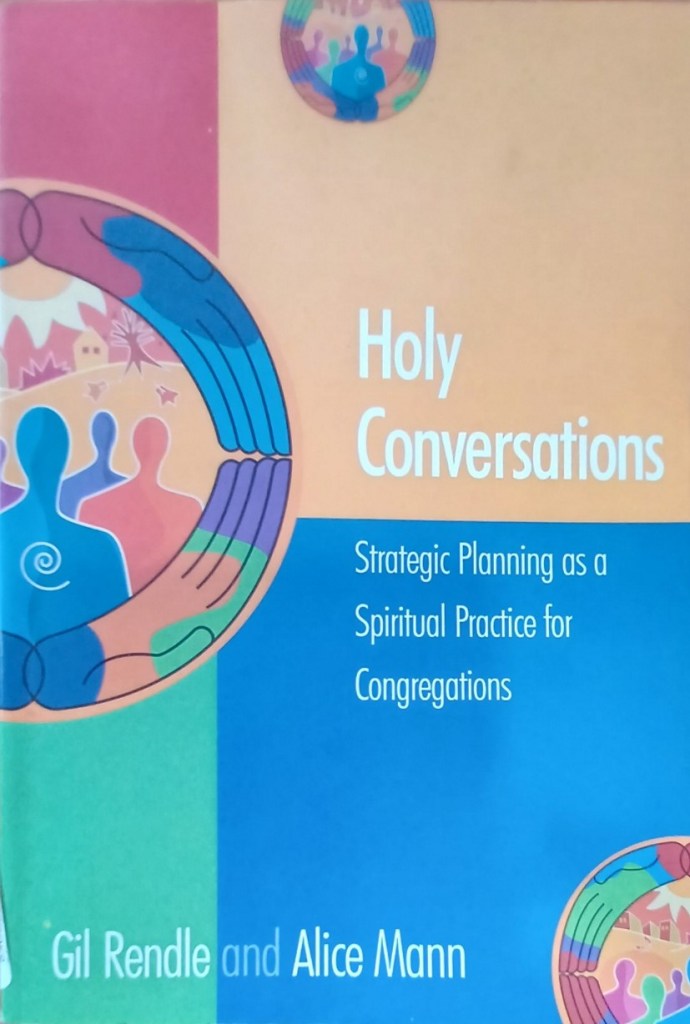
HOLY CONVERSATIONS – by Gil Rendle and Alice Mann

Holy Conversations: Strategic Planning as a Spiritual Practice for Congregations, is a practical workbook for anyone who is looking to lead a congregation to a unified vision and purpose. This book would be especially appealing to those who have little or no experience in leading a church through vision setting and strategic planning. They offer a number of examples, resources, and tools in the appendix that you could use as is or adapt to your local setting. If you are looking to lead a congregation to become more purposeful and with a unified mission, consider this book as a resource.

A Leader is a Self-Starter

A leader must be a self-starter who is ahead of the people he leads.

A Christian leader must know their role and how to do it without requiring external instruction. Leaders do not wait to receive direction.

If you have a job description, make sure you understand it and know it so well that you continually look for ways to fulfill it. If you did not receive a job description or are running your own organization, develop a description of your role so you have guidance in how you will spend your time.

This often requires an understanding of the mission and vision of the church or organization you lead. You need to know where you are to be leading others toward, and how you will measure success as you work toward it.

With the job description and vision in mind, prayerfully set the course for how you will spend your time. Identify your responsibilities and areas to delegate. I constantly check in with God for wisdom and discernment on what is important for each day and what needs to be left for another day.

A self-starter knows what is needed and how to determine what activities they should pursue for the day. This means knowing the daily and weekly requirements that can not be missed.

A self-starting leader schedules their efforts. I have found it helpful to occasionally set time aside to determine what needs to be done in the next year, next six months, next 30 days, and the next week. A self-starter knows that you cannot stumble into each day with no idea what needs to be done in the near future. Planning is a key characteristic of a self-starter.

For example, in my role, I preach a sermon each Sunday. At the beginning of each week, I know that this is something I need to prepare without putting it off for later. There are also some recurring meetings that I can anticipate and prepare for in advance according to my role in these meetings and my expected contributions. A self-starting leader knows how to schedule and then do what is required.

Being a self-starter means you do what needs to be done. Be clear what is required, and then you do it. Don’t wait for others to direct your activities. If you do, then you are definitely not a leader but are following the leading of someone else.

Planning and preparation is arriving to commitments on time, if not early. A self-starter is an achiever because they do the work required to get the job done.

The self-starting leader is courageous, pushing beyond comfort zones. This includes trying new things, not taking unnecessary risks, but open to taking risks to move beyond what is to what could be. This leader is the visionary who is willing to look out and pursue a new future or new direction because he sees what others don’t. While he tries to get others on board, he does not wait for everyone to agree with him before he takes necessary steps to what could be.

A driven leader is a self-starter. This leader is ambitious and passionate about moving the people and organization forward. This leader is not content to only do what has been done, or just doing enough to make people happy, but eagerly seeks opportunities for positive change.

A Christian leader asks God to continually guide as they move ahead to get things done and move people to the future God has for them.

Keep looking up,

Andy Wiebe

Elements of A Spiritual Checkup

I visited the dentist this week for what most people would call a regular checkup and teeth cleaning. Though since it had been seven years since my last checkup, it was not very “regular”. But as I was sitting in the chair, I began counting how many people were involved in my checkup. There was someone at the front desk, another taking my forms, someone doing the x-rays of my teeth, someone else to clean my teeth, and one or two others supervising. And that was all before I even saw the dentist! And then after, someone else fitted my teeth for a guard.  Each person had a specific role to play in making sure I received a full checkup and a thorough cleaning, and proper advice for caring for my teeth.

As I was lying in the chair, I began thinking of how this might compare to a thorough spiritual checkup. I would venture to say that we don’t take our spiritual checkups as seriously as this dentist and his team. Yes, many of us regularly read the scriptures and pray. We attend church regularly, and even examine our hearts before receiving communion, but might we benefit from more. If we were to have a thorough spiritual checkup, what might it look like? And would we be better served by having someone else walk us through it, or could we do an accurate enough checkup on our own?

Determing the present reality.

I don’t know if we need five of six specialized individuals to guide us, but we would benefit from a similar experience spiritually. We could have a trusted friend or a counselor or pastor walk through this process with us, or we could try it on our own. We could begin by looking at our spiritual condition.

Take inventory of reality. What does your spiritual life look like right now? In the same way a dental checkup begins with x-rays to identify the current situation, checking our spiritual life should start with an initial evaluation of what the situation is. Do we need some x-rays of our soul? With the psalmist we could ask God to examine us:

Search me, O God, and know my heart;

    test me and know my anxious thoughts.

Point out anything in me that offends you,

    and lead me along the path of everlasting life. (Psalm 139:23-24)

It’s rare that we can accurately identify our own state (otherwise, why would I need the x-ray in the first place?), so it can help to ask others in our lives who know us well. We could ask the people around us  what areas in our spiritual lives they see us perhaps needing improvement?

Ask God to guide the process of taking serious inventory of your spiritual condition.

A thorough cleaning.

Though I brush my teeth (probably not as often as I should), I still benefit from a professional to do a cleaning. In the same way, I can’t do a thorough cleaning of my own soul on my own. Instead, ask God to do a thorough cleaning of your soul. The initial evaluation shows you habits you need to remove, or sins you need to confess. Next, ask God to forgive. Wash me clean from my guilt. Purify me from my sin. (Psalm 51: 2)

After the regular cleaning, where God purifies your soul again and again, you can celebrate: our guilty consciences have been sprinkled with Christ’s blood to make us clean, and our bodies have been washed with pure water. (Hebrews 10: 22)

Maintaining spiritual health.

The dentist pointed out where some issues were occurring in my teeth and suggested some methods of caring for my teeth. He also suggested a teeth guard to wear at night. Going to the dentist isn’t very helpful if I stop caring for my teeth once I leave the clinic. In the same way, after reviewing your spiritual health and asking God to forgive those sins you have allowed to creep in, don’t continue in those old ways.

Instead, consider: what are some things I will do differently going forward, to protect my spiritual condition and even to make it better? This might be recommitting to reading the Bible regularly, maybe choosing a plan to follow. It might include reading books to help you grow. Decide what will help you be more spiritually healthy as you go on with life.

While there could be many more elements of a spiritual checkup, these are the key ones. If you aren’t sure how to start, you might want to talk to a pastor or work through this with a trusted friend.

May you be spiritually renewed going forward.

Keep looking up,

Andy Wiebe

Book Reviews: Andy’s 2023 Reading Experience

I will be sharing a brief review of every book I read this year. Hope you enjoy and hope it encourages you to keep reading.


UNSTUCK: A Nine-Step Journey to Change that Lasts – by Tim Lane

Tim Lane walks through a 9-step process to deal with lasting personal change. If there is an issue or a habit you are dealing with and would like to change, he believes his 9 steps will help you work your way through and overcome. He uses some examples from his own life and people he has helped to show how to work the process. If you are looking to make personal change, check out this book.

Reacting To An Offense

Has anyone at church ever offended you, or said something you didn’t agree with? Or has something happened publicly in the church that you were offended with? When a public offense occurs in the church, the first thought often is to write up a new policy. When we are part of a church, we are part of a group of people who will at times do something or say something that you don’t like. Each of us have different standards in our homes, and we likely have slightly different understandings of how to interpret and apply biblical truths.

When reacting to a situation in our church, we may act out of a desire to have policies and guidelines governing everything so that everyone does everything exactly the same. This is impossible to do. There will always be someone who does something you don’t like. So, how do we best respond to that perceived offense?

As I’ve worked with various churches and congregations, I’ve learned (and am continuing to learn) how to respond to situations where individuals are offended within the church. These may not necessarily be steps to follow in this order but are some helpful thoughts and questions I’ve learned to ask when working through the perceived offense.

  1. Is this an issue about me or about the other person?

Did the person actually do something wrong, or is the problem with me and the standards I am trying to push onto another person? Sometimes we just don’t like what another person does, but it doesn’t mean that what they’ve done is wrong.

  2. Is there a real issue to address?

If we believe there was truly an offense committed by the other person, what is the real issue? Did they do something that is spiritually wrong? It could be they did something that scripture can easily correct if they are shown the appropriate verses. Is this morally wrong? Did they do something that is generally believed to be wrong and offensive? What is the real issue that needs addressing? Why is what they did, wrong?

3. If an offense has occurred, what is the best response?

Jesus gives some practical advice in Matthew 18:15-17, about how to react when we see a fellow Christian sinning.

“If your brother or sister sins, go and point out their fault, just between the two of you. If they listen to you, you have won them over. But if they will not listen, take one or two others along, so that ‘every matter may be established by the testimony of two or three witnesses.’ If they still refuse to listen, tell it to the church; and if they refuse to listen even to the church, treat them as you would a pagan or a tax collector.

If you believe someone else has sinned, you have a responsibility to address that as a brother or sister in Christ. Pray about it and be careful as you address it.

What if it wasn’t a sin, but just something that the church generally has agreed is not acceptable? I would suggest being very careful when addressing any issue with people to be clear on what the issue is, to do it with kindness and love, not vindictively or angrily.

Also, make sure the appropriate person deals with the issue. Depending on the situation, it might be best for the person who noticed the issue to speak up, or it might be more appropriate for a different leader to step in.

4. Protect the dignity of the person who has caused the offense.

If something has happened that must be addressed, do it carefully.

Pray about it before doing anything, and then look for a way to approach the person with the concern that communicates as clearly as possible that this is a desire to help the other person and not to hurt or condemn them.

5. Is there an immediate response required?

If at all possible, take some time before responding. Take time to pray. Take time to clearly assess the issue. Take time to think through exactly what to say and how to best say it.

6. Is a new policy necessary?

Often an offense is a one-time occurrence. This does not need a new policy or more guidelines. On the rare occasion that an issue demands new policies and guidelines, determine these prayerfully and carefully, and with input from affected people.

The church is made up of many different individuals. We have all chosen to be part of this local church. As such, we need to see each other as brothers and sisters and do our absolute best to get along. We should be slow to speak and slow to get angry, while quick to encourage and love. If something has truly been done that is wrong, ask God to guide you as you address the issue. Remember, someone else may approach you too if they think you have done something wrong.

Keep looking up,

Andy Wiebe

Antidotes to Stress

More than three-quarters of adults report symptoms of stress, including headache, tiredness, or sleeping problems.

American Psychological Association, 2019

Everyone knows what stress is, and many people experience it often. We feel we are facing more than we can handle. The expectations on us are too much, or we are in uncomfortable situations without a way to gain control or get out of it. It affects our mind, our emotions, and our bodies. Some of our medical issues are even caused by stress.  And just because you attend church does not mean you immune to stress. Many of us even experience stress as we serve in the church.

At a recent visit to the doctor I saw this poster on the wall: Stress Coping Skills for Everyday Life.

There are a number of great ideas to put into practice when we are experiencing stress. Some of them are physical exercises such as “go outside” or “stretch”. Others are mental exercises such as “be positive”. There are social exercises and suggestions for eating better and drinking enough water.

These might all be good ideas. They cover most aspects of a person’s life – social, physical, emotional, and mental. But I couldn’t help noticing that there was something missing. Where is the spiritual aspect?

As people who know God, we should recognize the value of going to God in our times of stress. In fact, if we have put our faith in Christ for salvation, then we have also received His Spirit that lives within us. He is God within us. He wants us to have life and have it to the full. (John 10:10)

Like the psalmist David, we can cry out to God in our times of need.

When my spirit grows faint within me,
    it is you who watch over my way.
(Psalm 142: 3)

 Lord, you are the God who saves me;
    day and night I cry out to you.
May my prayer come before you;
    turn your ear to my cry.

 I am overwhelmed with troubles
    and my life draws near to death.
(Psalm 88: 1-3)

Yes, there are many different things we can do to try to alleviate the feelings of stress, but why not call on God to help?

Call out to God for help. Pray. Spend time reading scripture. Allow God to speak. Meditate on passages of scripture or dwell on God’s attributes. Spend time in worship. Sing songs of praise. Listen to songs of praise. Ask God to calm your spirit and empower you by His Spirit to tackle the day with confidence.

When stressed, do what you can to trust God to walk you through it.

Keep looking up,

Andy Wiebe