Church Has to be Different -But How?

A number of church leaders are declaring: Church has to be different now. Church has to change. While Covid has been an accelerator of this, leaders were already declaring this earlier.

I understand. As culture and society change, we need to adapt how we do the work of the church in order to connect with people today. But what changes?

I don’t feel I have the answers to what that change looks like. Instead, I will share my questions with you who follow me and hope you have some ideas to respond with. I would love to hear your comments.

Worship Service Changes

Do we need to change how we lead the worship service? I believe many churches need to plan for more audience participation and less performance at the front. I am passionate about creating interactive and transformational worship services – so much so, that I am in the process of writing a book about it!

Do we need to change from a monolog preaching style to more discussion? I know of one church that is attempting to do exactly that. People come to the service, gather around tables, and a table host leads the discussion. What else needs to change in the worship service?

Program Changes

What might be some beneficial changes to the type of programs we offer? Do we need to reduce the number of programs we offer? Should we plan more opportunities for people to interact with each other? Do we need to have more Biblical learning opportunities because people are biblically illiterate today?

Online Changes?

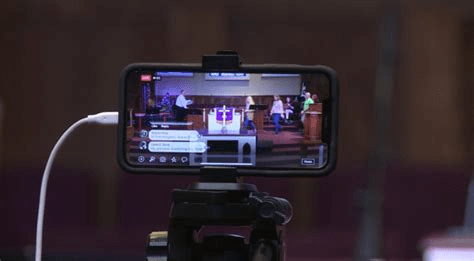
One positive outcome of covid restrictions was more churches provided an online worship service option. The church I presently serve is continuing this option, and usually have a number of people tuning in to watch. How might we improve in how we deliver those? Do we need to have people who can interact with those who are tuning in online? Maybe we need to hire staff to be the online church pastor in the same way multi-site churches hire a campus pastor?

How can we have a better online presence beyond just a one-hour worship service? Does this mean creating a presence on social media?

Discipleship Changes

How can we improve how we disciple new believers? In the past the emphasis was on teaching them “how to do” the Christian life. Should we move to an emphasis of “how to be” a Christian living in the world? While Bible teaching remains essential, especially for those coming to church with no prior Bible knowledge, I wonder if we need to help people move beyond living right to really connecting with Jesus, to actually listen and hear God?

Children and Youth Ministry Changes

Could we move beyond entertaining children and youth toward teaching them, even at a young age, how to live a life that is totally dependent on a relationship with God through faith in Jesus Christ, and tuned in to the guidance of the Holy Spirit? Do we need to challenge youth with opportunities to serve both in the church and in the community and world? Do we need to add in more digital content, or do we deliberately reduce screen time in our programs to counteract all the time they spend online in their day? Would it be wise to help youth focus more on getting to know God rather on avoiding sin? I came across a great quote a while back that went something like this: “Sin does not repel God, God repels sin.” We often see it as the less we sin, the closer we can get to God, when it is probably better to grow deeper in our relationship with God and then sin will be repelled.

Philosophy of Ministry Changes

Should we refocus our energies on helping people to grow in relationship with Jesus and not just in information about God? Do we need to remind ourselves that God came to be “with” us (Emmanuel)? Jesus sent the Holy Spirit to come live “in” us. It is about growing in relationship, not about growing in knowledge.

Outreach and Community Involvement Changes

As we think about introducing people to Jesus, our first realization should be that the mission field is not overseas, but right at our doorstep. There are many people living right next to us, who are just like us, who have never heard the message of salvation. And rather than thinking we need to go overseas, realize the world has come to us. Instead of taking a mission’s team to Mexico, maybe we need to reach out to the growing Mexican population down the street. Maybe instead of going to Africa, reach out to the many Africans from many different countries that now live in our cities? Even many small towns are seeing an influx of foreign workers and new immigrants. We need to reach out to them, welcoming them to Canada and sharing Jesus’ love with them.

As we reach out to those around us, this often requires an improved sense of community involvement and community connections. Some churches do well at this. Some churches offer English classes or homework help. The church I serve has an annual free Clothing Bonanza, clothing many children as they head off to school. They also give away free Bibles, so many that one year they started grabbing the church’s pew Bible to give away. Unfortunately, other churches are so caught up in their own church they hardly even know any people who don’t already know Jesus.

Let’s help people practically, and ensure we share the gospel as well. What else needs to change in how we reach out?

Facility Changes

What needs to change about how we build and set up the places where we meet? Many churches have done a good job equipping their facilities to be more accessible for those physical limitations, for example, by building ramps and elevators. We also have screens with the words on them so people don’t have to flip through hymn books. Additionally, many churches have recognized the needs of their communities, and replaced pews with chairs to allow their spaces to serve in varying purposes throughout the week. Are there other changes? Do we need to add more coffee bars?

Other Changes?

What else needs to change in how we do church? How do we update and adjust our ministries to have a greater impact for God’s kingdom? What “sacred cows” need to be chucked in order to head in a more effective direction?

I’m guessing that many changes will be different from church to church. Every church needs to mull over this issue of how to change to be the best they can be in reaching out and discipling people in their walk with Jesus.

What else needs to change?

Keep looking up,

Andy Wiebe

Book Reviews: Andy’s 2022 Reading Experience

I will be sharing a brief review of every book I read this year. Hope you enjoy and hope it encourages you to keep reading.


ALOOF: Figuring Out Life With A God Who Hides – by Tony Kriz

If you are looking for an easy read that packs a punch, this is for you! Tony Kriz walks through his life experience of pursuing a relationship with a God who is often in the shadows. He shares some great stories where God did something miraculous but also makes it clear that these are few and far in between. He does a great job of showing how God is continually there, even when we do not see Him or feel near to Him. Tony is very honest about his personally journey while asking great questions that make the reader think. And there is nothing wrong with thinking deeply about God! A great book for anyone who wants to go deeper with God!

The Thirst of Humanity

One of the fundamental questions of life is this: Does my life have meaning?

Wrapped up in that question are others. Why am I here? Do I have a role to play? Where do I fit? Can I do something of meaning? What is my purpose?

There is a basic thirst in all humanity to find meaning in life. Everyone wants to find some meaning and value in what they do. And they look for answers in all kinds of places. Some try to fill that thirst with experiences and so they do all kinds of things hoping something will satisfy. They may choose to enhance or even remove the feeling of reality with drugs and drinking. Some chase achievements, some look to “just provide a good life for my family.” Others look to fame. Some look to “leave a legacy” so their name will remain alive long after they are gone. Everyone is searching for that satisfaction that will finally quench their thirst.

The search is on for that elixir that will truly satisfy. This search has carried people in many different directions. If you have attended college or university you will probably have come across some of the following people and their ideas.

  • Albert Camus wrote in his essay The Myth of Sisyphus “There is but one truly serious philosophical problem, and that is suicide. Judging whether life is or is not worth living amounts to answering the fundamental question of philosophy.” According to Camus, life is entirely without meaning.
  • Jean-Paul Sartre argued for dealing with the meaninglessness of life by creating our own meaning. We decide, not God, or any other person, what we find meaning in.
  • Augustine of Hippo and Blaise Pascal, though many years apart have both been connected to the idea of a “God-shaped hole” in mankind, or an “infinite abyss”, that Pascal wrote in Pensées, “this he tries in vain to fill with everything around him, seeking in things that are not there the help he cannot find in those that are...” Looking for something that doesn’t exist, outside of God.

Solomon, King of Israel, declared in his book, Ecclesiastes, “Everything is meaningless… completely meaningless! …I observed everything going on under the sun, and really, it is all meaningless—like chasing the wind.” (Ecclesiastes 1: 2, 14).

Solomon’s journey for meaning led him to seek pleasure and wisdom and hard work, and found none of these pursuits were fulfilling. In Ecclesiastes 3: 14 he says, “God has made everything beautiful for its own time. He has planted eternity in the human heart, but even so, people cannot see the whole scope of God’s work from beginning to end.” There is something in the human heart that longs for more. This is reminiscent of the “God shaped hole” or “infinite abyss” that is longing to be filled, to be satisfied. This thirst that is longing to be quenched.

Solomon journeys on, looking at the injustices of life, the futility of political endeavors and chasing after and gaining wealth. He points out that everyone dies. So what is the value of the time of our existence?

In chapter 11 Solomon encourages both the old and young to treasure their days, and reminds them that God is part of the answer to our thirst for meaning. Yet he still views life as meaningless.

When people live to be very old, let them rejoice in every day of life. But let them also remember there will be many dark days. Everything still to come is meaningless.

Young people, it’s wonderful to be young! Enjoy every minute of it. Do everything you want to do; take it all in. But remember that you must give an account to God for everything you do. So refuse to worry, and keep your body healthy. But remember that youth, with a whole life before you, is meaningless. (Ecclesiastes 11: 8-9)

In the end Solomon concludes “Fear God and obey his commands, for this is everyone’s duty. God will judge us for everything we do, including every secret thing, whether good or bad.” (Ecclesiastes 12: 13-14.)

His final conclusion is we need to recognize that God has the final say about our meaning and value. He is the final judge. Our job is to obey him and find meaning in that obedience to God. There is no meaning in all other pursuits, except in honoring God in those pursuits.

The thirst of humanity cannot be satisfied with any other pursuit than that which brings us into a relationship with the One who made us. God created us to have a relationship with Him. Any pursuit that looks for satisfaction outside of that relationship will never satisfy. To look for contentment outside of what we were created for will only bring more dissatisfaction and frustration.

To use a drill to pound a nail or a file to chop wood is ridiculous and frustrating. We need to come to God who created us for relationship with Him, and as we honor and worship him our craving will find relief.

Your thirst can only be quenched as you drink deeply from God who created you and loves you!

Keep looking up,

Andy Wiebe

Pursue Excellence with Constant Evaluation

“CANEI is an acronym that stands for constant and never ending improvement. If you really want your services to soar, you have to commit to CANEI. You can never be satisfied with what you did last week, even if it was a great week. Always keep moving forward; always be working to reveal God’s excellence in a new, more powerful way.” 

– Nelson Searcy and Jason Hatley, Engage: A Guide to Creating Life-Transforming Worship Services.

To become better we need to evaluate. Everything we do can be improved through taking the time to reflect and evaluate when completed. An effective way to guide post-event evaluation it to use established systems and processes, whether these are adapted from other leaders or organizations, or created internally.

Recently I was reading Leading in a Culture of Change. Michael Fullan, in talking about evaluation, refers to Army After Action Reviews. These AARs have three key questions: What was supposed to happen? What happened? And what accounts for the difference?

I like that. While many evaluation systems include many questions about every aspect of the event, they really all come back to these three questions. All the questions on a long evaluation form probably come down to these three questions.

What was supposed to happen?

This question is effective because it assumes there was a clear plan from the beginning. Every person involved in making it happen knew what was expected. They likely talked through each aspect ahead of time, and maybe even rehearsed parts of it. Your evaluation needs to begin with a reminder of what you hoped to accomplish. In this way, everyone is reminded of what their goals were.

What happened?

This is where you work through the event in hindsight and remind yourself  what actually happened. Did those leading know what they were doing? Did the people involved enjoy the experience? Did it end up being close to the original goal and plan? Were you able to work the vision well, meaning did your effort move everyone toward the envisioned goal? This is the opportunity to consider each aspect and identify what went well and what did not.

What accounts for the difference?

Once you’ve identified the expectations and actual outcomes, it is time to look at how closely your event matched what you had dreamed and planned for. Focus in on what happened differently than expected. Point out any surprises or missteps, and then try to figure out why things did not go as planned. What are some reasons for what went wrong? And just as important: what are some reasons for what went right or better than you had planned?

With this in mind, brainstorm what needs to change to be better next time. There might be all kinds of actions to take to improve:

  • Better training
  • Clearer directions
  • More rehearsing
  • Better equipment
  • And on and on

An After Action Review (AAR) may take a few minutes or may last an hour. It depends on how complicated the event was or how many items were identified when answering the third question. I like these three questions because they really focus in on CANEI. You can zero in on what needs to improve for next time.

Evaluation always needs to lead to action. Everything that needs improvement must be worked on until a satisfactory change has been defined and developed.

Incorporate regular evaluation into your routines. Ask God to help you see where you may have fallen short of His hopes for the event, and the Holy Spirit to make it clear on how to continue to improve. As a follower of Jesus Christ, do your best for the Kingdom of God, no matter what you are doing.

Keep looking up,

Andy Wiebe

Leading Well When the Unexpected Happens!

We think we have a lot more control on things than we really do. We plan and prepare, but there are many things out of our control. We cannot control the weather, so it is not really all that unexpected when a picnic gets rained out. We cannot control people so it should not surprise us that people do things we hoped they wouldn’t, or don’t do things we wish they would.

Parents have hopes for their children but children choose their own paths. Business owners have dreams for their business but sometimes the market has more influence on how well they do than anything they could prepare. You plan for a big event only to have a small crowd because there were other more interesting things to do.

Most people like to be optimistic. We have to be if we want to make plans or develop anything. We have to believe that things well go well and get better. Reality sometimes chips away at that optimism.

So, what can we do when the unexpected happens?

  1. Pray

Too often we think that we need to find our way through a situation. We have worked hard on a project and want it to go well, so when the unexpected happens we feel that we need to come up with the solution. Instead, we need to remember that God is greater than any problems we come across. And God is never surprised. When challenges surprise us, why not go to God with them?

God will help you through it. He may give you an answer to quickly figure out a solution. He may give you strength as you struggle to find answers and push your way through. But God wants to be part of our lives. And if we are dedicated to serving God, then all that we do in some way should help to build God’s kingdom. If that is our goal, then the God of that kingdom would probably want to help us find our way through.

Remember to Pray.

2. Manage your Responses

An emotional response to the unexpected is not unusual, but obviously not very helpful. If we respond in a negative way to something that surprised us in a negative way, we are only compounding the problem. That is not going to help save the situation or fix what went wrong. Unfortunately, this is my natural response when a car darts in front of me in traffic. Maybe some of you can relate?

If we have enough bad unexpected things happen, when we get to that tipping point or that final straw that breaks the camel’s back, some of us give up. Whatever we were trying to do may just seem like too big of a task if too many unexpected things interfere.

Often it is our emotions that drag us down. We need to find a way to manage our emotions and push on.

3. Determine to Persevere

Some of us are resilient and continue to push ahead, looking for ways to overcome unexpected challenges. While some give up, others find a way through. Don’t immediately let the unexpected stop you from what you were planning to do. If your pursuit is of any value to you, then determine to find your way through.

These first three actions quickly lead you to the fourth one.

4. Triage the Situation

Good leaders will learn to assess the situation quickly and prioritize the needed response. When you go to the Emergency Room at the hospital, you are first taken to triage, where they assess your level of need so they can make sure that the greatest need is served first.

When the unexpected happens, you need to be able to determine the correct response by assessing if the unexpected situation needs to be dealt with first before going on with your plans.

For example, if you are planning a wedding and the hall floods on the week of your special day, you need to determine if the flooding can be dealt with or a new hall needs to be booked. This may take priority for the moment while you put aside the planning of the rehearsal to deal with the unexpected. In the same way, when something unexpected comes up at work or in your personal life, assess the situation to determine where to focus your attention for the best result.

5. Plan the Solution

Once you have triaged to identify your priorities, use that list to guide you through to a resolution. Figure out who can deal with which part of the problem and who can continue to work on the original project. Maybe part of the solution is to shut down your project or event for now and figure out how to reschedule with more planning in the future.

6. Delegate or Recruit Help

The unexpected often means that your time and resources are disappearing more quickly than you had planned. Can you hand off some of the responsibilities either in addressing the unexpected challenges or in the original project? Find someone who can step in to help. Don’t feel that you have to be limited to your abilities or that of your present team.

7. Pray and Trust God to Intervene

Continue to pray throughout the process. If you are a Christian leader, you have access to the God of Heaven. Our creative, miracle-working God can help us when we feel completely overwhelmed. I like seeing where God steps in and does the unexpected. I was just reading in 2 Kings 3 where the kings of Judah, Israel, and Edom were facing an army of Moabites. They thought they were hopelessly defeated, but then God stepped in. Water ran into the valley and onto the plains. The morning sun made it look like blood.

But when they got up the next morning, the sun was shining across the water, making it appear red to the Moabites—like blood. “It’s blood!” the Moabites exclaimed. “The three armies must have attacked and killed each other! Let’s go, men of Moab, and collect the plunder!”

But when the Moabites arrived at the Israelite camp, the army of Israel rushed out and attacked them until they turned and ran. The army of Israel chased them into the land of Moab, destroying everything as they went. (2 Kings 3: 23-24)

God can do the unexpected. Leading well when the unexpected happens depends to a large extent on how much you depend on God.

Keep looking up,

Andy

Develop an Active Imagination

I remember watching two preschoolers, a brother and sister, playing next to me as I was watching a floor hockey game in college. I was fascinated at their imagination. They had no toys, no digital devices, just the bleachers and their imagination. They played for a long time, together imagining all that was happening around them.

Too many of us have lost our ability to imagine. We are so caught up in the moment and in what is right in front of us that we no longer know how to use our imagination. There could be a number of reasons for that. Maybe our imagination was stifled as a child when a parent or teacher told us to quit daydreaming. Daydreaming is the fertile ground imagination grows in! Some of us had an active imagination until someone made fun of our ideas. For whatever reason, we have stopped imagining.

Have you ever wondered why some people are so good at coming up with ideas? It’s because they have an active imagination. They are not afraid to dream up something new. And they are not afraid to try out their ideas. We don’t know how many ideas these people imagined that went nowhere, before they found the ones that were great.

We can develop an active imagination. For instance, give yourself freedom to daydream. Find some time when you have no other distractions and no requirements of yourself and just imagine things. Find your time you can claim as your own. Dream. Make up a story in your mind. It could be that you have a problem at work. Whatever your work is, whether dealing with people or machines, if there is a problem, your imagination can help you solve it. So start imagining all kinds of possibilities.

In your daydreaming, don’t put up fences. Don’t start evaluating and discarding an idea too quickly. Sometimes good ideas need time to work their way to a solution. Some of us are quick to say: “That won’t work.” We even think that way in our daydreaming and discard ideas before they are fully developed. Remove that fence. Remove any fence that puts limitations on your imagining. Don’t discard an idea too soon because it takes more money than you have, or more volunteers than your organization has, or whatever it is that tempts you to short-circuit your dreaming.

Imagination is enhanced by other ideas. Sometimes as you read and watch and listen, ideas come to you through other people or situations around you.  A while back my one of my daughters gave me a book on trees. I would not have chosen to read a book like that, but it was amazing to read the insights of someone who had spent years working with trees and understanding them. There were points in the book that got me thinking about how to work with small groups and how people interact.

Another book I recently read outside of my normal reading selections was Atomic Habits, by James Clear. While the book was about habits, it sparked all kinds of ideas that made me want to apply the teaching to the process of discipleship. As we read and learn from others, we add fertilizer to the fertile ground of our imagination.

Someone once said that we should “beg, borrow, and steal” as we look for good ideas. There have been many times that my good ideas came out of ideas that others had worked on. I was able to build on and adapt those ideas to programs I was working on or ministries I was running.

I have been part of churches that planned wonderful Easter Celebrations complete with a breakfast, fun and games, a worship service, and an Easter Egg hunt. One of the aspects of the morning that went over really well was to bring in a professional photographer to take family photos. Many people dress up for Easter so it was a great time to offer people a free family photo. I don’t know where I got the idea, but I know it came from someone else’s ideas and I was able to adapt it to my setting.

One author who wrote about planning creative worship services suggested always having some children’s toys at hand. The idea was, if you have fun thing near you, in your environment and in your hand, your creativity will be enhanced. So, surround yourself with weird and wonderful objects, collect fun sayings and give yourself an environment that will be conducive to good imagining.

I don’t know if you have found this to be true, but some people think they imagine and think creatively better by being in a certain place, or a certain chair, or taking time to daydream at a certain time of day. If you want to be intentional about improving your creativity and your imagination, this might be an idea to try. Find a comfortable spot and see if the creativity ideas start flowing. It may take a bit of trial and error to find the right spot, but sometimes the habit of that certain spot or certain time can help unlock creative ideas.

Then, at a certain point, you have to look to putting your ideas into action. When you have ideas, start writing them down. Writing down ideas requires you to express the idea in a concrete way. The imagination has to become reality at some point. Writing it down helps you put that idea together.

If the written idea still seems like a good one, try it out. Share it with someone. You might want to make sure you share it with someone you trust, or someone who won’t shut you down too quickly. If you can verbalize it in a way that makes sense to the person listening, you are heading in the direction of your ideas becoming reality.

When you think you are ready, try out your idea. See if it solves the problem you were working on. If it does, great! Your imagination helped you. If it does not work, then keep looking for another idea.

Continue to cultivate an active imagination. Just think of how many good ideas you will have if you allow yourself to stop and daydream!

Keep looking up,

Andy Wiebe

Book Reviews: Andy’s 2022 Reading Experience

I will be sharing a brief review of every book I read this year. Hope you enjoy and hope it encourages you to keep reading.


AN HOUR ON SUNDAY – By Nancy Beach

In An Hour On Sunday: Creating Moments of Transformation and Wonder, Nancy Beach draws on her years of experience creating great worship services. She covers many aspects of how to create meaningful experiences for church congregations, focusing on the arts and artists involved in making these experiences moments of “transcendence”. She writes, “Our aim should be to create services so compelling, so meaningful, and so unexpected, that the time sails by and attenders leave with an enthusiastic desire to talk about their experience as well as the content of the service.” Her chapter on creativity is one of the best. This book is a great encouragement to do our best to create services that impact people in meaningful ways.

The Transition Pastor’s Process

More and more churches are choosing to hire a Transition Pastor to help them as they say goodbye to one pastor and look to hire the next. If you are curious about how this transition process works, then you are at the right place. (This post builds on a previous post: Do We Need a Transition Pastor?)

The process begins with the transition pastor getting to know the congregation and the way the church functions. They complete various assessments and evaluations to get a clear picture of what is really going on in the church. This is a helpful step whether the church is healthy or unhealthy, and whether the pastor left on good terms or not. These assessments are done with the whole congregation as well as the leadership and various ministry leaders. Often there are interviews of staff and members of the congregation to get a clear understanding of how things are going and what areas may need to be addressed. It is important to take some time to look back to make sure there are no issues that have just been “swept under the rug”, but adequately faced and dealt with. Unforgiveness for past mistakes will make it difficult to move ahead in a meaningful way.

The assessments can help the pastor know what to preach on. He can address current issues facing the church from scripture.

The first issue to acknowledge and address is often grief. The assessments and interviews will determine the level of grief, as the church is often mourning the loss of the pastor and his family. Often the preacher will focus sermons on the “one another” passages in scripture. These can help build on or restore much needed unity in the church.

After taking some time to look at the past and then getting a clear picture of the present situation, the pastor can move the church to start looking ahead to establish a clear vision for the church. This may include understanding the demographics of the church as well as the community it serves. It will include having vision meetings with both the elders and the church as a whole. My belief is that the vision a church develops usually does not vary much from where they have been in the past. The value of this practice is not so much in coming up with something unique for the next part or the journey, but in being able to clearly articulate their vision together.

This process is bathed in prayer, and builds on the assessments and understanding of the community the church feels called to reach. The vision guides the church moving ahead. Often, when a church goes through the process of hiring a new pastor, they do not have a clear vision and so the newly hired pastor moves the church in the direction of his own vision. This is not a bad thing, except each new pastor may go in a different direction. If the church can clearly identify a vision before they hire their next pastor, then they can hire a pastor that fits that vision.

For pastors looking for a position in a church, it helps to know what the church’s vision is so he can tell if he will fit there or not. I have taken a position in a church only to learn two years later that my vision and theirs were very different, opposite even. It is helpful to both the church and the pastor to be clear on this before being hired. It will prevent some pain in the future.

The completed assessments and articulated vision help the church know exactly what kind of pastor they are looking for. The transition pastor can help guide them up to this point and help them through the search process as well. One valuable tool the transition pastor can help the church with is developing their Pastoral Profile. All the other assessments and processes the transition pastor leads the church through really culminate in the clarifying their vision and determining what kind of pastor is needed to help them accomplish that vision. Without all the work leading up to this point, a church may not have a clear idea who will best fit their church. Too often there is just a pendulum swing where one teaching pastor with no shepherding skills is replaced with a shepherd with no teaching skills. A Pastoral Profile is built on all the work produced during the transition process so the church knows how to truly evaluate a candidate against their real needs.

The Transition pastor concludes their time with that church before the next pastor is hired.

If a church is between pastors, hiring a transition pastor will be of great benefit. Those months, up to two years, of a transition pastor leading a church through a transition process will be extremely beneficial in planning well for the next step of the journey for the church.

Keep looking up,

Andy Wiebe

Book Reviews: Andy’s 2022 Reading Experience

I will be sharing a brief review of every book I read this year. I hope you enjoy and hope it encourages you to keep reading.

THE POWER OF WRITING IT DOWN – by Allison Fallon

Allison Fallon is a writer who helps others write. Her book walks through a number of tips on how to keep writing, whether for publishing or for personal purposes. She draws a number of parallels to life and has a number of examples of how encouraging people to write about their life has actually helped them through tough times in their life. So if you like to write, anything from journaling to writing a novel, you could benefit from this book. If you are not a writer, but would like to try something new to help you deal with circumstances in your life, this might be the book for you.

The Hard Work of Thinking

A while back I was trying to find a church to attend. We were new to the area and had no specific ties to any church, so we tried a few. There was one church that I really liked. They had a number values and practices similar to my own. This church seemed like a great option for us, but there was one aspect of their theology in practice that I did not agree with.

So what could I do?

I decided to spend time thinking and praying about it. For the next few weeks, maybe even months, every time I prayed and every time I read the Bible, I had this one question on my mind. I needed clarity from God. I wanted to have an answer that would change my thinking so I could feel comfortable attending this church. I thought about it throughout the day. Finally, I just couldn’t find peace about attending that church, but at least I had spent some time seriously thinking through what was right for me and my wife.

Praise generally goes to the “doer,” while the “thinker” is often considered lazy. We have been taught from a young age that there is great value in getting things done. We are told, “Quit daydreaming! Get back to work.” What if thinking about something for a long time was getting things done? Is it possible that thinking about something for a long time can be beneficial?

My desire is to help people pursue their God-given dreams. Some of this involves taking time to think, to meditate or contemplate.

Most definitions for both words include something like this: “thinking seriously about something for a long time.” Whether you are meditating, or contemplating, there are times when it is of great value to slow down, and just think.

Do you know what God wants you to do with your life? Do you know what the next step of the journey is? Before you make a big decision, take some time to think. Seriously consider your situation and what God might have in mind next. Allow God to interrupt your thinking time. Read scripture. Pray. And think.

You may need to block out some time just for thinking. Maybe stay up after everyone else has gone to bed, so you can focus on your thinking, or get up before everyone else does so you can think in peace and quiet.

Have you ever read a scripture and just couldn’t get it out of your mind? I mean, it just kept ringing around in your mind. It may be that God was teaching you something, and he didn’t want you to forget what you had read. You thought about it all day. You thought about it in the shower, and when you were commuting, and when you were supposed to be working. Sure, you did your job like usual, but in the back of your mind you were still thinking about that verse.

We would all benefit from taking time to think on scripture more often. I read my Bible almost every day, but I don’t often stop to just think about what I read, or what God wanted me to hear from Him that day.

It’s too easy to see Bible Reading and Prayer as part of a to-do list to conquer and check off, rather than time to slow down and allow God to soak His words into our minds.

When is the last time you actually just stopped everything to think? To think about something for an extended period of time? Is there an issue in your life that needs to be resolved? Is there a question you would like answered? Why not book off some time, and take a mini-retreat for yourself to purposefully think? Find a place or time where you can have peace and quiet, where all distractions are removed if possible, and think on the issues facing you. You might want to begin with reading some scripture, with a time of prayer, and then just think. If you are like me, and benefit from writing thing down, then write it down. If you are someone who has to think out loud, then think out loud.

You may be meditating, or you may be contemplating, either way, take time to seriously think about something for an extended period of time. See if that doesn’t help you get some perspective on your present issue. Do the hard work of thinking.

Keep looking up

Andy