Surviving Disappointment

Sometimes our dreams are dashed in front of us. We had all kinds of dreams, were convinced that we were doing exactly what God wanted in the place he wanted us, and life is not going as we had planned.

All of us face disappointment. All of us will have times of discouragement. But sometimes the load seems too much. We consider giving up and moving on to something else. We feel that those close to us don’t understand how big the load is that we carry. We feel very alone. We may feel God has given up on us.

I’m reminded of the story of Joseph in the Bible, which begins in Genesis 37 and goes on for a few chapters. Joseph had eleven brothers. They hated him because they saw that he was Daddy’s favorite. Joseph had a few dreams that made it look like the rest of the family, all the brothers and their Dad, would bow down before Joseph. Sharing those dreams didn’t help his brother’s hatred. A few of them arranged it to look as if wild animals killed him, and then sold him to some slave traders. Those slave traders brought Joseph to Egypt and sold him to one of the Pharoah’s top officials.

That would be a terrible experience for anyone. No one would be shocked if Joseph became angry. Instead of being a rebellious and belligerent young slave, Joseph served his master well. In fact, his effort was rewarded by the master making him his attendant in charge of the whole household. Jospeh overcomes being sold as a slave and manages to do good for his master. What an amazing example of overcoming disappointment. Instead of letting the disappointment of the situation he finds himself in, causing him to dwell on his own terrible misfortune, Joseph rises above that to continue to do his best as a person – and as a slave.

Then his master’s wife tries to seduce him, but he runs away in order not to sin in this way. The master believes his wife when she accuses Joseph, and he sends Joseph to prison. A second wave of disappointment must have hit Joseph. No one would have been surprised if he was angry at God or became a hardened criminal in prison. Instead, he overcomes that disappointment by doing good in prison. Like when he arrived at the official’s house, his abilities and attitude are soon recognized, and he is placed in charge over all the prisoners. Yes, God is with him, His blessing is evident, but Joseph overcomes what would have been a terribly disappointing situation and is rewarded. Again, instead of letting the situation push him into despair or anger at God, he continues to do his best in the situation he finds himself in.

After some time, Joseph becomes aware through a dream, that one of his fellow prisoners will be soon released and return to his position as Pharaoh’s cupbearer. Joseph asks the cupbearer to please remember him when he returns to Pharaoh’s palace. Joseph begs him to speak up on his behalf and get him out of prison. The cupbearer gets his position back but forgets about poor Joseph back in prison. As time goes on Joseph realizes the cupbearer didn’t speak up and he remains in prison, experiencing yet another disappointment.  

Two years later Pharoah has a dream. Finally the cupbearer remembers Joseph, and how he was able to interpret dreams for him. He recommends that Pharoah speak with Joseph, and Joseph is brought in to explain Pharoah’s dream. When Joseph favourably explains the dream, Pharaoh ends up making Joseph his second in command!

Joseph survived a few waves of disappointment – terrible things to endure. He made it through and God placed him over all of Egypt, second only to Pharaoh.

Some time later, when famine hits the homeland, Joseph’s brothers came to Egypt looking for food. Since Joseph is in charge of the grain, they bow down before him – just like the dreams Joseph had as a youngster! And then Joseph makes an incredible statement in Genesis 50: 20: “You intended to harm me, but God intended it for good to accomplish what is now being done, the saving of many lives.”

Not only did Joseph survive all the terrible disappointments, he saw that God used what others did to him as a means to accomplish great good!

Some lessons to help us survive disappointments:

1. Trust that God is the same God in both moments of triumph and moments of despair. Joseph never blamed God for what was happening. He even ended up saying God was in all of the things he suffered.

2. Be faithful where you are, no matter how disappointing. Joseph did his best in every situation he found himself in. And God blessed him and rewarded him. Whether the disappointments result in goals left unreached or a position terminated when you still had dreams to pursue, be faithful to God wherever you find yourself next.

Be the person God wants you to be no matter what the circumstances are around you.

3. Find your sense of well-being in your relationship with God rather than in your circumstances. Whether Joseph was head slave in an important official’s house or a lowly prisoner, he did everything to the best of his abilities.

4. Trust that God will look after the future. Serve God faithfully right now, wherever you are, trusting that God knows all the next steps and future twists and turns, and that you are safe in His hands.

Disappointments will come. Sometimes they are small, often they are big. We can survive them if we continue to trust God and know we are safe with Him.

When your dreams are dashed and life is not meeting your expectations, continue to hold onto God in the middle of the frustration and pain.

Keep looking up,

Andy Wiebe
Book Reviews: Andy’s 2022 Reading Experience

I will be sharing a brief review of every book I read this year. Hope you enjoy and hope it encourages you to keep reading.


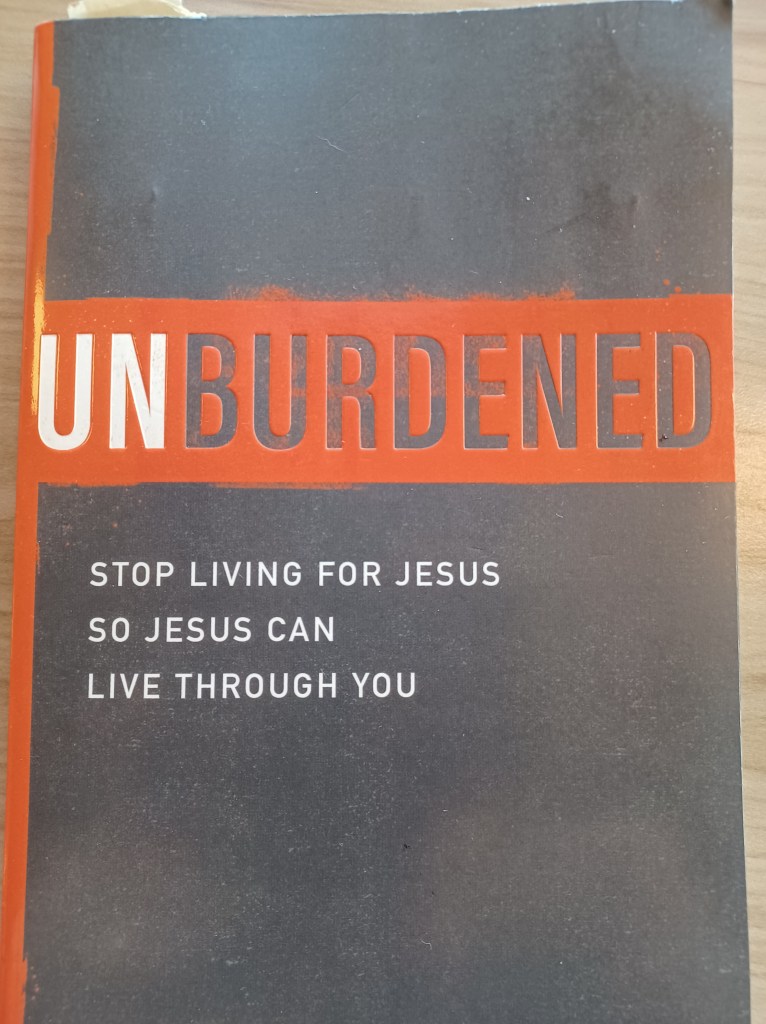
UNBURDENED – by Vance Pitman

This is among the TOP 3 books of the year so far! I know that I often describe the book I am reviewing as good, this one is great. Unburdened: Stop Living for Jesus so Jesus Can Live Through You is a much needed book for today’s Christian. We get so caught up in “doing what I need to do” to be a good Christian, that we slip into religion and loose the relationship with Jesus. Vance Pitman states in the Introduction: “The Christian life is not me living for Jesus but Jesus living His life in and through me.” Instead of having a list of do’s and don’ts to become a better Christian, work at building your relationship with Jesus. The more time you spend with Him, in tune with Him, listening to Him, and obeying Him, the more like Jesus you will become. Pitman describes our purpose as a Christian: God brought you to Himself so out of the outflow of your intimate relationship with Him – which is Christ in you, working through you – you could share in His mission locally and globally in fellowship with others.” The key in all of that is to pursue an intimate relationship with Jesus and the rest will flow out of you naturally. A great book that you will be challenged and encouraged by as a Christian.

Book Reviews: Andy’s 2022 Reading Experience

I will be sharing a brief review of every book I read this year. Hope you enjoy and hope it encourages you to keep reading.


In Tangible, Chris Sicks introduces a concept that I have not come across before, an “apologetics of mercy”. The one who practices this is then a mercy apologist. He says if we were to help someone in need, like a single mother, for instance, then: “The merciful apologist steps into her life, addresses her physical burdens, soothes her emotional scars, and then presents Christ as the answer to her heart’s pain”. (p 26) He does an excellent job presenting the case that too often we Christians think they can win someone to Christ by giving them a great argument, by telling them about Jesus. The truth is, many people are not interested. But when you show people you love them and care for them in practical and real ways, they begin to wonder why. Now you can tell them its because of Jesus. When people experience God through your presence in their lives, God can love them through you. And often they will respond by surrendering to Jesus, because you spent time with them and loved them and just went out of your way to show them the love of Jesus. Sicks refers to this a “show and tell”. Don’t think telling people about Jesus alone, don’t think about showing people God’s love alone, but do both together and see what a difference that makes as people experience the God you are talking about through your relationship with them. Show and Tell.

God Repels Sin

“God is not repelled by our sin.

Our sin is repelled by God.”

Tony Kriz (Aloof)

Somewhere, many followers of Jesus have gotten the unfortunate idea that when we sin we push God away from us. In this way of thinking, because God is holy and cannot stand sin, God will not be anywhere near our sin – much less near us, the sinner.

Don’t lose sight of God while desiring to be right with God.

This thought causes us to develop a perspective of “working really hard not to sin.” That is a tiring and fruitless endeavor. We become people of the law, people of rules.

We memorize the “thou shalt not’s” and make up others. We say we want to get closer to God and yet our focus is intently on our sin. We work so hard to prevent sin that we forget why we try to avoid sin in the first place. We lose sight of God by the very effort we hoped would make us right with God.

If we find ourselves viewing life from this perspective, that’s a sign that it is time to reorient our thinking. We need to realize that God is not repelled by our sin. In fact, he came to face it head on.

When we were utterly helpless, Christ came at just the right time and died for us sinners. Now, most people would not be willing to die for an upright person, though someone might perhaps be willing to die for a person who is especially good. But God showed his great love for us by sending Christ to die for us while we were still sinners. And since we have been made right in God’s sight by the blood of Christ, he will certainly save us from God’s condemnation. 10 For since our friendship with God was restored by the death of his Son while we were still his enemies, we will certainly be saved through the life of his Son. 11 So now we can rejoice in our wonderful new relationship with God because our Lord Jesus Christ has made us friends of God.

-Romans 5: 6-11 (NLT)

Jesus came to this earth to die for our sins. He willingly took all our sin on himself so that he could pay the death penalty for it for us. God arranged this in order for us to become right with him.

In his book, Aloof: Figuring out life with a God who hides, Tony Kriz adds, “We do not experience God by avoiding sin, we overcome sin by pressing into God.” We need to pay less attention to how much sin we have committed and pay more attention to the one who loves us and sent his Son to die for us, even while we were full of sin. Instead of focusing on what not to do, we need to focus on what to do to grow in relationship with God.

Trade information for relation

We need to shift our focus onto God. Press in to a relationship with Him in any and every way we can and get to know him. Bible reading is one way to get to know God. It’s important that we don’t just learn information but grow in relationship with him. Let’s listen and watch for how scripture reveals God’s heart for us. Allow scripture to be our conversation together.

As we focus on God and our relationship with him, we can read biographies and learn from Christian leaders of the past who have pursued God and how they experienced a relationship with Him.

We can read about Corrie Ten Boom forgiving her German captors. We can read of George Mueller and his complete faith in God’s provision for his hungry orphans. We can learn from those who had a relationship with God that allowed them to live boldly and confidently in the grace of God.

Trade monolog for dialogue

Rather than focusing on our sin and what we are not doing, we can shift our focus to God and what he has to say to us through regular conversations with Him. I learned how to talk to God from an early age. It started with a few memorized prayers for bedtime or before meals and graduated to imitating adults. Over time I learned how to express my needs to God with my own words, even pouring out my heart to God. But unfortunately, I was not taught how to have a conversation with God. To pursue God instead of living a life focused on “not sinning,” I need to be able to talk with him as a friend. Romans 5, above, says that through Christ we become friends of God. Friends have conversations. I needed to learn how to listen to God so that my monolog turned into a dialogue.

This does not mean I have quit sinning, but that I have quit dwelling on my sin and go quickly and regularly back to God and pursue Him. As I recognize sin – as God points it out – I confess my sin and renew my focus on God.

I encourage you to “press in” to God, dig deeper into a relationship with Him through faith in Jesus Christ, and as you focus more on Him you will be less inclined to be drawn into sin. Jesus sent us the Holy Spirit to both remind us of what He taught and to remind us of our sin. Allow the Holy Spirit to guide you as you deepen your relationship with God.

Keep looking up,

Andy Wiebe

Church Has to be Different -But How?

A number of church leaders are declaring: Church has to be different now. Church has to change. While Covid has been an accelerator of this, leaders were already declaring this earlier.

I understand. As culture and society change, we need to adapt how we do the work of the church in order to connect with people today. But what changes?

I don’t feel I have the answers to what that change looks like. Instead, I will share my questions with you who follow me and hope you have some ideas to respond with. I would love to hear your comments.

Worship Service Changes

Do we need to change how we lead the worship service? I believe many churches need to plan for more audience participation and less performance at the front. I am passionate about creating interactive and transformational worship services – so much so, that I am in the process of writing a book about it!

Do we need to change from a monolog preaching style to more discussion? I know of one church that is attempting to do exactly that. People come to the service, gather around tables, and a table host leads the discussion. What else needs to change in the worship service?

Program Changes

What might be some beneficial changes to the type of programs we offer? Do we need to reduce the number of programs we offer? Should we plan more opportunities for people to interact with each other? Do we need to have more Biblical learning opportunities because people are biblically illiterate today?

Online Changes?

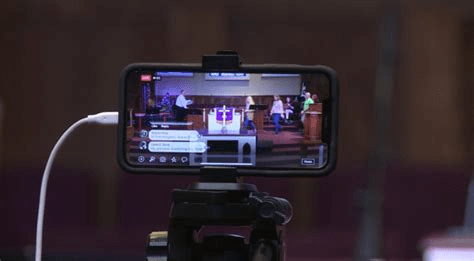
One positive outcome of covid restrictions was more churches provided an online worship service option. The church I presently serve is continuing this option, and usually have a number of people tuning in to watch. How might we improve in how we deliver those? Do we need to have people who can interact with those who are tuning in online? Maybe we need to hire staff to be the online church pastor in the same way multi-site churches hire a campus pastor?

How can we have a better online presence beyond just a one-hour worship service? Does this mean creating a presence on social media?

Discipleship Changes

How can we improve how we disciple new believers? In the past the emphasis was on teaching them “how to do” the Christian life. Should we move to an emphasis of “how to be” a Christian living in the world? While Bible teaching remains essential, especially for those coming to church with no prior Bible knowledge, I wonder if we need to help people move beyond living right to really connecting with Jesus, to actually listen and hear God?

Children and Youth Ministry Changes

Could we move beyond entertaining children and youth toward teaching them, even at a young age, how to live a life that is totally dependent on a relationship with God through faith in Jesus Christ, and tuned in to the guidance of the Holy Spirit? Do we need to challenge youth with opportunities to serve both in the church and in the community and world? Do we need to add in more digital content, or do we deliberately reduce screen time in our programs to counteract all the time they spend online in their day? Would it be wise to help youth focus more on getting to know God rather on avoiding sin? I came across a great quote a while back that went something like this: “Sin does not repel God, God repels sin.” We often see it as the less we sin, the closer we can get to God, when it is probably better to grow deeper in our relationship with God and then sin will be repelled.

Philosophy of Ministry Changes

Should we refocus our energies on helping people to grow in relationship with Jesus and not just in information about God? Do we need to remind ourselves that God came to be “with” us (Emmanuel)? Jesus sent the Holy Spirit to come live “in” us. It is about growing in relationship, not about growing in knowledge.

Outreach and Community Involvement Changes

As we think about introducing people to Jesus, our first realization should be that the mission field is not overseas, but right at our doorstep. There are many people living right next to us, who are just like us, who have never heard the message of salvation. And rather than thinking we need to go overseas, realize the world has come to us. Instead of taking a mission’s team to Mexico, maybe we need to reach out to the growing Mexican population down the street. Maybe instead of going to Africa, reach out to the many Africans from many different countries that now live in our cities? Even many small towns are seeing an influx of foreign workers and new immigrants. We need to reach out to them, welcoming them to Canada and sharing Jesus’ love with them.

As we reach out to those around us, this often requires an improved sense of community involvement and community connections. Some churches do well at this. Some churches offer English classes or homework help. The church I serve has an annual free Clothing Bonanza, clothing many children as they head off to school. They also give away free Bibles, so many that one year they started grabbing the church’s pew Bible to give away. Unfortunately, other churches are so caught up in their own church they hardly even know any people who don’t already know Jesus.

Let’s help people practically, and ensure we share the gospel as well. What else needs to change in how we reach out?

Facility Changes

What needs to change about how we build and set up the places where we meet? Many churches have done a good job equipping their facilities to be more accessible for those physical limitations, for example, by building ramps and elevators. We also have screens with the words on them so people don’t have to flip through hymn books. Additionally, many churches have recognized the needs of their communities, and replaced pews with chairs to allow their spaces to serve in varying purposes throughout the week. Are there other changes? Do we need to add more coffee bars?

Other Changes?

What else needs to change in how we do church? How do we update and adjust our ministries to have a greater impact for God’s kingdom? What “sacred cows” need to be chucked in order to head in a more effective direction?

I’m guessing that many changes will be different from church to church. Every church needs to mull over this issue of how to change to be the best they can be in reaching out and discipling people in their walk with Jesus.

What else needs to change?

Keep looking up,

Andy Wiebe
Book Reviews: Andy’s 2022 Reading Experience

I will be sharing a brief review of every book I read this year. Hope you enjoy and hope it encourages you to keep reading.


ALOOF: Figuring Out Life With A God Who Hides – by Tony Kriz

If you are looking for an easy read that packs a punch, this is for you! Tony Kriz walks through his life experience of pursuing a relationship with a God who is often in the shadows. He shares some great stories where God did something miraculous but also makes it clear that these are few and far in between. He does a great job of showing how God is continually there, even when we do not see Him or feel near to Him. Tony is very honest about his personally journey while asking great questions that make the reader think. And there is nothing wrong with thinking deeply about God! A great book for anyone who wants to go deeper with God!

Book Reviews: Andy’s 2022 Reading Experience

I will be sharing a brief review of every book I read this year. Hope you enjoy and hope it encourages you to keep reading.


DEFINED: Who God Says You Are – by Stephen Kendrick & Alex Kendrick

Many in our culture are struggling with their identity. They are confused about who they really are. The Kendrick brothers present a great answer by walking through “who God says you are.” They draw on the book of Ephesians as they say “His Word teaches that you can discover, believe, and set your heart on your true identity – your identity in heaven.” The book is laid out in a daily reading style with extra scriptures and a prayer at the end of each day’s reading. Want to know who God says you are? Then this book is for you.

Book Reviews: Andy’s 2022 Reading Experience

I will be sharing a brief review of every book I read this year. Hope you enjoy and hope it encourages you to keep reading.


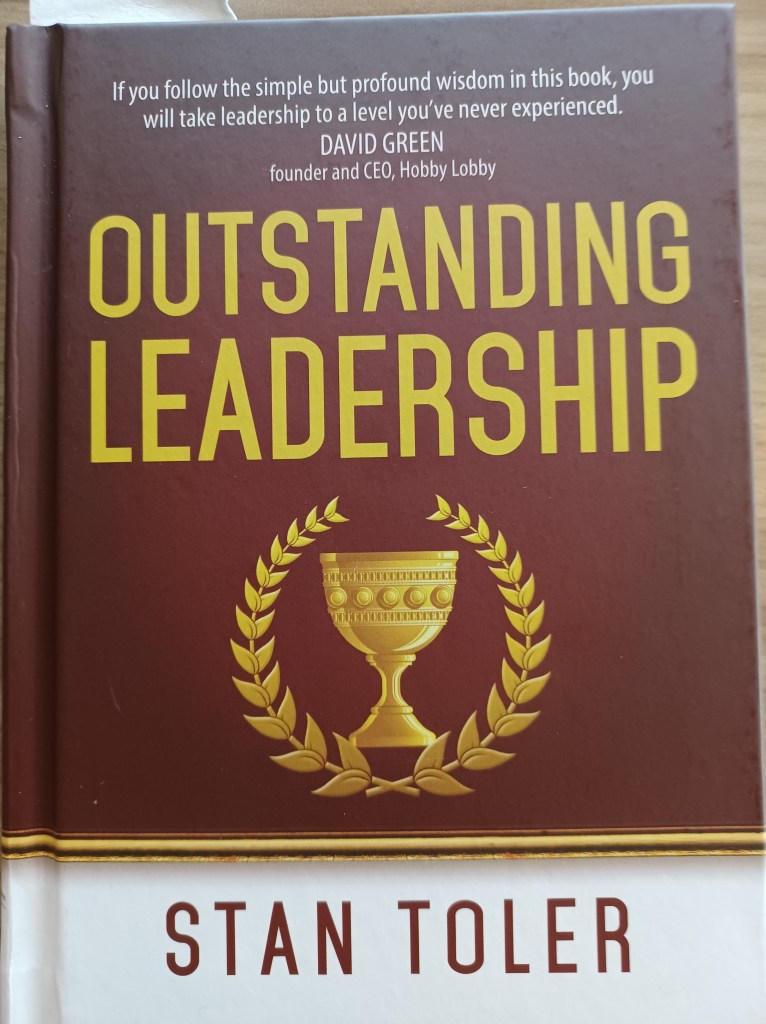
OUTSTANDING LEADERSHIP – by Stan Toler

There are many books on leadership, and this little book is among the best. Every short chapter is chockfull of ideas and definitions and quotes and generally good leadership advice. Stan Toler shares great advice drawing on many other good leaders. In Part 1: Leadership that Motivates, he shares how to develop and share a good vision. Part 2: Leadership that Relates lays out the value of communication and how to best communicate so that you can transform individuals and organizations. A great little book.

Book Reviews: Andy’s 2022 Reading Experience

I will be sharing a brief review of every book I read this year. Hope you enjoy and hope it encourages you to keep reading.


HOPE IN THE DARK – by Craig Groeschel

Hope in the Dark: Believing God is Good When Life is Not addresses those questions we have when life is not going as well as we think it should. Craig Groeschel asks many of the questions that we have all asked from time to time, questions like: “Where are you God?” and “Why aren’t you doing something?” He draws on the book of Habakkuk where the prophet asks some of the same questions. Let me give you one quote that I thought was very helpful. He writes, “Habakkuk urges us to draw on our long-term memories of God rather than being so shortsighted that we choose to keep replaying only our immediate, distressing circumstances.” That is so good! As we take our eyes off of our present situation we can remind ourselves of God’s goodness in the past and know that that same God is still walking with us in the difficulties we face. This is a very encouraging book for anyone asking the questions about where God is in our pain.

Do You Really See Your Team?

We are quick to make judgements about people. Our first impressions can be completely wrong but we hold onto them anyway. Other times, the we may have known someone for a long time but do not realize they are not the same person they were years ago. For someone in a leadership role, there is a particular danger of viewing people one way and not realizing who they truly are and how they can be of help in our organization.

King Solomon, in Ecclesiastes, describes some of the unfortunate ways that people see others.

13 Here is another bit of wisdom that has impressed me as I have watched the way our world works. 14 There was a small town with only a few people, and a great king came with his army and besieged it. 15 A poor, wise man knew how to save the town, and so it was rescued. But afterward no one thought to thank him. 16 So even though wisdom is better than strength, those who are wise will be despised if they are poor. What they say will not be appreciated for long. (Ecclesiastes 9: 13-16, NLT)

These people greatly benefited from the wisdom of a poor person. They appreciated the rescue but did not appreciate the person. We are like these townspeople: quick to write people off, even if they have valuable gifts and insights. We see them a certain way and do not allow that to change as we begin to get to know them and what they offer.

Because of this oversight, we – and by extension our teams and organizations – may lose out on valuable skills and insight just because we have identified a person in one way so we do not think they have anything to add.

King Solomon continues:

There is another evil I have seen under the sun. Kings and rulers make a grave mistake when they give great authority to foolish people and low positions to people of proven worth. I have even seen servants riding horseback like princes—and princes walking like servants! (Ecclesiastes 10: 5-7, NLT)

Our quick judgements can create further damage when we choose to promote or demote the wrong people. This can be due to existing relationships or the desire to honour certain people. The unfortunate result is that we listen to the advice of the wrong person when there is someone much wiser nearby.

Most of us work with teams and volunteers in some way at some point in our life. This is especially true in ministry, when programs and services rely on staff and volunteers.

Get to know these staff and volunteers. This could be through personality tests, or at a minimum, putting in the effort to get to know each person well enough to see how they can contribute best. Intentionally take time with this in order to avoid making quick assumptions or writing someone off because of one or two missteps. Often the best outcome happens when people are in roles that suit them best, and it often takes time to identify these roles and responsibilities.

As you work with your teams and notice people are in the wrong roles, be brave enough to reorganize and reassign individuals to roles where they will excel and your team will be better in the long run.

I love to get things done, but I have realized that there are times where I am better off taking time to get to know people first. As we get to know each other, I will learn where someone can serve and give their best, and we will be able to communicate better because I know them and they know me.

Good organizations will have a regular system of evaluating people. The leader does a formal review every six months or a year to continue to help the person get better. In the evaluation, the leader can also discern if this person is still a fit here or would fit better in a different role. A system of regular evaluation is good, but the personal relationships are even better. As you develop good relationships with your key people, they will be brave enough to approach you when they want to learn or grow in a certain area or if they would like to try a different role. If open communication is valued and practiced, you will be more likely to continually give the right responsibilities to the right people.

So much of what we do in life involves working with people. Let’s figure out how to help our teams be the best by putting the right people in the right seats where everyone can contribute their best.

Get to know your people first, then get the work done.

Keep looking up,

Andy Wiebe