Summer Road Signs Series – #4: Merge Signs

I noticed a driver sitting at an intersection, treating a merge lane like a stop sign. There was an open lane in front of her, but she was stopped, waiting for the traffic to end. She did not seem to understand that the lane she was about to enter was wide open. It was only as she entered the lane that she would be able to accelerate to the traffic speed and merge over into the lane she was hoping to get into. And at times I have done the same thing. I know I should merge but hesitate because it seems like there is no room, especially if I have not driven that road before.

Merge signs generally indicate two roads or lanes joining into one. Two common places these signs are used is at intersections where they assist in free flow turning and, on the highway, where a multiple lane highway narrows to one less lane. These signs alert drivers to cooperate and allow those in the lane that is ending to enter their lane.

There are two roles for drivers when encountering a merge sign that reminds me of two experiences in life.

ONE: Merging from one lane into the other

      Some of us are cautious drivers. We do not want to force our way into traffic. It seems too dangerous to use the merge lane when others are going by at the speed limit – or faster. An introvert can relate.

      This is how introverts often feel in life. Merging into new situations brings fear of the unknown. They do not want to force themselves into new situation or new relationships. It seems dangerous. The others already all know each other. Will they welcome me? It is tempting to not even try new situations or to get to know new people. What if it doesn’t work out well?

      If we are caught in a merge lane in life and are hesitating to move over into the main flow of traffic, we need to recognize that the merge lane eventually ends, and with it, your opportunity to make friends with that person or try that new experience. Sometimes, as we hesitate, life moves on by. Do not be too afraid to try something new. And if it doesn’t work out, try something else.  Push yourself to continue to learn and grow. It doesn’t matter whether we are introverts or extroverts, we need to develop perseverance to keep trying new things and looking for new friendships.

      TWO: Allowing others to merge into my lane

      I am not naturally a courteous driver – just ask my wife. I have to work at reminding myself to allow others into my lane and not just push ahead with no consideration for others.

      Some of us need to learn how to consider the needs of others and allow them to merge into our lane. This applies to more than smooth and safe traffic. This applies to life as well. We need to be aware of those around us who are having a hard time fitting in. It may be at church, or at work, or even in our neighbourhood. We need to open our circles to others who need a place to connect.

      Sometimes we get frustrated with people who are not aware or understanding of what we try to do as leaders. Slow adopters annoy us because we have a plan and want people to follow us at our pace. It may be that there needs to be space and time given for those who are still figuring out how to merge into your lane. Leadership requires clear communication of vision and patience for people to get it and move into pursuing it. Let’s learn to make room for others.

      We need to make sure we do not treat merge signs as stop signs but slowly and steadily move into the traffic flow. We can ask God to give us determination to push ahead when we are scared, and ask God to give us patience for those who are slow to merge in.

      Keep looking up,

      Andy Wiebe

      Summer Road Signs Series #3: Watch for Wild Animals

      On any road trip you take, you will pass signs warning about wildlife in the area – especially if you are in a rural area. These signs are intended to make you aware of the local wildlife because of the potential dangers you may face if you and your vehicle encounter them. These signs are used to keep you safe – both you and the wildlife. For me, these signs notify me of the possibilities of seeing some of the animals common in that area.

      In many areas of Canada the danger comes in the form of deer or moose. Deer are dangerous because they move fast and can come across the road in front of you when you least expect them. I know. I have had an encounter with one that stopped us on the side of the highway and made us wait hours for a tow truck to haul us and our car home in the middle of the night. Moose are dangerous because they are so big. Hitting a moose might not just damage your vehicle but cause you injury as well.

      I recently made a trip up to Yellowknife, Northwest Territories. There were many signs alerting us to the possibility of meeting bison on the highway. We did see some. Again, very big animals that would do a lot of damage to a car and its passengers if you were to hit one at highway speed. Majestic animals to watch, but not one you would want to hit.

      Some signs are more unusual. There are signs near Lethbridge, in southern Alberta, warning of snakes crossing the road. I don’t think there would be much danger to a car if you hit one, but these signs are also to protect the snakes.

      Speaking of protecting vulnerable animals, I like the signs that warn of ducks and geese crossing a road. Mama ducks and geese and their babies are very vulnerable. They have nothing to protect themselves with, and they are not very fast. The adults just head across the road and the little ones follow in a neat straight line. I remember recently just barely maneuvering around a mama leading her ducks.

      So what might these road signs teach us?

      They remind us of how unpredictable things can be. If you come around a corner, or pop over a hill, you have no idea what may be on the road. I have seen moose, elk, deer, antelope, bison, ducks and geese, coyotes, even a cow. I narrowly missed a horse on the road once driving late at night.

      Life, and what we encounter, can be quite unpredictable. We don’t know when we may get a health scare. Even healthy people can have heart attacks or fall and break a bone. We often go through life as if we are in full control. We make plans. We dream and strategize. We have expectations. We think that if we work hard, it will all work out. Unless we have been surprised too many times.

      Too many encounters with “wildlife” can make us paranoid. We are scared to drive at night, or too nervous to drive the speed limit. Instead of moving ahead with excitement and anticipation, we fear every next move, wondering when the next shoe will drop.

      These wildlife warning signs can remind us that we are not in control of all that happens. There are always potential dangers lurking around every corner. But we do not need to be afraid.

      We can be reminded that God is in charge. God is sovereign over all things. Nothing happens that God does not orchestrate, or allow. As we place our trust in him, we can move ahead with confidence. Not confident in our efforts or that everything will go exactly as we want, but that it will go exactly as God wants. Our confidence is in God. No matter what happens, he will walk with us. No matter what surprises we encounter in life or in business or as leaders in the church, we can trust that God is in charge, and he will direct our paths.

      Trust in the Lord with all your heart
          and lean not on your own understanding;
      in all your ways submit to him,
          and he will make your paths straight.

      Proverbs 3:5-6 New International Version

      Keep looking up,

      Andy Wiebe

      Summer Road Signs Series: #1 Speed Signs

      Many of us will be taking road trips over the summer. Maybe you already have. There are many signs along the road that guide our driving, so over the next two months, I will use these familiar signs as reminders of how we can live our lives and honour Jesus along the way.

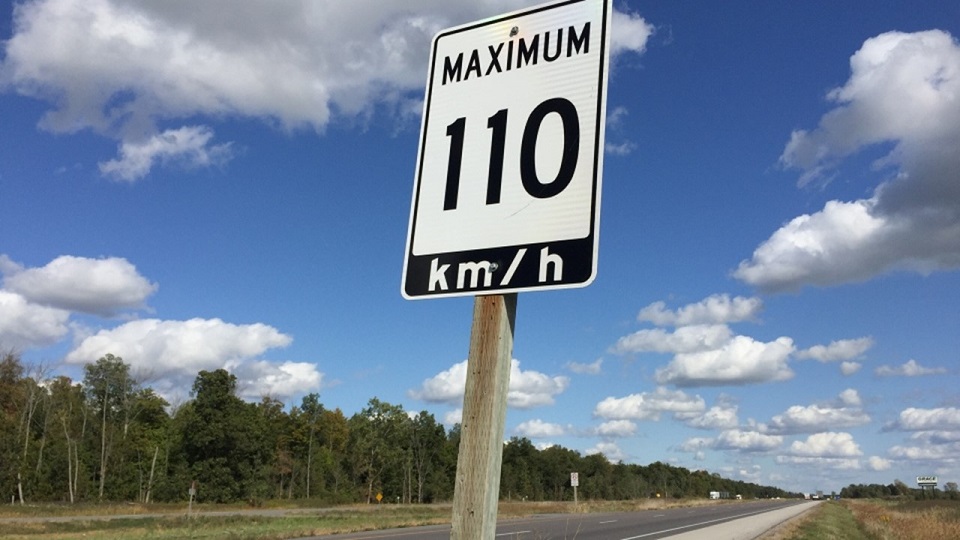
      I want to start with the sign that I think I like the most: speed signs. In Canada, these signs often show a maximum speed of 100km/h on the highway. I recently enjoyed a drive up to Yellowknife, Northwest Territories. While I enjoyed the trip, I did not enjoy one large section of highway that was limited to 90 Km/h. When we are fortunate to travel on divided highways, we are allowed to drive 110 km/h. I like travelling in the U.S. because often the speed limit is even higher.

      I like this sign because it is all about getting to where you want to go as fast as you can. This is not about taking a leisurely drive for no reason. The focus is on what is ahead. You don’t need your rearview mirror for this sign!

      One of the joys of my job is to help churches look ahead with clarity and purpose. Yes, we do take time to look at the past and understand the present, but we do this to clarify vision, and ultimately look at where we are headed and how best to get there. It is forward thinking and forward planning. We have a destination in mind and develop a map to get us there in the best way possible. No matter what speed you are travelling at, it is all about moving ahead.

      While we recognize the importance of brakes, we love using the gas pedal more. The goal is to keep moving forward as quickly as possible in order to get to the preferred future we have in mind.

      We set the destination. We map out the route. Maybe, if it is a longer trip, we even plan where we will stop for meals or gas, or even an overnight stay in a hotel or with friends. With a church, this means setting some short-term goals that will help us move along to the final destination, while giving us a way to measure progress along the way. If we trust God for 10 new believers this year, it is helpful to set some goals as to how we will help friends and family become new believers in Jesus first. We need to set some more immediate goals that will help us share Jesus with people regularly, praying along the way that some of those we share with will come to know Jesus.

      In our personal lives, these same reminders from speed signs might direct our thoughts to pursuing personal growth. Keep moving ahead looking for new experiences and new encounters with learning opportunities. Set personal goals that will move you in the right direction.

      In my own life, this forward momentum is evident in my love for learning. When I finished high school, I attended a Bible College. I wanted to learn what I could to become equipped for Christian ministry. I thought I would be involved in fulltime camp work or some kind of Christian education. Halfway through my Christian Education degree, God spoke through a few people and adjusted my destination to be pastoral ministry specifically. I added an extra year of education so I could get my Pastoral Degree as well. As I began ministry, I wanted to keep learning. I began taking courses at a seminary level. I was in no rush to complete the degree, wanting only to keep learning, so it took me over 20 years to get my Masters of Arts in Leadership and Ministry. Presently I am applying for the opportunity to pursue a Doctorate of Ministry.  I desire to keep moving forward, to keep growing as a person and as a pastor.

      Speed signs are about moving ahead at the highest speed allowed. I encourage you to consider where you have been going slower than you should. Maybe God is asking you to pick up the pace and keep moving forward to what is next. Trust God to guide you as you look to him for the right destination to pursue.

      And enjoy the journey!

      Keep looking up,

      Andy Wiebe

      P.S. Watch for next week’s Road Sign: Stop Sign

      Continually Collect More Tools of the Trade

      If you have ever worked on a car or built a deck, you know the value of a good tool. With the right tool the work becomes easier and you see better results. The same is true for a pastor. We benefit from having good tools to help us.

      Some of you may immediately think of tools like a good commentary or online study tools. These are great and we need those, but I’m thinking more along the lines of the ideas and questions we come across in our reading and study.

      Sermon Tools

      Over the years I have gathered many questions that I use regularly to help me better dig into the scripture I am preparing to preach. Referring to my pates of collected questions and processes has enhanced my sermon preparation. These are questions like:

      1. What does it say?
      2. What does it not say?
      3. Could it mean what it says?

      Sometimes I move through these three questions quickly, other times, if it is a difficult or controversial section of scripture, I tend to slow down and make sure these questions help clarify what God’s Word is truly saying.

      One question that I have found helpful to me, especially because I am usually preaching to a congregation of all ages is:

      4. “How will this sermon engage with a 12 – year – old boy?”

      I want to preach to everyone, but if I can get a pre-teen boy to be engaged, I will most likely I will engage with the rest of the congregation as well.

      Here are a sample of a few more questions:

      1. How does this speak to unbelievers?
      2. What is the audience’s thoughts, feelings, emotions, struggles, needs – relating to the big idea of this teaching segment or message?
      3. What are some practical steps the listener can take?

      One process I use is a diagram that helps me to move through a scripture passage in a way that moves my study from the text, to historical context, through the Biblical theology, to how it is fulfilled in Christ, and then to how we need to apply the scripture today. Following this process keeps me from taking a shortcut and miss an important step in clearly understanding what the scripture text is saying.

      Prayer Tools

      I have come across some great ideas for prayer, whether personal or corporate. In his book, The Hour that Changes the World, Dick Eastman suggests praying for an hour i12 periods of 5 minutes. I try to use this prayer plan about twice a week. The forms of prayer are: 1. Praise and worship 2. Waiting on the Lord 3. Confession 4. Praying scripture 5. Watching 6. Intercession 7. Petitions 8. Thanksgiving 9. Song 10. Meditation 11. Listening 12. Praise

      I have used this one-hour prayer plan many times for myself as well as for a prayer group.

      Pastoral Tools

      One of the “tools” I need to remind myself of occasionally is to “move slowly through the crowd.” It is easy for me to have things on my mind and things to do, but there is benefit of moving slowly through the crowd prior to or after the Sunday morning service because it gives me opportunities to connect with people, or for them to stop me with a question or comment. It helps me to be more present in the moment and available to people.

      I don’t know what tools you have gathered over the years that have helped equip you to improve your ministry and leadership, but I hope you have many. I would love to hear from you about the tools that help you. Send me an email to share some of your tools with me.

      Keep looking up,

      Andy Wiebe

      5 Ways to Personally Leverage Slow Seasons

      Most churches experience seasons in their ministry. There are times that are slow, times that are steady, and times that are extremely busy. Summer is often a slow season for many churches. The church I’m serving right now has Vacation Bible School at the beginning of July, and then only a monthly prayer meeting and Sunday morning services for the rest of July and August. How can we use the slow times in a beneficial way?

      1.  Slow down yourself.

      Maybe you can adjust your vacation time to have shorter days in the office and spend extra time with your family. Maybe you can take an extra day off to enjoy a long weekend doing something fun with your kids. Or just take some time to focus on a personal hobby. Allow yourself time to slow down a bit. I’m not sure that taking vacation in the summer is the best plan. Sometimes we need to save that break for in the middle or just after a busy season. Enjoy the time at home with your family without a bunch of commitments for you or them, to distract you from each other.

      2. Take a personal retreat.

        Maybe you can go camping by yourself or go to a local retreat center for a day or two to spend time with God. Talk with God about what has been happening in the last year and ask God for direction for what is next. I have benefited from even a half day retreat out of the office to just spend time with God.

        You might want to ask God to help you plan your next preaching year. Pray through what God is asking you to preach on. Start by choosing which books of the Bible to preach on, or consider if there is a topic that your church needs to address scripturally. Do a rough summary of the texts that you identify and how many sermons you might need to fully preach through the topic or book so you can start plotting them on a calendar for the year ahead. These opportunities to plan a preaching year have been of great benefit to me when I have been in the middle of busy seasons. It has been very helpful to have a plan in place already.

        3. Read a book or two.

        I have been greatly encouraged through reading good books. You probably have a list of books, maybe even a pile of books, that you have been meaning to read. This is the time. Or maybe there is a topic you would like to know more about. Maybe there are certain trends or cultural issues that are affecting your church and ministry.

        Look for a book that addresses that issue. Ask around for recommendations from others for a book that speaks to your church’s needs. I recently enjoyed some great books by Preston Sprinkle on issues of sexuality and gender.

        4. Connect with friends.

        Summer may be a time to connect with leaders or members in your church, but it may also be a time to connect with friends who are not involved your ministry. It may be a pastor down the road, or a friend in another part of the country. Good friends can be very encouraging and may be worth a trip to meet up with. Do a road trip with your family that includes the opportunity to connect face to face with your friend.

        5. Enjoy nature.

        Our slow time for many is summer. Summer is a great time to enjoy God’s creation. Go for a walk with your spouse. Go camping if that is your thing. Take a day trip to nearby waterfalls or into the mountains. Enjoy a picnic by a lake. Maybe catch a fish and fry it up for supper. Allow yourself to breathe some fresh air and slow down in God’s creation.

        We all have busy times. Sometimes we feel like we are running to just keep up. So take the time to slow down during the slow times. Your health will benefit, and so will your relationship with your spouse, with your family, and with God.

        Keep looking up,

        Andy Wiebe
        Four Suggestions for A Good New Start

        While beginning a new job is both exciting and overwhelming, it is important to take time in the midst of the busyness to identify your values in the new role. The duties of the job can quickly fill your schedule and begin to pull you in a direction you may not necessarily want to go.

        What is important to you that you do not want to ignore as the demands of your new position grow? What do you need to schedule now before your schedule fills up?

        1.  Get Your Family Settled

        When moving to a different community for your work, make sure you take adequate time to get your family settled. Unpack as quickly as you can so that your family can see familiar photos on the wall and fridge that help them feel somewhat at home.

        Help your family get settled in school and in other sports or community activities that will help them get connected to the community and to new friends. The more settled your family feels, the more settled you will feel.

        Schedule important family dates onto your calendar before the job demands overwhelm you and you forget special days. 

        2. Be Clear on Your Personal Priorities

          In the process of accepting a new role, you have an opportunity to review the job description that will define your responsibilities. But you most likely have some personal values or priorities that you hold. If you, as a new pastor, want to spend regular time in prayer, schedule it into your calendar. If you love mentoring others, you might already be looking for whom to mentor. If you want to keep on growing in your skills and personal development, you might want to determine a plan that will work in this new setting and will not interfere with the responsibilities you agree to when you accepted the position.

          Make sure you know the requirements of your new role. Begin to plan and dream and schedule dates as you look at what you need to work on.

          3. Begin New Friendships

          When you begin a new position in a church, there may not be a lot of demands on you at first as you begin to make your way into your new role. Because you do not have many projects to work on at first, focus on getting to know people. Get to know the people you will work closely with. Get to know your board. Get to know other staff. Get to know the leaders who volunteer in the ministries of the church. You can do this on your own, or if you have a spouse or family, meet together with couples and families.

          Good friendships will help your job to be an enjoyable experience.

          4. Develop a Schedule That Fits the New Role

          While your new job may be similar to what you have done before, each new role comes with various changes that affect how you fulfill your new role. Each new job comes with different expectations and different schedules. Because of the expectations of your new role, you may need to take a different day off than you have before. Maybe you are better off coming to work earlier and going home earlier in the afternoon as well. Figure out the schedule that will work for you now.

          It can be a lot of fun starting a new job. I believe you will have a better start if you can follow the suggestions above.

          Keep looking up,

          Andy Wiebe

          Preaching With Boldness

          All Scripture is God-breathed and is useful for teaching, rebuking, correcting and training in righteousness, so that the servant of God may be thoroughly equipped for every good work.

          2 Timothy 3: 16-17

          Recently, I began a sermon with this statement: “I am going to talk to you about something this morning, that is very hard for us.”

          I was preaching through 1 Peter. This morning we were looking at 1 Peter 2: 13 – 3: 7, which is all about submission. Not submission to God, but submitting to governing authorities, to masters, to husbands and wives. This is not a topic I would have chosen to preach about, except that it was in the middle of the book of the Bible that I was preaching through. Submitting to the government is not a popular topic among many church people, yet that was exactly what God’s Word was talking to us about in that scripture. Because it was God’s Word, and not my own ideas, I could preach it with confidence.

          If 2 Timothy 3: 16-17 above is right, then we know that there will be scriptures that rebuke and correct, not just encourage us or make us feel good. When the preacher makes sure to preach what God’s Word says, then the preacher can speak with confidence and boldness.

          I remember a person commenting after a sermon I preached that they thought I was brave to preach what I did. It actually surprised me a bit. I had preached on money, teaching what scripture said. I didn’t consider it brave. I was just preaching what God said, but this comment revealed the reality that there are certain scriptural truths that people do not want to hear. There will be people who are upset with you when you preach biblical sermons that challenge their personal beliefs, or even the beliefs and practices of their church.

          Scripture occasionally points out where we come up short and need to make corrections. As a preacher, I can preach boldly as long as I clearly say what scripture says. It is God’s Word. If the Bible says it, God says it. I should have no problem teaching it with confidence.

          At the same time, we need to preach with gentleness. When we teach about how God created people male and female, and only male and female with no other options, we can teach with gentleness in light of those who are personally struggling with this or have family who are.

          We can preach about money and giving to the church, but also recognize that some are struggling to make ends meet.

          We can preach on the importance of forgiveness even as we recognize that some people have been hurt deeply and personally in a way that is hard to move on from.

          God calls us preachers to preach the whole truth of His Word. We cannot pick and choose only the things that people want to hear. This is one of the benefits of preaching through a book of the Bible. We come across passages that we might not have chosen to preach about.

          If we are careful to preach what scripture says we can preach with confidence. We don’t need to be embarrassed to preach counter-cultural truths. We don’t need to be afraid that people won’t want to hear what the scripture says.

          If we are preaching something that scripture never said, then we better hesitate to say it. Yet we can preach with confidence when we know that we are saying what God said. Let’s continue to declare God’s truth with clarity and confidence.

          Keep looking up,

          Andy Wiebe

          The Privilege of Being a Pastor #1: My Personal Joys!

          I have enjoyed and still do, this wonderful role of being a pastor serving a local church. I want to share a few posts about the privilege of being in this role. Some will be more practical, others more spiritual, but I hope these couple of posts encourage pastors or potential pastors.

          As I work with churches during their transition times from one lead pastor to the next, I am very aware that there are not as many people out there looking to serve a local church as there used to be. Less young people are pursuing a role as pastor, and many pastors are leaving the position.

          While there have been some very difficult times in my pastoring career, overall, it has been a good life for me and my family.

          1. I have received respect and love as the person in this role.

              Some pastors no longer want to be called by the title of “Pastor,” yet there are still many churches and members out there who respect the role and want to honour you in it. For them, it is a term or respect for your calling and you as a person. People value your input into their lives because they see you as a professional called by God to serve as their leader and teacher.

              2. I have experienced kindness from church and community members because of my role.

                My family has experienced many acts of kindness from our different churches. One church asked for a specific Christmas list for my wife and I and our two daughters. Because they asked, we gave them a list with options. They didn’t choose, they got us everything! Others have given us financial love offerings at Christmas.

                People want to pay for my lunch. Just the other day, a member walked past my table in a restaurant as I was finishing my lunch and grabbed the bill the waitress had left on the table. And I hardly know him! I recognized him but don’t remember his name because I haven’t spent any time with him yet.

                We have been blessed with many gifts, including a grocery shower, a side of beef, a portion of a pig someone just butchered, and all kinds of garden produce. Many people have invited us to their home to share a meal with them.

                3. The role has given me freedom.

                The flexibility of my schedule has allowed me to coach my daughter’s soccer team. Most men couldn’t take time off work to coach a 3:30 pm practice or game, but I could.

                4. I have travelled, often with expenses paid.

                I know not everyone gets to experience this, but I have been able to travel a bit because of my role as a pastor. When I was a Youth Pastor, I got to go to the Philippines to scout out a possible missions opportunity for my youth. I was asked to officiate a destination wedding in Mexico for my niece, at no cost to me. I worked with a few other pastors to establish a Rural Church Pastors Network. As the leaders, we had an opportunity to go to North Carolina to check out a rural ministry program that ran out of Duke University serving United Methodist churches. Again, no cost to me.

                I have attended many Pastors Retreats with our denomination in Banff and Lake Louise! What a privilege to enjoy retreats in these great settings.

                5. Working with my wife is a joy.

                As a pastor, I have had many opportunities to work together with my wife as we have served churches. Lynnette and I have been able to work together in ministry in ways that many other jobs do not allow. We have worked on projects for the church together, led many worship services together, and enjoyed many visits with church members together as a team.

                The joys of pastoral ministry have outweighed the difficulties. God has given me wonderful opportunities to serve him and an enjoyable life in the process. If you are considering pastoral ministry, realize that it can give you great joy.

                Keep looking up,

                Andy Wiebe

                Fruitful Leadership #7: Faithfulness

                As we continue to work our way through Galatians 5: 22-23, we come to “faithfulness.”

                Faithfulness is seen in the character of God. God does not relinquish his promises. He does not change who he is. He is consistent and trustworthy and true to who he has always been. As a Christian leader, we want to reflect this characteristic of God in all our dealings with others.

                Faithfulness, like some of the other fruits of the Spirit, is only evident over time. God’s faithfulness is clearly observed as we look at the bible and his consistent way of dealing with people over thousands of years. No one observes us for thousands or hundreds of years, yet they do see the consistency of our character as we work alongside them day in and day out, week after week.

                A Christian leader who is living out the fruit of faithfulness is trustworthy. What he says and does will be the same. When he says something, he doesn’t have to add, “I promise.” His team and the people he is leading know that what he says is what he will do. His word holds value.

                His message will not continually change. I heard of one pastor who frustrated his church and his staff because he was always pursuing a new direction. There was not one consistent message or vision to the church. He would never have thought he was untrustworthy, yet those who were supposed to follow his leadership were confused and frustrated because what was expected of them changed continually. A faithful leader will be careful to hear from God and then lead in the direction they believe God is leading rather than grabbing hold of every new and exciting idea that comes along.

                Sometimes people question another’s motives, wondering if they are making commitments in “good faith.” To act in good faith is to act with honest intentions. This is to make decisions carefully based on available information. To be well-intentioned. This is faithfulness in action. This is to act in with such integrity that no one will be suspicious of a person’s motives.

                A faithful leader is one that others trust and confide in. Those you lead should know that when they share concerns with you, you will not share that with anyone else. You are one who can be trusted.

                As we allow the Holy Spirit to produce his fruit in us, his influence will be evident in directing and guiding our actions and words and even feelings towards others. As we continue to submit to the Holy Spirit’s influence on our lives we will become a faithful leader. This is a reminder again, that a Christian leader needs to be in continual communication with the Spirit. While some can work hard to be faithful leaders, the fruit of faithfulness can only be ours as a gift of God and a work of the Holy Spirit.

                In practical terms, faithfulness in a leader will be seen in how they lead with consistency and trustworthiness. The leader will not change expectations all the time and lead with a steady direction.

                Faithfulness is seen in a leader who does not expect more of his team than he puts in. It is seen in their care for those under their leadership. It will be evident over time that this leader is one who can be trusted, and people want to follow.

                May you be filled with the Spirit and then live out the fruit of faithfulness as you lead your team and those you serve.

                Keep looking up,

                Andy Wiebe

                Fruitful Leadership #4: Patience

                This is the fourth blog in a series about leading with the fruit of the Spirit. The fourth fruit listed in Galatians 5: 22 is patience. A few versions use “forbearance” or “longsuffering,” but patience is the word we would most likely use today.

                There is an old joke about praying to God, “God, give me patience, and give it to me now.” Patience takes time. Patience is needed when there is an ongoing situation that requires waiting or enduring. No one needs patience for something that happens in the moment.

                Patience is the ability to wait, or to continue doing something despite difficulties, or to suffer without complaining or becoming annoyed (Cambridge Dictionary).

                So first, to demonstrate a character of patience, we need to learn to wait. As Christians, there are many times where, by faith, we wait for God to act. This is often the case when we have a need we have prayed about for a long period of time, and we trust in God and know that He will act in His timing and according to His will. So we wait. I had to do this for a couple of years. I had concluded my time at a church and was waiting for the next pastoral position to open up for me. And it was not happening. As I sent out resumes and prayed and waited – sometimes very impatiently – I sensed God was telling me to wait because He was setting up a new opportunity for me. Some days I felt very patient, others I did not. It took about three years for me to finally see this new opportunity that God was preparing for me. In the waiting, I kept doing what I could to be faithful and wait. Waiting takes patience. Patience means waiting.

                An example of patience is found in the story of Abraham and Sarah. God had promised them a son, yet they had no children. No son was born. They waited for years and years. Abraham was 100 years old when Sarah finally gave birth to the son God had promised. Patience takes time.

                Patience is also visible in a person when they are continuing to persevere despite difficulties. There are times when we, as Christian leaders, believe God is calling us to move the church or organization in a certain direction and not everyone agrees. Patience may mean continuing to push ahead slowly and steadily even though there is opposition. A Christian leader may see the need to be patient as they look to pursue a vision God has given them, yet they do not see it becoming a reality yet. Patience is pushing ahead even when facing opposition.

                There are times when Christian leaders see the frustrating situations around them and would much rather complain and show their annoyance, yet as we allow the Spirit to encourage us, we can respond in a joyful and peaceful manner. Combining joy and peace with the act of patience will make the waiting experience more enjoyable.

                Patience is called a fruit of the Spirit. This means we will produce this fruit more naturally if we continue to depend on the Holy Spirit than if we think it depends on our determination alone. We can bring all our concerns to God in prayer, and then depend on Him to give us patience when we would rather give up or respond with criticism and frustration.

                May God give you patience as you continue to trust in Him.

                Keep looking up,

                Andy Wiebe