Pastors Are Staying Longer

Pastors seem to be staying at one church for a longer time than in the past. I have seen a few pastors who resigned recently after 13 or 15 years at the same church. How did they do it?

Let me share a few of my observations. Some, or all, or none, of the following may be at play in longer pastoral stays.

1. The Strong Leader

Leadership has been one of the main issues pastors have been told they need to work on to have a great ministry. There are many books and seminars and podcasts dedicated to pastoral leadership. Well, some pastors are great leaders. The congregation loves the pastor because they see how the pastor always leads with a strong vision and clear direction. The congregation see the results of new people, maybe their own children, coming to Christ and being baptized under the leadership of these pastors. The leadership board enjoys having a leader who guides them as a board.

This type of pastor appeals to a congregation that loves to do the work of the Kingdom. They flourish because the leader equips them and inspires them to move toward one direction together. This pastor understands the congregation and builds ministries on the gifts and skills and passions of those present.

The strong leader addresses issues as soon as they arise and deals with them swiftly. If there are relationships that are struggling, he will do his best to fix them immediately. If there are ministries that are having issues he steps in to resolve them as efficiently as possible.

This pastor will most likely be a “projects person.” He is great at setting up the right ministries so that the care for people is done in the ministries and programs of the church rather than through his own relationships with everyone.

2. The Strong Shepherd

Pastors do not need to have abundant leadership skills to stay long term in one church. I’ve seen some who remain at a church for years because they love people. They care for those in the congregation. They are at the hospital bed of everyone who ends up in the hospital. They might even remember everyone’s birthday and call them or take the out for coffee to celebrate. I remember a pastor with this gifting who remembered everybody’s name from the first time they attended as new-comers.

This pastor may not start new ministries but is faithful to continue to maintain the ministries that are already going. This pastor may not have strong preaching abilities, but the congregation senses his love for them whenever he preaches.

This pastor will generally be a “people person.” His ministry is all about loving and caring for people.

3. Be a Strong Adapter

I am presently doing transition ministry in one church that just said goodbye to a pastor who was there for about 13 years. As we have gone through the transition process, I have heard comments from people that the previous pastor was not the same at the end as he was at the beginning of his ministry. He changed and adapted, and it was a good thing.

Adapting happens for a few reasons.

a. The pastor grows up: If you are a new pastor just out of Bible College, you are likely young, and probably inexperienced. Some young pastors may have been very involved in their church growing up, or grew up in a pastor’s family and so have some experience of how church works. Others come to this role with little church experience at all.

If you are a young pastor, you may be able to have a long ministry at one church if you keep on growing. Keep on taking courses. Attend seminars. Read books. You might want to focus in on a certain aspect of the pastoral role that excites you, but keep learning. Find an older pastor nearby who will mentor you and whom you can bounce ideas off of. Make use of denominational leaders and coaches to help you. Be willing to listen to your leadership team. They have probably been in that church longer than you.

b. The church grows: If you are part of a church that is growing, the dynamics of church ministry will shift over time. When you have 60 people, you will know everyone. When you have 120 people, you may have to work much harder to get to know the newer people. You may need to add more small groups and add more leaders, so your role in equipping leaders may expand. If you grow to the point of hiring staff, you will again have to adapt as you are now leading a team, even if it is just two of you. You are now handing off some responsibilities to another pastor and trusting them to lead their areas well.

If you are in a growing church, make sure you keep learning. Go to seminars, take courses, and read lots. Look for someone who has experience pastoring a church that is growing and ask them to help you adapt well. Learn to increase your leadership team. Work closely with new staff. You may need to establish another level of leadership to look after different departments in the church.

If it is your goal to be a pastor who stays a long time in one church, then be the best you that you can be. If you are gifted as a leader, lead well. If your primary gifts are in the area of shepherding, then shepherd your congregation well. When you are in a church that is growing, figure out how to adapt where you can and gather a team around you to compliment and balance out your own gifts and skills. Usually both the pastor and the church benefit from a pastor staying for a longer period.

Keep looking up,

Andy Wiebe

Always Become Better!

Our education system helps us to figure out if we are continuing to learn and develop. If you are faithfully doing your homework and finishing your assignments, you should be learning what the curriculum has laid out for you in each grade in school, or each year of college or university. Every year you should ideally pass a level and move up to the next grade. When you enter college, there are a number of classes you must take as prerequisites to classes offered in the next year or two. You can track how well you are doing by what grade you are in, or what courses you have completed toward the degree you are pursuing. When we leave school, it is not as easy to see if we are still learning.

When you complete your degree, you hope to step into a career that uses your training. As you begin at a new place of employment, you are taught what is expected of you at that job. Sometimes there are opportunities to advance in your career so you feel like you are continuing to grow and develop.

Eventually even in your job, there are not more steps to advance to. You may not even be expected to do any further learning. You know what the job is, and have proven you are capable of doing it. You do not need to keep learning.

This is where some people become stagnant. They have reached a certain level in their job or their career and they are content. The problem is, no one plateaus in their life for long. Either you keep learning and growing and making yourself better in some way, or you start to fall off, and fall behind as the world keeps on changing and developing.

I have been a pastor most of my life. While I have done a few other things for an income, this has been what I have given my life to. And I have chosen to keep on growing. I love to read. If you have noticed my book reviews on this blog you will know that is true. I like to read a variety of things. Sometimes I focus on a certain subject for a while, but I love to learn and to grow and develop. As a pastor, I need to learn how to use technology.  I started out by writing my sermons by hand, no I always use my computer. Along the way I learned how to use PowerPoint to add slides to my sermons. I spent a number of years pursuing a Masters (It took a period of over 20 years from the first course I took towards my Masters degree until I completed the last one and graduated!) I was not as concerned about accomplishing the degree as I was about continuing to regularly keep on learning. I enjoyed taking time to implement what I was learning.

We should want to always become better. Whatever skill or ability or gift you may have, keep learning how to develop it further. If you are a good preacher, continue to learn from others who are better, or who may do it slightly differently. If you are good at leading meetings, keep reading new books or go to seminars on how to lead them even better. If you are a good counselor, continue to learn and find new techniques to try out.

It may be that you realize you are about average in a number of areas in what you are skilled at. You might want to choose one or two to become good at, or even one area where you excel.

I have found one of the ways of continuing to get better is to teach others. If you think you are pretty good at something, then see if there are opportunities for you to teach others. When you teach, you have to figure out what you actually do, how you do it, and why what you do or the way you do it is the best way. This forces you to not just do something you are naturally good at, but evaluate it and figure out what valuable lessons you can pass on to others.

David Sanders, a cellist in the Chicago Symphony was describing how many hours of practice it takes to get to and maintain such a high level of competency. “You cannot rest on your laurels in the Chicago Symphony, or in any world-class orchestra. You never want to let your colleagues down, yourself down, or, maybe more importantly, the music down. Now in my 42nd year, I still don’t want to let my colleagues, myself or the music down. It is a never-ending struggle to continually try to master a musical instrument, to keep improving, be it string, wind, brass, or percussion.” (A CHICAGO CELLIST EXPLAINS: WHY WE WORK ONLY 20 HOURS A WEEK)

If you want to be your best, you need to continue to work at your craft. You have to continue to learn and practice and develop. The person who is continuing to develop and grow will be sought after in their field of expertise. And I would venture to say, will be much more interesting than the person who has not learned anything new for the last couple of years. This is not necessarily about “moving up the ladder”, but about being the best you can be where you are at.

Always become better at what you are good at and what you are equipped to do. You will enjoy life more than those who have become stagnant. You won’t be left behind as those younger and more skilled start to catch up to you.

As a pastor, if you keep on learning and growing and developing, you will be more attractive to churches looking for someone relevant to the world around them who also comes with years of experience. Continue to become better, for yourself, and for long-term ongoing employment.

Always become better.

Keep looking up,

Andy

Book Reviews: Andy’s 2022 Reading Experience.

I will be sharing a brief review of every book I read this year. I hope you enjoy and hope it encourages you to keep reading too.


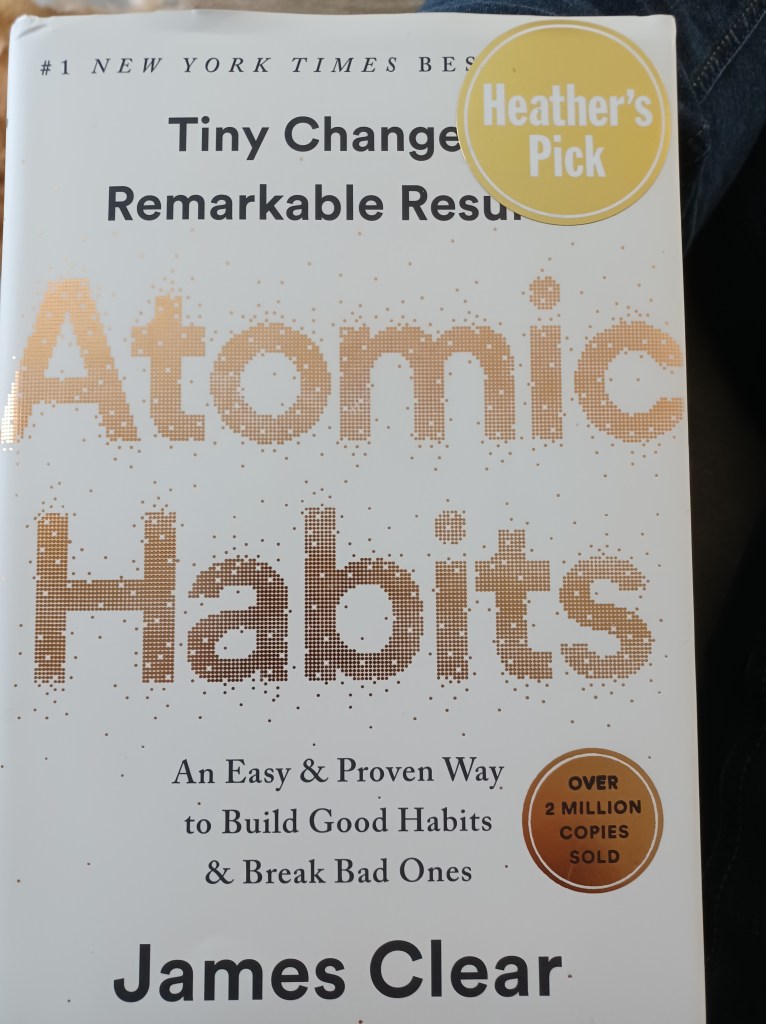
ATOMIC HABITS – by James Clear

James Clear has written a well-researched and scientifically backed book on how small habits can lead to big changes. By “Atomic” he means small, like atoms. Small changes can have great affect over time. The book breaks down how habits are formed and how new ones can be created or old ones overcome. James gives a number of examples that help to make sense of what he is teaching.

I especially like how he ties our habits to our identity. Deciding it would be good if I would run occasionally is very different than calling yourself a runner. If you are a runner, then you run. If you are trying to make a habit of running because I need to lose weight you will not have the same impetus as if you were identifying as a runner in the first place.

Want to overcome bad habits? Want to start new beneficial ones? Then this book will be a great help!!

Keep reading

Andy

Who Do You Want to Become?

Who are you? I mean, if friends were to describe you, what words and phrases would they mention?

As we transition into a new year, we are often asked about our resolutions. I prefer setting goals rather than making resolutions.

Some of us might want to rethink goals just a bit. I tend to set goals to accomplish something. For example, I want to read the whole Bible this year, using the Chronological reading plan that puts things in the order they probably happened. I also want to finish writing a book. But should I be setting some different goals?

How about goals that affect who we are? Should we be setting some goals in areas that would impact who we are, what our personality is, or how we face life?

If you want to be seen as a generous person, you could make your goal to be more generous this year. However, vague goals like that are less effective than those with more specific or concrete descriptors. Maybe we could write a list of what a “generous person” is like or what they do and how they interact with others. Perhaps you view generosity as being freer with your resources and time, for example, such as lending your tools or giving food to the food bank. Or your focus could be on buying meaningful things for people you care about or inviting more people to your home for a meal. You could do some research and find a worthwhile cause to support, financially or by volunteering, being generous with money and generous with your time. You might choose to lend your books to a friend after you read them. It’s your goal, so make it yours. You could consider reading some books or taking a course on generosity.

If being generous doesn’t resonate with you, consider a few other character goals. Think about your own life and moments of personal frustration or struggle to identify where you might want to focus your personal growth.

1. Do you want to be more forgiving? You realize you are quick to judge, quick to get angry and offended, and slow to forgive. You want to forgive more freely. Then set a character goal of becoming more forgiving.

2. You might desire to be more patient. You struggle with having to wait for anything. You could set a goal to deliberately always take the longest line in the grocery store, or when buying gas. You could find ways of thinking about other things while waiting. You could memorize scripture…so every time you wait in line you bring up the verses you are learning and go over them. Now the slow line becomes productive for you, and you are being more patient.

3. Would you like to be more creative? You could read books and take courses. You could find ways of trying new things that require creativity. Maybe you schedule in some “day-dreaming” into your day so that you can focus on your creativity.

4. Maybe you want to be more at peace and worry less. You could memorize scripture verses on not worrying. You could pray, even ask others to pray with you, that God would help you have peace in your life.

5. Maybe you want to be more considerate of other people. This is one I have to work on. I have set a goal for me to connect with at least two people who are not in my immediate family or part of the church. Personally, I want to text or visit or connect in a meaningful way with others that are outside of my immediate thought process. These are people I care about, but they may not realize it because I rarely connect with them.

I’m sure that if you ask yourself: “What is one area in my life where I would like to improve?” you will quickly come up with an answer.

Now, before we leave this, I want to suggest that some of these self-improvement goals may need some outside help. Maybe you connect with a coach, or book a few sessions with a counselor. Maybe you meet with your pastor, or a good friend. And you ask for others to speak into your life and help you think of how to improve in your area you want to grow in.

I’m thinking that a number of us probably have people in our life who are really good at the area we want to improve. At least for me, my lack shows up when I see others who are doing so well in this area. My wife is one who is great at noticing others and connecting and loving – and that is why I recognize I have some improving to do. Take time to talk with those in your life who exemplify the area you want to work on. Maybe you are doing well in an area they want to work on and you can help each other.

I encourage you to set some risk-taking goals for the year: tasks to complete as well as areas of personal character growth. Put a plan into place, to learn and grow in these areas.

I wish you all the best for 2022. May it be a life-changing year for you!!

Keep looking up!

Andy

Book Reviews: Andy’s 2022 Reading Experience

I will be sharing a brief review of every book I read this year. Hope you enjoy and hope it encourages you to keep reading.


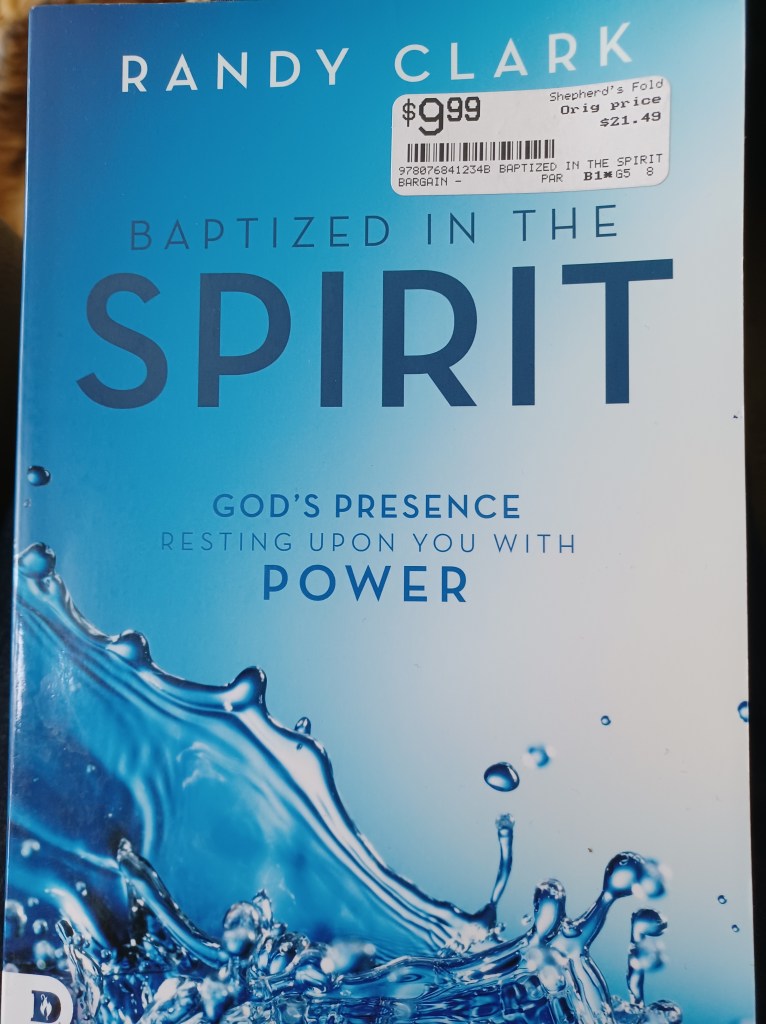
BAPTIZED IN THE SPIRIT – by Randy Clark

I enjoyed this book for a couple of reasons:

  1. I am growing and learning in my relationship with the Holy Spirit and this book brought some goo foundations to that learning.
  2. Randy Clark does a good job of explaining the historical understandings of different denominations and theological traditions.
  3. Randy does a great job walking through the many historical revivals where the Spirit showed up in power – with similar displays of God’s power as many are experiencing today when the Spirit shows up.

If you are looking to grow in knowledge and experience of the power of the Holy Spirit in your life, this book is a great foundation to that. It helps you to see that some of the unusual experiences of recent revivals are not that unusual when compared to previous outbreaks of the Spirit. And it helps give a balanced understanding of what we might expect if we are filled or baptized with the Spirit.

This book leaves you longing for more of the Spirit – His presence and His power.