Unravelling the Tangled Mess

When I was a kid, I loved flying my kite. I remember one windy summer day in the field just down from our house, releasing my kite into the sky. It was a thrill to feel the pull of the wind on the spool of string as the kite dove back and forth. I let out more string, and more string. The kite grew smaller as the string rolled off the spool until… oh no! The string was not tied to the spool in my hand! I had let the string reel out and suddenly the string was all gone – the kite was no longer tethered to the spool in my hand! I panicked! I scrambled after the kite, desperately trying to grab the string. After a few frantic attempts I managed to snag the string. In my panic I hauled the string in, not rolling it up neatly on its spool, but gathering it in a tangled pile at my feet until I had the kite back in my hands. I never managed to untangle that pile of string again.

Sometimes, in an attempt to control our busy lives, it seems we end up with a tangled mess of roles and responsibilities at our feet. We do everything we are supposed to do or have signed up for, but we desperately try to untangle the mess and get a sense of control back. Each of us needs to manage various roles in work and life.

Recently I felt like my life was resembling that pile of tangled string. I had some family issues that took precedence over all my other responsibilities. Everything else got put on the shelf for a week or so. I focused on the one thing that was most important in the moment. After that week, I recognized I had some untangling to do.

I needed to figure out which strings to pull to start unravelling the mess. I had to take out a calendar and plot out my responsibilities to make sure I was working on the right things at the right time. We can’t work on everything at once. No matter how many responsibilities we think we can handle, we can only work on one at a time. I had to break down my responsibilities into manageable periods and schedule them on my calendar. I had to plot when I would focus on my transitional pastor responsibilities. I needed to chart when I would work on my transitional coaching duties. I needed to clearly schedule when to work on my doctorate work. I needed to schedule some family responsibilities. It took some work to sort it all out, but the end result was a plan that gave me peace. I could see my way through.

Whatever is in your tangled mess of string, you can find your way through. Ask God to help you sort it out. And ask God to give you the time you need to accomplish what is on your plate. I know from experience, that God can enable you to work faster or to somehow stretch your time to do all He is asking of you. He will help you sort it out. Don’t panic or give up. Sort it out and begin working on one responsibility at a time.

Carve out a time of retreat. Even a hour or so away from everything may give you the necessary time to evaluate your priorities and determine what you need to focus on and in what order. Then after the retreat you can advance with a plan.

We all have numerous responsibilities. Sometimes they pile up and its hard to know where to start in addressing all the needs, but with God’s help you can do it.

Keep looking up,

Andy Wiebe

Book Reviews: Andy’s 2024 Reading Experience

I will be sharing a brief review of every book I read this year. Hope you enjoy and hope it encourages you to keep reading.


HOPECASTING: Finding, Keeping and Sharing the Things Unseen – by Mark Oestreicher

As the title states, the book is about hope. Mark Oestreicher defines hope as: “Hope is faithful confidence that God continues to author a story that moves us from vision to action.” (p. 24) His belief is that hope is not something we work hard to get, but we can only have it as God gives it to us as we spend time with him. He describes a number of enemies of hope, each a distraction that takes our eyes off of hope to other things. I like how he shows that our role is to be Hope carriers to the world around us, already giving them a glimpse of the kingdom of heaven.

Are you in need of some hope? This is the book for you.

Fruitful Leadership #4: Patience

This is the fourth blog in a series about leading with the fruit of the Spirit. The fourth fruit listed in Galatians 5: 22 is patience. A few versions use “forbearance” or “longsuffering,” but patience is the word we would most likely use today.

There is an old joke about praying to God, “God, give me patience, and give it to me now.” Patience takes time. Patience is needed when there is an ongoing situation that requires waiting or enduring. No one needs patience for something that happens in the moment.

Patience is the ability to wait, or to continue doing something despite difficulties, or to suffer without complaining or becoming annoyed (Cambridge Dictionary).

So first, to demonstrate a character of patience, we need to learn to wait. As Christians, there are many times where, by faith, we wait for God to act. This is often the case when we have a need we have prayed about for a long period of time, and we trust in God and know that He will act in His timing and according to His will. So we wait. I had to do this for a couple of years. I had concluded my time at a church and was waiting for the next pastoral position to open up for me. And it was not happening. As I sent out resumes and prayed and waited – sometimes very impatiently – I sensed God was telling me to wait because He was setting up a new opportunity for me. Some days I felt very patient, others I did not. It took about three years for me to finally see this new opportunity that God was preparing for me. In the waiting, I kept doing what I could to be faithful and wait. Waiting takes patience. Patience means waiting.

An example of patience is found in the story of Abraham and Sarah. God had promised them a son, yet they had no children. No son was born. They waited for years and years. Abraham was 100 years old when Sarah finally gave birth to the son God had promised. Patience takes time.

Patience is also visible in a person when they are continuing to persevere despite difficulties. There are times when we, as Christian leaders, believe God is calling us to move the church or organization in a certain direction and not everyone agrees. Patience may mean continuing to push ahead slowly and steadily even though there is opposition. A Christian leader may see the need to be patient as they look to pursue a vision God has given them, yet they do not see it becoming a reality yet. Patience is pushing ahead even when facing opposition.

There are times when Christian leaders see the frustrating situations around them and would much rather complain and show their annoyance, yet as we allow the Spirit to encourage us, we can respond in a joyful and peaceful manner. Combining joy and peace with the act of patience will make the waiting experience more enjoyable.

Patience is called a fruit of the Spirit. This means we will produce this fruit more naturally if we continue to depend on the Holy Spirit than if we think it depends on our determination alone. We can bring all our concerns to God in prayer, and then depend on Him to give us patience when we would rather give up or respond with criticism and frustration.

May God give you patience as you continue to trust in Him.

Keep looking up,

Andy Wiebe

Fruitful Leadership #3: Peace

Peace is not a common commodity in our world today. There are conflicts between countries, in business, in families, and in our workplaces.

When I think of a picture of peace, I remember the lake at the camp I spent a number of summers at. It was a fairly large lake, so it was a rare morning where the lake was completely calm. Yet once in awhile, the winds died down completely and turned the surface of the lake into a sheet of glace. Not a ripple to ruin the effect.

It’s a rare day when the wind isn’t blowing in our lives. It’s not easy to experience complete peace.

As a Christian leader who wants to allow the Holy Spirit to work in and through us, we do want to bear the fruit of the Spirit as described in Galatians 5: 22 . We want peace.

Yes, we want peace in our workplace. I’m primarily thinking of peace as the absence of conflict in the workplace. We want peace on our teams as they work together. We recognize the need to not let conflict simmer but to address it and work through it before it boils over.

Peace takes constant monitoring of the situations we are in. It takes discernment to know when something is eating away at peace and needs to be resolved. But if you are a leader who desires a peaceful workplace you will need to ensure you are at peace inside first.

Peace begins inside you – if you don’t have peace, you will have a hard time being peaceful in your relationships. Peace begins with a relationship with the Prince of Peace. We want Jesus to continue to help shape us to become like Himself. And we invite the Holy Spirit to work in our lives to make us more Christ-like. We need to pray that God will help us forgive others and not continue to carry personal hurts. We need God to fill us with His peace. Knowing that we are right with our creator, the God of the Universe, is a great place to start with peace.

To live out peace as a leader, we need to be at peace with our relationships at home. If we are in conflict in one area of our life, it is bound to create cracks in our peace with others. We cannot separate our private life from our public life. Keep short accounts at home before you even step into your leadership role. Peace is evident in harmonious relationships.

It is in the heat of the moment that what is inside comes out. When that mistake is made, or someone falls short of your expectations – what is your first response? If it is anger and shouting and judgement – you may need to work on peace in yourself first. Peace begins in us.

Peace has to be worked for. There are times when our Canadian troops have been sent into countries where there has been conflict, and they are called Peacekeepers. Jesus asks us to be peacemakers and says, “Blessed are the peacemakers, for they will be called children of God.” (Matthew 5:9) As Christian leaders, we need to be people of peace. This spiritual fruit should be produced continually in our lives in our relationships and in our leadership.

Peace may cost us something. There may be times where we need to apologize and make things right. There may be times where we will need to address issues with those on our team that won’t make us popular. Peace means addressing the issues that are causing conflict. Those in conflict may not always want to resolve that conflict. As leaders, we can ask God to give us great wisdom in how we lead through conflict and bring peace.

But let’s remember, peace, as a spiritual fruit, can only be produced in our lives as we continually are at peace with our God. If this is fruit of the Spirit, then we need to surrender to the Spirit’s work in our lives. And then we will bear the fruit of peace.

May you experience peace and excel at peacemaking!

Keep looking up,

Andy Wiebe

Half a Century of God’s Faithfulness!!

I just realized the other day that I have been a follower of Jesus for 50 years – and God has sure proven His faithfulness! I was about seven years old when my dad prayed with me, and I surrendered my life to Jesus. Next month I turn 57. And God has never failed me over all those years. I have experienced what Deuteronomy 7:9 declares, “Know therefore that the Lord your God is God; he is the faithful God.”

God has proven his faithfulness in always being there for me, in good times and bad. He has been there when I was so disappointed in Him that I deliberately tried to ignore Him for a period of time. I was frustrated how my life was going and began to wonder if God would ever intervene. That attempt to give God the cold shoulder didn’t last for too many days, because no matter what, God has always been there. He was never far from me. Romans 3:3-4 declares God’s faithfulness even when we are not. “What if some were unfaithful? Will their unfaithfulness nullify God’s faithfulness? Not at all!” And God has shown His faithfulness as I have learned to get to know Him better over the years. When I think back to the simple faith of seven-year-old me and the way God has proven His love in ever deepening ways, I am so thankful that faithfulness is one of God’s attributes!

I have experienced God’s faithfulness in his forgiveness. As scripture declares in Romans 5: 8, “But God demonstrates his own love for us in this: While we were still sinners, Christ died for us.” He loved me while I was a sinner, and he loves me as I continue to struggle with sin. And like the patriarchs of the Old Testament, God has used me in meaningful ways even as I fall short of His best for me. God working in and through me has allowed us to be part of some unique experiences like helping a church grow in a school and then move into its own building, and putting on Easter events for the community that drew three times as many people as we usually saw on a Sunday.

God has been faithful in giving me a great family! I have a beautiful wife, who is clearly a gift from God. We have two beautiful and competent daughters! Again, clearly gifts from God! And He has helped us through many difficult things. We have had family health scares but known God’s peace in those as He walked with us. We have had times of financial strain, without a house, without a job, and unsure about what was next. God arranged for a job that provided us with enough finances to buy a house after two years. We have experienced answers to prayer, from finding skates for a great deal to healing when we needed it.

The faithfulness of God is evident as I look back over the years to how God directed us to certain churches and communities to live and serve in for awhile. While there were a few disappointments along the way, it was clear that God directed us to the places where we could fit and serve Him well. He has given us many great memories from the different places we served.

God loves people. He loves to welcome them into His family. And He loves to walk with them for the rest of their lives! I have experienced that in many personal ways. It is so good to never have to worry if He will still love us if we do something wrong, or if He might ignore us or no longer respond in love. “Know therefore that the Lord your God is God; he is the faithful God.”

Keep looking up,

Andy

Church Leadership Series: Part 7: A Leader Must Manage His Family Well

He must manage his own family well, having children who respect and obey him. For if a man cannot manage his own household, how can he take care of God’s church?

1 Timothy 3: 4,5 (NLT)

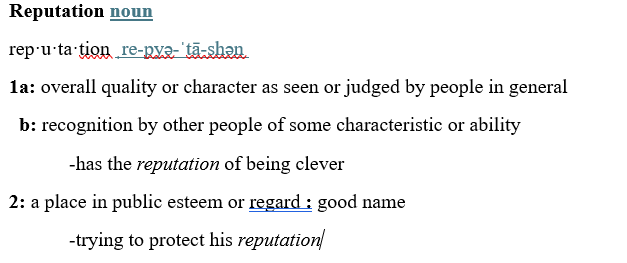
his children must be believers who don’t have a reputation for being wild or rebellious. 

 Titus 1: 6 (NLT)

I wonder how many leaders love the idea of leading people as long as it doesn’t intrude on their own personal life. The reality is, when we are leaders, we are still parents and children and siblings.  We have responsibilities at home that affect how we lead and how we lead affects how we handle our responsibilities at home.

A Christian leader must manage his own family well. After all, if you can’t manage your household, how can you be expected to manage the church organization you lead? How you do with your responsibilities at home portrays how you will likely manage others.

Look at Ephesians 6:4: “Fathers, do not exasperate your children; instead, bring them up in the training and instruction of the Lord.” Parents, especially fathers, are entrusted with the training and instruction of their children. Church leader, you need to be able to manage your family well.

In 1 Timothy the leader is described as “having children who respect and obey him.” Titus says, “his children must be believers who don’t have a reputation for being wild or rebellious.” I know of Christian leaders who have stepped out of leadership positions because of children who were not obeying them. They felt that if they were not able to manage their family, they should not be in church leadership. I respect that decision as long as there is then an effort to rebuild a relationship with a rebellious child.

There is an expectation that a Christian leader will have a good relationship with his children so the children will willingly respect and obey him. This tells us things about both the leader and their child. This implies that the leader has taken time at home to ensure there is a relationship with the child. Some Christian leaders are “absent fathers” because they spend so much time away from home, or even focused on their leadership responsibilities, that they have not cultivated a loving and caring relationship with their children! A child’s obedience can be an indicator the leader has not parented well, but this is not always the case. It could be that the child is struggling in some other way or is determined to do their own thing, no matter what. If so, then maybe the leader needs to step away from some leadership roles to spend more time with this child.

A leader should not have a “wild and rebellious child” but children who are believers. The leader should take time raising their children to ensure that they came to know Jesus, or at least had every opportunity to do so. Do we really want leaders in the church who have not taken the time to ensure their own children have given their lives to Jesus and accepted Him as their Savior?

Some Christian parents seem to think their role is to make sure their children get to Sunday School and VBS and youth group at church. They may enroll them in a Christian school. Their idea of Christian training is to expect the church to do it all. While all those are good things, they can never be more than an added help. The church cannot be the main contributor to the spiritual growth of children. This must be led by the parents at home. A Christian leader needs to see the value of their own time teaching their children and not expect they can hand it off to the church. A Christian will go out of their way to disciple their children first and then look at leading others.

Keep looking up,

Andy Wiebe

Reacting To An Offense

Has anyone at church ever offended you, or said something you didn’t agree with? Or has something happened publicly in the church that you were offended with? When a public offense occurs in the church, the first thought often is to write up a new policy. When we are part of a church, we are part of a group of people who will at times do something or say something that you don’t like. Each of us have different standards in our homes, and we likely have slightly different understandings of how to interpret and apply biblical truths.

When reacting to a situation in our church, we may act out of a desire to have policies and guidelines governing everything so that everyone does everything exactly the same. This is impossible to do. There will always be someone who does something you don’t like. So, how do we best respond to that perceived offense?

As I’ve worked with various churches and congregations, I’ve learned (and am continuing to learn) how to respond to situations where individuals are offended within the church. These may not necessarily be steps to follow in this order but are some helpful thoughts and questions I’ve learned to ask when working through the perceived offense.

  1. Is this an issue about me or about the other person?

Did the person actually do something wrong, or is the problem with me and the standards I am trying to push onto another person? Sometimes we just don’t like what another person does, but it doesn’t mean that what they’ve done is wrong.

  2. Is there a real issue to address?

If we believe there was truly an offense committed by the other person, what is the real issue? Did they do something that is spiritually wrong? It could be they did something that scripture can easily correct if they are shown the appropriate verses. Is this morally wrong? Did they do something that is generally believed to be wrong and offensive? What is the real issue that needs addressing? Why is what they did, wrong?

3. If an offense has occurred, what is the best response?

Jesus gives some practical advice in Matthew 18:15-17, about how to react when we see a fellow Christian sinning.

“If your brother or sister sins, go and point out their fault, just between the two of you. If they listen to you, you have won them over. But if they will not listen, take one or two others along, so that ‘every matter may be established by the testimony of two or three witnesses.’ If they still refuse to listen, tell it to the church; and if they refuse to listen even to the church, treat them as you would a pagan or a tax collector.

If you believe someone else has sinned, you have a responsibility to address that as a brother or sister in Christ. Pray about it and be careful as you address it.

What if it wasn’t a sin, but just something that the church generally has agreed is not acceptable? I would suggest being very careful when addressing any issue with people to be clear on what the issue is, to do it with kindness and love, not vindictively or angrily.

Also, make sure the appropriate person deals with the issue. Depending on the situation, it might be best for the person who noticed the issue to speak up, or it might be more appropriate for a different leader to step in.

4. Protect the dignity of the person who has caused the offense.

If something has happened that must be addressed, do it carefully.

Pray about it before doing anything, and then look for a way to approach the person with the concern that communicates as clearly as possible that this is a desire to help the other person and not to hurt or condemn them.

5. Is there an immediate response required?

If at all possible, take some time before responding. Take time to pray. Take time to clearly assess the issue. Take time to think through exactly what to say and how to best say it.

6. Is a new policy necessary?

Often an offense is a one-time occurrence. This does not need a new policy or more guidelines. On the rare occasion that an issue demands new policies and guidelines, determine these prayerfully and carefully, and with input from affected people.

The church is made up of many different individuals. We have all chosen to be part of this local church. As such, we need to see each other as brothers and sisters and do our absolute best to get along. We should be slow to speak and slow to get angry, while quick to encourage and love. If something has truly been done that is wrong, ask God to guide you as you address the issue. Remember, someone else may approach you too if they think you have done something wrong.

Keep looking up,

Andy Wiebe

Antidotes to Stress

More than three-quarters of adults report symptoms of stress, including headache, tiredness, or sleeping problems.

American Psychological Association, 2019

Everyone knows what stress is, and many people experience it often. We feel we are facing more than we can handle. The expectations on us are too much, or we are in uncomfortable situations without a way to gain control or get out of it. It affects our mind, our emotions, and our bodies. Some of our medical issues are even caused by stress.  And just because you attend church does not mean you immune to stress. Many of us even experience stress as we serve in the church.

At a recent visit to the doctor I saw this poster on the wall: Stress Coping Skills for Everyday Life.

There are a number of great ideas to put into practice when we are experiencing stress. Some of them are physical exercises such as “go outside” or “stretch”. Others are mental exercises such as “be positive”. There are social exercises and suggestions for eating better and drinking enough water.

These might all be good ideas. They cover most aspects of a person’s life – social, physical, emotional, and mental. But I couldn’t help noticing that there was something missing. Where is the spiritual aspect?

As people who know God, we should recognize the value of going to God in our times of stress. In fact, if we have put our faith in Christ for salvation, then we have also received His Spirit that lives within us. He is God within us. He wants us to have life and have it to the full. (John 10:10)

Like the psalmist David, we can cry out to God in our times of need.

When my spirit grows faint within me,
    it is you who watch over my way.
(Psalm 142: 3)

 Lord, you are the God who saves me;
    day and night I cry out to you.
May my prayer come before you;
    turn your ear to my cry.

 I am overwhelmed with troubles
    and my life draws near to death.
(Psalm 88: 1-3)

Yes, there are many different things we can do to try to alleviate the feelings of stress, but why not call on God to help?

Call out to God for help. Pray. Spend time reading scripture. Allow God to speak. Meditate on passages of scripture or dwell on God’s attributes. Spend time in worship. Sing songs of praise. Listen to songs of praise. Ask God to calm your spirit and empower you by His Spirit to tackle the day with confidence.

When stressed, do what you can to trust God to walk you through it.

Keep looking up,

Andy Wiebe

Book Reviews: Andy’s 2023 Reading Experience

I will be sharing a brief review of every book I read this year. Hope you enjoy and hope it encourages you to keep reading.


LEADING WITH A LIMP – by Dan B. Allender, PhD.

Allender states this as his core assumption for the book: “To the degree you face and name and deal with your failures as a leader, to that same extent you will create an environment conducive to growing and retaining productive and committed colleagues.” If you try to hide your failures as a leader, you will need to be more controlling of others around you. He says that in God’s leadership model, “He calls us to brokenness, not performance; to relationships, not commotion; to grace, not success.” While leaders often feel compelled to show they know everything and are definitely the right people for the job, they would be better off admitting their weaknesses since  everybody else can see them anyway, and work more on a good relationship with people than just trying to get the most out of them for the task at hand. Allender offers this great quote as he talks about the difficulty of being a leader and casting vision. “One can speak of vision and mission, calling and opportunity until the cows come home, but when the day ends, most people want nothing more demanding than some television and a few uncomplicated laughs.” He speaks honestly of the hard work of being a leader while giving hope from God’s perspective. A great leadership book that makes one think.

Finish Well

The start of a new job if often full of excitement and energy and ideas.

However, near the end of the job, it can be quite different. Whether you decided to hand in your resignation letter or you come to the end of a contract like me, it can be hard to finish with the same excitement.

I am coming to the end of a contract with a church right now. And I am trying to figure out what has to be done in the last two months here. I want to finish well, and not just coast across the finish line. I have been asking myself, “What can I do in these last two months that will help set the church up for a great future?” With that question in mind, I have determined what needs to be in my plans for the next few weeks.

Regular Duties

While I know that I will be leaving this position soon, that is not an excuse to quit doing the regular duties that I have been assigned. For me, I have to continue to preach and be available for caring for people right to the end of my time in this position. It doesn’t matter how close to the end I am, I need to serve them with the same commitment I did earlier.

People

I want to make sure that any people responsibilities I have are fulfilled. This includes letting people know or reminding them that I will be leaving soon. This is especially important when it comes to people who will be taking on tasks that I have maintained. Working with them before I leave and giving them a few pointers of what worked well will set them up for success.

Projects

One of my projects right now is to help the church set up their Search Committee and create and share a job posting for a full time Lead Pastor. As I finish up my contract as a transition pastor, I am helping the Search Committee with the process of posting the position and starting the hiring process.

My situation is quite specific, but for those who are resigning or retiring you may similarly want to help your organization as they find someone to fill your role.

Team Duties

Often, we are part of a team or a group of people who share responsibilities. For example, I work with the Elders Board at my church. As I near the end of my contract, I will continue to lead the team well, helping them to flesh out the vision we worked on together. I will help them prepare for the arrival of a new pastor so that his start will be planned out and he will have the best chance of success going forward.

Take time to finish your job well. Leave in such a way so that people think of you fondly as they remember you later. Don’t burn bridges – you may end up working with these people again some day. I served one church as a Transition pastor that I had served over 20 years ago as their lead pastor. Finish well to keep doors open down the road.

And finish well as a person of good character. Continue to do what needs to be done even though you know you are leaving soon. Don’t just mail it in. Do what you are expected to do to fulfill your job right to the end.

It’s fun to start new positions, but make sure you leave well at the end too.

Keep looking up.

Andy Wiebe