Book Reviews: Andy’s 2023 Reading Experience

I will be sharing a brief review of every book I read this year. Hope you enjoy and hope it encourages you to keep reading.


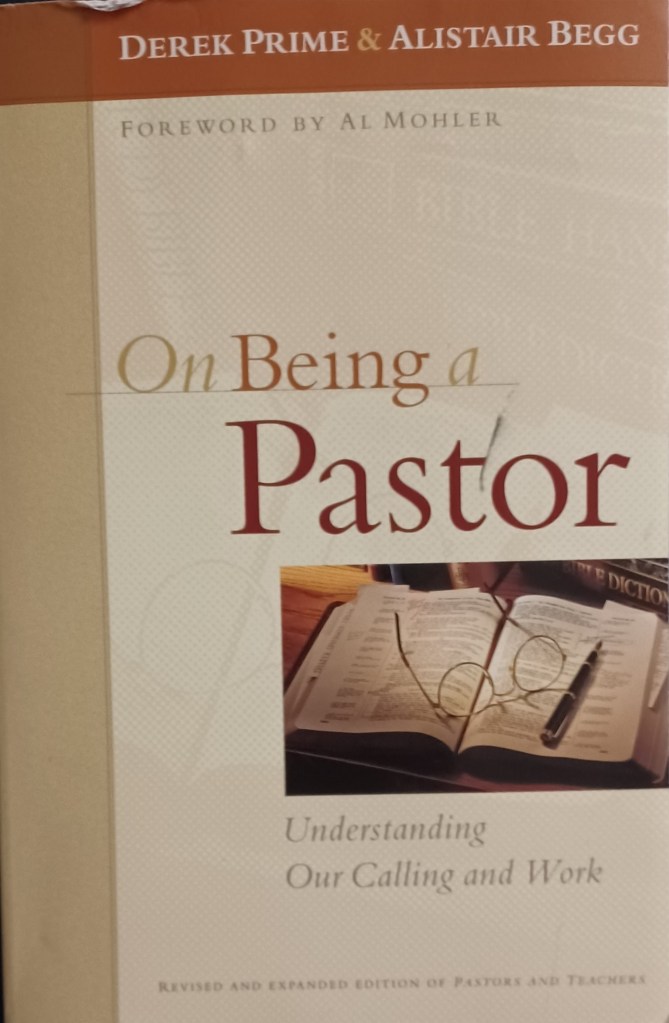
ON BEING A PASTOR – by Derek Prime & Alistair Begg

This is a great book for any pastor, especially for one who is just starting out. It covers many aspects of the pastor’s role and how to do it well. It is a bit dated, yet most of the content still speaks to the pastoral role today. The first chapter is a great discussion on the call to be a pastor, pointing out that the role can be difficult, but very rewarding if this is what God wants you to do. The authors, both pastors with years of experience themselves, then talk about the character of the pastor, his home life, and how to lead a serve a congregation well. The authors both share examples of how they have applied the teaching in many sections of the book. It is good to see the way two different pastors do the work of ministry. A great book for anyone in ministry!

Church Leadership Series: Part 7: A Leader Must Manage His Family Well

He must manage his own family well, having children who respect and obey him. For if a man cannot manage his own household, how can he take care of God’s church?

1 Timothy 3: 4,5 (NLT)

his children must be believers who don’t have a reputation for being wild or rebellious. 

 Titus 1: 6 (NLT)

I wonder how many leaders love the idea of leading people as long as it doesn’t intrude on their own personal life. The reality is, when we are leaders, we are still parents and children and siblings.  We have responsibilities at home that affect how we lead and how we lead affects how we handle our responsibilities at home.

A Christian leader must manage his own family well. After all, if you can’t manage your household, how can you be expected to manage the church organization you lead? How you do with your responsibilities at home portrays how you will likely manage others.

Look at Ephesians 6:4: “Fathers, do not exasperate your children; instead, bring them up in the training and instruction of the Lord.” Parents, especially fathers, are entrusted with the training and instruction of their children. Church leader, you need to be able to manage your family well.

In 1 Timothy the leader is described as “having children who respect and obey him.” Titus says, “his children must be believers who don’t have a reputation for being wild or rebellious.” I know of Christian leaders who have stepped out of leadership positions because of children who were not obeying them. They felt that if they were not able to manage their family, they should not be in church leadership. I respect that decision as long as there is then an effort to rebuild a relationship with a rebellious child.

There is an expectation that a Christian leader will have a good relationship with his children so the children will willingly respect and obey him. This tells us things about both the leader and their child. This implies that the leader has taken time at home to ensure there is a relationship with the child. Some Christian leaders are “absent fathers” because they spend so much time away from home, or even focused on their leadership responsibilities, that they have not cultivated a loving and caring relationship with their children! A child’s obedience can be an indicator the leader has not parented well, but this is not always the case. It could be that the child is struggling in some other way or is determined to do their own thing, no matter what. If so, then maybe the leader needs to step away from some leadership roles to spend more time with this child.

A leader should not have a “wild and rebellious child” but children who are believers. The leader should take time raising their children to ensure that they came to know Jesus, or at least had every opportunity to do so. Do we really want leaders in the church who have not taken the time to ensure their own children have given their lives to Jesus and accepted Him as their Savior?

Some Christian parents seem to think their role is to make sure their children get to Sunday School and VBS and youth group at church. They may enroll them in a Christian school. Their idea of Christian training is to expect the church to do it all. While all those are good things, they can never be more than an added help. The church cannot be the main contributor to the spiritual growth of children. This must be led by the parents at home. A Christian leader needs to see the value of their own time teaching their children and not expect they can hand it off to the church. A Christian will go out of their way to disciple their children first and then look at leading others.

Keep looking up,

Andy Wiebe

Church Leadership Series: Part 5: A Leader Must Teach

he must be able to teach

1 Timothy 3: 2 (NLT)

He must have a strong belief in the trustworthy message he was taught; then he will be able to encourage others with wholesome teaching and show those who oppose it where they are wrong.

Titus 1: 9 (NLT)

I love to teach. I love preparing a lesson and then teaching it to a group of people, small or large. I love to see learners understanding a new idea or learning how to apply a truth they have just understood. To be a leader is to instill new ideas and ways of doing things in others who are coming after you. A church leader must be able to teach. This is one of the main ways to instill new ideas and practices in those whom you are leading. My automatic reaction to this verse is to think of teaching thoughts and ideas, of preaching and teaching scripture and discipling others through teaching in a class or sermon. But we all know that teaching is also about hands-on and practical learning.

Apprentices are always learning, but only part of their training is in the classroom. Much of the teaching they receive is active hands-on learning. Leaders in the church may be good classroom teachers, or they may not, but if they are teaching others in practical ways, then they are still teaching.

I find it interesting that in Titus we are told that the leader must have been taught first and must believe what he was taught. A teacher cannot teach what they do not know.

The key teaching in the church is the “trustworthy message” of the gospel. We have heard and now teach the gospel of Jesus Christ to others. As leaders we continue to encourage others to get to know the Jesus of the gospel, and to receive His life-giving forgiveness of sins as we put our faith in Him.

Church leaders are responsible to teach many things in the church, but it always needs to come back to the gospel message. Whether we are teaching others how to be an usher or how to do run the sound board, all of that is to help others continue to hear the gospel message.

Part of a leader’s responsibility is to “show those who oppose it where they are  wrong.” (Titus 1:9) It is not unusual to come across people that have not understood something correctly. Misunderstanding may be as serious as not understanding the forgiveness that Jesus offers to all who believe in Him, or something as simple as not following through on a certain responsibility they accepted. In either case, the leader’s job is to correct when correcting is necessary, and this is done by teaching and showing what the correct understanding is.

It is pretty much impossible to be a leader and not be able to teach. To lead is to be ahead of people in information or practices that somehow need to be passed on to those following. In the process of doing that, you are teaching. Yes, some are more gifted in teaching than others, but a leader will always be able to teach to some level.

Keep looking up,

Andy Wiebe

Book Reviews: Andy’s 2023 Reading Experience

I will be sharing a brief review of every book I read this year. Hope you enjoy and hope it encourages you to keep reading.


EXPERIENCING THE RESURRECTION – By Henry & Melvin Blackaby

Henry and Melvin Blackaby do a great job walking through the importance and value of the resurrection of Jesus Christ in every believer’s life. While they take time to discuss God’s purpose in the resurrection as well as Jesus’ experience of the resurrection, the value of the book is found in the third part of the book where they apply the resurrection to the believer’s experience. They write, “And as a result of what the Father has done, the resurrection is something believers can experience in daily life…as well as something they will experience for all of eternity.” To experience the resurrection in ourselves is to die to self, and to live in the power of the Spirit, dead to sin and alive to Christ living in and through us.

A great book on the resurrection!

Church Leadership Series: Part 3: The Hospitable Leader

He must enjoy having guests in his home…

1 Timothy 3: 2 (NLT) and Titus 1: 8 (NLT)

I wonder how many leaders love the idea of leading people as long as it doesn’t intrude on their personal time? We are quite private people as a culture. We want our own space. We want a place to leave all our work behind and unwind after a long day. We want some “me time.” How does that align with today’s leadership lesson?

In both Timothy and Titus, we read that a church leader needs to “enjoy having guests in his home.” Most other translations just use the word “hospitality,” or “given to hospitality” (KJV). The New Living Translation interprets it in a certain way.

In Jewish circles, out of which the church grew, hospitality was a high value. We can understand the benefit when we remember that there were not many hotels or BnB’s available in ancient Israel. Travelers depended on the kindness of others to open their homes to them for the night. But I wonder, how does caring for travelers relate to church leadership today?

In the larger picture, hospitality is about caring for people in need. They may not be travelers passing through, but they could be others in your church or neighbourhood with unmet needs. Since Paul includes this characteristic of leadership in both Timothy and Titus, it is not likely that he slipped it in as an extra. He made sure to highlight it. So how do we apply it to our lives as leaders in the church?

If you are a hospitable leader, you care about people. You care about their needs. I just recently took in the Global Leadership Summit(GLS). It was interesting to see the theme of loving people under your leadership come up again and again. A good leader understands that leadership is not about just getting people to get the job done, but recognizing and caring for the people whom you are leading.

Yes, you might open your home and have them over for a meal or backyard barbecue. It might be a great experience for those you are leading to see a bit more of your life and to spend time together outside of the work setting.

A hospitable leader might be one who has an open-door policy. A closed door closes off relationships, but an open door says, “I invite you in to interrupt me because I want to help.” If there are times you need to block everyone out to focus on something, then make sure that you have certain times where your office is clearly open and accessible to your team or your church.

At the GLS, Craig Groeschel taught that leaders who want to build trust must be transparent. Hospitality might be one way to be transparent and open. If they feel free to pop in for a chat or to discuss some questions, their trust in you will increase. They will see that you care enough about them to stop whatever you are working on to listen and to connect with them.

If hospitality is about meeting needs, a leader may want to go out of his way to talk to volunteers in the church to see what needs they have that the leader could help with. Serving alongside a Sunday School teacher or the youth leader may be a way of sharing a bit of yourself with that volunteer, learning what they need and encouraging them in the role they serve.

A hospitable church leader should also recognize the opportunity to welcome guest to church in a way that makes them feel welcomed and loved. While this is not inviting guests into your home, it is inviting them to the church and its services. If guests are not greeted warmly, they may not connect enough to want to return.

A hospitable church leader may welcome guests into their home but will also go out of their way to meet the needs of the people around them: church members, volunteers, and people you encounter in the community.

To be a hospitable leader is to go out of your way to meet the needs of others and to love them.

Keep looking up,

Andy Wiebe
Church Leadership Series: Part 2: A Good Reputation

So a church leader must be a man whose life is above reproach… He must exercise self-control, live wisely, and have a good reputation.

Also, people outside the church must speak well of him so that he will not be disgraced and fall into the devil’s trap.

1 Timothy 3: 2, 7 (NLT)

An elder must live a blameless life.

Titus 1: 6 (NLT)

I have spent much of my life in small towns, towns where it seemed everyone knew who you were, especially if you were the new pastor in town. In smaller places, people know more about you than you realize. They see you around town, they hear the gossip about you. It doesn’t take long for a person to get a reputation. The thing about a reputation is that it can be good or bad, and while a reputation may be influence by others, you have a large part to play in the reputation you earn.

And often that is the case: you have earned your reputation. You have said things or done things that people saw or heard about later, which formed their opinion of you. Your reputation is one you should guard carefully. It is hard to reverse a bad reputation because first impressions make a huge impact.

The Bible tells us that church leaders need to have a good reputation. The two verses above tell us some of what that reputation should look like.

Timothy tells us the leader needs to live a life that is “above reproach” while Titus tells us the leader must live a blameless life. 1 Timothy talks about overseers and bishops, Titus addresses elders, but I will combine those to say they should influence all church leaders, whatever your role may be. If you are leading people, you need to have a good reputation. You need to be above reproach and live a blameless life.

Now, I want to be clear, I do not believe that you or I will lead a completely sinless perfect life, but we can live a life that is generally God-honoring. And when we give in to sin, whether privately or something others see, we address it quickly by confessing our sin, asking for forgiveness from all involved and make right what we can.

If you have a reputation for quickly trying to resolve issues, admitting when you have done wrong and looking to correct that, you may not be blameless, but you will have a reputation that says you long to do what is right. Choose that reputation and work towards it.

1 Timothy 3:2 shows us how to gain and maintain a good reputation: “exercise self-control, live wisely.” Self-control means we are in control of our self. That sounds so simple and yet is so difficult. We so easily allow the actions and words of others to affect how we act. When someone accuses us of poor leadership or belittles something we have poured a lot of time and energy and prayer into, it is easy to respond with frustration and anger. We are called to control our selfish response and love them. Further, we need to recognize that our value is not found in the approval of others but in the approval of God. “Our purpose is to please God, not people. He alone examines the motives of our hearts. (1 Thessalonians 2:4) Self-control must be a self controlled by the God we serve, a submitted heart helps self-control to work.

And then we come to the phrase: “live wisely”. If you desire a good reputation, you need to live wisely, and lead wisely. You need to be careful about what you say and do so that you are seen as someone who is living wisely.

It might be good to be silent and listen more often rather than be quick to speak and end up saying something that is not good. All of us probably have memories of saying something we would like to take back. It may have been said in jest or in anger but did not reflect “living wisely”. Take care that your words and actions reflect wise living.

If you desire to be a church leader, as a volunteer leading a program or as a pastor, guard your reputation. It’s quite okay if people talk about me when they are saying good things, it’s another when they are passing along negative gossip. And unfortunately, the hurtful gossip spreads quickly. Do your part to squash the negative gossip by living in such a way that it has no element of truth in it.

A church leader needs to have a good reputation.

Keep looking up,

Andy Wiebe

Church Leadership Series – Part 1: An Honourable Position

Introduction To Series:

There are many leaders in the church, from volunteers to paid staff to elders and pastors. While the Bible seems to speak most directly to elders and pastors in Timothy and Titus, Paul speaks to anyone who is in leadership in the church and in Christian ministry as a whole. I believe it is valuable to explore what the Bibl3 says about church leadership and these various roles, and want to give good time and space to do so. As such, this is the first post of a series on this subject.

An Honourable Position

You may have heard the perspective that no one should be too quick to jump into a leadership position at church. They say things like: “If you were reluctant to become a pastor, that is better than someone who has desired it for a long time.” They seem to think that it is a good display of humility to drag our feet a little in becoming a pastor. Yet when we look at 1 Timothy 3: 1 we read, “If someone aspires to be a church leader, he desires an honourable position.” Not only is it an honourable or noble role in the church, it is honourable to desire to fulfill that role.

Church leadership is a position of great responsibility and great privilege.

Some translations of scripture describe the position referred to above as “overseer” or “bishop.” This person takes on a role of leading people in a certain direction. Paul is an example of this when he writes  “And you should imitate me, just as I imitate Christ.” (1 Corinthians 11: 1). While a church leader might teach a class or lead a program, a large part of their leadership is leading by example. People who spend time with a church leader will likely become a little like the leader they follow.

There are many different aspects of the leader’s role, but I specifically want to remind us that it is a role that is an honourable position because it helps point others to Christ and a relationship with Him. The honourable part is that the leader has chosen to move past being a disciple to being a disciple-maker. They are now pouring into others in the same way that others have given to their spiritual growth.

In the Old Testament, prophets spoke God’s words to the people and priests went before God on behalf of the people. While church leaders today do not fulfill those specific roles, leaders do have the honourable position of speaking God’s words to those they lead and to bring those who follow before God in prayer. In a small way, a church leader acts like a bridge between God and His people, introducing them to Jesus Christ, the one “true bridge” who made it possible to have a relationship with God in the first place. This is the great privilege of leadership, that we get to help others grow in their relationship with God through a growing faith in Jesus Christ!

How is it an honourable pursuit?

To desire to be a leader, specifically a church leader, is to desire to help others to grow. What better pursuit is there than to help people grow in their faith in God and their relationship with Jesus Christ? We should long for many more individuals to step into church leadership, as both volunteers and paid full-time servants. We should pray for others in our own churches and Christian circles to recognize God’s call on their lives and step up to what that call may be. It is important to recognize that not every leader is called to lead in the church – godly leaders are needed in the business or political world as well, but it is an honourable position to pursue in the church.

As leaders who are already serving and leading, we need to look for ways to continually invite others into this honourable position. Let’s give others opportunities to try to learn and grow as leaders. And let’s thank God for how He chooses to use church leaders to impact so many others for Christ.

Keep looking up,

Andy Wiebe

Book Reviews: Andy’s 2023 Reading Experience

I will be sharing a brief review of every book I read this year. Hope you enjoy and hope it encourages you to keep reading.


EMBODIED: Transgender Identities, the Church and what the Bible has to say – by Preston Sprinkle

Sprinkle asks the question: If someone experiences incongruence between their biological self and their internal sense of self, which one determines who they are – and why?

He then walks through a thoughtful and biblical journey of defining the transgender issue, understanding what the real issues are, and looking at how the bible speaks to this struggle many people face. He finishes by addressing some of the realities of how to love transgender people in a way that is kind and reflects Jesus. A great book for one of today’s tough struggles.

Allowing The Bible To Guide Our Leadership

Many issues arise in our world today because of our search for the answer to the question: What is the truth? Theological issues may come about when we search for answers in teachings we have not heard before. Political issues can begin when we as Christians question what our place is in politics or responding to decisions our governments make. Moral and lifestyle issues are often found when the church is unsure how to respond to what is becoming acceptable in the world around us and even in the church that has historically not been accepted. What is the truth?

While there are many today who pretend we can have different truths to guide us, truth doesn’t work that way. If I am driving down the highway and decide that my truth is that I am in England so I will drive on the left-hand side of the yellow line, my truth will be quickly confronted by another truth when the traffic in that lane comes hurtling towards me. That is a silly simple example, but the fact is, what we believe about things makes a difference, and impacts our relationship with others. Truth, as God has laid it out, affects all of us.

As people of God, and as leaders of churches, we need to recognize that our answers need to be found in God’s Word. His Truth must be upheld in our churches. I do understand that sometimes we need to do some work to determine how God’s truth impacts the questions we face. But our answers should be informed by God’s Word – the Bible.

How might we find answers in the Bible?

Read the Bible.

The first priority to actually read the Bible. Read it regularly and search it for answers to your questions.

As you read, ask God, through the Holy Spirit, to give you correct understanding of what you are reading. We recognize that the Bible is more than a story book, though it contains many stories. Whether we are reading biblical stories, or a teaching section, or even some of the poetic books like Psalms and Proverbs, we want God to help us understand what the truth is and how it applies to my life and to the church where I serve as a leader.

Consult with others on difficult passages or topics.

We are blessed to have the results of many experts at our fingertips. We can find commentaries where others have worked through scripture and give their expert opinions. We can make use of tools that help with word studies and guide us through some of the definitions of the original language. We can read books by people who are struggling through some of the same questions we are. We cannot interpret scripture completely on our own, there is importance in reading scripture in community. Whether we agree or disagree, there is benefit in seeing how others have processed biblical truth in light of this topic. I’m presently reading a great book on how to respond biblically to those living a gay lifestyle. There are many other topics that others have been able to work through in more detail than we have so we can learn from them. Just make sure their teaching is arrived at by careful study of scripture.

And one of the simplest ways to consult others is to have conversations with others in your church as you work through scripture to find the answers you need. Find some other believers and read the Bible together. Work through scripture as a leadership team and ask God to guide you to the correct understanding and application.

Do what it says.

The hardest part of allowing the Bible to guide our leadership, is to then do something about what it says. If it means leadership needs to confront false teachers or people living contrary to truth in your church, then do it. If it means changing policies on how volunteers are screened, then change the policies. If it means teaching the church what it means to live out truth and love in light of Gods Word, then teach your church that.

If we are going to allow the Bible a prominent role in church leadership, then we need to make sure we read it regularly. We need to do the work of understanding it clearly, and then we need to follow through on what God is asking us to do as a result.

If we are Christian leaders, whether in the church or elsewhere, our leadership must be informed by the truth of God’s Word.

Keep looking up,

Andy Wiebe

Book Reviews: Andy’s 2023 Reading Experience

I will be sharing a brief review of every book I read this year. Hope you enjoy and hope it encourages you to keep reading.


KINGDOM VALUES: Character > Chaos – by Tony Evans

This book has two parts. Part one: The Foundation of Biblical Character focuses on Truth. He addresses what Truth actually is, why there is an absence of it, and how to return to it. And then he has a great chapter on “Merging Love with Truth”. Evans says, “Our job as representatives of the King of Kings and the Lord of Lords in the church and outwardly to the world is to inform culture about what heaven thinks on every subject.” He points out that we are to be showing the world around us what it means to live out the truth of God, and do this with love.

Part Two: The Components of Biblical Character is a great journey through the Beatitudes of the Sermon on the Mount. He shows how a correct relationship with God will enable us to be better at living out truth.