Plan a Restful, Renewing Break

Some people come home after a holiday, wishing they had a week off at home to recover. Holidays are not always restful. Sometimes we use vacation time to meet up with family, which can be really good – or really draining. Sometimes we fill our vacation with so much activity that we come home exhausted.

We all need a break from time to time. For many people, these next two months are the window within which we can plan our holidays. The weather is nice, the kids are out of school, and many organizations slow down over the summer.

It is the perfect time to take some time off. But there is a big difference between taking time off for a busy vacation and having a restful and renewing break from the busyness of life.

If you need a week off to recover from your vacation, you are too busy on your vacation.

It is tempting to use our holiday time to do the many things we wished we could do all year. Maybe we stay home but are constantly on the go with golfing in the morning and swimming with the kids in the afternoon and campfire with family in the evening. While all those things are great, unless we actually take time to slow down, many of us will feel just as tired, if not more, when we return to work.

Is the summer the best time to take a vacation?

Many of us assume that we must take our vacation in the summer, but is that true? Is that best for you and your family? Do you already have weekends off? Why not make the most of them during the summer? Enjoy the slower time in the office and the relaxation of being home with the kids without running off to all kinds of sports or school activities. If you are one of the families who have kids in summer sports you may not have this luxury.

Vacation during a busy season may be more helpful.

Some of us may have the freedom to take a vacation during other times of the year. You might even benefit from lower off-season prices at hotels and vacation spots. In this way, taking time off during a busier work season can be more refreshing than during a time of year that may be slower. If it is possible to take a week off during one of your busy times, you may just come back with more energy and get more done than if you just pushed through as usual.

But we have to take holidays when the kids are out of school!

One father said, “We never let education interfere with our holidays.” You may be able to take your children out of school for a bit if they are in lower grades and they won’t miss much. As they get older you could take your vacation during their school breaks in the middle of the year. If you are really concerned about what they will miss in school, ask the teachers if they can give you some assignments for the kids to work on during your time away.

Find ways to rest and be refreshed and renewed.

There are times to plan holidays with every day and hour filled with activity. There are other times where you recognize you need more sleep and time to slow down and just be. If you are a normal busy family you might benefit from time to just be together without having all kinds of activities on the agenda. Maybe you can rent a cabin on the lake, or go to a resort, and then just do whatever comes up in the day. Feel free to go for a swim when you want, or nap beside the pool. If you like reading, bring a good book. If your family plays board games, bring some to play in the evenings. Just enjoy being together and resting from your busy life.

Take your vacation time!

There are people who pride themselves on not taking all their vacation time. That is ridiculous! If you have the time, why not take it? If you don’t get paid holidays and don’t have money to do much, make your time off count with a “stay-cation” in your own backyard. Take the time for yourself and your marriage and your family that is available to you. Treasure the time you have together while you still can!

Give yourself permission to slow down and do the “nothing” of relaxing. There are times when it is quite okay that we haven’t accomplished anything in the day, except be together with the people who matter the most. Take your time to slow down and relax so you are ready to go back to your busy lives when the vacation is over.

Have a great summer, and if you are on vacation, take time to slow down.

Keep looking up,

Andy

How to Set Plans that Work

“The best laid plans of mice and men oft go awry,” goes the saying. I like dreaming and planning. I like looking ahead and doing strategic planning with churches. I get excited about the possibilities of what could happen if things worked out right. The problem is, many good plans do not bear the fruit we had hoped. So how can you set plans that will not fail?

“The best laid plans of mice and men oft go awry.”

John Steinbeck

In James 4:14-15 it says, “How do you know what your life will be like tomorrow? Your life is like the morning fog—it’s here a little while, then it’s gone. What you ought to say is, ‘If the Lord wants us to, we will live and do this or that.’” 

James reminds his readers that no one knows what tomorrow brings. We can do all kinds of planning and scheming and base it all on good research, but in the end, no one knows what will really happen. There are always many unknowns that we cannot prepare for. We can do our best, and often plans work out, but not always. The only one who knows what tomorrow will bring is the Lord God.

God is not bound by time, so He knows what will happen tomorrow and the next day, and the next year. So as events happen, He is not surprised. Maybe we need to ask Him to help us make plans that match His for us.

In Jeremiah 1: 4-5, we read:

The Lord gave me this message:

“I knew you before I formed you in your mother’s womb.
    Before you were born I set you apart
    and appointed you as my prophet to the nations.”

God told Jeremiah that He knew him before he was born, even before he was conceived. That is quite the theological issue to work through at another time, but the point is that God knows us and has plans for us. He had a plan for Jeremiah. He appointed him to be a “prophet to the nations.” Jeremiah didn’t need a career counselor or an aptitude test of some kind to help him discover what he wanted to do with his life. God told him exactly what he should be “when he grew up.”

This morning I was reading in Psalm 138 when I came across a line in verse 8: “The Lord will work out his plans for my life.” The psalmist believes that God has a plan for his life. He trusts that to be true. I felt comforted as I read that verse. My life and my plans are not dependent on my own abilities or lack thereof. If King David is right, and I believe other scriptures agree, then God has a plan for MY life, and a plan for YOUR life.

I don’t think God has every detail of your life planned out in such a way that you need to be constantly afraid that you are making the wrong decision. I don’t think God was disappointed that I chose the Mexican Bean soup at lunch instead of the Butternut Squash soup. And honestly, I don’t know if there is one specific girl for each guy or if God leaves that up to us. What I do know is that God is intimately aware of who you are and who I am. He has plans for us as one person of humanity and plans unique to each of us as an individual.

God’s plan for all humans is that they would come to faith in Jesus and a relationship with God the Father through Him. God wants all people to join him in living in His kingdom here on earth. God desires for all people to join him in the afterlife, in His new kingdom. But I believe he also has plans unique to us. These plans are more like the plans of a coach for each individual player. He puts the player in goal who has been playing that position all his life and is best equipped and prepared for that role. He will probably put the fastest skater and best player on the first line, maybe even at centre. God knows each of us, after all, He created us. Like Jeremiah, God knew you and me before we were even born. He has observed us all our lives. He knows how we are equipped to handle situations we will face in life. And I believe that he has certain roles He wants us to be in.

If I want to make plans that will work out, I had better talk with God about those plans. Whatever the plans, we can talk to God about them as we make them. There is generally good value in involving others on our team in plans we make for organizations we are part of. We can benefit from the input of good friends. Yet the best input is to ask God to help you in the dreaming and planning. Ask Him to guide your thinking. Ask Him to help you get the best research and information to base your planning on. Ask Him to tell you what He wants done. After all, if God has plans for me, I will be better off doing what he has planned.

There are many different steps that experts could suggest as you desire to make plans that work, but if you believe in God, your first step needs to be to check in with Him. Sometimes it takes hard work and effort to accomplish meaningful plans. Again, God is the one who can help you persevere to the end.

You want to make plans that work? Then ask God to guide you in making your plans.

Keep looking up,

Andy Wiebe

Encourage Second-Career Ministry

I meet monthly with other Transition Pastors. We are all serving churches by helping them say goodbye to a previous pastor, move to good health, and welcome a new pastor. In the last couple of months our conversations have included discussions about how few resumes are submitted for Lead Pastor positions at the churches we are serving. There seems to be a shortage of pastors. There are not enough pastors stepping into the role to balance those exiting that role.

Last week I said we need to encourage our young people to consider being a pastor or a missionary. When I was a young boy, I dreamed of becoming a doctor. There is nothing wrong with being a doctor. I have been really appreciative of a doctor’s work for me and my family many times. I dreamed of becoming a doctor. Our children are dreaming of what they want to be when they grow up. We need to encourage our children to dream of becoming pastors and servants of God in foreign contexts. We need to find good examples of pastors and missionaries to highlight for them.

Young people are not the only ones who could consider these roles. There is another group of individuals who are choosing to become a pastor later in life. I know of some who were farmers most of their life, or truckers, or welders, and then shifted to becoming a pastor.

Pastors, we have a special opportunity to encourage those in our congregation that seem to display the necessary qualities and character to choose pastoral ministry as a second career – or third, or whatever. People of God, ask God to show you if He wants to redirect you to become a pastor or missionary.

There are many godly people in our churches who work at their job all week and then serve at the church evenings and weekends. Some of them are clearly not just volunteering because someone is needed to fill a certain slot. Some of them are gifted teachers or mentors of others. They have a heart for God which is evident in the way they serve in the church and in how they operate their business or work at their jobs. Some of them have already graduated from Bible College or Seminary but never pursued the role of a pastor.

There is a group of faithful and godly people who graduated from Bible College, and maybe even Seminary, who have often not been the first choice in pastoral roles, but that has changed a lot in the last few years. Women are being hired more often and for roles beyond just Children’s Pastor or Women’s Pastor. While I, personally, may be hesitant to encourage a woman to pursue a Lead Pastor position, many churches now are open to hiring a woman for any pastoral role in the church. They are hiring based on the gifts of the person rather than on gender. So, let’s encourage our women to consider pastoral ministry as well, listening to God as to where and how he wants them to serve. Pastors, some women have not felt a freedom to pursue pastoral ministry and God is asking you to encourage them in that direction.

Some people have never considered being a pastor because they were not “good enough.” They had a certain image in their mind of what a pastor was like, and they didn’t match up to their ideal. If you look around, you will find that pastors come in all shapes and sizes. They come in all varieties of personalities. Some are great for serving in small churches and others are perfect for large churches. You don’t have to match up to an ideal. You just need to say “yes” if God is asking you to step into that role.

Some faithful servants of God felt God hadn’t specifically called them to the role of pastor, so they headed in a different direction. Just a question: “Did God call you to head in that direction?” If God did not specifically call you to be a pastor, did you use those same criteria to decide to be a welder or business owner? Many people chose to pursue a career because they thought they would do well in it, make good money, and they would feel fulfilled in that role. But maybe God never called you to that role. You just chose it. Maybe its time to specifically ask God if you should step into a role as pastor. Take time to prayerfully consider this. Talk to your pastor and other godly people around you and ask them what they think. And if all signs point to becoming a pastor, then pursue it with your whole heart!

Some have decided not to be a pastor because it is too hard of a job. Sometimes the pay will be way lower than what you are making right now. People will not appreciate what you are doing, and complain. Your family may suffer. You will be frustrated at how slow things move in the church compared to the business you were running. It seems like too much of a sacrifice to say yes to this role. Not to be too direct, but remember the sacrifice Jesus made for your salvation? He gave His all, His life, faced ridicule from people, and even separation from His Father as He died on the cross. If God is asking you to become a pastor, then He will give you the strength to persevere. I can give witness to that. I have had some very difficult moments in a few different churches, but God has been faithful through it all!

There are some of you who considered being a pastor, and maybe even served as a pastor for a short while, but you were frustrated with the institution of the church. You feel that it is not accomplishing what it should. You are probably right. But you may be just the right person to step into this role. If God is showing you where the church is lacking, can you trust that God will show you some answers in how to improve that? Sometimes it is a person new to the role that will see what is wrong and how to change it for the better. Your voice in the conversation may be exactly what is needed to raise the level of discussion on improving the church.

“Second Career Pastors” can have incredible ministries accomplishing great things for God and the expansion of His kingdom! Will you accept the challenge and become a pastor?

Keep looking up,

Andy Wiebe
Develop an Active Imagination

I remember watching two preschoolers, a brother and sister, playing next to me as I was watching a floor hockey game in college. I was fascinated at their imagination. They had no toys, no digital devices, just the bleachers and their imagination. They played for a long time, together imagining all that was happening around them.

Too many of us have lost our ability to imagine. We are so caught up in the moment and in what is right in front of us that we no longer know how to use our imagination. There could be a number of reasons for that. Maybe our imagination was stifled as a child when a parent or teacher told us to quit daydreaming. Daydreaming is the fertile ground imagination grows in! Some of us had an active imagination until someone made fun of our ideas. For whatever reason, we have stopped imagining.

Have you ever wondered why some people are so good at coming up with ideas? It’s because they have an active imagination. They are not afraid to dream up something new. And they are not afraid to try out their ideas. We don’t know how many ideas these people imagined that went nowhere, before they found the ones that were great.

We can develop an active imagination. For instance, give yourself freedom to daydream. Find some time when you have no other distractions and no requirements of yourself and just imagine things. Find your time you can claim as your own. Dream. Make up a story in your mind. It could be that you have a problem at work. Whatever your work is, whether dealing with people or machines, if there is a problem, your imagination can help you solve it. So start imagining all kinds of possibilities.

In your daydreaming, don’t put up fences. Don’t start evaluating and discarding an idea too quickly. Sometimes good ideas need time to work their way to a solution. Some of us are quick to say: “That won’t work.” We even think that way in our daydreaming and discard ideas before they are fully developed. Remove that fence. Remove any fence that puts limitations on your imagining. Don’t discard an idea too soon because it takes more money than you have, or more volunteers than your organization has, or whatever it is that tempts you to short-circuit your dreaming.

Imagination is enhanced by other ideas. Sometimes as you read and watch and listen, ideas come to you through other people or situations around you.  A while back my one of my daughters gave me a book on trees. I would not have chosen to read a book like that, but it was amazing to read the insights of someone who had spent years working with trees and understanding them. There were points in the book that got me thinking about how to work with small groups and how people interact.

Another book I recently read outside of my normal reading selections was Atomic Habits, by James Clear. While the book was about habits, it sparked all kinds of ideas that made me want to apply the teaching to the process of discipleship. As we read and learn from others, we add fertilizer to the fertile ground of our imagination.

Someone once said that we should “beg, borrow, and steal” as we look for good ideas. There have been many times that my good ideas came out of ideas that others had worked on. I was able to build on and adapt those ideas to programs I was working on or ministries I was running.

I have been part of churches that planned wonderful Easter Celebrations complete with a breakfast, fun and games, a worship service, and an Easter Egg hunt. One of the aspects of the morning that went over really well was to bring in a professional photographer to take family photos. Many people dress up for Easter so it was a great time to offer people a free family photo. I don’t know where I got the idea, but I know it came from someone else’s ideas and I was able to adapt it to my setting.

One author who wrote about planning creative worship services suggested always having some children’s toys at hand. The idea was, if you have fun thing near you, in your environment and in your hand, your creativity will be enhanced. So, surround yourself with weird and wonderful objects, collect fun sayings and give yourself an environment that will be conducive to good imagining.

I don’t know if you have found this to be true, but some people think they imagine and think creatively better by being in a certain place, or a certain chair, or taking time to daydream at a certain time of day. If you want to be intentional about improving your creativity and your imagination, this might be an idea to try. Find a comfortable spot and see if the creativity ideas start flowing. It may take a bit of trial and error to find the right spot, but sometimes the habit of that certain spot or certain time can help unlock creative ideas.

Then, at a certain point, you have to look to putting your ideas into action. When you have ideas, start writing them down. Writing down ideas requires you to express the idea in a concrete way. The imagination has to become reality at some point. Writing it down helps you put that idea together.

If the written idea still seems like a good one, try it out. Share it with someone. You might want to make sure you share it with someone you trust, or someone who won’t shut you down too quickly. If you can verbalize it in a way that makes sense to the person listening, you are heading in the direction of your ideas becoming reality.

When you think you are ready, try out your idea. See if it solves the problem you were working on. If it does, great! Your imagination helped you. If it does not work, then keep looking for another idea.

Continue to cultivate an active imagination. Just think of how many good ideas you will have if you allow yourself to stop and daydream!

Keep looking up,

Andy Wiebe

Book Reviews: Andy’s 2022 Reading Experience

I will be sharing a brief review of every book I read this year. Hope you enjoy and hope it encourages you to keep reading.


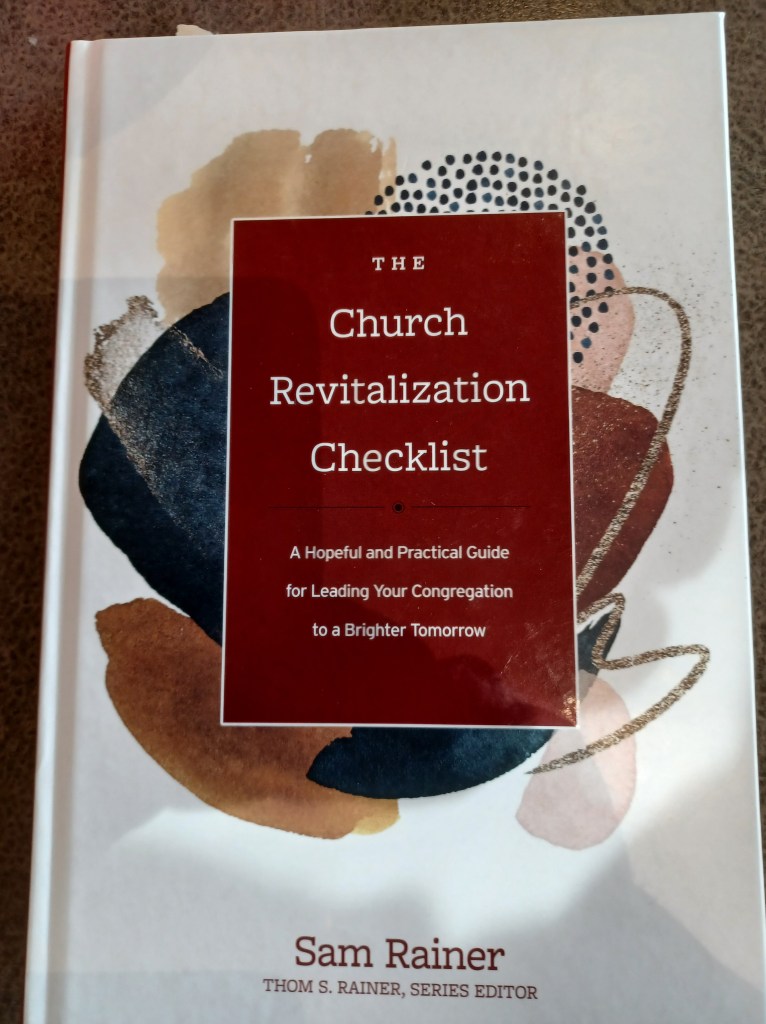
THE CHURCH REVITALIZATION CHECKLISTby Sam Rainer

The Church Revitalization Checklist: A Hopeful and Practical Guide for Leading Your Congregation to a Brighter Tomorrow is for pastors and church leaders who recognize that their church needs some renewing. Sam writes from the position of pastor and coach to pastors who are attempting to lead their churches to a brighter tomorrow.

The first line of the book is: “If God can save any person, he can save any church.” I have a sad memory of the first church I served as a youth pastor. That church no longer exists. Fortunately the building is still being used for ministry, but that church died. Many other churches are on the verge of dying unless someone can bring them new life. Sam has written a very practical book that helps walk you through the revitalization process. Pastors, I believe many of you could benefit greatly from having this resource at your side as you lead your church to a better future.

The Tortoise Change Leader

Many of us know the children’s story “The Tortoise and the Hare.” The two are having a race, and everyone knows the hare will win. After all, a hare is much faster than a turtle. The hare decides to take it easy and even rest for a while, but the tortoise keeps going, slow and steady. Who wins? The tortoise. The point is that sometimes the race goes to the slow and steady one.

If you are called to be a leader of change, you will need to learn the skill of slow and steady change. It is a rare situation in which a change leader can come in and make large scale changes to an organization quickly. Those who do attempt so often get their attempt cut short as they are removed from their leadership role.

Church leaders who attempt change also need to learn this concept of slow and steady change. I have realized my own shortcomings in this in a few situations I have been in. I tend to get impatient and want to change too much at once.

A good change leader understands how to lead slowly and steadily toward a desired goal. Here are ten actions to take to be a tortoise-like Change Leader. They may need to be worked on in a slightly different order than listed, depending on your situation. As you work through these actions, they will help you to feel you have some movement while keeping you to a slow and steady pace.

1. Evaluate Early: When you take on the role of change leader, evaluate early in your role. Evaluate the organization and team you are responsible for. Evaluate how they are doing in accomplishing stated purposes and goals, and whether those are even the appropriate goals and purposes to have. Leaders who wait to evaluate until they have been in the role for a while tend to become blind to things that need to be changed. It is amazing how quickly we get comfortable with how things are and then lose our ability to see critically. You will see things more clearly if you evaluate early, even though the change may be a while in coming.

Ask people to speak into your evaluation. As a pastor, you may want to do a congregational assessment so you can learn what the present reality is. In one church I got into trouble because I assumed too much. I was used to doing things a certain way and didn’t even consider that the church may have done things differently than I was used to. I ended up making more changes early without even knowing it, because of course, I was new to the church and had no idea how they did things in the past. Assessment may help prevent you from attempting to implement unnecessary and potentially harmful changes.

2. Pray First: Pray about the changes you believe need to be made. If you are trying to change things in a church, you want to make sure you are on track with what God has planned and that can only happen if you are listening carefully. Invite your leadership and other prayer warriors to join you in praying for wisdom and clear direction from God.

3. Love Deeply: Make your first priority to love the people experiencing the changes you will implement. Do anything and everything you can to show them you want to get to know them. Show them you want to get to know their history. Ask questions about who they are and what they care about. Celebrate together when things go well.

Loving people deeply can contribute to change being accepted because they have accepted you.  Show them that you want to put them first, but you want the best for them and that is why you are making changes.

4. Share Goals Carefully: Work with the leadership to get a sense of where changes should be made and even some of what the changes would look like. Have a goal in mind but don’t share it with too many people at first. If people hear about all you want to change at the beginning, they may be overwhelmed and not give you opportunity to change anything. This isn’t about deceiving people but about having time to build on small wins before sharing some of the bigger changes to come.

5. Build a Team: Work especially closely with those who want changes and will champion them for you. Help them introduce the changes so they don’t just come from the leader but from a larger team. Make sure you are all on the same page, having worked through the process of evaluating and planning for change together.

6. Begin Small: Start with a few small changes. Ask your team to help you figure out a few small things that could be changed. Invite them into the process of thinking through how that change would look. You might begin some of the changes by suggesting: “Let’s try this for a short period of time.” People are more willing to accept change if they know there is an end to it, or that it is not set in stone.

7. Evaluate Changes Honestly: Once you have changed something, evaluate it honestly. Evaluate how it went and decide if it should stay, and stay as is, or stay with some changes. Don’t assume it went well just because it was your idea. Invite the appropriate people into the evaluation so you can honestly determine if the change is good or not.

8. Communicate Clearly: Be very clear with all those affected. Inform them of what is being changed and why, as well as how the change will help improve things. If it is a change that will be noticed by all those in your organization then invite the whole organization into the evaluation. If it is only a certain department, then invite that department into the process. Once the evaluation process is complete, clearly communicate if it will stay, why, and what adjustments may be made.

9. Build on Wins: After a few smaller wins you will be able to make slightly larger changes. You can slowly build momentum on the changes that go well. If there is a change that is not adapted, don’t see it as a failure but as a means of developing credibility with your team as well as with those hesitant to make changes. If they realize you want the best and are not just forcing changes through, they may be quicker to accept the next “trial change”.

10. Develop Patience and Perseverance: Don’t give up if a few changes are not accepted. Be patient and persevere for the long term. The longer you are part of a church, the more likely you will be able to increase the rate of change. This will be because people get to know you and trust you. It will also be because over time there will be more people who started attending the church after you came, so they chose the church aware of who you are and how you lead and the changes you are making.

It is not easy to be a change leader. You will face opposition. Hopefully, if you move at a slow steady pace, you will face less of it and begin to build on your wins. Hang in there for the long haul. And trust God to give you wisdom and guide you as you look to Him.

Keep looking up,

Andy Wiebe

Know Your Yes, Know Your No

You do not have to say “yes” to every opportunity to serve that comes your way.

When we are young, and just starting out in life, the opportunities are endless. You could go in almost any direction for a career. As you get older and get more experience you learn that there are certain things that you are good at and certain things you are not as good at. There are certain roles you take on that you love and others where you struggle to survive the day.

As we get older, and hopefully a little more experienced, we begin to narrow down the real and meaningful opportunities for us. We are not quick to jump in to jobs that will require us doing things we hate. We choose to do what we enjoy if at all possible. We prefer doing what we enjoy, and over time get a clear sense of what those things are.

Beyond that, I believe that God has certain roles for us to fulfill. He has given us gifts and abilities, and led us through circumstances that prepare us for what is next. We can ask him to clarify for us what he wants us to do with our life, and he will. I believe that God has a role for everyone, if we will only ask him to help us discover that.

Through a number of different circumstance God has brought me to the place where I believe he wants me to focus on helping churches and leaders achieve their God-given dreams. I have been a pastor for about 30 years, and generally loved the role. I had the opportunity, with a few others, to start up and establish the Rural Church Pastors Network. I loved the opportunity to equip and encourage fellow pastors. I enjoy writing and sharing my thoughts with others. And God, through these experiences and some clear signs from him, called me to this role of helping leaders and churches.

God has called me to help churches and leaders discover their God-given dreams. I was recently offered a position that looked interesting. I knew I could do what was required, I might even enjoy the role, but I couldn’t say yes. As I prayed about it, God reminded me that he had called me to this role of helping leaders and churches. This new opportunity was not part of that. Saying “no” to something that I might enjoy was not easy, but I knew what God called me to do.

Knowing your “yes” helps you know your “no”. When you have a clear understanding of what God has called you to do, you can clearly say no to that which is not part of the plan. I know it is hard to say no to people. We want people to like us and so we try to please them. Knowing our specific calling from God helps us have an easier time making decisions about what we choose to agree to and what opportunities we decline. Then we can say no with a clear conscience when we know what fits in God’s plan for us and what does not.

Sometimes we are overwhelmed with all that is on our plate. I wonder how often that is a result of us not clearly understanding what we are called to do so we do everything that comes our way. We say yes to every good thing when maybe God would like us to focus in on a specific opportunity. We tell ourselves that we can’t get out of these responsibilities when maybe we just need to say no. Sometimes we get frustrated with people and all they demand of us, but the problem may be us. We haven’t set clear boundaries on what we should or should not do, what fits into the scope of who we are and what does not.

Clarifying who we are and what God is calling us to may be harder to determine when we are young and have not had time to try new things or experience various roles and opportunities. As we get involved in different jobs and serve in a variety of places, we can narrow down who we are and what we are called to do.

This allows us to  figure out how God has gifted us and what talents we have. But clarifying who we are and what we become involved in does not just depend on age and experience. I believe we need to have time with God asking him to clarify what he wants us to do with our lives. God may speak to you through your reading of scripture. He may speak to you in your prayer time. He may speak to unique ways such as dreams or visions. What I do know is this: if we ask God, he will answer. Ask him to clarify his calling on your life and then you will be able.

I hope you can clarify your “yes” so you can also know your “no.” May God show you your unique place in this world.

Keep looking up

Andy

5 Benefits of Evaluation

This past Christmas our church again served its annual Christmas Dinner, primarily for those who regularly access the local Food Bank. Some aspects of the dinner had to be adjusted in response to current Covid restrictions, and we were able to serve a drive-through take-home dinner. At the following leadership meeting we evaluated the event. It was a great experience as the Elders were not often doing evaluation, and they recognized the benefits. We recorded details that we wanted to make sure next year’s team would benefit from. We realized we needed to prepare more food. We discussed including some evangelism materials in their take-home bag. As we reflected on the event and went through our evaluation form, we identified what needed to improve and came up with some solutions.

Evaluation scares many of us. We are afraid that someone will say something bad about us or what we have worked on. No one likes hearing something negative about themselves, but what if we could realize the benefits and actually look forward to evaluation?

Throughout my experience both leading evaluations and being evaluated, I’ve identified five benefits of the practice of evaluation.

1. Evaluation helps you see what you did well.

Celebrate what went well, what worked, and what accomplished what it was supposed to accomplish. Evaluation should always find a way to point out what went well. Sometimes we need others to help us see the good others see. We are often our worst critics. We often measure ourselves against unreal expectations and can benefit from others showing us that we did well.

2. Evaluation helps you see what you did not do well.

Sometimes we need others to make us aware of what did not go as well as we thought. They may see areas of our life or our endeavors that need improving. So listen to the hard words. The perception of evaluators may be more accurate than our prideful self-evaluation. Evaluation can help remove “blinders” we have to what is truly going on.

Evaluation can point out, or even just remind us, of the areas that need work. And who doesn’t want to get better? You can only get better if you remove or improve that which was standing in the way.

3. Evaluation gives you a picture of true reality.

This is the “you are here” point of evaluation. I was on holidays recently in a city that I did not know. At one point, my wife and I were looking for the local museum because we wanted to see the Lego display they advertised. We were not far away so we decided to walk. We had the address, so we headed in the direction we thought we were supposed to go. After walking further than we thought was right, we checked the address again, and then tried our Google Maps. Again, we walked for awhile and realized we were not finding our way. It was only when we realized we had not started at the point we thought we were at and we were heading in the wrong direction that we finally found our way to the advertised Lego display.

Evaluation can help you figure out where you are at, and then in what direction to go. This can apply to us personally, as we realize we are not coming across as we thought we were. This can help as we evaluate a program we are running and realize we are not accomplishing our stated purpose. We need to know where we are at before we can figure out what direction to go to get to where we want.

4. Evaluation opens up new ideas.

After identifying where you are and where you want to go, evaluation can open up ideas of how to get there. Evaluation should not be just a process of highlighting everything that is wrong, but become a bridge to new ideas. Evaluators may have suggestions on how to change a negative to a positive, or a not so good aspect to a great one. Learn from the evaluation and then build on it with new and better ideas.

5. Evaluation helps you improve.

Evaluation moves you from where you are to where you want to go, at least it can if you are willing to learn from the experience. All of us want to be our best. Our best can only be achieved through ongoing evaluation that helps us know what needs improving. We can then focus on the areas that need work, while maintaining what already worked well.

As a pastor, I have benefited from evaluation of my sermons. I have realized that at times I was not connecting with the audience like I thought. My sermons improved as I included more stories and illustrations to get my points across clearly.

I have benefited from evaluation of programs and ministries we have run. We all make assumptions about how things work. Evaluation has shown me times where my assumptions kept me from seeing how areas of a program or ministry were experienced by those involved.

Evaluation is something many of us rarely do. We may criticize something, or complain about what went wrong. We may offer some critiques. But we rarely take time for evaluation. Think about ways to include this in your work and personal life, and make it important by adding it to your calendar and following through. You will be better for it.

Keep looking up

Andy

Who Do You Want to Become?

Who are you? I mean, if friends were to describe you, what words and phrases would they mention?

As we transition into a new year, we are often asked about our resolutions. I prefer setting goals rather than making resolutions.

Some of us might want to rethink goals just a bit. I tend to set goals to accomplish something. For example, I want to read the whole Bible this year, using the Chronological reading plan that puts things in the order they probably happened. I also want to finish writing a book. But should I be setting some different goals?

How about goals that affect who we are? Should we be setting some goals in areas that would impact who we are, what our personality is, or how we face life?

If you want to be seen as a generous person, you could make your goal to be more generous this year. However, vague goals like that are less effective than those with more specific or concrete descriptors. Maybe we could write a list of what a “generous person” is like or what they do and how they interact with others. Perhaps you view generosity as being freer with your resources and time, for example, such as lending your tools or giving food to the food bank. Or your focus could be on buying meaningful things for people you care about or inviting more people to your home for a meal. You could do some research and find a worthwhile cause to support, financially or by volunteering, being generous with money and generous with your time. You might choose to lend your books to a friend after you read them. It’s your goal, so make it yours. You could consider reading some books or taking a course on generosity.

If being generous doesn’t resonate with you, consider a few other character goals. Think about your own life and moments of personal frustration or struggle to identify where you might want to focus your personal growth.

1. Do you want to be more forgiving? You realize you are quick to judge, quick to get angry and offended, and slow to forgive. You want to forgive more freely. Then set a character goal of becoming more forgiving.

2. You might desire to be more patient. You struggle with having to wait for anything. You could set a goal to deliberately always take the longest line in the grocery store, or when buying gas. You could find ways of thinking about other things while waiting. You could memorize scripture…so every time you wait in line you bring up the verses you are learning and go over them. Now the slow line becomes productive for you, and you are being more patient.

3. Would you like to be more creative? You could read books and take courses. You could find ways of trying new things that require creativity. Maybe you schedule in some “day-dreaming” into your day so that you can focus on your creativity.

4. Maybe you want to be more at peace and worry less. You could memorize scripture verses on not worrying. You could pray, even ask others to pray with you, that God would help you have peace in your life.

5. Maybe you want to be more considerate of other people. This is one I have to work on. I have set a goal for me to connect with at least two people who are not in my immediate family or part of the church. Personally, I want to text or visit or connect in a meaningful way with others that are outside of my immediate thought process. These are people I care about, but they may not realize it because I rarely connect with them.

I’m sure that if you ask yourself: “What is one area in my life where I would like to improve?” you will quickly come up with an answer.

Now, before we leave this, I want to suggest that some of these self-improvement goals may need some outside help. Maybe you connect with a coach, or book a few sessions with a counselor. Maybe you meet with your pastor, or a good friend. And you ask for others to speak into your life and help you think of how to improve in your area you want to grow in.

I’m thinking that a number of us probably have people in our life who are really good at the area we want to improve. At least for me, my lack shows up when I see others who are doing so well in this area. My wife is one who is great at noticing others and connecting and loving – and that is why I recognize I have some improving to do. Take time to talk with those in your life who exemplify the area you want to work on. Maybe you are doing well in an area they want to work on and you can help each other.

I encourage you to set some risk-taking goals for the year: tasks to complete as well as areas of personal character growth. Put a plan into place, to learn and grow in these areas.

I wish you all the best for 2022. May it be a life-changing year for you!!

Keep looking up!

Andy

Lower Your Expectations For Christmas

Lynnette and I were married in October 1990. I have done many weddings as a pastor, and attended many as a friend or family member. And yet, I haven’t heard of a wedding that met all the expectations that the bride had for the special day. At our wedding, we had a miscommunication with some family members and my little sister wasn’t able to perform a specific role we had planned for her. We even started the wedding before Lynnette got to the church. I thought meant she was there and ready to go. She did get there in time to walk in at the right time. With all the months of planning things still go wrong.

Christmas is a magical time in many of our minds. We have expectations of how we think it should go. We hope our kids will be home for Christmas, or that Grandma and Grandpa will come join us. We have a certain gift we have been hinting toward for six months, and we don’t get it. We want a perfect dinner and somehow the turkey isn’t quite done in time.

Everyone needs to have goals and plans and dreams. They give us hope. But we have to realize that they don’t always work out. When it comes to Christmas, we might do well to lower our expectations a little this year.

Family Expectations

Some of us have expectations that others do not even know about. I remember a seminar years ago that clearly taught that we cannot set goals for other people. This really impacted me. Some of our frustrations and even anger at people is that we have set certain expectations and never told them. We just expect them to know that “we will be opening presents on Christmas Eve, no matter who of the family is there or not.” Lower your expectations – especially the ones no one even knows you have.

We might do well to lower our expectations of what gifts we will receive. Even if you hinted to your mom for six months, she may not have understood. Or maybe the person wanted to get you that gift, but they couldn’t find it or they thought they found a much better one instead. Enjoy the gifts you do receive, and enjoy the time you have with those who gave it.

Lower your expectations about how your family Christmas will go. Again, I’m not suggesting you plan on it being a wreck, but plan on being okay if things don’t happen exactly as you wish. Be prepared that not everything will go as you hope. If one of your children and their family can’t show up till Boxing Day, don’t be mad at them but just enjoy the time you have when they do arrive.

Expectations Around Grief

Many of us forget that there are families who are grieving at Christmas time. This may be the first Christmas without that one special person. Roles in family traditions will need to change and there may be an empty place at the dinner table.

If you are suffering loss and facing this Christmas in grief, I hope you have a really good and encouraging Christmas. The reality is that you may have expectations that will not be met. There will be people, even friends, who are so consumed with their own families they forget about you and your pain. You may wish that you had some people around to share their comfort, and the realities are that unless you reach out, that comfort may not be there. What could you do? Why not reach out? Friends and family are so focused on their own activities that it may feel as though they are ignoring your experience this year. Reach out. Invite someone for tea on Christmas Eve, or take them some cookies on Christmas afternoon. Do something to connect with people, and you might be amazed at how a simple act like this reminds them of your grief and motivates them to pour out some love on you.

If you are having family events and are missing that one person, take time to grieve as a family. Share some stories and memories of this family member. Don’t ignore the loss. And don’t expect that everything will go so well you won’t remember the pain.

When the pain comes, acknowledge it, share it with someone near you, and then move on.

If you are one experiencing loss this Christmas, please don’t expect things from others and be disappointed. Look for ways to connect. On the other hand, if you know of someone experiencing loss, reach out to them and encourage them.

Pastors

I have heard of pastors who do not like Christmas: “I don’t have anything new to say after 15 years of preaching the Christmas story,” “I am not creative enough to make it exciting for people.” Yes, the Christmas story is the same story it has been for two thousand years. Yes, people know the story. I’m wondering if pastors may do well to lower their expectations a little.

Do not expect that you will be able to preach something new to your congregation. Instead, walk through the story again. Maybe you can think of the new believers in your congregation who have only recently come to know the story. Maybe you can think of the eight and nine-ear-olds who have only experienced a few Christmases they remember. Think of the incredible story again, and just faithfully walk through the story in your service. For some it will be the thirtieth or fortieth time, but for some in the congregation it may actually be the first time they hear it.

Instead of comparing your sermons and services to other churches that have live animals, choirs, and symphonies, do the best with what you have. Prepare people ahead of time, and practice whatever you do have for your Christmas service. Allow the traditions and the story to speak. And do the best you can.

Lower Your Expectations

Last year was, of course, a COVID Christmas. With all the concerns and the regulations imposed on us, our family was unable to have Christmas in our home with both our daughters present. While that is what we would have usually expected, I had to let go of those expectations, and we tried something else. We were able to meet up as a family, and exchange gifts and spend a little time together, even though it was at a different venue. Lowering expectations may allow for some creative options instead.

I hope you have a great and wonderful Christmas. We all have expectations, but unfortunately they will not all be achieved. Lower your expectations and make them more realistic. Don’t let the hype and the commercialism make you think it has to be the most wonderful time of the year when it may not be.

Have your hopes. Make your plans, but be willing to be okay if they are not completely fulfilled. You will be happier in the end.

Keep looking up

Andy