Looking Ahead With Clarity: Part 1: Where We Were

New Years is often a time of resolutions and goal setting. As we move to a new calendar year, we begin to dream about what could be. I would like us to consider the possibilities of what could happen in this new year. In the next 3 blogs I want to discuss how to look ahead with clarity, covering the following three topics: where we were, where we are, and where we want to be.

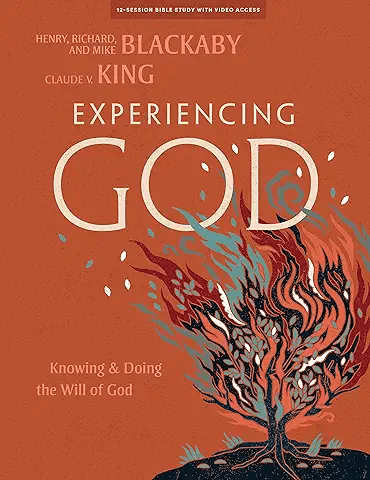
In order to look ahead with clarity, we need to first look back to see where we have been. The old Experiencing God bible study by Henry T. Blackaby (click for link to 2022 edition) identified the value of looking back at the past to gain clarity about what step God may want us to take next. Whether we are thinking of ourselves as an individual, or considering our church or organization, knowing and understanding our past can inform our future. It is rare that God will redirect us into a completely different direction than where He has already led.

Looking back helped my dad as he was making a change in his career path. My dad was a truck driver. That was his job. That was how most people saw him when I was young. At one point he decided God wanted him to become a marriage and family counselor. Some people thought this was a strange new direction for him to pursue. Others, who knew him well, said it made complete sense. They had already observed God using him to speak into other people’s lives and giving sound advice in the past. Becoming a counselor was not a drastic change but built on what God had already done in his life.

What Has God Been Up To?

As you look back over the last year or more, think about where God has been working in your life and how God has been using you. Has God been speaking to you about your life? There are times in life when every scripture we read or every time we talk with God in prayer that God impresses something on our mind or heart. There are times when, without us asking for it, a certain theme comes up again and again. Have you asked God what to do with that?

Have you seen God use you in meaningful ways with people and circumstances? Perhaps you’ve agreed to serve in a role because there is a need, only to find that God arranged for you to be in that place at that time to be a blessing to someone in need. God may use circumstances where you are exposed to a need you were not aware of, but God impresses the need on your heart, and you realize God is calling you to be part of the solution.

I know for me; I became convinced of God’s calling on me to be a pastor as I saw how He used me in my pastoral internship. It was while preaching a sermon during that period that I felt a clear call from God to serve as a pastor. That circumstance became a clear on my life. Similarly, a church may see a number of single mothers attending their church and realize God is calling them to a special ministry with them. Has God already been using you in a certain way that may give you direction for what’s next?

Has God been teaching you things that could be preparing you for something new? God can teach us in a number of different ways. It may be formal training at a school or college or hands on training in an apprenticeship. We also learn a lot just from experiences we go through. Each of these ways of learning can help us see God’s direction on our lives. As God teaches us over time, we get a clearer picture of what He is preparing us for next.

Evaluate the past in light of your relationship with God and His work in and through you. Recognize the value of knowing where you have been in order to get a sense of where to go next. What new beginning may be waiting for you as you step into the new year?

Please leave a comment, let me know how your past has helped you see the future more clearly.

Keep looking up,

Andy Wiebe

Leading Without Accolades

I remember a leader telling me that she was discouraged because she never heard from people if they appreciated what she was doing. We all long for approval and acknowledgement. We want validation because it feeds our desire for people to like us and like what we do. We need to keep leading even when the accolades are not freely given.

The general population is not good at giving approval for something they expect. If we lead well in church, we will rarely get feedback because we are doing exactly what we signed up to do. We are leading in the way we agreed to when we took on the responsibility. Sometimes, when the verbal accolades are not given, we may be able to read the body language of the crowd to recognize their approval. If people laugh at a joke you shared in a speech, take that as an accolade. If they respond with clapping or raised hands during worship you lead, receive that as a sign you are leading well as they are responding physically.

It is also important to recognize that people are more likely to give negative feedback than positive feedback. If there is absence of negative feedback, take that as a good sign. No feedback may mean that people are okay with how things are going.

As leaders, we also need to learn to get our affirmation elsewhere. We cannot depend on the people we lead to be a gauge of how well we are leading. Instead, we need to be clear about what our role is and do it to our best ability. Yes, we love and need feedback, but we must learn to lead without it coming from the ones we lead. And then when we do receive positive feedback, accept it as a bonus rather than an expectation.

Sometimes we can look at the success of our leadership and receive positive encouragement from that, but sometimes our leadership is not met with the success we long for. We may be doing it all right, but still have no success to point to.

Am I now trying to win the approval of human beings, or of God? Or am I trying to please people? If I were still trying to please people, I would not be a servant of Christ.

Galatians 1:10

In Galatians 1: 10 Paul points out that our goal should be to please God rather than look for the approval of men. Yes, it feels really good and is affirming to hear the “well done” of people, but it is even more encouraging to know that God approves of us and our leadership. Some years ago, my leadership was challenged to the point that I ended up losing my position. This affected me deeply. It was incredibly encouraging when I was at a pastor’s retreat, and God used others to affirm His love for me. Three different times in those couple of days, God said to me, “You are beloved Son in whom I am pleased.” Once it was a strong impression in my mind and twice it was as different people prayed over me. The approval of God was worth much more than that of men.

It is also valuable to recognize that anything good is done only through the work of Christ in us. 1 Corinthians 3: 7 points out, “So neither the one who plants nor the one who waters is anything, but only God, who makes things grow”. God equips us and invites us into leadership roles. Our first responsibility is to Him! As we serve in leadership, we ought to serve with a desire to please God first.

When the accolades do not come, continue to lead as God has called you. Do your job well and do it for the Master who called you to that role in the first place.

Keep looking up,

Andy Wiebe

Book Reviews: Andy’s 2023 Reading Experience

I will be sharing a brief review of every book I read this year. Hope you enjoy and hope it encourages you to keep reading.


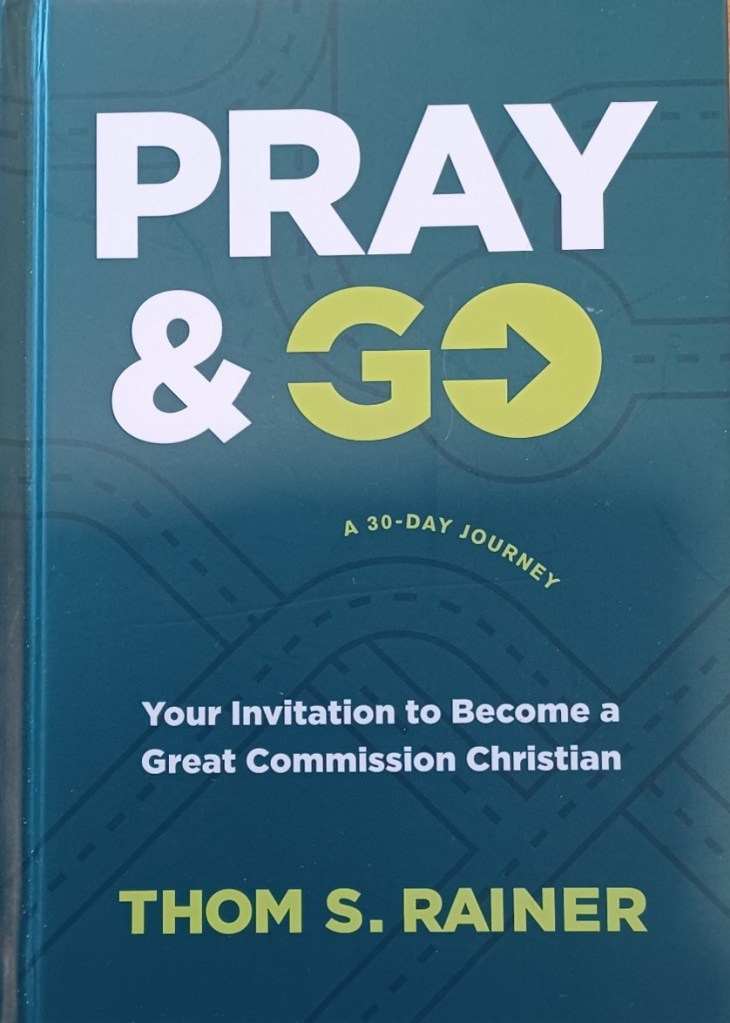
PRAY & GO: Your Invitation to Become a Great Commission Christian – by Thom S. Rainer.

Thom Rainer has written a great book that is used for Church Answer’s Hope Initiative, a 30-day journey that can be done as a group or individually. When you sign up for the Hope Initiative you also get other supporting resources and video encouragement in you 30-day journey. The intent of the book is to help you become more active in sharing your faith as you pursue the fulfillment of the Great Commission of introducing others to Jesus. A great book to help you grow as a disciple of Jesus.

Book Reviews: Andy’s 2023 Reading Experience

I will be sharing a brief review of every book I read this year. Hope you enjoy and hope it encourages you to keep reading.


A TREASURY OF A. W. TOZER by A. W. Tozer

If you have never read A. W. Tozer, this might be the book to get. It is a collection of Tozer’s writings from a few different books he has published. Tozer is an older author who speaks with a directness to his audience and a reverence for our Holy God. Much of his writing focuses on the indwelling of the Holy Spirit and the pursuit of holy living. The short chapters make it a great devotional read.

Courage to Risk

It is common to seek out safety and security. We want to know that we, and those in our care, are not in danger or lacking in anything. But progress is only made as someone has the courage to step out and try something new. If safety is our number one priority, we will never try anything new.

To be a good leader one must be willing to try something new, at least occasionally. We recognize that what we are doing may not be enough, that there might be other options out there that are better than what we are doing right now. The problem is, we don’t know if there are better options unless we try. Trying something new is a risk. When we step out of the safety of our comfort zone and the familiar, we move into uncharted territory for us and the church or organization we lead.

A pastor may need courage to try something new in a worship service – something a little unusual. I risked a change last Sunday. We had completed a sermon series I was working through and didn’t want to start a Christmas series just yet. As I thought about the service, I got an idea I felt may have been from God, but it was different. I am still a new pastor at this church, having only served them for about three months. I wasn’t sure if I was trying something they might respond to or not.

Here’s what I did: I introduced the Sunday as a Scripture Sunday. At the beginning of the service, I gave the congregation a heads up, that I would ask them to read or quote their favorite scripture. I made sure we had mics for people to go to so everyone could hear them read. I introduced the morning with a brief look at 2 Timothy 3: 16-17 which highlights the value and importance of scripture. I referenced 1 Timothy 4: 13 where the Apostle Paul encourages Timothy to include public reading of scripture in their worship services. When I opened up the floor for people to read their verses, I was pleasantly surprised at how many people came up to quote or read verses.

I had no idea how that morning would turn out, but I risked it and was pleasantly surprised. And I was encouraged to see how scripture was obviously an important part of many people’s lives.

There are many areas in a church or an organization that could benefit from a change. Have the courage to try. Though it can be tough to introduce a big change, it may help to approach it as a trial and see how it goes. Sometimes people are willing to try something new if they know it is not forever and will be evaluated later. If after a trial period it turns out to be less than ideal, then put it aside and move on, but if it is a good idea, now you can evaluate and improve it and keep going!

Courage is also required when reorganizing responsibilities, and letting someone else take over a responsibility you previously held. As much as you can prepare someone else, training and equipping them for that role, there is still the risk that they may do a terrible job and you will have to deal with problems after. Yet, if you have done your part to prepare the person taking over, they may even do a better job than you, though likely not exactly as you would had done.

Courage is necessary when you have to speak truth into a difficult situation. When you have to confront someone about their actions, you never know how they might respond. You may be risking a friendship breakdown. But sometimes you have to courageously speak up for the best for the larger organization.

Courage is required when leading a church toward a new vision. Even when many people from the church contributed to developing the vision, you do not know what the end result will be. You are moving toward a new vision, trusting that you have carefully sought out the best route. The risk is you don’t know exactly what it will look like until you get there. But take courage and move forward.

Courage is vital for any leader, vital for any pastor who is concerned about leading their church well. Prayerfully assess the risks and ask God to guide you as you courageously move in the direction you believe God is leading. Take courage and lead on.

Keep looking up,

Andy Wiebe
Share Your God Stories

When I was in Grade Four, my Dad felt called to attend Bible School. I remember one time in his third year, where he came to me and my brother, now about 12 and 13 years old. He told us that we had no food left in the cupboards and we needed to pray together that God would provide for us. Money that was supposed to come in had not. So, we prayed. Then, a little later, I remember hearing a sound at the front door. We

opened the door to find four big paper grocery bags full of food. Whoever dropped it off was long gone, but God had put it on their hearts to bring it to us at just the right time! I will never forget that feeling of knowing without a doubt that God had provided!

Just four days ago I was driving early. It was still dark and there was quite a bit of traffic. I was a little wary because we hit a deer a few months ago and I did not want that to happen again. With all the traffic I couldn’t see well. There were headlights shining in my eyes and my low beams didn’t reach into the ditches like I wished. Finally, I managed to get some space between me and other traffic and could turn on my high beams. As I did, it felt as if God was saying “Okay, now you can see. I’m looking after you.” Within seconds there were a couple of deer on the opposite shoulder of the road. I saw them in time and slowed down. As I got closer, they turned and headed back away from the road. And then within minutes I saw a couple of elk on the opposite shoulder of the road, coming steadily onto the highway. Because of my high beams I saw them clearly and came to a stop as two of them made their way onto the road and stopped to look around. Slowly the two of them started walking again and cleared the road. And then, again, because of my high beams, I noticed some more movement just as I was about to drive – a third elk. Where I needed to see, I could have my high beams on and God kept me safe!

When God does these kinds of things, we need to remember them. We need to tell others and pass them on to our families and friends.

There are many stories in the Old Testament that are repeated again and again. Many psalms celebrate significant stories of the people of Israel and God at work. They even had special holiday festivals dedicated to reminding people of God at work. One significant festival was the Passover, a yearly reminder of God freeing the Israelites from slavery in Egypt when the death angel passed over the homes of the Israelites who had painted the blood of goats on the doorposts.

Many of us have had unique experiences with God where we know God intervened in our lives in a way that was much more than coincidence. Unfortunately, even though the event was significant to us, we tend to keep it to ourselves. We need to tell the stories. We need to share them at our Thanksgiving suppers. We need to pass them on to our children and grand children, reminding them that God is still at work in our world.

The problem is that we too quickly forget. We don’t write songs about these significant events like bards of old might do. We don’t write the stories down. Unlike the Israelites, we don’t set up stone altars as reminders of God’s work.

God is still at work in our world. Let’s remember when he works in our lives and lets share the stories with others so we can celebrate God and his goodness together.

Keep looking up,

Andy Wiebe

Sermons That Change Lives

A history teacher tells you what happened in the past. Or, they might inspire you to travel to historic sites. A first aid instructor will help you get a first aid certification. Or, they might inspire you to pursue a career as an EMT.

All instructors convey information…but some inspire. In the same way, sermons can convey information…but they should inspire the listener to action. Something should happen as a result of hearing the sermon.

As I was looking ahead to writing this blog, I heard some great material on a podcast I follow(Revitalize & Replant with Mark Clifton) where these two pastors were talking about how to write meaningful sermons. They referred to a model you may be familiar with. They said every sermon needs to answer the following 3 “what” questions: What? So What? and Now What?

The first question – “what?” asks what the scripture says. This is the research that forms the content of the sermon.

The next question asks, “so what?” This focuses on the importance of the scripture. Why is it something we are discussing? Why do we need to know this?

The third question is the one I want to focus on. Most preachers will do a pretty good job on the researching and writing of a sermon. Many identify the importance and value of the scripture. But many sermons fall short on the final question: “now what?”

“Now What?” is about the application of the sermon. Actually, it’s about even more than that. It is about inspiring the listener to want to do something as a result of the sermon they just heard. They cannot just go home with their family, eat their Sunday dinner, and go on with life.

A good preacher will not be satisfied until the sermon calls the listener to action.

Writing a good “now what” conclusion for a sermon requires an understanding of the scripture and what God is intending to communicate. The preacher takes it to heart and recognizes the action God is calling him to. He knows the content so well that the action required emerges from the text.

Further, the preacher needs to understand his local context, because God does not speak to people in a vacuum. We all live in a certain country or province or community. We all have certain political realities we live in. The preacher needs to know how to make the call to action one that fits his local church. This is one reason why it is important for the preacher to know the people who will be listening to the sermon. The application is then connected to the local setting.

I have discovered that giving a few ideas how to respond may help some people, while others will have already felt God speaking to them about a specific response.

Beyond just suggesting ways to respond, the preacher needs to find a way to inspire the congregation to respond. Just to be clear, it the Word of God by the power of the Spirit that changes lives, yet the pastor needs to prayerfully work in tandem with the Spirit to determine what the action should be and how to describe it in such a way that makes people want to respond.

In Acts 2 Peter preaches a powerful sermon. Look at the response of the people in verse 37:

 “When the people heard this, they were cut to the heart and said to Peter and the other apostles, ‘Brothers, what shall we do?’”

The people were not satisfied with information. They felt a response was required of them, but they were unsure what to do. Peter responds: “Repent and be baptized, every one of you, in the name of Jesus Christ for the forgiveness of your sins. And you will receive the gift of the Holy Spirit.”

As a preacher, you want people at the end of your sermon to be asking, “what shall we do?” So take the time to answer this question before you conclude. This should not just be tacked on at the end, but something that is given equal consideration as the body of the sermon because it is just as important.

If you want your sermons to change lives, you must help people see what is expected of them after hearing the sermon.

Keep looking up,

Andy Wiebe

Church Leadership Series: Part 8: A Church Leader Must Not Be A New Christian

A church leader must not be a new believer, because he might become proud, and the devil would cause him to fall.

1 Timothy 3: 6 (NLT)

It is a great joy to welcome new believers into the church! But Paul gives a warning: “A church leader must not be a new believer.” We should look to those who are spiritually mature to lead us.

Paul doesn’t give us a length of time to wait, just that we are to wait. This is good, because some new believers mature faster than others. There are some who could take years to be ready while others might be ready in a year. The important thing is to give the new believer time to learn and grow in their faith in Christ.

What might be some problems with new believers in church leadership? Paul, in his letter to Timothy cautions that a new believer put into leadership too soon may become proud. The new believer may see this leadership role as a position of elevation in the eyes of others and think of themselves as something special, rather than as a servant. And Paul is concerned that this new believer, in their pride, may fall. The NIV puts it like this: He must not be a recent convert, or he may become conceited and fall under the same judgment as the devil. The devil fell because of his pride. He wanted to be higher than Jesus. Paul is concerned that a new believer will fall prey to the same sin and hurt his walk with God.

Other concerns may be tied to some of the earlier instructions given to church leaders. A leader needs to have a good reputation and live a goldy life. The new believer may not have that to begin with. He may need to have time to mature and become more like Jesus, and to gain that good reputation with others around him.

Another concern may be that a new believer will not be able to teach in the same way that a mature believer can. If a new believer is good at research, they may be able to put together a good lesson, but their teaching would generally be theory because they have not yet had time to put into practice what they are learning as a new follower of Jesus.

A new believer may also still carry sinful habits. He needs to learn to set those aside before stepping into leadership. While it is great to desire leadership, there should first be a strong desire to live in right relationship with Jesus by the power of the Spirit.

Churches often talk about discipleship when referring to the process of maturing as a believer, where over time the new believer becomes more and more like Jesus. A new believer would benefit from some discipleship first, whether formal or by spending time in the activities and teachings of the church. Part of that discipleship could include observing and learning from the leadership board or shadowing a leader as they go about their duties.

The official church leaders should be people who have already shown their leadership in the church as maturing believers. Asking them to serve on a board or a committee is a natural next step, affirming that they are already one of the people that others naturally look up to and learn from. Ongoing discipleship prepares maturing believers for the next steps in church leadership, taking on smaller roles to begin with and then being asked to higher levels of leadership as they prove themselves.

Church leaders should be mature and passionate about Christ and His church. They should learn and develop and grow until they are among the best in the church and well prepared for leadership. If you are that new believer, then do your part to continue to grow and be discipled as opportunities allow. God will build you up to the time when others recognize you have already become a leader. When that happens, step into leadership with a confident faith in God and a desire to serve.

Keep looking up,

Andy Wiebe

Church Leadership Series: Part 6: A Leader Exhibits Self-Discipline

He must not be a heavy drinker or be violent. He must be gentle, not quarrelsome, and not love money. 

1 Timothy 3: 3 (NLT)

A church leader is a manager of God’s household, so he must live a blameless life. He must not be arrogant or quick-tempered; he must not be a heavy drinker, violent, or dishonest with money.and he must love what is good. He must live wisely and be just. He must live a devout and disciplined life. 

Titus 1: 7, 8 (NLT)

Not everyone leads a self-disciplined life, but leaders must be able to do so. Leaders need to have the ability to assess themselves against the expectations laid out for them. A Christian leader assesses themselves regularly against what the scriptures teach about leadership.

When I was a kid, my church circles strongly opposed drinking alcohol of any kind. Today, many Christians have decided abstinence is not a requirement in scripture. Paul, while not teaching abstinence, clearly prohibits church leaders from being “a heavy drinker”. He doesn’t say that they need to avoid getting drunk, but not be a heavy drinker. So the warning is actually about drawing a line earlier than getting drunk. It’s not hard to understand why. Drinking to excess will severely limit a person’s self-control.

In both Titus and Timothy, Paul speaks against being violent immediately after warning about drinking too much. This may be because for some, drinking may lead to violence (perhaps related to lack of self-control mentioned above). In any case, violence should not be part of a Christian leader’s character in any way. Instead, there should be gentleness. There should be a kindness in every leader.  And they should not be known a someone who quarrels. They should be disciplined, controlling their anger.

A church leader should not be arrogant. Sometimes people in leadership think that everyone else should look up to them, expecting, even demanding, a certain amount of respect from people rather than choosing to serve others. Some church leaders, some pastors, act like little kings rather than servants of those they are tasked to lead.

A church leader must not be dishonest with money, or even love money! There have been many scandals in the news over the years bringing to light leaders who have used their position to build their own personal wealth at a cost to the organization they were entrusted to lead. That should not be.

When a Christian leader lives rightly, they will love what is good, live wisely, and be just. They will be more concerned about the people they serve and the organization they lead that they will be good and kind and wise in their actions. They will be more concerned about honouring God than trying to make themselves look good.

He must live a devout and disciplined life.” A Christian leader will desire God first. There will be a constant desire to give God the glory and take none for themselves. There will be a longing to know Jesus in a deeper and more personal way. The Christian leader will spend regular time in God’s Word, not just for their next teaching responsibility but for personal growth and connection with God. There will be a desire to live out what they are reading, to honour God with their abilities and their position, whether in the church or in business.

A disciplined life is one that is careful to remove and stay away from characteristics that do not reflect a relationship with God, while also working hard to reflect the character of God in all they do. Discipline means you put some effort in. You evaluate yourself regularly against what you believe God wants of you. A disciplined person knows where to draw lines in life, knowing how to avoid extremes of one way or another so as to reflect Jesus in all they do. A Christian leader will live a disciplined life.

Keep looking up,

Andy Wiebe

Church Leadership Series: Part 4: A Leader is Faithful to His Wife

He must be faithful to his wife

1 Timothy 3: 2 (NLT) and Titus 1: 6 (NLT)

A church leader must be faithful to his wife – or her husband. Paul advises church leaders to remember their priorities. Yes, serving in the church is a good thing – a great thing even – but he warns them not to forget their responsibilities to their spouse as well. Many church leaders work full time jobs outside the church and serve the church with the left-over time they may have. Others work full time in the church as pastoral staff. It is easy to see the church work as being so important that you begin to neglect the person most important to you.

I am serving as a Transition Pastor which means I serve a church for about a year or so in preparation for their next full-time pastor. One of the things I like to do is work with the church to make a plan for the first 90 days of the new pastor’s ministry. I want to help them see the importance for balance in the pastor’s ministry. That same balance needs to be there for any church staff or volunteer. Remember that you need to consider your spouse and make time for them to.

Part of “faithfulness” to your spouse is giving them time too so you do not make them feel they are fighting the church for attention from you. Faithfulness involves giving them priority in your life.

Some versions of 1 Timothy 3: 2 are: “husband of one wife,” or even “man of one woman.” If you want to be a God-honouring church leader, you will protect your marriage. You will be committed to your spouse. You will protect that relationship and not let anyone else into that place that you hold for them.

It is the nature of church work that volunteers work closely with other volunteers. You pour your heart into what you are working on. You are dealing with spiritual issues, which sometimes become emotional issues. In the process, some leaders have begun to transfer feelings and thoughts they had for their spouse to the person they are working so closely with. Guard yourself against sharing too intimate details with someone who is not your spouse, especially if you are working with people from the opposite sex.

You can protect yourself from some of the dangers by doing a few simple things.

  • Never spend time alone with a person of the opposite sex

If you need to meet with someone in your office who is of the opposite sex, make sure your office is set up with windows that anyone walking by can see what is going on inside. Keep the door open. If that does not work, ask if you can have another person sit in on the conversation.

Don’t spend time working on projects with a person of the opposite sex. Invite others to work with you, or make sure that the work being done is out in the open where people are coming and going.  Protect yourself from any problems or perceived problems.

Never drive anywhere with only one person of the opposite sex in your car. Either take separate cars or invite another person to join you.

  • Tell your spouse everything.

Tell your spouse about what you are doing. When you are ever in a situation that may cause an issue, let your spouse know as soon as you can. The more open you are with your spouse the less you will be tempted in the wrong direction. Hiding things lets temptation grow, bringing them out in the open takes the power of that temptation away. And the more you share with your spouse, the more they will trust you as well.

  •  Set guidelines and policies.

The more that is made clear at the beginning, the easier it is to stay on track and protect your relationship with your spouse. Develop clear guidelines for your staff and volunteers to make sure you all understand your desire to protect relationships and marriages.

Church leaders, do everything you can to protect your marriage as you serve the church.

Keep looking up,

Andy Wiebe