As we come to the end of this year, I want to thank each of you who read this blog. Thank you for allowing me the privilege of sharing from my heart, things I’m learning and discovering in my journey as a pastor and church leader. We serve a great God who loves us deeply – enough to send His Son to die for us and open a way for a personal relationship with Him! We are all learning every day. Thank you for considering my thoughts in your learning.
Rest doesn’t always come easily for driven people. Many pastors and church leaders are passionate about what they do. They are busy, sometimes with expectations put on them, but often because they see another thing that could be done to help move things forward. There is another person to visit, another meeting to prepare, or a new program to plan for. And Sunday is always coming. Every weekend needs another sermon, and service, and lesson prepared. Rest doesn’t always make it onto the “to do” list.
By the seventh day God had finished the work he had been doing; so on the seventh day he rested from all his work. Then God blessed the seventh day and made it holy, because on it he rested from all the work of creating that he had done.
Genesis 2: 2-3 (NIV)
We see four things God did as He concluded his creation. He finished, rested, blessed, and made holy the seventh day. God quit working. There was a certain point where God said, “That’s enough,” and he stopped working. Not only did he stop working, but he also rested. He took a break. He paused from the work and enjoyed a rest. And then he made the seventh day special by blessing it, and he “made it holy.” He set aside from all other days as a special day.
The people of Israel were told to celebrate the Sabbath every week. There were strict warnings from God to the Jewish people to keep this day as a day to stop working and rest and delight in Him and His creation.
Most Christians do not keep the Sabbath in the way that the Old Testament taught, and I don’t believe we need to; yet finding time to stop working and to rest and delight in God is still honoring to God and a huge benefit to all believers. For many, especially pastors, Sunday is not a Sabbath rest. This past Sunday was a good example. My wife and I left home in the morning at 8:30 am and did not return until 9:30 pm. We had a full Sunday. I had to set up and teach Sunday School. I then led a special Prayer Service. This was followed by visits to three different homes: lunch with one family, tea with another, and supper with a third. In that time, we debriefed the morning with an elder, anointed and prayed for a sick church member, and enjoyed playing games with some other friends. While not a Sabbath rest, as such, this was a great way to spend a Sunday, enjoying God and people.
Spending time with our church family, learning and worshipping together is part of Sabbath. Praying for people and anointing them with oil can be part of Sabbath. What many church leaders and pastors miss out on is the Sabbath rest aspect. For some, this works on a Sunday. For others, we need to set time aside at another time. My wife already asked me which day I was going to take off this week, but a Sabbath is more than just a day off. A meaningful Sabbath is a time to follow the example of God: to stop working, to rest, to delight in the day and in His Creation, and to contemplate the holiness of God. It may include feasting and church and family and friends. It may include prayer and scripture reading. If you finish the day rested, with your joy refreshed, and feeling God’s pleasure, then you have “sabbathed” well.
I would encourage you to take time in your week to, not just take a day off, but to enjoy God and his creation and rest your body, mind, and soul.
Take time to relax and rest in the presence of God.
Every leader benefits from reading regularly. Even those who do not enjoy reading can benefit from disciplining themselves to read. The authors we read become our mentors. We can benefit from being mentored by those whom we may never meet and who do not know us personally, but who pour into our lives through their written words. Many of us do not have access to pastoral mentors; these authors can become that for us.
As you read, you will find certain authors that you connect with or who seem to speak into your context in a way that you find helpful. There are certain authors I have read at different times depending on the situations I was working in or issues I was facing. Choosing a book allows you the opportunity to tailor your mentoring experience to your specific needs.
Let me share four authors and some of their books I have personally benefited from.
Nelson Searcy is the – founder and lead pastor of The Journey Church in New York and author of a many church leadership books. Many of Searcy’s books are about a specific system that he has developed in his church. I found many of the principles to be adaptable to my situation even in a smaller rural church.
A few of his books that I have benefited from are:
Fusion: Turning First-Time Guests into Fully – Engaged Members of Your Church
Activate: An Entirely New Approach to Small Groups
The Generosity Ladder: Your Next Step to Financial Peace
Maximize: How To Develop Extravagant Givers In Your Church
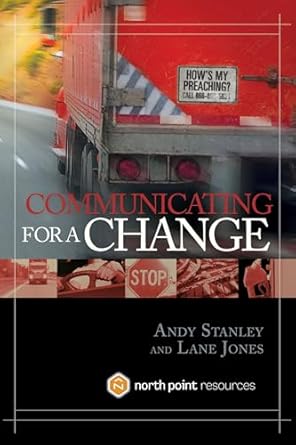
Andy Stanley is the – founder and lead pastor of North Point Community Church in Alpharetta, Georgia and author of many books, mostly about church leadership. I especially appreciated his teaching on preaching and vision setting.
A few of his books I have benefited from are:
Deep and Wide: Creating Churches Unchurched People Love to Attend
Communicating for a Change: Seven Keys to Irresistible Communication
Visioneering: God’s Blueprint for Developing and Maintaining Personal Vision
Seven Practices of Effective Ministry
Preston Sprinkle is an – author, speaker, and teacher. I have especially appreciated his books addressing gender and same sex attraction, as well as other issues of today.
Here are a few of his books that have helped me understand the discussion around these issues better:
Embodied: Transgender Identities, the Church, and What the Bible Has to Say
People to Be Loved: Why Homosexuality Is Not Just an Issue
Go: Returning Discipleship to the Front Lines of Faith
Fight: A Christian Case for Non-Violence
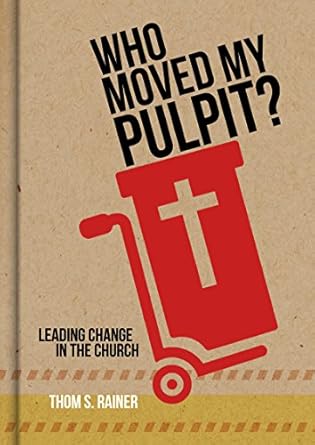
Thom Rainer – is a writer, researcher, speaker, and founder of Church Answers, a website where many pastors connect and learn together about church ministry and the life of a pastor. His books are usually short but filled with practical advice about the church.
Here are a few of his books I have enjoyed:
Becoming a Welcoming Church
I Will: Nine Traits of the Outwardly Focused Christian
Who Moved My Pulpit?: Leading Change in the Church
Unchurched Next Door
I read a lot, but these are a couple of authors I have read often and enjoyed how they spoke into my life and ministry.
Invite leaders to mentor you as you read their books. Learn from their experience and expertise. Look for a couple of nuggets that apply directly to you as you read. And keep on learning.
I had the privilege this past week of spending a day with others who have a similar role as I do. We don’t actually work together on the same projects or in the same church, but we are all part of the same denomination functioning in the role of transition pastors. There is a special joy in connecting with people who know your role and the situations you face because they face those situations, too. In the past, I was able to connect with fellow rural pastors and pastors in the same region. We may not all serve the same church, but we can connect and relate to shared experiences because of our similar roles.
It may feel like getting to know and spend time with these teammates takes too much time or effort that could be used for other priorities, but I have personally found value in connecting with others who understand my roles.
They understand the frustrations and joys.
When I met with rural pastors as a rural pastor, I knew that they understood what small-town life was like. They understood the realities of serving a smaller church. When I meet with transition pastors, they know what it is like to face church conflict and to try to mediate it. Transition pastors know what it is like to help churches, to fall in love with them, and then have to move on to a new assignment in a year or two.
When you are talking with others who know your role, you can share jokes and stories that they understand. They are “in the know” because they do the same things you do. Other transition pastors know the frustration of churches that do not want to change, even though they know they need to. They understand the joy of a board catching God’s vision together as they plan vision and strategy for the church.
They can provide ideas and advice.
When I meet with transition pastors, I know they use similar tools and processes as I do in helping churches transition. Transition pastors know what it is like to help churches build on the past to look to the future. One of the benefits of my recent meeting with other transition pastors is to learn about how they handle particular situations. Most of them have more experience in this role than I do so I love to soak up ideas as they talk about their ministry.
They can pray for me with understanding and clarity.
One of the joys of meeting with others in similar roles is that we can pray for each other with an understanding of the situations we face. Often we don’t even have to finish our story and the others are already smiling or nodding or even crying as they have gone through similar situations. They can pray for me, and I pray for them, with clarity because we have seen very similar situations where we have served.
I encourage you to find others who are in a similar situation as you. You need to find “your people” so you can have people around to encourage you and help guide you as you need input and wisdom from them.
Life and ministry can be busy times. Maybe you have taken on too many commitments. Maybe someone else piled responsibilities on you that you can’t ignore. Maybe you thought you had time for everything until an unexpected demand popped up. This happened to me recently. I had accepted a number of responsibilities and thought I could manage them until I found a leak in my shower. Now I had the added work of dealing with house repairs that I am not skilled at and do not love doing. I was beginning to feel quite overwhelmed and wondered how I would get everything done.
As my anxiety started to rise, I paused my day to spend some time with God. As I was praying, I began to get some clarity and peace, trusting God to help me get done what had to be done by the appropriate deadlines while also dealing with my house. Here are some of the steps I took to focus on one thing at a time:
Pause the “doing” to be with God
I took on the various responsibilities because I believed God was guiding me in accepting them. With that in mind, I handed it all over to Him and asked him to give me the time necessary to get it all done on time. I was reminded too, that God was not surprised by my house issues. So if God put these responsibilities in my lap, then he will give me the capacity to get them done.
Remove anything from your to do list that is not important for now
Sometimes we feel a duty to do something that we don’t really need to do. I had to reevaluate some of my goals and responsibilities and either eliminate some, or push them to next week.
Plan my day and week.
With God’s help, I began plotting all my responsibilities, along with their deadlines, onto my calendar. I tried to spread out the different requirements across the whole week. Then I considered all that I felt I had to accomplish for today. As I looked at the list, I started listing them in order of priority. If I could not complete all the tasks, at least the ones that had to get done today would get done.
Focus on one thing at a time.
When we get loaded down with responsibilities, we can get overwhelmed because we see it all in front of us. If we can break it down to what must be done this week, and this day, and this morning, we begin to narrow our focus. And if we tackle one thing at a time, giving it our full attention, we can begin to whittle away at the pile.
It doesn’t matter how big the pile is, you can only deal with one thing at a time, so choose one thing and give it your best. You could even tell yourself you are focusing on this for a certain amount of time, and when that time is up, you will tackle something else before coming back to the first task.
Celebrate your accomplishments
I find it quite exhilarating to be able to check off the items on my calendar as I complete them. It feels good to see the momentum beginning to build toward completion of all the different tasks.
Yes, life can be very busy at times, busier than we had planned, but God can help us grow in capacity so that we can get things done faster than we thought and can complete our list one task at a time. If God wants us to do it, he will help us to get it done.
The other day, I was speaking with someone who mentioned a “bumpy rug.” She was referring to the practice of ignoring problems and “sweeping them under the rug.” Another similar comment I heard recently was, “Let’s just get this behind us as soon as possible.” In both cases, people were dealing with sin in families and organizations. Both cases reflected a desire to move past the sin and the hurt it caused others as quickly as possible without a desire to actually address the sin and correct it.
Very few people enjoy conflict. The average person will go out of their way to avoid it. It is not fun when others are mad at you, even if you are doing the right thing. Our desire to get along and please people means that we will try to move past problems without confronting the issue and dealing with it.
We need to learn to work through the personal pain of a conflict to pursue correction, forgiveness, and reconciliation. We need to see the value of restored relationships both with God and with each other. We need to see the importance of repentance and forgiveness to help people truly get past a problem brought on by sin. We need to see the importance of pointing out sin that is affecting others in the family and in the church.
We forget that Jesus gave clear direction on how to handle sin with a Christian brother or sister in Matthew 18: 15-17.
“If your brother or sister sins, go and point out their fault, just between the two of you. If they listen to you, you have won them over. But if they will not listen, take one or two others along, so that ‘every matter may be established by the testimony of two or three witnesses.’ If they still refuse to listen, tell it to the church; and if they refuse to listen even to the church, treat them as you would a pagan or a tax collector.
Jesus does not advise getting past sin quickly, and definitely does not suggest sweeping it under the rug. Jesus suggest confrontation. He gives some steps. First, go by yourself to the person you know has sinned and point out their sin. Do not tell others about it. Do not take a party with you. Go by yourself.
The second and third steps are only taken if the first did not resolve the situation. So, second, if the sinner does not respond with repentance then take one or two others with you to confirm you are not just making a personal judgement. With two or three others, you can determine if the person really has sin they need to deal with.
Third, if the first two steps do not resolve the issue, then tell it to the church. The hope is that the church will push for what is right and stand for truth and righteousness rather than sweep it under the rug. Too many churches prefer the bumpy rug to the pain of confronting and dealing with a sinning brother or sister.
There is one last step. If the person does not listen and does not correct their ways, treat them as someone who is no longer part of the church. This is a very difficult step for any church to take, yet Jesus teaches this so we know there must be times when his teaching should be applied.
We need to remove the persistent sinner from any leadership in the church yet continue to love them and pray for them and look for opportunities to draw them back to Jesus.
Jesus did not write off tax collectors and pagans but invited them to follow him. He even called Matthew, the tax collector, to be one of his disciples. Jesus treated pagans and tax collectors as potential disciples, if only they would leave their sin behind. Even as we can’t allow the persistent sinner a place of leadership in the church, we continue to point them to Jesus, with the hope that they will repent and surrender their hearts to Jesus again.
Let’s choose to pursue reconciliation, not allow more bumps under the rug!
Our shower had mushrooms growing next to it. This happened a few months ago, so I did my best to seal up places where they were growing and places where water seemed to have leaked from the shower. All was good for a few months, until recently, the mushrooms were back.
I am not a renovator or construction worker of any kind, but I had to step and deal with this. My temporary fix was just that – temporary. I had to tear out the whole shower, piece by piece until I got down to the bare bathroom floor. I tore out the wet, damaged drywall and put some fans to work drying everything out. I was glad to see there were no other leaks. Whoever installed the shower just didn’t seal things well. I’m now in the process of replacing drywall, mudding, and painting in preparation of reinstalling the shower. This time I will ensure that everything is sealed. Leakage causes damage.
“Leakage” can happen in a number of ways in our lives, as something begins to deteriorate but it happens so slowly we don’t recognize it until a “mushroom” or other weird side-effect pops up that tells us something is wrong.
It could be that we are experiencing leakage in a relationship with a friend. We realize that something is wrong. The friend seems to be avoiding you. Maybe you have even tried a temporary fix like I did with my shower, trying to address the issue without creating a problem, yet you realize something is still wrong. More drastic measures need to be taken for a satisfactory resolution is reached. You need to face the issue head on and ask your friend directly about what is wrong, and how the relationship can be repaired to its original closeness and openness.
Leakage may happen in one’s spiritual life. Sometimes we get lazy in our walk with God. We allow sinful habits to creep in. If we recognize something is wrong, it may already mean it is time for some drastic measures. We can gradually allow others to influence us in directions that are not good and honorable. There are times we need to assess our friendship with Jesus and determine new patterns and habits to address the leakage. It may be beneficial to start practicing a few spiritual disciplines to get us back on track. Depending on the situation, we may want to find a friend or small group to help hold us accountable to the corrections we make.
An organization, a team, a church may all experience leakage of vision and purpose. Over time, the organization, including the leadership team, can forget what their vision is all about. Team members begin to do things that no longer match up with the values and vision agreed to at first. Sometimes a little adjustment of a reminder may be all that is required. Other times, a more drastic measure may be needed. It may require a full day of “re-visioning” with your team, returning to or reviving the vision that you all adopted in the beginning.
Leakage is often not noticeable until the issue is big, because leakage happens gradually over time. Once noticed, it must be addressed.
Leakage can be addressed with a few steps. First, like with my shower, you may recognize something happening that does not line up with the original purpose of the shower. I had no intention of growing mushrooms in my bathroom. Something was wrong.
Second, if a simple fix doesn’t cure the problem, drastic measures may be needed. I had to tear the whole shower out. You may need to address the issue head on.
Third, make sure you get a clear picture of what the problem is so you can then address it correctly.
And, fourth, do the difficult and time consuming work or correcting the problem. You will be glad you did.
Leakage causes damage. Don’t ignore the signs when you see them and address them appropriately as soon as you can.
When parents are raising their children, they teach them how to be polite and how to live into the culture around them. One of the values parents often try to instill into their children is to say thanks. Parents often remind their children to, “Say thank you.” Or they ask the child, “What do you say?” They want the child to express their gratefulness when they receive something.
Luke 17 tells us a story of ten men sick with leprosy who met Jesus. They stood at a distance, respectful of Jesus who did not have the disease, and called out for Jesus to have pity on them. Jesus tells them to go show themselves to the priest. As they went to do so, they were cleansed. (The Old Testament Law said the priest was the only one who could declare a person clean after a sickness.)
We might applaud the faith of these ten in going to do what Jesus said even though they were not cleansed yet. They were only healed as they headed to find the priest. But they were healed!
Here comes the important part of the story. Yes, they were healed, but what did they do after that? We are told that one of the men who had just been healed, instead of continuing to the priest, turned around, came back, praised God with a loud voice, threw himself at Jesus’ feet, and thanked him. Ten were healed; one came to thank the healer.
Jesus responded, “Were not all ten cleansed? Where are the other nine? Has no one returned to give praise to God except this foreigner?” Then he said to him, “Rise and go; your faith has made you well.” (Luke 17: 17-19)
How many times have we completely forgotten to give thanks, enjoying God’s goodness to us as if we deserved it?
We have a special day in our year that we stop to say “thanks.” Thanksgiving is coming up shortly. While it is good to have one day a year to give thanks, we need to cultivate a grateful heart and to develop an attitude of gratitude. As Paul encourages us in Ephesians 5:20, “always giving thanks to God the Father for everything.” Can we learn to give thanks regularly and not just on special occasions?
God is good to us in many ways every day. We take so much for granted, that we need reminders to pause and give thanks. If one wants a grateful heart, it means being intentional in giving thanks. Include thanksgiving in your prayers. Give thanks with your family around the dinner table. Thank God for His goodness in your life. Thank God for the unusual things and the answers to prayer. But also thank God for the things we receive from Him every day. The air we breathe, the food we eat, water to drink. Thank Him for creation we can enjoy. Autumne in my part of the world is a beautiful experience as the leaves change color and start to drop from the trees. Notice God’s beauty around you and give thanks.
Every time we give thanks, we remind ourselves that we depend on God for many things in our life. It is a reminder to us that we need God, and we benefit greatly from the good gifts He gives us!
Thanksgiving is coming soon, but don’t wait for that special day to give thanks!
When I was a kid, I loved flying my kite. I remember one windy summer day in the field just down from our house, releasing my kite into the sky. It was a thrill to feel the pull of the wind on the spool of string as the kite dove back and forth. I let out more string, and more string. The kite grew smaller as the string rolled off the spool until… oh no! The string was not tied to the spool in my hand! I had let the string reel out and suddenly the string was all gone – the kite was no longer tethered to the spool in my hand! I panicked! I scrambled after the kite, desperately trying to grab the string. After a few frantic attempts I managed to snag the string. In my panic I hauled the string in, not rolling it up neatly on its spool, but gathering it in a tangled pile at my feet until I had the kite back in my hands. I never managed to untangle that pile of string again.
Sometimes, in an attempt to control our busy lives, it seems we end up with a tangled mess of roles and responsibilities at our feet. We do everything we are supposed to do or have signed up for, but we desperately try to untangle the mess and get a sense of control back. Each of us needs to manage various roles in work and life.
Recently I felt like my life was resembling that pile of tangled string. I had some family issues that took precedence over all my other responsibilities. Everything else got put on the shelf for a week or so. I focused on the one thing that was most important in the moment. After that week, I recognized I had some untangling to do.
I needed to figure out which strings to pull to start unravelling the mess. I had to take out a calendar and plot out my responsibilities to make sure I was working on the right things at the right time. We can’t work on everything at once. No matter how many responsibilities we think we can handle, we can only work on one at a time. I had to break down my responsibilities into manageable periods and schedule them on my calendar. I had to plot when I would focus on my transitional pastor responsibilities. I needed to chart when I would work on my transitional coaching duties. I needed to clearly schedule when to work on my doctorate work. I needed to schedule some family responsibilities. It took some work to sort it all out, but the end result was a plan that gave me peace. I could see my way through.
Whatever is in your tangled mess of string, you can find your way through. Ask God to help you sort it out. And ask God to give you the time you need to accomplish what is on your plate. I know from experience, that God can enable you to work faster or to somehow stretch your time to do all He is asking of you. He will help you sort it out. Don’t panic or give up. Sort it out and begin working on one responsibility at a time.
Carve out a time of retreat. Even a hour or so away from everything may give you the necessary time to evaluate your priorities and determine what you need to focus on and in what order. Then after the retreat you can advance with a plan.
We all have numerous responsibilities. Sometimes they pile up and its hard to know where to start in addressing all the needs, but with God’s help you can do it.

















 Elevate with Andy