5 Ways to Personally Leverage Slow Seasons

Most churches experience seasons in their ministry. There are times that are slow, times that are steady, and times that are extremely busy. Summer is often a slow season for many churches. The church I’m serving right now has Vacation Bible School at the beginning of July, and then only a monthly prayer meeting and Sunday morning services for the rest of July and August. How can we use the slow times in a beneficial way?

  1.  Slow down yourself.

Maybe you can adjust your vacation time to have shorter days in the office and spend extra time with your family. Maybe you can take an extra day off to enjoy a long weekend doing something fun with your kids. Or just take some time to focus on a personal hobby. Allow yourself time to slow down a bit. I’m not sure that taking vacation in the summer is the best plan. Sometimes we need to save that break for in the middle or just after a busy season. Enjoy the time at home with your family without a bunch of commitments for you or them, to distract you from each other.

2. Take a personal retreat.

    Maybe you can go camping by yourself or go to a local retreat center for a day or two to spend time with God. Talk with God about what has been happening in the last year and ask God for direction for what is next. I have benefited from even a half day retreat out of the office to just spend time with God.

    You might want to ask God to help you plan your next preaching year. Pray through what God is asking you to preach on. Start by choosing which books of the Bible to preach on, or consider if there is a topic that your church needs to address scripturally. Do a rough summary of the texts that you identify and how many sermons you might need to fully preach through the topic or book so you can start plotting them on a calendar for the year ahead. These opportunities to plan a preaching year have been of great benefit to me when I have been in the middle of busy seasons. It has been very helpful to have a plan in place already.

    3. Read a book or two.

    I have been greatly encouraged through reading good books. You probably have a list of books, maybe even a pile of books, that you have been meaning to read. This is the time. Or maybe there is a topic you would like to know more about. Maybe there are certain trends or cultural issues that are affecting your church and ministry.

    Look for a book that addresses that issue. Ask around for recommendations from others for a book that speaks to your church’s needs. I recently enjoyed some great books by Preston Sprinkle on issues of sexuality and gender.

    4. Connect with friends.

    Summer may be a time to connect with leaders or members in your church, but it may also be a time to connect with friends who are not involved your ministry. It may be a pastor down the road, or a friend in another part of the country. Good friends can be very encouraging and may be worth a trip to meet up with. Do a road trip with your family that includes the opportunity to connect face to face with your friend.

    5. Enjoy nature.

    Our slow time for many is summer. Summer is a great time to enjoy God’s creation. Go for a walk with your spouse. Go camping if that is your thing. Take a day trip to nearby waterfalls or into the mountains. Enjoy a picnic by a lake. Maybe catch a fish and fry it up for supper. Allow yourself to breathe some fresh air and slow down in God’s creation.

    We all have busy times. Sometimes we feel like we are running to just keep up. So take the time to slow down during the slow times. Your health will benefit, and so will your relationship with your spouse, with your family, and with God.

    Keep looking up,

    Andy Wiebe

    A Good Team Produces Good Work

    Two are better than one,
        because they have a good return for their labor:
     If either of them falls down,
        one can help the other up.
    But pity anyone who falls
        and has no one to help them up.

    Ecclesiastes 4: 9-10

    As a pastor, much of my work is a solitary effort. I work on my sermon on my own. While I consult resources such as commentaries and word studies, I am responsible for creating the sermon myself. When I teach a Sunday School class, I generally work on it on my own. I am co-teaching a class on Acts right now. Though we spend some time discussing the scriptures together, we take turns preparing the lessons on our own. When I teach and lead, I build on all I have read and seminars I have attended, learning from the authors and presenters. Yet much of my job as a pastor I do on my own.

    This last week I was reminded of the value of working with a team. Our church is in the middle of a Three-Week Prayer Focus. We will conclude with a Solemn Assembly on a Saturday, a Prayer Vigil where people will sign up to pray for an hour or more through the night, and then a Celebration Service on the Sunday morning. This has become a much better event than I first envisioned because others have helped think through how to make it the best event it can be.

    When I presented the idea to the chairman of the church board, he instantly saw my vision and began to dream with me as to what we should plan and how to roll it out to the congregation. As we, together, dreamed about how the event might work for our church, we got more and more excited. We could see how to invite people to participate and even how to get them to step into some new experiences of prayer in the process. I had not thought of a prayer vigil through the night, but he suggested it.

    This chairman suggested we shoot a promo video with interviews of people from our congregation telling us what they thought of prayer. He knew of someone who could create the video. He asked someone to round up people to participate, and several people did, resulting in a very effective promotional video.

    He suggested that we make some promotional posters. Again, he knew of someone who would do a good job with this. Now we have some great posters for the event, and even a prayer guide for the event that people are now using to guide their prayer times. Other board members were willing to sign up to help coordinate and lead the prayer vigil. They have also volunteered to make announcements and lead group prayer times.

    If I had only depended on my own dreams and skills, we would still have had an event, but it would not have become the great experience it now is. I needed the Board Chair, the other board members, the promotional materials designer, and video producer to make the event that much better.

    We need others to team up with if we want to do a good job on many things. Inviting others into the process makes it better because we get to dream with others and bounce ideas off each other that make the result that much better. Working together ensures no one is left carrying the load, and everyone can use their skills and abilities to expand the capabilities of the leader. Sharing the work with others prevents your project from being a lonely experience; instead, the process becomes a shared collaboration with others who have the same convictions and ideas.

    I hope you have a good team around you. If not, then I pray that God will help you to find the right people to join your team.

    Keep looking up,

    Andy Wiebe

    What Energizes You?

    A friend of mine is going through a difficult stage in life. His job is not what he would like and leaves him exhausted at the end of the day when he wants to spend time with his family. He has a large debt that he is working to clean up among other issues that stress him out. When I asked him what fills him up, he answered, “Right now, I have no clue.” He is so overwhelmed with life that trying to think of something that would help energize him seems impossible.

    What fills up your tank? There is value in finding something that energizes you.

    Being in nature fills me up. I love driving through the mountains, enjoying the scenery and watching for wildlife. My wife and I stopped at a little heart-shaped lake in the Pine Pass in northern British Columbia this fall. Heart Lake is nestled at the foot of some mountains, surrounded by towering pines and spruce. When you walk out on the little dock, the water is so clear you can see right to the bottom of the lake. We enjoyed sitting at a picnic table, reading, then pausing to take in the scenery, and repeating that process. It filled me up.

    Sometimes spending time with the right person fills me up. We all know there are certain people who drain you. They draw energy from you. But there are others who make you feel good. There have been times when my wife has told me, “You should really talk to so and so.” Or “you should have lunch with your friend.” There are a few men in my life, who, when I spend a little time with them, leaves me encouraged and energized.

    Some of you might get energized by reading a good book. I love to read. It might be a novel or a book that challenges me spiritually. I love to learn, and reading helps me to do that. And it can fill up my tank.

    I’m also a project person. I love working on a project where there is a clear goal in mind that I can work toward. I get filled up when I can contribute to something meaningful that cumulates in a well-done finished project.

    What fills you up? If you are not sure, maybe you need to ask someone close to you. They may have seen where you shine and where you seem to act happier. As I said earlier, my wife sometimes reminds me to take time to be with one of my energizing friends.

    If you feel you have no idea what energizes you it may be time to try new things. Even though it sometimes doesn’t seem like it, you are in charge of your calendar, and your time. I know that we all have demands on us from work and family and other commitments we are tied to, but we should all have even a few minutes here or there to spend on our own well-being.

    Identifying what fills you up, and then spending time doing that activity is an important way to fill us up amid the stresses of life. When we get hungry, we eat. When we have been giving and giving too long, we begin to lose ambition and get short-tempered. We need to “eat” something that will restore joy and inner peace.

    Some pastors take a sabbatical for a period of weeks and months. While time off is good, even in that scenario, the true value comes not just from taking time off to rest but spending time in our “tank filling” activities. If you are married, you might want to help each other enjoy your energizing activities. This could look like covering for each other in the home for half an hour or so occasionally so the other person can have a few moments to spend on themselves.

    Let me finish with one more suggestion, probably the one we should have started with, and one that should remind us that any “tank filling” attempts fall short if we are not right with the One who created us and wants to walk through life with us. A key “tank filling” experience is to have some quiet time to spend with just you and God. You could read scripture. The Psalms may encourage you as the psalmist cries out to God with the same emotions you are feeling. Or you can read the Old Testament stores and be encouraged that God uses even the busy and messed up people for his purposes. You could spend some time talking with God. Think of it as a conversation. Ask him for encouragement and joy. You might want to sing songs of praise, or one of the old hymns. Taking time to be with God can fill a person up.

    Remember that God created us all unique, with unique ways of being re-energized and filled up for the next day.

    Keep looking up,

    Andy Wiebe

    Perfect Public Prayers?

    Public prayers can have great significance or be almost meaningless.

    Years ago, I knew an older man whose mind was starting to deteriorate. It wasn’t easy carrying on a conversation with him, yet when asked to pray, he would pray these great prayers. They were not necessarily eloquent or filled with theology, but you could sense the love for God and the sense of friendship with Him.

    When I refer to public prayers, I mean those usually prayed in our Sunday services at church. Here’s why I think some are more significant than others. Sometimes it seems a prayer is prayed strictly out of tradition or routine. The service always opens in prayer, so the pastor needs to pray something. Or the pastor prays before he begins his sermon just because that his is routine. Sometimes it even seems like it is just filler or used as a transition. We’ll pray now so the musicians can sneak onto the stage and magically appear at their instruments.

    Some public prayers seem like the ramblings of someone who has no idea what they want to pray about, so they just stumble into their prayer. In some cases, you know exactly what a person will pray because they always pray the same prayer. It seems that the one leading in prayer sometimes just says a few nice words, but has forgotten they are addressing the Lord God Almighty, the Creator of the Universe!

    On the other hand, there are some prayers that are well thought through and prayed with heartfelt words like the older gentleman above. So how can we improve our public prayers?

    First, remember whom you are addressing. When you are praying in a public service, you are not praying to the congregation. You are praying to the God of the universe. You are praying to the One who deserves all our praise. You might even want to begin your prayer with the lines of the Lord’s Prayer, “Our Father who art in heaven,” or a similar address to the Creator of the world. As you lead in public prayer, you are functioning in a priestly role, bringing the congregation before the Father and connecting with Him.

    Do not pray to teach someone something. Some public prayers seem as if the person praying is using that platform to try to tell the congregation something, rather than leading the congregation into the throne room of God. A prayer is not a time to teach a theological truth, though it is definitely a time to give thanks to God for that truth and what it means to us as believers. (And please don’t pray the announcements: “Thank you, God, that we can have a Valentines Banquet for our married couples next Friday at 7 and that we can get free tickets for the event.” Keep the prayer a prayer.)

    When you are asked to pray publicly, do some preparing. Musicians practice their music. The pastor probably writes out his sermon. He might practice it out loud. Why would we not prepare, maybe even practice, what we want to say to God in our prayer?

    I’m not sure where I got the impression, but when I was younger, I looked down on people who used written prayer. In my mind, you were less spiritual if you didn’t just “pray from your heart.” In my church we never used prayers of old or that others had written. Yet I have learned the value of writing out what I wanted to say. Sometimes I write out the complete prayer, other times I have a point form list to refer to. Taking time to do this means I have put some thought into what I will say.

    If we write it out, we will be less likely to forget something we wanted to include. In a pastoral prayer you may want to have a reminder of the various needs of the congregation, including names of individuals needing prayer. In an opening prayer you may want to thank God for something related to the theme of the morning, or of the sermon coming later. It can be a time thank God for being the great and awesome God we have come to worship.

    Writing out a prayer can help us avoid some of the annoying habits we get into without realizing it. We can cut down on the “umms” or stop repeating the same phrase. For some reason, a common word I often hear in prayer is “just.” We just want to thank you, we just want to ask you to help, we just…. Our words mean something. Saying “just” trivializes what we are asking God for or thanking him for.

    It is a privilege and honour to lead in public prayer. Let’s treat it as the privilege and honour it is to approach our Heavenly Father on behalf of those gathered to worship.

    Keep looking up,

    Andy Wiebe

    Pushing Past Nervousness!

    I remember the first time I had to speak publicly to a large crowd. It was only to make an announcement, but I was shaking so bad I didn’t know if I would be able to get the words out. Most of us will be nervous at some point, but if we want to lead, we need to push past the nervousness. Instead of just avoiding leadership, we need to find a way through. Too many people are willing to ignore their interest in leadership rather than learn how to get through it.

    I’ve been in roles that require public speaking for 30 years, and still experience nervousness – though not quite like that first announcement I made years ago. Let me share some of the things I do to help me push through.

    Prepare Well

    I still get nervous from time to time, especially if I am leading something new or if it is a special event that we have worked towards for a while. My first step in dealing with my nervousness is to make sure that I know what my role is. If it is to make a speech, I write it out. If it is to lead an activity of some kind, I make sure I have all the directions written out step by step. Sometimes it is helpful to consider what questions others may ask as I lead, so I can address those in my write-up.

    If I need any resources or props, I gather them ahead of time, and place them where I will have access to them as needed. If I am depending on others for assistance, like someone running the presentation slides for me, I make sure the presentation is easy to follow with a clear guide on how they can follow along.

    Create a Step by Step Plan.

    While this may be part of preparing, I want to make sure I point out that a clear plan helps calm my nerves. If I am preaching or making a speech, I need my script or outline. When leading a meeting I want to be clear on what will happen when, and make sure that my supporting documents are in the order of the agenda. I want to have my documents ready to go, and be ready to call for decisions to be made or actions to be created.

    The clearer I am in my head as well as on paper, the less nervous I am.

    Do a “Walk-through” Practice.

    I like to physically enact the event if possible. This means talking through the talk or reading over the agenda to make sure everything makes sense. It’s a little like the basketball player who shoots 100 baskets every morning. The more we have already “experienced” an event, the more likely we will be more comfortable when the real things comes and execute it better. The practice allows time for correction if you realize something needs changing.

    Prayer

    As a Christian leader, prayer needs to be part of every aspect of our leadership. I probably should have put this higher up in the article! I pray through every event or talk I lead. I want to be clear that I am doing what God is asking of me. I want His guidance in preparing. I want to hear His voice as I practice to discern if changes are necessary. I want to make sure He gets the glory, and that everything I do gives Him honour.

    And as I place myself and my endeavours in his hands, I can relax a bit, knowing that I am not on my own.

    Just Do It.

    After all the prayer and preparation and practice, there comes a point where I just have to do the event and trust that God will help me do it as well as possible. One of the ways to push through nervousness is to just do it. I’ve found the more often I do it, the less nervous I am. Just this past Sunday, as I was waiting for my time to go up and preach, I realized that I was not nervous at all. God has helped me to push through again and again so that my nerves do not hold me back like they used to.

    It’s okay to be nervous, just continue to push through and see how God will help you to do your best for Him.

    Keep looking up,

    Andy Wiebe

    Book Reviews: Andy’s 2023 Reading Experience

    I will be sharing a brief review of every book I read this year. Hope you enjoy and hope it encourages you to keep reading.


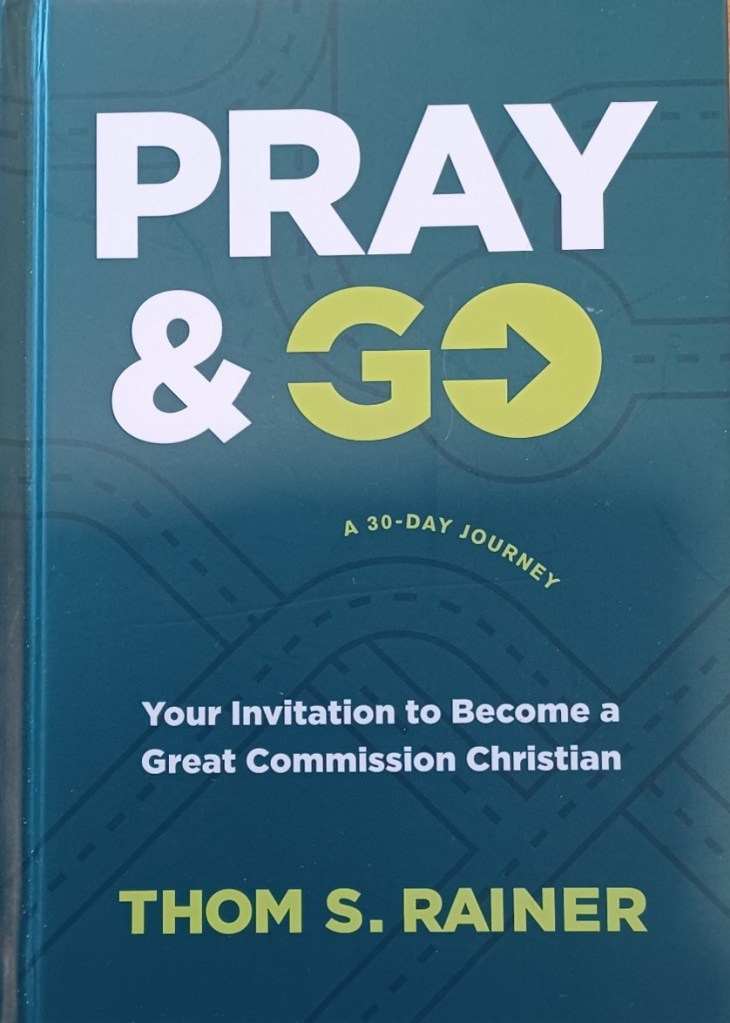
    PRAY & GO: Your Invitation to Become a Great Commission Christian – by Thom S. Rainer.

    Thom Rainer has written a great book that is used for Church Answer’s Hope Initiative, a 30-day journey that can be done as a group or individually. When you sign up for the Hope Initiative you also get other supporting resources and video encouragement in you 30-day journey. The intent of the book is to help you become more active in sharing your faith as you pursue the fulfillment of the Great Commission of introducing others to Jesus. A great book to help you grow as a disciple of Jesus.

    A Decision Making Guide

    The following guide is created to help boards and committees move beyond discussion and questions to the point of decision. The goal is a well thought-out and God-honouring decision.

    1. Clarify the decision:

    • Do I have all the information I need to consider this decision? Collect and disperse needed information to all involved in the decision-making process.
    • Review all related information. (read, watch, listen, etc.)
    • Does this decision have to be made right now, or can we wait a bit to pray and gather all pertinent information?
    • Determine who will be affected by this decision, and how.

    2. Write the motion:

    • WRITE OUT THE QUESTION BEING DEBATED. Write out a motion that clearly defines the decision being made and asks for a “yes” or “no” answer. Either you vote for or against the motion.
    • One person makes a motion: I move that _______________________________________.
    • The chair calls for a seconder. If someone seconds the motion, you can go on and have the necessary discussion leading to a decision on that motion. If there is no seconder, then the motion does not stand and you move on to the next order of business.

    After walking through the steps below, the chair then calls the board to declare their “Yes” or “No” to the motion. A simple majority wins, yet you want to strive for a unanimous vote if at all possible.

    Good motions include:

    • The precise decision being made
    • Any related deadlines
    • Who is responsible for the action in the motion

    3. Biblically informed:

    • Does Scripture say anything that speaks to this decision? Read appropriate scriptures.

    4. Vision directed:

    • How will our decision help move our Vision forward? Some decisions may not directly relate to the vision, but any that work against it should be avoided.

    5. Guiding Documents:

    • Guiding documents need to inform a board’s actions and decisions. These may not always need to be consulted but you need to be aware of them enough to make sure you only make decisions that uphold them and are consistent with them.

    Possible guiding documents

    • Policies and Procedures
    • Constitution
    • Statement of Faith
    • Job Descriptions
    • Etc.

    6. Prayer:

    • Pray about decisions that are coming up prior to the meeting.
    • Pray during the meeting. Ask God to speak to you through this whole process.
    • Listen to God and ask Him to give you direction on how to vote on the issue.
    • Pause for prayer before the decision is made.

    7. Board unity:

    • Discuss the issue together. And then decide together. Strive for unanimity. It should be a rare decision that gets passed by a vote where even one board member is opposed.
    • The board speaks as one voice – Once the decision is made, whether you were in favor or not, you abide by and support the decision that was made.

    8. Anything else to consider?

    • Consider any other aspects of the decision.

    Download GUIDE here.

    Keep Looking up,

    Andy Wiebe

    Elements of A Spiritual Checkup

    I visited the dentist this week for what most people would call a regular checkup and teeth cleaning. Though since it had been seven years since my last checkup, it was not very “regular”. But as I was sitting in the chair, I began counting how many people were involved in my checkup. There was someone at the front desk, another taking my forms, someone doing the x-rays of my teeth, someone else to clean my teeth, and one or two others supervising. And that was all before I even saw the dentist! And then after, someone else fitted my teeth for a guard.  Each person had a specific role to play in making sure I received a full checkup and a thorough cleaning, and proper advice for caring for my teeth.

    As I was lying in the chair, I began thinking of how this might compare to a thorough spiritual checkup. I would venture to say that we don’t take our spiritual checkups as seriously as this dentist and his team. Yes, many of us regularly read the scriptures and pray. We attend church regularly, and even examine our hearts before receiving communion, but might we benefit from more. If we were to have a thorough spiritual checkup, what might it look like? And would we be better served by having someone else walk us through it, or could we do an accurate enough checkup on our own?

    Determing the present reality.

    I don’t know if we need five of six specialized individuals to guide us, but we would benefit from a similar experience spiritually. We could have a trusted friend or a counselor or pastor walk through this process with us, or we could try it on our own. We could begin by looking at our spiritual condition.

    Take inventory of reality. What does your spiritual life look like right now? In the same way a dental checkup begins with x-rays to identify the current situation, checking our spiritual life should start with an initial evaluation of what the situation is. Do we need some x-rays of our soul? With the psalmist we could ask God to examine us:

    Search me, O God, and know my heart;

        test me and know my anxious thoughts.

    Point out anything in me that offends you,

        and lead me along the path of everlasting life. (Psalm 139:23-24)

    It’s rare that we can accurately identify our own state (otherwise, why would I need the x-ray in the first place?), so it can help to ask others in our lives who know us well. We could ask the people around us  what areas in our spiritual lives they see us perhaps needing improvement?

    Ask God to guide the process of taking serious inventory of your spiritual condition.

    A thorough cleaning.

    Though I brush my teeth (probably not as often as I should), I still benefit from a professional to do a cleaning. In the same way, I can’t do a thorough cleaning of my own soul on my own. Instead, ask God to do a thorough cleaning of your soul. The initial evaluation shows you habits you need to remove, or sins you need to confess. Next, ask God to forgive. Wash me clean from my guilt. Purify me from my sin. (Psalm 51: 2)

    After the regular cleaning, where God purifies your soul again and again, you can celebrate: our guilty consciences have been sprinkled with Christ’s blood to make us clean, and our bodies have been washed with pure water. (Hebrews 10: 22)

    Maintaining spiritual health.

    The dentist pointed out where some issues were occurring in my teeth and suggested some methods of caring for my teeth. He also suggested a teeth guard to wear at night. Going to the dentist isn’t very helpful if I stop caring for my teeth once I leave the clinic. In the same way, after reviewing your spiritual health and asking God to forgive those sins you have allowed to creep in, don’t continue in those old ways.

    Instead, consider: what are some things I will do differently going forward, to protect my spiritual condition and even to make it better? This might be recommitting to reading the Bible regularly, maybe choosing a plan to follow. It might include reading books to help you grow. Decide what will help you be more spiritually healthy as you go on with life.

    While there could be many more elements of a spiritual checkup, these are the key ones. If you aren’t sure how to start, you might want to talk to a pastor or work through this with a trusted friend.

    May you be spiritually renewed going forward.

    Keep looking up,

    Andy Wiebe
    The Benefits of Scheduling Events on Your Calendar Regularly

    How do you remember meetings and appointments you have scheduled? As church leaders, we are often busy enough with our own families and work lives that we can easily forget some of our responsibilities at church. We have many options available to us if we want to keep track of our schedules. We can go old-school with a day timer or paper calendar. We can use calendars on our phones and computers. We can set alarms that remind us of an upcoming event. The problem is, these are no good unless you actually use them.

    I recently talked with a church board who had just about missed planning a tradition in their church. Every Father’s Day, people would bring pies to share after church. This was tradition. Someone always reminded people and made sure it happened.  

    This year, personnel had changed and no one remembered until the Friday before the special day. As a result, a few people were scrambling the day before to make sure everything was in place. If this event had gotten on the right calendar, it may have caused a lot less stress.

    So what can we do? And what needs scheduling? Here are a few thoughts on scheduling and setting reminders ahead of time.

    • Choose a system of scheduling that works for you.

    It doesn’t matter which system you use, the important thing is to choose one that you will continually use. Don’t use more than one system because then something is likely to fall through the cracks. 

    • Chart everything.

    For me, I put everything on my calendar in my phone. When I say everything, I mean everything. All meetings are written there, whether board meetings, or board responsibilities. For bigger events, you may want to break down deadlines for parts of it to be done by earlier dates.

    •  Set reminder alarms

    Often, I not only put the event at the correct date and time, I also put an alarm to remind me ahead of time so I can make sure I will be prepared and on time.

    •  Scheduling helps planning

    Marking everything on your calendar allows you to also plan ahead for preparation time. Because I know of events far in advance, I know when to delegate certain aspects to other volunteers on my team. And of course, scheduling helps reduce conflicts because you know not to plan another event at the same time.

    •  Your calendar helps you say no

    One value of charting everything on the same calendar is that you can see when you are getting overwhelmed and need to say no to something. If you don’t have everything – your work schedule and personal life – on your personal calendar, you may not realize how busy you are with both parts of your life at the same time. You do not need to feel guilty because you know you do not have time to take on anything else.

    • Watching your activities helps you see where you spend your time

    We are not always aware of how we are spending our time. We get caught up in doing what needs to be done. When you look at your calendar and see that you are spending a large portion of your time doing things that have nothing to do with your vision, you need to adjust your activities. If you notice that an overwhelming amount of time is spent on work, and you are missing out on family time, you need to adjust your schedule.

    Setting reminders of appointments and meetings and events can help you be more prepared for them, as well as help you see where you need to adjust your priorities.

    Keep looking up,

    Andy Wiebe

    The Protecting Role of the Leader

    Few leadership books address the protecting role of a leader. Yet, if you are a leader, you a responsibility to protect those who are following you from distractions that will stop them from following you or moving toward your vision. Business leaders, too, must ensure that they are aware of outside forces that might derail those under their leadership from pursuing their purpose and vision. This might happen in various ways, such as someone speaking negatively about you and the goal you are pursuing or the distractions of life that keep your team from being fully focused on the task at hand.

    Church leaders – pastors and elders – need to understand their protective role too. Even as they are looking to help people grow in their knowledge of and love for God, they need to be aware of the influences that can undermine their leadership. Let’s consider a few influences that a church leader may need to protect their congregation from.

    False teaching

    Much of the church leader’s role teaching. The church needs to be taught about who God is, how to love and obey Him, and how to communicate with Him in prayer. Leaders use the Bible as their main teaching tool and the basis for all they believe.

    False teaching is ideas and teachings that conflict with scripture. If a church is begins to follow false teachings, church leadership should steer them back to the truth of scripture. Church leaders need to recognize when someone within the church is misleading people and needs to be corrected or even removed.

    False teaching can also creep in from the world. Our culture influences us all as we live in it. In the same way the early church lived within a culture that often opposed Jesus’ teachings, there are some things being taught and accepted in our culture that are in direct opposition to God and His Word. For example, it is not okay to end a pregnancy just because it is seen as an inconvenience. God is clear that all life is precious and He is the only one who can determine the end of someone’s life. Similarly, euthanasia is becoming common in Canada, where you can choose to end your life medically, for a number of reasons. Again, life is precious and only God can determine the end of someone’s life. Church leaders need to remind their church of what God teaches in the Bible so they can recognize when what they hear or see does not match up to God’s Word.

    Attempts to derail the vision

    The church exists to help people love God and love others. To do this, many churches have an agreed-upon vision that guides them. They have spent time praying and talking together and gaining an understanding of the needs of their community. As a result, they have come up with a vision that is their response to the needs around them. It is important for churches to adhere to this vision. For example, if you are a church that believes your main role is to reach out to the poor in your community, then protect your church from those who are pushing for you to do more to reach the professionals in your town. No matter what your vision is, there will be some who do not agree or fully buy in. There may also be some who deliberately try to derail that vision and cause confusion in your midst. You need to protect your congregation from that confusing voice. Questions and debate have their place, but you want to make sure that people have a clear understanding where you are going and why.

    Busy people

    Churches often fall into the habit of making people busy in the church with all kinds of activities. Church leadership needs to recognize when some of the good things going on need to be removed. Leadership needs to protect people from busyness that prevents them from being able to participate in pursuing the church’s vision.

    There are times church leaders need to make some very difficult decisions about what ministries need to be cut so people have time to do what is more important.

    Satan

    Of course, the one who truly wants to mess with the church, with the followers of Jesus who make up that church, is the evil one – Satan. He has messed with people right from the time of Adam and Eve until now, trying to confuse us and doing all he can to make us wander away and deny God. Church leaders need to protect their people from Satan’s attacks. They need to regularly pray a covering over their church. They need to remind people that we do not fight against flesh and blood but against principalities and powers of the unsee world. Even when people are doing wrong and causing disruption in the church, it is Satan who is behind their actions.

    Church leaders, you have a role of protecting your people, even as you lead them. Be aware of what is going on and when you need to confront or speak up about where people are being misled. Ask God for wisdom and discernment in the process so you can recognize when danger arises and how to combat it.

    Keep looking up,

    Andy Wiebe