The Transition Pastor’s Process

More and more churches are choosing to hire a Transition Pastor to help them as they say goodbye to one pastor and look to hire the next. If you are curious about how this transition process works, then you are at the right place. (This post builds on a previous post: Do We Need a Transition Pastor?)

The process begins with the transition pastor getting to know the congregation and the way the church functions. They complete various assessments and evaluations to get a clear picture of what is really going on in the church. This is a helpful step whether the church is healthy or unhealthy, and whether the pastor left on good terms or not. These assessments are done with the whole congregation as well as the leadership and various ministry leaders. Often there are interviews of staff and members of the congregation to get a clear understanding of how things are going and what areas may need to be addressed. It is important to take some time to look back to make sure there are no issues that have just been “swept under the rug”, but adequately faced and dealt with. Unforgiveness for past mistakes will make it difficult to move ahead in a meaningful way.

The assessments can help the pastor know what to preach on. He can address current issues facing the church from scripture.

The first issue to acknowledge and address is often grief. The assessments and interviews will determine the level of grief, as the church is often mourning the loss of the pastor and his family. Often the preacher will focus sermons on the “one another” passages in scripture. These can help build on or restore much needed unity in the church.

After taking some time to look at the past and then getting a clear picture of the present situation, the pastor can move the church to start looking ahead to establish a clear vision for the church. This may include understanding the demographics of the church as well as the community it serves. It will include having vision meetings with both the elders and the church as a whole. My belief is that the vision a church develops usually does not vary much from where they have been in the past. The value of this practice is not so much in coming up with something unique for the next part or the journey, but in being able to clearly articulate their vision together.

This process is bathed in prayer, and builds on the assessments and understanding of the community the church feels called to reach. The vision guides the church moving ahead. Often, when a church goes through the process of hiring a new pastor, they do not have a clear vision and so the newly hired pastor moves the church in the direction of his own vision. This is not a bad thing, except each new pastor may go in a different direction. If the church can clearly identify a vision before they hire their next pastor, then they can hire a pastor that fits that vision.

For pastors looking for a position in a church, it helps to know what the church’s vision is so he can tell if he will fit there or not. I have taken a position in a church only to learn two years later that my vision and theirs were very different, opposite even. It is helpful to both the church and the pastor to be clear on this before being hired. It will prevent some pain in the future.

The completed assessments and articulated vision help the church know exactly what kind of pastor they are looking for. The transition pastor can help guide them up to this point and help them through the search process as well. One valuable tool the transition pastor can help the church with is developing their Pastoral Profile. All the other assessments and processes the transition pastor leads the church through really culminate in the clarifying their vision and determining what kind of pastor is needed to help them accomplish that vision. Without all the work leading up to this point, a church may not have a clear idea who will best fit their church. Too often there is just a pendulum swing where one teaching pastor with no shepherding skills is replaced with a shepherd with no teaching skills. A Pastoral Profile is built on all the work produced during the transition process so the church knows how to truly evaluate a candidate against their real needs.

The Transition pastor concludes their time with that church before the next pastor is hired.

If a church is between pastors, hiring a transition pastor will be of great benefit. Those months, up to two years, of a transition pastor leading a church through a transition process will be extremely beneficial in planning well for the next step of the journey for the church.

Keep looking up,

Andy Wiebe

Book Reviews: Andy’s 2022 Reading Experience

I will be sharing a brief review of every book I read this year. Hope you enjoy and hope it encourages you to keep reading.


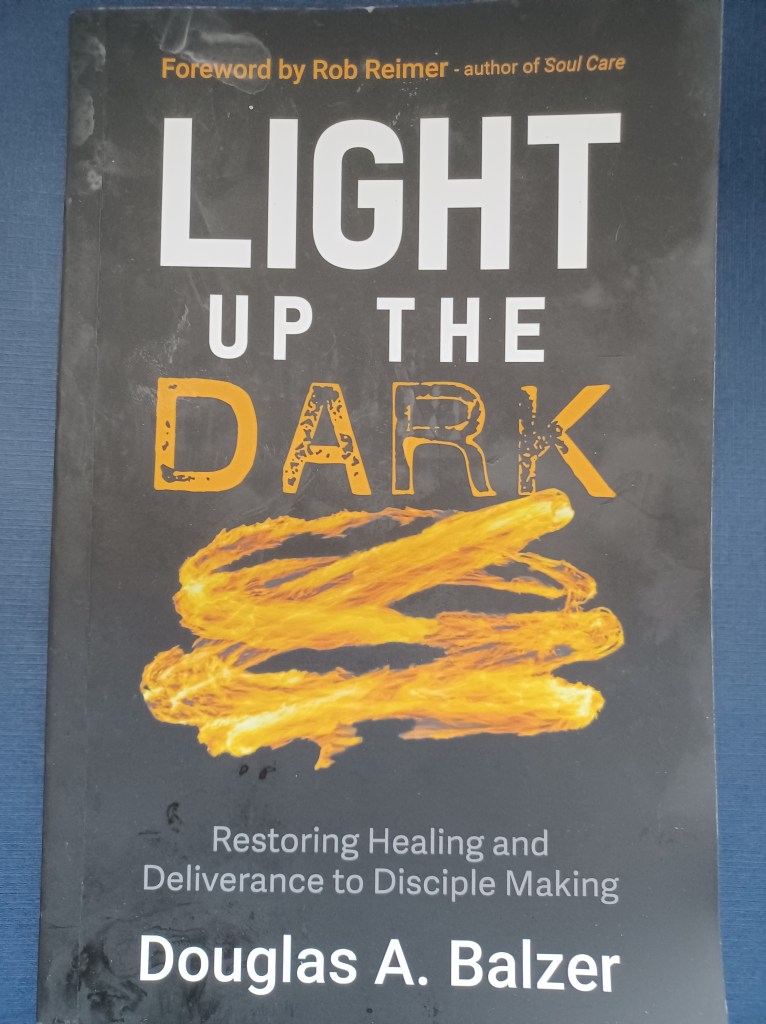
LIGHT UP THE DARK – by Douglas A. Balzer

Light Up The Dark is an encouragement to restore healing and deliverance to disciple making. Doug walks through the historical decline of healing and deliverance from its prominence in the ministry of Jesus and the Early Church to its eventual relegation to history and the occasional miracle. He shows how something that was central to the ministry of Jesus has been allowed to fade into the background as if God doesn’t want to work in that way anymore. This book wakes us up to the fact that healing and deliverance should be part of making disciples and what the average disciple would practice. He is calling for a restoration of healing and deliverance to its prominent place in evangelism and discipleship in the way that Jesus and the Apostles practiced. A great read for anyone who wants to truly bring the church back to its role of bringing healing to the hurting.

Prayer: The Gateway to Intimacy with God

It is impossible to get close to another person if you never talk, and it is impossible to become truly intimate with another unless your share your heart. I love my wife. I enjoyed dating and getting to know her. I loved getting married and spending more and more time together. We recently took a little holiday, and loved sharing some time new experiences and time together. I have developed an intimate relationship with Lynnette through years of sharing my life with her. We have had many conversations about anything and everything. All this has brought us closer to each other. We are falling more and more in love with each other.

We can be in a close relationship with God. We can develop an intimate relationship with God. This is possible through prayer.

Unfortunately, many of us have confusing ideas about prayer. While I was a pastor at one church, I remember someone coming to me a number of times to get a “prayer” from me because I was a pastor. She didn’t want me to pray for her or with her. She wanted a specific prayer that she could take with her to use for a certain situation she wanted to deal with. She didn’t want God to do something. She thought this “prayer” would solve her problem like a lucky talisman. This type of prayer will not help us develop intimacy with God.

Some people pray before they eat, thanking God for the food. Some pray for God to do certain things in their lives. Some pray prayers like the Lord’s Prayer or others written by leaders of the past. When used only as a routine or ritual and not prayed from the heart, these are not prayers that will develop intimacy with God.

Prayer that can truly develop intimacy with God means we will spend time in prayer. We will spend time talking with God. Prayer that develops intimacy depends on us having regular conversations with God. Scripture tells us to “pray without ceasing.” I realized I was doing this the other day. I noticed a little car in the lane next to me, driven by an older gentleman. I was immediately reminded of Jerry, a man who was in one of the churches I served. He passed away a few years ago. My first thought was: “So God, how’s Jerry doing up there?” It was just automatic and so natural. I spend time with God and constantly talk with him about what is going on.

Intimacy developing prayer means we have conversations with God. For many of us, prayer is something we do when we list off a laundry list of requests. We talk to God often. We tell him all the things we need and all the problems we need help with. While we think that may be prayer, it is definitely not a conversation with God. We need to learn to have a conversation, where we may talk for a while, but then we listen for a while. We need to realize that for prayer to help us develop intimacy with God, we need to do more than just talk to him.

Intimacy-developing prayer means we expect to hear from God. We actually pause long enough to listen and expect God to speak to us. We could occasionally come to God with a question, ask it, and then just wait and listen to what God is saying. Don’t say anything else until you hear God speaking.

Prayer that helps us develop intimacy with God is also often connected to Scripture. Pray and read scripture. Ask God to speak through what you read, and then read with an expectation that God will reveal himself to you in His Word. Commit to spending time with God regularly, reading scripture and talking with Him.

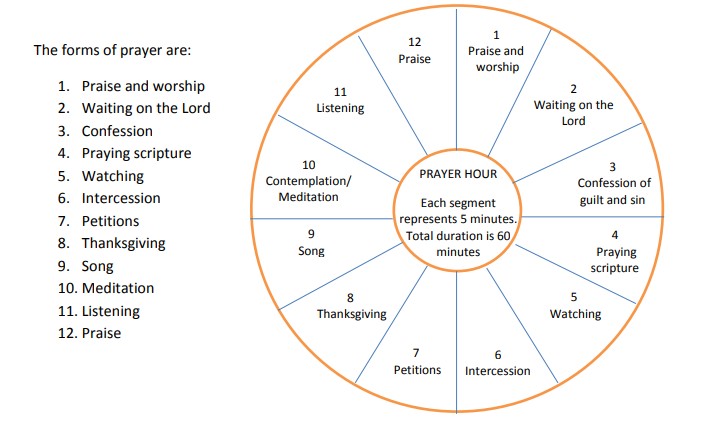
One of the intimacy-developing practices I have right now is to take two mornings a week where I pray through a “One Hour Prayer Guide”. In his book, The Hour That Changes the World, Dick Eastman suggests that one divide an hour into 12 periods of 5 minutes each. Topics in the 5 minutes segments include steps including praise, thanksgiving, confession, and praying scripture. There are a few sections that focus on watching for God and listening to God. It is surprising how quickly the hour passes, and very encouraging in how it makes me feel like I am more connected to God and what He wants to do in me and through me.

The Hour That Changes the World, Dick Eastman

You can develop intimacy with God. He longs for that. In fact, He created the world so that he could have a relationship with his created people. When you desire intimacy with God, he will eagerly respond to your efforts. Conversational prayer, taking time with God, and praying as you read scripture, is the gateway to intimacy with God.

Do you want to know God intimately? Then make the effort to spend time with him, having conversations with him, and experiencing him at work in your life.

Keep looking up,

Andy Wiebe

Book Reviews: Andy’s 2022 Reading Experience

I will be sharing a brief review of every book I read this year. Hope you enjoy and hope it encourages you to keep reading.


SPIRITUAL AUTHORITY – by Dr. Rob Reimer

Rob Reimer has written a few books on experiencing a deeper relationship with God and seeing His power at work. He describes how God wants to partner with us in releasing the Kingdom, in helping people find freedom, especially freedom from the forces of evil. He gives some direction on how to handle different situations as you work to set people free. One of his key phrases is this: Spiritual authority is rooted in identity, expanded in intimacy, and activated by faith. He emphasizes that we can do nothing without an intimate relationship with the Father and filling of the Holy Spirit. It is only then that we can experience the power that Jesus displayed. This book encourages a deeper relationship with God and an encouragement to help others find freedom.

Know Your Yes, Know Your No

You do not have to say “yes” to every opportunity to serve that comes your way.

When we are young, and just starting out in life, the opportunities are endless. You could go in almost any direction for a career. As you get older and get more experience you learn that there are certain things that you are good at and certain things you are not as good at. There are certain roles you take on that you love and others where you struggle to survive the day.

As we get older, and hopefully a little more experienced, we begin to narrow down the real and meaningful opportunities for us. We are not quick to jump in to jobs that will require us doing things we hate. We choose to do what we enjoy if at all possible. We prefer doing what we enjoy, and over time get a clear sense of what those things are.

Beyond that, I believe that God has certain roles for us to fulfill. He has given us gifts and abilities, and led us through circumstances that prepare us for what is next. We can ask him to clarify for us what he wants us to do with our life, and he will. I believe that God has a role for everyone, if we will only ask him to help us discover that.

Through a number of different circumstance God has brought me to the place where I believe he wants me to focus on helping churches and leaders achieve their God-given dreams. I have been a pastor for about 30 years, and generally loved the role. I had the opportunity, with a few others, to start up and establish the Rural Church Pastors Network. I loved the opportunity to equip and encourage fellow pastors. I enjoy writing and sharing my thoughts with others. And God, through these experiences and some clear signs from him, called me to this role of helping leaders and churches.

God has called me to help churches and leaders discover their God-given dreams. I was recently offered a position that looked interesting. I knew I could do what was required, I might even enjoy the role, but I couldn’t say yes. As I prayed about it, God reminded me that he had called me to this role of helping leaders and churches. This new opportunity was not part of that. Saying “no” to something that I might enjoy was not easy, but I knew what God called me to do.

Knowing your “yes” helps you know your “no”. When you have a clear understanding of what God has called you to do, you can clearly say no to that which is not part of the plan. I know it is hard to say no to people. We want people to like us and so we try to please them. Knowing our specific calling from God helps us have an easier time making decisions about what we choose to agree to and what opportunities we decline. Then we can say no with a clear conscience when we know what fits in God’s plan for us and what does not.

Sometimes we are overwhelmed with all that is on our plate. I wonder how often that is a result of us not clearly understanding what we are called to do so we do everything that comes our way. We say yes to every good thing when maybe God would like us to focus in on a specific opportunity. We tell ourselves that we can’t get out of these responsibilities when maybe we just need to say no. Sometimes we get frustrated with people and all they demand of us, but the problem may be us. We haven’t set clear boundaries on what we should or should not do, what fits into the scope of who we are and what does not.

Clarifying who we are and what God is calling us to may be harder to determine when we are young and have not had time to try new things or experience various roles and opportunities. As we get involved in different jobs and serve in a variety of places, we can narrow down who we are and what we are called to do.

This allows us to  figure out how God has gifted us and what talents we have. But clarifying who we are and what we become involved in does not just depend on age and experience. I believe we need to have time with God asking him to clarify what he wants us to do with our lives. God may speak to you through your reading of scripture. He may speak to you in your prayer time. He may speak to unique ways such as dreams or visions. What I do know is this: if we ask God, he will answer. Ask him to clarify his calling on your life and then you will be able.

I hope you can clarify your “yes” so you can also know your “no.” May God show you your unique place in this world.

Keep looking up

Andy

Healing – What the Church Can Offer

I recently heard two statements by two different people that I believe are prophetic words for the church. In my experience, there have been shifts in how the church functions or what church leaders think is important in reaching people for Christ. When I was a young youth pastor, it seemed the emphasis was on finding ways to make church fun and cool. As I got a little older, books and seminars seemed to focus on the church being relevant and relatable to unbelievers. What is the next emphasis of the church as we reach out to people who have not yet met Jesus personally?

On January 24, 2022, I heard Adam Browett of Glad Tidings Church in Victoria, B.C., make a profound statement in his sermon: The church moving forward “looks more like a healing center than a rec center.” He pointed out that if we were to be following Jesus’ example, we would be surrounding ourselves with hurting people and healing their hurts.

Our world offers all kinds of entertainment. The church does not need to provide entertainment. The church needs to find ways of helping the hurting and lonely. Our church buildings should be places where people find healing. Those of us who have a relationship with Jesus, the Healer, should be people in whom others can find healing as we point them to Jesus.

Dr. Rob Reimer writes in Spiritual Authority, “I think more people are going to come to faith in Christ in this generation because they know they are broken and in need of a Healer than because they know they are sinners in need of a Savior.” Our emphasis when we share the gospel has so often been about showing people how sinful they were so they would recognize they need a Saviour. Instead, if we focus on brokenness and healing, people don’t need us to point out how hurt and lonely they are. And we have an answer to that hurt and loneliness. We have a Healer.

In his book, Reimer points out that almost every time Jesus mentioned the kingdom of God he also mentioned healing from diseases and casting out of demons and restoring what is good and right in people. The church has been too focused on the “getting out of here” aspect of the Kingdom of God, where our goal is to gain eternal life and then just wait for that to be fulfilled. The kingdom of God is where what is bad is made right. The kingdom of God must be evident in displays of God’s power, as can be seen in demons cast out and people healed and relationships restored.

Our world is full of conflict. Countries are at odds with each other. People are at mad at each other. Large demonstrations and protests are rising up out of people’s frustrations. Violence is not uncommon. Disputes and arguments dominate social media. People are mad at the government and frustrated with the pandemic and all its fallout. Marriages and families are struggling and breaking apart. Many people are struggling with depression. Suicide is a way out for many. People are hurting.

If we truly love our world, if we as Christians want to truly love the hurting as Jesus did, then we need to be people offering healing, and our churches need to be places of healing. We need to believe God can still do miracles and bring healing and restoration. We need to speak and act with His authority and power to bring healing to our world.

This will not be just up to the pastors or church leaders. This is the role of every believer. We have the Holy Spirit in us. We have his power at work in and through us. We need to learn how to bring his healing to the hurting people around us. This will take much prayer, some in depth reading, and practice, as well as a continual filling of the Holy Spirit.

This is the need of the church today, but it is really just going back to what Jesus did when he was on earth, and what the apostles did as they established churches, and what New Testament church leaders did in their communities. We need to come back to inviting God to display his power and to bring healing to our hurting world again.

Let’s pray that the church will become the healing center it is meant to be.

Keep looking up

Andy

29 Ways to Share Jesus with Someone Who Doesn’t Want to Hear it

I am a Christian. I love Jesus, and am greatly thankful for the salvation He has given me. I want others to have that same experience with God, to find purpose in life, and peace and joy today and for the future. The reality is that some people do not want to hear about church or Jesus.

It is quite difficult to share Jesus with people who do not know Jesus and have clearly indicated that they do not want to know Jesus. All of us associate with people who do not yet know Jesus.

How do we share Jesus with them when they have already said they don’t want anything to do with Him or with church?

I think this is an especially difficult reality for those living in smaller rural towns. You know people, and you know their families. People know you and your family. You may have grown up with many of them and went to school with them. They know you are part of a church, and you know they are not. It seems that there is no way to help them see they need Jesus because they have clearly told you they want no part of that.

Some say they don’t come to church because it is too hard with kids. Others say they tried church and didn’t like it, or they were hurt by it, or “they are all hypocrites there.” So inviting them to church seems like an impossible and useless endeavor.

Ok, then. If we are to be faithful to share Jesus “as we go into all the world,” as we go on with life and all of its activities, what can we do to reach them with the good news of great joy? Let me share a bunch of ideas that can all be part of sharing Jesus with unbelievers. These will all lie on a spectrum between no interest in Jesus, to asking how they can become a Christian.

  1. Pray for at least 3 people you know who do not know Jesus.
  2. Invite your unbelieving friends into your home for a meal. And just do what you normally do, pray for the meal, have your conversations, enjoy time together.
  3. Remember their special days. Wish them Happy Birthday, Happy Anniversary, etc. Maybe even get them a gift for Christmas.
  4. Be a good friend.
  5. Tell them you are praying for them. This might work best when they are facing a difficult issue in their life. Maybe pray for them right there if the situation is right.
  6. Bake cookies and share them. While I was driving truck, my coworkers sure enjoyed days when I brought cookies my wife baked and left them in the breakroom. If you don’t bake, buy your coworkers a dozen or two of donuts or bring in coffee.
  7. Give them a hand. If you are good with mechanics, offer to help whey they are having car trouble. If you are good with construction, help them out when they are building a deck. If they are sick, take them supper. Use your experience and skills to help your friends.
  8. Share your stuff. Lend your ladder, or pizza pan, or air compressor. Let them borrow your truck if they don’t have one.
  9. Do something for them. Take their stuff to the landfill when you take yours.
  10. Include them in a party or get-together you are having. This is good when you are already having a bunch of church people over. They get to see that everyone is normal – hopefully. And then your friends can pray with you for this unbelieving friend.
  11. Workout together. I did this for quite a while with one unbelieving friend who was checking out our church. I got to baptize him later.
  12. Read the Bible together. Some people are interested in the Bible, even if not in church. One member of my small group shared that her neighbor came over weekly to read the Bible together. You can help them understand what things mean.
  13. Host a backyard BBQ. Invite them to join your family.
  14. Offer to house sit for them when they go away for summer vacation.
  15. Share rides back and forth to work.
  16. Give them a book on a prominent Christian. They may be interested in reading about a certain athlete who did well on the field, oh, and happens to be a Christian.
  17. At Easter, invite them to watch the latest Easter movie with you.
  18. Ask questions. Don’t be a pest, and don’t be a reporter, but be interested in the other person’s life.
  19. Share a hobby. If you find out you are both interested in chuckwagon races, plan to go together.
  20. Share an answer to prayer with them. People can’t argue with something that you experienced. They may not be interested, but they can’t say you didn’t have that experience. You prayed and God answered in a way you felt was just for you.
  21. Give them a Bible on a special occasion. For example, when their child graduates, gift them a Bible for Graduates.
  22. Share your testimony. This doesn’t have to happen all at once, but share bits of your story when it fits in conversations you have over the years. Tell them your experience with God. Tell them how that has helped you in life.
  23. Invite them to church for special occasions. Christmas Eve or Easter might be good times to invite them. Or if a child is getting baptized, invite them to the celebration. They may come to celebrate with you even in they are not interested in Jesus or church. Who knows what God might say to them in that church service?
  24. Ask what they believe. Invite them to tell you how they view life. This may make them question what they truly believe, and maybe start them searching.
  25. Tell them about a good sale. If you found a good deal somewhere, let them know, or even ask them if they would like you to pick something up for them too.
  26. Speak of Jesus and church naturally. It’s amazing what sometimes gets talked about at work, or after a game. Some conversations may naturally lead you to make a comment about something that happened at church, or what you read in the Bible about Jesus.
  27. Say Grace. Sometimes we hesitate to pray for our meal when we are at work or out with friends. Don’t make a scene, but just quietly do what you would normally do.
  28. Invite them to go with you on a missions trip. This might be a little tricky, but if it is more of a hands-on serving trip, rather than an evangelistic trip, it might be quite okay to have an unbeliever join you.
  29. Go hunting together – whether for a moose, or for that perfect pair of shoes for your daughter’s graduation.

I hope you get the point. If you truly want to win someone to Christ, you need to be a friend. This is not about seeing certain people as a project but just becoming friends with people you are in contact with already.

You may think some of the suggestions in the list are really just about being a good friend and not really about outreach, but that is exactly the point. You need to be intentional, in making friends and being a good friend. The idea is to find ways to be friends, and then talk with them about Jesus as you already do with the friends you already have. We can pray for them regularly, asking God to draw them and work in their lives. It may take years, and then when it happens, it will be so exciting!

Keep looking up

Andy

Embrace the New Year With Purpose

The New Year always brings questions about resolutions. “What are your New Year’s Resolutions? Do you have New Year’s Resolutions?” In a New York Post article, Shireen Khalil (Dec. 21, 2018) wrote, “Research conducted by Strava, the social network for athletes, has discovered that Saturday, Jan. 12, is the fateful day of New Year’s resolutions.” This was based on analyzing 31 million global online activities.

I still like the idea of marking January 1st as a new start. Make it a day where you both, look back and look ahead. Celebrate your past year, then look ahead to what is next. Instead of resolutions that often don’t make it to the end of the month, make January 1, or shortly thereafter, a day when you set goals. Resolutions can be broken quickly, and then your resolve disappears with it. Goals, instead, give you something to strive for. Instead of saying you won’t eat any apple fritters from Tim Hortons for the next year, set a goal of losing weight. If you happen to have a fritter, you would have broken your resolution, but you haven’t ruined your goal. Just consider it an infrequent event that has not destroyed your whole goal. You still have the rest of the year to keep working on it.

Goals help you to live with purpose. So what do you want to do on purpose this year?

I want to continue to grow in my relationship with God. If I make a resolution to read my Bible every day, as soon as I miss one day, I have broken that resolution and broken resolutions usually makes us quit pursuing what we were going to do. A goal to read the Bible in a year encourages me to just pick up my Bible again the next day, even if I happen to miss one.

SET A FEW GOALS

What goals would help you live your life with purpose? What are some things that will enhance your life and the lives of others around you? People often suggest setting goals in areas of personal health, or social connections, or something regarding your career or further education. If you want to accomplish a certain project – building your own canoe, or writing a book – then set that as a goal. You might want to set goals in your spiritual life. If there is something you have been struggling with and you want to overcome, design a goal around that. Don’t be afraid to set a goal that may seem out of reach, Identify sub-goals that help you get there, like planning to meet with a counselor at least three times this year to work on that habit I want to break. Choose goals that help you become who you want to be, who you believe God wants you to be.

Do not set ridiculous goals. If you weigh 350 pounds, and are struggling doing stairs, it may not be a good idea to set a goal of climbing Everest this year. But you could set that as a goal in a few years! Set a realistic goal for this year that will help you to move toward the bigger goal. Set a goal of working out regularly at a gym, and another of losing a certain amount of weight. Maybe a third goal would be to start putting aside the necessary money that trip might cost. Set a goal of getting as informed about Everest and mountain climbing as you can – maybe read a book along that theme every month.

Set goals that are realistic, but also a little risky. Maybe you can’t climb Everest this year, but you can plan on doing a 10 K run. It will give you a goal to work towards that will help you tackle Everest later.

If what you want to achieve is too big for one year, then set the timeline 2-3 years from now. Then set short-term goals for this year that will move you toward that goal.

WRITE THEM DOWN

Thinking about goals is one thing. Writing them down is a completely different thing. Writing them down means you have thought about it enough to actually verbalize it, on paper at least. Feel free to do some rough drafts. Write down things you would like to do or experience or accomplish. You may have to weed them out a bit to get down to about five goals to work on for the year. One tool that has been a great help to me is the Full Focus Planner. Look it up at FullFocusPlanner.com. It helps you plan goals for the year, and then breaks them down into quarters, three months at a time. Each quarter you write down goals that will move you toward the larger goal. And then it even helps you break it down more to work on the goals weekly. It has been a huge help to me.

Writing them down gives you something to refer back to. Post them somewhere that you will see them every day. Put them in you journal, or day planner, on your phone or the fridge, or all of these. When you see what you wrote down, you remind yourself regularly what you are working towards. You are now beginning to live your life with purpose.

SHARE THEM

Often, we need others to help us in life. The same is true when it comes to setting goals and working towards them. Share them with someone you think will encourage you in them. If you have a goal of working out at the gym regularly, you would do better to share that with a friend who is doing the same thing, rather than a friend who thinks a workout is carrying in the groceries from the car. If your goal is to write a book, share this goal with someone who thinks you can do it, and who will encourage you to do it. Sharing a goal, speaking it out loud, helps reinforce your determination to do it. Sharing it with someone who will hold you accountable to it, reinforces your goals again.

With some goals, you may even ask someone to check in with you regularly to see how you are doing. Maybe you have a friend who you can encourage toward their goal as they encourage you towards yours.

You might consider getting a coach who can help you toward certain goals. Maybe a trainer at the gym, or a life coach who can help you think through what is holding you back. Maybe you are hoping to improve your leadership or pastoral abilities as you pastor a church. Let me make a shameless plug here for Elevate Coaching & Consulting, and invite you to reach out to me for some coaching to help you live your life with purpose.

REMOVE DISTRACTIONS

Writing down your goals and sharing your goals with a friend are powerful steps to help you reach your goals. Yet sometimes there are too many other things that distract us from living with purpose as we planned.

Remove distractions. If you have goals regarding health, you may do well to remove the unhealthy items from your cupboard. If you have a goal of reading your Bible every day, you may want to get up thirty minutes earlier than everyone in your house so you can focus without others demanding your attention. You may need to remove certain events or activities from your schedule to make time for the purposeful steps you are taking. For example, you might quit your bowling league to make time to work out at the gym. You know what might distract you. You will figure out how to remove those things.

I encourage you to take some time to set some goals in the next week so you can live your life with purpose.

Keep looking up,

Andy

The Space In Between

We spend a lot of time waiting. We wait at traffic lights. We wait at the doctor’s office. There is waiting from when you first ooh and aah over the ultrasound pictures until the baby arrives. I love ordering books on line, but then have to wait two weeks or more to receive them.

Some waiting is so accepted by us that we pretty much ignore it. Waiting at a traffic light raises my stress way more than waiting for a book to arrive. Some waiting consumes our every thought; think of a soon-to-be mom who spends the nine months preparing for the new arrival.

Sometimes we wait for God to work. A few years ago I went through a time of waiting on God. Both my wife and I were convinced that God had told us to wait. I was in between ministry positions and had no way of rushing the process of what was next for us. I sent many resumes to a number of different ministry opportunities. No ministry positions came my way, but then again, God had said wait.

King Saul Didn’t Wait

That “time in between” one thing or another, that time of waiting on God is important. We can’t rush when God wants us to wait. I am reminded of King Saul in the Bible. In 1 Samuel 13: 8-9 we read:

            Saul waited there seven days for Samuel, as Samuel had instructed him earlier, but Samuel still didn’t come. Saul realized that his troops were rapidly slipping away. So he demanded, “Bring me the burnt offering and the peace offerings!” And Saul sacrificed the burnt offering himself.

Samuel was the priest. Saul was the king. The king was not to offer sacrifices, but he felt he had waited long enough, and he was worried because all of his men were leaving. He had to do something, didn’t he?

Then Samuel arrives just as King Saul is finishing the sacrifice. He chastises the king, “what have you done?”

And this is what happens to Saul as a result of not waiting: 13 “How foolish!” Samuel exclaimed. “You have not kept the command the Lord your God gave you. Had you kept it, the Lord would have established your kingdom over Israel forever. 14 But now your kingdom must end, for the Lord has sought out a man after his own heart. The Lord has already appointed him to be the leader of his people, because you have not kept the Lord’s command.”

Saul was tired of waiting. The in between time was making him nervous. He decided to act, and God punished him for it.

The Disciples Waited

There are times that God wants us to wait, so wait we should.

In Acts 1: 4-5 we read what Jesus told the disciples just before he left this earth after his resurrection: “Do not leave Jerusalem until the Father sends you the gift he promised, as I told you before. John baptized with water, but in just a few days you will be baptized with the Holy Spirit.”

So, the disciples waited. For ten days. Waiting, and praying. And then something incredible happened as the promised Holy Spirit showed up. Acts 2 describes tongues of fire and a roaring sound like a mighty wind, as well as those present speaking in languages they had not known before.

There was great benefit in waiting as they received the Holy Spirit that Jesus promised would be his replacement for them.

Faithful Waiting

There are other examples in scripture, and in our own lives, where we have been in the in between time. Sometimes we know there is something else, something better, coming. Other times we are just hoping for something better. In the meantime, we wait. In the waiting, our number one purpose is to remain faithful to God.

Maybe you are waiting for a new job or a new ministry position. You are convinced that you need to move on from where you are. Maybe you have even resigned. As you look for the next position, you are getting impatient. It seems like God is too slow. I want to encourage you to be patient, and wait faithfully for God to work.

Maybe you are waiting for something you think you deserve and it is just not happening. Maybe you are wishing you were married. You long for someone to live the rest of your life with. Remain faithful to God in the waiting. Do not look for a shortcut that will ruin your future. Continue to honor him and trust him to provide for you.

Maybe you are a parent who is longing for the return of a prodigal. You have a child who decided they wanted to live their own life, and to deliberately live it opposite to what you taught him or her. And now you wait, and pray, and try to trust God to bring that wayward child back.

Continue to faithfully wait. Trust God. Pray for your child regularly. If you have an opportunity to connect with a visit or even an email or card, do what you can, and trust God to continue to work as you love this child and long for them to return to you and to God.

Waiting is often really hard. Like Saul, we look for shortcuts. But remember how drastically that one mistake affected Saul and his family forever. God had wanted to make a kingly line through him, now that was done and God moved on to another, to David.

Be faithful to God in the waiting. Trust that he truly has the best in mind for you. That waiting time God had us go through a few years ago were not the easiest. We relied on God in a way we hadn’t for quite a while. He provided encouragement along the way. And then he began showing us that he was shifting us into a new type of ministry. The waiting was necessary to readjust my heart, to show me that I needed to go in a different direction than I had ever considered. He has blessed in numerous ways as we have come out of these years of waiting.

Remain faithful during the in between time.

Keep looking up

Andy

Enjoy a Fresh Start Everyday

I am usually the first person up in the morning at my house. I am often one of the first people up in my neighborhood. There is something special about the beginning of a new day. The “early bird gets the worm” they say. Many successful leaders are up by 5 or 6 am, to start their morning routine. More important than rising early, is the fresh start that each new day brings.

Every sunrise you an opportunity to start your day over. This is not reliving the same day like Bill Murray in Groundhog Day. We get to start over by starting at the beginning of another day. It is a fresh slate. There is something really freeing about a not-yet-lived day. You haven’t made any mistakes yet.

A Sin-free Day

Some of us may need the following prayer: “Dear Lord, so far today, I am doing alright. I have not gossiped, lost my temper, been greedy, grumpy, nasty, selfish, or self-indulgent. I have not whined and complained. But I am getting out of bed soon, and I will really need your help.”

Each new day is a day when we have not yet sinned. You know the things that happened yesterday, but today you get to start over. You know where you failed, and you know what you need to improve. If you want to, you can make a renewed effort to avoid the sins of yesterday. If you have repented and confessed the sins of yesterday, God has forgiven you. You have the privilege of relying on the power of the Holy Spirit to make it a day that honours God.

If there is a “sin that so easily entangles” you, you can make a concerted effort to avoid it. “Throw off everything that hinders and the sin that so easily entangles. And let us run with perseverance the race marked out for us” (Hebrews 12:1). Begin your day with prayer, maybe one with a little more sincerity than the one above. Talk with your heavenly Father about your desire to be holy as he is holy. Take deliberate steps to remove anything, or stay away from anything or anyone that tempts you to sin.

A Discouragement-free Day

Some days are much harder than others. Sometimes we have more of those difficult days than we would like. There are days we wish we could forget. The benefit of a new day is no one has said anything bad to you yet. Nothing has happened to discourage you. So far, nothing has gone wrong. Oh, some of us are quick to come up with potential problems, but they have not yet happened. So don’t bring on trouble that is not yours.

I like how Jesus teaches about worry in Matthew 6:34: “So don’t worry about tomorrow, for tomorrow will bring its own worries. Today’s trouble is enough for today.” Or we could say, don’t worry about today, since you haven’t lived it yet. Leave yesterday’s troubles to yesterday. Don’t worry about tomorrow. And focus on the moment and the start of a fresh, worry-free day.

So far you have nothing to feel guilty about. You haven’t brought on discouragement by falling short of a goal you had or a standard you wanted to meet. At the start of the day, you are free to enjoy a clean slate.

Maybe yesterday was not a good day. You gave in to temptations. You had things go wrong. Someone was mad at you. We could think of all kinds of things that made yesterday bad. Okay. Get up again, try again. It’s a new day. Yes, you messed up terribly yesterday. Yes, life threw everything at you that it could yesterday. Get up with a renewed spirit, a renewed energy. I like that God has given us seven restarts each week.

Daily Rituals

Start your day with good, daily rituals. Do the things you know will help you start on the right foot. This is one of the reasons I get up earlier than everyone else. I do not like missing my rituals because if I don’t do them first thing, I will not do them later in the day. I actually have some evening rituals that set up my morning rituals.

I lay out my clothes for the next day so that I will not wake up my wife by turning on the light or digging through drawers looking for matching socks.

As soon as I’m showered and dressed, I sit down in my big chair in the living room. I reach for my Bible and journal. I start with prayer journaling a conversation with God, which then leads to my daily Bible reading, and a prayerful response to what God is saying to me. Next, I open my daily planner to review how I did with yesterday’s goals and set the goals for today. Mondays I set goals for the week.

These rituals help me to start the day with the things I believe are important to me. You can develop your own rituals that work for you. Getting up early helps ensure I will do what I think is important.

Fresh Orders

One of my morning rituals is to plan the day. I do not approach this lightly. After spending time with God in prayer and Bible reading first, I want to make sure these are not my goals, but fresh orders from God for the day. Sometimes there are things that come up in my time with God that it seems God is telling me what he wants me to do this day.

Getting up early to pray is following the example of Jesus. “Before daybreak the next morning, Jesus got up and went to an isolated place to pray” (Mark 1:35). If Jesus needed to check in with the Father first thing in the morning, then that is probably not a bad idea for me.

Not only does each new day mean nothing bad has happened yet, it also means nothing good has happened yet. So I want to plan I will avoid sin and discouragement, and I also want to plan to do good and right. As I check in with my Father I get some idea of what I need to do this day.

You may not like to get up early. You don’t have to. But I want to encourage you to cherish each new day as a fresh start and an opportunity to check in with the Master for fresh orders for the day.

It’s a new day. Treasure the opportunity to start with a clean slate. May God help you fill in the day with wonderful moments where you see God at work in and through you.

Enjoy a fresh start every day.

Keep looking up

Andy