I will be sharing a brief review of every book I read this year. Hope you enjoy and hope it encourages you to keep reading.
GO: Returning Discipleship to the Front Lines of Faith – by Preston Sprinkle
As Preston Sprinkle’s books usually do, this one also pushes the boundaries of what believers are comfortable with and used to. He does a great job of biblically suggesting there is more to discipleship than just teaching and more to church than just Sunday morning worship. He points out that discipleship is about living out a relationship with Christ, and living it out in real and practical ways as we connect with others in our world. Chapter 9 is worth the cost of the whole book as he challenges believers to consider how much of our efforts and money is wrapped up in putting on nice Sunday services instead of helping people with their real needs. A challenging and encouraging read!
Whether in conversations with a friend or making a transaction at a store, we need to be able to communicate or intended message clearly. As church leaders, we want to communicate with the people in our churches and the communities around us, and it is important that we put thought into our messages we communicate to avoid unnecessary confusion.
Every time I drive to the community where I serve as a Transition Pastor, I pass a confusing message. On the side of the road there is a big tea pot shaped sign up on a post, as if announcing a place to stop and have tea. As you get closer, you will see that they do not want you to stop, because as you turn off the highway, you are greeted by two orange traffic barricades with a sign that says, “Do not enter. Private yard.” It must have been a restaurant at one time but not anymore. Yet the teapot sign remains inviting people to enter a private yard.
Just this morning I walked by another confusing message. In a storefront at the local mall, a slogan says: “Celebrate your shape.” In my mind, that indicates that they would have clothes for a variety of shapes of people. Instead, the mannequins in the display window are all pencil thin. That seems like a confusing message to me. Does it mean you can celebrate any shape you want as long as you are very thin.
Let’s look at a few ways that we as church leaders can prevent common inconsistent messages:
We say we want to strengthen families and then we plan separate activities for everyone.
Many churches say they support families. That is good, and we should support them, but too often we keep the families busy with their own separate activities. Children go to Sunday School and Children’s Club. Youth go to Youth Night. Men and women go to their own Bible Studies. We say we support families and then we plan everything to separate them. I know there are benefits to the separate programs, but how about we bring them together more? Instead of planning a Youth Ski Trip, plan a Family ski trip. How about planning mixed Bible Studies occasionally?
We say we are an intergenerational church but don’t allow children to serve in the worship service.
In many churches, serving in the worship services is limited to adults – often only “accomplished” adults. While the messages on the website might state the church values intergenerational participation, a different message is communicated each Sunday morning. Why not add some youth to your worship team? Many of them are musical and would love to learn to play an instrument as part of a music team. How about having children reading scripture?
Some of the ushers in our church are inviting their children to help them pass the bags to collect the offering. There are many places where children and youth can learn to serve and serve well.
We say we want to reach our community with the gospel but have no outreach from our church.
I understand there are many ways to reach into our community with the gospel, and much of that can be done by individual members of our church. It’s exciting when we hear of that happening. Yet if this is something that we say we want as priority in our church, the church should provide opportunities for outreach and training. We need to follow through on what we say we think is important as a church.
We have a website that announces activities we do not offer.
Every church needs to have a website. We need to be able to communicate with people online. But let’s make sure that our information is up to date and accurate. Recently I was looking to book a bus ride from one town to another. I searched online and found a site advertising the route and rates. I made some initial plans that revolved around catching that bus. I went to book it, only to find that the route and bus service had been cancelled for a year or two already. We don’t want to do the same thing with our information online. Communicate what you offer and make sure you it’s accurate.
Inconsistent messaging not only misinforms people, but it also causes them to lose trust in us. If we can’t communicate accurately, it will seem as if we are not being truthful. We end up not just disappointing people but turning them away from our church. Let’s make sure that our messaging is consistent and accurate.
I just realized the other day that I have been a follower of Jesus for 50 years – and God has sure proven His faithfulness! I was about seven years old when my dad prayed with me, and I surrendered my life to Jesus. Next month I turn 57. And God has never failed me over all those years. I have experienced what Deuteronomy 7:9 declares, “Know therefore that the Lord your God is God; he is the faithful God.”
God has proven his faithfulness in always being there for me, in good times and bad. He has been there when I was so disappointed in Him that I deliberately tried to ignore Him for a period of time. I was frustrated how my life was going and began to wonder if God would ever intervene. That attempt to give God the cold shoulder didn’t last for too many days, because no matter what, God has always been there. He was never far from me. Romans 3:3-4 declares God’s faithfulness even when we are not. “What if some were unfaithful? Will their unfaithfulness nullify God’s faithfulness? Not at all!” And God has shown His faithfulness as I have learned to get to know Him better over the years. When I think back to the simple faith of seven-year-old me and the way God has proven His love in ever deepening ways, I am so thankful that faithfulness is one of God’s attributes!
I have experienced God’s faithfulness in his forgiveness. As scripture declares in Romans 5: 8, “But God demonstrates his own love for us in this: While we were still sinners, Christ died for us.” He loved me while I was a sinner, and he loves me as I continue to struggle with sin. And like the patriarchs of the Old Testament, God has used me in meaningful ways even as I fall short of His best for me. God working in and through me has allowed us to be part of some unique experiences like helping a church grow in a school and then move into its own building, and putting on Easter events for the community that drew three times as many people as we usually saw on a Sunday.
God has been faithful in giving me a great family! I have a beautiful wife, who is clearly a gift from God. We have two beautiful and competent daughters! Again, clearly gifts from God! And He has helped us through many difficult things. We have had family health scares but known God’s peace in those as He walked with us. We have had times of financial strain, without a house, without a job, and unsure about what was next. God arranged for a job that provided us with enough finances to buy a house after two years. We have experienced answers to prayer, from finding skates for a great deal to healing when we needed it.
The faithfulness of God is evident as I look back over the years to how God directed us to certain churches and communities to live and serve in for awhile. While there were a few disappointments along the way, it was clear that God directed us to the places where we could fit and serve Him well. He has given us many great memories from the different places we served.
God loves people. He loves to welcome them into His family. And He loves to walk with them for the rest of their lives! I have experienced that in many personal ways. It is so good to never have to worry if He will still love us if we do something wrong, or if He might ignore us or no longer respond in love. “Know therefore that the Lord your God is God; he is the faithful God.”
I will be sharing a brief review of every book I read this year. Hope you enjoy and hope it encourages you to keep reading.
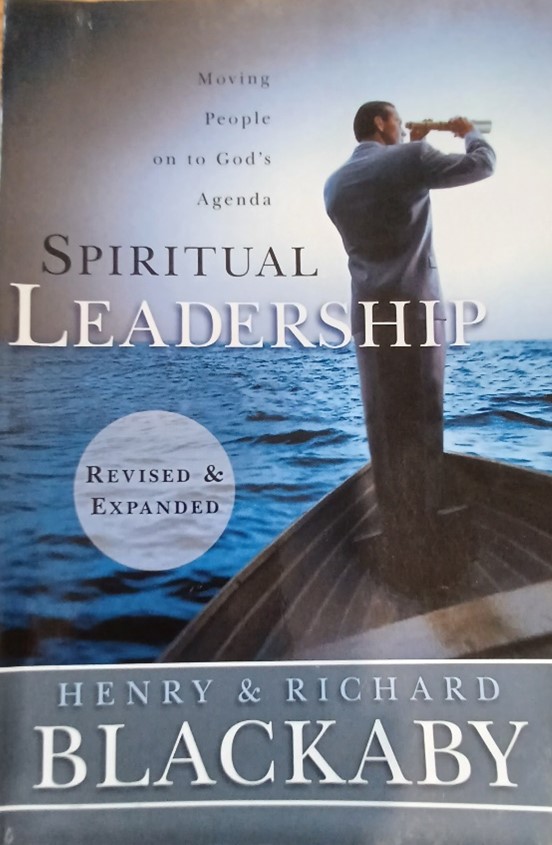
SPIRITUAL LEADERSHIP: Moving People on to God’s Agenda – by Henry & Richard Blackaby
Spiritual Leadership is one of the better leadership books I have read. The authors highlight that spiritual leadership is all about God. It is about moving people in the direction God wants them to go, about listening to God for how to lead well, and listening to God about what direction to lead. I appreciate how they point out that spiritual leadership is not the same as leadership in general. In fact, they begin the book with this statement: Spiritual leadership is not an occupation: it is a calling. Christians in any area of leadership should be spiritual leaders. This is a great book for any Christian who wants to lead well.
I will be sharing a brief review of every book I read this year. Hope you enjoy and hope it encourages you to keep reading.
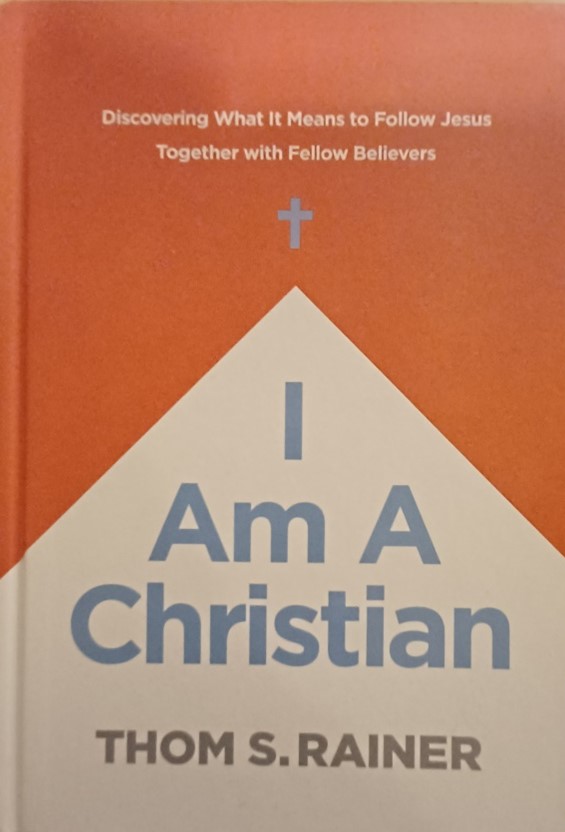
I AM A CHRISTIAN: Discovering What it Means to Follow Jesus Together with Fellow Believers – Thom S. Rainer
Thom Rainer outlines the basics of Christianity in a simple and straightforward manner. This little book would be great for new believers – and others – to explain what it really means to be a Christian in practice. Rainer introduces the reader to the main ways that a believer lives out their faith. He includes some good stories to help explain his concepts. A great biblical little book to help clarify what it means to be a Christian!
A friend of mine is going through a difficult stage in life. His job is not what he would like and leaves him exhausted at the end of the day when he wants to spend time with his family. He has a large debt that he is working to clean up among other issues that stress him out. When I asked him what fills him up, he answered, “Right now, I have no clue.” He is so overwhelmed with life that trying to think of something that would help energize him seems impossible.
What fills up your tank? There is value in finding something that energizes you.
Being in nature fills me up. I love driving through the mountains, enjoying the scenery and watching for wildlife. My wife and I stopped at a little heart-shaped lake in the Pine Pass in northern British Columbia this fall. Heart Lake is nestled at the foot of some mountains, surrounded by towering pines and spruce. When you walk out on the little dock, the water is so clear you can see right to the bottom of the lake. We enjoyed sitting at a picnic table, reading, then pausing to take in the scenery, and repeating that process. It filled me up.
Sometimes spending time with the right person fills me up. We all know there are certain people who drain you. They draw energy from you. But there are others who make you feel good. There have been times when my wife has told me, “You should really talk to so and so.” Or “you should have lunch with your friend.” There are a few men in my life, who, when I spend a little time with them, leaves me encouraged and energized.
Some of you might get energized by reading a good book. I love to read. It might be a novel or a book that challenges me spiritually. I love to learn, and reading helps me to do that. And it can fill up my tank.
I’m also a project person. I love working on a project where there is a clear goal in mind that I can work toward. I get filled up when I can contribute to something meaningful that cumulates in a well-done finished project.
What fills you up? If you are not sure, maybe you need to ask someone close to you. They may have seen where you shine and where you seem to act happier. As I said earlier, my wife sometimes reminds me to take time to be with one of my energizing friends.
If you feel you have no idea what energizes you it may be time to try new things. Even though it sometimes doesn’t seem like it, you are in charge of your calendar, and your time. I know that we all have demands on us from work and family and other commitments we are tied to, but we should all have even a few minutes here or there to spend on our own well-being.
Identifying what fills you up, and then spending time doing that activity is an important way to fill us up amid the stresses of life. When we get hungry, we eat. When we have been giving and giving too long, we begin to lose ambition and get short-tempered. We need to “eat” something that will restore joy and inner peace.
Some pastors take a sabbatical for a period of weeks and months. While time off is good, even in that scenario, the true value comes not just from taking time off to rest but spending time in our “tank filling” activities. If you are married, you might want to help each other enjoy your energizing activities. This could look like covering for each other in the home for half an hour or so occasionally so the other person can have a few moments to spend on themselves.
Let me finish with one more suggestion, probably the one we should have started with, and one that should remind us that any “tank filling” attempts fall short if we are not right with the One who created us and wants to walk through life with us. A key “tank filling” experience is to have some quiet time to spend with just you and God. You could read scripture. The Psalms may encourage you as the psalmist cries out to God with the same emotions you are feeling. Or you can read the Old Testament stores and be encouraged that God uses even the busy and messed up people for his purposes. You could spend some time talking with God. Think of it as a conversation. Ask him for encouragement and joy. You might want to sing songs of praise, or one of the old hymns. Taking time to be with God can fill a person up.
Remember that God created us all unique, with unique ways of being re-energized and filled up for the next day.
Public prayers can have great significance or be almost meaningless.
Years ago, I knew an older man whose mind was starting to deteriorate. It wasn’t easy carrying on a conversation with him, yet when asked to pray, he would pray these great prayers. They were not necessarily eloquent or filled with theology, but you could sense the love for God and the sense of friendship with Him.
When I refer to public prayers, I mean those usually prayed in our Sunday services at church. Here’s why I think some are more significant than others. Sometimes it seems a prayer is prayed strictly out of tradition or routine. The service always opens in prayer, so the pastor needs to pray something. Or the pastor prays before he begins his sermon just because that his is routine. Sometimes it even seems like it is just filler or used as a transition. We’ll pray now so the musicians can sneak onto the stage and magically appear at their instruments.
Some public prayers seem like the ramblings of someone who has no idea what they want to pray about, so they just stumble into their prayer. In some cases, you know exactly what a person will pray because they always pray the same prayer. It seems that the one leading in prayer sometimes just says a few nice words, but has forgotten they are addressing the Lord God Almighty, the Creator of the Universe!
On the other hand, there are some prayers that are well thought through and prayed with heartfelt words like the older gentleman above. So how can we improve our public prayers?
First, remember whom you are addressing. When you are praying in a public service, you are not praying to the congregation. You are praying to the God of the universe. You are praying to the One who deserves all our praise. You might even want to begin your prayer with the lines of the Lord’s Prayer, “Our Father who art in heaven,” or a similar address to the Creator of the world. As you lead in public prayer, you are functioning in a priestly role, bringing the congregation before the Father and connecting with Him.
Do not pray to teach someone something. Some public prayers seem as if the person praying is using that platform to try to tell the congregation something, rather than leading the congregation into the throne room of God. A prayer is not a time to teach a theological truth, though it is definitely a time to give thanks to God for that truth and what it means to us as believers. (And please don’t pray the announcements: “Thank you, God, that we can have a Valentines Banquet for our married couples next Friday at 7 and that we can get free tickets for the event.” Keep the prayer a prayer.)
When you are asked to pray publicly, do some preparing. Musicians practice their music. The pastor probably writes out his sermon. He might practice it out loud. Why would we not prepare, maybe even practice, what we want to say to God in our prayer?
I’m not sure where I got the impression, but when I was younger, I looked down on people who used written prayer. In my mind, you were less spiritual if you didn’t just “pray from your heart.” In my church we never used prayers of old or that others had written. Yet I have learned the value of writing out what I wanted to say. Sometimes I write out the complete prayer, other times I have a point form list to refer to. Taking time to do this means I have put some thought into what I will say.
If we write it out, we will be less likely to forget something we wanted to include. In a pastoral prayer you may want to have a reminder of the various needs of the congregation, including names of individuals needing prayer. In an opening prayer you may want to thank God for something related to the theme of the morning, or of the sermon coming later. It can be a time thank God for being the great and awesome God we have come to worship.
Writing out a prayer can help us avoid some of the annoying habits we get into without realizing it. We can cut down on the “umms” or stop repeating the same phrase. For some reason, a common word I often hear in prayer is “just.” We just want to thank you, we just want to ask you to help, we just…. Our words mean something. Saying “just” trivializes what we are asking God for or thanking him for.
It is a privilege and honour to lead in public prayer. Let’s treat it as the privilege and honour it is to approach our Heavenly Father on behalf of those gathered to worship.
This is the final of a three part series on looking ahead with clarity. Part 1 was about recognizing where we have come from. I discussed the value of reflecting on how God had used us in the past and what God has been teaching us that may give us a sense of what is next for us. In Part 2 we looked at assessing our present reality, where we are, and now in Part 3 we will discuss where we are going.
Knowing where we have been and where we are helps us identify a solid starting point from which to begin moving forward. Now we need to clarify where we are going. What is the goal we are shooting for? When that is clear, we can set appropriate steps to get us there.
There are two kinds of goals: achievement goals and habit goals. Achievement goals are goals we work towards to accomplish at some point down the road. Examples could be losing 20 pounds or running a marathon. These are specific points we can look forward to and measure clearly when accomplished. Habit goals are goals we want to work on regularly. A habit goal for me is to read my Bible every day. Habit goals can help us accomplish achievement goals. My daily reading goals help me work toward reading the whole Bible in a year, an achievement goal.
Goals help us determine where we wish to be. There is a 2005 Fountain Tire commercial where a man is buckling himself into his seat on a plane, excited to be going to Hawaii, only to find out he used the wrong gate and got on the wrong airplane. “Ok, goin’ to Winnipeg,” he declares to himself. We need to be clear on our goal and then figure out the right steps that will get us to that goal. If we don’t, we may find ourselves “going to Winnipeg” when we were geared up for a holiday in Hawaii.
While goals give us a point to work toward, it is the steps we take along the way that make a difference to where we end up.
Goals without an appropriate plan to achieve those goals are only wishes. When we create a plan with clear steps to take, we are better able to move toward the goals we have set.
Let’s work through an example. If I want to read the Bible in a year, I can break the goal down into smaller steps:
First, I need to determine which Bible I will read from. I like to choose a version I have not usually read, just to change things up a bit.
Second, I need to decide how much I will read every day. This is made simpler by all the reading options available to purchase or download online.
Third, I need to decide when I will read. Personally, I like to read first thing in the morning, right after my shower. This helps me be awake as I read, and is a perfect time to focus uninterrupted as I’m usually up before my family.
Fourth, I need to decide what I will do if I miss a day. Sometimes I miss a day. I have decided to catch up the next time I read. I do not want to skip any parts and I don’t want to fall too far behind. And I will track my progress by following a Bible laid out in daily readings, keeping a bookmark in place to remind me where I left off.
Whatever goal we are working towards, we can set achievable goals that keep moving us forward. We can develop a plan that gives us small enough steps to achieve in the short term but big enough steps that lead us to the goal.
We need to know where we are going and then make a clear plan to get there.
In part one of this series we looked back to see where we have been and if God has been leading us or preparing us in a certain direction. In part two we looked at how to get clarity on our present reality and so we have a clear starting point to move forward from. Now as we set clear goals and steps to get there, we will be moving ahead with a clear plan.
May God help you accomplish the plans He has given you.
I will be sharing a brief review of every book I read this year. Hope you enjoy and hope it encourages you to keep reading.
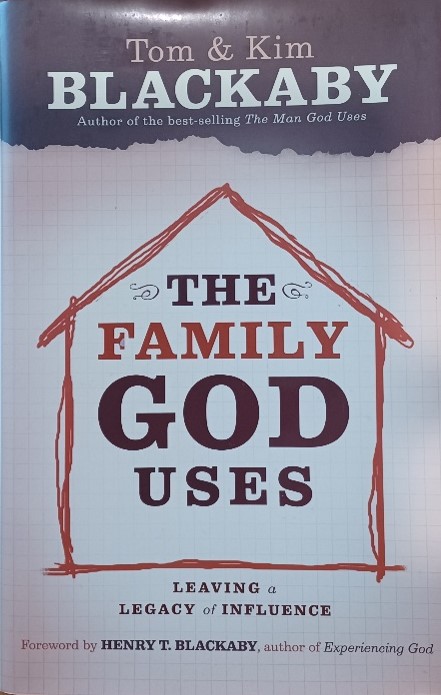
The Family God Uses: Leaving a Legacy of Influence – by Tom & Kim Blackaby
There are many parenting and family themed books out there, but this is the first I have seen that focuses outside the family. Instead of focusing on how to improve one’s family, the Blackaby’s write about how the family can unit around being on mission for God. They write about the value of the family to the church and to God’s work in the world. A number of examples from them personally and others, are included to show how families can serve God together and be used for His glory in His Kingdom. An excellent book for any parents who want their children to grow up with a desire to serve God. Your family can be used by God!
I will be sharing a brief review of every book I read this year. Hope you enjoy and hope it encourages you to keep reading.
Words and Deeds: Becoming a Man of Courageous Integrity – by Charles Causey
As the title declares, Charles Causey is writing about how our words and actions need to line up. We need to speak up about things that matter, and we need to act on things that matter. He does a good job illustrating the power of words at the right time to challenge and to encourage others. The book includes a diagnostic quiz to determine where you fit as one of his four categories of Sentry, Salesman, Scout, and Statesman. While I didn’t find the quiz all that helpful, I do appreciate how he points out that some are good with words, others with deeds, while we need to be good at both. An encouraging read for any man desiring to live with integrity.









 Elevate with Andy