Book Reviews: Andy’s 2022 Reading Experience

I will be sharing a brief review of every book I read this year. Hope you enjoy and hope it encourages you to keep reading.


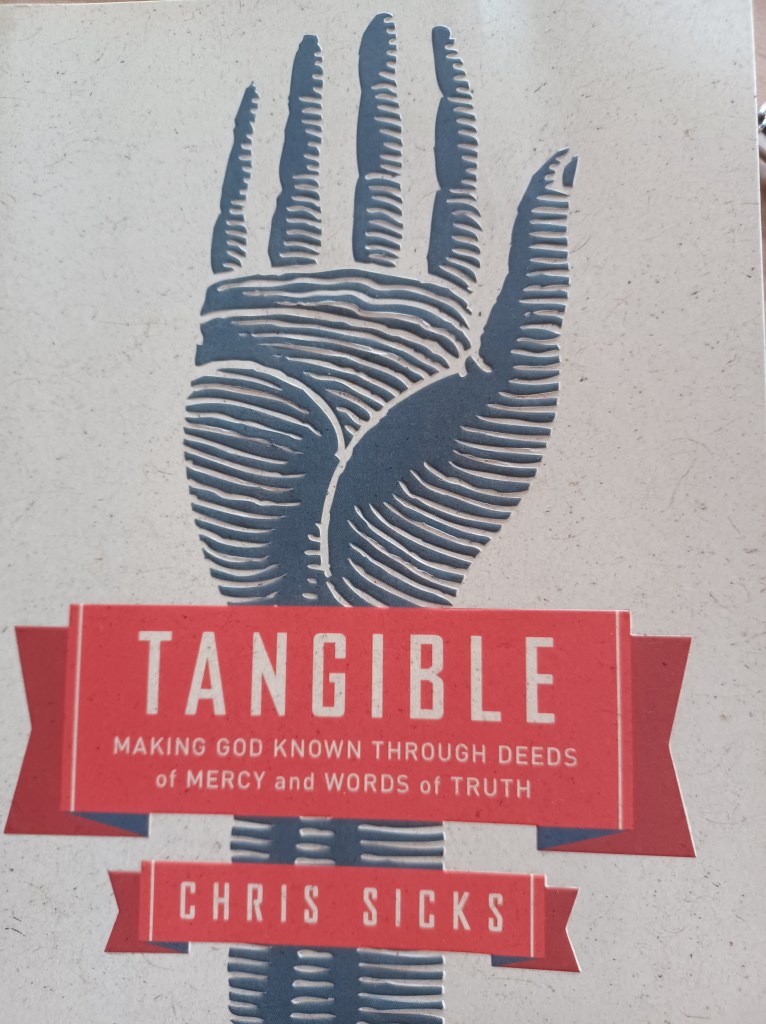
In Tangible, Chris Sicks introduces a concept that I have not come across before, an “apologetics of mercy”. The one who practices this is then a mercy apologist. He says if we were to help someone in need, like a single mother, for instance, then: “The merciful apologist steps into her life, addresses her physical burdens, soothes her emotional scars, and then presents Christ as the answer to her heart’s pain”. (p 26) He does an excellent job presenting the case that too often we Christians think they can win someone to Christ by giving them a great argument, by telling them about Jesus. The truth is, many people are not interested. But when you show people you love them and care for them in practical and real ways, they begin to wonder why. Now you can tell them its because of Jesus. When people experience God through your presence in their lives, God can love them through you. And often they will respond by surrendering to Jesus, because you spent time with them and loved them and just went out of your way to show them the love of Jesus. Sicks refers to this a “show and tell”. Don’t think telling people about Jesus alone, don’t think about showing people God’s love alone, but do both together and see what a difference that makes as people experience the God you are talking about through your relationship with them. Show and Tell.

Pursuing Excellence: Plan Your Sermons a Year Ahead

Life happens at a pretty steady pace. In fact, unless you plan ahead, you will be dragging behind regularly, just barely keeping up. It is valuable to set aside time at regularly to do the work of looking ahead. For preachers, there is always another sermon to prepare. Unless you plan ahead, it is difficult to spend adequate time thinking through how to preach a biblically accurate, relevant, and creative sermon. The more you plan ahead, the more time you have to think through and improve each sermon.

1.Natural Blocks of Time

I begin by determining the number of Sundays between natural breaks. For example, if I was going to preach on Christmas through Advent, and typically think of the church “year” from September to June, that means I only have September through November for a longer series. I could preach through a book of the Bible with that many weeks. Or, I might do a series for September and make a change at Thanksgiving. After determining how many Sundays for natural blocks of time, I start praying through and listing what I feel I need to preach on in the next 12 months.

2. Congregational Needs

There are times in a church where it seems the congregation needs a certain topic addressed. For example, I am presently leading a church transition ministry, meaning I come into a church that is newly without a pastor and is looking toward hiring the next one. Sometimes the transition is a painful one, where people have been hurt by the pastor or each other. Many transition pastors preach a series on the “one anothers” of the Bible. (“Love one another” or “forgive one another” and so on). The hope is to help people to restore their relationships and trust in each other.

As you pray and think through the needs of your congregation, God will guide you to which books of the Bible or topics to address. You could invite your leadership team into the process by asking them to suggest needs they see in the congregation. If you know that most people are going to take holidays over the summer, you might want to plan a summer series in which each sermon doesn’t build on previous sermons but can be fully understood on its own. If people miss a sermon, they are not falling behind.

If you have a number of new people, you may want to address some of your denominational and local church beliefs and priorities. Or if your church includes many new Christians, you might want to introduce them to Jesus through preaching through one of the gospels over the next year. You could intersperse it with thematic series at Christmas or leading up to Easter, or just preach right through the gospel.

If there are themes you feel need addressing but don’t fit in your preaching schedule, you could address some of those needs in a class or weekend seminar.

3. Main Idea of Each Sermon

Once you have decided which of the books of the Bible or themes you want to preach on, begin breaking them down to what scriptures will be preached which Sundays. Make sure each independent sermon builds on the theme you have decided on. After identifying the scripture for each Sunday, develop the basic sermon idea. This will not necessarily be the final decision, because at this point you are just doing a quick survey of the material. You may adjust the main idea later, but you want an outline of the focus for each sermon so you can begin to collect supporting materials, ideas, and stories for that focus over the next year leading up to each week’s sermon.

Develop the main ideas well enough so that you can give the music and creative service planning teams about six months’ notice for them to gather material for that Sunday that will fit with the sermon.

4. Monthly Glances Ahead

Each month, spend time looking at the next month’s sermons, reminding yourself of upcoming themes and topics. This helps you watch for how things like the news or world events are speaking into what you will be preaching about, as well as how that sermon will speak to local needs. Keep in touch with those who will be leading music or adding other creative ideas into the service so you are working together and building one cohesive service.

Prayerfully start to define the main focus of each sermon more specifically. Ask God to give you and your team creative ways of speaking truth and applying it to each one who will hear.

5. Weekly Specifics

As you work through the details of planning the sermon and accompanying service for the next Sunday, work closely with any volunteers who will be part of the service. Communicate your theme clearly and make sure you are on the same page with all who will contribute. Pray about the applications you will include in your sermon, and ask God to direct your final preparation so that lives will actually be transformed through what God has helped you prepare.

It is a privilege to weekly stand before a congregation who is waiting to hear from God. Put in the time necessary to be biblically accurate and creatively relevant to your congregation. God will reward your efforts as you continually listen to His guidance right from the time you determine what book of the Bible to preach on to the time you wrap up the conclusion of your sermon.

Keep looking up,

Andy

Book Reviews: Andy’s 2022 Reading Experience

I will be sharing a brief review of every book I read this year. Hope you enjoy and hope it encourages you to keep reading.


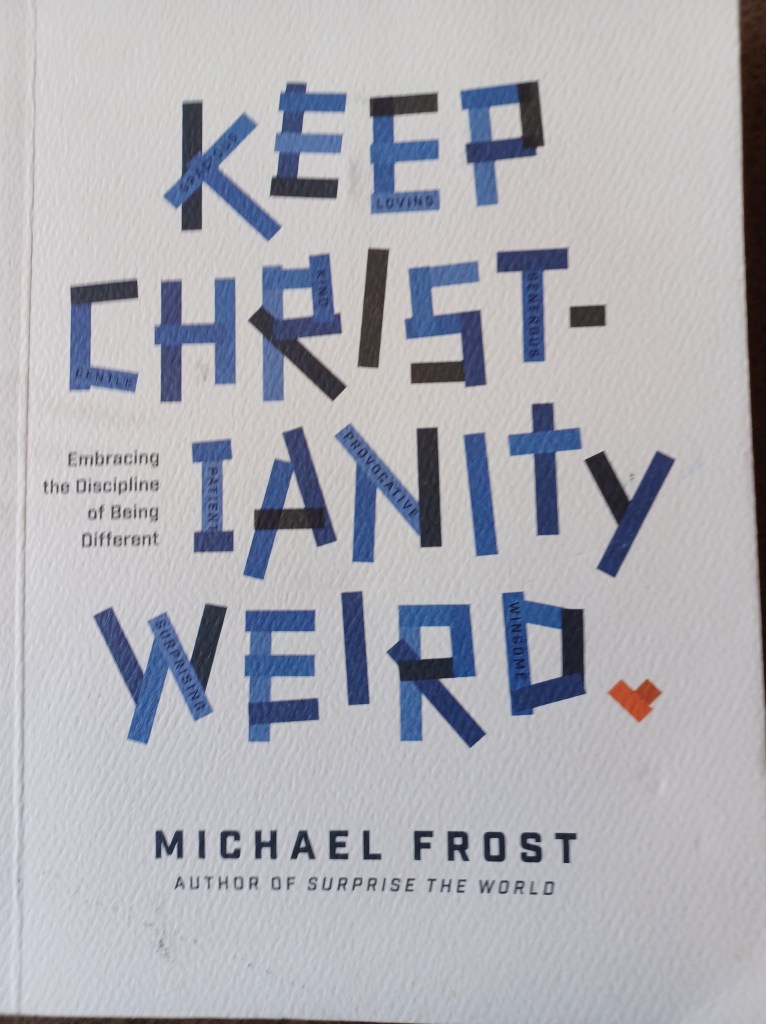
KEEP CHRISTIANITY WEIRD – by Michael Frost

Frost is encouraging the church to return to its counter-cultural beginnings. Instead of trying to blend in under the guise of being relevant, he encourages believers to be different. This is not about being strange to be noticed, but to do things differently than people expect. This is about actually caring for the needy, and being okay with doing things that the average person thinks is strange, if it means being more like Jesus. Frost writes, “Just as business and education is fostering greater creativity and innovation, the church is in a phase of rewarding compliance and conservatism and suppressing eccentricity.” (p. 16) We need to reward creativity, not “toeing the line”. We need out of the box thinkers and leaders.

Frost wants believers to come back to being different in a way that points people to Jesus and a proper understanding of God. “In a world of Moralistic Therapeutic Deism, keeping Christianity weird involves recovering our strange belief in a scary God who can’t ever be fully known, who doesn’t need us, whose face we can’t look upon, and whose name we can’t utter.” (p. 158)

This is a great book for anyone who wants their mediocre Christianity challenged!

Pursuing Excellence: Plan Your Year

Pursuing excellence involves a number of different aspects. One of those is to plan ahead. The difference between mediocrity and excellence may come down to how well you plan.

Planning ahead gives you time to work on your project or event. When you start planning earlier, you have more time to think it through, prepare and determine the best way to complete the project. Giving yourself this extra time to think about your project means that you have longer to think about it and come up with ideas than if you are scrambling to get everything together last minute.

Pastors and church leadership teams, plan your upcoming year. While many people plan their years from January to December (I tend to plan my personal goals to begin in January), when it comes to working with churches, I suggest thinking of the year as starting in September and finishing in August. This is because church activities usually follow the school year, starting and ending about the same time the local schools do. In order to be ready for September, I suggest you actually do your planning in May.

Benefits of Planning Ahead

Planning ahead helps you improve whatever you are planning, because the earlier attention to the project results in more time given to consider it. This extra time can be used in numerous ways:

  1. You can gather the best team.
  2. You can train and equip your volunteers ahead of time.
  3. You can let life enhance your creativity – your reading and TV watching and living of life will give you ideas you did not have when you first began planning.
  4. You can find great ideas, not just good ones. Instead of settling for the first idea your team comes up with, consider how to improve on that idea. Your programs will go from good to great because of the time to percolate in the minds of the creative teams.
  5. You can build better resources and materials required for the project.
  6. You can spend more time in prayer, asking God to guide every aspect of your planning as well as the final implementation.

Plan Your Year – Start with the Big Events

Begin planning for your main programs of the year. Work with program leaders to determine the start and end times for their programs. If your programs start in September, leaders should be determined by the end of May, so they can start planning their programs and find their volunteers from June through August.

Are there a few big events or weekends your church celebrates? This could be a church camp or a family weekend, as well as Easter, Christmas, and a Fall Kickoff. Set the dates and work on developing themes. Decide who should lead each event and who should be on each team. Make sure that everyone involved knows the pertinent information, such as dates and themes, as early as possible. Plan when to do baptism and membership classes, as well as when to have the baptism and when to receive new members. Plan when and what you will do for evangelism and outreach activities throughout the year.

Once the basics of the big events are planned, start filling in the other Sundays and other activities. Pastors can work on sermon plans for the year ahead. (I’ll share more about how I plan my preaching year next week). Knowing in advance what you will focus on, give additional time to improve the sermons with good illustrations and pertinent information. By creating a year-long plan in advance, you not only give yourself more time for sermon preparation, but you also provide your worship and service planning teams that same additional time to create the best services they can.

The themes for each Sunday will come from the pastor after he plans out his sermons for the year. With a plan for both large events and sermon themes, add other activities to your plan. For example, identify when you should hold leadership meetings or training and discipleship events throughout the year.

After your yearly calendar has been filled, build in further detailed planning every quarter or so. Planning ahead involves a few stages: 1) Planning the year, 2) Planning 3-4 months ahead, and 3) Planning the week ahead. For example, begin developing detailed plans for Christmas by the end of September. Plan for Easter in January. Plan for September program starts in May.

As you plan ahead, the goal is not just to put on a great event or program, but that whatever we plan in the church will transform lives and bring us closer to Jesus. Pursuing excellence is not about performing flawlessly, but doing our best to help everyone involved become more like Jesus.

Have fun in you planning, pray for God to guide every aspect, and then rejoice as you see people impacted by God through events and activities you planned.

Keep looking up,

Andy Wiebe

Book Reviews: Andy’s 2022 Reading Experience

I will be sharing a brief review of every book I read this year. Hope you enjoy and hope it encourages you to keep reading.


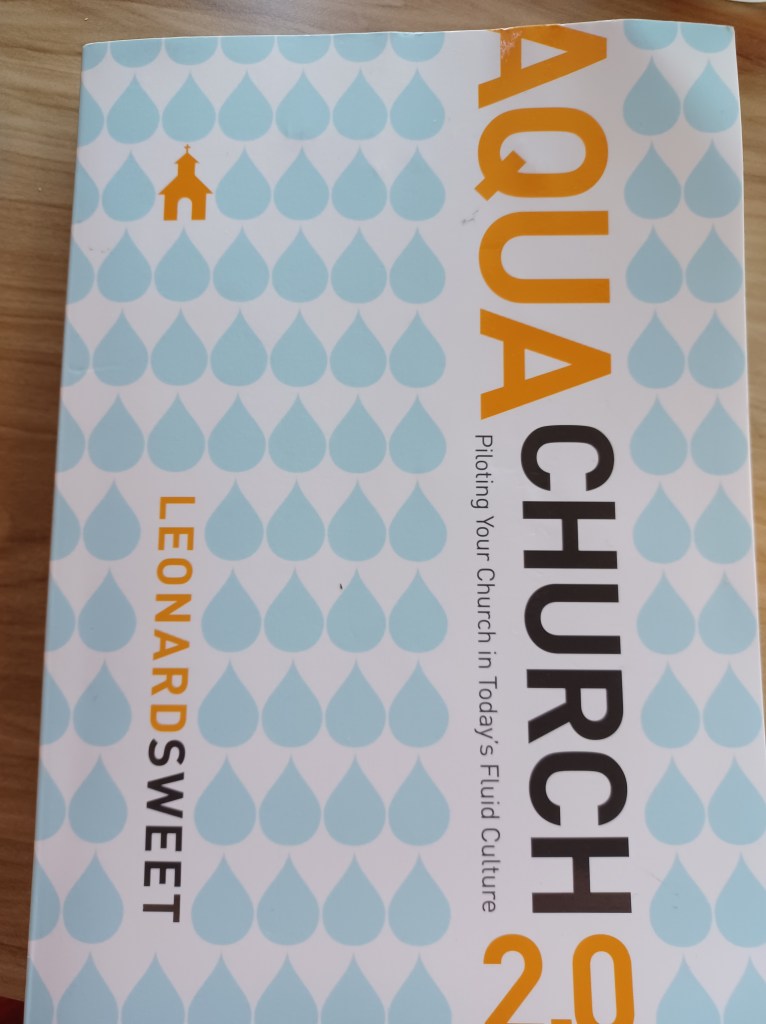
AQUACHURCH 2.0by Leonard Sweet

AQUACHURCH 2.0: Piloting Your Church in Today’s Fluid Culture uses the metaphor of water to teach on the church and it’s role in today’s culture. He addresses many aspects of church ministry, even chapters on “Risk Taking” and “Intuition” which most other church leadership books do not include. He is encouraging churches to be more aware of the culture we live in and minister in so we can understand how best to differentiate between places we join in and times we act counter-culturally. He makes a point of saying, “For leaders, not having a Web ministry is more than being without a calling card, not using a Web site as a communications and community-building tool is to have fumbled the future.” That is an appropriate message to the many churches who went to online service through Covid but have not chosen to have a meaningful online presence going forward. This book is a great resource for any church leader.

The Church Needs More Creativity

Our Bible begins with the Creator at work, creating our world. When He makes people, they are created in the “image” of God, as creators themselves. While different animals are incredibly industrious and clever, humans are set apart from the animal world by our ability to think through problems and find new solutions and create new things.

Merriam-Webster online defines “create” like this:

  • To bring into existence
  • To invest with a new form, office, or rank
  • To produce or bring about by a course of action or behavior
  • To produce through imaginative skill

Create with a twist on what already exists

God brings into existence something out of nothing. We, as humans, have to use what is already available to create something new or different. Even the creativity of thought or speech builds on the thoughts and words of others.

Creativity uses and builds on what others have created. Of course, we need to acknowledge other’s works and do not want to claim something as ours when it isn’t, but we usually create out of what already exists.

As a church, too often, we buy curriculum and programs that others have found to be useful. We run programs and events that have been effective elsewhere. These can be great options for times when we do not need to “re-invent the wheel” and use materials that others have invested in developing.

Even when we purchase a complete program, we often realize there are aspects that don’t quite fit. In order for the program to work well in our own situation, we need to implement frequent evaluations of our programs and events, and be open and flexible to make changes. These changes require a sense of creativity to consider what we could take out and add to improve the pre-made materials for our situation. We may also find that there are times when we are better off creating our own completely new program that more appropriately contributes to our ministry as a church. Just because a club program works well in large urban centers in the United States does not mean it will transfer to rural northern Alberta. While the teaching may still transfer, the application part may have to be adapted to connect with rural northern kids.

Stretch yourself to think creatively

We need to learn how to be creative. Many of us had all our creativity schooled out of us. We were forced to colour within the lines for too long. We no longer know how to think outside of what already exists. We need to stretch our creative muscles and limber them up so that we can think of things that do not exist yet, building something new on something old. This could be through reading and listening on a variety of subjects. It could be dreaming and brainstorming as a team. It could be learning how to take aspects from many different places to put together something that is new and different, and perfect for what we are hoping to accomplish.

Being creative is not an individual task. Instead, seek creative input from people in your community. Talk to people in different fields to learn how their knowledge and experience could be adapted to work in the church. For example, what might we learn from someone’s expertise in trees about how to structure small groups? Or how might talking to an electrician spark ideas for discipleship?

Areas for creativity in the church

As we focus in on church ministry, creativity can add some new life in almost every area!

The Worship Service – Our worship services have not changed much in decades. We may sing less hymns and more worship songs and we may use versions of the Bible with up-to-date language, but the service as a whole still consists of singing, prayer, scripture reading, and preaching much as it did years ago. Even if we don’t get creative with the outline and contents of the service, we could benefit from creative ways of doing these essential pieces of our worship traditions.

What if we celebrated communion with different stations spread around the room where we could physically enter into confession, repentance, and celebrating the forgiveness Christ offers? We could write sins on paper and run them through a shredder or nail them to a cross.

What if we built on the message of the sermon by inviting people to discuss the application of the lesson and promise to hold each other accountable to follow through on our commitments? Not only would this invite more participation in the service, but encourage engagement with one another throughout the week.

Discipleship – This has been one of the most talked about topic in my church circles over the last decade or two. How do we best disciple others? How do we grow as disciples of Jesus ourselves? Often the process is built on information. We teach people scriptural truths and encourage them to memorize verses. Could we borrow ideas from the trades where people progress through stages of practical learning along with class time? Maybe we could apprentice new believers through stages of learning and development. What if we “walked” through life together? An apprentice disciple could be in touch with their mentor throughout the day, perhaps checking in at certain times, and being available for advice and prayer? We need to creatively find ways of doing this better.

Children’s Ministry – Every church has some type of ministry for their children, and often they are very similar. Could we be creative in how we help our children get to know Jesus and grow in their faith in Him? Yes, use all kinds of media, and creatively insert “old-school” ideas that we enjoyed as children that our youngsters have never experienced. Sometimes creativity may mean re-creating something old with a new twist. You could use puppets, play a video, or have them record their own video on a topic. Find ways to engage them physically through games or dance or hands on interactive learnings stations.

Creativity is the means, not the end goal.

While our desire is to be creative, that is not our goal! While it may be nice to be known as a creative church, the creativity is only meant to help us reach our other goals and to engage more people in the process. As a church, God has called us to reach and teach people; to come to faith in Jesus and to grow as a disciple. Creativity can help us get people’s attention and keep them interested. Creativity can be the container that carries our goals forward. The colour and shape and size of the container helps draw attention. Who wants to watch black and white movies when you can watch them in High Definition colour?

Let’s learn to stretch our creative muscles prayerfully and creatively to be the best church offering the best programs you can!

Keep looking up,

Andy Wiebe

God Repels Sin

“God is not repelled by our sin.

Our sin is repelled by God.”

Tony Kriz (Aloof)

Somewhere, many followers of Jesus have gotten the unfortunate idea that when we sin we push God away from us. In this way of thinking, because God is holy and cannot stand sin, God will not be anywhere near our sin – much less near us, the sinner.

Don’t lose sight of God while desiring to be right with God.

This thought causes us to develop a perspective of “working really hard not to sin.” That is a tiring and fruitless endeavor. We become people of the law, people of rules.

We memorize the “thou shalt not’s” and make up others. We say we want to get closer to God and yet our focus is intently on our sin. We work so hard to prevent sin that we forget why we try to avoid sin in the first place. We lose sight of God by the very effort we hoped would make us right with God.

If we find ourselves viewing life from this perspective, that’s a sign that it is time to reorient our thinking. We need to realize that God is not repelled by our sin. In fact, he came to face it head on.

When we were utterly helpless, Christ came at just the right time and died for us sinners. Now, most people would not be willing to die for an upright person, though someone might perhaps be willing to die for a person who is especially good. But God showed his great love for us by sending Christ to die for us while we were still sinners. And since we have been made right in God’s sight by the blood of Christ, he will certainly save us from God’s condemnation. 10 For since our friendship with God was restored by the death of his Son while we were still his enemies, we will certainly be saved through the life of his Son. 11 So now we can rejoice in our wonderful new relationship with God because our Lord Jesus Christ has made us friends of God.

-Romans 5: 6-11 (NLT)

Jesus came to this earth to die for our sins. He willingly took all our sin on himself so that he could pay the death penalty for it for us. God arranged this in order for us to become right with him.

In his book, Aloof: Figuring out life with a God who hides, Tony Kriz adds, “We do not experience God by avoiding sin, we overcome sin by pressing into God.” We need to pay less attention to how much sin we have committed and pay more attention to the one who loves us and sent his Son to die for us, even while we were full of sin. Instead of focusing on what not to do, we need to focus on what to do to grow in relationship with God.

Trade information for relation

We need to shift our focus onto God. Press in to a relationship with Him in any and every way we can and get to know him. Bible reading is one way to get to know God. It’s important that we don’t just learn information but grow in relationship with him. Let’s listen and watch for how scripture reveals God’s heart for us. Allow scripture to be our conversation together.

As we focus on God and our relationship with him, we can read biographies and learn from Christian leaders of the past who have pursued God and how they experienced a relationship with Him.

We can read about Corrie Ten Boom forgiving her German captors. We can read of George Mueller and his complete faith in God’s provision for his hungry orphans. We can learn from those who had a relationship with God that allowed them to live boldly and confidently in the grace of God.

Trade monolog for dialogue

Rather than focusing on our sin and what we are not doing, we can shift our focus to God and what he has to say to us through regular conversations with Him. I learned how to talk to God from an early age. It started with a few memorized prayers for bedtime or before meals and graduated to imitating adults. Over time I learned how to express my needs to God with my own words, even pouring out my heart to God. But unfortunately, I was not taught how to have a conversation with God. To pursue God instead of living a life focused on “not sinning,” I need to be able to talk with him as a friend. Romans 5, above, says that through Christ we become friends of God. Friends have conversations. I needed to learn how to listen to God so that my monolog turned into a dialogue.

This does not mean I have quit sinning, but that I have quit dwelling on my sin and go quickly and regularly back to God and pursue Him. As I recognize sin – as God points it out – I confess my sin and renew my focus on God.

I encourage you to “press in” to God, dig deeper into a relationship with Him through faith in Jesus Christ, and as you focus more on Him you will be less inclined to be drawn into sin. Jesus sent us the Holy Spirit to both remind us of what He taught and to remind us of our sin. Allow the Holy Spirit to guide you as you deepen your relationship with God.

Keep looking up,

Andy Wiebe

Church Has to be Different -But How?

A number of church leaders are declaring: Church has to be different now. Church has to change. While Covid has been an accelerator of this, leaders were already declaring this earlier.

I understand. As culture and society change, we need to adapt how we do the work of the church in order to connect with people today. But what changes?

I don’t feel I have the answers to what that change looks like. Instead, I will share my questions with you who follow me and hope you have some ideas to respond with. I would love to hear your comments.

Worship Service Changes

Do we need to change how we lead the worship service? I believe many churches need to plan for more audience participation and less performance at the front. I am passionate about creating interactive and transformational worship services – so much so, that I am in the process of writing a book about it!

Do we need to change from a monolog preaching style to more discussion? I know of one church that is attempting to do exactly that. People come to the service, gather around tables, and a table host leads the discussion. What else needs to change in the worship service?

Program Changes

What might be some beneficial changes to the type of programs we offer? Do we need to reduce the number of programs we offer? Should we plan more opportunities for people to interact with each other? Do we need to have more Biblical learning opportunities because people are biblically illiterate today?

Online Changes?

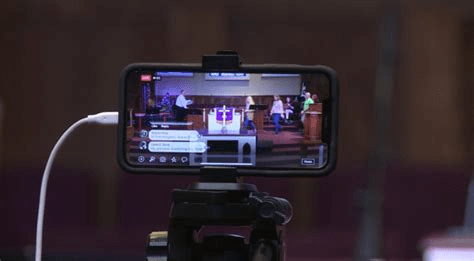
One positive outcome of covid restrictions was more churches provided an online worship service option. The church I presently serve is continuing this option, and usually have a number of people tuning in to watch. How might we improve in how we deliver those? Do we need to have people who can interact with those who are tuning in online? Maybe we need to hire staff to be the online church pastor in the same way multi-site churches hire a campus pastor?

How can we have a better online presence beyond just a one-hour worship service? Does this mean creating a presence on social media?

Discipleship Changes

How can we improve how we disciple new believers? In the past the emphasis was on teaching them “how to do” the Christian life. Should we move to an emphasis of “how to be” a Christian living in the world? While Bible teaching remains essential, especially for those coming to church with no prior Bible knowledge, I wonder if we need to help people move beyond living right to really connecting with Jesus, to actually listen and hear God?

Children and Youth Ministry Changes

Could we move beyond entertaining children and youth toward teaching them, even at a young age, how to live a life that is totally dependent on a relationship with God through faith in Jesus Christ, and tuned in to the guidance of the Holy Spirit? Do we need to challenge youth with opportunities to serve both in the church and in the community and world? Do we need to add in more digital content, or do we deliberately reduce screen time in our programs to counteract all the time they spend online in their day? Would it be wise to help youth focus more on getting to know God rather on avoiding sin? I came across a great quote a while back that went something like this: “Sin does not repel God, God repels sin.” We often see it as the less we sin, the closer we can get to God, when it is probably better to grow deeper in our relationship with God and then sin will be repelled.

Philosophy of Ministry Changes

Should we refocus our energies on helping people to grow in relationship with Jesus and not just in information about God? Do we need to remind ourselves that God came to be “with” us (Emmanuel)? Jesus sent the Holy Spirit to come live “in” us. It is about growing in relationship, not about growing in knowledge.

Outreach and Community Involvement Changes

As we think about introducing people to Jesus, our first realization should be that the mission field is not overseas, but right at our doorstep. There are many people living right next to us, who are just like us, who have never heard the message of salvation. And rather than thinking we need to go overseas, realize the world has come to us. Instead of taking a mission’s team to Mexico, maybe we need to reach out to the growing Mexican population down the street. Maybe instead of going to Africa, reach out to the many Africans from many different countries that now live in our cities? Even many small towns are seeing an influx of foreign workers and new immigrants. We need to reach out to them, welcoming them to Canada and sharing Jesus’ love with them.

As we reach out to those around us, this often requires an improved sense of community involvement and community connections. Some churches do well at this. Some churches offer English classes or homework help. The church I serve has an annual free Clothing Bonanza, clothing many children as they head off to school. They also give away free Bibles, so many that one year they started grabbing the church’s pew Bible to give away. Unfortunately, other churches are so caught up in their own church they hardly even know any people who don’t already know Jesus.

Let’s help people practically, and ensure we share the gospel as well. What else needs to change in how we reach out?

Facility Changes

What needs to change about how we build and set up the places where we meet? Many churches have done a good job equipping their facilities to be more accessible for those physical limitations, for example, by building ramps and elevators. We also have screens with the words on them so people don’t have to flip through hymn books. Additionally, many churches have recognized the needs of their communities, and replaced pews with chairs to allow their spaces to serve in varying purposes throughout the week. Are there other changes? Do we need to add more coffee bars?

Other Changes?

What else needs to change in how we do church? How do we update and adjust our ministries to have a greater impact for God’s kingdom? What “sacred cows” need to be chucked in order to head in a more effective direction?

I’m guessing that many changes will be different from church to church. Every church needs to mull over this issue of how to change to be the best they can be in reaching out and discipling people in their walk with Jesus.

What else needs to change?

Keep looking up,

Andy Wiebe
Book Reviews: Andy’s 2022 Reading Experience

I will be sharing a brief review of every book I read this year. Hope you enjoy and hope it encourages you to keep reading.


ALOOF: Figuring Out Life With A God Who Hides – by Tony Kriz

If you are looking for an easy read that packs a punch, this is for you! Tony Kriz walks through his life experience of pursuing a relationship with a God who is often in the shadows. He shares some great stories where God did something miraculous but also makes it clear that these are few and far in between. He does a great job of showing how God is continually there, even when we do not see Him or feel near to Him. Tony is very honest about his personally journey while asking great questions that make the reader think. And there is nothing wrong with thinking deeply about God! A great book for anyone who wants to go deeper with God!

The Thirst of Humanity

One of the fundamental questions of life is this: Does my life have meaning?

Wrapped up in that question are others. Why am I here? Do I have a role to play? Where do I fit? Can I do something of meaning? What is my purpose?

There is a basic thirst in all humanity to find meaning in life. Everyone wants to find some meaning and value in what they do. And they look for answers in all kinds of places. Some try to fill that thirst with experiences and so they do all kinds of things hoping something will satisfy. They may choose to enhance or even remove the feeling of reality with drugs and drinking. Some chase achievements, some look to “just provide a good life for my family.” Others look to fame. Some look to “leave a legacy” so their name will remain alive long after they are gone. Everyone is searching for that satisfaction that will finally quench their thirst.

The search is on for that elixir that will truly satisfy. This search has carried people in many different directions. If you have attended college or university you will probably have come across some of the following people and their ideas.

  • Albert Camus wrote in his essay The Myth of Sisyphus “There is but one truly serious philosophical problem, and that is suicide. Judging whether life is or is not worth living amounts to answering the fundamental question of philosophy.” According to Camus, life is entirely without meaning.
  • Jean-Paul Sartre argued for dealing with the meaninglessness of life by creating our own meaning. We decide, not God, or any other person, what we find meaning in.
  • Augustine of Hippo and Blaise Pascal, though many years apart have both been connected to the idea of a “God-shaped hole” in mankind, or an “infinite abyss”, that Pascal wrote in Pensées, “this he tries in vain to fill with everything around him, seeking in things that are not there the help he cannot find in those that are...” Looking for something that doesn’t exist, outside of God.

Solomon, King of Israel, declared in his book, Ecclesiastes, “Everything is meaningless… completely meaningless! …I observed everything going on under the sun, and really, it is all meaningless—like chasing the wind.” (Ecclesiastes 1: 2, 14).

Solomon’s journey for meaning led him to seek pleasure and wisdom and hard work, and found none of these pursuits were fulfilling. In Ecclesiastes 3: 14 he says, “God has made everything beautiful for its own time. He has planted eternity in the human heart, but even so, people cannot see the whole scope of God’s work from beginning to end.” There is something in the human heart that longs for more. This is reminiscent of the “God shaped hole” or “infinite abyss” that is longing to be filled, to be satisfied. This thirst that is longing to be quenched.

Solomon journeys on, looking at the injustices of life, the futility of political endeavors and chasing after and gaining wealth. He points out that everyone dies. So what is the value of the time of our existence?

In chapter 11 Solomon encourages both the old and young to treasure their days, and reminds them that God is part of the answer to our thirst for meaning. Yet he still views life as meaningless.

When people live to be very old, let them rejoice in every day of life. But let them also remember there will be many dark days. Everything still to come is meaningless.

Young people, it’s wonderful to be young! Enjoy every minute of it. Do everything you want to do; take it all in. But remember that you must give an account to God for everything you do. So refuse to worry, and keep your body healthy. But remember that youth, with a whole life before you, is meaningless. (Ecclesiastes 11: 8-9)

In the end Solomon concludes “Fear God and obey his commands, for this is everyone’s duty. God will judge us for everything we do, including every secret thing, whether good or bad.” (Ecclesiastes 12: 13-14.)

His final conclusion is we need to recognize that God has the final say about our meaning and value. He is the final judge. Our job is to obey him and find meaning in that obedience to God. There is no meaning in all other pursuits, except in honoring God in those pursuits.

The thirst of humanity cannot be satisfied with any other pursuit than that which brings us into a relationship with the One who made us. God created us to have a relationship with Him. Any pursuit that looks for satisfaction outside of that relationship will never satisfy. To look for contentment outside of what we were created for will only bring more dissatisfaction and frustration.

To use a drill to pound a nail or a file to chop wood is ridiculous and frustrating. We need to come to God who created us for relationship with Him, and as we honor and worship him our craving will find relief.

Your thirst can only be quenched as you drink deeply from God who created you and loves you!

Keep looking up,

Andy Wiebe