When parents are raising their children, they teach them how to be polite and how to live into the culture around them. One of the values parents often try to instill into their children is to say thanks. Parents often remind their children to, “Say thank you.” Or they ask the child, “What do you say?” They want the child to express their gratefulness when they receive something.
Luke 17 tells us a story of ten men sick with leprosy who met Jesus. They stood at a distance, respectful of Jesus who did not have the disease, and called out for Jesus to have pity on them. Jesus tells them to go show themselves to the priest. As they went to do so, they were cleansed. (The Old Testament Law said the priest was the only one who could declare a person clean after a sickness.)
We might applaud the faith of these ten in going to do what Jesus said even though they were not cleansed yet. They were only healed as they headed to find the priest. But they were healed!
Here comes the important part of the story. Yes, they were healed, but what did they do after that? We are told that one of the men who had just been healed, instead of continuing to the priest, turned around, came back, praised God with a loud voice, threw himself at Jesus’ feet, and thanked him. Ten were healed; one came to thank the healer.
Jesus responded, “Were not all ten cleansed? Where are the other nine? Has no one returned to give praise to God except this foreigner?” Then he said to him, “Rise and go; your faith has made you well.” (Luke 17: 17-19)
How many times have we completely forgotten to give thanks, enjoying God’s goodness to us as if we deserved it?
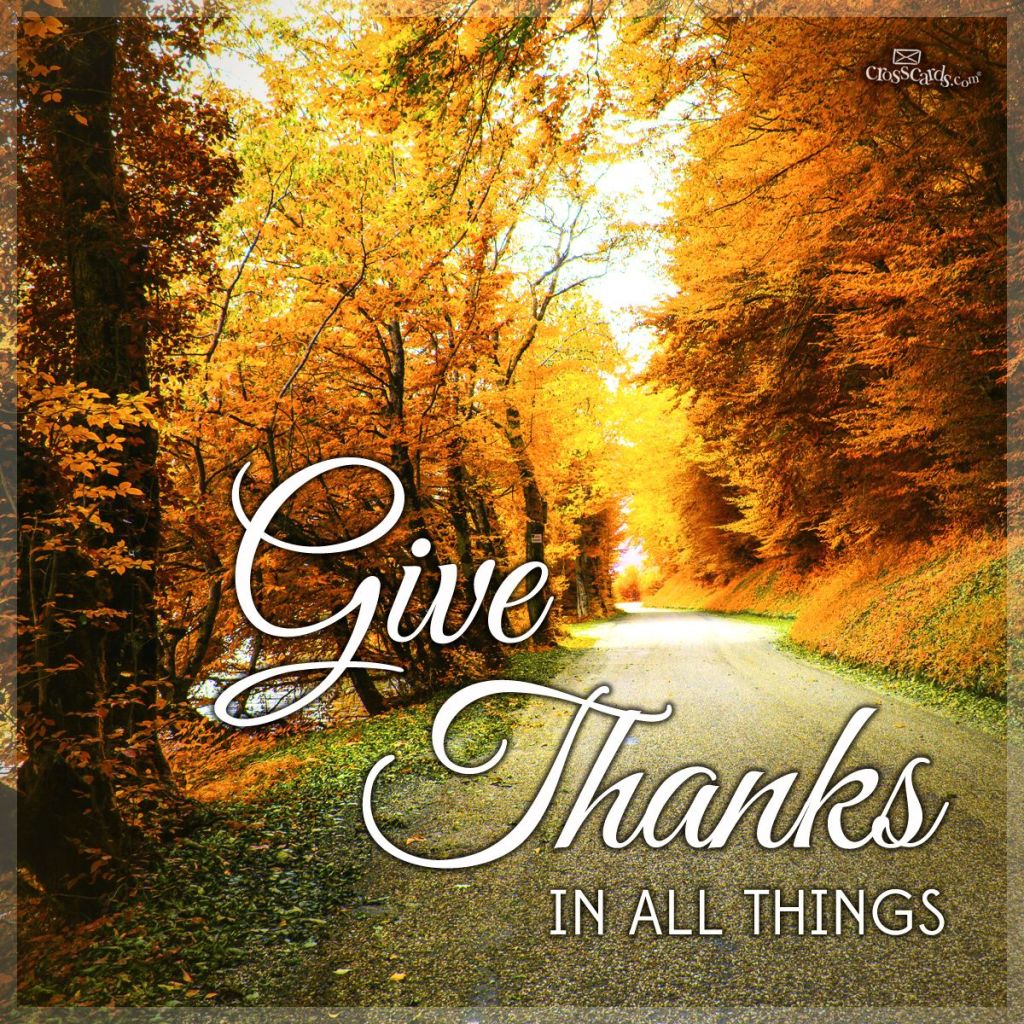
We have a special day in our year that we stop to say “thanks.” Thanksgiving is coming up shortly. While it is good to have one day a year to give thanks, we need to cultivate a grateful heart and to develop an attitude of gratitude. As Paul encourages us in Ephesians 5:20, “always giving thanks to God the Father for everything.” Can we learn to give thanks regularly and not just on special occasions?
God is good to us in many ways every day. We take so much for granted, that we need reminders to pause and give thanks. If one wants a grateful heart, it means being intentional in giving thanks. Include thanksgiving in your prayers. Give thanks with your family around the dinner table. Thank God for His goodness in your life. Thank God for the unusual things and the answers to prayer. But also thank God for the things we receive from Him every day. The air we breathe, the food we eat, water to drink. Thank Him for creation we can enjoy. Autumne in my part of the world is a beautiful experience as the leaves change color and start to drop from the trees. Notice God’s beauty around you and give thanks.
Every time we give thanks, we remind ourselves that we depend on God for many things in our life. It is a reminder to us that we need God, and we benefit greatly from the good gifts He gives us!
Thanksgiving is coming soon, but don’t wait for that special day to give thanks!
When I was a kid, I loved flying my kite. I remember one windy summer day in the field just down from our house, releasing my kite into the sky. It was a thrill to feel the pull of the wind on the spool of string as the kite dove back and forth. I let out more string, and more string. The kite grew smaller as the string rolled off the spool until… oh no! The string was not tied to the spool in my hand! I had let the string reel out and suddenly the string was all gone – the kite was no longer tethered to the spool in my hand! I panicked! I scrambled after the kite, desperately trying to grab the string. After a few frantic attempts I managed to snag the string. In my panic I hauled the string in, not rolling it up neatly on its spool, but gathering it in a tangled pile at my feet until I had the kite back in my hands. I never managed to untangle that pile of string again.
Sometimes, in an attempt to control our busy lives, it seems we end up with a tangled mess of roles and responsibilities at our feet. We do everything we are supposed to do or have signed up for, but we desperately try to untangle the mess and get a sense of control back. Each of us needs to manage various roles in work and life.
Recently I felt like my life was resembling that pile of tangled string. I had some family issues that took precedence over all my other responsibilities. Everything else got put on the shelf for a week or so. I focused on the one thing that was most important in the moment. After that week, I recognized I had some untangling to do.
I needed to figure out which strings to pull to start unravelling the mess. I had to take out a calendar and plot out my responsibilities to make sure I was working on the right things at the right time. We can’t work on everything at once. No matter how many responsibilities we think we can handle, we can only work on one at a time. I had to break down my responsibilities into manageable periods and schedule them on my calendar. I had to plot when I would focus on my transitional pastor responsibilities. I needed to chart when I would work on my transitional coaching duties. I needed to clearly schedule when to work on my doctorate work. I needed to schedule some family responsibilities. It took some work to sort it all out, but the end result was a plan that gave me peace. I could see my way through.
Whatever is in your tangled mess of string, you can find your way through. Ask God to help you sort it out. And ask God to give you the time you need to accomplish what is on your plate. I know from experience, that God can enable you to work faster or to somehow stretch your time to do all He is asking of you. He will help you sort it out. Don’t panic or give up. Sort it out and begin working on one responsibility at a time.
Carve out a time of retreat. Even a hour or so away from everything may give you the necessary time to evaluate your priorities and determine what you need to focus on and in what order. Then after the retreat you can advance with a plan.
We all have numerous responsibilities. Sometimes they pile up and its hard to know where to start in addressing all the needs, but with God’s help you can do it.
A person may think their own ways are right, but the Lord weighs the heart.
Proverbs 3:5-6
Trust in the Lord with all your heart and lean not on your own understanding; in all your ways submit to him, and he will make your paths straight.
If we were to take a look at the discipleship methods of our churches, we might tend to think that discipleship is about knowing enough information. We preach and teach on Sunday mornings, we have Bible studies mid-week, we encourage people to read the Bible at home. We want to make sure that people know the right stuff.
It’s as if we think that if we give Christians enough information about God, about themselves in light of their relationship with God, and what God wants us to do in the world, then we will live out what God wants us to do. Unfortunately, that is not correct. Giving people more information, and helping them to think right is important, but is not the complete picture.
Information by itself, if it does not connect with our inner being, may never affect us or change us in any way. In the verses above we see the emphasis on the heart. In these verses, “heart” refers to “the inner man, mind and will.” This moves beyond or rational thinking to our feeling. It moves beyond knowledge to our desires. Unless we care about something, it is simply information. Once we care about it, we want to act on it.
When I tell someone there are over 30,000 orphans in 750 orphanages across Haiti, people receive the information. When that same person gets to know an orphan who was adopted, or visits an orphanage in Haiti, that information becomes personal. They become emotionally connected to the information. Then they may move beyond just storing information in their head to wanting to make a difference somehow.
When I hear a sermon about the fact that God answers prayer, I receive it as information. I may even believe it. When I pray, and God answers in a specific way, then I know that God answers because I have experienced it. Now when I pray, I pray with a much deeper expectation because I don’t just have information.
When I am taught that I need to read my Bible and pray every day, I might do it occasionally, but when I have come to know Jesus in a real way, then I want to read because I hear him speaking to me. I am not just reading information but having a conversation with Jesus.
James K. A. Smith wrote You Are What You Love. He does a good job of pointing out that information alone won’t change us. We will still do what we love. We naturally act out of our personal desires, not just by being taught to think correctly.
May our relationship with Jesus be much more than information about Him. May we love him and choose to obey Him out of a desire to please him.
It’s fall, and children are heading back to school. Though we have no school age children in our house anymore, I’m reminded of those hectic school mornings. Often it is a race against time to get the children dressed, fed, and backpack loaded to get them out off to school on time. This is an example where rituals could be of great benefit.
Rituals are helpful patterns for life. These are steps we go through on a regular basis that ensure we don’t forget something and get it done on time. Rituals could help children be less rushed in the morning before they head off to school. Check out the examples below.
Before going to bed the night before:
Lay out the next day’s clothes.
Pack the backpack with everything except the lunch.
Pack the lunch and place in the fridge.
Morning rituals:
Pack lunch in backpack before breakfast.
Place backpack beside your shoes at the door.
Breakfast at the same time every morning.
It may be helpful to have a ritual for the start of your workday as a pastor or church leader. Instead of showing up in your office with no idea what the day will look like, you can have a plan to start the day right. A ritual can help you make the most the first part of your day.
To set up helpful rituals you need to think through what you already do, deciding which things happen every day and could help you start the day right. A morning ritual may look like this:
Begin with prayer, asking God to guide your day.
Check emails and quickly decide which to respond to or which to put on your to-do list to deal with later.
Plan your day, and note appointments already schedule or deadlines that need to be met.
You may find it helpful to have some “end of day” rituals which prepare you for a good start the next day:
List anything that needs to be followed up from the day.
Make your to-do list for the next day.
Note appointments that have already been made.
For rituals to be helpful, they need to be personal to you. They need to be steps you will take.
Rituals can help in many areas of our work life. I have rituals for how I go about preparing my weekly sermons. I have rituals I follow in preparing to teach a class. I have rituals in how I ensure I am ready for Sunday morning. These rituals help me to make sure I don’t forget something and save time because I don’t have to think up new patterns every time.
A few benefits of rituals are that you are less likely to forget important steps, you will be more organized, and life will be just a little less hectic. Enjoy establishing meaningful rituals.
I will be sharing a brief review of every book I read this year. Hope you enjoy and hope it encourages you to keep reading.
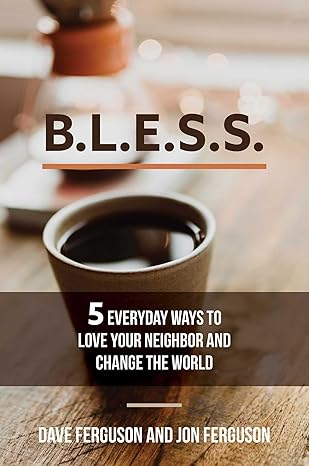
B.L.E.S.S.: 5 Everyday Ways to Love Your Neighbor and Change the World – by Dave Ferguson and Jon Ferguson
As Christians, we know that Jesus commanded us to share the gospel with the world around us. Yet for many of us this is a confusing and terrifying thought. It seems so foreign to us. Dave and Jon make it seem simple and lay out a clear plan on how to naturally share God’s love with the people we encounter every day. If you were looking for a plan on how to tell others about Jesus, B.L.E.S.S. is that plan. Begin with Prayer, Listen, Eat together, Serve, and Share your Story. I encourage you to grab a book, read it, and apply – by yourself or with a group.
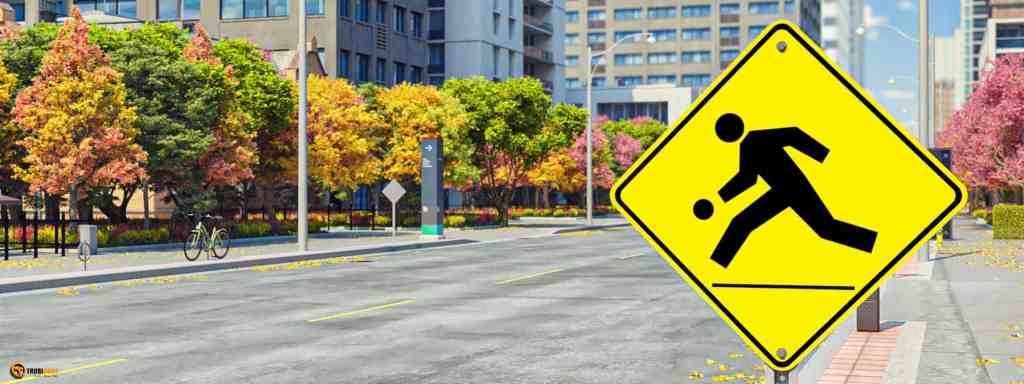
Playground and school zone signs are similar in that they warn drivers to be aware that there are children in the area. This is one of the road signs that I seem to miss easily. In fact, I got two photo radar tickets in the mail because I had not slowed down for a playground I passed twice in the same morning.
While many signs are intended for driver safety, these signs are all about the safety of other people, often children. And that is why I got my tickets, because I was focused on finding a doctor’s office that morning, not paying attention to others around me, and speeding in a playground zone. Churches, and pastors like me, could learn a few things from this sign.
First, remember that there are other people around. It is so easy to get focused on tasks we are engaged in that we don’t notice others. We are so focused on “driving” the church that we forget the importance of people in the process. Yes, pastors need to prepare for this Sunday’s sermon and monthly board meetings. There are projects to undertake and budgets to plan. All these are good and important things to engage with, but don’t forget that the first priority – the reason we exist as a church – is to help people. There are times we would benefit from a sign that would remind us to slow down and notice people.
Secondly, beyond just noticing people, we need to be aware of their needs – to stop driving and make sure we don’t hit them if they stumble on our path. Our desire should be to help these people get safely back off the road.
Thirdly, as we notice people and make sure they are safe, it is important that we do not view these people as distractions, but as the priority right there in the moment. Instead of yelling at kids to “get off the road,” or being frustrated with people who want some of our time, we need to see our interactions with people – even the unannounced ones – as an opportunity to fulfill our priorities as churches and church leaders. Other people are not inconveniences interrupting us on the way to what is really important.
Jesus tells a story that might help us see the outworkings of this sign in our church and pastoral ministry. In Luke 10: 25-37, Jesus tells the story of a man who is beaten, robbed, and left on the side of the road. A couple of religious leaders see the man but are so intent on their destination they ignore him and keep on going. Then along comes a Samaritan, who obviously was also on a journey somewhere, but is willing to delay it in order to ensure this stranger is okay and cared for. The Samaritan bandages the beaten man, puts him on his own donkey, takes him to an inn, and pays for all his needs.
Church leaders and pastors, let’s notice people and see them as the priority, not as an inconvenience to deal with quickly and get out of our way. Let’s notice them and care for their needs.
I will be sharing a brief review of every book I read this year. Hope you enjoy and hope it encourages you to keep reading.
GOD CAN DO ANYTHING BUT FAIL: So Try Parasailing in a Windstorm – by Stan Toler
Stan Toler uses a humorous approach to remind us of our God who can do amazing things. He focuses in on the amazing things God does in and through us with chapters like: Chapter 1: God Can Love Me Even When I Don’t Write on His Facebook Wall, Chapter 4: God Can Heal Me Even When the Doctor Shakes Her Head and Walks Away, or Chapter 5: God Can Guide Me Even When the Lady on My GPS Has Laryngitis. He reminds us that God can do amazing things, but we have a role to play too, “If you want to mature in Christ, you have to surrender all you have and all you are to Him every single day.” (p. 66) He reminds us that God is at work, and we are invited into relationship with Him, joining Him in what He is doing in the world.
Roundabouts and Traffic Circles are similar in that they help keep traffic moving without forcing anyone to come to a complete stop. I was pretty nervous the first time I encountered traffic circles. There were not any traffic circles in the small town where I learned to drive. I knew how to come to stop, watch for traffic, and then proceed. The idea that I was supposed to merge into this moving traffic and then leave the circle at the right spot was a little unnerving. I have since learned the benefits of traffic circles and roundabouts.
Roundabouts have become more common in the province where I live, not just traffic circles in the congested areas of a city but also at major intersections on highways. These have replaced 4-way stops, allowing traffic to keep moving. Traffic must slow down, yet doesn’t need to stop completely, which I’m sure large trucks appreciate especially. They don’t have to come to a complete stop and then get their heavy load moving again.
This made me think of how sometimes churches or organizations need to make wholesale changes to deal with problems that negatively affect them. Do they need to come to a complete stop or can they make changes on the fly? I’m reminded of observing how some hockey teams who are no longer winning regularly try to make changes. Some give up and trade away any player of value to try to do a complete restart. Others make significant tweaks in their organization without losing seasons to a restart. A roundabout is an example of making changes as you keep moving forward.
When churches have suffered a loss of member for an extended period, it becomes clear that changes need to be made. Often, if they have lived in denial for too long, they will need to come to a complete stop and start over. In some situations, a complete stop means a change of pastoral staff and a period of renewing vision and resetting strategy. In some situations the complete stop means completely stopping all functions of the church, even closing the doors for a brief period of time in order to start a new work down the road.
Like a roundabout, slowing down is preferable to the complete. Yes, the church must slow down. Maybe there are programs that need to be shut down or reworked completely. A pastoral transition might be required. Often someone outside the church needs to come and coach the church through to a better future. The church stops almost all activity for a time, while still maintaining regular Sunday worship services and a physical presence in the community. The church doesn’t come to a complete stop but slows down enough to consider the reality of what they are facing.
Most roundabouts have at least three alternatives for drivers to leave the circle. You may leave the roundabout at the exit that keeps you going straight ahead, or you can take a turn to the right or left. A church too, needs to consider if some simple realigning is all that is needed, and they can keep moving ahead in the direction they were already going. On the other hand, it may be the time to take a turn a little to the right or left. A complete stop is not required, but some restructuring on the fly may mean a change in vision and replacing some programs with others that fit better with the new vision and the current culture of the church and its community.
Like my first experiences with traffic circles, when a church realizes it needs to change, trying something new can be quite unnerving. Hopefully though, most churches will recognize that slowing down to make changes can help them avoid a complete stop.
Church leaders, be willing to adjust your vision and programming when necessary. Church members, work with your leaders as they guide you to a better future. Trust God to guide you as you ask Him to help you make the right changes.
I will be sharing a brief review of every book I read this year. Hope you enjoy and hope it encourages you to keep reading.
THINKING, FAST AND SLOW – by Daniel Kahneman
As the title says, this book is about thinking. Slow and fast refers to the two systems Kahneman describes in the book. System 1 is like instinct. This is our automatic thinking system where we don’t have to exert any effort to know certain things like one object is bigger than another or that 2 + 2 = 4. This is learned thinking, by experience or by effort. System 2 is where we have to take time to ponder something in order to come up with the right answer. Our choices and decisions originate from system 2. The first part of the book and the explanation of how these two systems work, is the best part of the book. The rest of the book then works through various examples of how our understanding of these systems affects our everyday lives. A great book on thinking to make you think!