Every leader benefits from reading regularly. Even those who do not enjoy reading can benefit from disciplining themselves to read. The authors we read become our mentors. We can benefit from being mentored by those whom we may never meet and who do not know us personally, but who pour into our lives through their written words. Many of us do not have access to pastoral mentors; these authors can become that for us.
As you read, you will find certain authors that you connect with or who seem to speak into your context in a way that you find helpful. There are certain authors I have read at different times depending on the situations I was working in or issues I was facing. Choosing a book allows you the opportunity to tailor your mentoring experience to your specific needs.
Let me share four authors and some of their books I have personally benefited from.
Nelson Searcy is the – founder and lead pastor of The Journey Church in New York and author of a many church leadership books. Many of Searcy’s books are about a specific system that he has developed in his church. I found many of the principles to be adaptable to my situation even in a smaller rural church.
A few of his books that I have benefited from are:
Fusion: Turning First-Time Guests into Fully – Engaged Members of Your Church
Activate: An Entirely New Approach to Small Groups
The Generosity Ladder: Your Next Step to Financial Peace
Maximize: How To Develop Extravagant Givers In Your Church
Andy Stanley is the – founder and lead pastor of North Point Community Church in Alpharetta, Georgia and author of many books, mostly about church leadership. I especially appreciated his teaching on preaching and vision setting.
A few of his books I have benefited from are:
Deep and Wide: Creating Churches Unchurched People Love to Attend
Communicating for a Change: Seven Keys to Irresistible Communication
Visioneering: God’s Blueprint for Developing and Maintaining Personal Vision
Seven Practices of Effective Ministry
Preston Sprinkle is an – author, speaker, and teacher. I have especially appreciated his books addressing gender and same sex attraction, as well as other issues of today.
Here are a few of his books that have helped me understand the discussion around these issues better:
Embodied: Transgender Identities, the Church, and What the Bible Has to Say
People to Be Loved: Why Homosexuality Is Not Just an Issue
Go: Returning Discipleship to the Front Lines of Faith
Fight: A Christian Case for Non-Violence
Thom Rainer – is a writer, researcher, speaker, and founder of Church Answers, a website where many pastors connect and learn together about church ministry and the life of a pastor. His books are usually short but filled with practical advice about the church.
Here are a few of his books I have enjoyed:
Becoming a Welcoming Church
I Will: Nine Traits of the Outwardly Focused Christian
Who Moved My Pulpit?: Leading Change in the Church
Unchurched Next Door
I read a lot, but these are a couple of authors I have read often and enjoyed how they spoke into my life and ministry.
Invite leaders to mentor you as you read their books. Learn from their experience and expertise. Look for a couple of nuggets that apply directly to you as you read. And keep on learning.
If you have ever worked on a car or built a deck, you know the value of a good tool. With the right tool the work becomes easier and you see better results. The same is true for a pastor. We benefit from having good tools to help us.
Some of you may immediately think of tools like a good commentary or online study tools. These are great and we need those, but I’m thinking more along the lines of the ideas and questions we come across in our reading and study.
Sermon Tools
Over the years I have gathered many questions that I use regularly to help me better dig into the scripture I am preparing to preach. Referring to my pates of collected questions and processes has enhanced my sermon preparation. These are questions like:
What does it say?
What does it not say?
Could it mean what it says?
Sometimes I move through these three questions quickly, other times, if it is a difficult or controversial section of scripture, I tend to slow down and make sure these questions help clarify what God’s Word is truly saying.
One question that I have found helpful to me, especially because I am usually preaching to a congregation of all ages is:
4. “How will this sermon engage with a 12 – year – old boy?”
I want to preach to everyone, but if I can get a pre-teen boy to be engaged, I will most likely I will engage with the rest of the congregation as well.
Here are a sample of a few more questions:
How does this speak to unbelievers?
What is the audience’s thoughts, feelings, emotions, struggles, needs – relating to the big idea of this teaching segment or message?
What are some practical steps the listener can take?
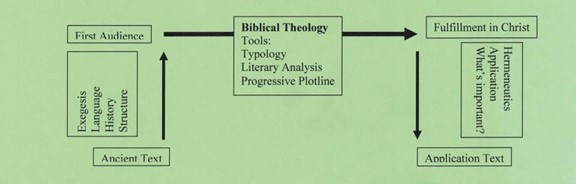
One process I use is a diagram that helps me to move through a scripture passage in a way that moves my study from the text, to historical context, through the Biblical theology, to how it is fulfilled in Christ, and then to how we need to apply the scripture today. Following this process keeps me from taking a shortcut and miss an important step in clearly understanding what the scripture text is saying.
Prayer Tools
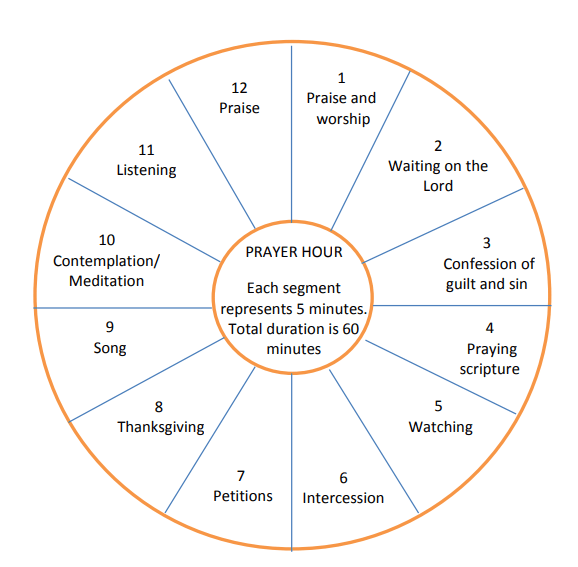
I have come across some great ideas for prayer, whether personal or corporate. In his book, The Hour that Changes the World, Dick Eastman suggests praying for an hour i12 periods of 5 minutes. I try to use this prayer plan about twice a week. The forms of prayer are: 1. Praise and worship 2. Waiting on the Lord 3. Confession 4. Praying scripture 5. Watching 6. Intercession 7. Petitions 8. Thanksgiving 9. Song 10. Meditation 11. Listening 12. Praise
I have used this one-hour prayer plan many times for myself as well as for a prayer group.
Pastoral Tools
One of the “tools” I need to remind myself of occasionally is to “move slowly through the crowd.” It is easy for me to have things on my mind and things to do, but there is benefit of moving slowly through the crowd prior to or after the Sunday morning service because it gives me opportunities to connect with people, or for them to stop me with a question or comment. It helps me to be more present in the moment and available to people.
I don’t know what tools you have gathered over the years that have helped equip you to improve your ministry and leadership, but I hope you have many. I would love to hear from you about the tools that help you. Send me an email to share some of your tools with me.
Most churches experience seasons in their ministry. There are times that are slow, times that are steady, and times that are extremely busy. Summer is often a slow season for many churches. The church I’m serving right now has Vacation Bible School at the beginning of July, and then only a monthly prayer meeting and Sunday morning services for the rest of July and August. How can we use the slow times in a beneficial way?
Slow down yourself.
Maybe you can adjust your vacation time to have shorter days in the office and spend extra time with your family. Maybe you can take an extra day off to enjoy a long weekend doing something fun with your kids. Or just take some time to focus on a personal hobby. Allow yourself time to slow down a bit. I’m not sure that taking vacation in the summer is the best plan. Sometimes we need to save that break for in the middle or just after a busy season. Enjoy the time at home with your family without a bunch of commitments for you or them, to distract you from each other.
2. Take a personal retreat.
Maybe you can go camping by yourself or go to a local retreat center for a day or two to spend time with God. Talk with God about what has been happening in the last year and ask God for direction for what is next. I have benefited from even a half day retreat out of the office to just spend time with God.
You might want to ask God to help you plan your next preaching year. Pray through what God is asking you to preach on. Start by choosing which books of the Bible to preach on, or consider if there is a topic that your church needs to address scripturally. Do a rough summary of the texts that you identify and how many sermons you might need to fully preach through the topic or book so you can start plotting them on a calendar for the year ahead. These opportunities to plan a preaching year have been of great benefit to me when I have been in the middle of busy seasons. It has been very helpful to have a plan in place already.
3. Read a book or two.
I have been greatly encouraged through reading good books. You probably have a list of books, maybe even a pile of books, that you have been meaning to read. This is the time. Or maybe there is a topic you would like to know more about. Maybe there are certain trends or cultural issues that are affecting your church and ministry.
Look for a book that addresses that issue. Ask around for recommendations from others for a book that speaks to your church’s needs. I recently enjoyed some great books by Preston Sprinkle on issues of sexuality and gender.
4. Connect with friends.
Summer may be a time to connect with leaders or members in your church, but it may also be a time to connect with friends who are not involved your ministry. It may be a pastor down the road, or a friend in another part of the country. Good friends can be very encouraging and may be worth a trip to meet up with. Do a road trip with your family that includes the opportunity to connect face to face with your friend.
5. Enjoy nature.
Our slow time for many is summer. Summer is a great time to enjoy God’s creation. Go for a walk with your spouse. Go camping if that is your thing. Take a day trip to nearby waterfalls or into the mountains. Enjoy a picnic by a lake. Maybe catch a fish and fry it up for supper. Allow yourself to breathe some fresh air and slow down in God’s creation.
We all have busy times. Sometimes we feel like we are running to just keep up. So take the time to slow down during the slow times. Your health will benefit, and so will your relationship with your spouse, with your family, and with God.
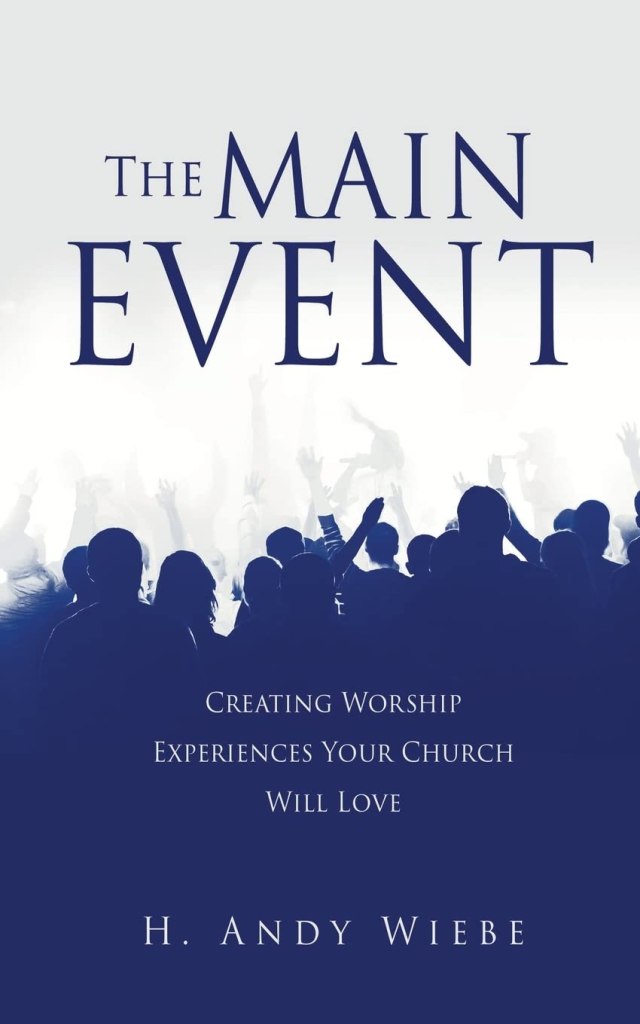
I usually write about leadership or spiritual issues. I also do book reviews on books I have read. Today is different – I will give you part of the introduction to a book I recently published. Here it is.
CRAFTING A WORSHIP EXPERIENCE
It is possible to create worship services that your church will hate to miss. Every week pastors and church leaders around the world prepare for the Main Event at their church, hoping it will impact their congregation in some way. Whatever it is called locally, and whatever day it takes place, every church has a Main Event where the whole congregation comes together to worship Jesus and to encourage each other. This is often the key means through which a church disciples their people. Most have other programs as well, but this is the one event that most people attend and engage with. We need to make it the best event it can be. I believe this requires creativity to help the congregation feel more involved and connected to what happens during the service. Churches need to find ways of making their Main Event less of a performance and more of an experience.
Each church has their own expression of worship. These vary greatly from one church to another. Each church has a certain expectation of what will take place and how it will be done. Some are quite somber; some are extremely exuberant. Some are very strict about the time; others are very flexible. Some have a clearly laid out agenda that rarely changes, while others change formats frequently. Some churches have services that are fine-tuned performances, where everything is practiced or even performed by professionals, and the agenda is planned out to the precise minute. In other churches, the agenda is loosely put together. They may start late and run late, but no one minds. In others, congregations have expectations of when the service has to conclude. In one church I served there was an older couple who just got up and walked out at 12:00, whether the service was done or not.
Though much of a service varies from church to church, most churches share some common characteristics when it comes to their Main Event. Typically, the experience of the congregation is more like that of an audience with very little participation. The congregation is invited to sing along with the worship songs, or maybe participate in responsive readings or prayers when prompted, but in many cases the congregation does little more than sit and watch the performance at the front.
When I was a young pastor in the 90’s, the big push was to have “seeker sensitive” worship services, and it was very effective for some. Seeker services often were designed and performed with a high level of excellence. Some churches hired professional musicians. Others made sure they had only the best speakers. The seeker service was something that people attended to enjoy, a little like going to the opera or even a sporting event, where the audience is there to watch, and maybe cheer occasionally. They may be invited to sing along to some songs but not many, as the emphasis was more on a great performance, than on participatory worship. This was appropriate for the time as there were still many people who had a bit of a church background and were just looking for something “better,” or more “real.” They were truly “seeking.” While many people came to know Jesus through this style of worship service, times have changed where people are looking for an experience and not just a performance.
Experiential Worship
I believe the time has come for us to move to a more experiential worship event. Churches need to find ways to invite people to participate in the worship service. This may mean including more volunteers in the actual creation and leadership of the event instead of just staff, or it may mean finding ways to invite the congregation to participate more during the event.
Those who are entrusted with the task of creating meaningful worship experiences need to realize that the next generation wants to be more involved in the service. Gary Collins, shares some research about the values of the younger emerging generation, and I believe what he says has great impact for churches and pastors as they craft the weekly Main Event in a way that will reach the next generation. Here are a few of his key concepts to consider:
Values and experiences are more important than vision casting and reaching goals;
Images and stories are more valued than words and facts;
Active participation and ownership are preferred over passive submission to authority and professional expertise; and
It is time to evaluate why we create our worship services the way we do. It is time we determine to find ways of inviting people to enter into the whole worship experience from start to finish. Young people are less impressed with excellence than previous generations were. They would rather see authenticity and be invited to participate in the experience. I want to help you create participatory and multisensory worship experiences.
If you are looking for ways to invite your congregation into an experience every worship service, then you are in the right place. This book will encourage you to create your service in such a way that those in attendance feel they are part of what is going on instead of watching a performance. Each chapter will look at one specific aspect of a worship service. We will look at how to invite more participation where those in attendance are invited to an experience they can engage with.
When I arrived as a new pastor at one church, I discovered that the church had used the same general service agenda for the last five years with little or no change. I, personally, have a hard time with that. While there may be something comforting about knowing exactly what to expect and when, I love to be creative, and as their pastor, wanted to give them some variety. This desire to be creative impacts my leadership style so much so, that at a different church, a senior commented, “Andy, I never know what to expect when I show up on Sunday.” He meant it as a compliment. He liked the variety. It wasn’t that every Sunday was extremely different, but no two Sundays were the same. I changed the order of service most Sundays. Sometimes the sermon would be earlier in the service, or we would change the number of worship songs. My goal was to allow the theme of the sermon to guide how best to create each service. The idea was to craft each Sunday’s service around a specific text and theme, and to communicate that theme in creative and interactive ways.
I remember taking our two daughters to a creative and interactive experience when they were young; it was a football game. The team ownership had realized that even a football game had to have a larger experience. Our girls were thrilled to watch the mascot. If you were fortunate, you could catch one of the plush footballs they threw up into the stands when the team scored. Cheerleaders were dancing and jumping, some being thrown in the air. Young men and women were running up and down the stairs offering all kinds of drinks, food, and candy. This was an experience beyond just the football game. If you were not a true fan and were just there with family members who were, you could still have an enjoyable experience…
THE BIG PICTURE FOR SMALLER CHURCHES – by John Benton
John Benton writes as the pastor of a small church, encouraging small churches that they can “thrive and survive as a small congregation”. He describes how there are certain things that can really discourage small churches while at the same time pointing out the benefits of small congregations in impacting people’s lives. He suggests there are five things that small churches can excel at, and if they do, they will have meaningful ministry:
Quality Presence
Quality Welcome
Quality Teaching
Quality Hospitality
Quality Prayer
And then he concludes with some ideas on how to fight discouragement in small churches. You will be encouraged to value your small church and make it the best small church it can be.
I will be sharing a brief review of every book I read this year. Hope you enjoy and hope it encourages you to keep reading.
BEAUTIFUL OUTLAW – By John Eldredge
Beautiful Outlaw: Experiencing the Playful, Disruptive, Extravagant Personality of Jesus by John Eldredge is a book that will shock some people while encouraging others. He writes about Jesus, but not in the distant manner that we often think of him. Eldredge presents Jesus as a human in a way that few, if any, have before. It is a great reminder that Jesus was a human who walked this earth in a certain place in time within a specific community and with other human friends. Eldredge points out where Jesus responds with emotion like any other human person. He, in his words, is trying to “clear the religious fog” around who our Lord and Saviour Jesus was and is. Do you want to know Jesus better? This book will help you in that search. Your ideas may be challenged, but I do believe the person of Jesus will be revealed as a person you can actually communicate with and live your life with.
Somewhere, many followers of Jesus have gotten the unfortunate idea that when we sin we push God away from us. In this way of thinking, because God is holy and cannot stand sin, God will not be anywhere near our sin – much less near us, the sinner.
Don’t lose sight of God while desiring to be right with God.
This thought causes us to develop a perspective of “working really hard not to sin.” That is a tiring and fruitless endeavor. We become people of the law, people of rules.
We memorize the “thou shalt not’s” and make up others. We say we want to get closer to God and yet our focus is intently on our sin. We work so hard to prevent sin that we forget why we try to avoid sin in the first place. We lose sight of God by the very effort we hoped would make us right with God.
If we find ourselves viewing life from this perspective, that’s a sign that it is time to reorient our thinking. We need to realize that God is not repelled by our sin. In fact, he came to face it head on.
When we were utterly helpless, Christ came at just the right time and died for us sinners. 7 Now, most people would not be willing to die for an upright person, though someone might perhaps be willing to die for a person who is especially good. 8 But God showed his great love for us by sending Christ to die for us while we were still sinners. 9 And since we have been made right in God’s sight by the blood of Christ, he will certainly save us from God’s condemnation. 10 For since our friendship with God was restored by the death of his Son while we were still his enemies, we will certainly be saved through the life of his Son. 11 So now we can rejoice in our wonderful new relationship with God because our Lord Jesus Christ has made us friends of God.
-Romans 5: 6-11 (NLT)
Jesus came to this earth to die for our sins. He willingly took all our sin on himself so that he could pay the death penalty for it for us. God arranged this in order for us to become right with him.
In his book, Aloof: Figuring out life with a God who hides, Tony Kriz adds, “We do not experience God by avoiding sin, we overcome sin by pressing into God.” We need to pay less attention to how much sin we have committed and pay more attention to the one who loves us and sent his Son to die for us, even while we were full of sin. Instead of focusing on what not to do, we need to focus on what to do to grow in relationship with God.
Trade information for relation
We need to shift our focus onto God. Press in to a relationship with Him in any and every way we can and get to know him. Bible reading is one way to get to know God. It’s important that we don’t just learn information but grow in relationship with him. Let’s listen and watch for how scripture reveals God’s heart for us. Allow scripture to be our conversation together.
As we focus on God and our relationship with him, we can read biographies and learn from Christian leaders of the past who have pursued God and how they experienced a relationship with Him.
We can read about Corrie Ten Boom forgiving her German captors. We can read of George Mueller and his complete faith in God’s provision for his hungry orphans. We can learn from those who had a relationship with God that allowed them to live boldly and confidently in the grace of God.
Trade monolog for dialogue
Rather than focusing on our sin and what we are not doing, we can shift our focus to God and what he has to say to us through regular conversations with Him. I learned how to talk to God from an early age. It started with a few memorized prayers for bedtime or before meals and graduated to imitating adults. Over time I learned how to express my needs to God with my own words, even pouring out my heart to God. But unfortunately, I was not taught how to have a conversation with God. To pursue God instead of living a life focused on “not sinning,” I need to be able to talk with him as a friend. Romans 5, above, says that through Christ we become friends of God. Friends have conversations. I needed to learn how to listen to God so that my monolog turned into a dialogue.
This does not mean I have quit sinning, but that I have quit dwelling on my sin and go quickly and regularly back to God and pursue Him. As I recognize sin – as God points it out – I confess my sin and renew my focus on God.
I encourage you to “press in” to God, dig deeper into a relationship with Him through faith in Jesus Christ, and as you focus more on Him you will be less inclined to be drawn into sin. Jesus sent us the Holy Spirit to both remind us of what He taught and to remind us of our sin. Allow the Holy Spirit to guide you as you deepen your relationship with God.
I will be sharing a brief review of every book I read this year. Hope you enjoy and hope it encourages you to keep reading.
PATHWAYS TO THE KING – by Dr. Rob Reimer
Pathways to the King: Living a Life of Spiritual Renewal and Power, is another on the Spiritual life by Dr. Rob Reimer. If you want to live a live of Spiritual Renewal and Power, then this book will help you as you move toward that. He uses a number of personal examples to show that it has been quite a journey for him. You will be able to identify with him, no matter where you are at in the journey right now. He helps the reader to get a better understanding of who we are in light of our relationship with God and his Spirit at work within us. Each chapter walks through a way to open ourselves up more to the filling and empowering of the Holy Spirit for personal growth and kingdom effectiveness. Learn to live with a fresh and deepening relationship with the Spirit.
I will be sharing a brief review of every book I read this year. Hope you enjoy and hope it encourages you to keep reading.
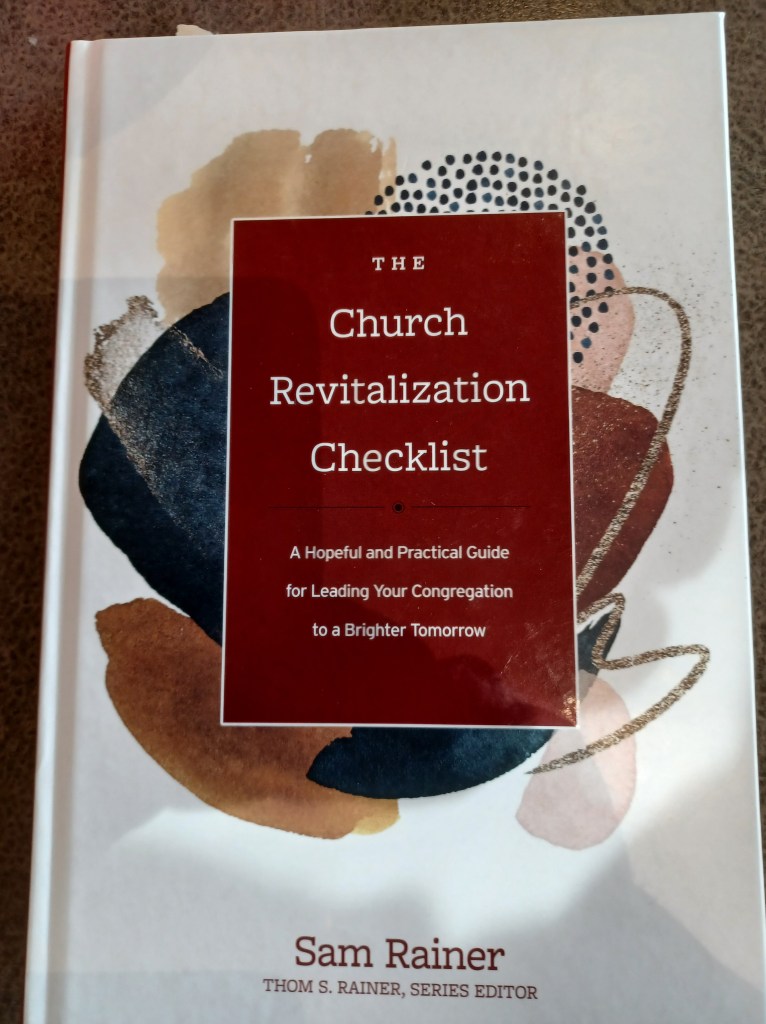
THE CHURCH REVITALIZATION CHECKLIST – by Sam Rainer
The Church Revitalization Checklist: A Hopeful and Practical Guide for Leading Your Congregation to a Brighter Tomorrow is for pastors and church leaders who recognize that their church needs some renewing. Sam writes from the position of pastor and coach to pastors who are attempting to lead their churches to a brighter tomorrow.
The first line of the book is: “If God can save any person, he can save any church.” I have a sad memory of the first church I served as a youth pastor. That church no longer exists. Fortunately the building is still being used for ministry, but that church died. Many other churches are on the verge of dying unless someone can bring them new life. Sam has written a very practical book that helps walk you through the revitalization process. Pastors, I believe many of you could benefit greatly from having this resource at your side as you lead your church to a better future.
I will be sharing a brief review of every book I read this year. Hope you enjoy and hope it encourages you to keep reading.
AN HOUR ON SUNDAY – By Nancy Beach
In An Hour On Sunday: Creating Moments of Transformation and Wonder, Nancy Beach draws on her years of experience creating great worship services. She covers many aspects of how to create meaningful experiences for church congregations, focusing on the arts and artists involved in making these experiences moments of “transcendence”. She writes, “Our aim should be to create services so compelling, so meaningful, and so unexpected, that the time sails by and attenders leave with an enthusiastic desire to talk about their experience as well as the content of the service.” Her chapter on creativity is one of the best. This book is a great encouragement to do our best to create services that impact people in meaningful ways.









 Elevate with Andy