Train Yourself to Be Godly #4: The Spiritual Practice of Prayer

*Training yourself to be godly will include intentional prayer.

It is easy to worry. We all face things that are out of our control, whether it’s the state of the world that we see in the news or the health conditions of loved ones. We don’t have to look far to realize that we do not control most things in life. This may cause us to worry, but scripture suggests an alternative.

Look at the words of Philippians 4:6-7,

Don’t worry about anything; instead, pray about everything. Tell God what you need, and thank him for all he has done. Then you will experience God’s peace, which exceeds anything we can understand. His peace will guard your hearts and minds as you live in Christ Jesus.

We are encouraged not to worry or be anxious about anything. Anything seems to, well, include everything. There is nothing worth worrying about. It won’t help us anyway, even if we do.

Instead, we are to pray and pray about everything. We should have nothing to worry about and everything to pray about. Everything. That means that everything we can think of or imagine can be prayed about. We should pray for those suffering with cancer and for persecuted Christians, and for our work situation or relationships, and even a parking spot or finding the right Birthday present for our spouse.

The verse continues, “tell God what you need, and thank him for all he has done.”

God wants us to communicate our need to him. He wants us to ask for help. And he wants us to thank him for what he has done for us. This helps explain what praying for everything means as prayer includes both asking for help and thanking God for all the help he has already given. That covers everything, doesn’t it?

The verse goes on to explain the peace we can have as we bring everything to God. His peace can become a guard for our hearts and minds so that we continue to experience his worry-free peace. This peace comes from “living in Christ Jesus.” We need to continue to remain connected to Jesus if we want to have peace.

As a child, I enjoyed flying a kite, watching it get smaller and smaller as I let out the string. One day, the string came off my spool. I no longer had control of the kite. What happens to a kite that is not anchored to the person flying it? The wind may blow it for a while, but it will eventually drop to the ground. The kite is only flying free in the wind when it is anchored to its master. We are only able to fly free in the winds of life if we remain anchored to our Master, and that anchoring, that string that ties us to him is our prayer.

We need a consistent and intentional prayer life, a plan for how we will pray, if we are to train ourselves to be godly or remain connected to the God we serve. If we want to train ourselves to become more like God, we must engage in the spiritual practice of prayer. This means that I will be intentional, not just to pray for meals or to say a prayer before I go to sleep, but to pray intentionally and about specific things and even in specific ways.

I would suggest you make a prayer plan. When will you pray? What will you pray about? And then ask God to speak as you pray.

As you regularly talk with God, he will help you become more like Him.

Keep looking up,

Andy Wiebe

Spiritual Training Series #1: Train Yourself to be Godly

Imagine you just received a baby picture from friends who just had a baby. What if they sent you a picture every year? What if you are like me and don’t clean your fridge very often? As you put up the picture from year five, you notice the picture from the first announcement. And then you realize there has been very little change. The baby is still hardly any bigger and doesn’t seem to have developed much. Unfortunately, there are some children who do not mature the way we expect, who never crawl or walk or communicate. This makes us sad because a baby needs to grow.

As followers of Jesus, we need to grow, too.

1 Timothy 4:7 says “train yourself to be godly”.

Philippians 2:12 says “work out your salvation”.

We are to become more “godly” or Christ-like. We are to continue to grow and develop spiritually to become a better expression of the image of God as we were created to be, according to Genesis 1:27.

So God created mankind in his own image,
in the image of God he created them;
male and female he crated them.

Genesis 1:27

This is not just about our own hard work though. In Colossians 1:29, the Apostle Paul writes: “I work and struggle so hard, depending on Christ’s mighty power that works within me.” Yes we are to train ourselves and work out our salvation and struggle. We have a part to play in our spiritual development, but this is never something we do no our own. Like Paul we can depend on “Christ’s mighty power that works within me”.

We can and should do our part. It may be that we choose to practice some of the Spiritual Disciplines that Christians have practiced throughout history. This includes prayer, scripture reading, fasting, sabbath, generosity, and so on. As we practice these disciplines, we make an effort to do our part as we invite the Holy Spirit to do His work in us to make us a little more like Jesus.

Whatever training we want to instill in our lives, we do need to train ourselves to become godly. For this to be a priority in our lives, we need to intentionally prepare a training schedule or plan. When will you read the Bible, and what will you read? When will you pray, and what will you include in your prayer time? When will you choose to fast, and what kind of fast? How will you practice generosity, and so on?

Think back to the time when you first became a believer in Jesus. We could say you were a baby Christian. What would that picture have looked like if your heavenly Father had taken a picture and hung it on his fridge in heaven? What would a picture he took this year look like? As I look back 51 years, to the time He could have taken my “spiritual baby” picture,  I trust that my picture – the me that God sees – would give evidence of much spiritual growth and maturity. Maybe the picture would not just include me, but other people around me who have come to know Jesus or been impacted for Jesus by me.

I pray that you are intentionally pursuing Jesus and looking for ways to grow toward every fuller spiritual maturity.

Keep on looking up,

Andy Wiebe

Do Something That Scares You

DO SOMETHING EACH MONTH IN WORSHIP THAT FRIGHTENS YOU
If you want to grow, you should be prepared to risk. As a rule of thumb, do something every month that scares you. If you grow in your faith and tenacity, do something every week that scares you. It might be asking a 7th grader to pray the benediction. It may be singing in the middle of the sermon. It may be asking a visitor about his relationship with Christ after a service is over. If you’re shaking in your boots sometime during your ministry, you might feel uncomfortable, but at least you know you have a pulse.

I came across the above paragraph some time ago and don’t remember where it came from or who wrote it, but I keep it on my sermon preparation checklist as a reminder to be willing to do something new and different from time to time.

It is easy for pastors to do exactly what they have always done in how they preach a sermon or plan and lead a service. Human beings easily fall into a rut, a routine that feels comfortable and familiar. But there is a reason that people love to go to Disneyland. I don’t think it’s the rides and entertainment alone; I think part of it is because it is different and unusual from our daily lives. As much as we might fight change, we still want some variety from time to time.

At the same time, bringing variety to a service takes risk. When we, and our church, are used to doing things a certain way, we know that a change could very well frustrate some people. Some may oppose it just because it is different. Some may even have a biblical reason why you shouldn’t have done what you did.

Yet taking the risk may be worth it. Variety awakens our senses. When we taste something new, our tongue notices whether it is an unpleasant taste we have no intention of repeating or a pleasant taste that we think we would like to try again. New experiences awaken different new feelings that the familiar old ways do not. In some churches, a person could sleep through the service and know exactly what happened, in what order, and maybe even the message that was preached, but introducing something new can wake us up.

Recently, at a church where I serve as a transition pastor, I invited people to come for prayer for healing after a baptism service. I have never done that before, but felt that God wanted me to do so. I appealed to Isaiah 53: 4 – 5 to explain the connection between baptism and healing.

4 Surely he took up our pain

    and bore our suffering,

yet we considered him punished by God,

    stricken by him, and afflicted.

5 But he was pierced for our transgressions,

    he was crushed for our iniquities;

the punishment that brought us peace was on him,

    and by his wounds we are healed.

I pointed out how Matthew ties Jesus’ healing of the sick and demon possessed to this passage:

This was to fulfill what was spoken through the prophet Isaiah:

“He took up our infirmities

    and bore our diseases.” (Matthew 8:17)

A couple of people came for prayer. After the service, a few people told me that prayer for healing had not been practiced in the church, but they were grateful that I had offered it.

The risk for me was to add prayer for healing to a baptism service – something I had never done before. I didn’t know that it was also going beyond the usual practice of the church. But God honoured my willingness to risk as I felt him lead.

Let’s not be afraid to risk misunderstanding, or even simple awkwardness, by doing something in a new way. May God help us to know when to step out of the usual and risk something new.

Keep looking up,

Andy Wiebe

Highlight Baptism as the Celebration It Is.

One of my highlights of pastoral ministry has been baptism services. I have had the joy of baptizing children, one as young as nine years old, as well as a senior who was around ninety years old. I have baptized in rivers and lakes and horse watering troughs and baptismal tanks. I had the privilege of baptizing my daughters! Every baptism has been a great celebration of God drawing an individual to Himself and that individual responding by faith and a public declaration of their commitment to serve Jesus!

Baptism is one of the acts that Jesus challenged his followers to do as part of making disciples. Along with teaching them to obey everything Jesus commanded, disciples of Jesus are to make disciples of others, “baptizing them in the name of the Father and the Son and the Holy Spirit” (Matthew 28: 19-20). As the water runs off, the baptismal candidate is reminded of their sins washed away. My practice has usually been to immerse the candidate, so when they come out of the water it is as if they have been buried and now raised to a new life in Christ.

Baptism should always be a great celebration! I have been disappointed to be in services where baptism seemed like a side issue. One church baptized people off to the side of the stage as the rest of the congregation continued with their worship service. We heard no testimony from the candidates or the words spoken over them as they were baptized. Baptism is one of the few expressions of discipleship Jesus instituted so let’s make it a priority in our services. Let’s show everyone present that we believe this is an important step in obedience to Jesus by highlighting the whole of the baptism.

I have heard of some baptisms that happened in someone’s backyard with only the family attending. Again, I think the church is missing out when a member of their community is not baptized in the presence of the whole church, as it is a celebration of their discipleship, and discipleship must happen in community with the local body of Christ! The baptismal candidate is also missing out because they do not have the support and excitement of their church celebrating this momentous moment with them. We have celebrations for our physical birth and for wedding anniversaries, why not celebrate our spiritual birth and life too!

Baptism is important because Jesus told us to do it. It is an initial step in discipleship, so let’s not only practice it but also highlight it as the special priority it is. Let’s invite the whole congregation to gather around, whether it is in the church, or out at a lake or river, or even in a hot tub in someone’s backyard. Let’s allow the candidate to share a testimony, whether live or recorded, where they declare their allegiance to Jesus! Let’s invite unbelieving family and friends to come too, so they can experience this occasion and recognize the commitment the person is making to Jesus. Maybe the event will be an occasion for them to commit their life to Jesus, too!

Pastors can use the baptism service as a time to remind the church of God’s love, of Jesus’ sacrifice for them in His death and resurrection, and that the Holy Spirit wants to help them grow in their relationship with Jesus. Highlight baptism as part of discipleship. Those witnessing the baptism can see Christ’s incredible love and fall more in love with Him, too.

I hope you have many baptism celebrations as many come to faith in Jesus and connect with your church!

Keep looking up,

Andy Wiebe
Is Your Church Declining or Growing?

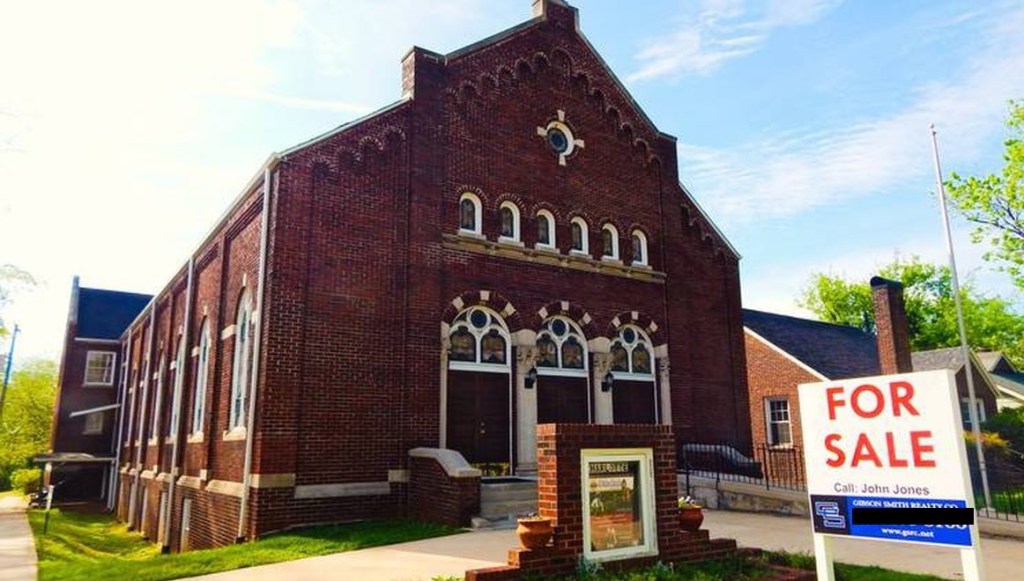
You may have heard some of the discouraging statements about church closures recently. A study by the National Trust of Canada “predicted that one-third of Canada’s 27,000 faith buildings, most of which are Christian, would likely close permanently in the next 10 years.”[i] The narrative around church closures includes conversations about the decline of religious affiliation in Canada. A January 8, 2022 Global News Report stated: “Religiosity in Canada is at an all-time low, with recently released data from Statistics Canada showing only 68 per cent of Canadians 15 or older now report having a religious affiliation. It’s the lowest it’s been since they first started tracking this statistic in 1985.[ii] The Canadian Institute for Empirical Church Research, in a 2024 article, stated an opposing view, saying “overall the Canadian Christian Church had only 2% fewer net congregations in 2019 (23,675) than they did in 2009 (24,138).”[iii] While pointing out that there are only a few fewer churches, the article acknowledged that religious affiliation is indeed down.

I understand that churches do sometimes close. The church I started in as a youth pastor no longer exists. At the same time, I am very encouraged as I think of the churches I have served as a transitional pastor over the last 5 years.

I have served seven churches, of which three were growing even during their transition, and all the rest were stable. Not one of the churches was in continual decline.

So what might this mean for us as pastors and church leaders?

There may be times when a church should close. Some of our rural communities are declining as people move away for school and jobs, which may mean a church closes for lack of people. Some churches may need to close because they have lost their mission and are no longer serving as a church, but a Christian club for a few dedicated members.

So what does this mean for church leaders?

We need to remind ourselves that we are serving God’s church. It is His church. While we can definitely do our part, we need to ask God to step in and bring revival where necessary and grow the church. We need to remind the church of our mission to make disciples who make other disciples. We need to give people hope and joy in their relationship with Jesus. We need to look for ways to bring spiritual renewal and transformation into our congregations, beginning with us.

We cannot lead people where we aren’t going first. Are you hungry for God? Are you digging into His Word, hungry for more of Him? Are you reading books on spiritual renewal? Are you praying and inviting others to pray with you? Are you loving your neighbours and those in the community around the church building?

Pastors, God wants us to use our gifting and calling to draw people ever closer to Jesus. I am convinced that when people fall in love with Jesus again, they will come alive. They will experience Him at work in their lives. As we ask for a fresh filling of the Holy Spirit, He will fill us and empower us for holy living and bold sharing of the gospel.

Quit preaching “self-help” sermons. Preach Jesus from the Gospels. Preach about the filling of the Holy Spirit. Introduce spiritual disciplines and invite your church to practice them. Show your members the full life that can be theirs.

God is still at work. He is still drawing new people to Himself. New believers are asking to be baptized. Some of your members are hungry and searching for more of Jesus. Encourage those who are already searching and ask God to open the hearts of others.

Are churches closing? Yes, some are, but yours does not need to be one of them. Be proactive. Do not assume the decline of your church is inevitable. God is still at work, renewing believers and reviving churches. May yours be one of those.

Keep looking up,

Andy Wiebe


[i] New report suggests opening churches to the masses as attendance dwindles

By The Canadian Press

Published: June 22, 2025 at 7:43AM EDT https://www.ctvnews.ca/canada/article/new-report-suggests-opening-churches-to-the-masses-as-attendance-dwindles/

[ii] [1] ‘Gone by 2040’: Why some religions are declining in Canada faster than ever

By Ashleigh Stewart  Global News

Posted January 8, 2022 5:00 am

 Updated January 17, 2022 3:21 pm https://globalnews.ca/news/8471086/religion-decline-canada/

[iii] Hope For the Future: The 2021 Canadian Census

Rev. Dr. Lee Beachhttps://flourishingcongregations.org/hope-for-the-future-the-2021-canadian-census/

I Can’t Do What God Can Do

I can’t do what God can do. God can do what I can’t do.

As a pastor, as a leader, I have come to realize that there are not many things that I can actually do to make people come to know Jesus, grow in their faith, learn to serve, or continue to pursue Jesus.

I can’t make a seeker surrender their life to Jesus.

I want people to come to know Jesus and put their faith in Him for forgiveness and salvation, but I cannot make them surrender their lives to Jesus; however, God can. John 6:44 is clear, “No one can come to me unless the Father who sent me draws them, and I will raise them up at the last day.” God can draw people to Himself. He can soften the sinner’s heart and create a longing in them for a relationship with God through faith in Jesus.

I can’t make anyone fall in love with God.

Many Christians possess extensive knowledge about God and Jesus and could pass a test on the Bible and their understanding of who God is and what Jesus did to provide salvation. Unfortunately, I am realizing many of these same people do not have a real, alive relationship with God.  I can’t make anyone fall in love with Jesus or with the Heavenly Father, but God can draw them and open their hearts and spiritual minds to get to know him personally and learn to love Him. God can reveal Himself to them in personal ways that deepen their love for Him.

I can’t disciple people on my own.

I can teach people and do my best to lead them by example. I can try to disciple them in the way that Matthew 28:19-20 calls us to. But it is only God who can work in their hearts, and it is the Spirit at work in them that helps Christians continue to grow in their faith.

I can’t make people serve.

I can try to guilt people into serving, I can push people, but ultimately, for them to serve with God’s love, God must show them the need to serve and use their gifts and passions and skills for Him.

I can’t make a Bible lesson change someone’s life.

I enjoy teaching, but I have recognized that the impact of a lesson on the hearts of the students really depends on what God chooses to do in their hearts in that moment. God is the one who can use the words of the teacher in ways that He chooses.

I can’t make a church grow.

I love to see new people added to the church. I love to hear stories of churches that are running out of room because so many people are attending. I can try to use various church growth techniques, but I have realized over the years that growth depends on what God does in the hearts of people.

I can invite people to do something, I can try to inspire them in a certain direction, but I cannot make people do anything they do not want to do. Yet as I trust God to work, He does. He works in me, and through me, and in others, as I faithfully do what God asks of me. I need to serve Him faithfully, and I need to recognize the results have little do with me and are all about how God is at work in people’s lives.

Yes, we need to work hard and do our best, recognizing that we need God to work. There are many things we can’t do, but if God is the one who does the work in people’s lives, we can pray urgently for God to work in our church and the people we serve.

Keep looking up,

Andy Wiebe

Earning Trust As A Pastor

As pastors, we can not expect that people will trust us simply because we are “the pastor.” People have been let down by too many leaders, by too many pastors, to automatically trust a pastor. Trust must be earned. Pastors, we can intentionally lead in a trustworthy manner so people will trust us.

As pastors, we invite our members to listen to and respond to our sermons. We challenge people to step up and volunteer in church ministries. We ask people to accept changes we are making to how we run services and ministries. If church members trust us, they will be much more willing to follow our leadership. If they do not trust us, it will feel like dragging a car through mud. Here are a few ways to earn people’s trust.

Be real.

Being real begins with leaders being self-aware and confident in who they are. They are open with people. They share their stories and let others know who they are. This involves letting people know what they care about and sharing their life ups and downs.

Pastors, you don’t need to hide who you are. People can tell when you are not being authentic. Don’t feel that you have to be perfect or have all the answers. If people feel you are hiding something they will be slow to trust you.

Be consistent.

Trustworthy leaders are clear about their expectations and consistent with their goals. When circumstances are difficult, trustworthy leaders don’t abandon their goals too quickly in light of other priorities. A trustworthy leader is the same person up front leading as they are when you interact with them over a coffee.

Make sure your words and actions match. Trust is threatened when a leader is unpredictable. Do what you promise. I just led our church through a vision and values clarifying meeting that I promised would take no longer than ninety minutes. I was glad when, as we were wrapping up, I looked at the time to see we finished in about eighty minutes. Keeping your word helps earn people’s trust. We need to be consistent in what we say and do as we lead.

Be curious.

Curiosity is important particularly for leaders in a new setting or role. People appreciate a leader who is interested in who they are, who their family is, and what they are interested in.

As a Transitional Pastor I begin with a new church every twelve to fourteen months. I make an effort to meet people and get to know them. I ask lots of questions. Some questions are about the church, but many are about the people and their lives and what they care about. People generally like sharing about their life, especially if someone actually shows an interest. Get to know what they are good at and what they enjoy doing in life. You may be surprised at the hidden talents and passions you discover, and in the process, you will be earning people’s trust.

Be available.

Leaders who hide behind their desk and closed doors portray that they are hiding something. An open-door policy and a willingness to share contact information makes followers feel like they can be trusted. Being available demonstrates that a leader cares enough about others to connect with them on their terms, and it communicates a desire to hear from them. Leaders who are available can answer questions, clarify instructions, and welcome feedback.

Be hopeful.

Trustworthy leaders inspire others to hope in the future. We have the best hope to share, Jesus! We have a confident hope of a present and future in His hands! Leaders, don’t get caught dwelling on past mistakes. Deal with them quickly so you can refocus on a positive future that inspires hope in those you lead.

Pastors, we are asked to lead congregations of people. Let’s work at earning their trust, so we can lead well and enjoy the journey together.

Keep looking up,

Andy Wiebe

Preparing For Change #3: Begin Your Change by Easing Into It

We experience some changes gradually; others come as an abrupt shock. When prices at the gas pumps go up by a cent or two at a time, we don’t notice as much as when it is a five-cent increase or more at once. Easing into a change can help a church be more accepting of the change as it develops. This gives people time to adjust to smaller changes instead of the whole change at once.

Break the Change into Smaller Parts

For many churches, Sunday Worship services have a familiar flow. The order of service is the same each Sunday. If you want to lead your church in changing its service, you may want to begin with small changes. Instead of changing everything, change one or two things at a time.

For example, if you want to add some variety to the service, you could begin by breaking the usual group of worship songs into two smaller groups, inserting a scripture reading or prayer time in between. Then, after a while, you could move the second group of songs to the end of the service for a time when you want to follow a sermon on praise with singing praise songs as a sermon response. After people get used to some changes in the singing, you can change how the welcome and announcements are done. If you always start with a song and then the welcome and announcements, try starting with a video clip highlighting a ministry in the church before doing the welcome and announcements. Instead of depending on the song to gather the church to worship, gather them with a video followed by a scriptural “call to worship” from one of the psalms.

Whatever your change, see if there are ways of breaking it into smaller changes to allow people to adapt slowly. As people see you make small changes that work, they may be willing to try a bigger change next time.

Do a Trial Run

It may be appropriate to introduce a change by announcing it as a “trial run.” You can set a date for the trial period. The caveat that this is a temporary change that will be evaluated later may give your church the willingness to try it for a while. You could even introduce the change by explaining that you are looking for a way to do things better, but you aren’t sure if this is the best way to do so. You can encourage your congregation to give you feedback as you try the change.

If you introduce a “trial run” change, make sure it is a long enough period to give it a good test run, but a short enough time to still be a trial period. If you introduce a change that you will try for a year or two, that is obviously no longer a trial run. And make sure to stick with your timeline. Do not extend it. Respect people by keeping your promises.

Promise an Evaluation

Whether it is presented as a trial run or not, you can promise all those involved in implementing the changes that you will be doing a thorough evaluation, which they can take part in, on a certain date. Evaluate it against the intended purpose. Be honest with the results. 

Three options arise out of an evaluation. First, if it didn’t do what you hoped, you can always revert to the old way. Second, if the change didn’t work, you can adjust aspects of it and try again. Or, third, you can introduce a completely reworked change to try again. You may have to wait a while before people are ready to try again, but that will give you time to figure out how best to move ahead, if that seems the best option.

May God guide you as you introduce change to your church.

Keep looking up,

Andy Wiebe

Preparing for Change #2: Prepare For the Projected Change

In a world where change happens whether we like it or not, people are sometimes hesitant to follow a leader into more change. However, they may be open to change if the leader provides compelling reasons.  I talked about that in the last blog post. Another way to help people follow your change leadership is to help them prepare for the change.

Provide Examples

Some people are more willing to adopt a change if they know what to expect. Helping churches visualize the change can take away some of their fear of the unknown. They may still not be sure about it, but at least they will begin to understand where you are leading them and what that change will look like. Visualizing requires the leader to carefully explain the change with enough details that the change begins to make sense, whether they actually can picture it or just understand the steps involved.

Recently, I was leading a church in communion. Their tradition was to have the elders serve communion by passing the trays of bread and juice down the rows and people helping themselves to a piece of bread and cup of juice. Everyone waited until everyone had been served and then the pastor led them to eat the bread and drink the cup together as a congregation.

We had decided to change things up a bit. I explained to the congregation that they would be coming up to the front to receive the communion bread and juice. I came down off the stage to where the people would be coming up to show exactly where the bread and juice would be. I walked over and pointed to the side of the aisle we wanted people to come up in and which aisle they could follow to go back to their seats. I explained that we would still wait until everyone was served and participate together.

I tried to use words to explain what was happening. I tried to make my explanation itself visual as I pointed to the appropriate places and aisles. And I reminded them of what was still remaining the same. I think I helped them visualize it because it worked very smoothly!

Answer Questions

People have questions about upcoming changes. If they are given the opportunity to ask their questions, they may be more open to the change. As their questions are answered, your church members will be more informed and hopefully their concerns will be addressed. A leader may anticipate several questions and should answer as many of those early in the process, but there will always be other questions that people want clarified. As they are given time to process the upcoming change, and as they can ask questions, you are including them in the change without it just being dropped on their lap.

Stock Traders In A Meeting

Invite Engagement.

While not every change may allow this freedom, you can often invite the church to participate in planning the change. There are times when a change may be so scary for people that they do not want to be part of it at all. Forcing change will usually only increase the resistance. Do everything you can to help people see why the change is occuring, what it will look like, and what their involvement will require.

Recently, our church leadership suggested we have a Prayer Sunday, where instead of a sermon, we have corporate prayer. When I introduced the plan for the morning, I made it very clear that no one had to pray. I told them they could even say “Pass.” At the same time, I invited them to pray, even a brief sentence prayer, and gave them an example. It was good to see that most people participated, and no one seemed too uncomfortable or upset by the change.

Changes mean we have to adjust something. The better you prepare those you lead for the changes you are planning, the more likely they will be willing to adjust to the changes. May your changes go well.

Keep looking up,

And Wiebe

PREPARING FOR CHANGE #1: Presenting the Case.

Change is a scary word for many people. Yet change is necessary if we want to continue to grow and respond to the world around us. Change gives the opportunity to improve with the hope of better results. Recognizing the value of change and helping others to do the same is an essential part of being an effective leader, as such, the next three blogs will be about leading change.

When we are leaders of change, we often assume people are following right behind us. We forget that, because of our role to lead initiatives and implement adjustments in order to see improvements, we often spend a lot of time thinking through changes before we introduce them to others, so what is familiar to us is brand new information to those we lead. We are prepared for it, but they are not. We need to be intentional and clear about what changes we are introducing, the reason for it, how it will look, and how we will evaluate it.

We want to invite people to change, not force them. It helps to give a clear idea of why each change is appropriate. Among the reasons for change may be a desire for creativity, a response to Biblical direction, or a reaction to statistical information.

Change and Creativity

I like trying new things, so I sometimes introduce change simply for creativity’s sake. I think there is a place for that.

Some churches have exactly the same order of service every Sunday. Everyone knows the order of announcements, prayers, singing, preaching, and so on. I like to rearrange the order of service because I think people respond to creativity. The same thing every time puts people to sleep. One member, who appreciated the creativity and variety told me, “I like coming to this church because I never know what to expect from Sunday to Sunday.”

I also like to arrange the service in different ways in order to highlight the theme of the morning in a unique and creative way. Celebrating communion is often done at the end of the worship service in the churches I serve. Sometimes, I move it to the beginning of the worship service so the rest of the service is a celebration of Jesus’ death and resurrection as we were just reminded of in taking communion.

Change and Biblical Reasons

Sometimes churches need to make changes because they recognize they are not fulfilling a Biblical direction as best they could.

A church may respond to a sermon series on prayer with a renewed emphasis on prayer. They may ask Bible Study groups to pray. A church may make a prayer room available for after-service prayer. They may cancel all programs for a week to invite everyone to come to special prayer events.

A church may ask all their small groups to put a greater emphasis on outreach and inviting unbelievers because they recognized they weren’t doing well in reaching unbelievers. This is one way they are hoping to fulfill the Biblical mandate to share the good news with those who have never heard. Sometimes churches need to make changes that they believe God is inviting them into because of Biblical reasons.

Change and Statistics

Some reasons for change include statistics. We measure many aspects of life, including how we do ministry, by certain numbers.

A Sunday School class that has only two attendees may need to be canceled to give that teacher the option of serving in an area with greater need.. Giving to ministries or missions outside of the church may need to be stopped or postponed when the church is in financial difficulty. If the income does not match the budget, the necessary reductions need to be made. A church that does a demographic study of their community may recognize that there is a large number of people of a certain ethnic group in their community that has no church or church reaching out to them, so they develop a specific ministry effort to share Jesus with that group of people.

Whatever your reason for the change, whether one of the above or something else, be clear about it so that those who are affected may understand why this change is good and needed. May God guide you as you lead change.

Keep looking up,

Andy Wiebe