I will be sharing a brief review of every book I read this year. Hope you enjoy and hope it encourages you to keep reading.
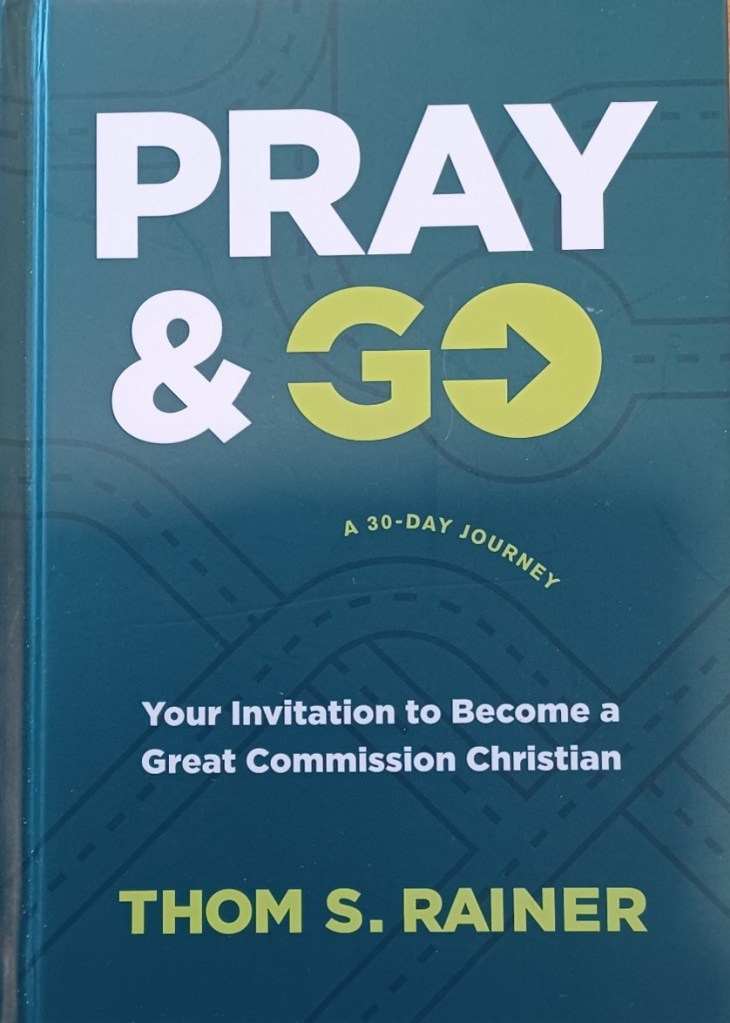
PRAY & GO: Your Invitation to Become a Great Commission Christian – by Thom S. Rainer.
Thom Rainer has written a great book that is used for Church Answer’s Hope Initiative, a 30-day journey that can be done as a group or individually. When you sign up for the Hope Initiative you also get other supporting resources and video encouragement in you 30-day journey. The intent of the book is to help you become more active in sharing your faith as you pursue the fulfillment of the Great Commission of introducing others to Jesus. A great book to help you grow as a disciple of Jesus.
I will be sharing a brief review of every book I read this year. Hope you enjoy and hope it encourages you to keep reading.
A TREASURY OF A. W. TOZER – by A. W. Tozer
If you have never read A. W. Tozer, this might be the book to get. It is a collection of Tozer’s writings from a few different books he has published. Tozer is an older author who speaks with a directness to his audience and a reverence for our Holy God. Much of his writing focuses on the indwelling of the Holy Spirit and the pursuit of holy living. The short chapters make it a great devotional read.
He must not be a heavy drinker or be violent. He must be gentle, not quarrelsome, and not love money.
1 Timothy 3: 3 (NLT)
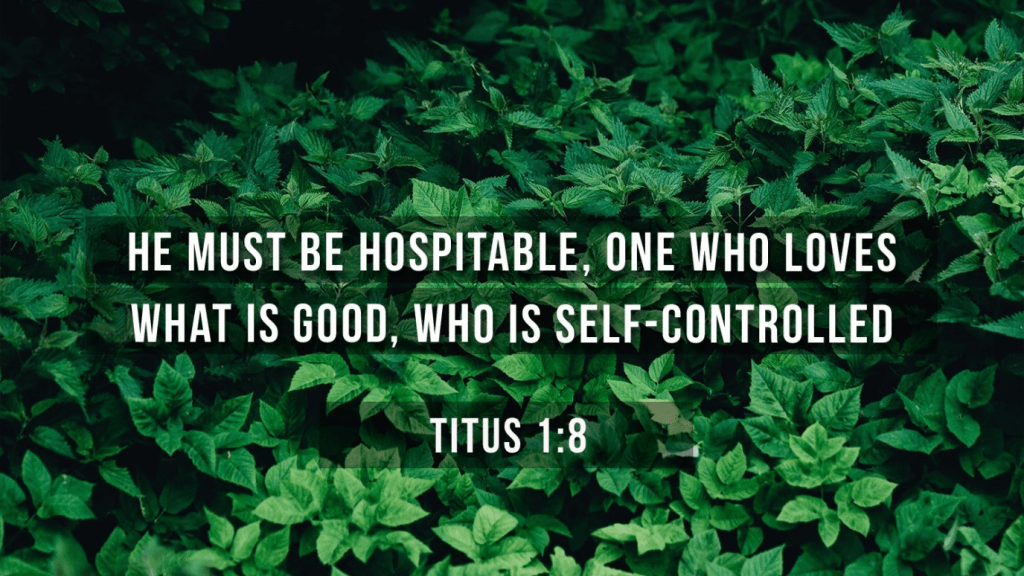
A church leader is a manager of God’s household, so he must live a blameless life. He must not be arrogant or quick-tempered; he must not be a heavy drinker, violent, or dishonest with money. …and he must love what is good. He must live wisely and be just. He must live a devout and disciplined life.
Titus 1: 7, 8 (NLT)
Not everyone leads a self-disciplined life, but leaders must be able to do so. Leaders need to have the ability to assess themselves against the expectations laid out for them. A Christian leader assesses themselves regularly against what the scriptures teach about leadership.
When I was a kid, my church circles strongly opposed drinking alcohol of any kind. Today, many Christians have decided abstinence is not a requirement in scripture. Paul, while not teaching abstinence, clearly prohibits church leaders from being “a heavy drinker”. He doesn’t say that they need to avoid getting drunk, but not be a heavy drinker. So the warning is actually about drawing a line earlier than getting drunk. It’s not hard to understand why. Drinking to excess will severely limit a person’s self-control.
In both Titus and Timothy, Paul speaks against being violent immediately after warning about drinking too much. This may be because for some, drinking may lead to violence (perhaps related to lack of self-control mentioned above). In any case, violence should not be part of a Christian leader’s character in any way. Instead, there should be gentleness. There should be a kindness in every leader. And they should not be known a someone who quarrels. They should be disciplined, controlling their anger.
A church leader should not be arrogant. Sometimes people in leadership think that everyone else should look up to them, expecting, even demanding, a certain amount of respect from people rather than choosing to serve others. Some church leaders, some pastors, act like little kings rather than servants of those they are tasked to lead.
A church leader must not be dishonest with money, or even love money! There have been many scandals in the news over the years bringing to light leaders who have used their position to build their own personal wealth at a cost to the organization they were entrusted to lead. That should not be.
When a Christian leader lives rightly, they will love what is good, live wisely, and be just. They will be more concerned about the people they serve and the organization they lead that they will be good and kind and wise in their actions. They will be more concerned about honouring God than trying to make themselves look good.
“He must live a devout and disciplined life.” A Christian leader will desire God first. There will be a constant desire to give God the glory and take none for themselves. There will be a longing to know Jesus in a deeper and more personal way. The Christian leader will spend regular time in God’s Word, not just for their next teaching responsibility but for personal growth and connection with God. There will be a desire to live out what they are reading, to honour God with their abilities and their position, whether in the church or in business.
A disciplined life is one that is careful to remove and stay away from characteristics that do not reflect a relationship with God, while also working hard to reflect the character of God in all they do. Discipline means you put some effort in. You evaluate yourself regularly against what you believe God wants of you. A disciplined person knows where to draw lines in life, knowing how to avoid extremes of one way or another so as to reflect Jesus in all they do. A Christian leader will live a disciplined life.
I will be sharing a brief review of every book I read this year. Hope you enjoy and hope it encourages you to keep reading.
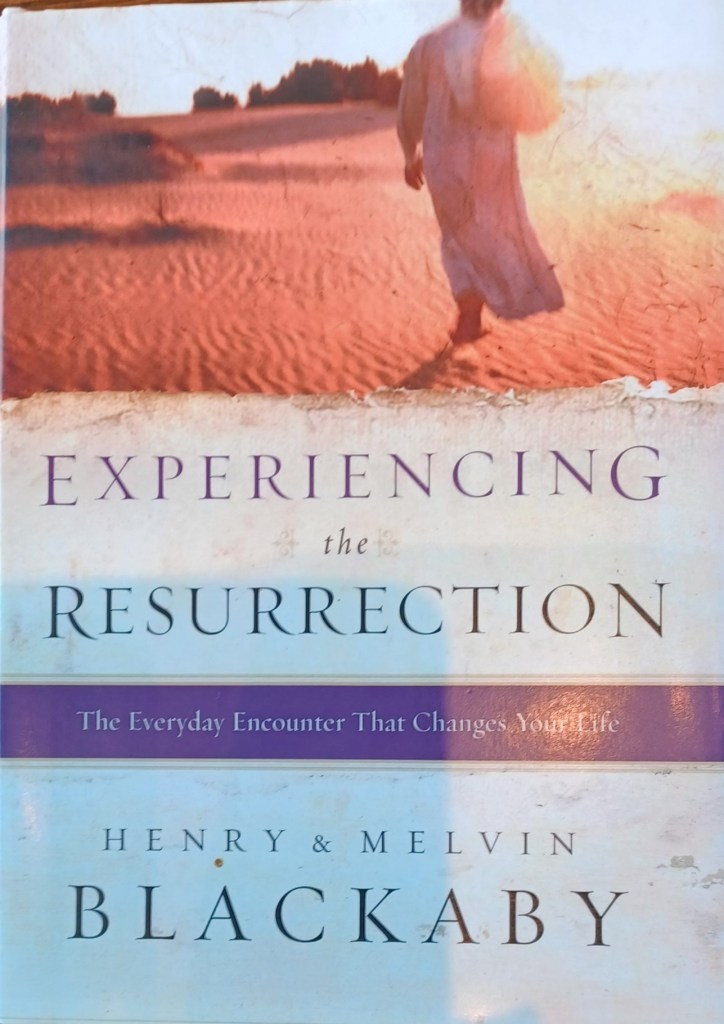
EXPERIENCING THE RESURRECTION – By Henry & Melvin Blackaby
Henry and Melvin Blackaby do a great job walking through the importance and value of the resurrection of Jesus Christ in every believer’s life. While they take time to discuss God’s purpose in the resurrection as well as Jesus’ experience of the resurrection, the value of the book is found in the third part of the book where they apply the resurrection to the believer’s experience. They write, “And as a result of what the Father has done, the resurrection is something believers can experience in daily life…as well as something they will experience for all of eternity.” To experience the resurrection in ourselves is to die to self, and to live in the power of the Spirit, dead to sin and alive to Christ living in and through us.
I will be sharing a brief review of every book I read this year. Hope you enjoy and hope it encourages you to keep reading.
EMBODIED: Transgender Identities, the Church and what the Bible has to say – by Preston Sprinkle
Sprinkle asks the question: If someone experiences incongruence between their biological self and their internal sense of self, which one determines who they are – and why?
He then walks through a thoughtful and biblical journey of defining the transgender issue, understanding what the real issues are, and looking at how the bible speaks to this struggle many people face. He finishes by addressing some of the realities of how to love transgender people in a way that is kind and reflects Jesus. A great book for one of today’s tough struggles.
Many issues arise in our world today because of our search for the answer to the question: What is the truth? Theological issues may come about when we search for answers in teachings we have not heard before. Political issues can begin when we as Christians question what our place is in politics or responding to decisions our governments make. Moral and lifestyle issues are often found when the church is unsure how to respond to what is becoming acceptable in the world around us and even in the church that has historically not been accepted. What is the truth?
While there are many today who pretend we can have different truths to guide us, truth doesn’t work that way. If I am driving down the highway and decide that my truth is that I am in England so I will drive on the left-hand side of the yellow line, my truth will be quickly confronted by another truth when the traffic in that lane comes hurtling towards me. That is a silly simple example, but the fact is, what we believe about things makes a difference, and impacts our relationship with others. Truth, as God has laid it out, affects all of us.
As people of God, and as leaders of churches, we need to recognize that our answers need to be found in God’s Word. His Truth must be upheld in our churches. I do understand that sometimes we need to do some work to determine how God’s truth impacts the questions we face. But our answers should be informed by God’s Word – the Bible.
How might we find answers in the Bible?
Read the Bible.
The first priority to actually read the Bible. Read it regularly and search it for answers to your questions.
As you read, ask God, through the Holy Spirit, to give you correct understanding of what you are reading. We recognize that the Bible is more than a story book, though it contains many stories. Whether we are reading biblical stories, or a teaching section, or even some of the poetic books like Psalms and Proverbs, we want God to help us understand what the truth is and how it applies to my life and to the church where I serve as a leader.
Consult with others on difficult passages or topics.
We are blessed to have the results of many experts at our fingertips. We can find commentaries where others have worked through scripture and give their expert opinions. We can make use of tools that help with word studies and guide us through some of the definitions of the original language. We can read books by people who are struggling through some of the same questions we are. We cannot interpret scripture completely on our own, there is importance in reading scripture in community. Whether we agree or disagree, there is benefit in seeing how others have processed biblical truth in light of this topic. I’m presently reading a great book on how to respond biblically to those living a gay lifestyle. There are many other topics that others have been able to work through in more detail than we have so we can learn from them. Just make sure their teaching is arrived at by careful study of scripture.
And one of the simplest ways to consult others is to have conversations with others in your church as you work through scripture to find the answers you need. Find some other believers and read the Bible together. Work through scripture as a leadership team and ask God to guide you to the correct understanding and application.
Do what it says.
The hardest part of allowing the Bible to guide our leadership, is to then do something about what it says. If it means leadership needs to confront false teachers or people living contrary to truth in your church, then do it. If it means changing policies on how volunteers are screened, then change the policies. If it means teaching the church what it means to live out truth and love in light of Gods Word, then teach your church that.
If we are going to allow the Bible a prominent role in church leadership, then we need to make sure we read it regularly. We need to do the work of understanding it clearly, and then we need to follow through on what God is asking us to do as a result.
If we are Christian leaders, whether in the church or elsewhere, our leadership must be informed by the truth of God’s Word.
I will be sharing a brief review of every book I read this year. Hope you enjoy and hope it encourages you to keep reading.
PEOPLE TO BE LOVED: Why homosexuality is not just an issue – by Preston Sprinkle
Preston Sprinkle provides a well thought out and Biblical response to questions about homosexuality. This is a much-needed book for our world and for the church. Sprinkle is writing about an issue that is important for him as he has gone out of his way to develop friendships with many gay people. He is writing about how to love real people and how to maintain truth. He does a thorough job of looking at scriptures, even refuting some that have been used as “anti-gay” artillery, while highlighting others that are clearly lay out God’s view against homosexuality. He helps us work through certain definitions that clarify what we are talking about. I appreciate how his struggle to maintain God’s truth as authoritative and maintain loving friendships with gay people is evident in his book. I highly recommend this book to anyone wanting a solid understanding of God’s view regarding people with same-sex attraction.






 Elevate with Andy