I will be sharing a brief review of every book I read this year. Hope you enjoy and hope it encourages you to keep reading.
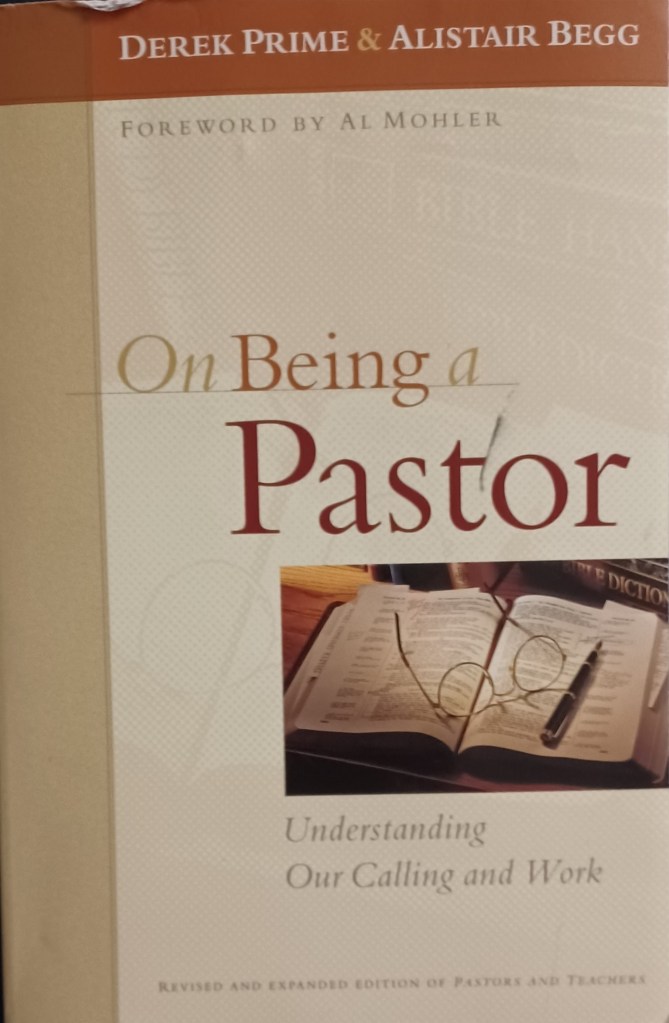
ON BEING A PASTOR – by Derek Prime & Alistair Begg
This is a great book for any pastor, especially for one who is just starting out. It covers many aspects of the pastor’s role and how to do it well. It is a bit dated, yet most of the content still speaks to the pastoral role today. The first chapter is a great discussion on the call to be a pastor, pointing out that the role can be difficult, but very rewarding if this is what God wants you to do. The authors, both pastors with years of experience themselves, then talk about the character of the pastor, his home life, and how to lead a serve a congregation well. The authors both share examples of how they have applied the teaching in many sections of the book. It is good to see the way two different pastors do the work of ministry. A great book for anyone in ministry!
He must manage his own family well, having children who respect and obey him. For if a man cannot manage his own household, how can he take care of God’s church?
1 Timothy 3: 4,5 (NLT)
his children must be believers who don’t have a reputation for being wild or rebellious.
Titus 1: 6 (NLT)
I wonder how many leaders love the idea of leading people as long as it doesn’t intrude on their own personal life. The reality is, when we are leaders, we are still parents and children and siblings. We have responsibilities at home that affect how we lead and how we lead affects how we handle our responsibilities at home.
A Christian leader must manage his own family well. After all, if you can’t manage your household, how can you be expected to manage the church organization you lead? How you do with your responsibilities at home portrays how you will likely manage others.
Look at Ephesians 6:4: “Fathers, do not exasperate your children; instead, bring them up in the training and instruction of the Lord.” Parents, especially fathers, are entrusted with the training and instruction of their children. Church leader, you need to be able to manage your family well.
In 1 Timothy the leader is described as “having children who respect and obey him.” Titus says, “his children must be believers who don’t have a reputation for being wild or rebellious.” I know of Christian leaders who have stepped out of leadership positions because of children who were not obeying them. They felt that if they were not able to manage their family, they should not be in church leadership. I respect that decision as long as there is then an effort to rebuild a relationship with a rebellious child.
There is an expectation that a Christian leader will have a good relationship with his children so the children will willingly respect and obey him. This tells us things about both the leader and their child. This implies that the leader has taken time at home to ensure there is a relationship with the child. Some Christian leaders are “absent fathers” because they spend so much time away from home, or even focused on their leadership responsibilities, that they have not cultivated a loving and caring relationship with their children! A child’s obedience can be an indicator the leader has not parented well, but this is not always the case. It could be that the child is struggling in some other way or is determined to do their own thing, no matter what. If so, then maybe the leader needs to step away from some leadership roles to spend more time with this child.
A leader should not have a “wild and rebellious child” but children who are believers. The leader should take time raising their children to ensure that they came to know Jesus, or at least had every opportunity to do so. Do we really want leaders in the church who have not taken the time to ensure their own children have given their lives to Jesus and accepted Him as their Savior?
Some Christian parents seem to think their role is to make sure their children get to Sunday School and VBS and youth group at church. They may enroll them in a Christian school. Their idea of Christian training is to expect the church to do it all. While all those are good things, they can never be more than an added help. The church cannot be the main contributor to the spiritual growth of children. This must be led by the parents at home. A Christian leader needs to see the value of their own time teaching their children and not expect they can hand it off to the church. A Christian will go out of their way to disciple their children first and then look at leading others.
He must not be a heavy drinker or be violent. He must be gentle, not quarrelsome, and not love money.
1 Timothy 3: 3 (NLT)
A church leader is a manager of God’s household, so he must live a blameless life. He must not be arrogant or quick-tempered; he must not be a heavy drinker, violent, or dishonest with money. …and he must love what is good. He must live wisely and be just. He must live a devout and disciplined life.
Titus 1: 7, 8 (NLT)
Not everyone leads a self-disciplined life, but leaders must be able to do so. Leaders need to have the ability to assess themselves against the expectations laid out for them. A Christian leader assesses themselves regularly against what the scriptures teach about leadership.
When I was a kid, my church circles strongly opposed drinking alcohol of any kind. Today, many Christians have decided abstinence is not a requirement in scripture. Paul, while not teaching abstinence, clearly prohibits church leaders from being “a heavy drinker”. He doesn’t say that they need to avoid getting drunk, but not be a heavy drinker. So the warning is actually about drawing a line earlier than getting drunk. It’s not hard to understand why. Drinking to excess will severely limit a person’s self-control.
In both Titus and Timothy, Paul speaks against being violent immediately after warning about drinking too much. This may be because for some, drinking may lead to violence (perhaps related to lack of self-control mentioned above). In any case, violence should not be part of a Christian leader’s character in any way. Instead, there should be gentleness. There should be a kindness in every leader. And they should not be known a someone who quarrels. They should be disciplined, controlling their anger.
A church leader should not be arrogant. Sometimes people in leadership think that everyone else should look up to them, expecting, even demanding, a certain amount of respect from people rather than choosing to serve others. Some church leaders, some pastors, act like little kings rather than servants of those they are tasked to lead.
A church leader must not be dishonest with money, or even love money! There have been many scandals in the news over the years bringing to light leaders who have used their position to build their own personal wealth at a cost to the organization they were entrusted to lead. That should not be.
When a Christian leader lives rightly, they will love what is good, live wisely, and be just. They will be more concerned about the people they serve and the organization they lead that they will be good and kind and wise in their actions. They will be more concerned about honouring God than trying to make themselves look good.
“He must live a devout and disciplined life.” A Christian leader will desire God first. There will be a constant desire to give God the glory and take none for themselves. There will be a longing to know Jesus in a deeper and more personal way. The Christian leader will spend regular time in God’s Word, not just for their next teaching responsibility but for personal growth and connection with God. There will be a desire to live out what they are reading, to honour God with their abilities and their position, whether in the church or in business.
A disciplined life is one that is careful to remove and stay away from characteristics that do not reflect a relationship with God, while also working hard to reflect the character of God in all they do. Discipline means you put some effort in. You evaluate yourself regularly against what you believe God wants of you. A disciplined person knows where to draw lines in life, knowing how to avoid extremes of one way or another so as to reflect Jesus in all they do. A Christian leader will live a disciplined life.
I will be sharing a brief review of every book I read this year. Hope you enjoy and hope it encourages you to keep reading.
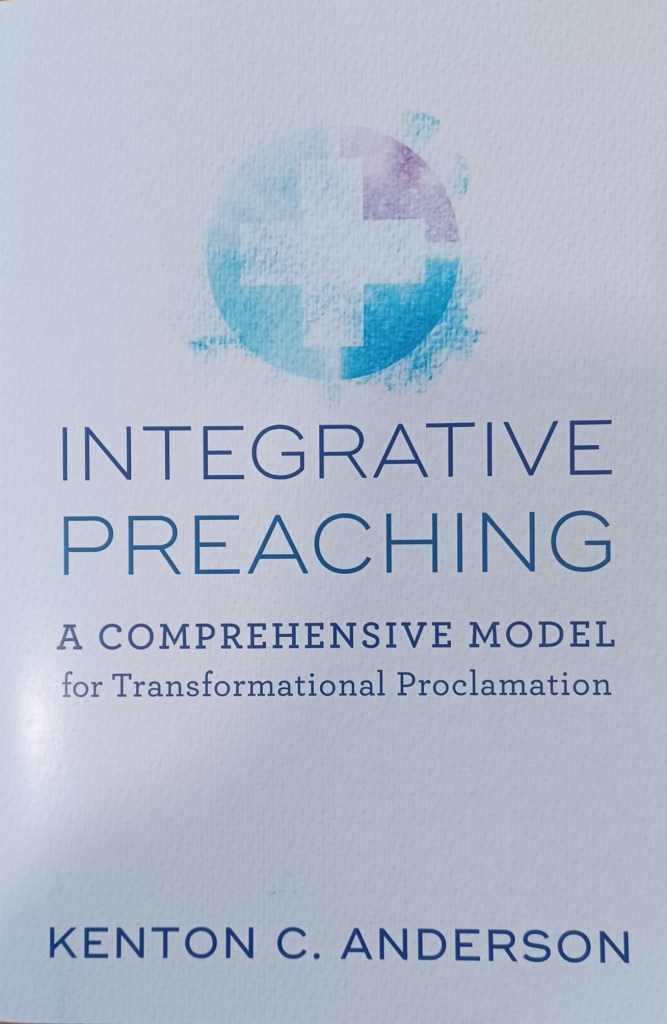
INTEGRATIVE PREACHING – by Kenton C. Anderson
Integrative Preaching: A Comprehensive Model for Transformational Proclamation – by Kenton C. Anderson
Integrative Preaching is one of the best books on preaching I have read lately. Kenton Anderson diagrams a model that intends for sermon to reach both the mind and the heart. He describes this method in a number of ways. I especially like how he names each of the four steps of the sermon in ways that connect to the heart of a person: Engage, Instruct, Convict, and Inspire. I personally was most challenged to do a better job of Inspiring my listeners when I preach, not being satisfied with information alone, but driving home how the information should affect us and be lived out. An excellent book on how to build and deliver sermons that change lives.
He must have a strong belief in the trustworthy message he was taught; then he will be able to encourage others with wholesome teaching and show those who oppose it where they are wrong.
Titus 1: 9 (NLT)
I love to teach. I love preparing a lesson and then teaching it to a group of people, small or large. I love to see learners understanding a new idea or learning how to apply a truth they have just understood. To be a leader is to instill new ideas and ways of doing things in others who are coming after you. A church leader must be able to teach. This is one of the main ways to instill new ideas and practices in those whom you are leading. My automatic reaction to this verse is to think of teaching thoughts and ideas, of preaching and teaching scripture and discipling others through teaching in a class or sermon. But we all know that teaching is also about hands-on and practical learning.
Apprentices are always learning, but only part of their training is in the classroom. Much of the teaching they receive is active hands-on learning. Leaders in the church may be good classroom teachers, or they may not, but if they are teaching others in practical ways, then they are still teaching.
I find it interesting that in Titus we are told that the leader must have been taught first and must believe what he was taught. A teacher cannot teach what they do not know.
The key teaching in the church is the “trustworthy message” of the gospel. We have heard and now teach the gospel of Jesus Christ to others. As leaders we continue to encourage others to get to know the Jesus of the gospel, and to receive His life-giving forgiveness of sins as we put our faith in Him.
Church leaders are responsible to teach many things in the church, but it always needs to come back to the gospel message. Whether we are teaching others how to be an usher or how to do run the sound board, all of that is to help others continue to hear the gospel message.
Part of a leader’s responsibility is to “show those who oppose it where they are wrong.” (Titus 1:9) It is not unusual to come across people that have not understood something correctly. Misunderstanding may be as serious as not understanding the forgiveness that Jesus offers to all who believe in Him, or something as simple as not following through on a certain responsibility they accepted. In either case, the leader’s job is to correct when correcting is necessary, and this is done by teaching and showing what the correct understanding is.
It is pretty much impossible to be a leader and not be able to teach. To lead is to be ahead of people in information or practices that somehow need to be passed on to those following. In the process of doing that, you are teaching. Yes, some are more gifted in teaching than others, but a leader will always be able to teach to some level.
A church leader must be faithful to his wife – or her husband. Paul advises church leaders to remember their priorities. Yes, serving in the church is a good thing – a great thing even – but he warns them not to forget their responsibilities to their spouse as well. Many church leaders work full time jobs outside the church and serve the church with the left-over time they may have. Others work full time in the church as pastoral staff. It is easy to see the church work as being so important that you begin to neglect the person most important to you.
I am serving as a Transition Pastor which means I serve a church for about a year or so in preparation for their next full-time pastor. One of the things I like to do is work with the church to make a plan for the first 90 days of the new pastor’s ministry. I want to help them see the importance for balance in the pastor’s ministry. That same balance needs to be there for any church staff or volunteer. Remember that you need to consider your spouse and make time for them to.
Part of “faithfulness” to your spouse is giving them time too so you do not make them feel they are fighting the church for attention from you. Faithfulness involves giving them priority in your life.
Some versions of 1 Timothy 3: 2 are: “husband of one wife,” or even “man of one woman.” If you want to be a God-honouring church leader, you will protect your marriage. You will be committed to your spouse. You will protect that relationship and not let anyone else into that place that you hold for them.
It is the nature of church work that volunteers work closely with other volunteers. You pour your heart into what you are working on. You are dealing with spiritual issues, which sometimes become emotional issues. In the process, some leaders have begun to transfer feelings and thoughts they had for their spouse to the person they are working so closely with. Guard yourself against sharing too intimate details with someone who is not your spouse, especially if you are working with people from the opposite sex.
You can protect yourself from some of the dangers by doing a few simple things.
Never spend time alone with a person of the opposite sex
If you need to meet with someone in your office who is of the opposite sex, make sure your office is set up with windows that anyone walking by can see what is going on inside. Keep the door open. If that does not work, ask if you can have another person sit in on the conversation.
Don’t spend time working on projects with a person of the opposite sex. Invite others to work with you, or make sure that the work being done is out in the open where people are coming and going. Protect yourself from any problems or perceived problems.
Never drive anywhere with only one person of the opposite sex in your car. Either take separate cars or invite another person to join you.
Tell your spouse everything.
Tell your spouse about what you are doing. When you are ever in a situation that may cause an issue, let your spouse know as soon as you can. The more open you are with your spouse the less you will be tempted in the wrong direction. Hiding things lets temptation grow, bringing them out in the open takes the power of that temptation away. And the more you share with your spouse, the more they will trust you as well.
Set guidelines and policies.
The more that is made clear at the beginning, the easier it is to stay on track and protect your relationship with your spouse. Develop clear guidelines for your staff and volunteers to make sure you all understand your desire to protect relationships and marriages.
Church leaders, do everything you can to protect your marriage as you serve the church.
I will be sharing a brief review of every book I read this year. Hope you enjoy and hope it encourages you to keep reading.
THE PASSIONATE CHURCH – by Mike Slaughter
Mike Slaughter draws on his United Methodist heritage and denominational connections to describe what a passionate church looks like. He addresses Four Areas of Focus as highlighted by the United Methodist Church: Developing Principled Christian Leaders, Engaging in Ministry for the Poor, Creating New and Renewed Congregations, and Improving Health. He does a great job of giving good examples for how each of these areas can become a real part of how a church does ministry. He uses examples from his own church in Ginghamsburg as well as from many others. What I love most about this book is the practicality of it. Passionate Church is a few years old now (2008), but the same questions can still be asked of our church and how we are living out our calling in our own communities.
I wonder how many leaders love the idea of leading people as long as it doesn’t intrude on their personal time? We are quite private people as a culture. We want our own space. We want a place to leave all our work behind and unwind after a long day. We want some “me time.” How does that align with today’s leadership lesson?
In both Timothy and Titus, we read that a church leader needs to “enjoy having guests in his home.” Most other translations just use the word “hospitality,” or “given to hospitality” (KJV). The New Living Translation interprets it in a certain way.
In Jewish circles, out of which the church grew, hospitality was a high value. We can understand the benefit when we remember that there were not many hotels or BnB’s available in ancient Israel. Travelers depended on the kindness of others to open their homes to them for the night. But I wonder, how does caring for travelers relate to church leadership today?
In the larger picture, hospitality is about caring for people in need. They may not be travelers passing through, but they could be others in your church or neighbourhood with unmet needs. Since Paul includes this characteristic of leadership in both Timothy and Titus, it is not likely that he slipped it in as an extra. He made sure to highlight it. So how do we apply it to our lives as leaders in the church?
If you are a hospitable leader, you care about people. You care about their needs. I just recently took in the Global Leadership Summit(GLS). It was interesting to see the theme of loving people under your leadership come up again and again. A good leader understands that leadership is not about just getting people to get the job done, but recognizing and caring for the people whom you are leading.
Yes, you might open your home and have them over for a meal or backyard barbecue. It might be a great experience for those you are leading to see a bit more of your life and to spend time together outside of the work setting.
A hospitable leader might be one who has an open-door policy. A closed door closes off relationships, but an open door says, “I invite you in to interrupt me because I want to help.” If there are times you need to block everyone out to focus on something, then make sure that you have certain times where your office is clearly open and accessible to your team or your church.
At the GLS, Craig Groeschel taught that leaders who want to build trust must be transparent. Hospitality might be one way to be transparent and open. If they feel free to pop in for a chat or to discuss some questions, their trust in you will increase. They will see that you care enough about them to stop whatever you are working on to listen and to connect with them.
If hospitality is about meeting needs, a leader may want to go out of his way to talk to volunteers in the church to see what needs they have that the leader could help with. Serving alongside a Sunday School teacher or the youth leader may be a way of sharing a bit of yourself with that volunteer, learning what they need and encouraging them in the role they serve.
A hospitable church leader should also recognize the opportunity to welcome guest to church in a way that makes them feel welcomed and loved. While this is not inviting guests into your home, it is inviting them to the church and its services. If guests are not greeted warmly, they may not connect enough to want to return.
A hospitable church leader may welcome guests into their home but will also go out of their way to meet the needs of the people around them: church members, volunteers, and people you encounter in the community.
To be a hospitable leader is to go out of your way to meet the needs of others and to love them.
So a church leader must be a man whose life is above reproach… He must exercise self-control, live wisely, and have a good reputation.
Also, people outside the church must speak well of him so that he will not be disgraced and fall into the devil’s trap.
1 Timothy 3: 2, 7 (NLT)
An elder must live a blameless life.
Titus 1: 6 (NLT)
I have spent much of my life in small towns, towns where it seemed everyone knew who you were, especially if you were the new pastor in town. In smaller places, people know more about you than you realize. They see you around town, they hear the gossip about you. It doesn’t take long for a person to get a reputation. The thing about a reputation is that it can be good or bad, and while a reputation may be influence by others, you have a large part to play in the reputation you earn.
And often that is the case: you have earned your reputation. You have said things or done things that people saw or heard about later, which formed their opinion of you. Your reputation is one you should guard carefully. It is hard to reverse a bad reputation because first impressions make a huge impact.
The Bible tells us that church leaders need to have a good reputation. The two verses above tell us some of what that reputation should look like.
Timothy tells us the leader needs to live a life that is “above reproach” while Titus tells us the leader must live a blameless life. 1 Timothy talks about overseers and bishops, Titus addresses elders, but I will combine those to say they should influence all church leaders, whatever your role may be. If you are leading people, you need to have a good reputation. You need to be above reproach and live a blameless life.
Now, I want to be clear, I do not believe that you or I will lead a completely sinless perfect life, but we can live a life that is generally God-honoring. And when we give in to sin, whether privately or something others see, we address it quickly by confessing our sin, asking for forgiveness from all involved and make right what we can.
If you have a reputation for quickly trying to resolve issues, admitting when you have done wrong and looking to correct that, you may not be blameless, but you will have a reputation that says you long to do what is right. Choose that reputation and work towards it.
1 Timothy 3:2 shows us how to gain and maintain a good reputation: “exercise self-control, live wisely.” Self-control means we are in control of our self. That sounds so simple and yet is so difficult. We so easily allow the actions and words of others to affect how we act. When someone accuses us of poor leadership or belittles something we have poured a lot of time and energy and prayer into, it is easy to respond with frustration and anger. We are called to control our selfish response and love them. Further, we need to recognize that our value is not found in the approval of others but in the approval of God. “Our purpose is to please God, not people. He alone examines the motives of our hearts. (1 Thessalonians 2:4) Self-control must be a self controlled by the God we serve, a submitted heart helps self-control to work.
And then we come to the phrase: “live wisely”. If you desire a good reputation, you need to live wisely, and lead wisely. You need to be careful about what you say and do so that you are seen as someone who is living wisely.
It might be good to be silent and listen more often rather than be quick to speak and end up saying something that is not good. All of us probably have memories of saying something we would like to take back. It may have been said in jest or in anger but did not reflect “living wisely”. Take care that your words and actions reflect wise living.
If you desire to be a church leader, as a volunteer leading a program or as a pastor, guard your reputation. It’s quite okay if people talk about me when they are saying good things, it’s another when they are passing along negative gossip. And unfortunately, the hurtful gossip spreads quickly. Do your part to squash the negative gossip by living in such a way that it has no element of truth in it.













 Elevate with Andy