I will be sharing a brief review of every book I read this year. Hope you enjoy and hope it encourages you to keep reading.
PEOPLE TO BE LOVED: Why homosexuality is not just an issue – by Preston Sprinkle
Preston Sprinkle provides a well thought out and Biblical response to questions about homosexuality. This is a much-needed book for our world and for the church. Sprinkle is writing about an issue that is important for him as he has gone out of his way to develop friendships with many gay people. He is writing about how to love real people and how to maintain truth. He does a thorough job of looking at scriptures, even refuting some that have been used as “anti-gay” artillery, while highlighting others that are clearly lay out God’s view against homosexuality. He helps us work through certain definitions that clarify what we are talking about. I appreciate how his struggle to maintain God’s truth as authoritative and maintain loving friendships with gay people is evident in his book. I highly recommend this book to anyone wanting a solid understanding of God’s view regarding people with same-sex attraction.
Leadership within the church is similar to leadership anywhere, because it is leading people. Yet it is quite unique in that you are asked to lead people on a lifelong journey toward Christ. This is not about building a business, though some business ideas can work in a church as it grows. This is not about pushing your personal brand or a personal vision that your employees all work toward. Instead, church leadership is first about God, and secondly, about people. It is about God’s vision for the world and His specific vision for your church in the part of the world where you are located. God’s vision is about drawing all people to Himself. It is about helping others to come to know God and pursue holy living.
When you are first elected to your position on a leadership board at your church, you may wonder if you really belong there. 1 Timothy 3:1–7 and Titus 1:6–9 are two examples of scripture that identify the qualifications of an elder. Basically, these say that an elder must show evidence of a relationship with God through faith in Jesus and filling of the Holy Spirit, as well as evidence of being a leader already, specifically in your own home.
None of us is perfectly Holy. None of us is exactly like God or as good as God. We are humans, saved by grace, and pursuing a relationship with Jesus that helps us become more like Him every day. But none of us can say to those following us, those in the rest of the church: “If you do exactly what I do, or live exactly like me, then you will be good.” All of us have faults. All of us are attacked or influenced by Satan and his various means of tempting us. It is important that we realize we are not perfect. This will help us have more patience when working with others who are also not perfect.
There is a big difference between those who are walking toward Christ and those who are walking away from Christ. There are some people who will declare they are Christians and may have prayed a prayer at some point in their life, but who are regularly and continually walking away from Jesus. These are people who are living with a certain sin and have found a way to live with it and be okay with it. And they want others to agree that it isn’t really that bad. There are most likely some in your church, but hopefully not on your leadership board.
There are some Christians who are clearly walking toward Christ. They are trying to become more like Jesus every day. They spend time with him in prayer and talk with him and listen to him regularly. These are people who recognize how sinful they still are, but who keep getting back up after each stumble in sin, ready to pursue Christ again. These are the people who love Jesus and want others to come to love Him as well. Does this sound like you? Then I would think you may very well be a candidate for leadership in the church.
We must recognize we are not perfect, and yet we are pursuing Christ. What else might make someone a good candidate for leadership? This might sound wrong, but often good leaders are ones who have not sought it out. They haven’t been campaigning the nominating committee or tried to show they knew better than the existing leaders. These are the ones who recognize how far they come short from the holiness of God. These are the Christians who recognize they have so much to learn. But these humble and gracious individuals are great for the board because they will never lord it over anyone. Some boards love the power and take advantage of people because of their position. A leader who is hesitant and not clamoring for attention will probably be a much kinder leader.
A leader in the church should also believe that God has asked them to serve in this position. While not a personal attribute that qualifies a person, there should be no doubt in a church leader’s mind that they are there because God wants them there. This may be affirmed by God speaking in whatever way He speaks to that person: highlighting a verse in Scripture, or a voice, or an impression, or even just the belief that God is guiding the membership as they elected that person to this position.
Sure, it might be nice to have some leaders who have Bible education, or who have experience, or who have natural charisma that draws people to them, those are not necessarily what makes a leader in the church. First, Love God with your whole heart and serve him, second, love people with a humble heart, and third, trust that God has placed you where you are. While there could be many other qualities we may look for in a church leader, these are key.
Are you a church leader? Lead with humble service before God, with the best in mind for the rest of the church, and with a deep faith that God will enable you to do your best where He has placed you.
I will be sharing a brief review of every book I read this year. Hope you enjoy and hope it encourages you to keep reading.
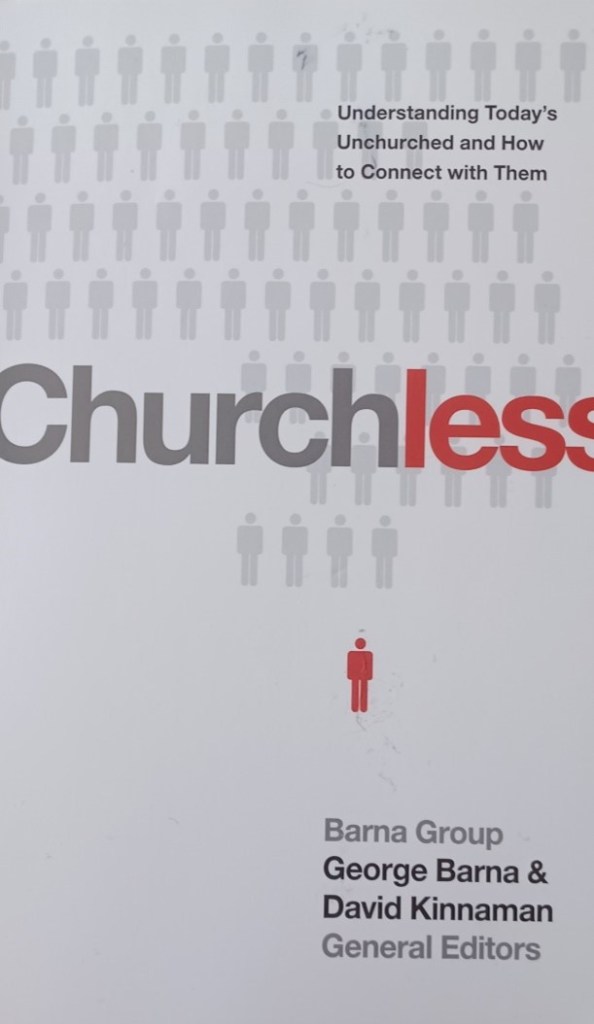
CHURCHLESS – by George Barna & David Kinnaman
Churchless: Understanding Today’s Unchurched and How to Connect with Them – by George Barna & David Kinnaman.
If you are familiar with the Barna Group, you know that they do ongoing research focused on the church and aspects of the church. This book is all about what the unchurched in our world are like and what they think of the church. It may not surprise you that most don’t think about the church hardly at all, and when they do, it is either with a negative or neutral view for the most part. At the same time, there are still people out there who would attend church with you if you only invited them. They will be more interested in the church if the church is known for its care for the community and meeting real needs. A good sermon or music will not draw most of them in. If they want entertainment, they can find better stuff in the world. A good place to start in connecting with the unchurched is to develop friendships as many people are lonely. It’s a great book if you want some real statistics. If you want the most up-to-date stats go to Barna.com.
At a recent family gathering I was joking with my family that I expected to live longer than 100 years old. Why not? From organizations to businesses to human life, mankind always looks for ways to prolong what is good. We celebrate 100 years of farms owned by the same family. We celebrate people who live to 100 years of age, and often ask these individuals what their answer is to long life.
The life expectancy for Canada in 2023 is 82.96 years. If you break it down between males and females, life expectancy for men I around 80 years while female life expectancy is around 84 years. Most people love to point out that this number is slowly climbing. We are making progress, we think, by keeping people healthier longer. Scientific studies have been done to determine how to help people live longer.
People have attempted all kinds of things to prolong their life. Some have used magic potions, others have chosen to drink mercury, or played around with DNA manipulation. One pope from the 1400’s asked three young boys to give him their blood. According to the story, all four of them died as a result of this blood transfusion and attempt to lengthen one man’s life.
Is living longer the goal? Is long life the best thing we can hope for or dream of?
What all these people who have dedicated their lives to living longer don’t understand is that longer life is not the goal. Living again is the goal!
We just celebrated Easter. Easter is the celebration of resurrection – life again – specifically the resurrection of Jesus Christ. We celebrate this resurrection because the Bible clearly states that all who put their faith in Him for eternal life will live again. While human death will still happen, we will live forever in a new body with God Himself in a renewed version of the original Garden of Eden. Living longer is not the answer – living again is!
The Bible tells us that Jesus of Nazareth was crucified on a cross, and then buried in a tomb. On Easter morning, first some women and then others, saw Jesus alive. We are told that many people saw Him alive after that. He defeated death. It looked like the grave had claimed him until he rose again, alive, as attested by many people.
That, in itself, is amazing! For someone to die and then rise from the dead is amazing. Some of us may think this was only possible for Jesus because he was the Son of God. He was God. He could do what humans can’t, except that is not the full story.
Jesus said that resurrection was possible if only we believe in him. In John 11: 25, 26, just before Jesus raised Lazarus from the dead, Jesus said this to Lazarus’ sister:
Jesus told her, “I am the resurrection and the life. Anyone who believes in me will live, even after dying. Everyone who lives in me and believes in me will never ever die. Do you believe this, Martha?”
Later in the Bible, after Jesus went back to heaven, the Apostle Paul writes that resurrection is possible for us if we believe in Christ.
So you see, just as death came into the world through a man, now the resurrection from the dead has begun through another man. Just as everyone dies because we all belong to Adam, everyone who belongs to Christ will be given new life. (1 Corinthians 15: 25, 26)
I like to write about the church and about leadership and how to do things well, but all of that is in service of this message that by faith in Jesus Christ, we can have new life. New life that begins now, and continues after we die. Resurrection comes after death. So living longer is not the answer. Living again is. When we live again, we will live forever and do not need to fear death ever again.
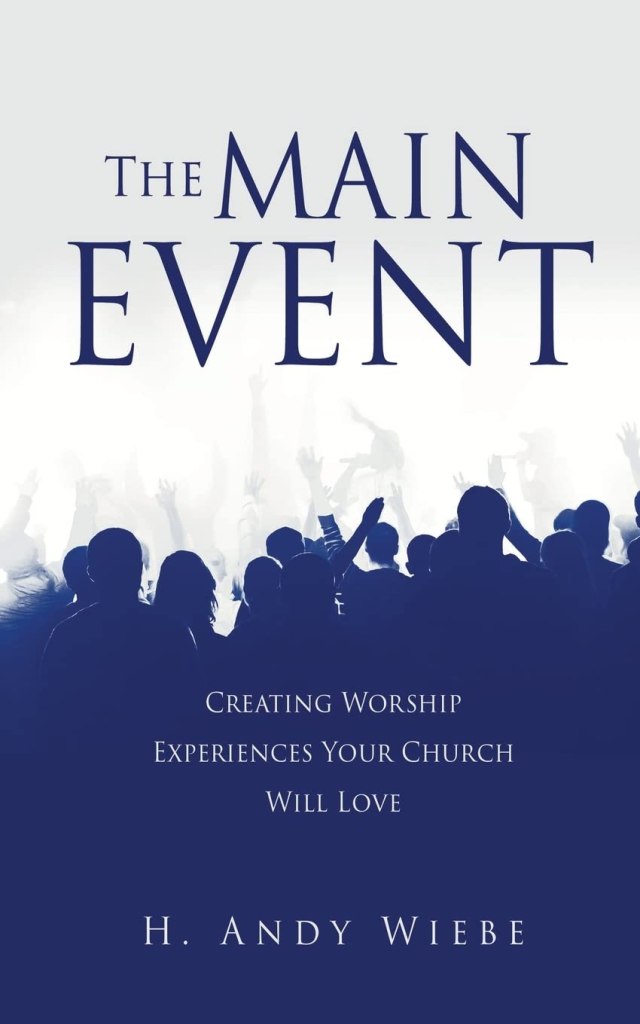
I usually write about leadership or spiritual issues. I also do book reviews on books I have read. Today is different – I will give you part of the introduction to a book I recently published. Here it is.
CRAFTING A WORSHIP EXPERIENCE
It is possible to create worship services that your church will hate to miss. Every week pastors and church leaders around the world prepare for the Main Event at their church, hoping it will impact their congregation in some way. Whatever it is called locally, and whatever day it takes place, every church has a Main Event where the whole congregation comes together to worship Jesus and to encourage each other. This is often the key means through which a church disciples their people. Most have other programs as well, but this is the one event that most people attend and engage with. We need to make it the best event it can be. I believe this requires creativity to help the congregation feel more involved and connected to what happens during the service. Churches need to find ways of making their Main Event less of a performance and more of an experience.
Each church has their own expression of worship. These vary greatly from one church to another. Each church has a certain expectation of what will take place and how it will be done. Some are quite somber; some are extremely exuberant. Some are very strict about the time; others are very flexible. Some have a clearly laid out agenda that rarely changes, while others change formats frequently. Some churches have services that are fine-tuned performances, where everything is practiced or even performed by professionals, and the agenda is planned out to the precise minute. In other churches, the agenda is loosely put together. They may start late and run late, but no one minds. In others, congregations have expectations of when the service has to conclude. In one church I served there was an older couple who just got up and walked out at 12:00, whether the service was done or not.
Though much of a service varies from church to church, most churches share some common characteristics when it comes to their Main Event. Typically, the experience of the congregation is more like that of an audience with very little participation. The congregation is invited to sing along with the worship songs, or maybe participate in responsive readings or prayers when prompted, but in many cases the congregation does little more than sit and watch the performance at the front.
When I was a young pastor in the 90’s, the big push was to have “seeker sensitive” worship services, and it was very effective for some. Seeker services often were designed and performed with a high level of excellence. Some churches hired professional musicians. Others made sure they had only the best speakers. The seeker service was something that people attended to enjoy, a little like going to the opera or even a sporting event, where the audience is there to watch, and maybe cheer occasionally. They may be invited to sing along to some songs but not many, as the emphasis was more on a great performance, than on participatory worship. This was appropriate for the time as there were still many people who had a bit of a church background and were just looking for something “better,” or more “real.” They were truly “seeking.” While many people came to know Jesus through this style of worship service, times have changed where people are looking for an experience and not just a performance.
Experiential Worship
I believe the time has come for us to move to a more experiential worship event. Churches need to find ways to invite people to participate in the worship service. This may mean including more volunteers in the actual creation and leadership of the event instead of just staff, or it may mean finding ways to invite the congregation to participate more during the event.
Those who are entrusted with the task of creating meaningful worship experiences need to realize that the next generation wants to be more involved in the service. Gary Collins, shares some research about the values of the younger emerging generation, and I believe what he says has great impact for churches and pastors as they craft the weekly Main Event in a way that will reach the next generation. Here are a few of his key concepts to consider:
Values and experiences are more important than vision casting and reaching goals;
Images and stories are more valued than words and facts;
Active participation and ownership are preferred over passive submission to authority and professional expertise; and
It is time to evaluate why we create our worship services the way we do. It is time we determine to find ways of inviting people to enter into the whole worship experience from start to finish. Young people are less impressed with excellence than previous generations were. They would rather see authenticity and be invited to participate in the experience. I want to help you create participatory and multisensory worship experiences.
If you are looking for ways to invite your congregation into an experience every worship service, then you are in the right place. This book will encourage you to create your service in such a way that those in attendance feel they are part of what is going on instead of watching a performance. Each chapter will look at one specific aspect of a worship service. We will look at how to invite more participation where those in attendance are invited to an experience they can engage with.
When I arrived as a new pastor at one church, I discovered that the church had used the same general service agenda for the last five years with little or no change. I, personally, have a hard time with that. While there may be something comforting about knowing exactly what to expect and when, I love to be creative, and as their pastor, wanted to give them some variety. This desire to be creative impacts my leadership style so much so, that at a different church, a senior commented, “Andy, I never know what to expect when I show up on Sunday.” He meant it as a compliment. He liked the variety. It wasn’t that every Sunday was extremely different, but no two Sundays were the same. I changed the order of service most Sundays. Sometimes the sermon would be earlier in the service, or we would change the number of worship songs. My goal was to allow the theme of the sermon to guide how best to create each service. The idea was to craft each Sunday’s service around a specific text and theme, and to communicate that theme in creative and interactive ways.
I remember taking our two daughters to a creative and interactive experience when they were young; it was a football game. The team ownership had realized that even a football game had to have a larger experience. Our girls were thrilled to watch the mascot. If you were fortunate, you could catch one of the plush footballs they threw up into the stands when the team scored. Cheerleaders were dancing and jumping, some being thrown in the air. Young men and women were running up and down the stairs offering all kinds of drinks, food, and candy. This was an experience beyond just the football game. If you were not a true fan and were just there with family members who were, you could still have an enjoyable experience…
THE BIG PICTURE FOR SMALLER CHURCHES – by John Benton
John Benton writes as the pastor of a small church, encouraging small churches that they can “thrive and survive as a small congregation”. He describes how there are certain things that can really discourage small churches while at the same time pointing out the benefits of small congregations in impacting people’s lives. He suggests there are five things that small churches can excel at, and if they do, they will have meaningful ministry:
Quality Presence
Quality Welcome
Quality Teaching
Quality Hospitality
Quality Prayer
And then he concludes with some ideas on how to fight discouragement in small churches. You will be encouraged to value your small church and make it the best small church it can be.
If you are like me, you tend to feel a little let down after a big project or event. After working so hard for weeks or months to prepare, and experiencing growing excitement and anticipation, it’s suddenly over. So how can you make the best use of the days following the big event?
With Christmas now behind us, you may be experiencing the let down after your Christmas events and projects. We planned, prepared, and practiced, and suddenly it arrived and was over. There are some things we can do to make use of the “letdown” period. There are things you can do even as you are preparing your event, and there are some specific steps to take shortly after the event.
Because Christmas is still on my mind – and it is likely on yours as well, I’ll refer to common Christmas events when discussing steps to take before and after an event.
Use the event as a springboard for more. While planning your event include in your preparations what you will do following the event.
New Guests: You may have seen a few new quests at your Christmas events, and reconnected with some you may not have seen for a long time. It is important that each person visiting feels welcomed. Get their contact information, – and then contact them in a few days following the event. You could include a guest form on each seat and ask anyone new to fill it out, or even encourage visitors to connect on an app. Some churches even offer a gift if people take their filled-in form to a welcome centre before they leave. However you choose to connect with each guest, make it simple and clear, informing them how you will use the information you acquire.
Volunteers/ Staff: Throughout the preparations and during the event, record each volunteer and staff who contributed to the event and thank them after in a personal way.
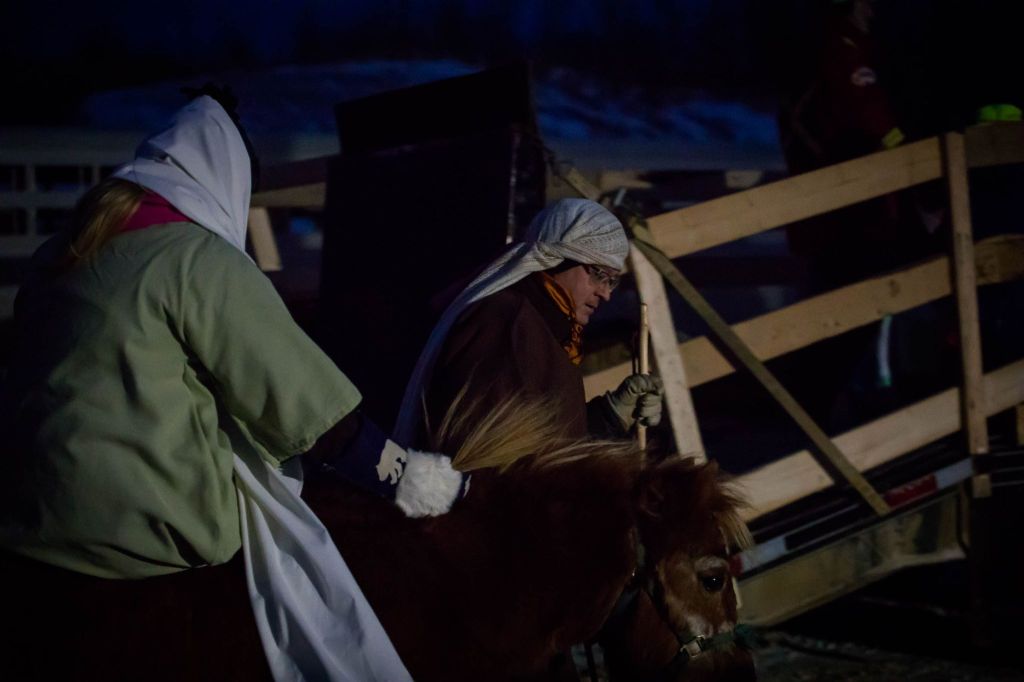
Our church just did a Living Nativity led by one of our members. Our church’s average attendance is around 85-90 people, and the leader on this project counted 75 people involved. Most of the church participated in some way! Thanking as many volunteers as possible will go a long way. And who knows, it may encourage them to volunteer again? This is going to take some work but should bring you benefits down the road as people want to serve again because they felt appreciated.
Post-event Opportunities: Plan a class or training to follow the event. These opportunities will provide meaningful material that builds off your event. For example, after a Christmas event, plan to begin new small groups in January and invite those who attended the event to join a group.
You could also plan a course to begin shortly after your event and announce this at the end of your Christmas program and allow people to sign up that evening. The course could be all about Jesus or a series like the Alpha program.
Immediate After-Party Actions
Thankyou’s: Extend your gratitude via cards, texts, or emails the day following the event. Handwritten notes are probably best. Thank all the staff and volunteers who contributed. If you had sponsors, thank them with a note, and maybe even a nice card or certificate they would like to display in their office.
Offers: Send a follow-up thankyou to all who attended and offer something before inviting them to attend something else. More than getting them to the next event, you want them to have a positive memory of the even they attended and the experience they had in your church. Offer to pray for them and invite them to join you Sundays at your services.
Invites: Invite them to attend your upcoming small groups or classes. Put together an invitation that describes the event and all the details of where and when and who will benefit from it. Do your best to present this as something that will benefit them, not you.
I love planning big events that are well-prepared and practiced and performed. It’s important to know what to do next. I hope you got some helpful ideas from the above steps.
I would love to hear how you use the time following events to connect with guests and develop relationships with them.
26 In the sixth month of Elizabeth’s pregnancy, God sent the angel Gabriel to Nazareth, a village in Galilee, 27 to a virgin named Mary. She was engaged to be married to a man named Joseph, a descendant of King David. 28 Gabriel appeared to her and said, “Greetings, favored woman! The Lord is with you!”
29 Confused and disturbed, Mary tried to think what the angel could mean. 30 “Don’t be afraid, Mary,” the angel told her, “for you have found favor with God! 31 You will conceive and give birth to a son, and you will name him Jesus. 32 He will be very great and will be called the Son of the Most High. The Lord God will give him the throne of his ancestor David. 33 And he will reign over Israel forever; his Kingdom will never end!”
34 Mary asked the angel, “But how can this happen? I am a virgin.”
35 The angel replied, “The Holy Spirit will come upon you, and the power of the Most High will overshadow you. So the baby to be born will be holy, and he will be called the Son of God. 36 What’s more, your relative Elizabeth has become pregnant in her old age! People used to say she was barren, but she has conceived a son and is now in her sixth month. 37 For the word of God will never fail.”
38 Mary responded, “I am the Lord’s servant. May everything you have said about me come true.” And then the angel left her. (Luke 1: 26-380
The Birth of Jesus the Messiah
18 This is how Jesus the Messiah was born. His mother, Mary, was engaged to be married to Joseph. But before the marriage took place, while she was still a virgin, she became pregnant through the power of the Holy Spirit. 19 Joseph, to whom she was engaged, was a righteous man and did not want to disgrace her publicly, so he decided to break the engagement quietly.
20 As he considered this, an angel of the Lord appeared to him in a dream. “Joseph, son of David,” the angel said, “do not be afraid to take Mary as your wife. For the child within her was conceived by the Holy Spirit. 21 And she will have a son, and you are to name him Jesus,[i] for he will save his people from their sins.”
22 All of this occurred to fulfill the Lord’s message through his prophet:
23 “Look! The virgin will conceive a child! She will give birth to a son, and they will call him Immanuel, which means ‘God is with us.’”
24 When Joseph woke up, he did as the angel of the Lord commanded and took Mary as his wife. 25 But he did not have sexual relations with her until her son was born. And Joseph named him Jesus.
(Matthew 1: 18-25)
The Birth of Jesus
2 At that time the Roman emperor, Augustus, decreed that a census should be taken throughout the Roman Empire. 2 (This was the first census taken when Quirinius was governor of Syria.) 3 All returned to their own ancestral towns to register for this census. 4 And because Joseph was a descendant of King David, he had to go to Bethlehem in Judea, David’s ancient home. He traveled there from the village of Nazareth in Galilee. 5 He took with him Mary, to whom he was engaged, who was now expecting a child.
6 And while they were there, the time came for her baby to be born. 7 She gave birth to her firstborn son. She wrapped him snugly in strips of cloth and laid him in a manger, because there was no lodging available for them.
The Shepherds and Angels
8 That night there were shepherds staying in the fields nearby, guarding their flocks of sheep. 9 Suddenly, an angel of the Lord appeared among them, and the radiance of the Lord’s glory surrounded them. They were terrified, 10 but the angel reassured them. “Don’t be afraid!” he said. “I bring you good news that will bring great joy to all people. 11 The Savior—yes, the Messiah, the Lord—has been born today in Bethlehem, the city of David! 12 And you will recognize him by this sign: You will find a baby wrapped snugly in strips of cloth, lying in a manger.”
13 Suddenly, the angel was joined by a vast host of others—the armies of heaven—praising God and saying,
14 “Glory to God in highest heaven, and peace on earth to those with whom God is pleased.”
15 When the angels had returned to heaven, the shepherds said to each other, “Let’s go to Bethlehem! Let’s see this thing that has happened, which the Lord has told us about.”
16 They hurried to the village and found Mary and Joseph. And there was the baby, lying in the manger. 17 After seeing him, the shepherds told everyone what had happened and what the angel had said to them about this child. 18 All who heard the shepherds’ story were astonished, 19 but Mary kept all these things in her heart and thought about them often. 20 The shepherds went back to their flocks, glorifying and praising God for all they had heard and seen. It was just as the angel had told them.
(Luke 2: 1-20)
Visitors from the East
2 Jesus was born in Bethlehem in Judea, during the reign of King Herod. About that time some wise men from eastern lands arrived in Jerusalem, asking, 2 “Where is the newborn king of the Jews? We saw his star as it rose, and we have come to worship him.”
3 King Herod was deeply disturbed when he heard this, as was everyone in Jerusalem. 4 He called a meeting of the leading priests and teachers of religious law and asked, “Where is the Messiah supposed to be born?”
5 “In Bethlehem in Judea,” they said, “for this is what the prophet wrote:
6 ‘And you, O Bethlehem in the land of Judah, are not least among the ruling cities of Judah, for a ruler will come from you who will be the shepherd for my people Israel.’”
7 Then Herod called for a private meeting with the wise men, and he learned from them the time when the star first appeared. 8 Then he told them, “Go to Bethlehem and search carefully for the child. And when you find him, come back and tell me so that I can go and worship him, too!”
9 After this interview the wise men went their way. And the star they had seen in the east guided them to Bethlehem. It went ahead of them and stopped over the place where the child was. 10 When they saw the star, they were filled with joy! 11 They entered the house and saw the child with his mother, Mary, and they bowed down and worshiped him. Then they opened their treasure chests and gave him gifts of gold, frankincense, and myrrh.
12 When it was time to leave, they returned to their own country by another route, for God had warned them in a dream not to return to Herod.
I will be sharing a brief review of every book I read this year. Hope you enjoy and hope it encourages you to keep reading.
DISCIPLINES OF A GODLY MAN – R. Kent Hughes
Disciplines of a Godly Man is a call to men in the church and home to stand up and be whom God has called them to be. Kent Hughes challenges men to step up and discipline themselves with chapters dealing on personal soul issues, relationships, character, and ministry. The church is looking for good men to give themselves to the work of ministry. God is looking for good men to give themselves to leading in the home, the church, and in the culture. Hughes does a good job reminding us that this is not about legalism: doing something in order to gain God’s favor. In fact, this is the opposite. This is about living in such a way that we honor the One who already loves us and calls us to a disciplined life of faith in Him. This would be a great book to walk through with a Men’s Group.
An organization working through the budgeting process needs to forget guessing, begin dreaming, and develop a plan.
Forget Guessing
If you are guessing what your budget should look like that means you have not done your homework.
The budgeting process can seem a little like a guessing game. Yes, you are looking ahead with no assurance that the money you expect and hope to come in actually will. You do not know what your costs for the year will be.
There are some fixed numbers like salaries, but other numbers, such as utility costs that fluctuate based on weather, aren’t as certain. You can get a good idea of what your office supplies will cost based on the previous year, but those costs go up from time to time.
Doing your homework means looking at the realities of the past and the possibilities of the future. The realities are how much you spent on different things over the last few years. You should be able to forecast based on the trends of the past. Developing a budget is not random guessing but a process of looking at various factors to determine the best budget. As for income, look to the past and how current realities might determine if that same amount of income can be expected next year. In a church, if many people are experiencing job loss or are moving away, you may have to anticipate less income as fewer people are able to give. A budget is a thoughtful forecast based on prayerful dreaming and visioning, and connected to a plan of how to move toward the vision. While budgeting always involves a level of uncertainty, you must create a budget based on real information.
Begin Dreaming
Most churches, like other organizations, hope to grow. That means connecting with more people and running more programs. This means greater costs, but hopefully greater giving as well.
It is important for organizations and churches to dream about the future. I believe that we need to build our organizations and our budgets around “God-given” dreams. Ask God what his desires are for you and the people you work with and the people you serve. Are there needs and opportunities God is calling you to step into?
Dreams often cost more than the expected income. This is where the hard work comes in. Find a way to determine if costs need to be cut or your income can be increased. Whether you are a leader in a church or another organization, determine if God wants you to create a budget that will cost more than your forecasted income. We can’t be irresponsible, yet faith plays a part. If you believe God wants you to do certain things and they cost a certain amount, sometimes a budget can look impossible outside of the fact that God can bring in the necessary funds.
A budget is part of your dreaming as you look at how you can meet the costs of the dreams you believe are from God. A budget is an important part of developing your vision as you will need to pay for the costs of moving toward that vision.
Develop A Plan
As you dream of what could happen next year, have a plan so you know where you will be spending money, and an estimate of how much. Your plan is based on your vision and God-given dreams. Your vision and goals should help you project what will be spent over the next year. In our church we also invite leaders of certain programs to submit budget requests based on their vision and goals for their own ministry.
A budget is not just a guess, is needed to achieved your dreams, and can be achieved as you develop a plan around that budget.
Set Clear Goals and Strategic Steps
Defer to your organization’s mission and goals to inform how money will be spent. Your goals and strategic steps will give you an idea of what your financial costs for the year will be. Build on the data from past years to develop a plan for how your finances will support your organization’s God-given dreams.
Communicate Your Vision
Communicate your vision and God-given dreams clearly to all stakeholders in your church or organization. Share your dreams with passion and excitement. Help them see how their financial contributions will make a difference in people’s lives. Let them know what they are contributing to.
Report Regularly
Use a regular reporting structure to let key people know how things are going financially and how that is helping you move toward your goals. Implementing a reporting plan, including what the reports will look like, who will prepare them, and how often they will be shared keeps people informed and prevents surprises when adjustments may have to be made. Updates keep people connected and donors excited about continuing to support the church. When people see the impact of their giving – perhaps through a connection to real people who are being helped – they will be more likely to continue to give.
The results of not reporting on finances regularly can be detrimental to organizations. One church used a congregational meeting to inform the church that finances were very low, and to meet costs, they would be letting a few staff go. The problem was, they had not informed the congregation of the financial situation before they decided on this solution. If they had done so, people may have been willing to increase their giving. If people think there is plenty of money, they may be spending their money elsewhere. Don’t wait until there is a problem before you inform those invested in your church or organization.
If you are determined to honor God in your church and organization, then make sure you talk with God about your dreams and His dreams and then develop clear plans on how to move ahead. Continue to ask God for the wisdom He offers as you handle the finances of your organization with integrity.










 Elevate with Andy