Roundabouts and Traffic Circles are similar in that they help keep traffic moving without forcing anyone to come to a complete stop. I was pretty nervous the first time I encountered traffic circles. There were not any traffic circles in the small town where I learned to drive. I knew how to come to stop, watch for traffic, and then proceed. The idea that I was supposed to merge into this moving traffic and then leave the circle at the right spot was a little unnerving. I have since learned the benefits of traffic circles and roundabouts.
Roundabouts have become more common in the province where I live, not just traffic circles in the congested areas of a city but also at major intersections on highways. These have replaced 4-way stops, allowing traffic to keep moving. Traffic must slow down, yet doesn’t need to stop completely, which I’m sure large trucks appreciate especially. They don’t have to come to a complete stop and then get their heavy load moving again.
This made me think of how sometimes churches or organizations need to make wholesale changes to deal with problems that negatively affect them. Do they need to come to a complete stop or can they make changes on the fly? I’m reminded of observing how some hockey teams who are no longer winning regularly try to make changes. Some give up and trade away any player of value to try to do a complete restart. Others make significant tweaks in their organization without losing seasons to a restart. A roundabout is an example of making changes as you keep moving forward.
When churches have suffered a loss of member for an extended period, it becomes clear that changes need to be made. Often, if they have lived in denial for too long, they will need to come to a complete stop and start over. In some situations, a complete stop means a change of pastoral staff and a period of renewing vision and resetting strategy. In some situations the complete stop means completely stopping all functions of the church, even closing the doors for a brief period of time in order to start a new work down the road.
Like a roundabout, slowing down is preferable to the complete. Yes, the church must slow down. Maybe there are programs that need to be shut down or reworked completely. A pastoral transition might be required. Often someone outside the church needs to come and coach the church through to a better future. The church stops almost all activity for a time, while still maintaining regular Sunday worship services and a physical presence in the community. The church doesn’t come to a complete stop but slows down enough to consider the reality of what they are facing.
Most roundabouts have at least three alternatives for drivers to leave the circle. You may leave the roundabout at the exit that keeps you going straight ahead, or you can take a turn to the right or left. A church too, needs to consider if some simple realigning is all that is needed, and they can keep moving ahead in the direction they were already going. On the other hand, it may be the time to take a turn a little to the right or left. A complete stop is not required, but some restructuring on the fly may mean a change in vision and replacing some programs with others that fit better with the new vision and the current culture of the church and its community.
Like my first experiences with traffic circles, when a church realizes it needs to change, trying something new can be quite unnerving. Hopefully though, most churches will recognize that slowing down to make changes can help them avoid a complete stop.
Church leaders, be willing to adjust your vision and programming when necessary. Church members, work with your leaders as they guide you to a better future. Trust God to guide you as you ask Him to help you make the right changes.
Many of us will be taking road trips over the summer. Maybe you already have. There are many signs along the road that guide our driving, so over the next two months, I will use these familiar signs as reminders of how we can live our lives and honour Jesus along the way.
I want to start with the sign that I think I like the most: speed signs. In Canada, these signs often show a maximum speed of 100km/h on the highway. I recently enjoyed a drive up to Yellowknife, Northwest Territories. While I enjoyed the trip, I did not enjoy one large section of highway that was limited to 90 Km/h. When we are fortunate to travel on divided highways, we are allowed to drive 110 km/h. I like travelling in the U.S. because often the speed limit is even higher.
I like this sign because it is all about getting to where you want to go as fast as you can. This is not about taking a leisurely drive for no reason. The focus is on what is ahead. You don’t need your rearview mirror for this sign!
One of the joys of my job is to help churches look ahead with clarity and purpose. Yes, we do take time to look at the past and understand the present, but we do this to clarify vision, and ultimately look at where we are headed and how best to get there. It is forward thinking and forward planning. We have a destination in mind and develop a map to get us there in the best way possible. No matter what speed you are travelling at, it is all about moving ahead.
While we recognize the importance of brakes, we love using the gas pedal more. The goal is to keep moving forward as quickly as possible in order to get to the preferred future we have in mind.
We set the destination. We map out the route. Maybe, if it is a longer trip, we even plan where we will stop for meals or gas, or even an overnight stay in a hotel or with friends. With a church, this means setting some short-term goals that will help us move along to the final destination, while giving us a way to measure progress along the way. If we trust God for 10 new believers this year, it is helpful to set some goals as to how we will help friends and family become new believers in Jesus first. We need to set some more immediate goals that will help us share Jesus with people regularly, praying along the way that some of those we share with will come to know Jesus.
In our personal lives, these same reminders from speed signs might direct our thoughts to pursuing personal growth. Keep moving ahead looking for new experiences and new encounters with learning opportunities. Set personal goals that will move you in the right direction.
In my own life, this forward momentum is evident in my love for learning. When I finished high school, I attended a Bible College. I wanted to learn what I could to become equipped for Christian ministry. I thought I would be involved in fulltime camp work or some kind of Christian education. Halfway through my Christian Education degree, God spoke through a few people and adjusted my destination to be pastoral ministry specifically. I added an extra year of education so I could get my Pastoral Degree as well. As I began ministry, I wanted to keep learning. I began taking courses at a seminary level. I was in no rush to complete the degree, wanting only to keep learning, so it took me over 20 years to get my Masters of Arts in Leadership and Ministry. Presently I am applying for the opportunity to pursue a Doctorate of Ministry. I desire to keep moving forward, to keep growing as a person and as a pastor.
Speed signs are about moving ahead at the highest speed allowed. I encourage you to consider where you have been going slower than you should. Maybe God is asking you to pick up the pace and keep moving forward to what is next. Trust God to guide you as you look to him for the right destination to pursue.
If you have ever worked on a car or built a deck, you know the value of a good tool. With the right tool the work becomes easier and you see better results. The same is true for a pastor. We benefit from having good tools to help us.
Some of you may immediately think of tools like a good commentary or online study tools. These are great and we need those, but I’m thinking more along the lines of the ideas and questions we come across in our reading and study.
Sermon Tools
Over the years I have gathered many questions that I use regularly to help me better dig into the scripture I am preparing to preach. Referring to my pates of collected questions and processes has enhanced my sermon preparation. These are questions like:
What does it say?
What does it not say?
Could it mean what it says?
Sometimes I move through these three questions quickly, other times, if it is a difficult or controversial section of scripture, I tend to slow down and make sure these questions help clarify what God’s Word is truly saying.
One question that I have found helpful to me, especially because I am usually preaching to a congregation of all ages is:
4. “How will this sermon engage with a 12 – year – old boy?”
I want to preach to everyone, but if I can get a pre-teen boy to be engaged, I will most likely I will engage with the rest of the congregation as well.
Here are a sample of a few more questions:
How does this speak to unbelievers?
What is the audience’s thoughts, feelings, emotions, struggles, needs – relating to the big idea of this teaching segment or message?
What are some practical steps the listener can take?
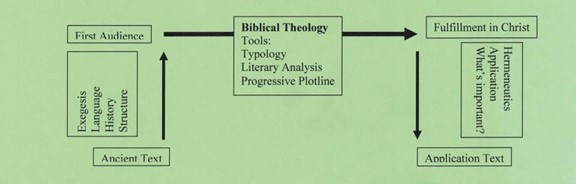
One process I use is a diagram that helps me to move through a scripture passage in a way that moves my study from the text, to historical context, through the Biblical theology, to how it is fulfilled in Christ, and then to how we need to apply the scripture today. Following this process keeps me from taking a shortcut and miss an important step in clearly understanding what the scripture text is saying.
Prayer Tools
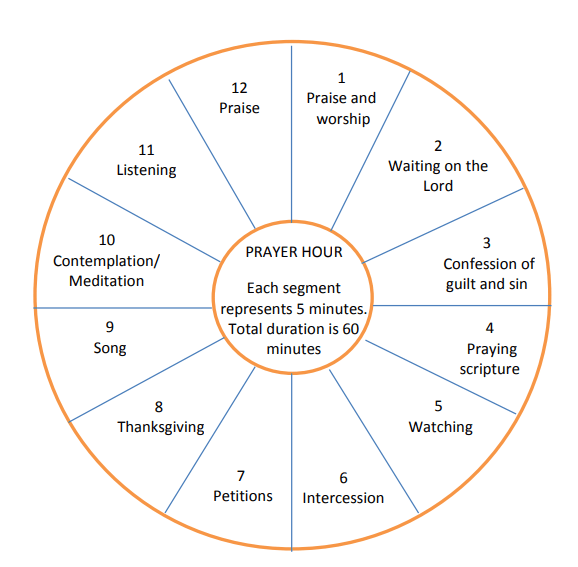
I have come across some great ideas for prayer, whether personal or corporate. In his book, The Hour that Changes the World, Dick Eastman suggests praying for an hour i12 periods of 5 minutes. I try to use this prayer plan about twice a week. The forms of prayer are: 1. Praise and worship 2. Waiting on the Lord 3. Confession 4. Praying scripture 5. Watching 6. Intercession 7. Petitions 8. Thanksgiving 9. Song 10. Meditation 11. Listening 12. Praise
I have used this one-hour prayer plan many times for myself as well as for a prayer group.
Pastoral Tools
One of the “tools” I need to remind myself of occasionally is to “move slowly through the crowd.” It is easy for me to have things on my mind and things to do, but there is benefit of moving slowly through the crowd prior to or after the Sunday morning service because it gives me opportunities to connect with people, or for them to stop me with a question or comment. It helps me to be more present in the moment and available to people.
I don’t know what tools you have gathered over the years that have helped equip you to improve your ministry and leadership, but I hope you have many. I would love to hear from you about the tools that help you. Send me an email to share some of your tools with me.
I will be sharing a brief review of every book I read this year. Hope you enjoy and hope it encourages you to keep reading.
IMAGINATION REDEEMED: Glorifying God with a Neglected Part of Your Mind – by Gene Edward Veith Jr. and Matthew P. Ristuccia
The authors suggest that Christians have not paid enough attention to imagination and how it influences our daily walk with Christ. Imagination can help us when we are able to picture what we are reading in the Bible. Or it can hinder us when it leads us to imagine and dwell on sinful things. The book includes both a discussion on imagination and then a look at the Biblical book of Ezekiel and the visions included. The goal of the book is for Christians to pay more attention to their imagination and how it can be used for good. At one point we are challenged to think about God. They write, “If we are to conceive of him correctly – whether in our understanding, our imagination, or our will – our minds must be saturated with Holy Scripture.” (p. 34) They encourage us as believers to allow Scripture to guide our imagination. I was hoping for a little more on how to become more creative in our imagination, but they focused in on how to protect and enhance our godly imagination.
Two are better than one, because they have a good return for their labor: If either of them falls down, one can help the other up. But pity anyone who falls and has no one to help them up.
Ecclesiastes 4: 9-10
As a pastor, much of my work is a solitary effort. I work on my sermon on my own. While I consult resources such as commentaries and word studies, I am responsible for creating the sermon myself. When I teach a Sunday School class, I generally work on it on my own. I am co-teaching a class on Acts right now. Though we spend some time discussing the scriptures together, we take turns preparing the lessons on our own. When I teach and lead, I build on all I have read and seminars I have attended, learning from the authors and presenters. Yet much of my job as a pastor I do on my own.
This last week I was reminded of the value of working with a team. Our church is in the middle of a Three-Week Prayer Focus. We will conclude with a Solemn Assembly on a Saturday, a Prayer Vigil where people will sign up to pray for an hour or more through the night, and then a Celebration Service on the Sunday morning. This has become a much better event than I first envisioned because others have helped think through how to make it the best event it can be.
When I presented the idea to the chairman of the church board, he instantly saw my vision and began to dream with me as to what we should plan and how to roll it out to the congregation. As we, together, dreamed about how the event might work for our church, we got more and more excited. We could see how to invite people to participate and even how to get them to step into some new experiences of prayer in the process. I had not thought of a prayer vigil through the night, but he suggested it.
This chairman suggested we shoot a promo video with interviews of people from our congregation telling us what they thought of prayer. He knew of someone who could create the video. He asked someone to round up people to participate, and several people did, resulting in a very effective promotional video.
He suggested that we make some promotional posters. Again, he knew of someone who would do a good job with this. Now we have some great posters for the event, and even a prayer guide for the event that people are now using to guide their prayer times. Other board members were willing to sign up to help coordinate and lead the prayer vigil. They have also volunteered to make announcements and lead group prayer times.
If I had only depended on my own dreams and skills, we would still have had an event, but it would not have become the great experience it now is. I needed the Board Chair, the other board members, the promotional materials designer, and video producer to make the event that much better.
We need others to team up with if we want to do a good job on many things. Inviting others into the process makes it better because we get to dream with others and bounce ideas off each other that make the result that much better. Working together ensures no one is left carrying the load, and everyone can use their skills and abilities to expand the capabilities of the leader. Sharing the work with others prevents your project from being a lonely experience; instead, the process becomes a shared collaboration with others who have the same convictions and ideas.
I hope you have a good team around you. If not, then I pray that God will help you to find the right people to join your team.
When our girls were little, I loved seeing the world through their eyes. They were curious about things that I had long become accustomed to and never noticed anymore. They noticed the little bugs crawling on a windowpane. They were excited about the colours of flowers – and weeds. Their little fingers loved to touch the dirt and play in water.
As Christian leaders, we need to reignite our curiosity. We need to be comfortable asking questions, even when we have no answers. It seems that somewhere in our growing up we decided we should be more concerned about answers than questions. Yet questions help us to learn more than answers. They open new ideas and new angles on answers we thought we had sorted out. We need to be more curious.
We should be curious about the people we work with whether on our team or those we serve. We assume many things about each other, and don’t know how little we know until we start asking questions. Ask people about their families, or their pets. Ask people about their dreams and experiences. Be curious enough about people for them to believe you truly care about them. I love learning about people. I love to hear stories of how couples met, or what their families are up to. I love to hear how they started a business and it grew.
Curiosity can benefit us as we give leadership to programs and ministries. It is when we are curious that we ask the questions that no one else is asking. We ask about how the program is really working. We want to know how the leaders are doing. Are they feeling adequate or is more training necessary. Are they feeling they have an impact on those they connect with? Do they have ideas to improve how they run the program and are waiting for someone to give them the courage to try them? When you are curious, you may discover great things happening that you can share with others to encourage them. I enjoy finding people who are serving in an area of their expertise. Some people serve because someone is needed in that role, while others serve because they are uniquely equipped to excel in that role. While willing volunteers are greatly appreciated, I love finding those who are serving in exactly the role they were created for.
Curiosity helps us to learn. As long as we stay curious, we will continue learning. We will search out new books or learn new skills. We will sign up for classes. Curiosity can draw us into new areas of growth as we willingly pursue new interests and new skills. My curiosity has helped me to try new things. When I was a youth pastor, I decided I needed to learn to play guitar so I could lead the youth in singing. I loved it. Some years later I tried my hand at songwriting. I wasn’t good at it but had fun trying. At one point, I learned how to create balloon animals. It was fun learning how to shape balloons into recognizable creations, and then to even use them to tell children’s stories.
Our eyes can be opened to new experiences – and so can our tastes. Just this past week my wife, Lynnette, and I tried a new restaurant, the Cozy Pierogi. I had driven by the place a few times and was curious about their menu. It turned out to be pretty good! As we try something new, we often discover new favourites. Curiosity introduces new experiences into our lives as we are willing to step into something foreign but interesting.
Last week I wrote about the courage to risk. I believe curiosity can pay a part in our courage to risk. Curiosity invites us to courageously try something new to see if it may be better than what we were doing in a program we were running.
We would all benefit from becoming like a little child occasionally, to be curious about things that we believe we have completely figured out. And as your curiosity opens your eyes, you may discover new and wonderful ways of interacting with our world and the people around us.
It is common to seek out safety and security. We want to know that we, and those in our care, are not in danger or lacking in anything. But progress is only made as someone has the courage to step out and try something new. If safety is our number one priority, we will never try anything new.
To be a good leader one must be willing to try something new, at least occasionally. We recognize that what we are doing may not be enough, that there might be other options out there that are better than what we are doing right now. The problem is, we don’t know if there are better options unless we try. Trying something new is a risk. When we step out of the safety of our comfort zone and the familiar, we move into uncharted territory for us and the church or organization we lead.
A pastor may need courage to try something new in a worship service – something a little unusual. I risked a change last Sunday. We had completed a sermon series I was working through and didn’t want to start a Christmas series just yet. As I thought about the service, I got an idea I felt may have been from God, but it was different. I am still a new pastor at this church, having only served them for about three months. I wasn’t sure if I was trying something they might respond to or not.
Here’s what I did: I introduced the Sunday as a Scripture Sunday. At the beginning of the service, I gave the congregation a heads up, that I would ask them to read or quote their favorite scripture. I made sure we had mics for people to go to so everyone could hear them read. I introduced the morning with a brief look at 2 Timothy 3: 16-17 which highlights the value and importance of scripture. I referenced 1 Timothy 4: 13 where the Apostle Paul encourages Timothy to include public reading of scripture in their worship services. When I opened up the floor for people to read their verses, I was pleasantly surprised at how many people came up to quote or read verses.
I had no idea how that morning would turn out, but I risked it and was pleasantly surprised. And I was encouraged to see how scripture was obviously an important part of many people’s lives.
There are many areas in a church or an organization that could benefit from a change. Have the courage to try. Though it can be tough to introduce a big change, it may help to approach it as a trial and see how it goes. Sometimes people are willing to try something new if they know it is not forever and will be evaluated later. If after a trial period it turns out to be less than ideal, then put it aside and move on, but if it is a good idea, now you can evaluate and improve it and keep going!
Courage is also required when reorganizing responsibilities, and letting someone else take over a responsibility you previously held. As much as you can prepare someone else, training and equipping them for that role, there is still the risk that they may do a terrible job and you will have to deal with problems after. Yet, if you have done your part to prepare the person taking over, they may even do a better job than you, though likely not exactly as you would had done.
Courage is necessary when you have to speak truth into a difficult situation. When you have to confront someone about their actions, you never know how they might respond. You may be risking a friendship breakdown. But sometimes you have to courageously speak up for the best for the larger organization.
Courage is required when leading a church toward a new vision. Even when many people from the church contributed to developing the vision, you do not know what the end result will be. You are moving toward a new vision, trusting that you have carefully sought out the best route. The risk is you don’t know exactly what it will look like until you get there. But take courage and move forward.
Courage is vital for any leader, vital for any pastor who is concerned about leading their church well. Prayerfully assess the risks and ask God to guide you as you courageously move in the direction you believe God is leading. Take courage and lead on.
I will be sharing a brief review of every book I read this year. Hope you enjoy and hope it encourages you to keep reading.
HOLY CONVERSATIONS – by Gil Rendle and Alice Mann
Holy Conversations: Strategic Planning as a Spiritual Practice for Congregations, is a practical workbook for anyone who is looking to lead a congregation to a unified vision and purpose. This book would be especially appealing to those who have little or no experience in leading a church through vision setting and strategic planning. They offer a number of examples, resources, and tools in the appendix that you could use as is or adapt to your local setting. If you are looking to lead a congregation to become more purposeful and with a unified mission, consider this book as a resource.
A history teacher tells you what happened in the past. Or, they might inspire you to travel to historic sites. A first aid instructor will help you get a first aid certification. Or, they might inspire you to pursue a career as an EMT.
All instructors convey information…but some inspire. In the same way, sermons can convey information…but they should inspire the listener to action. Something should happen as a result of hearing the sermon.
As I was looking ahead to writing this blog, I heard some great material on a podcast I follow(Revitalize & Replant with Mark Clifton) where these two pastors were talking about how to write meaningful sermons. They referred to a model you may be familiar with. They said every sermon needs to answer the following 3 “what” questions: What? So What? and Now What?
The first question – “what?” asks what the scripture says. This is the research that forms the content of the sermon.
The next question asks, “so what?” This focuses on the importance of the scripture. Why is it something we are discussing? Why do we need to know this?
The third question is the one I want to focus on. Most preachers will do a pretty good job on the researching and writing of a sermon. Many identify the importance and value of the scripture. But many sermons fall short on the final question: “now what?”
“Now What?” is about the application of the sermon. Actually, it’s about even more than that. It is about inspiring the listener to want to do something as a result of the sermon they just heard. They cannot just go home with their family, eat their Sunday dinner, and go on with life.
A good preacher will not be satisfied until the sermon calls the listener to action.
Writing a good “now what” conclusion for a sermon requires an understanding of the scripture and what God is intending to communicate. The preacher takes it to heart and recognizes the action God is calling him to. He knows the content so well that the action required emerges from the text.
Further, the preacher needs to understand his local context, because God does not speak to people in a vacuum. We all live in a certain country or province or community. We all have certain political realities we live in. The preacher needs to know how to make the call to action one that fits his local church. This is one reason why it is important for the preacher to know the people who will be listening to the sermon. The application is then connected to the local setting.
I have discovered that giving a few ideas how to respond may help some people, while others will have already felt God speaking to them about a specific response.
Beyond just suggesting ways to respond, the preacher needs to find a way to inspire the congregation to respond. Just to be clear, it the Word of God by the power of the Spirit that changes lives, yet the pastor needs to prayerfully work in tandem with the Spirit to determine what the action should be and how to describe it in such a way that makes people want to respond.
In Acts 2 Peter preaches a powerful sermon. Look at the response of the people in verse 37:
“When the people heard this, they were cut to the heart and said to Peter and the other apostles, ‘Brothers, what shall we do?’”
The people were not satisfied with information. They felt a response was required of them, but they were unsure what to do. Peter responds: “Repent and be baptized, every one of you, in the name of Jesus Christ for the forgiveness of your sins. And you will receive the gift of the Holy Spirit.”
As a preacher, you want people at the end of your sermon to be asking, “what shall we do?” So take the time to answer this question before you conclude. This should not just be tacked on at the end, but something that is given equal consideration as the body of the sermon because it is just as important.
If you want your sermons to change lives, you must help people see what is expected of them after hearing the sermon.