God Repels Sin

“God is not repelled by our sin.

Our sin is repelled by God.”

Tony Kriz (Aloof)

Somewhere, many followers of Jesus have gotten the unfortunate idea that when we sin we push God away from us. In this way of thinking, because God is holy and cannot stand sin, God will not be anywhere near our sin – much less near us, the sinner.

Don’t lose sight of God while desiring to be right with God.

This thought causes us to develop a perspective of “working really hard not to sin.” That is a tiring and fruitless endeavor. We become people of the law, people of rules.

We memorize the “thou shalt not’s” and make up others. We say we want to get closer to God and yet our focus is intently on our sin. We work so hard to prevent sin that we forget why we try to avoid sin in the first place. We lose sight of God by the very effort we hoped would make us right with God.

If we find ourselves viewing life from this perspective, that’s a sign that it is time to reorient our thinking. We need to realize that God is not repelled by our sin. In fact, he came to face it head on.

When we were utterly helpless, Christ came at just the right time and died for us sinners. Now, most people would not be willing to die for an upright person, though someone might perhaps be willing to die for a person who is especially good. But God showed his great love for us by sending Christ to die for us while we were still sinners. And since we have been made right in God’s sight by the blood of Christ, he will certainly save us from God’s condemnation. 10 For since our friendship with God was restored by the death of his Son while we were still his enemies, we will certainly be saved through the life of his Son. 11 So now we can rejoice in our wonderful new relationship with God because our Lord Jesus Christ has made us friends of God.

-Romans 5: 6-11 (NLT)

Jesus came to this earth to die for our sins. He willingly took all our sin on himself so that he could pay the death penalty for it for us. God arranged this in order for us to become right with him.

In his book, Aloof: Figuring out life with a God who hides, Tony Kriz adds, “We do not experience God by avoiding sin, we overcome sin by pressing into God.” We need to pay less attention to how much sin we have committed and pay more attention to the one who loves us and sent his Son to die for us, even while we were full of sin. Instead of focusing on what not to do, we need to focus on what to do to grow in relationship with God.

Trade information for relation

We need to shift our focus onto God. Press in to a relationship with Him in any and every way we can and get to know him. Bible reading is one way to get to know God. It’s important that we don’t just learn information but grow in relationship with him. Let’s listen and watch for how scripture reveals God’s heart for us. Allow scripture to be our conversation together.

As we focus on God and our relationship with him, we can read biographies and learn from Christian leaders of the past who have pursued God and how they experienced a relationship with Him.

We can read about Corrie Ten Boom forgiving her German captors. We can read of George Mueller and his complete faith in God’s provision for his hungry orphans. We can learn from those who had a relationship with God that allowed them to live boldly and confidently in the grace of God.

Trade monolog for dialogue

Rather than focusing on our sin and what we are not doing, we can shift our focus to God and what he has to say to us through regular conversations with Him. I learned how to talk to God from an early age. It started with a few memorized prayers for bedtime or before meals and graduated to imitating adults. Over time I learned how to express my needs to God with my own words, even pouring out my heart to God. But unfortunately, I was not taught how to have a conversation with God. To pursue God instead of living a life focused on “not sinning,” I need to be able to talk with him as a friend. Romans 5, above, says that through Christ we become friends of God. Friends have conversations. I needed to learn how to listen to God so that my monolog turned into a dialogue.

This does not mean I have quit sinning, but that I have quit dwelling on my sin and go quickly and regularly back to God and pursue Him. As I recognize sin – as God points it out – I confess my sin and renew my focus on God.

I encourage you to “press in” to God, dig deeper into a relationship with Him through faith in Jesus Christ, and as you focus more on Him you will be less inclined to be drawn into sin. Jesus sent us the Holy Spirit to both remind us of what He taught and to remind us of our sin. Allow the Holy Spirit to guide you as you deepen your relationship with God.

Keep looking up,

Andy Wiebe

Church Has to be Different -But How?

A number of church leaders are declaring: Church has to be different now. Church has to change. While Covid has been an accelerator of this, leaders were already declaring this earlier.

I understand. As culture and society change, we need to adapt how we do the work of the church in order to connect with people today. But what changes?

I don’t feel I have the answers to what that change looks like. Instead, I will share my questions with you who follow me and hope you have some ideas to respond with. I would love to hear your comments.

Worship Service Changes

Do we need to change how we lead the worship service? I believe many churches need to plan for more audience participation and less performance at the front. I am passionate about creating interactive and transformational worship services – so much so, that I am in the process of writing a book about it!

Do we need to change from a monolog preaching style to more discussion? I know of one church that is attempting to do exactly that. People come to the service, gather around tables, and a table host leads the discussion. What else needs to change in the worship service?

Program Changes

What might be some beneficial changes to the type of programs we offer? Do we need to reduce the number of programs we offer? Should we plan more opportunities for people to interact with each other? Do we need to have more Biblical learning opportunities because people are biblically illiterate today?

Online Changes?

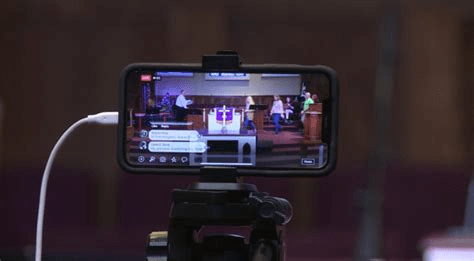
One positive outcome of covid restrictions was more churches provided an online worship service option. The church I presently serve is continuing this option, and usually have a number of people tuning in to watch. How might we improve in how we deliver those? Do we need to have people who can interact with those who are tuning in online? Maybe we need to hire staff to be the online church pastor in the same way multi-site churches hire a campus pastor?

How can we have a better online presence beyond just a one-hour worship service? Does this mean creating a presence on social media?

Discipleship Changes

How can we improve how we disciple new believers? In the past the emphasis was on teaching them “how to do” the Christian life. Should we move to an emphasis of “how to be” a Christian living in the world? While Bible teaching remains essential, especially for those coming to church with no prior Bible knowledge, I wonder if we need to help people move beyond living right to really connecting with Jesus, to actually listen and hear God?

Children and Youth Ministry Changes

Could we move beyond entertaining children and youth toward teaching them, even at a young age, how to live a life that is totally dependent on a relationship with God through faith in Jesus Christ, and tuned in to the guidance of the Holy Spirit? Do we need to challenge youth with opportunities to serve both in the church and in the community and world? Do we need to add in more digital content, or do we deliberately reduce screen time in our programs to counteract all the time they spend online in their day? Would it be wise to help youth focus more on getting to know God rather on avoiding sin? I came across a great quote a while back that went something like this: “Sin does not repel God, God repels sin.” We often see it as the less we sin, the closer we can get to God, when it is probably better to grow deeper in our relationship with God and then sin will be repelled.

Philosophy of Ministry Changes

Should we refocus our energies on helping people to grow in relationship with Jesus and not just in information about God? Do we need to remind ourselves that God came to be “with” us (Emmanuel)? Jesus sent the Holy Spirit to come live “in” us. It is about growing in relationship, not about growing in knowledge.

Outreach and Community Involvement Changes

As we think about introducing people to Jesus, our first realization should be that the mission field is not overseas, but right at our doorstep. There are many people living right next to us, who are just like us, who have never heard the message of salvation. And rather than thinking we need to go overseas, realize the world has come to us. Instead of taking a mission’s team to Mexico, maybe we need to reach out to the growing Mexican population down the street. Maybe instead of going to Africa, reach out to the many Africans from many different countries that now live in our cities? Even many small towns are seeing an influx of foreign workers and new immigrants. We need to reach out to them, welcoming them to Canada and sharing Jesus’ love with them.

As we reach out to those around us, this often requires an improved sense of community involvement and community connections. Some churches do well at this. Some churches offer English classes or homework help. The church I serve has an annual free Clothing Bonanza, clothing many children as they head off to school. They also give away free Bibles, so many that one year they started grabbing the church’s pew Bible to give away. Unfortunately, other churches are so caught up in their own church they hardly even know any people who don’t already know Jesus.

Let’s help people practically, and ensure we share the gospel as well. What else needs to change in how we reach out?

Facility Changes

What needs to change about how we build and set up the places where we meet? Many churches have done a good job equipping their facilities to be more accessible for those physical limitations, for example, by building ramps and elevators. We also have screens with the words on them so people don’t have to flip through hymn books. Additionally, many churches have recognized the needs of their communities, and replaced pews with chairs to allow their spaces to serve in varying purposes throughout the week. Are there other changes? Do we need to add more coffee bars?

Other Changes?

What else needs to change in how we do church? How do we update and adjust our ministries to have a greater impact for God’s kingdom? What “sacred cows” need to be chucked in order to head in a more effective direction?

I’m guessing that many changes will be different from church to church. Every church needs to mull over this issue of how to change to be the best they can be in reaching out and discipling people in their walk with Jesus.

What else needs to change?

Keep looking up,

Andy Wiebe

The Thirst of Humanity

One of the fundamental questions of life is this: Does my life have meaning?

Wrapped up in that question are others. Why am I here? Do I have a role to play? Where do I fit? Can I do something of meaning? What is my purpose?

There is a basic thirst in all humanity to find meaning in life. Everyone wants to find some meaning and value in what they do. And they look for answers in all kinds of places. Some try to fill that thirst with experiences and so they do all kinds of things hoping something will satisfy. They may choose to enhance or even remove the feeling of reality with drugs and drinking. Some chase achievements, some look to “just provide a good life for my family.” Others look to fame. Some look to “leave a legacy” so their name will remain alive long after they are gone. Everyone is searching for that satisfaction that will finally quench their thirst.

The search is on for that elixir that will truly satisfy. This search has carried people in many different directions. If you have attended college or university you will probably have come across some of the following people and their ideas.

  • Albert Camus wrote in his essay The Myth of Sisyphus “There is but one truly serious philosophical problem, and that is suicide. Judging whether life is or is not worth living amounts to answering the fundamental question of philosophy.” According to Camus, life is entirely without meaning.
  • Jean-Paul Sartre argued for dealing with the meaninglessness of life by creating our own meaning. We decide, not God, or any other person, what we find meaning in.
  • Augustine of Hippo and Blaise Pascal, though many years apart have both been connected to the idea of a “God-shaped hole” in mankind, or an “infinite abyss”, that Pascal wrote in Pensées, “this he tries in vain to fill with everything around him, seeking in things that are not there the help he cannot find in those that are...” Looking for something that doesn’t exist, outside of God.

Solomon, King of Israel, declared in his book, Ecclesiastes, “Everything is meaningless… completely meaningless! …I observed everything going on under the sun, and really, it is all meaningless—like chasing the wind.” (Ecclesiastes 1: 2, 14).

Solomon’s journey for meaning led him to seek pleasure and wisdom and hard work, and found none of these pursuits were fulfilling. In Ecclesiastes 3: 14 he says, “God has made everything beautiful for its own time. He has planted eternity in the human heart, but even so, people cannot see the whole scope of God’s work from beginning to end.” There is something in the human heart that longs for more. This is reminiscent of the “God shaped hole” or “infinite abyss” that is longing to be filled, to be satisfied. This thirst that is longing to be quenched.

Solomon journeys on, looking at the injustices of life, the futility of political endeavors and chasing after and gaining wealth. He points out that everyone dies. So what is the value of the time of our existence?

In chapter 11 Solomon encourages both the old and young to treasure their days, and reminds them that God is part of the answer to our thirst for meaning. Yet he still views life as meaningless.

When people live to be very old, let them rejoice in every day of life. But let them also remember there will be many dark days. Everything still to come is meaningless.

Young people, it’s wonderful to be young! Enjoy every minute of it. Do everything you want to do; take it all in. But remember that you must give an account to God for everything you do. So refuse to worry, and keep your body healthy. But remember that youth, with a whole life before you, is meaningless. (Ecclesiastes 11: 8-9)

In the end Solomon concludes “Fear God and obey his commands, for this is everyone’s duty. God will judge us for everything we do, including every secret thing, whether good or bad.” (Ecclesiastes 12: 13-14.)

His final conclusion is we need to recognize that God has the final say about our meaning and value. He is the final judge. Our job is to obey him and find meaning in that obedience to God. There is no meaning in all other pursuits, except in honoring God in those pursuits.

The thirst of humanity cannot be satisfied with any other pursuit than that which brings us into a relationship with the One who made us. God created us to have a relationship with Him. Any pursuit that looks for satisfaction outside of that relationship will never satisfy. To look for contentment outside of what we were created for will only bring more dissatisfaction and frustration.

To use a drill to pound a nail or a file to chop wood is ridiculous and frustrating. We need to come to God who created us for relationship with Him, and as we honor and worship him our craving will find relief.

Your thirst can only be quenched as you drink deeply from God who created you and loves you!

Keep looking up,

Andy Wiebe

Assumptions Lead to Problems

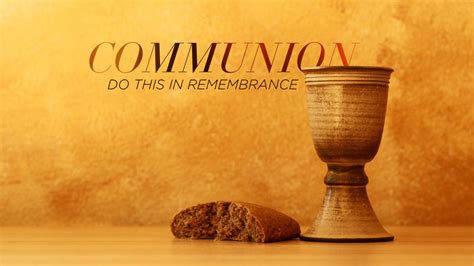
Last week I was preparing for Sunday’s service at church. We wanted to include communion as part of the service. I have only been at this church for a few weeks now, and I assumed things.

I assumed that their traditions around the celebration of communion would be similar to my experience. Here are my assumptions. I assumed that I could insert communion into the service where I felt it fit best. I was planning for a two-part sermon and decided communion would work really well as a practical expression of the first part. Next, I assumed that communion would be set up with cups of juice in trays and bread on plates. I assumed that would mean we needed a table at the front for the elements to sit until we were ready to move into the ceremony of communion. Then, I assumed that we would be serving everyone. That lead to a few more assumptions. I assumed we then needed to have 4 people prepared to pass the trays down the rows to cover the two sections of chairs we had set up, so I asked four of the elders if they could help serve. Along with the serving, I then assumed that since we were serving the bread and then the juice, we could use someone to play some music while everyone was being served, so I asked my wife to be prepared to play a few songs on the piano. Since I assumed we were serving everyone, I thought my sermon would be longer because we had to give time to serve everyone which would draw things out a bit.

My assumptions were not correct. First, in talking to my wife, she mentioned that she had seen a supply of cups and wafers that were one sealed unit. So then I assumed we will only be serving them once, so that shortens up the time a bit. Then, in conversation with one of the Elders, he mentioned that they had just been handing the elements to people as they entered the sanctuary.

So we will not be serving them at all, okay. They will already have the bread and juice with them for when they were needed. And that meant that we didn’t need anyone to actually serve the congregation.

Well, someone still had to hand them out as people came in for the service. Another assumption was that the piano could be used and I was informed it desperately needed tuning and was not ready to play. I had to tell my wife that her playing was not needed.

Assumptions.

We often make assumptions, especially when we are in a new situation. I am new to this church and had not bothered to ask anyone about how they practiced communion. I could have saved myself some trouble by just asking a few appropriate questions.

So, how can we deal with assumptions in new situations?

  • Realize we don’t know what we don’t know.

When we are in a new situation, we assume that we can approach it the same way we have approached similar situations in the past. We need to realize that every new situation requires new information for us to know how to proceed in a meaningful way.

  • Watch and listen

We can learn a lot in a new situation if we slow down and carefully observe what is going on. Before jumping into action, watch what others around you are doing, even how they are doing things. Listen to the conversation. What do they talk about? What can you learn from what they are saying that will help you know how to move ahead?

  • Ask questions

I am serving as a Transition Pastor. That means I go into a church for a period of a year or so before I move on to a new assignment. Every new church I serve is a new experience for me. Yes, I have years of experience being a pastor, but I have not been a pastor for this church at this time. Even in the last church I served, I had been a pastor there years ago, but people and practices had changed. I did not know how things were done now.

So, I ask a lot of questions. I want to know what their traditions are and how they would like to see things done. I try to figure out who they are talking about when they mention a name.

I try to get a sense of the inter-personal dynamics in the relationships of the people I am working with. I want to know the history so I can get a true sense of the present.

  • Admit you are a newbie

It’s okay to remind people that you are new here, acknowledge that this is a new situation and you may mess up. As I greet people on Sundays, I admit I am new there and don’t know if they are long-term members or guests. As we talk about programs or practices, I remind people I am new and don’t know all the history. I regularly ask people to give me some background and detail on programs or practices so I can get a sense of what they are talking about.

  • Ask for a guide

Sometimes it is helpful to ask for someone to be your guide. It’s good to find who is familiar with the situation so they can help you navigate around potential missteps. If you can find someone like this, make use of their knowledge.

Assumptions can lead to problems, but you may avoid those problems by trying some of the tips above.

I would love to hear how you have handled new situations. Leave a comment about how something went really well or really bad.

Keep looking up,

Andy Wiebe

Pursue Excellence with Constant Evaluation

“CANEI is an acronym that stands for constant and never ending improvement. If you really want your services to soar, you have to commit to CANEI. You can never be satisfied with what you did last week, even if it was a great week. Always keep moving forward; always be working to reveal God’s excellence in a new, more powerful way.” 

– Nelson Searcy and Jason Hatley, Engage: A Guide to Creating Life-Transforming Worship Services.

To become better we need to evaluate. Everything we do can be improved through taking the time to reflect and evaluate when completed. An effective way to guide post-event evaluation it to use established systems and processes, whether these are adapted from other leaders or organizations, or created internally.

Recently I was reading Leading in a Culture of Change. Michael Fullan, in talking about evaluation, refers to Army After Action Reviews. These AARs have three key questions: What was supposed to happen? What happened? And what accounts for the difference?

I like that. While many evaluation systems include many questions about every aspect of the event, they really all come back to these three questions. All the questions on a long evaluation form probably come down to these three questions.

What was supposed to happen?

This question is effective because it assumes there was a clear plan from the beginning. Every person involved in making it happen knew what was expected. They likely talked through each aspect ahead of time, and maybe even rehearsed parts of it. Your evaluation needs to begin with a reminder of what you hoped to accomplish. In this way, everyone is reminded of what their goals were.

What happened?

This is where you work through the event in hindsight and remind yourself  what actually happened. Did those leading know what they were doing? Did the people involved enjoy the experience? Did it end up being close to the original goal and plan? Were you able to work the vision well, meaning did your effort move everyone toward the envisioned goal? This is the opportunity to consider each aspect and identify what went well and what did not.

What accounts for the difference?

Once you’ve identified the expectations and actual outcomes, it is time to look at how closely your event matched what you had dreamed and planned for. Focus in on what happened differently than expected. Point out any surprises or missteps, and then try to figure out why things did not go as planned. What are some reasons for what went wrong? And just as important: what are some reasons for what went right or better than you had planned?

With this in mind, brainstorm what needs to change to be better next time. There might be all kinds of actions to take to improve:

  • Better training
  • Clearer directions
  • More rehearsing
  • Better equipment
  • And on and on

An After Action Review (AAR) may take a few minutes or may last an hour. It depends on how complicated the event was or how many items were identified when answering the third question. I like these three questions because they really focus in on CANEI. You can zero in on what needs to improve for next time.

Evaluation always needs to lead to action. Everything that needs improvement must be worked on until a satisfactory change has been defined and developed.

Incorporate regular evaluation into your routines. Ask God to help you see where you may have fallen short of His hopes for the event, and the Holy Spirit to make it clear on how to continue to improve. As a follower of Jesus Christ, do your best for the Kingdom of God, no matter what you are doing.

Keep looking up,

Andy Wiebe

Leading Well When the Unexpected Happens!

We think we have a lot more control on things than we really do. We plan and prepare, but there are many things out of our control. We cannot control the weather, so it is not really all that unexpected when a picnic gets rained out. We cannot control people so it should not surprise us that people do things we hoped they wouldn’t, or don’t do things we wish they would.

Parents have hopes for their children but children choose their own paths. Business owners have dreams for their business but sometimes the market has more influence on how well they do than anything they could prepare. You plan for a big event only to have a small crowd because there were other more interesting things to do.

Most people like to be optimistic. We have to be if we want to make plans or develop anything. We have to believe that things well go well and get better. Reality sometimes chips away at that optimism.

So, what can we do when the unexpected happens?

  1. Pray

Too often we think that we need to find our way through a situation. We have worked hard on a project and want it to go well, so when the unexpected happens we feel that we need to come up with the solution. Instead, we need to remember that God is greater than any problems we come across. And God is never surprised. When challenges surprise us, why not go to God with them?

God will help you through it. He may give you an answer to quickly figure out a solution. He may give you strength as you struggle to find answers and push your way through. But God wants to be part of our lives. And if we are dedicated to serving God, then all that we do in some way should help to build God’s kingdom. If that is our goal, then the God of that kingdom would probably want to help us find our way through.

Remember to Pray.

2. Manage your Responses

An emotional response to the unexpected is not unusual, but obviously not very helpful. If we respond in a negative way to something that surprised us in a negative way, we are only compounding the problem. That is not going to help save the situation or fix what went wrong. Unfortunately, this is my natural response when a car darts in front of me in traffic. Maybe some of you can relate?

If we have enough bad unexpected things happen, when we get to that tipping point or that final straw that breaks the camel’s back, some of us give up. Whatever we were trying to do may just seem like too big of a task if too many unexpected things interfere.

Often it is our emotions that drag us down. We need to find a way to manage our emotions and push on.

3. Determine to Persevere

Some of us are resilient and continue to push ahead, looking for ways to overcome unexpected challenges. While some give up, others find a way through. Don’t immediately let the unexpected stop you from what you were planning to do. If your pursuit is of any value to you, then determine to find your way through.

These first three actions quickly lead you to the fourth one.

4. Triage the Situation

Good leaders will learn to assess the situation quickly and prioritize the needed response. When you go to the Emergency Room at the hospital, you are first taken to triage, where they assess your level of need so they can make sure that the greatest need is served first.

When the unexpected happens, you need to be able to determine the correct response by assessing if the unexpected situation needs to be dealt with first before going on with your plans.

For example, if you are planning a wedding and the hall floods on the week of your special day, you need to determine if the flooding can be dealt with or a new hall needs to be booked. This may take priority for the moment while you put aside the planning of the rehearsal to deal with the unexpected. In the same way, when something unexpected comes up at work or in your personal life, assess the situation to determine where to focus your attention for the best result.

5. Plan the Solution

Once you have triaged to identify your priorities, use that list to guide you through to a resolution. Figure out who can deal with which part of the problem and who can continue to work on the original project. Maybe part of the solution is to shut down your project or event for now and figure out how to reschedule with more planning in the future.

6. Delegate or Recruit Help

The unexpected often means that your time and resources are disappearing more quickly than you had planned. Can you hand off some of the responsibilities either in addressing the unexpected challenges or in the original project? Find someone who can step in to help. Don’t feel that you have to be limited to your abilities or that of your present team.

7. Pray and Trust God to Intervene

Continue to pray throughout the process. If you are a Christian leader, you have access to the God of Heaven. Our creative, miracle-working God can help us when we feel completely overwhelmed. I like seeing where God steps in and does the unexpected. I was just reading in 2 Kings 3 where the kings of Judah, Israel, and Edom were facing an army of Moabites. They thought they were hopelessly defeated, but then God stepped in. Water ran into the valley and onto the plains. The morning sun made it look like blood.

But when they got up the next morning, the sun was shining across the water, making it appear red to the Moabites—like blood. “It’s blood!” the Moabites exclaimed. “The three armies must have attacked and killed each other! Let’s go, men of Moab, and collect the plunder!”

But when the Moabites arrived at the Israelite camp, the army of Israel rushed out and attacked them until they turned and ran. The army of Israel chased them into the land of Moab, destroying everything as they went. (2 Kings 3: 23-24)

God can do the unexpected. Leading well when the unexpected happens depends to a large extent on how much you depend on God.

Keep looking up,

Andy

Plan a Restful, Renewing Break

Some people come home after a holiday, wishing they had a week off at home to recover. Holidays are not always restful. Sometimes we use vacation time to meet up with family, which can be really good – or really draining. Sometimes we fill our vacation with so much activity that we come home exhausted.

We all need a break from time to time. For many people, these next two months are the window within which we can plan our holidays. The weather is nice, the kids are out of school, and many organizations slow down over the summer.

It is the perfect time to take some time off. But there is a big difference between taking time off for a busy vacation and having a restful and renewing break from the busyness of life.

If you need a week off to recover from your vacation, you are too busy on your vacation.

It is tempting to use our holiday time to do the many things we wished we could do all year. Maybe we stay home but are constantly on the go with golfing in the morning and swimming with the kids in the afternoon and campfire with family in the evening. While all those things are great, unless we actually take time to slow down, many of us will feel just as tired, if not more, when we return to work.

Is the summer the best time to take a vacation?

Many of us assume that we must take our vacation in the summer, but is that true? Is that best for you and your family? Do you already have weekends off? Why not make the most of them during the summer? Enjoy the slower time in the office and the relaxation of being home with the kids without running off to all kinds of sports or school activities. If you are one of the families who have kids in summer sports you may not have this luxury.

Vacation during a busy season may be more helpful.

Some of us may have the freedom to take a vacation during other times of the year. You might even benefit from lower off-season prices at hotels and vacation spots. In this way, taking time off during a busier work season can be more refreshing than during a time of year that may be slower. If it is possible to take a week off during one of your busy times, you may just come back with more energy and get more done than if you just pushed through as usual.

But we have to take holidays when the kids are out of school!

One father said, “We never let education interfere with our holidays.” You may be able to take your children out of school for a bit if they are in lower grades and they won’t miss much. As they get older you could take your vacation during their school breaks in the middle of the year. If you are really concerned about what they will miss in school, ask the teachers if they can give you some assignments for the kids to work on during your time away.

Find ways to rest and be refreshed and renewed.

There are times to plan holidays with every day and hour filled with activity. There are other times where you recognize you need more sleep and time to slow down and just be. If you are a normal busy family you might benefit from time to just be together without having all kinds of activities on the agenda. Maybe you can rent a cabin on the lake, or go to a resort, and then just do whatever comes up in the day. Feel free to go for a swim when you want, or nap beside the pool. If you like reading, bring a good book. If your family plays board games, bring some to play in the evenings. Just enjoy being together and resting from your busy life.

Take your vacation time!

There are people who pride themselves on not taking all their vacation time. That is ridiculous! If you have the time, why not take it? If you don’t get paid holidays and don’t have money to do much, make your time off count with a “stay-cation” in your own backyard. Take the time for yourself and your marriage and your family that is available to you. Treasure the time you have together while you still can!

Give yourself permission to slow down and do the “nothing” of relaxing. There are times when it is quite okay that we haven’t accomplished anything in the day, except be together with the people who matter the most. Take your time to slow down and relax so you are ready to go back to your busy lives when the vacation is over.

Have a great summer, and if you are on vacation, take time to slow down.

Keep looking up,

Andy

Do You Really See Your Team?

We are quick to make judgements about people. Our first impressions can be completely wrong but we hold onto them anyway. Other times, the we may have known someone for a long time but do not realize they are not the same person they were years ago. For someone in a leadership role, there is a particular danger of viewing people one way and not realizing who they truly are and how they can be of help in our organization.

King Solomon, in Ecclesiastes, describes some of the unfortunate ways that people see others.

13 Here is another bit of wisdom that has impressed me as I have watched the way our world works. 14 There was a small town with only a few people, and a great king came with his army and besieged it. 15 A poor, wise man knew how to save the town, and so it was rescued. But afterward no one thought to thank him. 16 So even though wisdom is better than strength, those who are wise will be despised if they are poor. What they say will not be appreciated for long. (Ecclesiastes 9: 13-16, NLT)

These people greatly benefited from the wisdom of a poor person. They appreciated the rescue but did not appreciate the person. We are like these townspeople: quick to write people off, even if they have valuable gifts and insights. We see them a certain way and do not allow that to change as we begin to get to know them and what they offer.

Because of this oversight, we – and by extension our teams and organizations – may lose out on valuable skills and insight just because we have identified a person in one way so we do not think they have anything to add.

King Solomon continues:

There is another evil I have seen under the sun. Kings and rulers make a grave mistake when they give great authority to foolish people and low positions to people of proven worth. I have even seen servants riding horseback like princes—and princes walking like servants! (Ecclesiastes 10: 5-7, NLT)

Our quick judgements can create further damage when we choose to promote or demote the wrong people. This can be due to existing relationships or the desire to honour certain people. The unfortunate result is that we listen to the advice of the wrong person when there is someone much wiser nearby.

Most of us work with teams and volunteers in some way at some point in our life. This is especially true in ministry, when programs and services rely on staff and volunteers.

Get to know these staff and volunteers. This could be through personality tests, or at a minimum, putting in the effort to get to know each person well enough to see how they can contribute best. Intentionally take time with this in order to avoid making quick assumptions or writing someone off because of one or two missteps. Often the best outcome happens when people are in roles that suit them best, and it often takes time to identify these roles and responsibilities.

As you work with your teams and notice people are in the wrong roles, be brave enough to reorganize and reassign individuals to roles where they will excel and your team will be better in the long run.

I love to get things done, but I have realized that there are times where I am better off taking time to get to know people first. As we get to know each other, I will learn where someone can serve and give their best, and we will be able to communicate better because I know them and they know me.

Good organizations will have a regular system of evaluating people. The leader does a formal review every six months or a year to continue to help the person get better. In the evaluation, the leader can also discern if this person is still a fit here or would fit better in a different role. A system of regular evaluation is good, but the personal relationships are even better. As you develop good relationships with your key people, they will be brave enough to approach you when they want to learn or grow in a certain area or if they would like to try a different role. If open communication is valued and practiced, you will be more likely to continually give the right responsibilities to the right people.

So much of what we do in life involves working with people. Let’s figure out how to help our teams be the best by putting the right people in the right seats where everyone can contribute their best.

Get to know your people first, then get the work done.

Keep looking up,

Andy Wiebe

Is This Church?

I have many unique and incredible experiences of church. I have been to churches meeting in large auditoriums, in school gymnasiums, in homes, and at a golf course. I have been to churches on three continents. I have been in churches that speak various languages. I grew up in a church where everyone felt comfortable speaking Low German. In one church most members were speaking Tagalog until the service began in English. I had the opportunity of preaching in a church in Choma, Zambia, where the pastor interpreted it into one of the local languages, Tonga. I have been in church services that started right on time and ended exactly one hour later. I have been in services where there was an approximate ending time but usually it went much longer. I have been in churches of thirty people and churches of hundreds of people.

I have been in churches where the staff led everything in the service and in churches where most of the service was led by volunteers. I have been in services where it felt like we were watching a performance, and I have been in services where the congregation was invited to participate in a number of ways.

So, what makes it church?

Let’s think of a few things that need to be present for it to be church, and before that, let’s define church. Church is the people of God meeting together. So let’s look at a few things that make something “church”.

  • Church is the people of God gathered.

When Paul wrote his different letters, he addressed them to the church in Corinth, or Ephesus, etc. He was addressing people. In Corinthians 1: 2 Paul writes, “I am writing to God’s church in Corinth, to you who have been called by God to be his own holy people.” Church is a gathering of people.

  • Church is the encouraging and motivating of God’s people.

Hebrews 10: 24 and 25 says, “Let us think of ways to motivate one another to acts of love and good works…encourage one another….” When the gathered disperse, they should feel encouraged and motivated to continue to grow in their love of God and their service to others. Something needs to happen when gathered so that the people going home are different than when they came in. They should have been challenged to change in some way.

In order for something to be church, the gathered must leave encouraged.

  • Church is the people of God praying to God.

In 1 Timothy 2: 8 Paul advises this young pastor, “In every place of worship, I want men to pray with holy hands lifted up to God….” One aspect of a church service, when God’s people gather, should be prayer. Somehow, as part of the time with each other, God’s people need to spend time talking with God.

In order for something to be church, the gathered must pray.

  • Church is the people of God gathered to listen to Scripture.

Here is some more advice from Paul to Pastor Timothy: “Until I get there, focus on reading the Scriptures to the church, encouraging the believers, and teaching them.” God’s Word should be read in church. While everyone should read at home on their own as well, there should be public reading of Scripture. That means, preaching through a popular book does not cut it.

In order for something to be church, the gathered must read Scripture.

  • Church is the people of God gathered to be taught.

In the advice to Timothy in the last point, Paul says to “teach them.” Someone, or more than one, needs to expound and apply Scripture to the regular daily lives of God’s people. Someone who has more training or more experience in a passage of Scripture can help others understand it and figure out how the rest of the Bible contributes to what is said in the verses read.

In order for something to be church, the gathered must be taught.

  • Church is the people of God gathered to celebrate communion.

In 1 Corinthians 11 Paul reminds the Corinthian church to respect the Lord’s Supper as a special event reminding us of Jesus’ death and resurrection: “For I pass on to you what I received from the Lord himself. On the night he was betrayed, the Lord Jesus took some bread…” (1 Corinthians 11: 23) He goes on to describe what happened during that meal Jesus had with his disciples, leaving us an example to follow. Many churches regularly celebrate communion, or whatever your church calls it. Some practice it every Sunday, others monthly.

In order for something to be church, communion will be celebrated regularly.

Is this church?

These are some of the elements that make church “church.” Basically, church is the gathered people of God, but the above elements are usually part of that gathering. Not every item above will be in every gathering of believers, and there may be others included. The point is, do we know what needs to included and what does not? Do we understand the incredible value of regularly meeting with others who are part of God’s family? Please leave a comment sharing what you would add or remove from the list. What do you believe needs to be present to be “church”?

I hope you have found a great local church to regularly gather with. If you have not found one, keep looking. You need to meet with others of God’s people.

Keep looking up,

Andy Wiebe

9 Reasons To Quit

In my last article I gave nine reasons not to quit your present role or position. I think those are important reasons to be aware of. On the other hand, sometimes it is the perfect time to quit. My daughter, who edits my blogs for me, reminded me of the times I have quit and suggested I approach this issue from the opposite side. Great idea! So here it is. Nine reasons to quit.

1. God has clearly called you somewhere else.

I believe that God has the authority to redirect me if he so chooses. You may have experienced that in your own life. Sometimes it is clear that God is asking you to take on a new role elsewhere. One pastor suggested that every time you quit to take on a new role, look for both the push and the pull. Look at the reasons you feel like quitting and the reasons the next role seems so appealing. It may be that God is pulling you to a new opportunity elsewhere.

2. You believe you have done all you can in your current role.

Sometimes we take on roles with great excitement. It seems like such a great fit. You work hard and do a good job, but then you come to the point where you feel you have done all you can. Church planters are a good example of this. They start a church and get it to a certain size or place of stability and then hand it off to another pastor so they can start another new church.

3. You have lost the confidence of your team.

There are times, whether it is your fault or not, where you know that you have lost the confidence of your team. Your board may no longer trust you or believe that you are capable of leading into the next chapter of your church or organization, and you realize that you will no longer be able to lead in your current role. I experienced this when someone misread my actions, and I knew that no matter what I did, I would not be able to change their opinion of me. It would be hard to gain the team’s trust back. It was time to move on.

4. Outside factors indicate a need to move.

Sometimes we need to leave a position because of external factors. These factors could be related to medical care, family care needs, or education. For example, one move my wife and I decided to make was influenced in a large part by the fact that both our daughters were entering High School and a move later would be much harder to manage.

5. You are pursuing further training.

You may recognize that in order to grow in areas you are called to and to continue to be effective, you need to pursue further education or training. That may be a meaningful reason to quit.

6. Your present role is taking too much of a toll on you.

There are times when we find ourselves in a role that is wearing on us to the point that we are emotionally and physically becoming ill. We need to recognize when we are no longer able to endure the pain or difficulty of our present role.

7. When your vision and the church’s vision are too different.

I left a pastoral role at a church after only being there a short time, when I finally realized that the church’s vision was too different from mine.

This had not been clarified before taking the position. It is impossible to maintain your integrity when you have to work in a role that does not align with your own values and goals. It is better for you, and the organization you are working for, to find a better fit elsewhere.

8. You are being asked to do more than you are capable of.

Sometimes our roles change. We may have been a great fit in the beginning, but things have changed to the point where you no longer fit. It could be that you have done a great job as a pastor so your church has grown, but you recognize that it is now bigger than you are capable of leading and someone else is needed. Alternatively, you may be in a situation where your job description is changed, and you need to evaluate the situation to see if you are still in the right role or need to move on.

9. If you can’t afford the role anymore.

Sometimes, you need to make a decision to quit and find a new role because you are not being paid well enough. Some churches are small, and are limited in what they can offer as a salary. If the wage is no longer enough to meet the climbing expenses of you and your family, there may come a time when you need to resign and look for a better paying role.

If you think it is time to quit, make sure you are doing it for the right reasons, and then do it with confidence.

Keep looking up,

Andy Wiebe