Discerning Truth

New ideas challenge our understanding. What do we do with new ideas? As a young man, I wanted things to be black and white. I wanted to know right and wrong. I accepted the teachings I received in my church and at home, as well as those I learned at Bible College. I held strong views about beliefs and practices of other churches based on what I had grown up with.

As I ventured into the world, I discovered speakers, authors, and churches who presented ideas I was not comfortable with because they were different than what I thought was right. There were times when the teachings I came across made sense. There were times I had to adjust my thinking because I was wrong, or at least not fully informed, about a certain belief.

How should we respond to new ideas? Let’s look at a couple of ways we often respond to new teachings.

It is new, so it is wrong.

There are some people who are convinced, as I was in my early years, that anything new and different must be wrong.  And if it is wrong, it must be avoided. These people will not accept anything new as true because it is not what they are used to or comfortable with. They will ban those books from their libraries and caution others not to listen to those speakers. In their desire to hold to the truth, they assume that they already have the truth and don’t need to be confused with new ideas. While well-meaning, this is a naïve attitude that prevents many good followers of Jesus from growing.

It is new and I don’t know if it is right or wrong.

Some Christians, when exposed to new ideas, aren’t sure if these are right or wrong, and either don’t want or don’t know how to determine if it is right, so they just choose to ignore the new idea. Maybe it’s too much work to figure out if it is true. Maybe they aren’t sure how to assess it’s validity. Maybe they are comfortable and don’t want anyone to rock the boat. Life is good, I know where I stand, I know what my church teaches, and my friends believe. I don’t need to check out anything else.

Again, this attitude keeps followers of Jesus from growing in their relationship with Jesus as they never struggle with new understandings of God or scripture. Spiritual growth assumes a deeper or further understanding of and obedience to God. This may include accepting something new.

It is new, but is it true?

Other followers of Jesus are aware that they do not have all the answers. They may have already experienced times where a new teaching has given them further clarity about who Jesus is or how He works in their lives. They are willing to do the work to find out if this new teaching is truth or not, and willing to accept and apply the new teaching if it is true.

Their attitude is “I don’t know if it is true, but I will check it out.”

And so they study scripture to see if what they have been hearing is consistent with scripture. They read other authors or listen to other teachers they trust to get advice from other believers. They take time to talk to God about what they have discovered, asking God to give them clarity about what they are hearing. They might consider how this teaching has been accepted by other churches or by some of the older writers.

These followers of Jesus do not just jump on the bandwagon because friends are or because a certain speaker endorses this teaching, but they take time to consider it carefully before accepting it.

I have benefited greatly from discovering teachings that were not part of my childhood or that of my church. I have learned to appreciate teachings on the gifts of the Spirit and learning to listen and hear from God. I have appreciated being challenged on my beliefs about the kingdom of God. I have come a long way from my theological roots, continuing to carefully learn and grow in understanding God and how He works in us. In my pursuit of a deeper intimacy with Jesus, I have had to grow in my understanding and learned to accept new truths along the way.

Discerning truth is not a quick and easy process, but it may be of great benefit to you and your relationship with God as you get to know more. Be willing to do the work of assessing the validity of new teachings you come across without discarding them too quickly.

Keep looking up,

Andy Wiebe

Remembering the Priorities of a Church Board

For something to be a priority, it must be most important. When I see a company proudly displaying a slogan on their work trucks declaring, “Safety is our number one priority,” I know they don’t really mean it. It’s not true. If safety was their top priority, they would leave their work trucks at the shop and ask their work force not to leave the building. Their top priority is their business, but they do want to be safe in doing it.

Number one priority marked with red circle on math notebook

When I think of church boards, I wonder if we too have lost an understanding of what is truly priority? Board meetings begin with a welcome, maybe a devotional and a quick prayer, and then it’s on with the business of running a church. Much time is spent on financial discussions, reports, and budget. There is talk about the facilities and what maintenance is needed. There may be reports from different ministries highlighting their recent accomplishments. The board discusses, debates, and makes decisions. And then, after three hours of discussion, the meeting ends and everyone goes home.

The question is: did the board members focus on the priorities?

Too many church boards model themselves after a corporate board of a business. Yes, there are certain “business” aspects church boards need to handle such as managing insurance, paying bills, and ensuring the church functions in an organized way. But could it be that there are priorities that get shoved to the end of the meeting so they get less time than required?

There are a few items that I have noticed are not receiving the attention I believe should be given to them as priorities.

  1. Connect with God

Central to engaging with God is time spent in prayer. A church board is not first responsible to it’s “shareholders” (congregation) but is first responsible to God. It is God’s church, so the board needs to check in with Him to ensure that they are hearing His voice and being led by Him. Board decisions cannot be dependent on consensus alone but need to be guided by God. Along with asking God for direction, the board should talk to God about the people they are called to shepherd. A church board needs to pray for people’s health and life situations, but more importantly, pray for them to grow spiritually. A board has the privilege of interceding for their congregation.

2. Emphasize Discipleship

A church board is called, with the pastor, to lead a church in “making disciples.” (Matthew 28:20) This requires church leadership to regularly review their discipleship process to ensure people are coming to know Jesus and growing in their relationship with Him. Discipleship is about ensuring appropriate ministries are available to those who want to grow in their faith. When discipleship is a priority, it will influence other discussions during the board meeting. For example, if a board recognizes that their budget is falling short, they may want to encourage the pastor to preach about how God wants us to handle finances. The Board may want to plan a study on financial stewardship, not just to meet the budget, but to help their members to honour Jesus in their finances. Boards are easily caught up in many other decisions that it is easy to forget their role in making sure people are growing in their relationship with Jesus.

3. Pursue their God-given Vision

God has called every church to a unique role in the setting they find themselves in. Their vision needs to come from time with God. This may seem like a daunting task, but once the vision is clarified they can move ahead with purpose and clarity. Once they have determined their vision, church boards need to do everything they can to align all aspects of their church services and ministries to the vision God has called them to. This is about being responsible to what God has called them to

While there may be other priorities, these are three that every board needs to remember. A board that remembers these will do well.

Keep looking up,

Andy Wiebe

Preparing For Change #3: Begin Your Change by Easing Into It

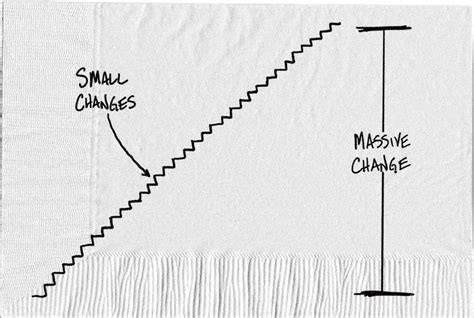
We experience some changes gradually; others come as an abrupt shock. When prices at the gas pumps go up by a cent or two at a time, we don’t notice as much as when it is a five-cent increase or more at once. Easing into a change can help a church be more accepting of the change as it develops. This gives people time to adjust to smaller changes instead of the whole change at once.

Break the Change into Smaller Parts

For many churches, Sunday Worship services have a familiar flow. The order of service is the same each Sunday. If you want to lead your church in changing its service, you may want to begin with small changes. Instead of changing everything, change one or two things at a time.

For example, if you want to add some variety to the service, you could begin by breaking the usual group of worship songs into two smaller groups, inserting a scripture reading or prayer time in between. Then, after a while, you could move the second group of songs to the end of the service for a time when you want to follow a sermon on praise with singing praise songs as a sermon response. After people get used to some changes in the singing, you can change how the welcome and announcements are done. If you always start with a song and then the welcome and announcements, try starting with a video clip highlighting a ministry in the church before doing the welcome and announcements. Instead of depending on the song to gather the church to worship, gather them with a video followed by a scriptural “call to worship” from one of the psalms.

Whatever your change, see if there are ways of breaking it into smaller changes to allow people to adapt slowly. As people see you make small changes that work, they may be willing to try a bigger change next time.

Do a Trial Run

It may be appropriate to introduce a change by announcing it as a “trial run.” You can set a date for the trial period. The caveat that this is a temporary change that will be evaluated later may give your church the willingness to try it for a while. You could even introduce the change by explaining that you are looking for a way to do things better, but you aren’t sure if this is the best way to do so. You can encourage your congregation to give you feedback as you try the change.

If you introduce a “trial run” change, make sure it is a long enough period to give it a good test run, but a short enough time to still be a trial period. If you introduce a change that you will try for a year or two, that is obviously no longer a trial run. And make sure to stick with your timeline. Do not extend it. Respect people by keeping your promises.

Promise an Evaluation

Whether it is presented as a trial run or not, you can promise all those involved in implementing the changes that you will be doing a thorough evaluation, which they can take part in, on a certain date. Evaluate it against the intended purpose. Be honest with the results. 

Three options arise out of an evaluation. First, if it didn’t do what you hoped, you can always revert to the old way. Second, if the change didn’t work, you can adjust aspects of it and try again. Or, third, you can introduce a completely reworked change to try again. You may have to wait a while before people are ready to try again, but that will give you time to figure out how best to move ahead, if that seems the best option.

May God guide you as you introduce change to your church.

Keep looking up,

Andy Wiebe

PREPARING FOR CHANGE #1: Presenting the Case.

Change is a scary word for many people. Yet change is necessary if we want to continue to grow and respond to the world around us. Change gives the opportunity to improve with the hope of better results. Recognizing the value of change and helping others to do the same is an essential part of being an effective leader, as such, the next three blogs will be about leading change.

When we are leaders of change, we often assume people are following right behind us. We forget that, because of our role to lead initiatives and implement adjustments in order to see improvements, we often spend a lot of time thinking through changes before we introduce them to others, so what is familiar to us is brand new information to those we lead. We are prepared for it, but they are not. We need to be intentional and clear about what changes we are introducing, the reason for it, how it will look, and how we will evaluate it.

We want to invite people to change, not force them. It helps to give a clear idea of why each change is appropriate. Among the reasons for change may be a desire for creativity, a response to Biblical direction, or a reaction to statistical information.

Change and Creativity

I like trying new things, so I sometimes introduce change simply for creativity’s sake. I think there is a place for that.

Some churches have exactly the same order of service every Sunday. Everyone knows the order of announcements, prayers, singing, preaching, and so on. I like to rearrange the order of service because I think people respond to creativity. The same thing every time puts people to sleep. One member, who appreciated the creativity and variety told me, “I like coming to this church because I never know what to expect from Sunday to Sunday.”

I also like to arrange the service in different ways in order to highlight the theme of the morning in a unique and creative way. Celebrating communion is often done at the end of the worship service in the churches I serve. Sometimes, I move it to the beginning of the worship service so the rest of the service is a celebration of Jesus’ death and resurrection as we were just reminded of in taking communion.

Change and Biblical Reasons

Sometimes churches need to make changes because they recognize they are not fulfilling a Biblical direction as best they could.

A church may respond to a sermon series on prayer with a renewed emphasis on prayer. They may ask Bible Study groups to pray. A church may make a prayer room available for after-service prayer. They may cancel all programs for a week to invite everyone to come to special prayer events.

A church may ask all their small groups to put a greater emphasis on outreach and inviting unbelievers because they recognized they weren’t doing well in reaching unbelievers. This is one way they are hoping to fulfill the Biblical mandate to share the good news with those who have never heard. Sometimes churches need to make changes that they believe God is inviting them into because of Biblical reasons.

Change and Statistics

Some reasons for change include statistics. We measure many aspects of life, including how we do ministry, by certain numbers.

A Sunday School class that has only two attendees may need to be canceled to give that teacher the option of serving in an area with greater need.. Giving to ministries or missions outside of the church may need to be stopped or postponed when the church is in financial difficulty. If the income does not match the budget, the necessary reductions need to be made. A church that does a demographic study of their community may recognize that there is a large number of people of a certain ethnic group in their community that has no church or church reaching out to them, so they develop a specific ministry effort to share Jesus with that group of people.

Whatever your reason for the change, whether one of the above or something else, be clear about it so that those who are affected may understand why this change is good and needed. May God guide you as you lead change.

Keep looking up,

Andy Wiebe

Turning Vision Into Reality

My wife and I enjoy spending time in our backyard. Two summers ago, I extended our deck. I had built a small deck, but it just couldn’t accommodate enough people. We began to dream about how we could extend it. My wife asked for a bench swing to be incorporated in it. A vision began to take shape in our minds of what could be, but vision alone accomplishes nothing. I had to develop a strategy that included practical steps, in the right order, to make the vision a reality. I had to determine how much lumber I needed, and how many of the different lengths and sizes. I had to figure out how many screws I needed. I would need chain to hang the swing. Once I had the materials delivered, I needed to work the steps, one at a time. Not being an experienced carpenter, there were a few times I had to sit and think, to evaluate if I was doing things in the right order. I didn’t want to put the decking on only to realize I had missed something underneath. There were also things I hadn’t planned for and learned along the way. I had to put in extra bracing in the frame to ensure the swing would not pull the deck apart when someone was swinging on it.

The end result is an enlarged deck with a bench swing – that actually works!

Many churches have realized the value of a vision. They work hard to develop a dream for their future. They pray, and they discuss, and create a vision of a future they can picture. But now what? While defining a vision can be difficult, it gets even harder as you move to developing a strategy to work towards that vision. This is where churches often fall short. They have a vision but don’t know how to actually achievve it. They lack a strategic plan.

When I work with a church to support their development of a strategic plan, I suggest the following steps and ask these questions along the way:

One: Pray

Pray first, pray during the planning, and pray as you move toward your goals. The church belongs to God so listen to him as you create and implement your strategy. Invite him to do his work in and through your efforts.

Two: Set clear Goals.

What goals can you work towards that will help you accomplish your vision? These goals act as checkpoints on the way to fully reaching your vision, to help make it less overwhelming.

Three: Create Action Steps

For each goal, determine the steps needed to accomplish that goal.

What smaller steps can be taken to move toward that goal? Can that larger goal be broken down into smaller manageable steps?

Are there certain steps that need to be accomplished before others?

Four: Assign Resources

This is primarily about people and finances.

Who needs to be assigned to this goal, or specific steps along the way?

Who needs to be in on decisions affecting these steps?

How much money is required for each step?

Will this be funded from a fund already in place or will fundraising be required?

Five: Establish a Timeline

What order do these steps need to be in? Determine a timeline, along with completion dates.

When will you start each step? When will you finish each step?

Six: Evaluate, Adjust, and Keep Going.

When it seems you are nearing the achievement of your goals, take time to evaluate to ensure you accomplished what you needed or if any readjustment or reworking of the strategy is needed.

If you want to see your vision becoming a reality, it is important to do the difficult work of creating a strategic plan and sticking to it. So, church leaders, I hope you have a vision for your church. Take the time to develop a strategy to help you move forward to achieving it.

Keep looking up,

Andy Wiebe

Don’t Just Examine the Bread!

So the Israelites examined their food, but they did not consult the Lord.

Joshua 9:14 (New Living Translation)

Christian leaders need to recognize the importance of not accepting everything at face value. It is important that we do the work of evaluating the latest teaching. Even if the speaker or author or podcast host has a good reputation, we must do the work of determining if what they are saying and presenting and teaching is the truth.

Joshua 9 gives us a glimpse into an event in the life of the Israelites as they begin to conquer the Promised Land. They conquered Jericho by walking around it for a whole week and then shouting, bringing the walls down. They conquered Ai next.

After defeating these groups a delegation of strangers showed up on their doorstep. These Gibeonites didn’t live too far away, and heard how God gave them victory against all other people. They were afraid for their lives, so out of self-preservation, they put on a little drama. They wore patched sandals, brought dry and moldy bread, and carried cracking wineskins. They arrive at the Israelite camp looking every bit the faraway people they pretend to be.

The Gibeonites asked for a peace treaty, but the Israelites were clear: if you live nearby “we cannot make a treaty with you” (Joshua 9:7). God told them to conquer all the people. He did not want them to make a treaty with any of the people in the land He is giving them.

In an effort to convince the Israelites that they were from far away, the delegation pointed out the terrible shape of their supplies. And as verse 14 says, “the Israelites examined their food, but they did not consult the Lord.”

Other versions say “they sampled their provisions” or “took some of their provisions.” This can be both a symbol of friendship, as well as a “testing” of the supplies. The Israelites examined the supplies and discovered that they aligned with the story the delegation told. The Israelites felt they had done their “due diligence” and agreed to make a treaty. It is very clear the Israelites did this without consulting the Lord. They believed something and acted on it. They believed a lie and acted by making a treaty.

Only three days later they discover the Gibeonites were neighbours. The Israelites were not impressed, but their leaders convince them they couldn’t destroy the Gibeonites but must honour the treaty. Instead, the Israelites make the Gibeonites do forced labour.

How often do we as leaders think we have done our due diligence because we have in some way vetted what we have been told? Maybe we listen to a speaker and listen to a few other voices and accept what we are hearing at face value. We may do this work, and yet we forget to “consult the Lord” as we accept new ideas or try new ways of doing things.

It may be that the Israelites did not consult the Lord because they were encountering something new. They had seen God do incredible things for them over their history, including conquering Jericho and Ai just recently, but they had not met Gibeonites before, they had never encountered a peace delegation before, and they were still new at this concept of conquering the land God was giving them. Like them, when we encounter something new, we can get caught up in the new experience and forget to consult the Lord.

Instead of following the ways of the Israelites and simply “examining the bread,” we must inquire of the Lord. This should be one of our go-to moves. Ask God, “What do you think about what we have just heard? What do you think of this new idea?” Due diligence for a Christian leader should always include consulting the Lord. Accept new ideas carefully after consulting the Lord. Make new decisions after you have talked to God about them.

Yes, examine the bread, but also consult the Lord.

Keep looking up,

Andy Wiebe

What Your Office Says About You

What does your office say about who you are or what you value?

When you walk into my office you will be bombarded by my Coca-Cola collection. It began with one unique Coke can years ago, and has expanded a lot over the years. I’m hoping the various cans, bottles, and trinkets show a bit of my human and whimsical side.

You will see picture of my family: my wife and two daughters, at various ages and at various places. A friend of ours drew a picture of my wife and the dog we had at that time, that I treasure. Anyone coming into my office should see that I love my family, and that my family includes my beautiful wife and beautiful daughters.

I have a wooden map of Africa on display, which would give me opportunity to talk to anyone interested about my sister who is a missionary in Zambia, and about a trip I was able to take to be at her wedding.

On the window sill is a small glass award given to me in recognition of 25 years of service as a pastor with the Christian and Missionary Alliance. This tells people that I have been a pastor for a while.

Spread all throughout my office in various shelves and on my desk are books. Anyone looking through my shelves would soon recognize my favorite authors, and favorite themes or topics I like reading about. If they looked closer they would find two books by H. Andy Wiebe. They would realize that I am an author.

My office proudly displays a Tassimo coffee machine, announcing my preference for coffee.

On my desk sits a complete season of six DVD sets of “Corner Gas” in a little case my daughter made for me years ago. People might get a sense of my humor as they see that.

Upon entering my office anyone could see my printer and a paper cutter and hole punch close to hand. I would be able to explain that I love teaching and often build my own booklets to use for boards and churches.

And noticeable to anyone checking out my office would be the number of Bibles on display. I have one shelf full of about twenty Bibles in various sizes and translations. On my desk are another two Bibles which I use most of the time: A New Living Translation Bible and a New International Version Bible. It would be clear that I value the Bible, and hopefully clear from the shape some of them are in, that I read the Bible often.

If someone looked a little closer at my desk, they might find a couple of prayer journals indicating that prayer is important in my life. If they asked, I could explain how I pray and how I long to not only tell God my needs but love to listen to and hear from God.

I would hope that my office reflects a person who loves his family and loves God! I would hope my office would show my love for reading and learning and growing. I hope each person who visits my office sees that I am someone who enjoys life.

What does your office say about you? Would people know something about your values? Would the items in your office give you opportunities to talk with people about what is most important to you?

What does your office say about you?

Keep looking up,

Andy Wiebe

Summer Road Signs Series #6: Roundabout or Traffic Circle Signs

Roundabouts and Traffic Circles are similar in that they help keep traffic moving without forcing anyone to come to a complete stop. I was pretty nervous the first time I encountered traffic circles. There were not any traffic circles in the small town where I learned to drive. I knew how to come to stop, watch for traffic, and then proceed. The idea that I was supposed to merge into this moving traffic and then leave the circle at the right spot was a little unnerving. I have since learned the benefits of traffic circles and roundabouts.

Roundabouts have become more common in the province where I live, not just traffic circles in the congested areas of a city but also at major intersections on highways. These have replaced 4-way stops, allowing traffic to keep moving. Traffic must slow down, yet doesn’t need to stop completely, which I’m sure large trucks appreciate especially. They don’t have to come to a complete stop and then get their heavy load moving again.

This made me think of how sometimes churches or organizations need to make wholesale changes to deal with problems that negatively affect them. Do they need to come to a complete stop or can they make changes on the fly? I’m reminded of observing how some hockey teams who are no longer winning regularly try to make changes. Some give up and trade away any player of value to try to do a complete restart. Others make significant tweaks in their organization without losing seasons to a restart. A roundabout is an example of making changes as you keep moving forward.

When churches have suffered a loss of member for an extended period, it becomes clear that changes need to be made. Often, if they have lived in denial for too long, they will need to come to a complete stop and start over. In some situations, a complete stop means a change of pastoral staff and a period of renewing vision and resetting strategy. In some situations the complete stop means completely stopping all functions of the church, even closing the doors for a brief period of time in order to start a new work down the road.

Like a roundabout, slowing down is preferable to the complete. Yes, the church must slow down. Maybe there are programs that need to be shut down or reworked completely. A pastoral transition might be required. Often someone outside the church needs to come and coach the church through to a better future. The church stops almost all activity for a time, while still maintaining regular Sunday worship services and a physical presence in the community. The church doesn’t come to a complete stop but slows down enough to consider the reality of what they are facing.

Most roundabouts have at least three alternatives for drivers to leave the circle. You may leave the roundabout at the exit that keeps you going straight ahead, or you can take a turn to the right or left. A church too, needs to consider if some simple realigning is all that is needed, and they can keep moving ahead in the direction they were already going. On the other hand, it may be the time to take a turn a little to the right or left. A complete stop is not required, but some restructuring on the fly may mean a change in vision and replacing some programs with others that fit better with the new vision and the current culture of the church and its community.

Like my first experiences with traffic circles, when a church realizes it needs to change, trying something new can be quite unnerving. Hopefully though, most churches will recognize that slowing down to make changes can help them avoid a complete stop.

Church leaders, be willing to adjust your vision and programming when necessary. Church members, work with your leaders as they guide you to a better future. Trust God to guide you as you ask Him to help you make the right changes.

Keep looking up,

Andy Wiebe

The Importance of Consistent Messaging

Whether in conversations with a friend or making a transaction at a store, we need to be able to communicate or intended message clearly. As church leaders, we want to communicate with the people in our churches and the communities around us, and it is important that we put thought into our messages we communicate to avoid unnecessary confusion.

Every time I drive to the community where I serve as a Transition Pastor, I pass a confusing message. On the side of the road there is a big tea pot shaped sign up on a post, as if announcing a place to stop and have tea. As you get closer, you will see that they do not want you to stop, because as you turn off the highway, you are greeted by two orange traffic barricades with a sign that says, “Do not enter. Private yard.” It must have been a restaurant at one time but not anymore. Yet the teapot sign remains inviting people to enter a private yard.

Just this morning I walked by another confusing message. In a storefront at the local mall, a slogan says: “Celebrate your shape.” In my mind, that indicates that they would have clothes for a variety of shapes of people. Instead, the mannequins in the display window are all pencil thin. That seems like a confusing message to me. Does it mean you can celebrate any shape you want as long as you are very thin.

Let’s look at a few ways that we as church leaders can prevent common inconsistent messages:

  • We say we want to strengthen families and then we plan separate activities for everyone.

Many churches say they support families. That is good, and we should support them, but too often we keep the families busy with their own separate activities. Children go to Sunday School and Children’s Club. Youth go to Youth Night. Men and women go to their own Bible Studies. We say we support families and then we plan everything to separate them. I know there are benefits to the separate programs, but how about we bring them together more? Instead of planning a Youth Ski Trip, plan a Family ski trip. How about planning mixed Bible Studies occasionally?

  • We say we are an intergenerational church but don’t allow children to serve in the worship service.

In many churches, serving in the worship services is limited to adults – often only “accomplished” adults. While the messages on the website might state the church values intergenerational participation, a different message is communicated each Sunday morning. Why not add some youth to your worship team? Many of them are musical and would love to learn to play an instrument as part of a music team. How about having children reading scripture?

Some of the ushers in our church are inviting their children to help them pass the bags to collect the offering. There are many places where children and youth can learn to serve and serve well.

  •   We say we want to reach our community with the gospel but have no outreach from our church.

I understand there are many ways to reach into our community with the gospel, and much of that can be done by individual members of our church. It’s exciting when we hear of that happening. Yet if this is something that we say we want as priority in our church, the church should provide opportunities for outreach and training. We need to follow through on what we say we think is important as a church.

  • We have a website that announces activities we do not offer.

Every church needs to have a website. We need to be able to communicate with people online. But let’s make sure that our information is up to date and accurate. Recently I was looking to book a bus ride from one town to another. I searched online and found a site advertising the route and rates. I made some initial plans that revolved around catching that bus. I went to book it, only to find that the route and bus service had been cancelled for a year or two already. We don’t want to do the same thing with our information online. Communicate what you offer and make sure you it’s accurate.

 Inconsistent messaging not only misinforms people, but it also causes them to lose trust in us. If we can’t communicate accurately, it will seem as if we are not being truthful. We end up not just disappointing people but turning them away from our church. Let’s make sure that our messaging is consistent and accurate.

Keep looking up,

Andy Wiebe

Looking Ahead With Clarity Series: Part 2: Where We Are

We are in the middle of a three part series about looking ahead with clarity. Part 1 was about recognizing where we have come from. I discussed the value of reflecting on how God had used us in the past and what God has been teaching us that may give us a sense of what is next for us. Today I want to suggest looking at the present reality, where we are, and then in part 3 move to where we are going.

When I use my Maps app on my phone, I type in where I want to go, ask for directions, and immediately am asked for “your location.” There is no way of knowing how to get somewhere if I don’t know where I am starting from. We want to look ahead with clarity, so we must be clear about our starting point. We need to ask, “Where am I?”

When I am considering my personal life and goals for this next year, I may evaluate things like my physical health or emotional well-being. If I want to be healthier, I need to be clear on what my reality is right now. If I want to lose twenty pounds, then I need to know how much I weigh right now so I can measure if I am moving toward my goal. A clear and accurate starting point is necessary for us to know if we are making progress toward our goals.

Alberta Einstein has been given credit for the following quote: If I had an hour to solve a problem I’d spend 55 minutes thinking about the problem and 5 minutes thinking about the solution.” While this may seem excessive, too often we want to jump to the solution too quickly. Dreaming about the future is much more appealing than trying to determine an accurate picture of our present reality. Yet, unless we are clear on where we are, we will have a hard time knowing where we are going. If we do not have a clear picture of where we are we will not know how to improve and set good growth goals.

So before you start setting goals, take the “55 minutes” needed to do an accurate reality check. If you want to be better at managing your time, first figure out how much time you allot to different activities in your day. If you want to lose weight, first determine how much you weigh and what the ideal weight for you is. If you are looking to keep growing in your skills, do an assessment of your skills and where you feel you are lacking. Take time for a reality check in the area you are looking to set goals in.

After the reality check, you can begin asking questions of yourself to determine where goals should be set. Here are some questions I’m asking as I look ahead:

  1. How can I improve my health?

Presently, I am overweight. I have less energy than I think I should have. I am eating more than I should. I need to work towards becoming healthier.

2. How can I keep on learning and growing?

Presently, I am reading regularly. I read quite a bit and listen to podcasts. How can I keep growing and developing in my role as a Transition Pastor? I do not want to stagnate as a person and as a pastor.

3. How can I keep growing in my relationship with Jesus?

Presently, I read the Bible just about every morning. I take time to talk with Jesus. Is there something I should change up or add into my life that would help me move closer to Jesus? What format should I use to read through the Bible again this year? My prayer life is better than it has been, but it could still use some improvement. How can I address that?

4. How am I doing financially?

Presently, I have some debt that needs to be cleaned up. I do not like carrying debt other than my mortgage. I spend money quite freely, maybe too freely? I tithe regularly, but should I be more generous this year?

What questions do you need to ask yourself to take an honest look at your reality? You may use some of the questions I ask myself, but I’m sure there are others that are your own questions you are facing. Set aside some time to get your reality clear so that you can set goals with clarity as well.

I’d love to hear how you go about setting goals for yourself. Leave me a comment.

Keep looking up,

Andy Wiebe