15 Values of a Person of Integrity

Blog 15 Values of a Person of Integrity

_____________________________________________________________________________________

integrity

ĭn-tĕg′rĭ-tē

noun

  1. Steadfast adherence to a strict moral or ethical code.
  2. The state of being unimpaired; soundness.
  3. The quality or condition of being whole or undivided; completeness.

_____________________________________________________________________________________

Integrity is a characteristic that makes most lists describing good leaders. As you read the list of definitions of integrity below, evaluate yourself as to how you match up. If you want to become a better leader, with integrity, choose one to work on.

You are a person of integrity if:

  1. You are the same person in every circumstance. While we may act differently when with friends or family or coworkers, we should display the same integrity in every case, no matter who you are talking to, or what context you are in, or how much you have had to drink or how tired you are. Consistency.
  2. You are quick to acknowledge mistakes your mistakes, such as failed communication or broken promises.
  3. You are who you say you are. Your actions match your words.
  4. You are honest. Never surrendering to the draw of the white lie. Truth is a high value for you.
  5. You are a person of few excuses. You never use “sorry” as an excuse or to get out of something. If you say “sorry”, you also look at how to correct the situation.
  6. You are never satisfied with producing low quality work. You always do your best.
  7. You make the tough calls. You know when to shut down a useless endeavor, when to address concerns of team members, and when to challenge someone to do better. You do not allow problems to simmer.
  8. You do not throw others under the bus to save yourself. You take personal responsibility.
  9. You are trustworthy. If you promote a new event or project, people trust that you will do the work necessary to make it the best it can be.
  10. You want to be understood, not just heard. You learn how to communicate well.
  11. You are quick to give credit where credit is due. You never claim credit for another’s ideas or work.
  12. You respect people, whether a boss or employee, whether a team member or a client.
  13. You are persistent, and follow through, not giving up easily. You look for ways to makes something work, rather than an excuse to give up.
  14. You are ethical. You are more concerned about doing the right things than just doing things right. You do the right things even when no one is looking.
  15. You have a high regard for the standards of your profession, calling, and position.

I hope you measure up to these 15 values, if not, you might choose one or two to start working on right now. Leaders, let’s be people of integrity.

Keep Looking up,

Andy Wiebe

Pursue Excellence: Develop Useful Templates

When you drive to work in the morning, do you always go the same way? Do you go the way that you know is the quickest, or takes you past the best coffee shop, or has the least traffic? Or do you change up your route each day? I always take the same route. In fact, over time it becomes so automatic that I find myself turn toward work when I’m driving those roads on my day off.

Taking the same route is like using templates in the office. Templates are the well-worn tracks that help work become more automatic and less stressful. Templates can be used in many different situations and for varying purposes.

Templates create efficiency:

As a leader, you are probably quite busy. You don’t want to have to re-learn how to do something every time you do it. When you find a good way of doing something, keep track of that method or format, and use that to create a template to follow. When you create a new document or work on a new project, pull out this template and follow the plan you have learned to trust. This saves you from trying to figure out how to put it all together.

In the same way that a familiar route to work ensures you get there on time, templates become familiar paths to work through quickly and save time.

Templates ensure uniformity:

In addition to ensuring you follow the same method, templates help you produce similar-looking documents. For example, I use templates when I am writing job descriptions. In this way it easy to compare one document to another. It also ensures that I include all the pertinent information in the order I want in the job description.

There are times when various team members may independently prepare documents for a shared project. Without a template you may end up with very different looking pieces making it difficult to combine efforts or compare results. A template helps everyone follow the same format. In this way, you can easily compare information across various documents because you know exactly where to look to find the information you need.

Templates provide consistent processes:

I use a template in my sermon preparation. Using a templated provides me with a format and process to follow. My sermons don’t always look the same, but the research and preparation process often does. I know what steps I have benefited from in the past and want to make sure I don’t forget them. For example, I like to ask myself certain questions as I work on the application of the sermon, such as: How does this sermon speak to a twelve-year-old boy?

In addition to sermon preparation, I use templates when working with planning teams for church events. I this way I make sure that we talk about costs, budgets, available resources, plans for prayer, and various other essential steps in planning.

Templates are also effective for more administrative work. For example, when working on Terms of Reference, a template can make sure you have the important details listed. For instance, I want to make sure that if people are working on an agreement for working together, I want there to be no question as to who has the final say. A template reminds me to include a statement about that.

Useful templates:

Pursuing excellence requires a plan and a template can get you there. As you begin to use templates you will adjust and refine them to become the most helpful tool they can be. If a template makes you do more work than you want, if it is not actually useful, then redo it or find a better one. You could start by finding a template someone else has used and adapting it to make it your own.

Templates and creativity:

I have found that adapting and implementing templates to my work has been incredibly helpful. While I would always advise using a template when possible, there are times when using a simplified template – more of a checklist – is a better option. If your goal is creativity, rigid templates may be a hinderance. As a pastor, I have created hundreds of Sunday morning worship services. I love to create each service in a unique way, meaning the different parts in the service can be moved around to accomplish the best result for each service. I joined one church that had exactly the same order of service every Sunday for the last seven years! In this instance, using a service template may restrict some creativity. Instead, a template that focuses on the planning process, or even using a checklist, provides guidance while allowing room for more freedom. As I mentioned earlier, I use a template for sermon preparation, but I have developed it to aid my creativity. While the final sermon is different each week, I use a template to guide each step of the process, which includes adding creative elements. On the other hand, a template makes each order of service exactly the same, but a checklist could be an effective way to ensure all the items to include are included, while still allowing you to be creative. (More on checklists: The Incredible Value of Checklists)

You have probably already figured out that I place a high value on creativity. At the same time, I want to be efficient in my work. Templates save time, and if used in the right circumstances still allow for creativity in the efficiency.

Templates can be very useful if you find ones that fit your situation. Use them well and save time.

Keep looking up,

Andy Wiebe
Pursuing Excellence: Plan Your Sermons a Year Ahead

Life happens at a pretty steady pace. In fact, unless you plan ahead, you will be dragging behind regularly, just barely keeping up. It is valuable to set aside time at regularly to do the work of looking ahead. For preachers, there is always another sermon to prepare. Unless you plan ahead, it is difficult to spend adequate time thinking through how to preach a biblically accurate, relevant, and creative sermon. The more you plan ahead, the more time you have to think through and improve each sermon.

1.Natural Blocks of Time

I begin by determining the number of Sundays between natural breaks. For example, if I was going to preach on Christmas through Advent, and typically think of the church “year” from September to June, that means I only have September through November for a longer series. I could preach through a book of the Bible with that many weeks. Or, I might do a series for September and make a change at Thanksgiving. After determining how many Sundays for natural blocks of time, I start praying through and listing what I feel I need to preach on in the next 12 months.

2. Congregational Needs

There are times in a church where it seems the congregation needs a certain topic addressed. For example, I am presently leading a church transition ministry, meaning I come into a church that is newly without a pastor and is looking toward hiring the next one. Sometimes the transition is a painful one, where people have been hurt by the pastor or each other. Many transition pastors preach a series on the “one anothers” of the Bible. (“Love one another” or “forgive one another” and so on). The hope is to help people to restore their relationships and trust in each other.

As you pray and think through the needs of your congregation, God will guide you to which books of the Bible or topics to address. You could invite your leadership team into the process by asking them to suggest needs they see in the congregation. If you know that most people are going to take holidays over the summer, you might want to plan a summer series in which each sermon doesn’t build on previous sermons but can be fully understood on its own. If people miss a sermon, they are not falling behind.

If you have a number of new people, you may want to address some of your denominational and local church beliefs and priorities. Or if your church includes many new Christians, you might want to introduce them to Jesus through preaching through one of the gospels over the next year. You could intersperse it with thematic series at Christmas or leading up to Easter, or just preach right through the gospel.

If there are themes you feel need addressing but don’t fit in your preaching schedule, you could address some of those needs in a class or weekend seminar.

3. Main Idea of Each Sermon

Once you have decided which of the books of the Bible or themes you want to preach on, begin breaking them down to what scriptures will be preached which Sundays. Make sure each independent sermon builds on the theme you have decided on. After identifying the scripture for each Sunday, develop the basic sermon idea. This will not necessarily be the final decision, because at this point you are just doing a quick survey of the material. You may adjust the main idea later, but you want an outline of the focus for each sermon so you can begin to collect supporting materials, ideas, and stories for that focus over the next year leading up to each week’s sermon.

Develop the main ideas well enough so that you can give the music and creative service planning teams about six months’ notice for them to gather material for that Sunday that will fit with the sermon.

4. Monthly Glances Ahead

Each month, spend time looking at the next month’s sermons, reminding yourself of upcoming themes and topics. This helps you watch for how things like the news or world events are speaking into what you will be preaching about, as well as how that sermon will speak to local needs. Keep in touch with those who will be leading music or adding other creative ideas into the service so you are working together and building one cohesive service.

Prayerfully start to define the main focus of each sermon more specifically. Ask God to give you and your team creative ways of speaking truth and applying it to each one who will hear.

5. Weekly Specifics

As you work through the details of planning the sermon and accompanying service for the next Sunday, work closely with any volunteers who will be part of the service. Communicate your theme clearly and make sure you are on the same page with all who will contribute. Pray about the applications you will include in your sermon, and ask God to direct your final preparation so that lives will actually be transformed through what God has helped you prepare.

It is a privilege to weekly stand before a congregation who is waiting to hear from God. Put in the time necessary to be biblically accurate and creatively relevant to your congregation. God will reward your efforts as you continually listen to His guidance right from the time you determine what book of the Bible to preach on to the time you wrap up the conclusion of your sermon.

Keep looking up,

Andy

Book Reviews: Andy’s 2022 Reading Experience

I will be sharing a brief review of every book I read this year. Hope you enjoy and hope it encourages you to keep reading.


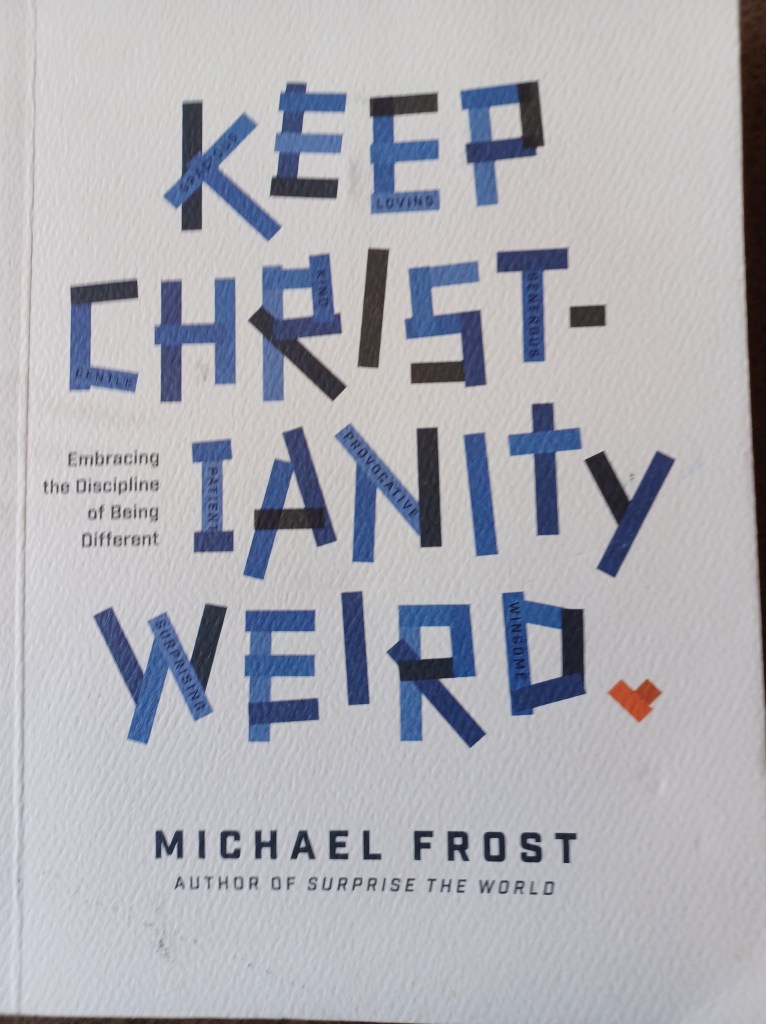
KEEP CHRISTIANITY WEIRD – by Michael Frost

Frost is encouraging the church to return to its counter-cultural beginnings. Instead of trying to blend in under the guise of being relevant, he encourages believers to be different. This is not about being strange to be noticed, but to do things differently than people expect. This is about actually caring for the needy, and being okay with doing things that the average person thinks is strange, if it means being more like Jesus. Frost writes, “Just as business and education is fostering greater creativity and innovation, the church is in a phase of rewarding compliance and conservatism and suppressing eccentricity.” (p. 16) We need to reward creativity, not “toeing the line”. We need out of the box thinkers and leaders.

Frost wants believers to come back to being different in a way that points people to Jesus and a proper understanding of God. “In a world of Moralistic Therapeutic Deism, keeping Christianity weird involves recovering our strange belief in a scary God who can’t ever be fully known, who doesn’t need us, whose face we can’t look upon, and whose name we can’t utter.” (p. 158)

This is a great book for anyone who wants their mediocre Christianity challenged!

Pursuing Excellence: Plan Your Year

Pursuing excellence involves a number of different aspects. One of those is to plan ahead. The difference between mediocrity and excellence may come down to how well you plan.

Planning ahead gives you time to work on your project or event. When you start planning earlier, you have more time to think it through, prepare and determine the best way to complete the project. Giving yourself this extra time to think about your project means that you have longer to think about it and come up with ideas than if you are scrambling to get everything together last minute.

Pastors and church leadership teams, plan your upcoming year. While many people plan their years from January to December (I tend to plan my personal goals to begin in January), when it comes to working with churches, I suggest thinking of the year as starting in September and finishing in August. This is because church activities usually follow the school year, starting and ending about the same time the local schools do. In order to be ready for September, I suggest you actually do your planning in May.

Benefits of Planning Ahead

Planning ahead helps you improve whatever you are planning, because the earlier attention to the project results in more time given to consider it. This extra time can be used in numerous ways:

  1. You can gather the best team.
  2. You can train and equip your volunteers ahead of time.
  3. You can let life enhance your creativity – your reading and TV watching and living of life will give you ideas you did not have when you first began planning.
  4. You can find great ideas, not just good ones. Instead of settling for the first idea your team comes up with, consider how to improve on that idea. Your programs will go from good to great because of the time to percolate in the minds of the creative teams.
  5. You can build better resources and materials required for the project.
  6. You can spend more time in prayer, asking God to guide every aspect of your planning as well as the final implementation.

Plan Your Year – Start with the Big Events

Begin planning for your main programs of the year. Work with program leaders to determine the start and end times for their programs. If your programs start in September, leaders should be determined by the end of May, so they can start planning their programs and find their volunteers from June through August.

Are there a few big events or weekends your church celebrates? This could be a church camp or a family weekend, as well as Easter, Christmas, and a Fall Kickoff. Set the dates and work on developing themes. Decide who should lead each event and who should be on each team. Make sure that everyone involved knows the pertinent information, such as dates and themes, as early as possible. Plan when to do baptism and membership classes, as well as when to have the baptism and when to receive new members. Plan when and what you will do for evangelism and outreach activities throughout the year.

Once the basics of the big events are planned, start filling in the other Sundays and other activities. Pastors can work on sermon plans for the year ahead. (I’ll share more about how I plan my preaching year next week). Knowing in advance what you will focus on, give additional time to improve the sermons with good illustrations and pertinent information. By creating a year-long plan in advance, you not only give yourself more time for sermon preparation, but you also provide your worship and service planning teams that same additional time to create the best services they can.

The themes for each Sunday will come from the pastor after he plans out his sermons for the year. With a plan for both large events and sermon themes, add other activities to your plan. For example, identify when you should hold leadership meetings or training and discipleship events throughout the year.

After your yearly calendar has been filled, build in further detailed planning every quarter or so. Planning ahead involves a few stages: 1) Planning the year, 2) Planning 3-4 months ahead, and 3) Planning the week ahead. For example, begin developing detailed plans for Christmas by the end of September. Plan for Easter in January. Plan for September program starts in May.

As you plan ahead, the goal is not just to put on a great event or program, but that whatever we plan in the church will transform lives and bring us closer to Jesus. Pursuing excellence is not about performing flawlessly, but doing our best to help everyone involved become more like Jesus.

Have fun in you planning, pray for God to guide every aspect, and then rejoice as you see people impacted by God through events and activities you planned.

Keep looking up,

Andy Wiebe

Book Reviews: Andy’s 2022 Reading Experience

I will be sharing a brief review of every book I read this year. Hope you enjoy and hope it encourages you to keep reading.


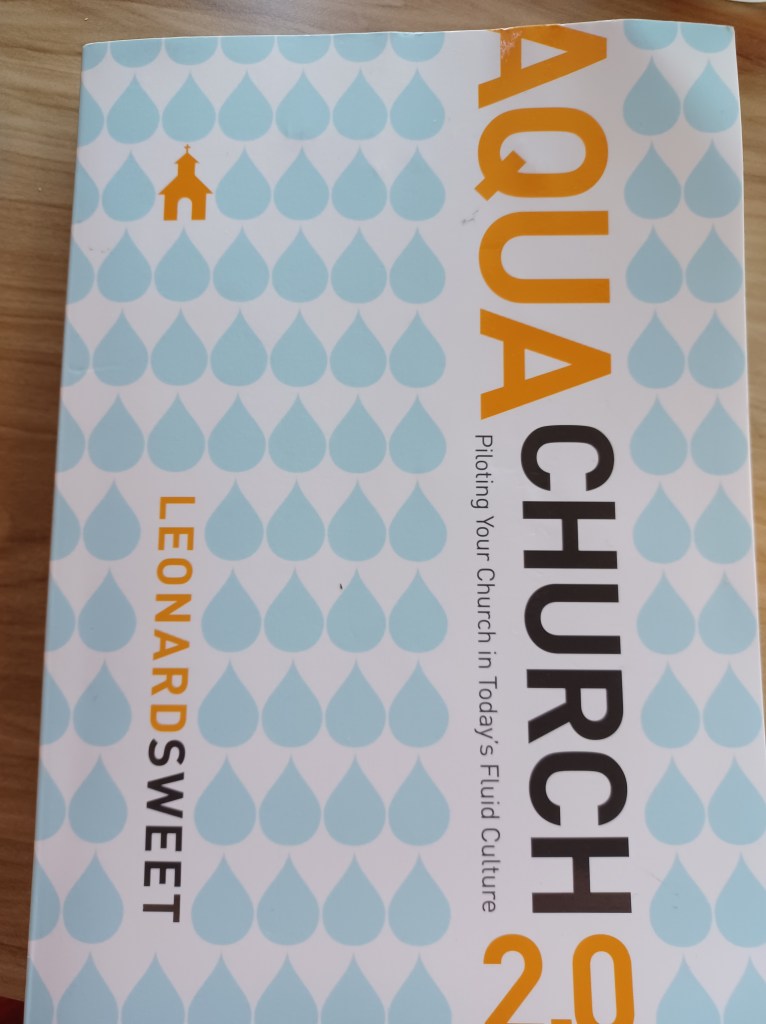
AQUACHURCH 2.0by Leonard Sweet

AQUACHURCH 2.0: Piloting Your Church in Today’s Fluid Culture uses the metaphor of water to teach on the church and it’s role in today’s culture. He addresses many aspects of church ministry, even chapters on “Risk Taking” and “Intuition” which most other church leadership books do not include. He is encouraging churches to be more aware of the culture we live in and minister in so we can understand how best to differentiate between places we join in and times we act counter-culturally. He makes a point of saying, “For leaders, not having a Web ministry is more than being without a calling card, not using a Web site as a communications and community-building tool is to have fumbled the future.” That is an appropriate message to the many churches who went to online service through Covid but have not chosen to have a meaningful online presence going forward. This book is a great resource for any church leader.

Book Reviews: Andy’s 2022 Reading Experience

I will be sharing a brief review of every book I read this year. Hope you enjoy and hope it encourages you to keep reading.


DEFINED: Who God Says You Are – by Stephen Kendrick & Alex Kendrick

Many in our culture are struggling with their identity. They are confused about who they really are. The Kendrick brothers present a great answer by walking through “who God says you are.” They draw on the book of Ephesians as they say “His Word teaches that you can discover, believe, and set your heart on your true identity – your identity in heaven.” The book is laid out in a daily reading style with extra scriptures and a prayer at the end of each day’s reading. Want to know who God says you are? Then this book is for you.

Pursue Excellence with Constant Evaluation

“CANEI is an acronym that stands for constant and never ending improvement. If you really want your services to soar, you have to commit to CANEI. You can never be satisfied with what you did last week, even if it was a great week. Always keep moving forward; always be working to reveal God’s excellence in a new, more powerful way.” 

– Nelson Searcy and Jason Hatley, Engage: A Guide to Creating Life-Transforming Worship Services.

To become better we need to evaluate. Everything we do can be improved through taking the time to reflect and evaluate when completed. An effective way to guide post-event evaluation it to use established systems and processes, whether these are adapted from other leaders or organizations, or created internally.

Recently I was reading Leading in a Culture of Change. Michael Fullan, in talking about evaluation, refers to Army After Action Reviews. These AARs have three key questions: What was supposed to happen? What happened? And what accounts for the difference?

I like that. While many evaluation systems include many questions about every aspect of the event, they really all come back to these three questions. All the questions on a long evaluation form probably come down to these three questions.

What was supposed to happen?

This question is effective because it assumes there was a clear plan from the beginning. Every person involved in making it happen knew what was expected. They likely talked through each aspect ahead of time, and maybe even rehearsed parts of it. Your evaluation needs to begin with a reminder of what you hoped to accomplish. In this way, everyone is reminded of what their goals were.

What happened?

This is where you work through the event in hindsight and remind yourself  what actually happened. Did those leading know what they were doing? Did the people involved enjoy the experience? Did it end up being close to the original goal and plan? Were you able to work the vision well, meaning did your effort move everyone toward the envisioned goal? This is the opportunity to consider each aspect and identify what went well and what did not.

What accounts for the difference?

Once you’ve identified the expectations and actual outcomes, it is time to look at how closely your event matched what you had dreamed and planned for. Focus in on what happened differently than expected. Point out any surprises or missteps, and then try to figure out why things did not go as planned. What are some reasons for what went wrong? And just as important: what are some reasons for what went right or better than you had planned?

With this in mind, brainstorm what needs to change to be better next time. There might be all kinds of actions to take to improve:

  • Better training
  • Clearer directions
  • More rehearsing
  • Better equipment
  • And on and on

An After Action Review (AAR) may take a few minutes or may last an hour. It depends on how complicated the event was or how many items were identified when answering the third question. I like these three questions because they really focus in on CANEI. You can zero in on what needs to improve for next time.

Evaluation always needs to lead to action. Everything that needs improvement must be worked on until a satisfactory change has been defined and developed.

Incorporate regular evaluation into your routines. Ask God to help you see where you may have fallen short of His hopes for the event, and the Holy Spirit to make it clear on how to continue to improve. As a follower of Jesus Christ, do your best for the Kingdom of God, no matter what you are doing.

Keep looking up,

Andy Wiebe
Book Reviews: Andy’s 2022 Reading Experience

I will be sharing a brief review of every book I read this year. Hope you enjoy and hope it encourages you to keep reading.


OUTSTANDING LEADERSHIP – by Stan Toler

There are many books on leadership, and this little book is among the best. Every short chapter is chockfull of ideas and definitions and quotes and generally good leadership advice. Stan Toler shares great advice drawing on many other good leaders. In Part 1: Leadership that Motivates, he shares how to develop and share a good vision. Part 2: Leadership that Relates lays out the value of communication and how to best communicate so that you can transform individuals and organizations. A great little book.

Do You Really See Your Team?

We are quick to make judgements about people. Our first impressions can be completely wrong but we hold onto them anyway. Other times, the we may have known someone for a long time but do not realize they are not the same person they were years ago. For someone in a leadership role, there is a particular danger of viewing people one way and not realizing who they truly are and how they can be of help in our organization.

King Solomon, in Ecclesiastes, describes some of the unfortunate ways that people see others.

13 Here is another bit of wisdom that has impressed me as I have watched the way our world works. 14 There was a small town with only a few people, and a great king came with his army and besieged it. 15 A poor, wise man knew how to save the town, and so it was rescued. But afterward no one thought to thank him. 16 So even though wisdom is better than strength, those who are wise will be despised if they are poor. What they say will not be appreciated for long. (Ecclesiastes 9: 13-16, NLT)

These people greatly benefited from the wisdom of a poor person. They appreciated the rescue but did not appreciate the person. We are like these townspeople: quick to write people off, even if they have valuable gifts and insights. We see them a certain way and do not allow that to change as we begin to get to know them and what they offer.

Because of this oversight, we – and by extension our teams and organizations – may lose out on valuable skills and insight just because we have identified a person in one way so we do not think they have anything to add.

King Solomon continues:

There is another evil I have seen under the sun. Kings and rulers make a grave mistake when they give great authority to foolish people and low positions to people of proven worth. I have even seen servants riding horseback like princes—and princes walking like servants! (Ecclesiastes 10: 5-7, NLT)

Our quick judgements can create further damage when we choose to promote or demote the wrong people. This can be due to existing relationships or the desire to honour certain people. The unfortunate result is that we listen to the advice of the wrong person when there is someone much wiser nearby.

Most of us work with teams and volunteers in some way at some point in our life. This is especially true in ministry, when programs and services rely on staff and volunteers.

Get to know these staff and volunteers. This could be through personality tests, or at a minimum, putting in the effort to get to know each person well enough to see how they can contribute best. Intentionally take time with this in order to avoid making quick assumptions or writing someone off because of one or two missteps. Often the best outcome happens when people are in roles that suit them best, and it often takes time to identify these roles and responsibilities.

As you work with your teams and notice people are in the wrong roles, be brave enough to reorganize and reassign individuals to roles where they will excel and your team will be better in the long run.

I love to get things done, but I have realized that there are times where I am better off taking time to get to know people first. As we get to know each other, I will learn where someone can serve and give their best, and we will be able to communicate better because I know them and they know me.

Good organizations will have a regular system of evaluating people. The leader does a formal review every six months or a year to continue to help the person get better. In the evaluation, the leader can also discern if this person is still a fit here or would fit better in a different role. A system of regular evaluation is good, but the personal relationships are even better. As you develop good relationships with your key people, they will be brave enough to approach you when they want to learn or grow in a certain area or if they would like to try a different role. If open communication is valued and practiced, you will be more likely to continually give the right responsibilities to the right people.

So much of what we do in life involves working with people. Let’s figure out how to help our teams be the best by putting the right people in the right seats where everyone can contribute their best.

Get to know your people first, then get the work done.

Keep looking up,

Andy Wiebe