I will be sharing a brief review of every book I read this year. Hope you enjoy and hope it encourages you to keep reading.
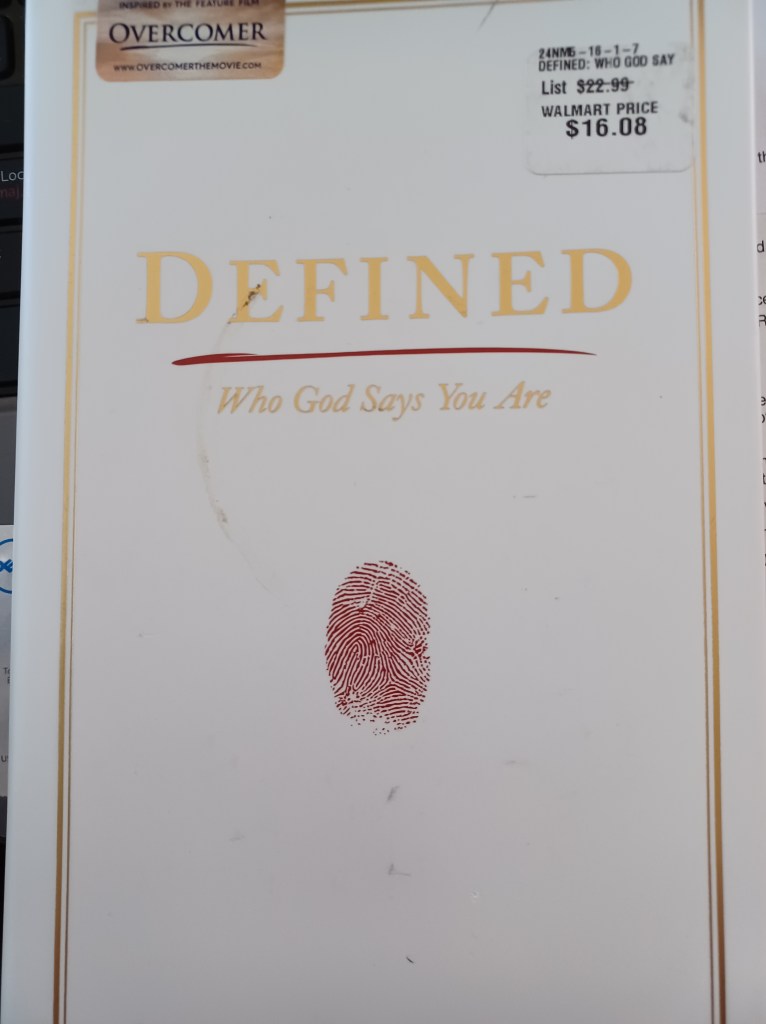
DEFINED: Who God Says You Are – by Stephen Kendrick & Alex Kendrick
Many in our culture are struggling with their identity. They are confused about who they really are. The Kendrick brothers present a great answer by walking through “who God says you are.” They draw on the book of Ephesians as they say “His Word teaches that you can discover, believe, and set your heart on your true identity – your identity in heaven.” The book is laid out in a daily reading style with extra scriptures and a prayer at the end of each day’s reading. Want to know who God says you are? Then this book is for you.
“CANEI is an acronym that stands for constant and never ending improvement. If you really want your services to soar, you have to commit to CANEI. You can never be satisfied with what you did last week, even if it was a great week. Always keep moving forward; always be working to reveal God’s excellence in a new, more powerful way.”
– Nelson Searcy and Jason Hatley, Engage: A Guide to Creating Life-Transforming Worship Services.
To become better we need to evaluate. Everything we do can be improved through taking the time to reflect and evaluate when completed. An effective way to guide post-event evaluation it to use established systems and processes, whether these are adapted from other leaders or organizations, or created internally.
Recently I was reading Leading in a Culture of Change. Michael Fullan, in talking about evaluation, refers to Army After Action Reviews. These AARs have three key questions: What was supposed to happen? What happened? And what accounts for the difference?
I like that. While many evaluation systems include many questions about every aspect of the event, they really all come back to these three questions. All the questions on a long evaluation form probably come down to these three questions.
What was supposed to happen?
This question is effective because it assumes there was a clear plan from the beginning. Every person involved in making it happen knew what was expected. They likely talked through each aspect ahead of time, and maybe even rehearsed parts of it. Your evaluation needs to begin with a reminder of what you hoped to accomplish. In this way, everyone is reminded of what their goals were.
What happened?
This is where you work through the event in hindsight and remind yourself what actually happened. Did those leading know what they were doing? Did the people involved enjoy the experience? Did it end up being close to the original goal and plan? Were you able to work the vision well, meaning did your effort move everyone toward the envisioned goal? This is the opportunity to consider each aspect and identify what went well and what did not.
What accounts for the difference?
Once you’ve identified the expectations and actual outcomes, it is time to look at how closely your event matched what you had dreamed and planned for. Focus in on what happened differently than expected. Point out any surprises or missteps, and then try to figure out why things did not go as planned. What are some reasons for what went wrong? And just as important: what are some reasons for what went right or better than you had planned?
With this in mind, brainstorm what needs to change to be better next time. There might be all kinds of actions to take to improve:
Better training
Clearer directions
More rehearsing
Better equipment
And on and on
An After Action Review (AAR) may take a few minutes or may last an hour. It depends on how complicated the event was or how many items were identified when answering the third question. I like these three questions because they really focus in on CANEI. You can zero in on what needs to improve for next time.
Evaluation always needs to lead to action. Everything that needs improvement must be worked on until a satisfactory change has been defined and developed.
Incorporate regular evaluation into your routines. Ask God to help you see where you may have fallen short of His hopes for the event, and the Holy Spirit to make it clear on how to continue to improve. As a follower of Jesus Christ, do your best for the Kingdom of God, no matter what you are doing.
I will be sharing a brief review of every book I read this year. Hope you enjoy and hope it encourages you to keep reading.
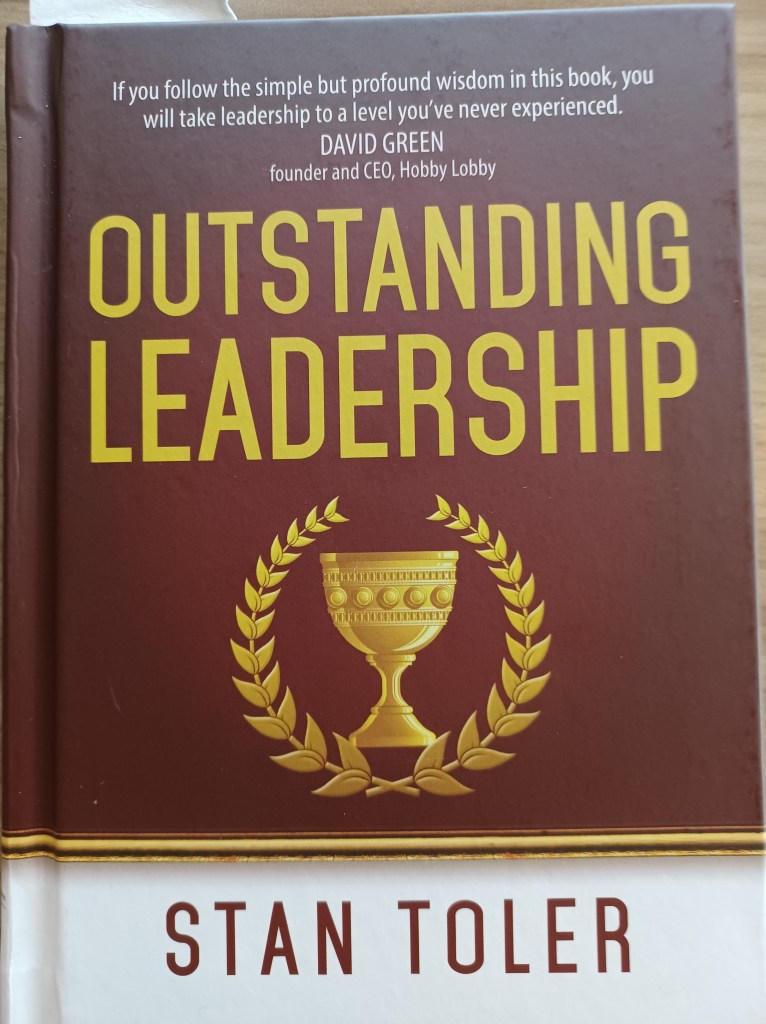
OUTSTANDING LEADERSHIP – by Stan Toler
There are many books on leadership, and this little book is among the best. Every short chapter is chockfull of ideas and definitions and quotes and generally good leadership advice. Stan Toler shares great advice drawing on many other good leaders. In Part 1: Leadership that Motivates, he shares how to develop and share a good vision. Part 2: Leadership that Relates lays out the value of communication and how to best communicate so that you can transform individuals and organizations. A great little book.
We are quick to make judgements about people. Our first impressions can be completely wrong but we hold onto them anyway. Other times, the we may have known someone for a long time but do not realize they are not the same person they were years ago. For someone in a leadership role, there is a particular danger of viewing people one way and not realizing who they truly are and how they can be of help in our organization.
King Solomon, in Ecclesiastes, describes some of the unfortunate ways that people see others.
13 Here is another bit of wisdom that has impressed me as I have watched the way our world works. 14 There was a small town with only a few people, and a great king came with his army and besieged it. 15 A poor, wise man knew how to save the town, and so it was rescued. But afterward no one thought to thank him. 16 So even though wisdom is better than strength, those who are wise will be despised if they are poor. What they say will not be appreciated for long. (Ecclesiastes 9: 13-16, NLT)
These people greatly benefited from the wisdom of a poor person. They appreciated the rescue but did not appreciate the person. We are like these townspeople: quick to write people off, even if they have valuable gifts and insights. We see them a certain way and do not allow that to change as we begin to get to know them and what they offer.
Because of this oversight, we – and by extension our teams and organizations – may lose out on valuable skills and insight just because we have identified a person in one way so we do not think they have anything to add.
King Solomon continues:
5 There is another evil I have seen under the sun. Kings and rulers make a grave mistake 6 when they give great authority to foolish people and low positions to people of proven worth. 7 I have even seen servants riding horseback like princes—and princes walking like servants! (Ecclesiastes 10: 5-7, NLT)
Our quick judgements can create further damage when we choose to promote or demote the wrong people. This can be due to existing relationships or the desire to honour certain people. The unfortunate result is that we listen to the advice of the wrong person when there is someone much wiser nearby.
Most of us work with teams and volunteers in some way at some point in our life. This is especially true in ministry, when programs and services rely on staff and volunteers.
Get to know these staff and volunteers. This could be through personality tests, or at a minimum, putting in the effort to get to know each person well enough to see how they can contribute best. Intentionally take time with this in order to avoid making quick assumptions or writing someone off because of one or two missteps. Often the best outcome happens when people are in roles that suit them best, and it often takes time to identify these roles and responsibilities.
As you work with your teams and notice people are in the wrong roles, be brave enough to reorganize and reassign individuals to roles where they will excel and your team will be better in the long run.
I love to get things done, but I have realized that there are times where I am better off taking time to get to know people first. As we get to know each other, I will learn where someone can serve and give their best, and we will be able to communicate better because I know them and they know me.
Good organizations will have a regular system of evaluating people. The leader does a formal review every six months or a year to continue to help the person get better. In the evaluation, the leader can also discern if this person is still a fit here or would fit better in a different role. A system of regular evaluation is good, but the personal relationships are even better. As you develop good relationships with your key people, they will be brave enough to approach you when they want to learn or grow in a certain area or if they would like to try a different role. If open communication is valued and practiced, you will be more likely to continually give the right responsibilities to the right people.
So much of what we do in life involves working with people. Let’s figure out how to help our teams be the best by putting the right people in the right seats where everyone can contribute their best.
Get to know your people first, then get the work done.
I will be sharing a brief review of every book I read this year. Hope you enjoy and hope it encourages you to keep reading.
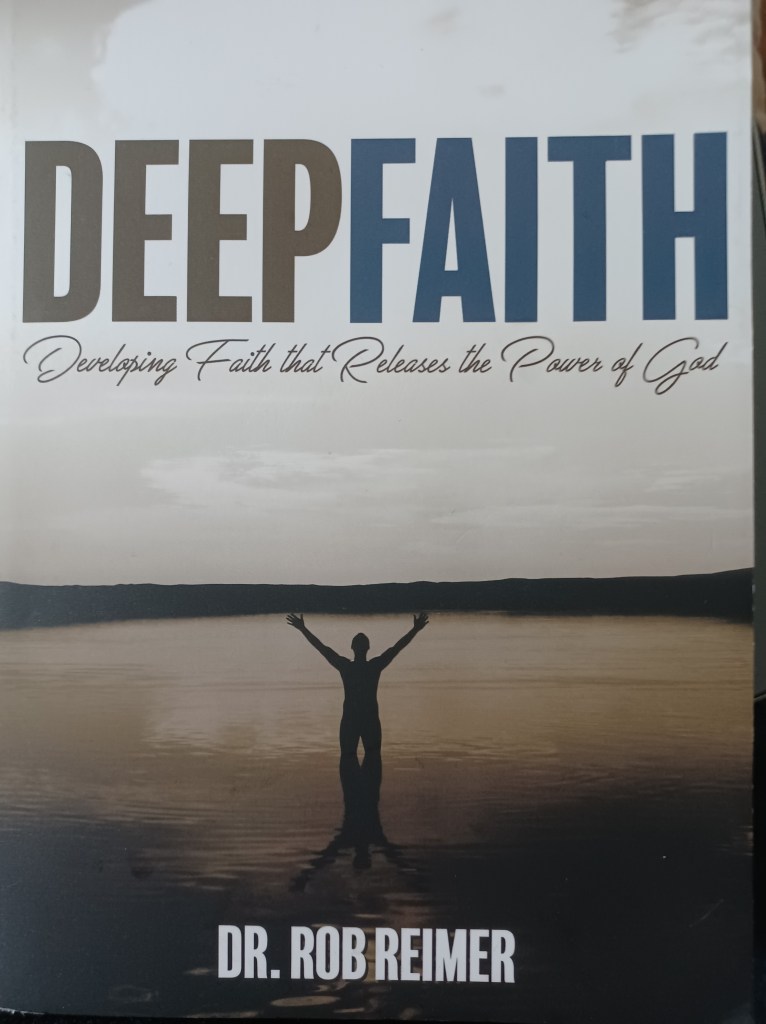
DEEP FAITH – by Dr. Rob Reimer
Rob Reimer has written another great book regarding personal renewal and spiritual growth. In Deep Faith, he helps the reader see how they may deepen or grow their faith. Reimer does a good job of showing how this has worked in his own life and his experience with others. He says on page, “Faith is not static; it is dynamic. We can and must take an intentional path toward growing and developing our faith if we want to see the works of the Kingdom in greater measure, for the glory of the King, and for the sake of his mission to the world.” He wants to help people grow in their faith for the glory of God and for the continuing growth of the kingdom. A great read if you want to deepen your faith.
I love to read. You are probably well aware of that as you see me regularly posting reviews on books I have read. I read all kinds of books. I love learning new things and being challenged to think about how I am living my life. I also love to read for entertainment and to relax.
I often go through times where I am focused on a certain topic. Recently, I have been reading on the issue of the Holy Spirit and spiritual renewal personally and for the local church. As you will see from my reviews when I find an author that writes about this, I like to read all he has written.
Over the years I have attended many seminars and pursued life-long learning. I took my first course towards my Masters of Arts in Leadership and Ministry in 1992. My last course was completed in 2018. It took me 26 years to graduate. This was due to a few reasons. I was not always able to afford the cost or time to take another course. But I also preferred learning a little at a time rather than sitting in class for 2-3 years and getting one big dump of knowledge. I love to learn.
Recently, God chastised me regarding my learning focus. I was praying and journaling when God gave me a picture. I was running a race.
There were a number of runners just in front of me but for some reason I wanted to see who it was in front of them, but I just couldn’t see past them. I asked God what this was all about. It seemed unfocused, unclear.
And then it was as if God said, “Learn from me. Don’t just learn from others on the journey, even if they are ahead of you. Learn from me.” It was a good reminder that my focus should be on Jesus, and listening to and learning from the Holy Spirit. Not just from other people.
Matthew 11: 29 says, “Learn from me, for I am gentle and lowly in heart, and you will find rest for your souls.” (ESV)
I read my Bible just about every morning, but I have made a commitment to read more of the Bible more often. I want to learn from the Master, not just from others who have learned from the Master.
We fall into this trap quite easily. As believers, we need to regularly read the Bible and hear from God. Too many Christians are content to listen to their pastor and other preachers online or on television while not reading for themselves. Too many people of faith treat hearing from God like a mama bird feeding it’s young, eating only what has been regurgitated for them. God doesn’t want us to be satisfied with others feeding us. He wants us to chew our own food, to read the Bible ourselves and to ruminate over it. We need to personally hear God speak to us and rather than only hear the stories of others who have heard from God.
“Learn from me, for I am gentle and lowly in heart, and you will find rest for your souls.”
– Jesus
I love that you are reading this blog. Thank you! But I hope you are going to the Master and learning directly from him too. I’m glad that people show up in church to hear the sermon I prepared and preach. But I hope you are taking the time to learn from the Holy Spirit. After all, that is the job of the Holy Spirit. Jesus said, “The Spirit will tell you whatever he receives from me.” (John 16: 15, NLT)
I will be sharing a brief review of every book I read this year. Hope you enjoy and hope it encourages you to keep reading.
PATHWAYS TO THE KING – by Dr. Rob Reimer
Pathways to the King: Living a Life of Spiritual Renewal and Power, is another on the Spiritual life by Dr. Rob Reimer. If you want to live a live of Spiritual Renewal and Power, then this book will help you as you move toward that. He uses a number of personal examples to show that it has been quite a journey for him. You will be able to identify with him, no matter where you are at in the journey right now. He helps the reader to get a better understanding of who we are in light of our relationship with God and his Spirit at work within us. Each chapter walks through a way to open ourselves up more to the filling and empowering of the Holy Spirit for personal growth and kingdom effectiveness. Learn to live with a fresh and deepening relationship with the Spirit.
I remember watching two preschoolers, a brother and sister, playing next to me as I was watching a floor hockey game in college. I was fascinated at their imagination. They had no toys, no digital devices, just the bleachers and their imagination. They played for a long time, together imagining all that was happening around them.
Too many of us have lost our ability to imagine. We are so caught up in the moment and in what is right in front of us that we no longer know how to use our imagination. There could be a number of reasons for that. Maybe our imagination was stifled as a child when a parent or teacher told us to quit daydreaming. Daydreaming is the fertile ground imagination grows in! Some of us had an active imagination until someone made fun of our ideas. For whatever reason, we have stopped imagining.
Have you ever wondered why some people are so good at coming up with ideas? It’s because they have an active imagination. They are not afraid to dream up something new. And they are not afraid to try out their ideas. We don’t know how many ideas these people imagined that went nowhere, before they found the ones that were great.
We can develop an active imagination. For instance, give yourself freedom to daydream. Find some time when you have no other distractions and no requirements of yourself and just imagine things. Find your time you can claim as your own. Dream. Make up a story in your mind. It could be that you have a problem at work. Whatever your work is, whether dealing with people or machines, if there is a problem, your imagination can help you solve it. So start imagining all kinds of possibilities.
In your daydreaming, don’t put up fences. Don’t start evaluating and discarding an idea too quickly. Sometimes good ideas need time to work their way to a solution. Some of us are quick to say: “That won’t work.” We even think that way in our daydreaming and discard ideas before they are fully developed. Remove that fence. Remove any fence that puts limitations on your imagining. Don’t discard an idea too soon because it takes more money than you have, or more volunteers than your organization has, or whatever it is that tempts you to short-circuit your dreaming.
Imagination is enhanced by other ideas. Sometimes as you read and watch and listen, ideas come to you through other people or situations around you. A while back my one of my daughters gave me a book on trees. I would not have chosen to read a book like that, but it was amazing to read the insights of someone who had spent years working with trees and understanding them. There were points in the book that got me thinking about how to work with small groups and how people interact.
Another book I recently read outside of my normal reading selections was Atomic Habits, by James Clear. While the book was about habits, it sparked all kinds of ideas that made me want to apply the teaching to the process of discipleship. As we read and learn from others, we add fertilizer to the fertile ground of our imagination.
Someone once said that we should “beg, borrow, and steal” as we look for good ideas. There have been many times that my good ideas came out of ideas that others had worked on. I was able to build on and adapt those ideas to programs I was working on or ministries I was running.
I have been part of churches that planned wonderful Easter Celebrations complete with a breakfast, fun and games, a worship service, and an Easter Egg hunt. One of the aspects of the morning that went over really well was to bring in a professional photographer to take family photos. Many people dress up for Easter so it was a great time to offer people a free family photo. I don’t know where I got the idea, but I know it came from someone else’s ideas and I was able to adapt it to my setting.
One author who wrote about planning creative worship services suggested always having some children’s toys at hand. The idea was, if you have fun thing near you, in your environment and in your hand, your creativity will be enhanced. So, surround yourself with weird and wonderful objects, collect fun sayings and give yourself an environment that will be conducive to good imagining.
I don’t know if you have found this to be true, but some people think they imagine and think creatively better by being in a certain place, or a certain chair, or taking time to daydream at a certain time of day. If you want to be intentional about improving your creativity and your imagination, this might be an idea to try. Find a comfortable spot and see if the creativity ideas start flowing. It may take a bit of trial and error to find the right spot, but sometimes the habit of that certain spot or certain time can help unlock creative ideas.
Then, at a certain point, you have to look to putting your ideas into action. When you have ideas, start writing them down. Writing down ideas requires you to express the idea in a concrete way. The imagination has to become reality at some point. Writing it down helps you put that idea together.
If the written idea still seems like a good one, try it out. Share it with someone. You might want to make sure you share it with someone you trust, or someone who won’t shut you down too quickly. If you can verbalize it in a way that makes sense to the person listening, you are heading in the direction of your ideas becoming reality.
When you think you are ready, try out your idea. See if it solves the problem you were working on. If it does, great! Your imagination helped you. If it does not work, then keep looking for another idea.
Continue to cultivate an active imagination. Just think of how many good ideas you will have if you allow yourself to stop and daydream!
I will be sharing a brief review of every book I read this year. Hope you enjoy and hope it encourages you to keep reading.
AN HOUR ON SUNDAY – By Nancy Beach
In An Hour On Sunday: Creating Moments of Transformation and Wonder, Nancy Beach draws on her years of experience creating great worship services. She covers many aspects of how to create meaningful experiences for church congregations, focusing on the arts and artists involved in making these experiences moments of “transcendence”. She writes, “Our aim should be to create services so compelling, so meaningful, and so unexpected, that the time sails by and attenders leave with an enthusiastic desire to talk about their experience as well as the content of the service.” Her chapter on creativity is one of the best. This book is a great encouragement to do our best to create services that impact people in meaningful ways.
Our education system helps us to figure out if we are continuing to learn and develop. If you are faithfully doing your homework and finishing your assignments, you should be learning what the curriculum has laid out for you in each grade in school, or each year of college or university. Every year you should ideally pass a level and move up to the next grade. When you enter college, there are a number of classes you must take as prerequisites to classes offered in the next year or two. You can track how well you are doing by what grade you are in, or what courses you have completed toward the degree you are pursuing. When we leave school, it is not as easy to see if we are still learning.
When you complete your degree, you hope to step into a career that uses your training. As you begin at a new place of employment, you are taught what is expected of you at that job. Sometimes there are opportunities to advance in your career so you feel like you are continuing to grow and develop.
Eventually even in your job, there are not more steps to advance to. You may not even be expected to do any further learning. You know what the job is, and have proven you are capable of doing it. You do not need to keep learning.
This is where some people become stagnant. They have reached a certain level in their job or their career and they are content. The problem is, no one plateaus in their life for long. Either you keep learning and growing and making yourself better in some way, or you start to fall off, and fall behind as the world keeps on changing and developing.
I have been a pastor most of my life. While I have done a few other things for an income, this has been what I have given my life to. And I have chosen to keep on growing. I love to read. If you have noticed my book reviews on this blog you will know that is true. I like to read a variety of things. Sometimes I focus on a certain subject for a while, but I love to learn and to grow and develop. As a pastor, I need to learn how to use technology. I started out by writing my sermons by hand, no I always use my computer. Along the way I learned how to use PowerPoint to add slides to my sermons. I spent a number of years pursuing a Masters (It took a period of over 20 years from the first course I took towards my Masters degree until I completed the last one and graduated!) I was not as concerned about accomplishing the degree as I was about continuing to regularly keep on learning. I enjoyed taking time to implement what I was learning.
We should want to always become better. Whatever skill or ability or gift you may have, keep learning how to develop it further. If you are a good preacher, continue to learn from others who are better, or who may do it slightly differently. If you are good at leading meetings, keep reading new books or go to seminars on how to lead them even better. If you are a good counselor, continue to learn and find new techniques to try out.
It may be that you realize you are about average in a number of areas in what you are skilled at. You might want to choose one or two to become good at, or even one area where you excel.
I have found one of the ways of continuing to get better is to teach others. If you think you are pretty good at something, then see if there are opportunities for you to teach others. When you teach, you have to figure out what you actually do, how you do it, and why what you do or the way you do it is the best way. This forces you to not just do something you are naturally good at, but evaluate it and figure out what valuable lessons you can pass on to others.
David Sanders, a cellist in the Chicago Symphony was describing how many hours of practice it takes to get to and maintain such a high level of competency. “You cannot rest on your laurels in the Chicago Symphony, or in any world-class orchestra. You never want to let your colleagues down, yourself down, or, maybe more importantly, the music down. Now in my 42nd year, I still don’t want to let my colleagues, myself or the music down. It is a never-ending struggle to continually try to master a musical instrument, to keep improving, be it string, wind, brass, or percussion.” (A CHICAGO CELLIST EXPLAINS: WHY WE WORK ONLY 20 HOURS A WEEK)
If you want to be your best, you need to continue to work at your craft. You have to continue to learn and practice and develop. The person who is continuing to develop and grow will be sought after in their field of expertise. And I would venture to say, will be much more interesting than the person who has not learned anything new for the last couple of years. This is not necessarily about “moving up the ladder”, but about being the best you can be where you are at.
Always become better at what you are good at and what you are equipped to do. You will enjoy life more than those who have become stagnant. You won’t be left behind as those younger and more skilled start to catch up to you.
As a pastor, if you keep on learning and growing and developing, you will be more attractive to churches looking for someone relevant to the world around them who also comes with years of experience. Continue to become better, for yourself, and for long-term ongoing employment.








 Elevate with Andy