A Few Cautions Against Spiritually Keeping Up with the Joneses

A natural part of being human is to compare ourselves to others around us. Sometimes we pick out a bad part of their character or how they live and then make ourselves feel better because we are better in that area. Often it is the other way around. We look at others, and feel bad that we can’t attain that level. This could be how much money we have, toys, or status. It could also be about character.

This attitude creeps into our Christian life as well. We have a tendency to notice people who are really gifted in a certain area and we feel bad that we can’t compete. For me, there has been a tendency to compare myself to other pastors, thinking I don’t lead as well or preach as well or grow a church like they can. Our comparison could be in how God has used someone to heal people, or somehow act with the power of the Spirit in a way that we have not experienced ourselves.

Here are a few cautions of why comparing is not helpful.

1. We don’t know the whole story. 

We have heard enough sad stories of people who had great public ministry only to find out later that their private life was a mess. They were sinners just like us. Sure, they had a large platform and a wide audience, but their personal life or their home life suffered greatly. Some of these were terrible to work for. They were mean and bullied their staff.

We don’t see the things that hold others back from being their best. We focus in on one or two key areas that we can see, and then we assume that their whole life is way better than ours. They may have a better position in a church or organization and we envy that, but we don’t know the struggles and the depression they fight as they work to be their best. We see their great family and don’t know the pain they are dealing with in the privacy of their own home.

2. God has gifted us all differently

John Maxwell writes in “No Limits”, about a man who devoted his life to being the second chair. He had realized early on that he was not a good leader. He was great at being the second in command but needed someone above him to be the leader. We need that kind of personal discernment about what we are capable of, how God has gifted us, and what we have learned through experience.

It is valuable for us to learn who we are, how God has gifted us, and how we can best serve God. There are a number of assessment tools out there that may help, but some of it comes with trial and error. Try something, see if you are good at it, and if not, try something else.

I was never going to be a pastor, but the president of the Bible College I attended encouraged me to do a summer intern position. I remember the specific day I was preaching to the small crowd gathered on that warm summer evening in that stuffy church. I was preaching from Philippians – when I suddenly had this feeling, this thought – I like this. I think I could really enjoy doing this. Sometimes it is as we try new things that we discover where we fit.

3. Compare yourself to yourself.

If you want to see how you are really doing, compare yourself to what you were like last year, or five years ago. Have you grown and developed personally in that time? Are you growing in your relationship with Jesus? Are you living in the fullness of the Spirit living in you? Have you figured out some of what you are good at? And are you working to do that and to continue to improve in how well you do?
4. Compare yourself to Scripture.

There are many places in scripture where we are told how to live. We are told what kind of actions and behaviors glorify God. How are you doing with that? As you read the Bible, and I hope you read it regularly, daily, keep asking yourself how well you are doing in regard to what you are reading. Look at how to improve daily. Look at how to develop habits that help you develop into a person who consistently glorifies God with their life.

5. Ask God what He thinks of you.

I have enjoyed having more conversations with God – not just praying to Him, but also hearing from Him. I believe that you can ask God what He thinks of you and He will tell you. Ask God where there are areas you need to grow in and what you can do to grow. Instead of trying to become like someone you admire, become someone God admires. Become who God wants you to be without worrying about how big your audience or your fame is.

The envy of others will never make you a better you. You need to learn to be the best you that you can be. Don’t compare yourself to others. Everyone has their own path. Maybe God will give you a large public voice, and maybe it will be a quiet encouragement to individuals. Like the story of the talents in the Bible, you are only responsible for what you have been given. God has made you with your unique abilities to be you in your own unique way. Your responsibility is to just be the best that you can be, without comparing to others. And then serve Him well.

Keep looking up,

Andy Wiebe

Don’t Let Satan Give You a Time-Out!

Many children are familiar with a “time out” This is used as a punishment to remove the person from something they would like to do and, help them see the behavior results in negative consequences such as missing out.

As a follower of Jesus, I want to do what is right and good. I read the Bible and talk with God. I make decisions to do right and work at being self-disciplined. I work at training myself to be whom God wants me to be. But like you, and everyone else around us, I sin. There are times when I allow the sinful nature in me to take over, where I do something that is clearly against God’s best for us.

Spring brings us to the holiday of Easter. This is much more than bunnies and eggs. This is the annual celebration of Jesus’ death and resurrection for all people. Because of our sin, we deserved to die. That was how God created things. And then He arranged for a way out. God sent His own son to die in our place – to take our penalty for us. Good Friday is the reminder that Jesus, the only perfect human, died in our place. Easter is the celebration that when His friends went to the tomb, Jesus wasn’t there. He was alive! This resurrection gave Him the right to offer forgiveness and new life to all who believe in Him.

When we put our faith in Jesus, when we acknowledge our sin and repent of it, confessing it to God, Jesus forgives us. And we enter into a relationship with God! God now sees Jesus’ righteousness in us!

So, yes, we sin from time to time. Now what?

Often, we have this feeling that we need to put ourselves in a time-out. We feel need to wallow in our guilt for awhile before we can be in right relationship with God again. I don’t think I’m the only one who has felt this way. We think that to be sorry for our sin means we have to show it by spending time in our sorrowful guilt-ridden state.

But that is straight from the devil!

God does not want us to live in a state of guilt. Jesus has paid for our sin. God arranged this plan because He did not want us to live in guilt but to live in the joy of freedom. If Jesus already died on the cross, He already paid for that sin. The sin you are wallowing in is already paid for, already forgiven!

When we sin, we can immediately come to Jesus with it. As soon as the Holy Spirit reminds you that what you did was wrong, you can use that conviction to repent. The Holy Spirit is not pointing out your sin in order for you to feel bad, but in order for you to repent. So confess your sin, stop doing it, and get back on your feet.

Some of you might remember that old commercial that had this one iconic line: “Help I’ve fallen and I can’t get up.” Well we may have fallen, but the Holy Spirit is already showing us we can get back up. Jesus is already reaching out a hand to lift us to our feet.

1 John 1: 9 tells us, “But if we confess our sins, he is faithful and just to forgive us our sins an to cleanse us from all wickedness”.

This does not tell us we have to take a time-out. It says, confess and receive forgiveness. Receive the cleansing from Jesus, and get back on your feet. Serve Jesus again!

Yes, we sin, but we can confess and receive forgiveness immediately. We are then cleansed and ready to be of use to God again. This is the only way that I, and any other pastor, can stand up every Sunday and preach a sermon. It is because Jesus forgives all my sin of that week and that morning. He cleanses immediately so I can preach with confidence.

Do not allow Satan to put you in a time-out. Receive Christ Jesus’ cleansing forgiveness and get on your feet immediately, serving God again.

Keep looking up,

Andy Wiebe

Book Reviews: Andy’s 2022 Reading Experience

I will be sharing a brief review of every book I read this year. Hope you enjoy and hope it encourages you to keep reading.


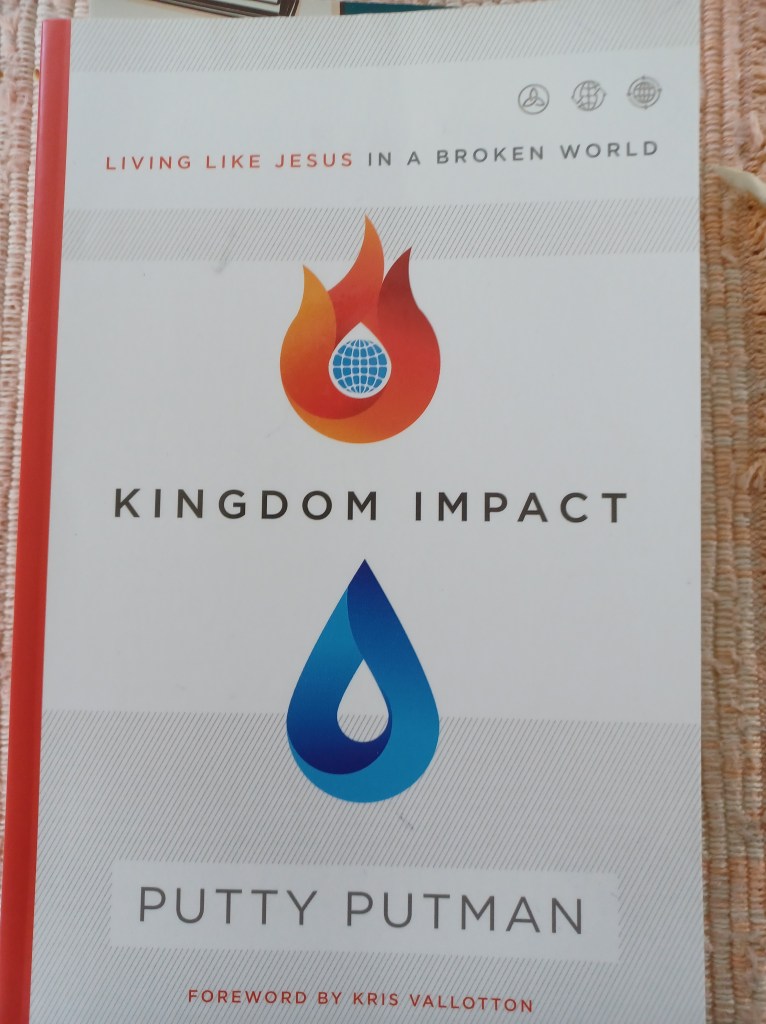
KINGDOM IMPACT: Living Like Jesus in a Broken World – by Putty Putman

Putty Putman has written a challenging book on how to move beyond just impacting individuals for Christ, to impacting larger entities like business and other nations. Chapter 4 “Reclaiming the Planet”, introduces an idea that was new to me, but made me think. He states that all the nations did not just have gods they conjured up in their minds, but that these were truly other gods who were assigned to all the nations. He ties this in to the role we have of reaching all the nations, not just individuals. He challenges us to the task of reclaiming cities and social systems for God. A challenging read!

The Tortoise Change Leader

Many of us know the children’s story “The Tortoise and the Hare.” The two are having a race, and everyone knows the hare will win. After all, a hare is much faster than a turtle. The hare decides to take it easy and even rest for a while, but the tortoise keeps going, slow and steady. Who wins? The tortoise. The point is that sometimes the race goes to the slow and steady one.

If you are called to be a leader of change, you will need to learn the skill of slow and steady change. It is a rare situation in which a change leader can come in and make large scale changes to an organization quickly. Those who do attempt so often get their attempt cut short as they are removed from their leadership role.

Church leaders who attempt change also need to learn this concept of slow and steady change. I have realized my own shortcomings in this in a few situations I have been in. I tend to get impatient and want to change too much at once.

A good change leader understands how to lead slowly and steadily toward a desired goal. Here are ten actions to take to be a tortoise-like Change Leader. They may need to be worked on in a slightly different order than listed, depending on your situation. As you work through these actions, they will help you to feel you have some movement while keeping you to a slow and steady pace.

1. Evaluate Early: When you take on the role of change leader, evaluate early in your role. Evaluate the organization and team you are responsible for. Evaluate how they are doing in accomplishing stated purposes and goals, and whether those are even the appropriate goals and purposes to have. Leaders who wait to evaluate until they have been in the role for a while tend to become blind to things that need to be changed. It is amazing how quickly we get comfortable with how things are and then lose our ability to see critically. You will see things more clearly if you evaluate early, even though the change may be a while in coming.

Ask people to speak into your evaluation. As a pastor, you may want to do a congregational assessment so you can learn what the present reality is. In one church I got into trouble because I assumed too much. I was used to doing things a certain way and didn’t even consider that the church may have done things differently than I was used to. I ended up making more changes early without even knowing it, because of course, I was new to the church and had no idea how they did things in the past. Assessment may help prevent you from attempting to implement unnecessary and potentially harmful changes.

2. Pray First: Pray about the changes you believe need to be made. If you are trying to change things in a church, you want to make sure you are on track with what God has planned and that can only happen if you are listening carefully. Invite your leadership and other prayer warriors to join you in praying for wisdom and clear direction from God.

3. Love Deeply: Make your first priority to love the people experiencing the changes you will implement. Do anything and everything you can to show them you want to get to know them. Show them you want to get to know their history. Ask questions about who they are and what they care about. Celebrate together when things go well.

Loving people deeply can contribute to change being accepted because they have accepted you.  Show them that you want to put them first, but you want the best for them and that is why you are making changes.

4. Share Goals Carefully: Work with the leadership to get a sense of where changes should be made and even some of what the changes would look like. Have a goal in mind but don’t share it with too many people at first. If people hear about all you want to change at the beginning, they may be overwhelmed and not give you opportunity to change anything. This isn’t about deceiving people but about having time to build on small wins before sharing some of the bigger changes to come.

5. Build a Team: Work especially closely with those who want changes and will champion them for you. Help them introduce the changes so they don’t just come from the leader but from a larger team. Make sure you are all on the same page, having worked through the process of evaluating and planning for change together.

6. Begin Small: Start with a few small changes. Ask your team to help you figure out a few small things that could be changed. Invite them into the process of thinking through how that change would look. You might begin some of the changes by suggesting: “Let’s try this for a short period of time.” People are more willing to accept change if they know there is an end to it, or that it is not set in stone.

7. Evaluate Changes Honestly: Once you have changed something, evaluate it honestly. Evaluate how it went and decide if it should stay, and stay as is, or stay with some changes. Don’t assume it went well just because it was your idea. Invite the appropriate people into the evaluation so you can honestly determine if the change is good or not.

8. Communicate Clearly: Be very clear with all those affected. Inform them of what is being changed and why, as well as how the change will help improve things. If it is a change that will be noticed by all those in your organization then invite the whole organization into the evaluation. If it is only a certain department, then invite that department into the process. Once the evaluation process is complete, clearly communicate if it will stay, why, and what adjustments may be made.

9. Build on Wins: After a few smaller wins you will be able to make slightly larger changes. You can slowly build momentum on the changes that go well. If there is a change that is not adapted, don’t see it as a failure but as a means of developing credibility with your team as well as with those hesitant to make changes. If they realize you want the best and are not just forcing changes through, they may be quicker to accept the next “trial change”.

10. Develop Patience and Perseverance: Don’t give up if a few changes are not accepted. Be patient and persevere for the long term. The longer you are part of a church, the more likely you will be able to increase the rate of change. This will be because people get to know you and trust you. It will also be because over time there will be more people who started attending the church after you came, so they chose the church aware of who you are and how you lead and the changes you are making.

It is not easy to be a change leader. You will face opposition. Hopefully, if you move at a slow steady pace, you will face less of it and begin to build on your wins. Hang in there for the long haul. And trust God to give you wisdom and guide you as you look to Him.

Keep looking up,

Andy Wiebe

The Natural Hamartiologist

The hunter reaches back with quiet well-practiced motion to locate an arrow in his quiver. He selects one and brings it forward as his other hand raises his bow. He nocks his arrow on the bow and pulls back the full reach of his arm. His eyes look down the arrow and focus in on the deer in the open field ahead of him. As soon as he feels his aim is true, he pauses his breath, and lets the arrow fly. If the hunter is well practiced, and maybe a bit lucky, the arrow will pierce his prey and provide him with his supper.

There is a word used in the New Testament that describes an arrow missing its mark. The word “hamartano,” is translated as “sin.” So the word for “sin” comes from a word “regularly used in ancient times of an archer missing the target.” (Strong’s Concordance) We all regularly “miss the mark”. We sin. I heard one person recently say, “we regularly hurt the ones we love.” Often we miss the mark with the people we care about the most.

Hamartiology is the study of how we miss the mark. Romans 3:23 says, “all have sinned and fall short of the glory of God.”

I am adapting the word to suit my own purposes here: the Natural Hamartiologist is the one who naturally misses the mark. The one who regularly and often misses the mark is a Natural Hamartiologist. I would suggest that this is really a description of all humans.

Our Creator God created us to have someone to have a relationship with. He created us with free will, hoping we would choose to love and serve and honor Him. The book of Genesis is the first book of the Bible. Only 3 chapters in you will find the first people – Adam and Eve – choosing to disobey and miss God’s mark for them. From then on all humans have this tendency to miss the mark – not all the time – but regularly. Some of us have no interest in pleasing God, so missing the mark in measuring up to His standards is not relevant. For the rest of us, those who have surrendered our lives to God, we desire to hit the mark more often than not.

God chose to send His Son Jesus Christ to die on the cross in our place, taking our death penalty that missing the mark requires of us. When Jesus rose from the dead, He was victorious over death, over the devil, and over sin. He never missed the mark when it came to obeying God. He gives us his Spirit to remind us when we do miss the mark. And every time the Spirit reminds us, we can go back to Jesus, ask him to forgive us, and he does. God sees us as the forgiven ones, because he sees us through Jesus who never missed the mark.

As Christians with our faith in Jesus and his death and resurrection for us, we can be forgiven. We can have a relationship with God, as He desired in the first place, as people who are not seen as Hamartiologists but as “dikaios” – Righteous Ones.

We fall short of God’s ideal very often, but we also have One who by his death and resurrection has paid for our sin and made us righteous before God.

Are you a practicing Hamartiologist or are you an aspiring Dikaios? What we think of ourselves as influences how we live our life. If we think we are ones who regularly miss the mark, then we are not surprised when we do. If we view ourselves as ones who are righteous, then we focus more on living out that righteousness. It may seem like a small thing, but I believe how you view yourself affects how you live. Paul regularly addressed his New Testament letters “to God’s holy people” in Ephesus, or Philippi. We are righteous ones pursuing The Righteous One. We want to pursue the God-given ideal and can rejoice that God has provided a way for us to become righteous when we miss the mark again.

Keep coming back to Jesus,

Andy Wiebe

Always Become Better!

Our education system helps us to figure out if we are continuing to learn and develop. If you are faithfully doing your homework and finishing your assignments, you should be learning what the curriculum has laid out for you in each grade in school, or each year of college or university. Every year you should ideally pass a level and move up to the next grade. When you enter college, there are a number of classes you must take as prerequisites to classes offered in the next year or two. You can track how well you are doing by what grade you are in, or what courses you have completed toward the degree you are pursuing. When we leave school, it is not as easy to see if we are still learning.

When you complete your degree, you hope to step into a career that uses your training. As you begin at a new place of employment, you are taught what is expected of you at that job. Sometimes there are opportunities to advance in your career so you feel like you are continuing to grow and develop.

Eventually even in your job, there are not more steps to advance to. You may not even be expected to do any further learning. You know what the job is, and have proven you are capable of doing it. You do not need to keep learning.

This is where some people become stagnant. They have reached a certain level in their job or their career and they are content. The problem is, no one plateaus in their life for long. Either you keep learning and growing and making yourself better in some way, or you start to fall off, and fall behind as the world keeps on changing and developing.

I have been a pastor most of my life. While I have done a few other things for an income, this has been what I have given my life to. And I have chosen to keep on growing. I love to read. If you have noticed my book reviews on this blog you will know that is true. I like to read a variety of things. Sometimes I focus on a certain subject for a while, but I love to learn and to grow and develop. As a pastor, I need to learn how to use technology.  I started out by writing my sermons by hand, no I always use my computer. Along the way I learned how to use PowerPoint to add slides to my sermons. I spent a number of years pursuing a Masters (It took a period of over 20 years from the first course I took towards my Masters degree until I completed the last one and graduated!) I was not as concerned about accomplishing the degree as I was about continuing to regularly keep on learning. I enjoyed taking time to implement what I was learning.

We should want to always become better. Whatever skill or ability or gift you may have, keep learning how to develop it further. If you are a good preacher, continue to learn from others who are better, or who may do it slightly differently. If you are good at leading meetings, keep reading new books or go to seminars on how to lead them even better. If you are a good counselor, continue to learn and find new techniques to try out.

It may be that you realize you are about average in a number of areas in what you are skilled at. You might want to choose one or two to become good at, or even one area where you excel.

I have found one of the ways of continuing to get better is to teach others. If you think you are pretty good at something, then see if there are opportunities for you to teach others. When you teach, you have to figure out what you actually do, how you do it, and why what you do or the way you do it is the best way. This forces you to not just do something you are naturally good at, but evaluate it and figure out what valuable lessons you can pass on to others.

David Sanders, a cellist in the Chicago Symphony was describing how many hours of practice it takes to get to and maintain such a high level of competency. “You cannot rest on your laurels in the Chicago Symphony, or in any world-class orchestra. You never want to let your colleagues down, yourself down, or, maybe more importantly, the music down. Now in my 42nd year, I still don’t want to let my colleagues, myself or the music down. It is a never-ending struggle to continually try to master a musical instrument, to keep improving, be it string, wind, brass, or percussion.” (A CHICAGO CELLIST EXPLAINS: WHY WE WORK ONLY 20 HOURS A WEEK)

If you want to be your best, you need to continue to work at your craft. You have to continue to learn and practice and develop. The person who is continuing to develop and grow will be sought after in their field of expertise. And I would venture to say, will be much more interesting than the person who has not learned anything new for the last couple of years. This is not necessarily about “moving up the ladder”, but about being the best you can be where you are at.

Always become better at what you are good at and what you are equipped to do. You will enjoy life more than those who have become stagnant. You won’t be left behind as those younger and more skilled start to catch up to you.

As a pastor, if you keep on learning and growing and developing, you will be more attractive to churches looking for someone relevant to the world around them who also comes with years of experience. Continue to become better, for yourself, and for long-term ongoing employment.

Always become better.

Keep looking up,

Andy

Know Your Yes, Know Your No

You do not have to say “yes” to every opportunity to serve that comes your way.

When we are young, and just starting out in life, the opportunities are endless. You could go in almost any direction for a career. As you get older and get more experience you learn that there are certain things that you are good at and certain things you are not as good at. There are certain roles you take on that you love and others where you struggle to survive the day.

As we get older, and hopefully a little more experienced, we begin to narrow down the real and meaningful opportunities for us. We are not quick to jump in to jobs that will require us doing things we hate. We choose to do what we enjoy if at all possible. We prefer doing what we enjoy, and over time get a clear sense of what those things are.

Beyond that, I believe that God has certain roles for us to fulfill. He has given us gifts and abilities, and led us through circumstances that prepare us for what is next. We can ask him to clarify for us what he wants us to do with our life, and he will. I believe that God has a role for everyone, if we will only ask him to help us discover that.

Through a number of different circumstance God has brought me to the place where I believe he wants me to focus on helping churches and leaders achieve their God-given dreams. I have been a pastor for about 30 years, and generally loved the role. I had the opportunity, with a few others, to start up and establish the Rural Church Pastors Network. I loved the opportunity to equip and encourage fellow pastors. I enjoy writing and sharing my thoughts with others. And God, through these experiences and some clear signs from him, called me to this role of helping leaders and churches.

God has called me to help churches and leaders discover their God-given dreams. I was recently offered a position that looked interesting. I knew I could do what was required, I might even enjoy the role, but I couldn’t say yes. As I prayed about it, God reminded me that he had called me to this role of helping leaders and churches. This new opportunity was not part of that. Saying “no” to something that I might enjoy was not easy, but I knew what God called me to do.

Knowing your “yes” helps you know your “no”. When you have a clear understanding of what God has called you to do, you can clearly say no to that which is not part of the plan. I know it is hard to say no to people. We want people to like us and so we try to please them. Knowing our specific calling from God helps us have an easier time making decisions about what we choose to agree to and what opportunities we decline. Then we can say no with a clear conscience when we know what fits in God’s plan for us and what does not.

Sometimes we are overwhelmed with all that is on our plate. I wonder how often that is a result of us not clearly understanding what we are called to do so we do everything that comes our way. We say yes to every good thing when maybe God would like us to focus in on a specific opportunity. We tell ourselves that we can’t get out of these responsibilities when maybe we just need to say no. Sometimes we get frustrated with people and all they demand of us, but the problem may be us. We haven’t set clear boundaries on what we should or should not do, what fits into the scope of who we are and what does not.

Clarifying who we are and what God is calling us to may be harder to determine when we are young and have not had time to try new things or experience various roles and opportunities. As we get involved in different jobs and serve in a variety of places, we can narrow down who we are and what we are called to do.

This allows us to  figure out how God has gifted us and what talents we have. But clarifying who we are and what we become involved in does not just depend on age and experience. I believe we need to have time with God asking him to clarify what he wants us to do with our lives. God may speak to you through your reading of scripture. He may speak to you in your prayer time. He may speak to unique ways such as dreams or visions. What I do know is this: if we ask God, he will answer. Ask him to clarify his calling on your life and then you will be able.

I hope you can clarify your “yes” so you can also know your “no.” May God show you your unique place in this world.

Keep looking up

Andy

The Space In Between

We spend a lot of time waiting. We wait at traffic lights. We wait at the doctor’s office. There is waiting from when you first ooh and aah over the ultrasound pictures until the baby arrives. I love ordering books on line, but then have to wait two weeks or more to receive them.

Some waiting is so accepted by us that we pretty much ignore it. Waiting at a traffic light raises my stress way more than waiting for a book to arrive. Some waiting consumes our every thought; think of a soon-to-be mom who spends the nine months preparing for the new arrival.

Sometimes we wait for God to work. A few years ago I went through a time of waiting on God. Both my wife and I were convinced that God had told us to wait. I was in between ministry positions and had no way of rushing the process of what was next for us. I sent many resumes to a number of different ministry opportunities. No ministry positions came my way, but then again, God had said wait.

King Saul Didn’t Wait

That “time in between” one thing or another, that time of waiting on God is important. We can’t rush when God wants us to wait. I am reminded of King Saul in the Bible. In 1 Samuel 13: 8-9 we read:

            Saul waited there seven days for Samuel, as Samuel had instructed him earlier, but Samuel still didn’t come. Saul realized that his troops were rapidly slipping away. So he demanded, “Bring me the burnt offering and the peace offerings!” And Saul sacrificed the burnt offering himself.

Samuel was the priest. Saul was the king. The king was not to offer sacrifices, but he felt he had waited long enough, and he was worried because all of his men were leaving. He had to do something, didn’t he?

Then Samuel arrives just as King Saul is finishing the sacrifice. He chastises the king, “what have you done?”

And this is what happens to Saul as a result of not waiting: 13 “How foolish!” Samuel exclaimed. “You have not kept the command the Lord your God gave you. Had you kept it, the Lord would have established your kingdom over Israel forever. 14 But now your kingdom must end, for the Lord has sought out a man after his own heart. The Lord has already appointed him to be the leader of his people, because you have not kept the Lord’s command.”

Saul was tired of waiting. The in between time was making him nervous. He decided to act, and God punished him for it.

The Disciples Waited

There are times that God wants us to wait, so wait we should.

In Acts 1: 4-5 we read what Jesus told the disciples just before he left this earth after his resurrection: “Do not leave Jerusalem until the Father sends you the gift he promised, as I told you before. John baptized with water, but in just a few days you will be baptized with the Holy Spirit.”

So, the disciples waited. For ten days. Waiting, and praying. And then something incredible happened as the promised Holy Spirit showed up. Acts 2 describes tongues of fire and a roaring sound like a mighty wind, as well as those present speaking in languages they had not known before.

There was great benefit in waiting as they received the Holy Spirit that Jesus promised would be his replacement for them.

Faithful Waiting

There are other examples in scripture, and in our own lives, where we have been in the in between time. Sometimes we know there is something else, something better, coming. Other times we are just hoping for something better. In the meantime, we wait. In the waiting, our number one purpose is to remain faithful to God.

Maybe you are waiting for a new job or a new ministry position. You are convinced that you need to move on from where you are. Maybe you have even resigned. As you look for the next position, you are getting impatient. It seems like God is too slow. I want to encourage you to be patient, and wait faithfully for God to work.

Maybe you are waiting for something you think you deserve and it is just not happening. Maybe you are wishing you were married. You long for someone to live the rest of your life with. Remain faithful to God in the waiting. Do not look for a shortcut that will ruin your future. Continue to honor him and trust him to provide for you.

Maybe you are a parent who is longing for the return of a prodigal. You have a child who decided they wanted to live their own life, and to deliberately live it opposite to what you taught him or her. And now you wait, and pray, and try to trust God to bring that wayward child back.

Continue to faithfully wait. Trust God. Pray for your child regularly. If you have an opportunity to connect with a visit or even an email or card, do what you can, and trust God to continue to work as you love this child and long for them to return to you and to God.

Waiting is often really hard. Like Saul, we look for shortcuts. But remember how drastically that one mistake affected Saul and his family forever. God had wanted to make a kingly line through him, now that was done and God moved on to another, to David.

Be faithful to God in the waiting. Trust that he truly has the best in mind for you. That waiting time God had us go through a few years ago were not the easiest. We relied on God in a way we hadn’t for quite a while. He provided encouragement along the way. And then he began showing us that he was shifting us into a new type of ministry. The waiting was necessary to readjust my heart, to show me that I needed to go in a different direction than I had ever considered. He has blessed in numerous ways as we have come out of these years of waiting.

Remain faithful during the in between time.

Keep looking up

Andy