Develop the Leadership Character of Discipline

Discipline is something you develop in yourself by deliberate and consistent decisions. It is not something a person automatically has but is a characteristic that must be learned and developed. Discipline is what helps maintain what is good in life and build on it to improve even more. It is developed by regularly choosing to make the necessary decisions and take the correct actions. A disciplined person may live by a rule or system of rules governing their conduct or activity. As you live by these good choices, you become a disciplined person.

A disciplined leader gets more done.

Many people put in the expected hours at work. Some get much more done in those hours than others. One reason is that the disciplined person knows how to keep breaks short and focus back on the task at hand.

A disciplined person starts on time, but also ends on time. Whether it is the start of your day or running a meeting, a disciplined person is prepared, ready to start when it is time, and focused enough to accomplish what is needed in the necessary time.

A disciplined leader develops good habits.

Self-discipline is the ability to control your behavior in a way that leads you to be more productive or have better habits. Systems or rituals can help you organize the activities you regularly do into an orderly fashion that eliminates time spent deciding what to do next or how to do it. These rituals can be as simple as cleaning off your desk before going home at night so it is not cluttered when you return in the morning. A ritual could include taking 10 minutes to plan the next day so you are ready when you arrive in the office the next day.

Systems are the habits that are packaged together, like a series of procedures.  An example may be a system for tracking meeting decisions and action items. This might include transferring all dates discussed in the meeting onto their calendar, and adding your responsibilities to your to-do list, and adding time to work on these items to your daily schedule. In this way, within minutes of your meeting, you have all the pertinent information on the right calendars and to -do lists.

A disciplined leader excels at self-management.

A disciplined person is a self-starter. They don’t need someone else to regularly check in to remind them of the next job to do. They know how to determine what needs to be done and what can wait. They know where to go to get answers or expertise they don’t have. A disciplined person sets their own direction for the day rather than waiting for the supervisor to give them their jobs. A disciplined leader manages their time in such a way that everything gets done and they still have time to dream and plan for the future.

A disciplined leader keeps going when things get tough.

Being a leader is not always easy. Pushback can come from many angles, including some of your own staff or even those you serve. Financial issues can become a big concern when money isn’t coming in as expected. A time crunch can also be tough, when the amount that needs to be done seems to be greater than the time available. Things can get tough too, when a leader feel like they are leading beyond their limits. In all the different ways that things can get tough, the disciplined leader will never give up. They will push through. They may arrange for deadline extensions or make some financial adjustments. They may get outside help, whether personal coaching, or more staff, to push ahead when they feel they are in new territory and unsure how to proceed.

Discipline is a valuable characteristic of anybody, but especially a leader. This characteristic will help a leader get through many situations when an undisciplined person may give up or just panic and do a poor job. Work at becoming a disciplined leader, one good decision, one good habit, after another. If you want to lead well, develop the character of discipline.

If you are looking to become more disciplined, checkout next week’s post on how to develop discipline as a leader.

Keep looking up,

Andy Wiebe

Can God Really Be Heard?

As people who love God and want to serve Him, can we actually hear him? Can we have clear direction as we make decisions and lead a church?

God spoke with people in the stories of the Bible. In Genesis 3 the Bible describes a conversation between Adam and Eve and God. It tells us that God came and spent time with them in the Garden of Eden. Many times, prophets in the Bible spoke what they knew were the words of God. And others accepted their words as from God. People like Abraham and God had conversations about how many children he would have. God spoke to Moses from the burning bush. Sometimes God sent his angels as messengers, as seen when Gabriel visited Mary. God spoke through dreams and visions, as he did when warning the Magi not to return to King Herod after visiting Jesus. When people in the Bible heard God speak to them, they were confident that it was Him and clear about what He was saying to them.

God clearly spoke through His Son. John 1 tells us that Jesus was and is the Word from God. He is the expression of all God is. But Jesus also spoke with his disciples about many things. He taught with authority – so much so that people wondered where he got his authority. Jesus’ disciples had intimate conversations with Jesus dealing with everyday life like paying taxes, or dealing with the fact that he would have to die and rise again. He spoke to the two on the road to Emmaus, in Luke 24. Even though those who heard from Jesus were sometimes unsure what Jesus meant when he spoke, they clearly heard him, and had the privilege of asking questions to clarify what He meant.

God spoke in and still speaks through scripture. 1 Peter 1: 20-21 says, “Above all, you must realize that no prophecy in Scripture ever came from the prophet’s own understanding, or from human initiative. No, those prophets were moved by the Holy Spirit, and they spoke from God.” The scriptures are God’s words to us. 2 Timothy 3: 16-17 record Paul’s words to Timothy on the value and purpose of the Scriptures in people’s lives: all Scripture is inspired by God and is useful to teach us what is true and learn what is wrong in our lives. It corrects us when we are wrong and teaches us to do right. God uses it to prepare and equip his people to do every good work.” The scriptures are God’s words of guidance in our lives so we know how to live a life that honours Him. As God speaks in Scripture, we can clearly hear his direction for how to live our lives.

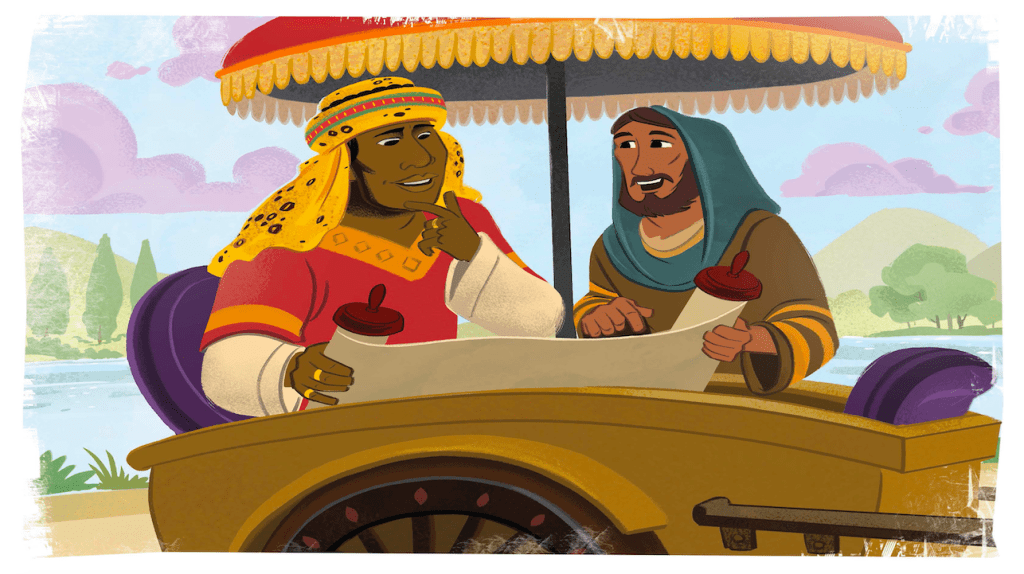
Sometimes God combines a few ways of speaking to give clear direction. A good example is the story of Philip leading the Ethiopian eunuch to Christ in Acts 8. First, an angel told Philip in verse 26, ‘” Go south down the desert road that runs from Jerusalem to Gaza.” So, he did. He started travelling down the road until he came upon this man sitting in his carriage. Verse 29 says, “The Holy Spirit said to Philip, “Go over and walk along beside the carriage.’” Philip did. He heard the man reading scripture so he asked, “Do you understand what you are reading?” The man did not and invited Philip into the carriage to sit with him and explain it. In the end, the man wanted to be baptized as he accepted he Good News of Jesus.

In this case, God spoke through an angel, through the Holy Spirit, through Philips willingness to enter into a conversation with the man, and through the scriptures – all to get the right person to talk with this man and explain salvation to him!

Philip clearly heard he was to go on that road, then clearly heard he was to go up to the chariot. But then, no one told him to enter into a conversation. He saw this as the next right thing to do. As the man asked questions, Philip explained scripture for him to understand and respond to.

I believe we serve the same God who will speak to us and direct us as we listen to him, though it doesn’t always seem as clear as we wish. God can and still occasionally speaks through angels. God can and does speak through the Holy Spirit. This may be an “out loud” voice or it may be strong sense that you need to do something. Sometimes we get this sense we are to call someone or visit someone and perhaps after responding, we see that God was setting that up. God can, and still does, speak through scripture. There are times when a certain verse jumps out at you as you are reading, and you know that was God’s encouragement for you. Sometimes, God will use a verse to clearly direct you.

God continues to speak in various ways. I have had God clearly direct me through seeing certain signs on trucks. He used these signs as a reminder of something I had written in my prayer journal, and he showed me the answer. I have had God speak through thoughts or feelings I was supposed to do something. I have heard God through the words others spoke. I have “heard” God speak through pictures he has given me in my mind. And many times God has spoken to me as I read the Bible, His Word to us.

God wants to speak to us. I am convinced of that. I also believe that God does not want us to be confused. We need to expect God to speak, and then respond as we believe we should. And if it is not clear, then ask him for clarity. Look to scripture to speak. Even ask God to speak through other wise people around you. Believe that God is interested in you and wants to speak. Keep listening.

And keep looking up,

Andy Wiebe

Book Reviews: Andy’s 2023 Reading Experience

I will be sharing a brief review of every book I read this year. Hope you enjoy and hope it encourages you to keep reading.


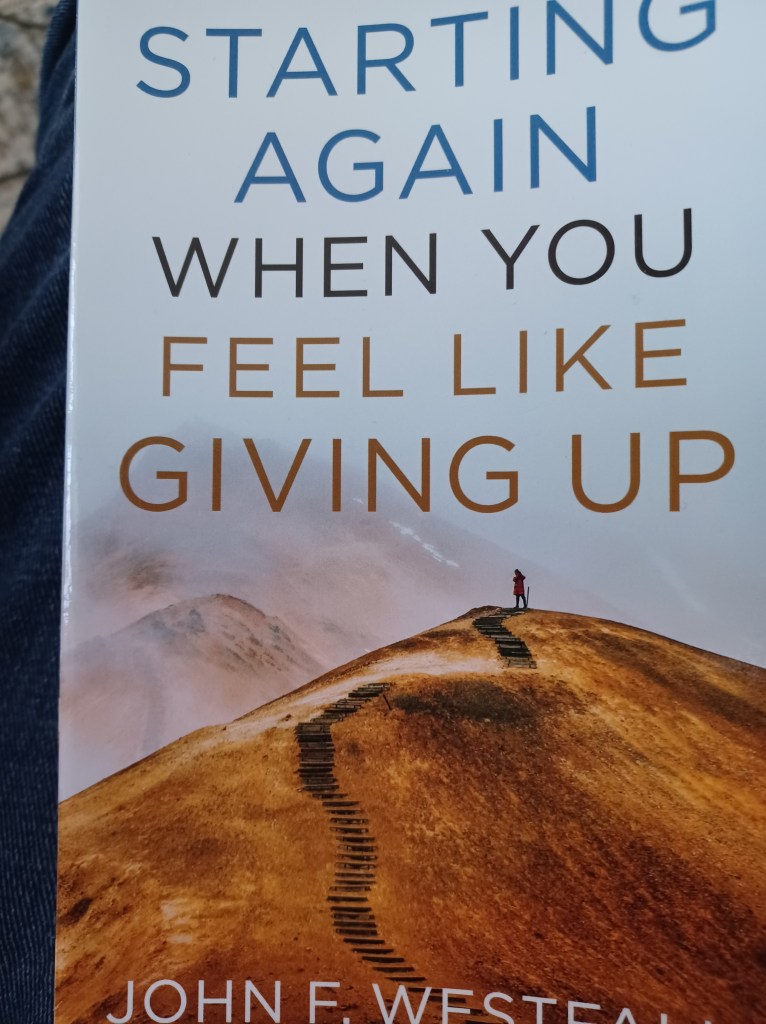
STARTING AGAIN WHEN YOU FEEL LIKE GIVING UP – by John F. Westfall

In Starting Again When You Feel Like Giving Up, John F. Westfall addresses the issue of feeling life has gone in such a terrible direction that it is sometimes hard to get back up. Life can be disappointing and disheartening when things go wrong and our goals are not achieved. I appreciate how, as he encourages the ones trying to get up, he addresses risk. Here are a healthy risks he thinks are worth taking. He expounds on the following:

  1. Risk getting turned down.
  2. Risk failing.
  3. Risk being misunderstood.
  4. Risk saying, “I love you”.
  5. Risk being yourself.
  6. Risk not being good enough.
  7. Risk being good enough.
  8. Risk getting hurt.

This might be just the book if you are struggling and trying to get back up again.

3 Steps to Ensure You Are Not a People-Pleasing Leader

My natural tendency is to be a people pleaser. I don’t feel good when someone disagrees with me. Recently I was talking with a friend who challenged a statement made by my church. It was regarding a practice of the church that we believed was scripturally accurate, but he was not willing to agree to this statement. I realized that I was trying really hard to come up with at solution so that he would be satisfied. I was trying to please him, rather than stand true to a statement we had made and believed to be biblically accurate. There was no reason for me to try to please him except that I like this guy and didn’t want to feel like there was disagreement between us.

Any leader needs to realize the value of being considerate and finding ways to get people to follow, but we cannot lead from a position of pleasing people first.

Know What You Believe.

I realized that I was a little unsure in this conversation. I was being asked to support a statement that I hadn’t given a lot of thought to. I believed it to be true, but when questioned, my first thought was to figure out how to make him happy rather than about showing him why I believed this statement.

I realized that I needed to be clear on what I believed. My job as a leader was not first to make him feel good about this statement but to show why we believed it was biblical and one worth following. Yes, I wanted him to agree – and I wanted him to feel good about it and accept it as worthwhile. But I should have begun with a desire to protect the truth of the statement rather than trying to please him.

If you know what you believe, then you know what to stand up for.

Know Why You Believe it is True.

Not only did I need to believe the statement was one that we should live by, I needed to know why. The more we understand the why of something, the easier it is to stand up for it. When there are certain expectations in our church or organization that we don’t agree with, it is hard to stand up for them. If we believe them, it may help to also know why we believe them to be worth operating by.

Sometimes the “why” can help us explain it to those who are questioning us. If I am convinced of the value of something, I will be more likely to stand up for it instead of trying to downplay it with the hope the person I am speaking with will agree with me.

Know What You Will Do if Someone Disagrees with You.

Not everyone you encounter will agree with you on certain issues. Even the people in your organization, and your friends, will not always see eye-to-eye with you on everything. What then?

Sometimes it is easier to try to please the person, and we end up being wishy-washy, always changing our minds according to whom we are talking with.

Sometimes it is easier to fight for what we believe and stand for, with the risk of losing relationships.

We need to find a way to balance, standing up for what we believe and our desire to be in a good relationship with people. Ideally, we convince our friend to agree with us, or realize they were right. And we have maintained our relationship.

Unfortunately, we will have disagreements where we cannot convince someone to change their mind and agree with us. We need to figure out how to continue to have good relationships with people who see things differently than we do. This will not always be easy. Some relationships will not continue. Even if relationships fall apart, maintain a proper love and respect for the other person. Sometimes we will not be able to maintain our integrity and our relationships at the same time. Then part in as amiable manner as possible.

We will always come across people we disagree with. Let’s ensure we stand up for what we believe even as we value the relationships we have.

Keep looking up,

Andy Wiebe

5 Steps to Maintaining Unity When Confronting Divisive Issues

We can all do a pretty good job of getting along when everything is going our way. We can enjoy time with people and think they are pretty good friends. Life is good when no one challenges me or my ideas. But what do we do when someone we thought we were on good terms with ends up on the opposite side of an issue?

The church I am presently serving is facing an issue that is fairly divisive. I won’t tell you what the issue is. You can insert your own issue as I address how we are attempting to maintain unity even as we deal with a divisive issue.

  1. Clarify the Issue

Whatever the issue is that you as a church or organization or team are facing, make sure that you clarify the issue. We thought we had been quite clear on the issue, but we realized that even after weeks of talking about it, people were confused. Do everything you can to make sure everyone knows exactly what you are talking about.

I remember a story of three men going into business together. They had rented a building and were setting up their restaurant. And then a problem arose. One of the men started talking about where he wanted the buffet area. A second interrupted him and told him clearly that a buffet was not part of the plan. They were going to have people come to the counter to order and pick up their meals. By now the third man was getting a little agitated. “I thought this was a fish and chips place!” We have to clarify the issue, and sometimes it means talking about it again and again to get down to what the real issue is so effective communication can take place.

2. Gather Supporting Information

For us, this was a decision that would affect some of our bylaws, so we had to make sure people understood what the bylaw was that was affected by the decision we were about to make. It was an issue that we believed had spiritual connotations, so we made sure to provide documents to our membership with scripture verses and explanations of how they spoke into the question at hand. We did some historical checking to see how this situation had been handled in the past. We even contacted our denominational office to get their input.

3. Prayer

We made sure to pray about this event. We encouraged people to pray on their own, we prayed about it in our services, and we prayed about it at leadership meetings. We prayed about it at discussion meetings we had regarding this question. We asked God to give us clarity and unity in the process.

4. Discussion Events

We hosted one formal evening of discussion on the topic. We recognized that there were people on either side of the question. Each side felt they had scriptural backing to why they believed what they believed. We determined not to enter into a debate. We did not want to set up a situation where we caused people to publicly take sides against each other. So we arranged for a time to carefully look at both sides of the issue. We invited people to speak up, but only in a positive way. No one was allowed to speak against an issue, they could only speak for their side. In this way, everyone was given opportunity to speak into the issue without it being against an individual.

As an aside, it was very encouraging to me as we ended that Discussion Evening, that many present stated their commitment to the unity of the church even if the vote did not go their way when decision time came. They were more concerned about protecting unity as one family or body, than about fighting for their point of view!

5. Make a Decision

At some point you have to decide how you will answer the question at hand. Like us, you may want to have a formal vote by the membership. You will need to decide at which level of authority in your church or organization that decision needs to be made. We encouraged our people to vote as their conscience directed after all the discussion and prayer we had. And then, whatever way the vote went, we trusted that God spoke into our situation and moved ahead according to the results of the vote.

Once a decision has been made, it is important to recognize that not everyone will agree with the decision as you move forward. Be alert to situations where people are having a hard time accepting the decision and take time to walk them as they process the results. You may need to meet with some individuals who are slow in processing the results so that you can help them move forward, encouraging them to trust God will continue to walk with us even as we trusted him to guide our decision process.

May God guide you with divisive issues you face. Too often, we become so closely tied to the issue that we would rather cause disunity than lose out on a vote. May God guide you and help you maintain unity as you too work through issues that could divide.

I would love to hear how you have worked through divisive issues and what worked for you. Let me know. Comment or email me.

Keep looking up,

Andy Wiebe

Book Reviews: Andy’s 2023 Reading Experience


THE BIG PICTURE FOR SMALLER CHURCHES – by John Benton

John Benton writes as the pastor of a small church, encouraging small churches that they can “thrive and survive as a small congregation”. He describes how there are certain things that can really discourage small churches while at the same time pointing out the benefits of small congregations in impacting people’s lives. He suggests there are five things that small churches can excel at, and if they do, they will have meaningful ministry:

  1. Quality Presence
  2. Quality Welcome
  3. Quality Teaching
  4. Quality Hospitality
  5. Quality Prayer

And then he concludes with some ideas on how to fight discouragement in small churches. You will be encouraged to value your small church and make it the best small church it can be.

Book Reviews: Andy’s 2022 Reading Experience

I will be sharing a brief review of every book I read this year. Hope you enjoy and hope it encourages you to keep reading.


WHAT TO DO NEXT – By Jeff Henderson

I highly recommend What to do NEXT: Taking Your Best Step When Life is Uncertain to anyone who is contemplating a possible move to a different position at work or a change in career or even just a change out of something when you are not sure what is next. Jeff Henderson reflects on his own recent journey of change of career, along with a number of helpful stories, to provide a helpful guide to anyone wishing they were somewhere else or doing something else. Many of us have faced transition in the last couple of years. This book may help make sense of transition you had to make and are now trying to cope with as well. A very helpful book.

Simply Christmas

Let’s remember the simple Christmas story:

The Birth of Jesus Foretold

26 In the sixth month of Elizabeth’s pregnancy, God sent the angel Gabriel to Nazareth, a village in Galilee, 27 to a virgin named Mary. She was engaged to be married to a man named Joseph, a descendant of King David. 28 Gabriel appeared to her and said, “Greetings, favored woman! The Lord is with you!”

29 Confused and disturbed, Mary tried to think what the angel could mean. 30 “Don’t be afraid, Mary,” the angel told her, “for you have found favor with God! 31 You will conceive and give birth to a son, and you will name him Jesus. 32 He will be very great and will be called the Son of the Most High. The Lord God will give him the throne of his ancestor David. 33 And he will reign over Israel forever; his Kingdom will never end!”

34 Mary asked the angel, “But how can this happen? I am a virgin.”

35 The angel replied, “The Holy Spirit will come upon you, and the power of the Most High will overshadow you. So the baby to be born will be holy, and he will be called the Son of God. 36 What’s more, your relative Elizabeth has become pregnant in her old age! People used to say she was barren, but she has conceived a son and is now in her sixth month. 37 For the word of God will never fail.”

38 Mary responded, “I am the Lord’s servant. May everything you have said about me come true.” And then the angel left her.                           (Luke 1: 26-380

The Birth of Jesus the Messiah

18 This is how Jesus the Messiah was born. His mother, Mary, was engaged to be married to Joseph. But before the marriage took place, while she was still a virgin, she became pregnant through the power of the Holy Spirit. 19 Joseph, to whom she was engaged, was a righteous man and did not want to disgrace her publicly, so he decided to break the engagement quietly.

20 As he considered this, an angel of the Lord appeared to him in a dream. “Joseph, son of David,” the angel said, “do not be afraid to take Mary as your wife. For the child within her was conceived by the Holy Spirit. 21 And she will have a son, and you are to name him Jesus,[i] for he will save his people from their sins.”

22 All of this occurred to fulfill the Lord’s message through his prophet:

23 “Look! The virgin will conceive a child!
    She will give birth to a son,
and they will call him Immanuel,
    which means ‘God is with us.’”

24 When Joseph woke up, he did as the angel of the Lord commanded and took Mary as his wife. 25 But he did not have sexual relations with her until her son was born. And Joseph named him Jesus.

(Matthew 1: 18-25)

The Birth of Jesus

At that time the Roman emperor, Augustus, decreed that a census should be taken throughout the Roman Empire. (This was the first census taken when Quirinius was governor of Syria.) All returned to their own ancestral towns to register for this census. And because Joseph was a descendant of King David, he had to go to Bethlehem in Judea, David’s ancient home. He traveled there from the village of Nazareth in Galilee. He took with him Mary, to whom he was engaged, who was now expecting a child.

And while they were there, the time came for her baby to be born. She gave birth to her firstborn son. She wrapped him snugly in strips of cloth and laid him in a manger, because there was no lodging available for them.

The Shepherds and Angels

That night there were shepherds staying in the fields nearby, guarding their flocks of sheep. Suddenly, an angel of the Lord appeared among them, and the radiance of the Lord’s glory surrounded them. They were terrified, 10 but the angel reassured them. “Don’t be afraid!” he said. “I bring you good news that will bring great joy to all people. 11 The Savior—yes, the Messiah, the Lord—has been born today in Bethlehem, the city of David! 12 And you will recognize him by this sign: You will find a baby wrapped snugly in strips of cloth, lying in a manger.”

13 Suddenly, the angel was joined by a vast host of others—the armies of heaven—praising God and saying,

14 “Glory to God in highest heaven,
    and peace on earth to those with whom God is pleased.”

15 When the angels had returned to heaven, the shepherds said to each other, “Let’s go to Bethlehem! Let’s see this thing that has happened, which the Lord has told us about.”

16 They hurried to the village and found Mary and Joseph. And there was the baby, lying in the manger. 17 After seeing him, the shepherds told everyone what had happened and what the angel had said to them about this child. 18 All who heard the shepherds’ story were astonished, 19 but Mary kept all these things in her heart and thought about them often. 20 The shepherds went back to their flocks, glorifying and praising God for all they had heard and seen. It was just as the angel had told them.

(Luke 2: 1-20)

Visitors from the East

Jesus was born in Bethlehem in Judea, during the reign of King Herod. About that time some wise men from eastern lands arrived in Jerusalem, asking, “Where is the newborn king of the Jews? We saw his star as it rose, and we have come to worship him.”

King Herod was deeply disturbed when he heard this, as was everyone in Jerusalem. He called a meeting of the leading priests and teachers of religious law and asked, “Where is the Messiah supposed to be born?”

“In Bethlehem in Judea,” they said, “for this is what the prophet wrote:

‘And you, O Bethlehem in the land of Judah,
    are not least among the ruling cities of Judah,
for a ruler will come from you
    who will be the shepherd for my people Israel.’”

Then Herod called for a private meeting with the wise men, and he learned from them the time when the star first appeared. Then he told them, “Go to Bethlehem and search carefully for the child. And when you find him, come back and tell me so that I can go and worship him, too!”

After this interview the wise men went their way. And the star they had seen in the east guided them to Bethlehem. It went ahead of them and stopped over the place where the child was. 10 When they saw the star, they were filled with joy! 11 They entered the house and saw the child with his mother, Mary, and they bowed down and worshiped him. Then they opened their treasure chests and gave him gifts of gold, frankincense, and myrrh.

12 When it was time to leave, they returned to their own country by another route, for God had warned them in a dream not to return to Herod.                     

(Matthew 2: 1-11)

– taken from the New Living Translation

Book Reviews: Andy’s 2022 Reading Experience

I will be sharing a brief review of every book I read this year. Hope you enjoy and hope it encourages you to keep reading.


HINGE MOMENTS – by D. Michael Lindsay

Hinge Moments: Making the Most of Life’s Transitions is a powerful guide to anyone facing a transition, and in today’s world that is just about all of us. Transitions will happen, whether we choose them or not. Lindsay builds off interviews of hundreds of leaders looking at their transitions and lessons they learned in the process. He builds his book around a diagram of seven stages of transition. Discernment, Anticipation, Intersection, Landing, Integration, Inspiration, and Realization. He uses the example of a door to show how a “hinge moments” are the opportunities to open (or close) doors to various pathways of our lives. A helpful book for anyone facing or anticipating a transition in their life.

Book Reviews: Andy’s 2022 Reading Experience

I will be sharing a brief review of every book I read this year. Hope you enjoy and hope it encourages you to keep reading.


SWEPT AWAY BY HIS PRESENCE – by Ron Auch

The subtitle of the book is: Refreshing the Church with the Power of Prayer. Ron Auch is calling the church back to prayer. He writes from a Pentecostal background, reminding the reader of the early revivals such as the Asuza Street Revival. In chapter 3 Auch points out how the first generations who experience God have a much different faith experience than the second, and how the third generation often has lost any experience of God. He calls the present generation back to prayer and a real and alive relationship with God. And he says prayer is the way to get that real relationship again. While the book is a little older (1997), the call to prayer is needed just as much today as it was back then.