I will be sharing a brief review of every book I read this year. Hope you enjoy and hope it encourages you to keep reading.
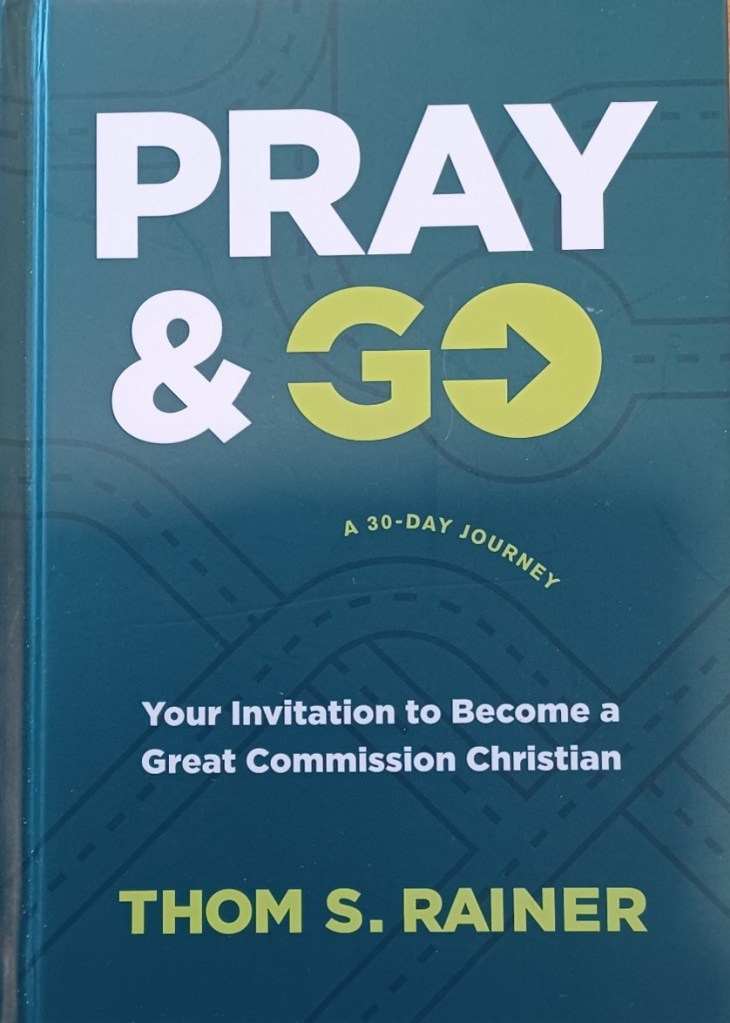
PRAY & GO: Your Invitation to Become a Great Commission Christian – by Thom S. Rainer.
Thom Rainer has written a great book that is used for Church Answer’s Hope Initiative, a 30-day journey that can be done as a group or individually. When you sign up for the Hope Initiative you also get other supporting resources and video encouragement in you 30-day journey. The intent of the book is to help you become more active in sharing your faith as you pursue the fulfillment of the Great Commission of introducing others to Jesus. A great book to help you grow as a disciple of Jesus.
I will be sharing a brief review of every book I read this year. Hope you enjoy and hope it encourages you to keep reading.
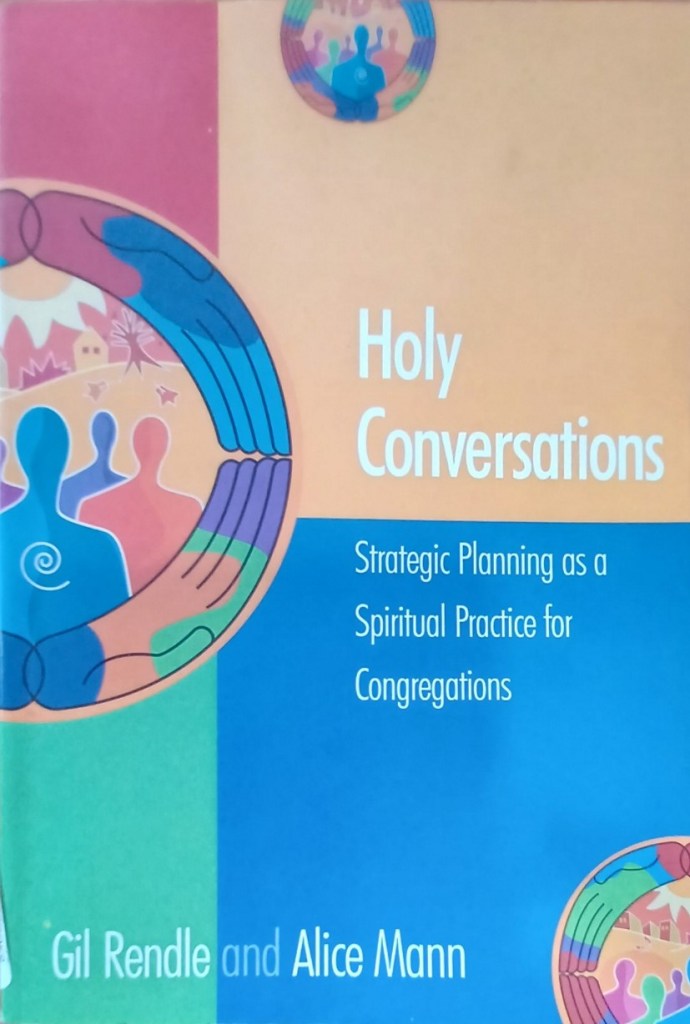
HOLY CONVERSATIONS – by Gil Rendle and Alice Mann
Holy Conversations: Strategic Planning as a Spiritual Practice for Congregations, is a practical workbook for anyone who is looking to lead a congregation to a unified vision and purpose. This book would be especially appealing to those who have little or no experience in leading a church through vision setting and strategic planning. They offer a number of examples, resources, and tools in the appendix that you could use as is or adapt to your local setting. If you are looking to lead a congregation to become more purposeful and with a unified mission, consider this book as a resource.
A leader must be a self-starter who is ahead of the people he leads.
A Christian leader must know their role and how to do it without requiring external instruction. Leaders do not wait to receive direction.
If you have a job description, make sure you understand it and know it so well that you continually look for ways to fulfill it. If you did not receive a job description or are running your own organization, develop a description of your role so you have guidance in how you will spend your time.
This often requires an understanding of the mission and vision of the church or organization you lead. You need to know where you are to be leading others toward, and how you will measure success as you work toward it.
With the job description and vision in mind, prayerfully set the course for how you will spend your time. Identify your responsibilities and areas to delegate. I constantly check in with God for wisdom and discernment on what is important for each day and what needs to be left for another day.
A self-starter knows what is needed and how to determine what activities they should pursue for the day. This means knowing the daily and weekly requirements that can not be missed.
A self-starting leader schedules their efforts. I have found it helpful to occasionally set time aside to determine what needs to be done in the next year, next six months, next 30 days, and the next week. A self-starter knows that you cannot stumble into each day with no idea what needs to be done in the near future. Planning is a key characteristic of a self-starter.
For example, in my role, I preach a sermon each Sunday. At the beginning of each week, I know that this is something I need to prepare without putting it off for later. There are also some recurring meetings that I can anticipate and prepare for in advance according to my role in these meetings and my expected contributions. A self-starting leader knows how to schedule and then do what is required.
Being a self-starter means you do what needs to be done. Be clear what is required, and then you do it. Don’t wait for others to direct your activities. If you do, then you are definitely not a leader but are following the leading of someone else.
Planning and preparation is arriving to commitments on time, if not early. A self-starter is an achiever because they do the work required to get the job done.
The self-starting leader is courageous, pushing beyond comfort zones. This includes trying new things, not taking unnecessary risks, but open to taking risks to move beyond what is to what could be. This leader is the visionary who is willing to look out and pursue a new future or new direction because he sees what others don’t. While he tries to get others on board, he does not wait for everyone to agree with him before he takes necessary steps to what could be.
A driven leader is a self-starter. This leader is ambitious and passionate about moving the people and organization forward. This leader is not content to only do what has been done, or just doing enough to make people happy, but eagerly seeks opportunities for positive change.
A Christian leader asks God to continually guide as they move ahead to get things done and move people to the future God has for them.
I will be sharing a brief review of every book I read this year. Hope you enjoy and hope it encourages you to keep reading.
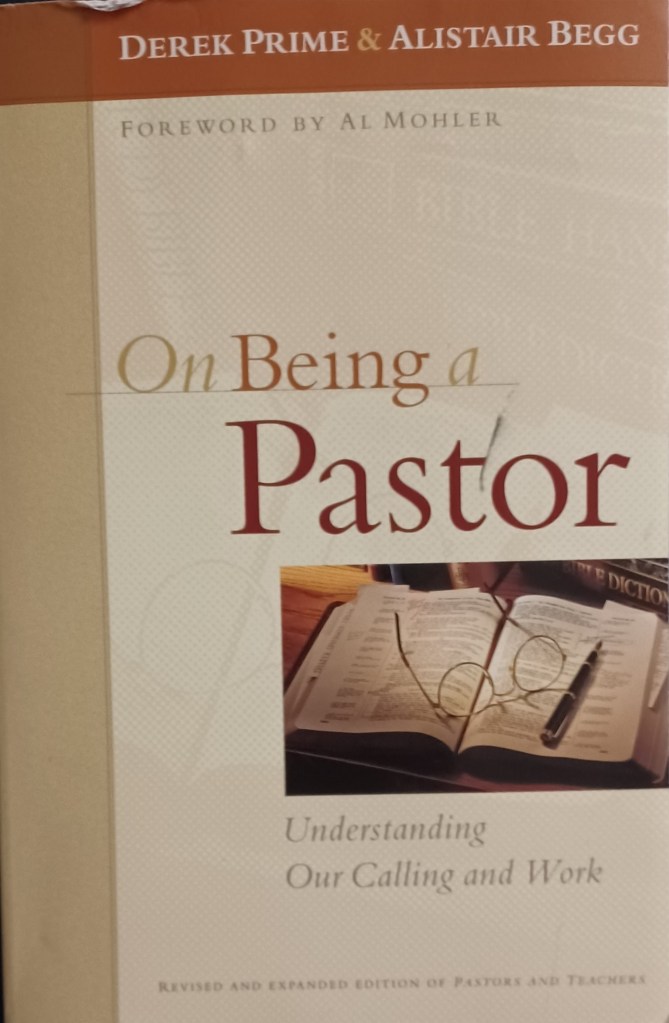
ON BEING A PASTOR – by Derek Prime & Alistair Begg
This is a great book for any pastor, especially for one who is just starting out. It covers many aspects of the pastor’s role and how to do it well. It is a bit dated, yet most of the content still speaks to the pastoral role today. The first chapter is a great discussion on the call to be a pastor, pointing out that the role can be difficult, but very rewarding if this is what God wants you to do. The authors, both pastors with years of experience themselves, then talk about the character of the pastor, his home life, and how to lead a serve a congregation well. The authors both share examples of how they have applied the teaching in many sections of the book. It is good to see the way two different pastors do the work of ministry. A great book for anyone in ministry!
I will be sharing a brief review of every book I read this year. Hope you enjoy and hope it encourages you to keep reading.
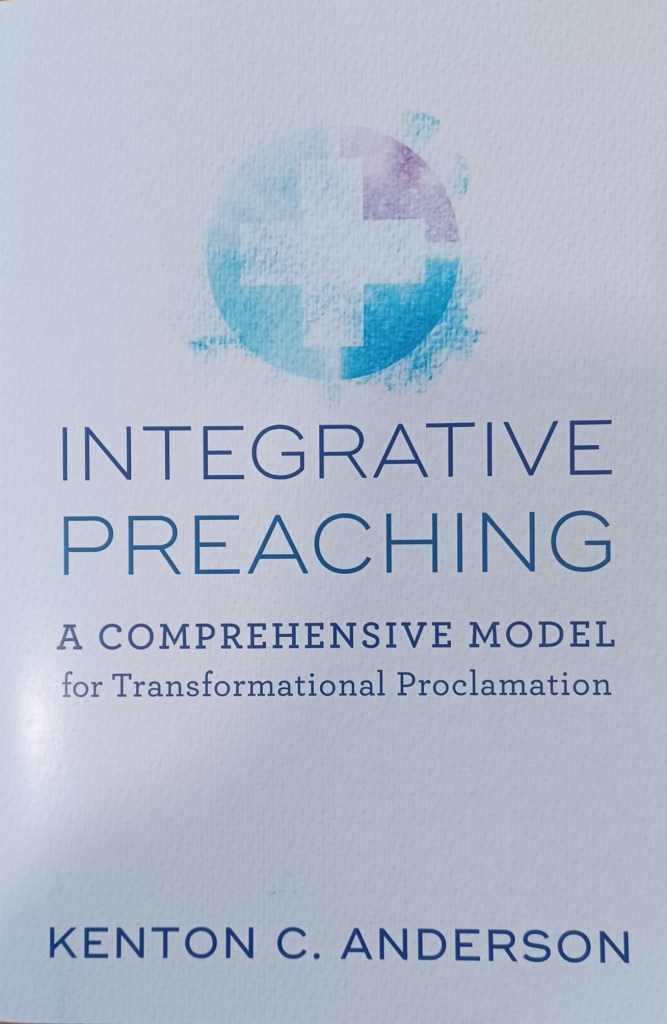
INTEGRATIVE PREACHING – by Kenton C. Anderson
Integrative Preaching: A Comprehensive Model for Transformational Proclamation – by Kenton C. Anderson
Integrative Preaching is one of the best books on preaching I have read lately. Kenton Anderson diagrams a model that intends for sermon to reach both the mind and the heart. He describes this method in a number of ways. I especially like how he names each of the four steps of the sermon in ways that connect to the heart of a person: Engage, Instruct, Convict, and Inspire. I personally was most challenged to do a better job of Inspiring my listeners when I preach, not being satisfied with information alone, but driving home how the information should affect us and be lived out. An excellent book on how to build and deliver sermons that change lives.
A church leader must be faithful to his wife – or her husband. Paul advises church leaders to remember their priorities. Yes, serving in the church is a good thing – a great thing even – but he warns them not to forget their responsibilities to their spouse as well. Many church leaders work full time jobs outside the church and serve the church with the left-over time they may have. Others work full time in the church as pastoral staff. It is easy to see the church work as being so important that you begin to neglect the person most important to you.
I am serving as a Transition Pastor which means I serve a church for about a year or so in preparation for their next full-time pastor. One of the things I like to do is work with the church to make a plan for the first 90 days of the new pastor’s ministry. I want to help them see the importance for balance in the pastor’s ministry. That same balance needs to be there for any church staff or volunteer. Remember that you need to consider your spouse and make time for them to.
Part of “faithfulness” to your spouse is giving them time too so you do not make them feel they are fighting the church for attention from you. Faithfulness involves giving them priority in your life.
Some versions of 1 Timothy 3: 2 are: “husband of one wife,” or even “man of one woman.” If you want to be a God-honouring church leader, you will protect your marriage. You will be committed to your spouse. You will protect that relationship and not let anyone else into that place that you hold for them.
It is the nature of church work that volunteers work closely with other volunteers. You pour your heart into what you are working on. You are dealing with spiritual issues, which sometimes become emotional issues. In the process, some leaders have begun to transfer feelings and thoughts they had for their spouse to the person they are working so closely with. Guard yourself against sharing too intimate details with someone who is not your spouse, especially if you are working with people from the opposite sex.
You can protect yourself from some of the dangers by doing a few simple things.
Never spend time alone with a person of the opposite sex
If you need to meet with someone in your office who is of the opposite sex, make sure your office is set up with windows that anyone walking by can see what is going on inside. Keep the door open. If that does not work, ask if you can have another person sit in on the conversation.
Don’t spend time working on projects with a person of the opposite sex. Invite others to work with you, or make sure that the work being done is out in the open where people are coming and going. Protect yourself from any problems or perceived problems.
Never drive anywhere with only one person of the opposite sex in your car. Either take separate cars or invite another person to join you.
Tell your spouse everything.
Tell your spouse about what you are doing. When you are ever in a situation that may cause an issue, let your spouse know as soon as you can. The more open you are with your spouse the less you will be tempted in the wrong direction. Hiding things lets temptation grow, bringing them out in the open takes the power of that temptation away. And the more you share with your spouse, the more they will trust you as well.
Set guidelines and policies.
The more that is made clear at the beginning, the easier it is to stay on track and protect your relationship with your spouse. Develop clear guidelines for your staff and volunteers to make sure you all understand your desire to protect relationships and marriages.
Church leaders, do everything you can to protect your marriage as you serve the church.
I will be sharing a brief review of every book I read this year. Hope you enjoy and hope it encourages you to keep reading.
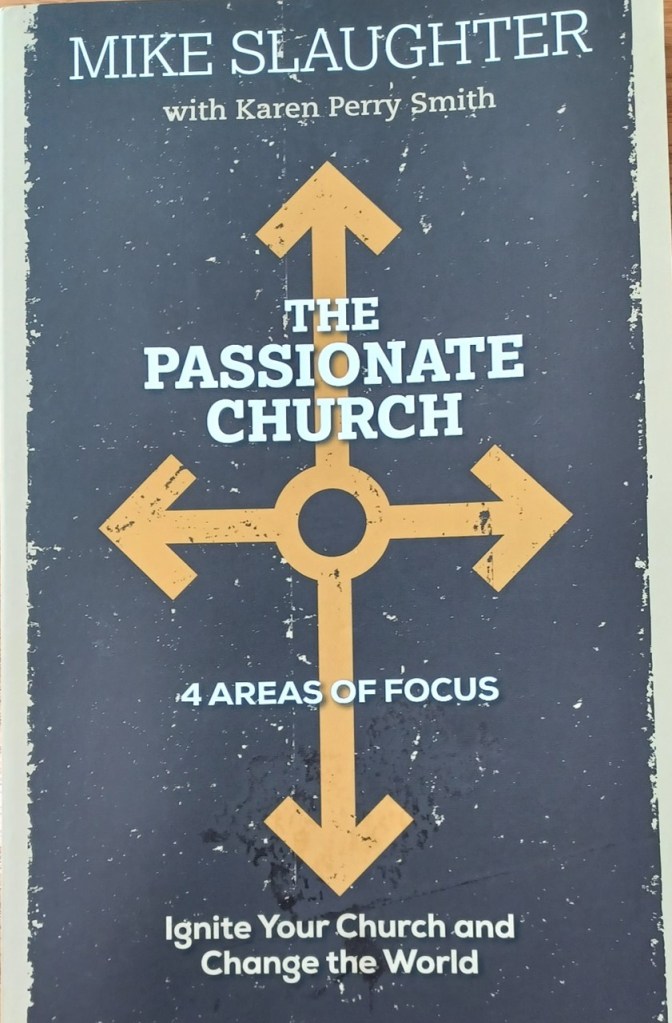
THE PASSIONATE CHURCH – by Mike Slaughter
Mike Slaughter draws on his United Methodist heritage and denominational connections to describe what a passionate church looks like. He addresses Four Areas of Focus as highlighted by the United Methodist Church: Developing Principled Christian Leaders, Engaging in Ministry for the Poor, Creating New and Renewed Congregations, and Improving Health. He does a great job of giving good examples for how each of these areas can become a real part of how a church does ministry. He uses examples from his own church in Ginghamsburg as well as from many others. What I love most about this book is the practicality of it. Passionate Church is a few years old now (2008), but the same questions can still be asked of our church and how we are living out our calling in our own communities.
How do you remember meetings and appointments you have scheduled? As church leaders, we are often busy enough with our own families and work lives that we can easily forget some of our responsibilities at church. We have many options available to us if we want to keep track of our schedules. We can go old-school with a day timer or paper calendar. We can use calendars on our phones and computers. We can set alarms that remind us of an upcoming event. The problem is, these are no good unless you actually use them.
I recently talked with a church board who had just about missed planning a tradition in their church. Every Father’s Day, people would bring pies to share after church. This was tradition. Someone always reminded people and made sure it happened.
This year, personnel had changed and no one remembered until the Friday before the special day. As a result, a few people were scrambling the day before to make sure everything was in place. If this event had gotten on the right calendar, it may have caused a lot less stress.
So what can we do? And what needs scheduling? Here are a few thoughts on scheduling and setting reminders ahead of time.
Choose a system of scheduling that works for you.
It doesn’t matter which system you use, the important thing is to choose one that you will continually use. Don’t use more than one system because then something is likely to fall through the cracks.
Chart everything.
For me, I put everything on my calendar in my phone. When I say everything, I mean everything. All meetings are written there, whether board meetings, or board responsibilities. For bigger events, you may want to break down deadlines for parts of it to be done by earlier dates.
Set reminder alarms
Often, I not only put the event at the correct date and time, I also put an alarm to remind me ahead of time so I can make sure I will be prepared and on time.
Scheduling helps planning
Marking everything on your calendar allows you to also plan ahead for preparation time. Because I know of events far in advance, I know when to delegate certain aspects to other volunteers on my team. And of course, scheduling helps reduce conflicts because you know not to plan another event at the same time.
Your calendar helps you say no
One value of charting everything on the same calendar is that you can see when you are getting overwhelmed and need to say no to something. If you don’t have everything – your work schedule and personal life – on your personal calendar, you may not realize how busy you are with both parts of your life at the same time. You do not need to feel guilty because you know you do not have time to take on anything else.
Watching your activities helps you see where you spend your time
We are not always aware of how we are spending our time. We get caught up in doing what needs to be done. When you look at your calendar and see that you are spending a large portion of your time doing things that have nothing to do with your vision, you need to adjust your activities. If you notice that an overwhelming amount of time is spent on work, and you are missing out on family time, you need to adjust your schedule.
Setting reminders of appointments and meetings and events can help you be more prepared for them, as well as help you see where you need to adjust your priorities.
I like to help people to discover what God is asking of them and how they can do it. We have the privilege of dreaming today, maybe much more so than the average person a few centuries ago. Life has become so much easier for many of us and we don’t often consider how people used to work hard from dawn to dusk just to put food on the table and keep a roof over their family. Today, many of us have the privilege of time for entertainment, and time to get bored, but we also have time to dream. We have time and energy to dream about what we could do with our lives.
As someone who has put my faith in God, my starting point for dreaming is God and His desires for me. While a bucket list of things we might like to do or see or experience is fun, I find it gives me greater purpose in my life to know that I am responsible to God and He knows best for my life. As a child of God, I can trust that my Father knows best.
What a privilege – to dream about what could be.
When students graduate from high school, well-meaning parents and teachers tell them a lie. “You can be anything you want to be.” That is absolutely not true. Yes, you can dream big and pursue many different options, but we all have certain limitations. If you can’t carry a tune you will not be a backup singer for Taylor Swift. If you have poor eyesight, you will not be flying fighter jets. There are many things that limit our ability to choose to do anything we want. But if you are listening to God, you can do anything that God wants you to do. When we reorient ourselves to the will of God, He opens the doors to possibilities that we may not have imagined.
I have seen God give me opportunities that I never expected. He has opened doors I would never have tried to open. As Ephesians 3:20 says, I have experienced God doing more than I can ask or imagine. For example, I have gone on trips that I would never have thought possible, and serve rural churches and pastors beyond my local church.
We have the privilege of asking God for His dreams, so when we dream, our imagination is guided and informed by God Himself. Now our dreams flow from a heart surrendered to Him rather than focused on us and what we can do or experience.
In the Bible, the letter from James warns about dreaming and planning for tomorrow. In James 4:15 we are cautioned, “Instead, you ought to say, ‘If it is the Lord’s will, we will live or do this or that.’” Our dreams should be God-given dreams where we listen for the Lord’s will and then work toward fulfilling it.
I believe that we need to look forward with hope and excitement. We need to see that God has put opportunities in our path. He has called us to certain responsibilities and wants to help us do our best with them.
Right now, God has called me to serve as a Transition Pastor, serving different churches for about a year or so, helping them to be as healthy as possible as they prepare to welcome their next full-time lead pastor. I believe God gave me this dream even before I knew exactly what it looked like. I believed I was to help churches, so I started taking some courses and reading books on coaching and consulting with churches. As I was doing that, God opened doors for my first Transitional Pastor position. As God gave me a dream, He opened doors to fulfill that dream.
Rather than focusing on our own hopes and desires, I believe that we need to ask God to direct our dreams and give each of us a vision for the future. We need to pray and ask God to speak to us and help us to hear clearly as we choose what to focus our life on.
In my experience, dreaming God-given dreams is not static, but ongoing as I continually come back to what God wants. Over the years He has adjusted the dreams for me and redirected me to other opportunities that I had not anticipated.
Keep on dreaming. Keep on listening to the voice of God. Keep on obeying and pursuing His dreams for you.
I will be sharing a brief review of every book I read this year. Hope you enjoy and hope it encourages you to keep reading.
7 FRIENDSHIPS EVERY MAN NEEDS – by Justin Erickson
Erickson suggests that every man needs these 7 friends in their life to live a full life. Here are his seven friends: a mentor to disciple you, a Peter to encourage you, a best friend to uphold you, a courageous brother to confront you, a faithful disciple to follow you, a lost seeker to hear you, and a gracious Savior to befriend you. He presents some well though out chapters on the value of each one, comparing them to the value of a pit crew to a Nascar driver. While I do agree that most of us men could use more friends, I think it is highly unlikely that any man will have seven solid friendships in their life at the same time. Some of those roles may be played by the same person, or at times we may have a friend in a certain role for a season, yet his premise holds true: Men need to find more good friends to walk through life with.









 Elevate with Andy