Book Reviews: Andy’s 2023 Reading Experience

I will be sharing a brief review of every book I read this year. Hope you enjoy and hope it encourages you to keep reading.


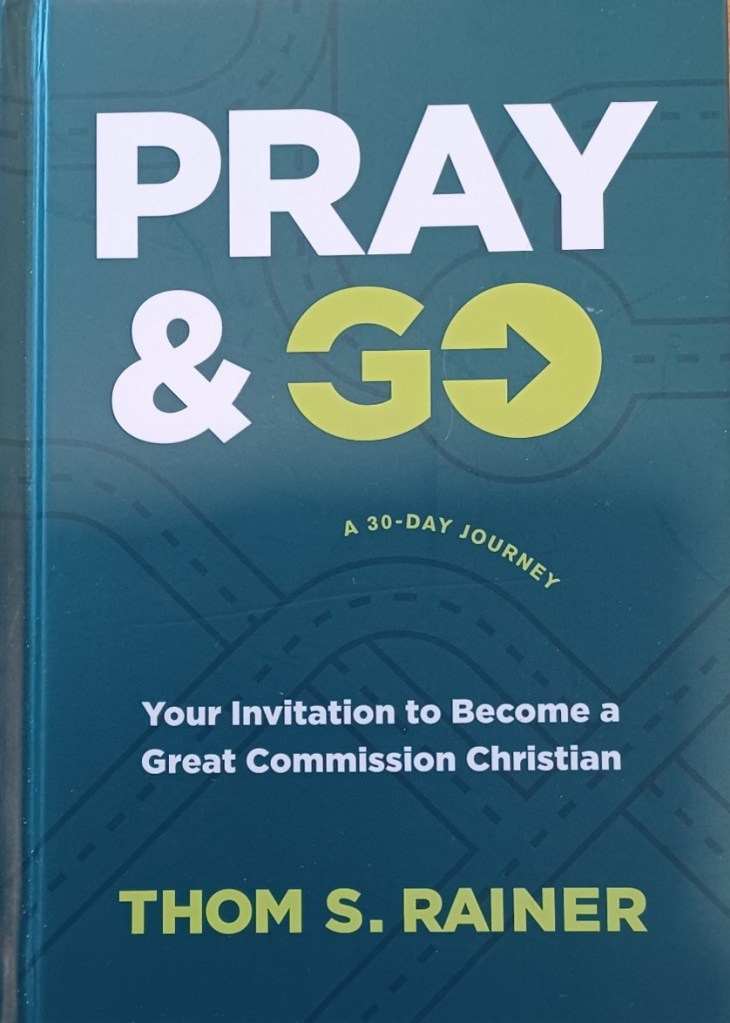
PRAY & GO: Your Invitation to Become a Great Commission Christian – by Thom S. Rainer.

Thom Rainer has written a great book that is used for Church Answer’s Hope Initiative, a 30-day journey that can be done as a group or individually. When you sign up for the Hope Initiative you also get other supporting resources and video encouragement in you 30-day journey. The intent of the book is to help you become more active in sharing your faith as you pursue the fulfillment of the Great Commission of introducing others to Jesus. A great book to help you grow as a disciple of Jesus.

Book Reviews: Andy’s 2023 Reading Experience

I will be sharing a brief review of every book I read this year. Hope you enjoy and hope it encourages you to keep reading.


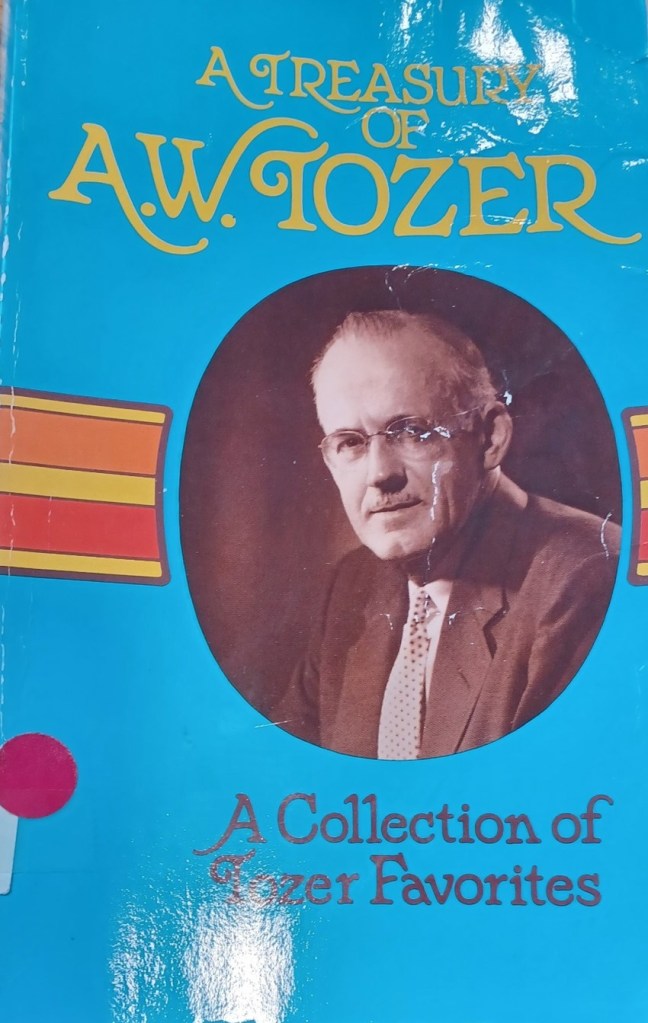
A TREASURY OF A. W. TOZER by A. W. Tozer

If you have never read A. W. Tozer, this might be the book to get. It is a collection of Tozer’s writings from a few different books he has published. Tozer is an older author who speaks with a directness to his audience and a reverence for our Holy God. Much of his writing focuses on the indwelling of the Holy Spirit and the pursuit of holy living. The short chapters make it a great devotional read.

Courage to Risk

It is common to seek out safety and security. We want to know that we, and those in our care, are not in danger or lacking in anything. But progress is only made as someone has the courage to step out and try something new. If safety is our number one priority, we will never try anything new.

To be a good leader one must be willing to try something new, at least occasionally. We recognize that what we are doing may not be enough, that there might be other options out there that are better than what we are doing right now. The problem is, we don’t know if there are better options unless we try. Trying something new is a risk. When we step out of the safety of our comfort zone and the familiar, we move into uncharted territory for us and the church or organization we lead.

A pastor may need courage to try something new in a worship service – something a little unusual. I risked a change last Sunday. We had completed a sermon series I was working through and didn’t want to start a Christmas series just yet. As I thought about the service, I got an idea I felt may have been from God, but it was different. I am still a new pastor at this church, having only served them for about three months. I wasn’t sure if I was trying something they might respond to or not.

Here’s what I did: I introduced the Sunday as a Scripture Sunday. At the beginning of the service, I gave the congregation a heads up, that I would ask them to read or quote their favorite scripture. I made sure we had mics for people to go to so everyone could hear them read. I introduced the morning with a brief look at 2 Timothy 3: 16-17 which highlights the value and importance of scripture. I referenced 1 Timothy 4: 13 where the Apostle Paul encourages Timothy to include public reading of scripture in their worship services. When I opened up the floor for people to read their verses, I was pleasantly surprised at how many people came up to quote or read verses.

I had no idea how that morning would turn out, but I risked it and was pleasantly surprised. And I was encouraged to see how scripture was obviously an important part of many people’s lives.

There are many areas in a church or an organization that could benefit from a change. Have the courage to try. Though it can be tough to introduce a big change, it may help to approach it as a trial and see how it goes. Sometimes people are willing to try something new if they know it is not forever and will be evaluated later. If after a trial period it turns out to be less than ideal, then put it aside and move on, but if it is a good idea, now you can evaluate and improve it and keep going!

Courage is also required when reorganizing responsibilities, and letting someone else take over a responsibility you previously held. As much as you can prepare someone else, training and equipping them for that role, there is still the risk that they may do a terrible job and you will have to deal with problems after. Yet, if you have done your part to prepare the person taking over, they may even do a better job than you, though likely not exactly as you would had done.

Courage is necessary when you have to speak truth into a difficult situation. When you have to confront someone about their actions, you never know how they might respond. You may be risking a friendship breakdown. But sometimes you have to courageously speak up for the best for the larger organization.

Courage is required when leading a church toward a new vision. Even when many people from the church contributed to developing the vision, you do not know what the end result will be. You are moving toward a new vision, trusting that you have carefully sought out the best route. The risk is you don’t know exactly what it will look like until you get there. But take courage and move forward.

Courage is vital for any leader, vital for any pastor who is concerned about leading their church well. Prayerfully assess the risks and ask God to guide you as you courageously move in the direction you believe God is leading. Take courage and lead on.

Keep looking up,

Andy Wiebe

Share Your God Stories

When I was in Grade Four, my Dad felt called to attend Bible School. I remember one time in his third year, where he came to me and my brother, now about 12 and 13 years old. He told us that we had no food left in the cupboards and we needed to pray together that God would provide for us. Money that was supposed to come in had not. So, we prayed. Then, a little later, I remember hearing a sound at the front door. We

opened the door to find four big paper grocery bags full of food. Whoever dropped it off was long gone, but God had put it on their hearts to bring it to us at just the right time! I will never forget that feeling of knowing without a doubt that God had provided!

Just four days ago I was driving early. It was still dark and there was quite a bit of traffic. I was a little wary because we hit a deer a few months ago and I did not want that to happen again. With all the traffic I couldn’t see well. There were headlights shining in my eyes and my low beams didn’t reach into the ditches like I wished. Finally, I managed to get some space between me and other traffic and could turn on my high beams. As I did, it felt as if God was saying “Okay, now you can see. I’m looking after you.” Within seconds there were a couple of deer on the opposite shoulder of the road. I saw them in time and slowed down. As I got closer, they turned and headed back away from the road. And then within minutes I saw a couple of elk on the opposite shoulder of the road, coming steadily onto the highway. Because of my high beams I saw them clearly and came to a stop as two of them made their way onto the road and stopped to look around. Slowly the two of them started walking again and cleared the road. And then, again, because of my high beams, I noticed some more movement just as I was about to drive – a third elk. Where I needed to see, I could have my high beams on and God kept me safe!

When God does these kinds of things, we need to remember them. We need to tell others and pass them on to our families and friends.

There are many stories in the Old Testament that are repeated again and again. Many psalms celebrate significant stories of the people of Israel and God at work. They even had special holiday festivals dedicated to reminding people of God at work. One significant festival was the Passover, a yearly reminder of God freeing the Israelites from slavery in Egypt when the death angel passed over the homes of the Israelites who had painted the blood of goats on the doorposts.

Many of us have had unique experiences with God where we know God intervened in our lives in a way that was much more than coincidence. Unfortunately, even though the event was significant to us, we tend to keep it to ourselves. We need to tell the stories. We need to share them at our Thanksgiving suppers. We need to pass them on to our children and grand children, reminding them that God is still at work in our world.

The problem is that we too quickly forget. We don’t write songs about these significant events like bards of old might do. We don’t write the stories down. Unlike the Israelites, we don’t set up stone altars as reminders of God’s work.

God is still at work in our world. Let’s remember when he works in our lives and lets share the stories with others so we can celebrate God and his goodness together.

Keep looking up,

Andy Wiebe

Sermons That Change Lives

A history teacher tells you what happened in the past. Or, they might inspire you to travel to historic sites. A first aid instructor will help you get a first aid certification. Or, they might inspire you to pursue a career as an EMT.

All instructors convey information…but some inspire. In the same way, sermons can convey information…but they should inspire the listener to action. Something should happen as a result of hearing the sermon.

As I was looking ahead to writing this blog, I heard some great material on a podcast I follow(Revitalize & Replant with Mark Clifton) where these two pastors were talking about how to write meaningful sermons. They referred to a model you may be familiar with. They said every sermon needs to answer the following 3 “what” questions: What? So What? and Now What?

The first question – “what?” asks what the scripture says. This is the research that forms the content of the sermon.

The next question asks, “so what?” This focuses on the importance of the scripture. Why is it something we are discussing? Why do we need to know this?

The third question is the one I want to focus on. Most preachers will do a pretty good job on the researching and writing of a sermon. Many identify the importance and value of the scripture. But many sermons fall short on the final question: “now what?”

“Now What?” is about the application of the sermon. Actually, it’s about even more than that. It is about inspiring the listener to want to do something as a result of the sermon they just heard. They cannot just go home with their family, eat their Sunday dinner, and go on with life.

A good preacher will not be satisfied until the sermon calls the listener to action.

Writing a good “now what” conclusion for a sermon requires an understanding of the scripture and what God is intending to communicate. The preacher takes it to heart and recognizes the action God is calling him to. He knows the content so well that the action required emerges from the text.

Further, the preacher needs to understand his local context, because God does not speak to people in a vacuum. We all live in a certain country or province or community. We all have certain political realities we live in. The preacher needs to know how to make the call to action one that fits his local church. This is one reason why it is important for the preacher to know the people who will be listening to the sermon. The application is then connected to the local setting.

I have discovered that giving a few ideas how to respond may help some people, while others will have already felt God speaking to them about a specific response.

Beyond just suggesting ways to respond, the preacher needs to find a way to inspire the congregation to respond. Just to be clear, it the Word of God by the power of the Spirit that changes lives, yet the pastor needs to prayerfully work in tandem with the Spirit to determine what the action should be and how to describe it in such a way that makes people want to respond.

In Acts 2 Peter preaches a powerful sermon. Look at the response of the people in verse 37:

 “When the people heard this, they were cut to the heart and said to Peter and the other apostles, ‘Brothers, what shall we do?’”

The people were not satisfied with information. They felt a response was required of them, but they were unsure what to do. Peter responds: “Repent and be baptized, every one of you, in the name of Jesus Christ for the forgiveness of your sins. And you will receive the gift of the Holy Spirit.”

As a preacher, you want people at the end of your sermon to be asking, “what shall we do?” So take the time to answer this question before you conclude. This should not just be tacked on at the end, but something that is given equal consideration as the body of the sermon because it is just as important.

If you want your sermons to change lives, you must help people see what is expected of them after hearing the sermon.

Keep looking up,

Andy Wiebe

Book Reviews: Andy’s 2023 Reading Experience

I will be sharing a brief review of every book I read this year. Hope you enjoy and hope it encourages you to keep reading.


THE PASSIONATE CHURCH – by Mike Slaughter

Mike Slaughter draws on his United Methodist heritage and denominational connections to describe what a passionate church looks like. He addresses Four Areas of Focus as highlighted by the United Methodist Church: Developing Principled Christian Leaders, Engaging in Ministry for the Poor, Creating New and Renewed Congregations, and Improving Health. He does a great job of giving good examples for how each of these areas can become a real part of how a church does ministry. He uses examples from his own church in Ginghamsburg as well as from many others. What I love most about this book is the practicality of it. Passionate Church is a few years old now (2008), but the same questions can still be asked of our church and how we are living out our calling in our own communities.

Allowing The Bible To Guide Our Leadership

Many issues arise in our world today because of our search for the answer to the question: What is the truth? Theological issues may come about when we search for answers in teachings we have not heard before. Political issues can begin when we as Christians question what our place is in politics or responding to decisions our governments make. Moral and lifestyle issues are often found when the church is unsure how to respond to what is becoming acceptable in the world around us and even in the church that has historically not been accepted. What is the truth?

While there are many today who pretend we can have different truths to guide us, truth doesn’t work that way. If I am driving down the highway and decide that my truth is that I am in England so I will drive on the left-hand side of the yellow line, my truth will be quickly confronted by another truth when the traffic in that lane comes hurtling towards me. That is a silly simple example, but the fact is, what we believe about things makes a difference, and impacts our relationship with others. Truth, as God has laid it out, affects all of us.

As people of God, and as leaders of churches, we need to recognize that our answers need to be found in God’s Word. His Truth must be upheld in our churches. I do understand that sometimes we need to do some work to determine how God’s truth impacts the questions we face. But our answers should be informed by God’s Word – the Bible.

How might we find answers in the Bible?

Read the Bible.

The first priority to actually read the Bible. Read it regularly and search it for answers to your questions.

As you read, ask God, through the Holy Spirit, to give you correct understanding of what you are reading. We recognize that the Bible is more than a story book, though it contains many stories. Whether we are reading biblical stories, or a teaching section, or even some of the poetic books like Psalms and Proverbs, we want God to help us understand what the truth is and how it applies to my life and to the church where I serve as a leader.

Consult with others on difficult passages or topics.

We are blessed to have the results of many experts at our fingertips. We can find commentaries where others have worked through scripture and give their expert opinions. We can make use of tools that help with word studies and guide us through some of the definitions of the original language. We can read books by people who are struggling through some of the same questions we are. We cannot interpret scripture completely on our own, there is importance in reading scripture in community. Whether we agree or disagree, there is benefit in seeing how others have processed biblical truth in light of this topic. I’m presently reading a great book on how to respond biblically to those living a gay lifestyle. There are many other topics that others have been able to work through in more detail than we have so we can learn from them. Just make sure their teaching is arrived at by careful study of scripture.

And one of the simplest ways to consult others is to have conversations with others in your church as you work through scripture to find the answers you need. Find some other believers and read the Bible together. Work through scripture as a leadership team and ask God to guide you to the correct understanding and application.

Do what it says.

The hardest part of allowing the Bible to guide our leadership, is to then do something about what it says. If it means leadership needs to confront false teachers or people living contrary to truth in your church, then do it. If it means changing policies on how volunteers are screened, then change the policies. If it means teaching the church what it means to live out truth and love in light of Gods Word, then teach your church that.

If we are going to allow the Bible a prominent role in church leadership, then we need to make sure we read it regularly. We need to do the work of understanding it clearly, and then we need to follow through on what God is asking us to do as a result.

If we are Christian leaders, whether in the church or elsewhere, our leadership must be informed by the truth of God’s Word.

Keep looking up,

Andy Wiebe

Book Reviews: Andy’s 2023 Reading Experience

I will be sharing a brief review of every book I read this year. Hope you enjoy and hope it encourages you to keep reading.


UNSTUCK: A Nine-Step Journey to Change that Lasts – by Tim Lane

Tim Lane walks through a 9-step process to deal with lasting personal change. If there is an issue or a habit you are dealing with and would like to change, he believes his 9 steps will help you work your way through and overcome. He uses some examples from his own life and people he has helped to show how to work the process. If you are looking to make personal change, check out this book.

Book Reviews: Andy’s 2023 Reading Experience

I will be sharing a brief review of every book I read this year. Hope you enjoy and hope it encourages you to keep reading.


THE PRACTICE OF THE PRESENCE OF GOD – By Brother Lawrence

This book describes how Bother Lawrence practiced the presence of God in the mundane practices of life. It was in 1666 that he became a lay brother among the Carmelites at Paris. His main role was to work in the kitchen. He practiced the presence of God in his everyday activities, so much so that he felt that time for devotions distracted him from his time with God. He was continually aware of God’s presence, as if he had a continuous uninterrupted conversation with God. “I desire only Him, and to be wholly devoted to Him. He pointed out the need to be fully committed to God, “no soul which delights in earthly things, can find full joy in the Presence of God.” This is a little old book that packs a big punch if you want to draw near to God.

Reacting To An Offense

Has anyone at church ever offended you, or said something you didn’t agree with? Or has something happened publicly in the church that you were offended with? When a public offense occurs in the church, the first thought often is to write up a new policy. When we are part of a church, we are part of a group of people who will at times do something or say something that you don’t like. Each of us have different standards in our homes, and we likely have slightly different understandings of how to interpret and apply biblical truths.

When reacting to a situation in our church, we may act out of a desire to have policies and guidelines governing everything so that everyone does everything exactly the same. This is impossible to do. There will always be someone who does something you don’t like. So, how do we best respond to that perceived offense?

As I’ve worked with various churches and congregations, I’ve learned (and am continuing to learn) how to respond to situations where individuals are offended within the church. These may not necessarily be steps to follow in this order but are some helpful thoughts and questions I’ve learned to ask when working through the perceived offense.

  1. Is this an issue about me or about the other person?

Did the person actually do something wrong, or is the problem with me and the standards I am trying to push onto another person? Sometimes we just don’t like what another person does, but it doesn’t mean that what they’ve done is wrong.

  2. Is there a real issue to address?

If we believe there was truly an offense committed by the other person, what is the real issue? Did they do something that is spiritually wrong? It could be they did something that scripture can easily correct if they are shown the appropriate verses. Is this morally wrong? Did they do something that is generally believed to be wrong and offensive? What is the real issue that needs addressing? Why is what they did, wrong?

3. If an offense has occurred, what is the best response?

Jesus gives some practical advice in Matthew 18:15-17, about how to react when we see a fellow Christian sinning.

“If your brother or sister sins, go and point out their fault, just between the two of you. If they listen to you, you have won them over. But if they will not listen, take one or two others along, so that ‘every matter may be established by the testimony of two or three witnesses.’ If they still refuse to listen, tell it to the church; and if they refuse to listen even to the church, treat them as you would a pagan or a tax collector.

If you believe someone else has sinned, you have a responsibility to address that as a brother or sister in Christ. Pray about it and be careful as you address it.

What if it wasn’t a sin, but just something that the church generally has agreed is not acceptable? I would suggest being very careful when addressing any issue with people to be clear on what the issue is, to do it with kindness and love, not vindictively or angrily.

Also, make sure the appropriate person deals with the issue. Depending on the situation, it might be best for the person who noticed the issue to speak up, or it might be more appropriate for a different leader to step in.

4. Protect the dignity of the person who has caused the offense.

If something has happened that must be addressed, do it carefully.

Pray about it before doing anything, and then look for a way to approach the person with the concern that communicates as clearly as possible that this is a desire to help the other person and not to hurt or condemn them.

5. Is there an immediate response required?

If at all possible, take some time before responding. Take time to pray. Take time to clearly assess the issue. Take time to think through exactly what to say and how to best say it.

6. Is a new policy necessary?

Often an offense is a one-time occurrence. This does not need a new policy or more guidelines. On the rare occasion that an issue demands new policies and guidelines, determine these prayerfully and carefully, and with input from affected people.

The church is made up of many different individuals. We have all chosen to be part of this local church. As such, we need to see each other as brothers and sisters and do our absolute best to get along. We should be slow to speak and slow to get angry, while quick to encourage and love. If something has truly been done that is wrong, ask God to guide you as you address the issue. Remember, someone else may approach you too if they think you have done something wrong.

Keep looking up,

Andy Wiebe