Ending Well

Every job you take on will eventually end. It may end when you retire after serving for 29 years like it did for the pastor of the church I am working with right now. The job may end when you are pushed out or let go. The job may end because you have a new opportunity waiting for you. Every job will eventually end, the question is: Will you end well?

When an ending happens on our own terms, like retirement or leaving to pursue another opportunity, our mindset is very different than when we are let go. Our attitude is also affected by how we feel about the people we are leaving behind. If we are not on good terms with most people on our team or in the church we serve, we may not mind leaving; if we are leaving good friends behind it may be bittersweet even if we are leaving on our own terms.

In either case, how do you end well?

Ending well has a lot to do with your attitude. You can choose to be grumpy and make your last days a grumpy experience for all, or you can determine to be cheerful, no matter the circumstances around your leaving.

I recently completed a contract with a church. As the last few weeks were winding down, I determined to make sure I stayed fully engaged right to the end. It was encouraging for people to see. One person even used the words, “We see you are fully engaged and not winding down.” I wanted to give my best. I deliberately planned a workshop for the second last weekend at the church, so I had something specific to work towards.

I encourage you to stay as engaged as possible even as you are nearing the final days. Don’t just coast the last bit but do what you can to encourage those you are leaving behind. No matter the reason for your departure, there will be some people who will greatly miss you. Encourage them as you finish up.

Do your best with every task you are responsible for. Look for ways to hand off any tasks others will be taking over. Make it a smooth transition for them. You don’t want people frustrated with you as you head for the door.

One of the reasons you want to end well is that everything you do is a demonstration of God’s character. You want to point people to Jesus, not leave them frustrated with you. You want to reflect well on the one you say you believe in and follow.

Another reason for ending well, is that everything you do contributes to your own reputation. Don’t burn bridges, you may need them again down the road. I was fired from one church. Over 20 years later they had me come back to be their transition pastor. The people in the church who still remembered me thought well of me and welcomed me back. Who knows what God will do in the years ahead, so end well so you are not destroying relationships that may be beneficial down the road.

End well, for the glory of God, for the good of the church, and for your own good. Protect relationships that you may need and want in the years to come.

Keep looking up,

Andy Wiebe

Summer Road Signs Series – #5: No U Turn Signs

There were a few times this summer where I was driving in unfamiliar territory and realized too late that I should have taken an earlier turn. I was headed the wrong direction and unsure how to safely turn around. Many intersections have “No U Turn” signs, sometimes with just the symbol, other times with the words “No U Turn” also posted. I would have loved to just turn around and go back to the starting point.

In my experience working with churches in transition, I could have used No U Turn signs a few times. Some churches long for the “good old days.” There is a hope that if only they could get back to what they were like and the programs they ran some years ago, when the church was growing, then things would turn around in the church and it would start to grow again.

In my experience working with churches in transition, I could have used No U Turn signs a few times. Some churches long for the “good old days.” There is a hope that if only they could get back to what they were like and the programs they ran some years ago, when the church was growing, then things would turn around in the church and it would start to grow again.

The reality is a church cannot forget the last few years and the experiences they have gone through and just start over. Time moves on. Culture changes. The congregation changes, and so does the community around the church. Instead of looking backwards, the church must learn how to move forward with clarity and purpose.

I love working on vision with churches. I love to help them see the reality of today and the possibilities of tomorrow. Instead of churches looking back to a certain period of history as the high point for the church, I want them to see that God has great things in store for them, so the best times are still ahead. It may take some work, and prayer, and trusting God, but looking back will not help. I tell churches that as we work on vision, I do not expect there to be radical change from what has happened in the past and what is going on in the church at the present. Instead, I believe God has the church on a trajectory that may need some adjusting here and there but the future will generally be consistent with their history.

The same applies to our personal lives. Many of us can look back to certain periods of our life where we felt things were going really well. Looking back, those seemed like stress-free times, times of excitement and joy. As tempting as it may be to somehow replicate what we once had, life moves on. We have new experiences. We have new responsibilities and new relationships. As we grow our family and develop our careers, we can’t just drop all of that to return to a more carefree time. Instead, we need to find a way forward, to try new roads and look for what God is going to do in our lives in the future.

U-turns are tempting because they seem like a quick and easy fix. Let’s just get back there and try again. This is usually not an option if we are leading a church or setting direction for our personal future. Time moves on like water under a bridge. Our past is not a static thing we can return to. We need to keep looking ahead.

The reality of being human is that we cannot start over. Yes, we can come back to some original principles to live by. We can reorient ourselves to God and His Word. We can re-establish guidelines for our life that served us well in the past, but we cannot remove history and start over. Sometimes a map directory in a mall has a little icon stating “you are here” so you know where you are starting from. The reality is, we are where we are. Now we need to know how to move on from here. We cannot change the past, but we can make changes for our future.

May God help us to learn from the past and keep moving ahead. U-turns to an earlier period in our life or in our church are not possible. Keep moving ahead.

Keep looking up,

Andy Wiebe

We All Need Someone to Lean On

Many pastors are lonely. Many don’t have a team of staff to talk things through with. Recently I have again recognized the value of having other pastors to talk with and connect with. I have the privilege of being part of a few groups of pastors, but it has been a while since the one group has met and I realize I miss those get togethers.

In 2023 Barna.com shared a poll that highlighted the loneliness and isolation of pastors. Their poll shows “these feelings have increased significantly since 2015 when 42 percent of pastors shared they either frequently (14%) or sometimes (28%) felt this way. Now, 65 percent of pastors report feelings of loneliness and isolation, with 18 admitting these feelings occur frequently.” (7-Year Trends: Pastors Feel More Loneliness & Less Support)

As pastors, we need to take initiative to connect with others who understand what it its like being a pastor. Pastors can relate to us and pray for us in a way that others can’t. We all need good friends, and many of us have very supportive and encouraging families, but we do need to have other pastors in our circles too.

Many denominations have regular gatherings for local pastors. Take advantage of those. These are people who are in your circles and understand your church dynamics. In some places, there may not be others in the same denomination nearby; instead, connect with other pastors in your community. I have benefited greatly from connections with pastors from other denominations. We have different theological stands on some issues, but we all deal with the same day-to-day struggles of working with people and trying to have the answers our congregation needs.

One of the benefits of connecting with other pastors is that we can have people in our corner who understand us. Like any profession, it can be difficult to explain some aspects of being a pastor to others who are not. It is easier to celebrate and commiserate with people in the same field.

Other pastors may also be able to speak into our lives, offer words of encouragement, or ideas on how to handle certain situations we face. This is valuable support that requires you to open up to others.

Sometimes other pastors can help us develop our creativity as we hear of unique ministries or programs they run. We can help each other become better. Proverbs 27: 17 applies here:

As iron sharpens iron,
    so one person sharpens another.

Do not be satisfied with your loneliness. Find other pastors to connect with, and encourage them as they encourage you.

Keep looking up,

Andy Wiebe

Book Reviews: Andy’s 2023 Reading Experience

I will be sharing a brief review of every book I read this year. Hope you enjoy and hope it encourages you to keep reading.


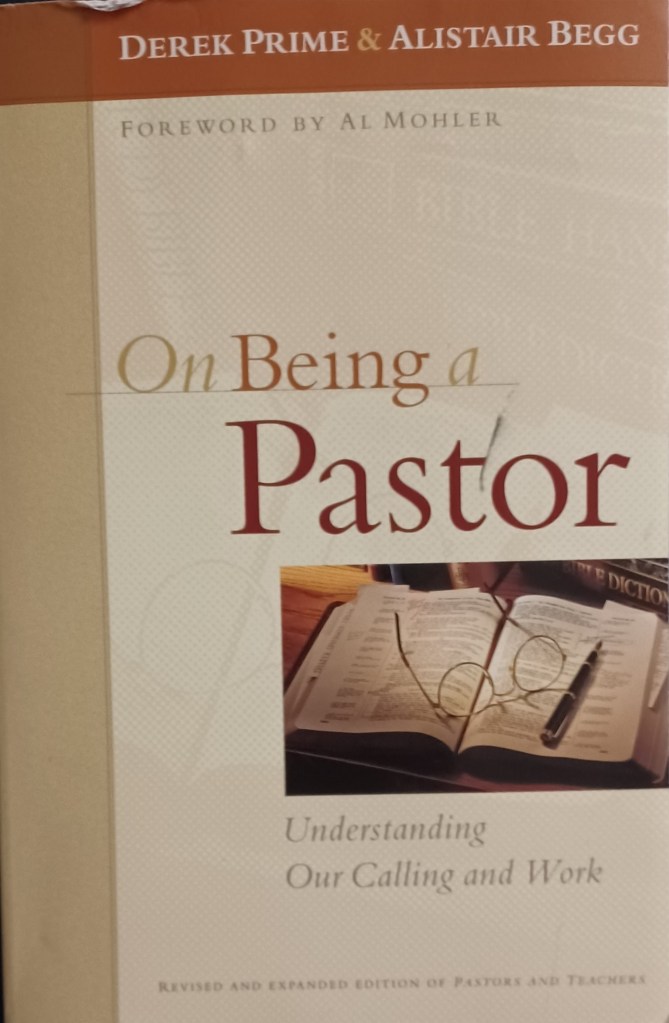
ON BEING A PASTOR – by Derek Prime & Alistair Begg

This is a great book for any pastor, especially for one who is just starting out. It covers many aspects of the pastor’s role and how to do it well. It is a bit dated, yet most of the content still speaks to the pastoral role today. The first chapter is a great discussion on the call to be a pastor, pointing out that the role can be difficult, but very rewarding if this is what God wants you to do. The authors, both pastors with years of experience themselves, then talk about the character of the pastor, his home life, and how to lead a serve a congregation well. The authors both share examples of how they have applied the teaching in many sections of the book. It is good to see the way two different pastors do the work of ministry. A great book for anyone in ministry!

Book Reviews: Andy’s 2022 Reading Experience

I will be sharing a brief review of every book I read this year. Hope you enjoy and hope it encourages you to keep reading.


WHAT TO DO NEXT – By Jeff Henderson

I highly recommend What to do NEXT: Taking Your Best Step When Life is Uncertain to anyone who is contemplating a possible move to a different position at work or a change in career or even just a change out of something when you are not sure what is next. Jeff Henderson reflects on his own recent journey of change of career, along with a number of helpful stories, to provide a helpful guide to anyone wishing they were somewhere else or doing something else. Many of us have faced transition in the last couple of years. This book may help make sense of transition you had to make and are now trying to cope with as well. A very helpful book.

Book Reviews: Andy’s 2022 Reading Experience

I will be sharing a brief review of every book I read this year. Hope you enjoy and hope it encourages you to keep reading.


HINGE MOMENTS – by D. Michael Lindsay

Hinge Moments: Making the Most of Life’s Transitions is a powerful guide to anyone facing a transition, and in today’s world that is just about all of us. Transitions will happen, whether we choose them or not. Lindsay builds off interviews of hundreds of leaders looking at their transitions and lessons they learned in the process. He builds his book around a diagram of seven stages of transition. Discernment, Anticipation, Intersection, Landing, Integration, Inspiration, and Realization. He uses the example of a door to show how a “hinge moments” are the opportunities to open (or close) doors to various pathways of our lives. A helpful book for anyone facing or anticipating a transition in their life.

9 Reasons To Quit

In my last article I gave nine reasons not to quit your present role or position. I think those are important reasons to be aware of. On the other hand, sometimes it is the perfect time to quit. My daughter, who edits my blogs for me, reminded me of the times I have quit and suggested I approach this issue from the opposite side. Great idea! So here it is. Nine reasons to quit.

1. God has clearly called you somewhere else.

I believe that God has the authority to redirect me if he so chooses. You may have experienced that in your own life. Sometimes it is clear that God is asking you to take on a new role elsewhere. One pastor suggested that every time you quit to take on a new role, look for both the push and the pull. Look at the reasons you feel like quitting and the reasons the next role seems so appealing. It may be that God is pulling you to a new opportunity elsewhere.

2. You believe you have done all you can in your current role.

Sometimes we take on roles with great excitement. It seems like such a great fit. You work hard and do a good job, but then you come to the point where you feel you have done all you can. Church planters are a good example of this. They start a church and get it to a certain size or place of stability and then hand it off to another pastor so they can start another new church.

3. You have lost the confidence of your team.

There are times, whether it is your fault or not, where you know that you have lost the confidence of your team. Your board may no longer trust you or believe that you are capable of leading into the next chapter of your church or organization, and you realize that you will no longer be able to lead in your current role. I experienced this when someone misread my actions, and I knew that no matter what I did, I would not be able to change their opinion of me. It would be hard to gain the team’s trust back. It was time to move on.

4. Outside factors indicate a need to move.

Sometimes we need to leave a position because of external factors. These factors could be related to medical care, family care needs, or education. For example, one move my wife and I decided to make was influenced in a large part by the fact that both our daughters were entering High School and a move later would be much harder to manage.

5. You are pursuing further training.

You may recognize that in order to grow in areas you are called to and to continue to be effective, you need to pursue further education or training. That may be a meaningful reason to quit.

6. Your present role is taking too much of a toll on you.

There are times when we find ourselves in a role that is wearing on us to the point that we are emotionally and physically becoming ill. We need to recognize when we are no longer able to endure the pain or difficulty of our present role.

7. When your vision and the church’s vision are too different.

I left a pastoral role at a church after only being there a short time, when I finally realized that the church’s vision was too different from mine.

This had not been clarified before taking the position. It is impossible to maintain your integrity when you have to work in a role that does not align with your own values and goals. It is better for you, and the organization you are working for, to find a better fit elsewhere.

8. You are being asked to do more than you are capable of.

Sometimes our roles change. We may have been a great fit in the beginning, but things have changed to the point where you no longer fit. It could be that you have done a great job as a pastor so your church has grown, but you recognize that it is now bigger than you are capable of leading and someone else is needed. Alternatively, you may be in a situation where your job description is changed, and you need to evaluate the situation to see if you are still in the right role or need to move on.

9. If you can’t afford the role anymore.

Sometimes, you need to make a decision to quit and find a new role because you are not being paid well enough. Some churches are small, and are limited in what they can offer as a salary. If the wage is no longer enough to meet the climbing expenses of you and your family, there may come a time when you need to resign and look for a better paying role.

If you think it is time to quit, make sure you are doing it for the right reasons, and then do it with confidence.

Keep looking up,

Andy Wiebe

9 Reasons To Not Quit Today

Have you heard about the “Great Resignation?” Many people are quitting their jobs. So many in the recent months that it has been given the name: the Great Resignation. While this trend mainly focuses on the private sector, it has been felt within the churches, too. There are many churches currently hiring pastors because pastors have quit and are not in a hurry to take on another pastoral position.

I would like to give you nine reasons not to quit today.

1. You have been called by God.

If you are a pastor, you have been called to this role. Do not let the frustrations of covid and the hard work of ministry make you leave your calling.

2. Your church needs you.

No matter how long you have walked with your congregation, you know them better than any other pastor. They know you better than any other pastor. They may be walking through similar frustrations in life and need someone like you to remind them that God is walking with them, just as he is with you.

3. Your community needs you.

I hope you have invested in your community to the point that people know you and you know the people. They need someone like you to introduce them to Jesus. They need you to lead your congregation to continue to pour God’s love into the community. The new pastor does not have the relationships you have already built in the community.

4. The grass is not greener elsewhere.

If you were to leave your church and go to another one, you will most likely encounter people with many of the same life issues and problems. People are the same everywhere.

5. There are people watching you.

If you are a leader, you are being watched by others. They are looking to you to see how you handle the frustrations of life. You can show them how to persevere through difficult times. You can show them how to find encouragement from others.

6. Your present pain may be future gain.

It is often in the painful moments of life that our faith in God deepens and our relationship with God matures. The hard times offer us forks in the road of life. Will you choose the path to a deeper relationship with God or the path that gives you an easier life?

7. A sabbatical may be the answer.

There are times when we do need a break, a time for rest and recovery. In the same way that our body needs rest after a hard day’s work, there are times we need to have a break from the hectic pace of life. Don’t quit, but ask for a sabbatical to rejuvenate for the next part of your journey with your church.

8. Take advantage of help that is available.

Too often leaders try to lead alone. Pastors, don’t be a Lone Ranger. If you are part of a denomination, there is likely support available. There may be other pastors who are willing to walk the journey with you. Maybe you could seek out some encouragers you trust. Find a counselor who can help you find tools to manage the emotions of your ministry.

9. Spend time with God.

Even if you can’t take a sabbatical, take some time every day to pour your heart out to God. Ask him for insight and wisdom to lead well. Read the Bible and hear from God. Read about other leaders in the Bible who struggled and kept on going. Spend time in the Psalms, and Laments, and ask God to help you join in with the writers who declare that they will trust in God no matter what.

Keep looking up, and keep on going,

Andy Wiebe

P.S. Watch for next week’s article on reasons TO quit.

The Transition Pastor’s Process

More and more churches are choosing to hire a Transition Pastor to help them as they say goodbye to one pastor and look to hire the next. If you are curious about how this transition process works, then you are at the right place. (This post builds on a previous post: Do We Need a Transition Pastor?)

The process begins with the transition pastor getting to know the congregation and the way the church functions. They complete various assessments and evaluations to get a clear picture of what is really going on in the church. This is a helpful step whether the church is healthy or unhealthy, and whether the pastor left on good terms or not. These assessments are done with the whole congregation as well as the leadership and various ministry leaders. Often there are interviews of staff and members of the congregation to get a clear understanding of how things are going and what areas may need to be addressed. It is important to take some time to look back to make sure there are no issues that have just been “swept under the rug”, but adequately faced and dealt with. Unforgiveness for past mistakes will make it difficult to move ahead in a meaningful way.

The assessments can help the pastor know what to preach on. He can address current issues facing the church from scripture.

The first issue to acknowledge and address is often grief. The assessments and interviews will determine the level of grief, as the church is often mourning the loss of the pastor and his family. Often the preacher will focus sermons on the “one another” passages in scripture. These can help build on or restore much needed unity in the church.

After taking some time to look at the past and then getting a clear picture of the present situation, the pastor can move the church to start looking ahead to establish a clear vision for the church. This may include understanding the demographics of the church as well as the community it serves. It will include having vision meetings with both the elders and the church as a whole. My belief is that the vision a church develops usually does not vary much from where they have been in the past. The value of this practice is not so much in coming up with something unique for the next part or the journey, but in being able to clearly articulate their vision together.

This process is bathed in prayer, and builds on the assessments and understanding of the community the church feels called to reach. The vision guides the church moving ahead. Often, when a church goes through the process of hiring a new pastor, they do not have a clear vision and so the newly hired pastor moves the church in the direction of his own vision. This is not a bad thing, except each new pastor may go in a different direction. If the church can clearly identify a vision before they hire their next pastor, then they can hire a pastor that fits that vision.

For pastors looking for a position in a church, it helps to know what the church’s vision is so he can tell if he will fit there or not. I have taken a position in a church only to learn two years later that my vision and theirs were very different, opposite even. It is helpful to both the church and the pastor to be clear on this before being hired. It will prevent some pain in the future.

The completed assessments and articulated vision help the church know exactly what kind of pastor they are looking for. The transition pastor can help guide them up to this point and help them through the search process as well. One valuable tool the transition pastor can help the church with is developing their Pastoral Profile. All the other assessments and processes the transition pastor leads the church through really culminate in the clarifying their vision and determining what kind of pastor is needed to help them accomplish that vision. Without all the work leading up to this point, a church may not have a clear idea who will best fit their church. Too often there is just a pendulum swing where one teaching pastor with no shepherding skills is replaced with a shepherd with no teaching skills. A Pastoral Profile is built on all the work produced during the transition process so the church knows how to truly evaluate a candidate against their real needs.

The Transition pastor concludes their time with that church before the next pastor is hired.

If a church is between pastors, hiring a transition pastor will be of great benefit. Those months, up to two years, of a transition pastor leading a church through a transition process will be extremely beneficial in planning well for the next step of the journey for the church.

Keep looking up,

Andy Wiebe

Do We Need A Transition Pastor?

I am presently serving as a Transition Pastor. Some might wonder what that is, or why a church might need one. Many of you reading this are part of a church, and may be part of the leadership that needs to determine next steps after a pastor leaves.

When a pastor resigns and leaves his church, the church needs to determine next steps. Some questions to consider would be:

  • Should we immediately look for a new pastor?
  • What kind of pastor do we need next?
  • Should we get a Transition Pastor?
  • Are there things we need to work on to be ready for a new pastor?

A Transition Pastor

A Transition Pastor serves in the time between a church’s last pastor and the next one they will hire. He will generally sign a contract for nine months up to two years. The Transition Pastor’s main role is to make sure the church is healthy and ready for the next part of their journey, before hiring the next pastor.

 Another role is to help the church say goodbye to the previous pastor and some of the experiences of the past. If the pastor who left was deeply loved by the congregation, and if he served there for a long time, a new pastor coming in immediately would probably be regularly compared to the last pastor. I have had that experience in a few churches I served. A Transition Pastor can be a buffer, helping the church move on from the last pastor and be ready to accept the next one.

If there was a lot of pain and heartache that caused the previous pastor to leave in turmoil, the Transition Pastor can help the church heal and move on from that experience so they are ready to accept the next pastor God sends their way. This is part of the process of ensuring the church is heathy and ready to move on.

The Transition Pastor can also bring consistency to the congregation while they are looking for their next pastor. Instead of bringing in different local people to preach every Sunday, he provides consistent leadership that takes the load from the Leadership Board that volunteers to serve with already busy lives of their own.

Transition Benefits

If you are part of a church that is in between pastors, I would highly recommend hiring a Transition pastor. They will help you say goodbye to the previous pastor and that chapter of the church. They will help you be healthy and ready for the next chapter. The Transition Pastor can focus in on the issues that will bring health in a way that a new pastor can’t, as they are responsible to deal with all aspects of the church.

The Transition Pastor is a trained specialist who can address much needed assessing and re-visioning that not every pastor is equipped to do.

The Transition Coach

Not every church that is between pastors will hire a Transition Pastor. Sometimes they opt to go with a Transition Coach. Churches that choose this option usually have others in the church that can continue to preach most Sundays and look after pastoral care of the congregation. This would most likely be a multi-staff church that may be looking for their next Lead Pastor while still having other staff running many aspects of the church.

The Transition Coach will do many of the same assessments and work through similar processes with the Elders, staff, and congregation. He will not be there every Sunday but will show up occasionally to work through different steps of the process. And he will be guiding the whole process, even suggesting topics or themes to address in the preaching. The one concern I have about choosing a Transition Coach is that this person is not as closely connected or intimately in tune with what is going on in the church in the way an on-site Transition Pastor is.

Are you in between pastors? Then consider hiring a Transition Pastor. You will benefit greatly!

Keep looking up

Andy Wiebe

*Click this link to connect with Andy about Transition ministry.