Book Reviews: Andy’s 2024 Reading Experience

I will be sharing a brief review of every book I read this year. Hope you enjoy and hope it encourages you to keep reading.


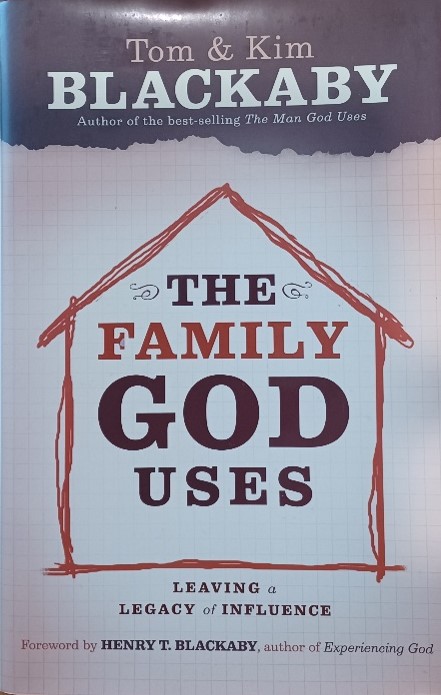
The Family God Uses: Leaving a Legacy of Influence – by Tom & Kim Blackaby

There are many parenting and family themed books out there, but this is the first I have seen that focuses outside the family. Instead of focusing on how to improve one’s family, the Blackaby’s write about how the family can unit around being on mission for God. They write about the value of the family to the church and to God’s work in the world. A number of examples from them personally and others, are included to show how families can serve God together and be used for His glory in His Kingdom. An excellent book for any parents who want their children to grow up with a desire to serve God. Your family can be used by God!

Book Reviews: Andy’s 2024 Reading Experience

I will be sharing a brief review of every book I read this year. Hope you enjoy and hope it encourages you to keep reading.


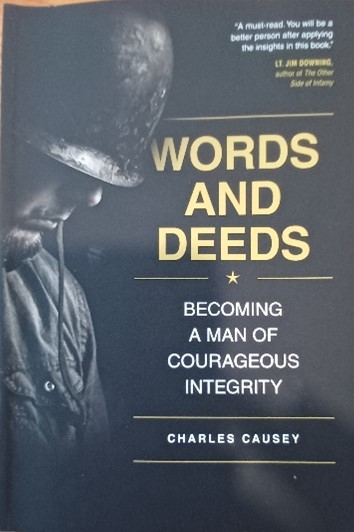
Words and Deeds: Becoming a Man of Courageous Integrity – by Charles Causey

As the title declares, Charles Causey is writing about how our words and actions need to line up. We need to speak up about things that matter, and we need to act on things that matter. He does a good job illustrating the power of words at the right time to challenge and to encourage others. The book includes a diagnostic quiz to determine where you fit as one of his four categories of Sentry, Salesman, Scout, and Statesman. While I didn’t find the quiz all that helpful, I do appreciate how he points out that some are good with words, others with deeds, while we need to be good at both. An encouraging read for any man desiring to live with integrity.

Looking Ahead With Clarity Series: Part 2: Where We Are

We are in the middle of a three part series about looking ahead with clarity. Part 1 was about recognizing where we have come from. I discussed the value of reflecting on how God had used us in the past and what God has been teaching us that may give us a sense of what is next for us. Today I want to suggest looking at the present reality, where we are, and then in part 3 move to where we are going.

When I use my Maps app on my phone, I type in where I want to go, ask for directions, and immediately am asked for “your location.” There is no way of knowing how to get somewhere if I don’t know where I am starting from. We want to look ahead with clarity, so we must be clear about our starting point. We need to ask, “Where am I?”

When I am considering my personal life and goals for this next year, I may evaluate things like my physical health or emotional well-being. If I want to be healthier, I need to be clear on what my reality is right now. If I want to lose twenty pounds, then I need to know how much I weigh right now so I can measure if I am moving toward my goal. A clear and accurate starting point is necessary for us to know if we are making progress toward our goals.

Alberta Einstein has been given credit for the following quote: If I had an hour to solve a problem I’d spend 55 minutes thinking about the problem and 5 minutes thinking about the solution.” While this may seem excessive, too often we want to jump to the solution too quickly. Dreaming about the future is much more appealing than trying to determine an accurate picture of our present reality. Yet, unless we are clear on where we are, we will have a hard time knowing where we are going. If we do not have a clear picture of where we are we will not know how to improve and set good growth goals.

So before you start setting goals, take the “55 minutes” needed to do an accurate reality check. If you want to be better at managing your time, first figure out how much time you allot to different activities in your day. If you want to lose weight, first determine how much you weigh and what the ideal weight for you is. If you are looking to keep growing in your skills, do an assessment of your skills and where you feel you are lacking. Take time for a reality check in the area you are looking to set goals in.

After the reality check, you can begin asking questions of yourself to determine where goals should be set. Here are some questions I’m asking as I look ahead:

  1. How can I improve my health?

Presently, I am overweight. I have less energy than I think I should have. I am eating more than I should. I need to work towards becoming healthier.

2. How can I keep on learning and growing?

Presently, I am reading regularly. I read quite a bit and listen to podcasts. How can I keep growing and developing in my role as a Transition Pastor? I do not want to stagnate as a person and as a pastor.

3. How can I keep growing in my relationship with Jesus?

Presently, I read the Bible just about every morning. I take time to talk with Jesus. Is there something I should change up or add into my life that would help me move closer to Jesus? What format should I use to read through the Bible again this year? My prayer life is better than it has been, but it could still use some improvement. How can I address that?

4. How am I doing financially?

Presently, I have some debt that needs to be cleaned up. I do not like carrying debt other than my mortgage. I spend money quite freely, maybe too freely? I tithe regularly, but should I be more generous this year?

What questions do you need to ask yourself to take an honest look at your reality? You may use some of the questions I ask myself, but I’m sure there are others that are your own questions you are facing. Set aside some time to get your reality clear so that you can set goals with clarity as well.

I’d love to hear how you go about setting goals for yourself. Leave me a comment.

Keep looking up,

Andy Wiebe

Pushing Past Nervousness!

I remember the first time I had to speak publicly to a large crowd. It was only to make an announcement, but I was shaking so bad I didn’t know if I would be able to get the words out. Most of us will be nervous at some point, but if we want to lead, we need to push past the nervousness. Instead of just avoiding leadership, we need to find a way through. Too many people are willing to ignore their interest in leadership rather than learn how to get through it.

I’ve been in roles that require public speaking for 30 years, and still experience nervousness – though not quite like that first announcement I made years ago. Let me share some of the things I do to help me push through.

Prepare Well

I still get nervous from time to time, especially if I am leading something new or if it is a special event that we have worked towards for a while. My first step in dealing with my nervousness is to make sure that I know what my role is. If it is to make a speech, I write it out. If it is to lead an activity of some kind, I make sure I have all the directions written out step by step. Sometimes it is helpful to consider what questions others may ask as I lead, so I can address those in my write-up.

If I need any resources or props, I gather them ahead of time, and place them where I will have access to them as needed. If I am depending on others for assistance, like someone running the presentation slides for me, I make sure the presentation is easy to follow with a clear guide on how they can follow along.

Create a Step by Step Plan.

While this may be part of preparing, I want to make sure I point out that a clear plan helps calm my nerves. If I am preaching or making a speech, I need my script or outline. When leading a meeting I want to be clear on what will happen when, and make sure that my supporting documents are in the order of the agenda. I want to have my documents ready to go, and be ready to call for decisions to be made or actions to be created.

The clearer I am in my head as well as on paper, the less nervous I am.

Do a “Walk-through” Practice.

I like to physically enact the event if possible. This means talking through the talk or reading over the agenda to make sure everything makes sense. It’s a little like the basketball player who shoots 100 baskets every morning. The more we have already “experienced” an event, the more likely we will be more comfortable when the real things comes and execute it better. The practice allows time for correction if you realize something needs changing.

Prayer

As a Christian leader, prayer needs to be part of every aspect of our leadership. I probably should have put this higher up in the article! I pray through every event or talk I lead. I want to be clear that I am doing what God is asking of me. I want His guidance in preparing. I want to hear His voice as I practice to discern if changes are necessary. I want to make sure He gets the glory, and that everything I do gives Him honour.

And as I place myself and my endeavours in his hands, I can relax a bit, knowing that I am not on my own.

Just Do It.

After all the prayer and preparation and practice, there comes a point where I just have to do the event and trust that God will help me do it as well as possible. One of the ways to push through nervousness is to just do it. I’ve found the more often I do it, the less nervous I am. Just this past Sunday, as I was waiting for my time to go up and preach, I realized that I was not nervous at all. God has helped me to push through again and again so that my nerves do not hold me back like they used to.

It’s okay to be nervous, just continue to push through and see how God will help you to do your best for Him.

Keep looking up,

Andy Wiebe

Book Reviews: Andy’s 2023 Reading Experience

I will be sharing a brief review of every book I read this year. Hope you enjoy and hope it encourages you to keep reading.


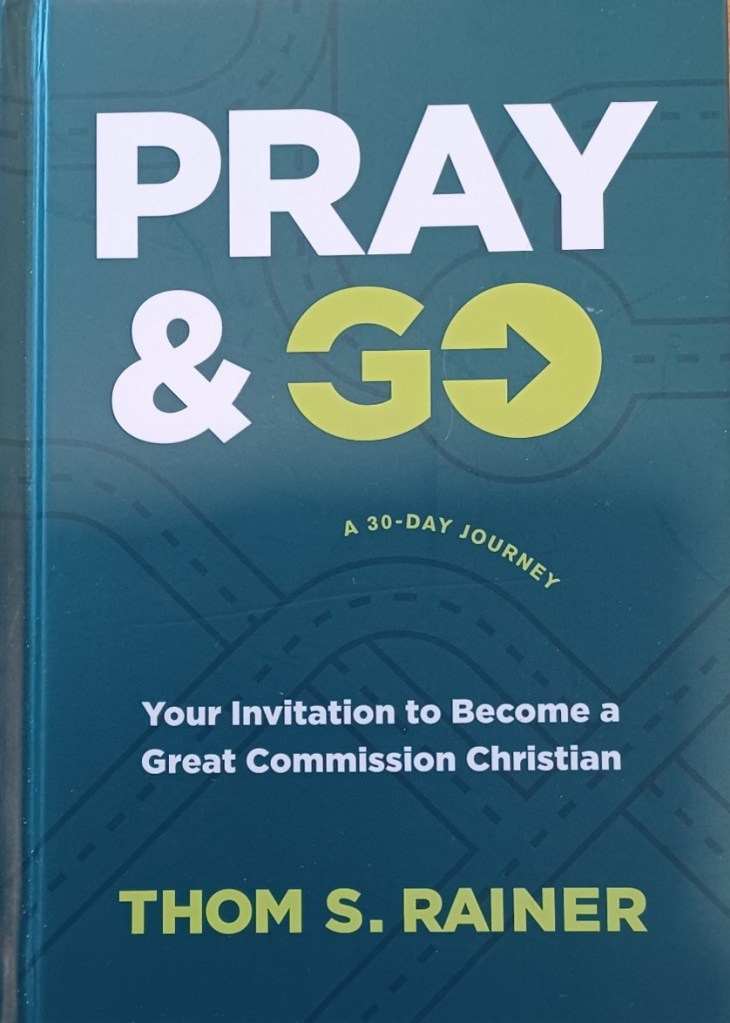
PRAY & GO: Your Invitation to Become a Great Commission Christian – by Thom S. Rainer.

Thom Rainer has written a great book that is used for Church Answer’s Hope Initiative, a 30-day journey that can be done as a group or individually. When you sign up for the Hope Initiative you also get other supporting resources and video encouragement in you 30-day journey. The intent of the book is to help you become more active in sharing your faith as you pursue the fulfillment of the Great Commission of introducing others to Jesus. A great book to help you grow as a disciple of Jesus.

Book Reviews: Andy’s 2023 Reading Experience

I will be sharing a brief review of every book I read this year. Hope you enjoy and hope it encourages you to keep reading.


A TREASURY OF A. W. TOZER by A. W. Tozer

If you have never read A. W. Tozer, this might be the book to get. It is a collection of Tozer’s writings from a few different books he has published. Tozer is an older author who speaks with a directness to his audience and a reverence for our Holy God. Much of his writing focuses on the indwelling of the Holy Spirit and the pursuit of holy living. The short chapters make it a great devotional read.

Curiosity Opens Your Eyes

When our girls were little, I loved seeing the world through their eyes. They were curious about things that I had long become accustomed to and never noticed anymore. They noticed the little bugs crawling on a windowpane. They were excited about the colours of flowers – and weeds. Their little fingers loved to touch the dirt and play in water.

As Christian leaders, we need to reignite our curiosity. We need to be comfortable asking questions, even when we have no answers. It seems that somewhere in our growing up we decided we should be more concerned about answers than questions. Yet questions help us to learn more than answers. They open new ideas and new angles on answers we thought we had sorted out. We need to be more curious.

We should be curious about the people we work with whether on our team or those we serve. We assume many things about each other, and don’t know how little we know until we start asking questions. Ask people about their families, or their pets. Ask people about their dreams and experiences. Be curious enough about people for them to believe you truly care about them. I love learning about people. I love to hear stories of how couples met, or what their families are up to. I love to hear how they started a business and it grew.

Curiosity can benefit us as we give leadership to programs and ministries. It is when we are curious that we ask the questions that no one else is asking. We ask about how the program is really working. We want to know how the leaders are doing. Are they feeling adequate or is more training necessary. Are they feeling they have an impact on those they connect with? Do they have ideas to improve how they run the program and are waiting for someone to give them the courage to try them? When you are curious, you may discover great things happening that you can share with others to encourage them. I enjoy finding people who are serving in an area of their expertise. Some people serve because someone is needed in that role, while others serve because they are uniquely equipped to excel in that role. While willing volunteers are greatly appreciated, I love finding those who are serving in exactly the role they were created for.

Curiosity helps us to learn. As long as we stay curious, we will continue learning. We will search out new books or learn new skills. We will sign up for classes. Curiosity can draw us into new areas of growth as we willingly pursue new interests and new skills. My curiosity has helped me to try new things. When I was a youth pastor, I decided I needed to learn to play guitar so I could lead the youth in singing. I loved it. Some years later I tried my hand at songwriting. I wasn’t good at it but had fun trying. At one point, I learned how to create balloon animals. It was fun learning how to shape balloons into recognizable creations, and then to even use them to tell children’s stories.

Our eyes can be opened to new experiences – and so can our tastes. Just this past week my wife, Lynnette, and I tried a new restaurant, the Cozy Pierogi. I had driven by the place a few times and was curious about their menu. It turned out to be pretty good! As we try something new, we often discover new favourites. Curiosity introduces new experiences into our lives as we are willing to step into something foreign but interesting.

Last week I wrote about the courage to risk. I believe curiosity can pay a part in our courage to risk. Curiosity invites us to courageously try something new to see if it may be better than what we were doing in a program we were running.

We would all benefit from becoming like a little child occasionally, to be curious about things that we believe we have completely figured out. And as your curiosity opens your eyes, you may discover new and wonderful ways of interacting with our world and the people around us.

Keep looking up,

Andy Wiebe

Share Your God Stories

When I was in Grade Four, my Dad felt called to attend Bible School. I remember one time in his third year, where he came to me and my brother, now about 12 and 13 years old. He told us that we had no food left in the cupboards and we needed to pray together that God would provide for us. Money that was supposed to come in had not. So, we prayed. Then, a little later, I remember hearing a sound at the front door. We

opened the door to find four big paper grocery bags full of food. Whoever dropped it off was long gone, but God had put it on their hearts to bring it to us at just the right time! I will never forget that feeling of knowing without a doubt that God had provided!

Just four days ago I was driving early. It was still dark and there was quite a bit of traffic. I was a little wary because we hit a deer a few months ago and I did not want that to happen again. With all the traffic I couldn’t see well. There were headlights shining in my eyes and my low beams didn’t reach into the ditches like I wished. Finally, I managed to get some space between me and other traffic and could turn on my high beams. As I did, it felt as if God was saying “Okay, now you can see. I’m looking after you.” Within seconds there were a couple of deer on the opposite shoulder of the road. I saw them in time and slowed down. As I got closer, they turned and headed back away from the road. And then within minutes I saw a couple of elk on the opposite shoulder of the road, coming steadily onto the highway. Because of my high beams I saw them clearly and came to a stop as two of them made their way onto the road and stopped to look around. Slowly the two of them started walking again and cleared the road. And then, again, because of my high beams, I noticed some more movement just as I was about to drive – a third elk. Where I needed to see, I could have my high beams on and God kept me safe!

When God does these kinds of things, we need to remember them. We need to tell others and pass them on to our families and friends.

There are many stories in the Old Testament that are repeated again and again. Many psalms celebrate significant stories of the people of Israel and God at work. They even had special holiday festivals dedicated to reminding people of God at work. One significant festival was the Passover, a yearly reminder of God freeing the Israelites from slavery in Egypt when the death angel passed over the homes of the Israelites who had painted the blood of goats on the doorposts.

Many of us have had unique experiences with God where we know God intervened in our lives in a way that was much more than coincidence. Unfortunately, even though the event was significant to us, we tend to keep it to ourselves. We need to tell the stories. We need to share them at our Thanksgiving suppers. We need to pass them on to our children and grand children, reminding them that God is still at work in our world.

The problem is that we too quickly forget. We don’t write songs about these significant events like bards of old might do. We don’t write the stories down. Unlike the Israelites, we don’t set up stone altars as reminders of God’s work.

God is still at work in our world. Let’s remember when he works in our lives and lets share the stories with others so we can celebrate God and his goodness together.

Keep looking up,

Andy Wiebe

Rehearsal: A Valuable Aspect of Sermon Preparation

I was an actor in a drama years ago when I was attending Bible College. We received our script and then spent time getting to know our lines. One of the key aspects of preparing for the final show was rehearsals. After months of rehearsing, first individual scenes, and then the entire drama, we debuted a successful show that went quite smoothly and was enjoyed by all.

As pastors and teachers in the church, we regularly prepare presentations. We work on lessons to teach to a class and sermons to preach to the congregation. We all have our methods of preparing for our presentations. We may do some research and pray through what God wants us to say. We may work at preparing just the right outline and finding just the right words to express our thoughts clearly. One aspect that some of us miss is rehearsal..

I like to practice my sermon at least once and have experienced numerous benefits.

  • I hear what it sounds like.

Preaching is not the same as writing a paper. In a paper I might write formally, and there are often clues such as headings and formatting that visually indicate the organization of topics.

However, when preaching, the content is delivered audibly so the same visual clues no longer apply. That means that it needs to be more conversational, even if the audience isn’t responding to you. You need to pretend you are speaking with them. I get to hear if it sounds too formal and change the wording before I preach it “live”.

  • I hear what I sound like.

I can hear my voice as I preach it. I can adjust by slowing down or speeding up at sections I want to highlight. I can hear if I sound judgmental, or if I sound like I care about the audience as I preach to them. If my voice goes too high, or if I say a word in a funny way, I can work at correcting that. Sometimes, what sounds good on paper sounds wrong when we speak it, so I can adjust that.

  • I can anticipate their responses as I practice.

I try to do this as I write, but sometimes, as I practice out loud, my mind hears how it sounds and reminds me of a question that may be raised by what I just said. I can then determine if and how I need to address that question.

  • I get a better idea of how long it will take.

Often there is an expectation on how long – or short – our sermon or lesson should be. When practicing it out loud, I can time myself and get a pretty good idea of how long I will take. I can also adjust to the time before I go live.

  • I can see how my actions will look or feel like.

As a presenter, I enter into the presentation with my whole body. I can smile and frown. I can raise my hands in excitement or open my arms wide to imply something big.

As I practice the sermon, I move around and go through my actions as I expect them to be. If they seem awkward I can either drop the actions or practice them enough to feel comfortable using them. Some presenters will record themselves so they can see what they actually look like.

  • I get it ingrained in my head.

Speaking the sermon out loud helps me to get it ingrained in my mind so that I am not just reading content, but it becomes part of who I am. In this way, hopefully, it will not just sound like I am reciting information I have researched but will sound like something I have learned personally and am passionate about sharing with those listening.

  • I think of new illustrations as I go.

Sometimes, practicing my sermon out loud will help me think of illustrations I didn’t think about when just writing words down. Saying the words out loud can remind me of something else that helps explain what I am teaching.

  • I can recognize when something needs to be reworked.

There are times when I have written things down in the wrong order. Just the other day I recognized that I was missing a section of the scripture I was preaching on. Somehow, I had missed including a place where we would read those verses. I was able to put that in because I noticed it in practice.

As we prepare for lessons and sermons, we want to do our best to communicate God’s truth accurately and creatively. Rehearsing your presentation is one way of making it even better.

Keep looking up,

Andy Wiebe

Church Leadership Series: Part 8: A Church Leader Must Not Be A New Christian

A church leader must not be a new believer, because he might become proud, and the devil would cause him to fall.

1 Timothy 3: 6 (NLT)

It is a great joy to welcome new believers into the church! But Paul gives a warning: “A church leader must not be a new believer.” We should look to those who are spiritually mature to lead us.

Paul doesn’t give us a length of time to wait, just that we are to wait. This is good, because some new believers mature faster than others. There are some who could take years to be ready while others might be ready in a year. The important thing is to give the new believer time to learn and grow in their faith in Christ.

What might be some problems with new believers in church leadership? Paul, in his letter to Timothy cautions that a new believer put into leadership too soon may become proud. The new believer may see this leadership role as a position of elevation in the eyes of others and think of themselves as something special, rather than as a servant. And Paul is concerned that this new believer, in their pride, may fall. The NIV puts it like this: He must not be a recent convert, or he may become conceited and fall under the same judgment as the devil. The devil fell because of his pride. He wanted to be higher than Jesus. Paul is concerned that a new believer will fall prey to the same sin and hurt his walk with God.

Other concerns may be tied to some of the earlier instructions given to church leaders. A leader needs to have a good reputation and live a goldy life. The new believer may not have that to begin with. He may need to have time to mature and become more like Jesus, and to gain that good reputation with others around him.

Another concern may be that a new believer will not be able to teach in the same way that a mature believer can. If a new believer is good at research, they may be able to put together a good lesson, but their teaching would generally be theory because they have not yet had time to put into practice what they are learning as a new follower of Jesus.

A new believer may also still carry sinful habits. He needs to learn to set those aside before stepping into leadership. While it is great to desire leadership, there should first be a strong desire to live in right relationship with Jesus by the power of the Spirit.

Churches often talk about discipleship when referring to the process of maturing as a believer, where over time the new believer becomes more and more like Jesus. A new believer would benefit from some discipleship first, whether formal or by spending time in the activities and teachings of the church. Part of that discipleship could include observing and learning from the leadership board or shadowing a leader as they go about their duties.

The official church leaders should be people who have already shown their leadership in the church as maturing believers. Asking them to serve on a board or a committee is a natural next step, affirming that they are already one of the people that others naturally look up to and learn from. Ongoing discipleship prepares maturing believers for the next steps in church leadership, taking on smaller roles to begin with and then being asked to higher levels of leadership as they prove themselves.

Church leaders should be mature and passionate about Christ and His church. They should learn and develop and grow until they are among the best in the church and well prepared for leadership. If you are that new believer, then do your part to continue to grow and be discipled as opportunities allow. God will build you up to the time when others recognize you have already become a leader. When that happens, step into leadership with a confident faith in God and a desire to serve.

Keep looking up,

Andy Wiebe