Pursuing Excellence: Plan Your Sermons a Year Ahead

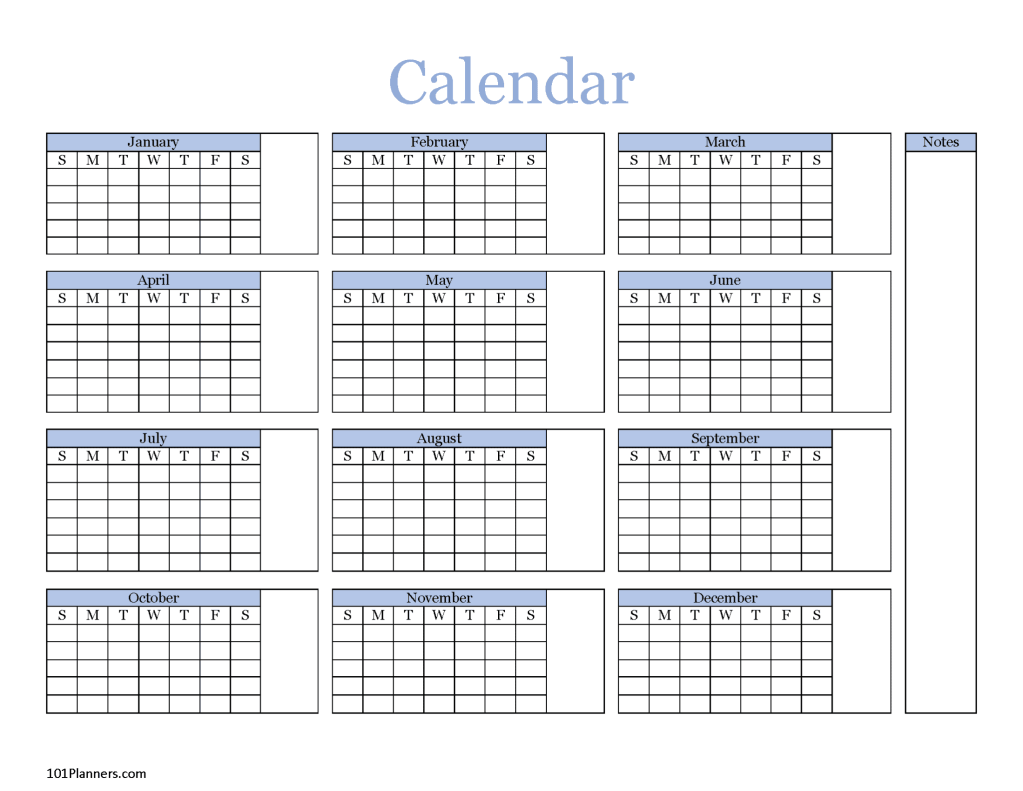
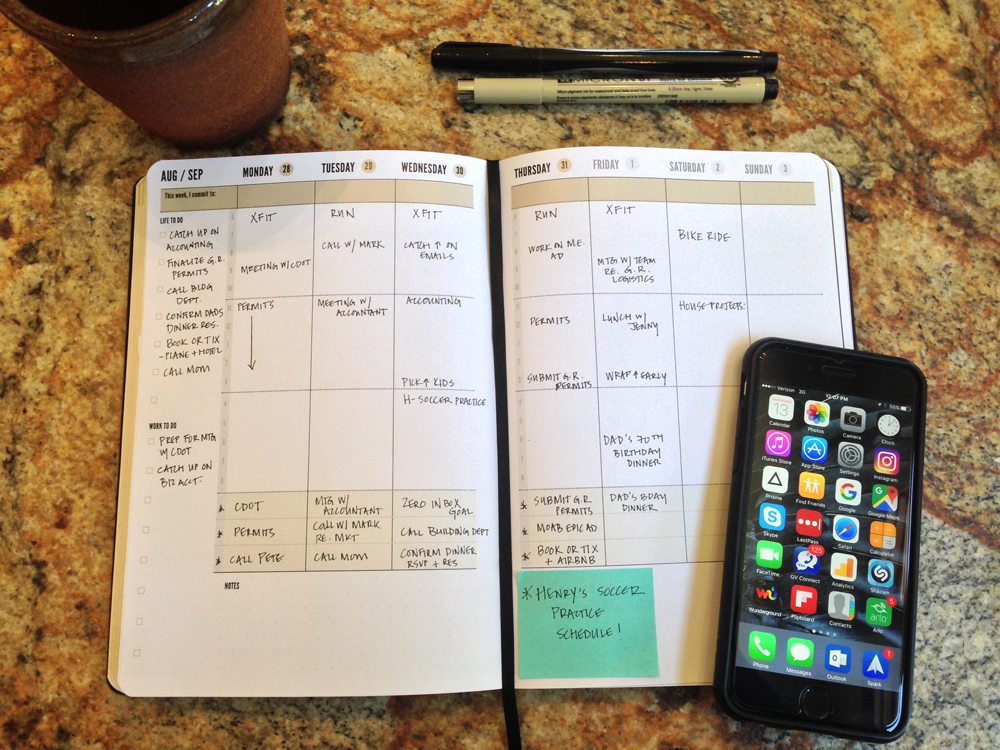
Life happens at a pretty steady pace. In fact, unless you plan ahead, you will be dragging behind regularly, just barely keeping up. It is valuable to set aside time at regularly to do the work of looking ahead. For preachers, there is always another sermon to prepare. Unless you plan ahead, it is difficult to spend adequate time thinking through how to preach a biblically accurate, relevant, and creative sermon. The more you plan ahead, the more time you have to think through and improve each sermon.

1.Natural Blocks of Time

I begin by determining the number of Sundays between natural breaks. For example, if I was going to preach on Christmas through Advent, and typically think of the church “year” from September to June, that means I only have September through November for a longer series. I could preach through a book of the Bible with that many weeks. Or, I might do a series for September and make a change at Thanksgiving. After determining how many Sundays for natural blocks of time, I start praying through and listing what I feel I need to preach on in the next 12 months.

2. Congregational Needs

There are times in a church where it seems the congregation needs a certain topic addressed. For example, I am presently leading a church transition ministry, meaning I come into a church that is newly without a pastor and is looking toward hiring the next one. Sometimes the transition is a painful one, where people have been hurt by the pastor or each other. Many transition pastors preach a series on the “one anothers” of the Bible. (“Love one another” or “forgive one another” and so on). The hope is to help people to restore their relationships and trust in each other.

As you pray and think through the needs of your congregation, God will guide you to which books of the Bible or topics to address. You could invite your leadership team into the process by asking them to suggest needs they see in the congregation. If you know that most people are going to take holidays over the summer, you might want to plan a summer series in which each sermon doesn’t build on previous sermons but can be fully understood on its own. If people miss a sermon, they are not falling behind.

If you have a number of new people, you may want to address some of your denominational and local church beliefs and priorities. Or if your church includes many new Christians, you might want to introduce them to Jesus through preaching through one of the gospels over the next year. You could intersperse it with thematic series at Christmas or leading up to Easter, or just preach right through the gospel.

If there are themes you feel need addressing but don’t fit in your preaching schedule, you could address some of those needs in a class or weekend seminar.

3. Main Idea of Each Sermon

Once you have decided which of the books of the Bible or themes you want to preach on, begin breaking them down to what scriptures will be preached which Sundays. Make sure each independent sermon builds on the theme you have decided on. After identifying the scripture for each Sunday, develop the basic sermon idea. This will not necessarily be the final decision, because at this point you are just doing a quick survey of the material. You may adjust the main idea later, but you want an outline of the focus for each sermon so you can begin to collect supporting materials, ideas, and stories for that focus over the next year leading up to each week’s sermon.

Develop the main ideas well enough so that you can give the music and creative service planning teams about six months’ notice for them to gather material for that Sunday that will fit with the sermon.

4. Monthly Glances Ahead

Each month, spend time looking at the next month’s sermons, reminding yourself of upcoming themes and topics. This helps you watch for how things like the news or world events are speaking into what you will be preaching about, as well as how that sermon will speak to local needs. Keep in touch with those who will be leading music or adding other creative ideas into the service so you are working together and building one cohesive service.

Prayerfully start to define the main focus of each sermon more specifically. Ask God to give you and your team creative ways of speaking truth and applying it to each one who will hear.

5. Weekly Specifics

As you work through the details of planning the sermon and accompanying service for the next Sunday, work closely with any volunteers who will be part of the service. Communicate your theme clearly and make sure you are on the same page with all who will contribute. Pray about the applications you will include in your sermon, and ask God to direct your final preparation so that lives will actually be transformed through what God has helped you prepare.

It is a privilege to weekly stand before a congregation who is waiting to hear from God. Put in the time necessary to be biblically accurate and creatively relevant to your congregation. God will reward your efforts as you continually listen to His guidance right from the time you determine what book of the Bible to preach on to the time you wrap up the conclusion of your sermon.

Keep looking up,

Andy

Pursuing Excellence: Plan Your Year

Pursuing excellence involves a number of different aspects. One of those is to plan ahead. The difference between mediocrity and excellence may come down to how well you plan.

Planning ahead gives you time to work on your project or event. When you start planning earlier, you have more time to think it through, prepare and determine the best way to complete the project. Giving yourself this extra time to think about your project means that you have longer to think about it and come up with ideas than if you are scrambling to get everything together last minute.

Pastors and church leadership teams, plan your upcoming year. While many people plan their years from January to December (I tend to plan my personal goals to begin in January), when it comes to working with churches, I suggest thinking of the year as starting in September and finishing in August. This is because church activities usually follow the school year, starting and ending about the same time the local schools do. In order to be ready for September, I suggest you actually do your planning in May.

Benefits of Planning Ahead

Planning ahead helps you improve whatever you are planning, because the earlier attention to the project results in more time given to consider it. This extra time can be used in numerous ways:

  1. You can gather the best team.
  2. You can train and equip your volunteers ahead of time.
  3. You can let life enhance your creativity – your reading and TV watching and living of life will give you ideas you did not have when you first began planning.
  4. You can find great ideas, not just good ones. Instead of settling for the first idea your team comes up with, consider how to improve on that idea. Your programs will go from good to great because of the time to percolate in the minds of the creative teams.
  5. You can build better resources and materials required for the project.
  6. You can spend more time in prayer, asking God to guide every aspect of your planning as well as the final implementation.

Plan Your Year – Start with the Big Events

Begin planning for your main programs of the year. Work with program leaders to determine the start and end times for their programs. If your programs start in September, leaders should be determined by the end of May, so they can start planning their programs and find their volunteers from June through August.

Are there a few big events or weekends your church celebrates? This could be a church camp or a family weekend, as well as Easter, Christmas, and a Fall Kickoff. Set the dates and work on developing themes. Decide who should lead each event and who should be on each team. Make sure that everyone involved knows the pertinent information, such as dates and themes, as early as possible. Plan when to do baptism and membership classes, as well as when to have the baptism and when to receive new members. Plan when and what you will do for evangelism and outreach activities throughout the year.

Once the basics of the big events are planned, start filling in the other Sundays and other activities. Pastors can work on sermon plans for the year ahead. (I’ll share more about how I plan my preaching year next week). Knowing in advance what you will focus on, give additional time to improve the sermons with good illustrations and pertinent information. By creating a year-long plan in advance, you not only give yourself more time for sermon preparation, but you also provide your worship and service planning teams that same additional time to create the best services they can.

The themes for each Sunday will come from the pastor after he plans out his sermons for the year. With a plan for both large events and sermon themes, add other activities to your plan. For example, identify when you should hold leadership meetings or training and discipleship events throughout the year.

After your yearly calendar has been filled, build in further detailed planning every quarter or so. Planning ahead involves a few stages: 1) Planning the year, 2) Planning 3-4 months ahead, and 3) Planning the week ahead. For example, begin developing detailed plans for Christmas by the end of September. Plan for Easter in January. Plan for September program starts in May.

As you plan ahead, the goal is not just to put on a great event or program, but that whatever we plan in the church will transform lives and bring us closer to Jesus. Pursuing excellence is not about performing flawlessly, but doing our best to help everyone involved become more like Jesus.

Have fun in you planning, pray for God to guide every aspect, and then rejoice as you see people impacted by God through events and activities you planned.

Keep looking up,

Andy Wiebe
Plan a Restful, Renewing Break

Some people come home after a holiday, wishing they had a week off at home to recover. Holidays are not always restful. Sometimes we use vacation time to meet up with family, which can be really good – or really draining. Sometimes we fill our vacation with so much activity that we come home exhausted.

We all need a break from time to time. For many people, these next two months are the window within which we can plan our holidays. The weather is nice, the kids are out of school, and many organizations slow down over the summer.

It is the perfect time to take some time off. But there is a big difference between taking time off for a busy vacation and having a restful and renewing break from the busyness of life.

If you need a week off to recover from your vacation, you are too busy on your vacation.

It is tempting to use our holiday time to do the many things we wished we could do all year. Maybe we stay home but are constantly on the go with golfing in the morning and swimming with the kids in the afternoon and campfire with family in the evening. While all those things are great, unless we actually take time to slow down, many of us will feel just as tired, if not more, when we return to work.

Is the summer the best time to take a vacation?

Many of us assume that we must take our vacation in the summer, but is that true? Is that best for you and your family? Do you already have weekends off? Why not make the most of them during the summer? Enjoy the slower time in the office and the relaxation of being home with the kids without running off to all kinds of sports or school activities. If you are one of the families who have kids in summer sports you may not have this luxury.

Vacation during a busy season may be more helpful.

Some of us may have the freedom to take a vacation during other times of the year. You might even benefit from lower off-season prices at hotels and vacation spots. In this way, taking time off during a busier work season can be more refreshing than during a time of year that may be slower. If it is possible to take a week off during one of your busy times, you may just come back with more energy and get more done than if you just pushed through as usual.

But we have to take holidays when the kids are out of school!

One father said, “We never let education interfere with our holidays.” You may be able to take your children out of school for a bit if they are in lower grades and they won’t miss much. As they get older you could take your vacation during their school breaks in the middle of the year. If you are really concerned about what they will miss in school, ask the teachers if they can give you some assignments for the kids to work on during your time away.

Find ways to rest and be refreshed and renewed.

There are times to plan holidays with every day and hour filled with activity. There are other times where you recognize you need more sleep and time to slow down and just be. If you are a normal busy family you might benefit from time to just be together without having all kinds of activities on the agenda. Maybe you can rent a cabin on the lake, or go to a resort, and then just do whatever comes up in the day. Feel free to go for a swim when you want, or nap beside the pool. If you like reading, bring a good book. If your family plays board games, bring some to play in the evenings. Just enjoy being together and resting from your busy life.

Take your vacation time!

There are people who pride themselves on not taking all their vacation time. That is ridiculous! If you have the time, why not take it? If you don’t get paid holidays and don’t have money to do much, make your time off count with a “stay-cation” in your own backyard. Take the time for yourself and your marriage and your family that is available to you. Treasure the time you have together while you still can!

Give yourself permission to slow down and do the “nothing” of relaxing. There are times when it is quite okay that we haven’t accomplished anything in the day, except be together with the people who matter the most. Take your time to slow down and relax so you are ready to go back to your busy lives when the vacation is over.

Have a great summer, and if you are on vacation, take time to slow down.

Keep looking up,

Andy

Embrace the New Year With Purpose

The New Year always brings questions about resolutions. “What are your New Year’s Resolutions? Do you have New Year’s Resolutions?” In a New York Post article, Shireen Khalil (Dec. 21, 2018) wrote, “Research conducted by Strava, the social network for athletes, has discovered that Saturday, Jan. 12, is the fateful day of New Year’s resolutions.” This was based on analyzing 31 million global online activities.

I still like the idea of marking January 1st as a new start. Make it a day where you both, look back and look ahead. Celebrate your past year, then look ahead to what is next. Instead of resolutions that often don’t make it to the end of the month, make January 1, or shortly thereafter, a day when you set goals. Resolutions can be broken quickly, and then your resolve disappears with it. Goals, instead, give you something to strive for. Instead of saying you won’t eat any apple fritters from Tim Hortons for the next year, set a goal of losing weight. If you happen to have a fritter, you would have broken your resolution, but you haven’t ruined your goal. Just consider it an infrequent event that has not destroyed your whole goal. You still have the rest of the year to keep working on it.

Goals help you to live with purpose. So what do you want to do on purpose this year?

I want to continue to grow in my relationship with God. If I make a resolution to read my Bible every day, as soon as I miss one day, I have broken that resolution and broken resolutions usually makes us quit pursuing what we were going to do. A goal to read the Bible in a year encourages me to just pick up my Bible again the next day, even if I happen to miss one.

SET A FEW GOALS

What goals would help you live your life with purpose? What are some things that will enhance your life and the lives of others around you? People often suggest setting goals in areas of personal health, or social connections, or something regarding your career or further education. If you want to accomplish a certain project – building your own canoe, or writing a book – then set that as a goal. You might want to set goals in your spiritual life. If there is something you have been struggling with and you want to overcome, design a goal around that. Don’t be afraid to set a goal that may seem out of reach, Identify sub-goals that help you get there, like planning to meet with a counselor at least three times this year to work on that habit I want to break. Choose goals that help you become who you want to be, who you believe God wants you to be.

Do not set ridiculous goals. If you weigh 350 pounds, and are struggling doing stairs, it may not be a good idea to set a goal of climbing Everest this year. But you could set that as a goal in a few years! Set a realistic goal for this year that will help you to move toward the bigger goal. Set a goal of working out regularly at a gym, and another of losing a certain amount of weight. Maybe a third goal would be to start putting aside the necessary money that trip might cost. Set a goal of getting as informed about Everest and mountain climbing as you can – maybe read a book along that theme every month.

Set goals that are realistic, but also a little risky. Maybe you can’t climb Everest this year, but you can plan on doing a 10 K run. It will give you a goal to work towards that will help you tackle Everest later.

If what you want to achieve is too big for one year, then set the timeline 2-3 years from now. Then set short-term goals for this year that will move you toward that goal.

WRITE THEM DOWN

Thinking about goals is one thing. Writing them down is a completely different thing. Writing them down means you have thought about it enough to actually verbalize it, on paper at least. Feel free to do some rough drafts. Write down things you would like to do or experience or accomplish. You may have to weed them out a bit to get down to about five goals to work on for the year. One tool that has been a great help to me is the Full Focus Planner. Look it up at FullFocusPlanner.com. It helps you plan goals for the year, and then breaks them down into quarters, three months at a time. Each quarter you write down goals that will move you toward the larger goal. And then it even helps you break it down more to work on the goals weekly. It has been a huge help to me.

Writing them down gives you something to refer back to. Post them somewhere that you will see them every day. Put them in you journal, or day planner, on your phone or the fridge, or all of these. When you see what you wrote down, you remind yourself regularly what you are working towards. You are now beginning to live your life with purpose.

SHARE THEM

Often, we need others to help us in life. The same is true when it comes to setting goals and working towards them. Share them with someone you think will encourage you in them. If you have a goal of working out at the gym regularly, you would do better to share that with a friend who is doing the same thing, rather than a friend who thinks a workout is carrying in the groceries from the car. If your goal is to write a book, share this goal with someone who thinks you can do it, and who will encourage you to do it. Sharing a goal, speaking it out loud, helps reinforce your determination to do it. Sharing it with someone who will hold you accountable to it, reinforces your goals again.

With some goals, you may even ask someone to check in with you regularly to see how you are doing. Maybe you have a friend who you can encourage toward their goal as they encourage you towards yours.

You might consider getting a coach who can help you toward certain goals. Maybe a trainer at the gym, or a life coach who can help you think through what is holding you back. Maybe you are hoping to improve your leadership or pastoral abilities as you pastor a church. Let me make a shameless plug here for Elevate Coaching & Consulting, and invite you to reach out to me for some coaching to help you live your life with purpose.

REMOVE DISTRACTIONS

Writing down your goals and sharing your goals with a friend are powerful steps to help you reach your goals. Yet sometimes there are too many other things that distract us from living with purpose as we planned.

Remove distractions. If you have goals regarding health, you may do well to remove the unhealthy items from your cupboard. If you have a goal of reading your Bible every day, you may want to get up thirty minutes earlier than everyone in your house so you can focus without others demanding your attention. You may need to remove certain events or activities from your schedule to make time for the purposeful steps you are taking. For example, you might quit your bowling league to make time to work out at the gym. You know what might distract you. You will figure out how to remove those things.

I encourage you to take some time to set some goals in the next week so you can live your life with purpose.

Keep looking up,

Andy

Enjoy a Fresh Start Everyday

I am usually the first person up in the morning at my house. I am often one of the first people up in my neighborhood. There is something special about the beginning of a new day. The “early bird gets the worm” they say. Many successful leaders are up by 5 or 6 am, to start their morning routine. More important than rising early, is the fresh start that each new day brings.

Every sunrise you an opportunity to start your day over. This is not reliving the same day like Bill Murray in Groundhog Day. We get to start over by starting at the beginning of another day. It is a fresh slate. There is something really freeing about a not-yet-lived day. You haven’t made any mistakes yet.

A Sin-free Day

Some of us may need the following prayer: “Dear Lord, so far today, I am doing alright. I have not gossiped, lost my temper, been greedy, grumpy, nasty, selfish, or self-indulgent. I have not whined and complained. But I am getting out of bed soon, and I will really need your help.”

Each new day is a day when we have not yet sinned. You know the things that happened yesterday, but today you get to start over. You know where you failed, and you know what you need to improve. If you want to, you can make a renewed effort to avoid the sins of yesterday. If you have repented and confessed the sins of yesterday, God has forgiven you. You have the privilege of relying on the power of the Holy Spirit to make it a day that honours God.

If there is a “sin that so easily entangles” you, you can make a concerted effort to avoid it. “Throw off everything that hinders and the sin that so easily entangles. And let us run with perseverance the race marked out for us” (Hebrews 12:1). Begin your day with prayer, maybe one with a little more sincerity than the one above. Talk with your heavenly Father about your desire to be holy as he is holy. Take deliberate steps to remove anything, or stay away from anything or anyone that tempts you to sin.

A Discouragement-free Day

Some days are much harder than others. Sometimes we have more of those difficult days than we would like. There are days we wish we could forget. The benefit of a new day is no one has said anything bad to you yet. Nothing has happened to discourage you. So far, nothing has gone wrong. Oh, some of us are quick to come up with potential problems, but they have not yet happened. So don’t bring on trouble that is not yours.

I like how Jesus teaches about worry in Matthew 6:34: “So don’t worry about tomorrow, for tomorrow will bring its own worries. Today’s trouble is enough for today.” Or we could say, don’t worry about today, since you haven’t lived it yet. Leave yesterday’s troubles to yesterday. Don’t worry about tomorrow. And focus on the moment and the start of a fresh, worry-free day.

So far you have nothing to feel guilty about. You haven’t brought on discouragement by falling short of a goal you had or a standard you wanted to meet. At the start of the day, you are free to enjoy a clean slate.

Maybe yesterday was not a good day. You gave in to temptations. You had things go wrong. Someone was mad at you. We could think of all kinds of things that made yesterday bad. Okay. Get up again, try again. It’s a new day. Yes, you messed up terribly yesterday. Yes, life threw everything at you that it could yesterday. Get up with a renewed spirit, a renewed energy. I like that God has given us seven restarts each week.

Daily Rituals

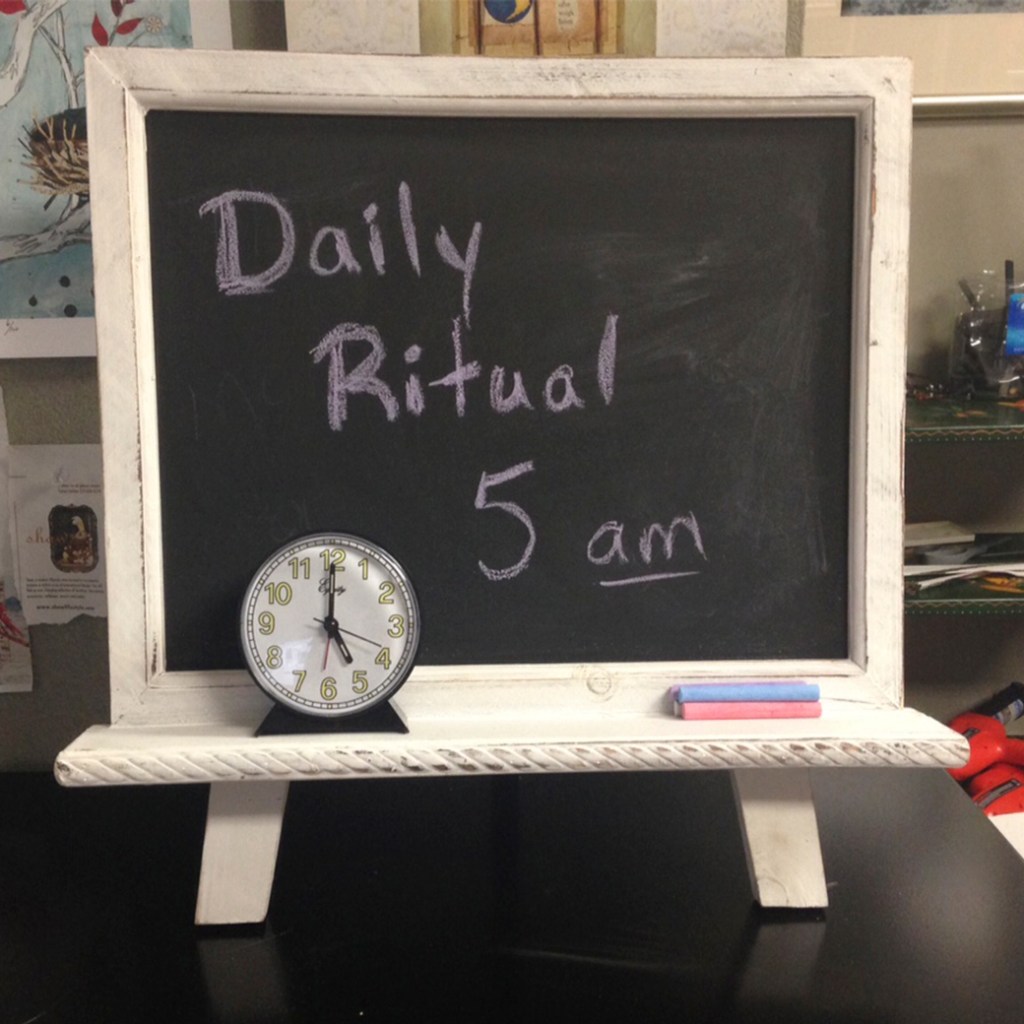
Start your day with good, daily rituals. Do the things you know will help you start on the right foot. This is one of the reasons I get up earlier than everyone else. I do not like missing my rituals because if I don’t do them first thing, I will not do them later in the day. I actually have some evening rituals that set up my morning rituals.

I lay out my clothes for the next day so that I will not wake up my wife by turning on the light or digging through drawers looking for matching socks.

As soon as I’m showered and dressed, I sit down in my big chair in the living room. I reach for my Bible and journal. I start with prayer journaling a conversation with God, which then leads to my daily Bible reading, and a prayerful response to what God is saying to me. Next, I open my daily planner to review how I did with yesterday’s goals and set the goals for today. Mondays I set goals for the week.

These rituals help me to start the day with the things I believe are important to me. You can develop your own rituals that work for you. Getting up early helps ensure I will do what I think is important.

Fresh Orders

One of my morning rituals is to plan the day. I do not approach this lightly. After spending time with God in prayer and Bible reading first, I want to make sure these are not my goals, but fresh orders from God for the day. Sometimes there are things that come up in my time with God that it seems God is telling me what he wants me to do this day.

Getting up early to pray is following the example of Jesus. “Before daybreak the next morning, Jesus got up and went to an isolated place to pray” (Mark 1:35). If Jesus needed to check in with the Father first thing in the morning, then that is probably not a bad idea for me.

Not only does each new day mean nothing bad has happened yet, it also means nothing good has happened yet. So I want to plan I will avoid sin and discouragement, and I also want to plan to do good and right. As I check in with my Father I get some idea of what I need to do this day.

You may not like to get up early. You don’t have to. But I want to encourage you to cherish each new day as a fresh start and an opportunity to check in with the Master for fresh orders for the day.

It’s a new day. Treasure the opportunity to start with a clean slate. May God help you fill in the day with wonderful moments where you see God at work in and through you.

Enjoy a fresh start every day.

Keep looking up

Andy

Planning Ahead Raises Your Level of Excellence

My wife and I are planning for a short holiday. We are planning ahead. We are planning for the middle of January 2022, about three months from now. Planning ahead his beneficial for a few reasons: we can make sure we have time off, we can get a cheaper price, we can make sure that everything will be taken care of at home while we are away, we can set aside a little extra money in the next couple of months, we can try to prepare for any covid-related restrictions or obstacles, and we get to build excitement as we anticipate some time for just the two of us away from home and the daily routine. Planning ahead means that it will be a much better experience than if we had just decided to wait till a few days before and then quickly tried planning something.

I’m sure you do some planning for events in your home. You plan to be at your kids’ sports activities. You plan for Christmas. Your child is planning for graduation.

Why is it that we seem to avoid planning too far ahead in our churches?

Sermons and services are prepared each week from scratch to be ready for Sunday. Meetings come up and we rush to make sure there is an agenda and then run off to the meeting. We arrange for a visit with church members, but hardly give it a thought until we arrive at their door. What if we planned ahead?

Planning ahead is valuable, and can raise the level of excellence in your ministry. Planning ahead:

  1. Demonstrates that you care about what you are planning – you have put some thought into it rather than just hoping it will all work out.
  2. Means you have a clarified vision and purpose – and gives you time to develop and apply those.
  3. Results in well-prepared events. You have time to research each aspect and prepare any documents or tools you need to make the event a success.
  4. Allows others to be involved in the planning process. You can work as a team, and can collaborate with others who are part of that event.
  5. Avoids conflicts. You can make sure to avoid any conflicting appointments or events at that time.
  6. Helps you test your plans. You have time to work on issues you may face at the event.
  7. Gives you more time to spend in prayer ahead of time.

Let’s look at how planning ahead raises the level of excellence of the event.

Meetings

If you plan ahead, you can make sure all the people who should be at the meeting are notified in advance so they can either book that time for themselves or let you know of conflicts so you can reschedule. Planning ahead allows you to ensure you have an appropriate meeting room, necessary research and documents are prepared, and an agenda can be created with participant input. You can even arrange for someone to provide drinks and snacks. This also gives you time to ensure that you are comfortable with the technology you will be using (and test any videos, etc.) or that tech support will be available.

Visits:

Most pastors will at some point visit with members, either at their home or over coffee at a local restaurant. You could just show up and hope the conversation goes well, or you could plan ahead. If you want to raise the level of excellence for a visit, do a few things to prepare. You could make sure you know who you are meeting, especially if you do not know them well. I once was asked by a funeral home to call and provide pastoral help, to a family who had lost a loved one. I called and asked for who I thought I was to speak to, only to realize I had gotten things confused and I was asking for the deceased father! Make sure you know who you are meeting with.

Even if you know them well, you may want to think of past conversations.  Have they asked for prayer recently? It might be good to check up on that. You might want to remind yourself of who is in their family, and the names of their children.

As the pastor, you might even think through where they are at spiritually and how you could use this meeting to help disciple them. Are there some issues that you want to challenge them with? Is there a volunteer position you would like them to consider?

And be ready to have a fun and enjoyable time with them.

Worship Services

The Sunday morning worship service is the main event in a local church. While there are numerous moving parts to the service, it is amazing how many churches don’t plan very far in advance. Too often staff and volunteers rush around each week to be ready for Sunday. This means there is little opportunity to consider anything creative, and instead, to keep up each week, churches keep doing the same old service each week with just a couple of different songs and a new sermon.

You, pastor (or preaching team), would do well to plan ahead. I have tried to usually plan a year ahead. This allows me to think through the needs of my congregation, and plan around and for special days and seasons throughout the year. Taking this approach has allowed me to prepare a balanced preaching schedule, so I’m not surprised when Easter or Christmas arrive.

I don’t have every sermon prepared a year in advance, but I have a general idea of the scriptures and themes I will be addressing throughout the year, so that they are in my mind as I come across good quotes or creative ideas that fit a certain upcoming theme.

Planning the sermon text and themes ahead of time means I can better work with others, too. Sharing the upcoming sermon themes with a music pastor or worship planning team means they can also plan ahead. They might want to prepare special music around holidays or special events, or add creative elements such as preparing a skit or reading. This enables others involved in the services to prepare in a way that complements the sermon.

You raise the level of excellence when everyone involved knows what is going on and can make sure their part fits well. You raise the level of excellence when people can practice and prepare ahead of time for some more unique additions to your service. You raise the level of excellence by having the time to do better.

I want to encourage you to plan ahead. Not just for meetings and visits and services, but in all your responsibilities.

Do you want to raise your level of excellence? Planning ahead is a great place to start!

Keep looking up

Andy

www.elevatecoaching-consulting.com

Chasing Rabbits and Other Distractions

A pastor must know how to keep focused and avoid distractions. We probably all remember a teacher or professor who loved going down rabbit trails. If someone asked the right question, he would get distracted from the topic at hand and head in a completely different direction. Pastors face many distractions daily, and need to know how to keep focused on the right things.

Staying focused requires a sense of clarity in both one’s role and purpose. What is the vision of the church? What is your personal role in accomplishing that vision? What needs to be done this week or this day?

COMMON DISTRACTIONS

Unannounced Visitors  

Many pastors have methods of protecting their sermon preparation time. For example, they may have set “office hours” when they know they will be in the office and their door will be open to visitors. They may have a secretary who helps protect their schedule. The smaller the church, the freer people are to show up and wanting to talk with the pastor. Larger churches often have administrative staff or offices located in such a way that visitors can’t barge into the pastor’s office, but this is not always the case for small churches. The pastor may be the only staff, and the pastor’s office may be near the front door. There is no easy place to avoid the unannounced visitor. In these situations, the pastor could put a sign on his door asking not to be disturbed or choose to work in a coffee shop, or in their home office.

The Big Question             

When interacting with people, you may find yourself distracted by big questions. Some people love to ask their pastor specific doctrinal or theological questions. They may be wanting a real answer, or they may be hoping to just stump the pastor. You need to decide which questions need an in-depth study for you to respond, or which ones you need to redirect back to the questioner. You do not need to answer their every question.

We Should Do This          

Often a pastor will hear from one of their members, “We should have a program to do…” They suggest a program or ministry they heard another church was doing and think your church needs to do it too. You need to be clear on the vision and priorities of your church as you and your leadership have determined. When people bring suggestions, you can remind them of the priorities your church has set.

There are times, though, when someone comes with a question – or an idea and, may be speaking for God. They may actually suggest something that God would have you do. One man came to visit me at one church and asked if we had anything for single moms. His daughter and grandson had moved home and he thought they could really benefit from meeting other moms. This happened to be one conversation among a few others that made us realize God was asking us to do something. The end result was a Moms and Tots program which was very well received by both church and community moms.

Hobby Horses   

Years ago, I was in a church where one Adult Sunday School teacher would end up directing the attention of his class to “New Age” issues in every class, no matter what topic the class was supposedly studying. Recognize when members are getting hung up on hobby horses. Some pastors are like this, where everything comes back to one or two key issues. When they preach, they always have some reference to their pet topic. Beware of that, as it distracts from the message of the sermon.

Technology        

The covid pandemic, and its accompanying restrictions on meeting, has forced many churches to adopt technology they never tried before. I am amazed at how many churches were able to find a way to stream their church services to people at home! But not all technology is necessary or helpful. Sometimes we get caught up in the amazing new options out there, and spend time and money on things that make no difference to our ministry, and may even distract us from achieving our vision. Make sure that what you spend time and money on will enhance your ministry, not distract from it.

Know Your Focus

What distracts you? What trails do you tend to veer onto? It may be something mentioned here, or something else. No matter the distraction, the best way to prevent losing focus is to be clear on what you believe is important. Time spent on clarifying your vision, priorities, and strategies as a church is time well spent. This narrows your focus and keeps you from being distracted. It is a tool to help you determine if something is a distraction and how you should respond. Everything that comes up can be measured against this purpose. Know your focus and you will spend less time on distractions.

If you would like help clarifying your vision and priorities contact me.

Keep looking up!

Andy

Find Ways to Enjoy Every Season of Your Life

The yellow and red leaves on the trees are ushering in our Fall season. I love the different seasons we have in Canada. There is a clear winter, usually with lots of snow and cold weather. There is a clear summer where it can get quite warm. We had 40 degrees Celsius this summer in northern Alberta. In between we have Spring where nature around us is waking up from its long winter nap. And we have Fall, when we see the green of summer change to the red and yellow of fall, and then the white of winter. Each season has an official day of beginning and ending, but nature follows its own schedule.

Each season has certain activities associated with it. Winter means more time indoors, or outdoors if you are a fan of the cold and snow. Summer is the natural time for vacations as students get a break from school. Summer is sometimes also referred to as the “construction season”, as crews try to do road construction before the cold returns.

A TIME FOR EVERYTHING

Ecclesiastes 3 has a famous poem about seasons:

1There is a time for everything,
    and a season for every activity under the heavens:

    a time to be born and a time to die,
    a time to plant and a time to uproot,
    a time to kill and a time to heal,
    a time to tear down and a time to build,
    a time to weep and a time to laugh,
    a time to mourn and a time to dance,
    a time to scatter stones and a time to gather them,
    a time to embrace and a time to refrain from embracing,
    a time to search and a time to give up,
    a time to keep and a time to throw away,
    a time to tear and a time to mend,
    a time to be silent and a time to speak,
    a time to love and a time to hate,
    a time for war and a time for peace.

Our lives have seasons, as does our work life. There are times when life slows down a little, and there are times when life is so full that we feel we can hardly think. I have been in a busy season as my wife and I recently bought a new house, I changed jobs, and began my first Transition Pastor position.

The house required a couple of inspections, a lot of work to get the mortgage and insurance completed, some additional maintenance on the house, and the actual move. We had to clean out our rental and get it ready for the final walk through. We cleaned out our storage unit and started going through boxes to see what we had and where to put it.

My job required all the usual paperwork of a new job and joining a denomination I had not been part of for almost five years. I had to have Elder meetings and develop a Transition Plan. I had to get used to how things were working at the church and how I would schedule my week with them as I am commuting 110 km to serve them.

SLOW SEASONS

Some of you may be in a season that allows you to slow down a bit. You have some time to catch up with your jobs around the house that you have been putting aside. Maybe you are able to catch up with your spouse and with friends. Enjoy this season, and do the things you have been neglecting in your busy seasons. Be purposeful during this time to pursue the relationships that matter. Even though you still read your Bible and spend time with God, and connect with your spouse and family, use this time to dig in. Take more concentrated time to just be with Jesus, reading and mulling over what the scriptures say. Take time to go on that needed vacation with your family, or that date with your spouse. Enjoy sleeping in a bit. Bears hibernate so they are ready for spring. Use this time to be ready for the busy season that is most likely coming.

BUSY SEASONS

Maybe you are in a busy season right now. You feel overwhelmed with all that is demanded of you. You recognize that your emotions are at a limit, you get angry much quicker than usual. And you wonder how you will be able to hold it all together.

If you are in a busy season, here are a few things you might want to consider, not necessarily in any order:

1. Is this a capacity issue, or are you really this busy? Some of us can handle more than others, which of course means that some of us can handle less than others. We need to know how to work at our capacity, and find ways to expand that capacity. Be diligent about scheduling and arranging your days and weeks in the way that will give you the best time and energy to tackle all you need to do.

2. Determine what is yours and what you can hand off to someone else. Sometimes we are carrying a load that we do not need to carry. It may be that you are doing things that someone else can do. At work, do you have someone else on staff, or a volunteer, who can take some of the things you are doing? Have you taken on something that isn’t even yours? Hand that off, or even just put it aside. If you are doing things that are not your responsibility at work, why? If you are carrying things in your personal life that are not yours, let them go. Some of us are such caring “people persons” that we carry loads that are not ours to worry about. Give good advice, pray for people, and encourage them to work on solving their own issues.

3. Pray. Did you ever notice how Jesus took time to pray in his busy days? In Mark 1: 35-39 we read:

35 Very early in the morning, while it was still dark, Jesus got up, left the house and went off to a solitary place, where he prayed. 36 Simon and his companions went to look for him, 37 and when they found him, they exclaimed: “Everyone is looking for you!”

38 Jesus replied, “Let us go somewhere else—to the nearby villages—so I can preach there also. That is why I have come.” 39 So he traveled throughout Galilee, preaching in their synagogues and driving out demons.

Jesus had just had some very busy day of people and ministry. Very early the next day, the first thing he did was find a quiet place away from everyone, and pray. He needed to spend time with the Father before going about the work of ministry. And…the time of prayer helped him to renew his commitment to what God’s plan was. He didn’t work to appease the crowds, but continued on with what he knew his purpose was.

So, pray. Reset yourself to see and know God as the one who is truly in charge of your day, who will remind you what your main priorities of this season should be.

We all have seasons we go through in life. Some are very busy, but make sure you continue to remind yourself of what is truly your responsibility and what is not.

May God guide you and give you joy in all seasons of your life.

Keep looking up!

Andy

Ask People to Give

Reaching people for Jesus costs money. Running a church with all its ministries costs money.

The truth is, your church needs money. Bills come in regularly for the electricity, gas, insurance, and on and on. Salaries must be paid. And vision needs to be funded.

Conversations about money make some people squirm. Especially if it is about their money.

As a pastor, you can talk about money in a number of different ways, some better than others. For example, you can hammer them with Old Testament scriptures and tell them they have to give, or you can tell them they need to pay for their ability to enjoy the services, like a user-fee.

MONEY AND DISCIPLESHIP

Or, instead, you can invite them to listen to God, and give as He directs. I like the idea of talking with the congregation about their discipleship and how being a follower of Jesus means allowing him access to all areas of my life, including my money. If we don’t give him control, money can become the root of all kinds of evil. Like anything else we don’t hand over to Jesus, it can become our god.

There are many great studies and programs that churches can use to help teach their congregation how to handle money as God would want them to, and help the congregation see how budgeting can help them handle their money with purpose. Tithing is an act of budgeting, even for those who do not have an actual budget. The effort of deliberately figuring out 10% is the beginning of budgeting.

You can teach them how even a little savings each month can add up over time for when they need to make a bigger purchase without borrowing. Borrowing money, using debt of any kind, always means the costs is actually higher. Saving ahead of time means you may not have to borrow, or not as much, when that big need comes along. My wife has been slowly putting money into a separate account over the last number of years. Her money, along with a tax refund I had, enabled us to recently have enough money for a down payment on a house. We can finally own a home again because of the savings she did!

MONEY AND VISION

I like tying any conversation about money, with vision. Clearly, to do this, you need to have a vision to point to. If you have a vision for your church that you and your leadership have prayerfully worked through, then you believe this is what God wants your church to pursue. Explain to your congregation how their funding of that vision will help make the vision a reality.

If your church’s vision includes winning youth to Christ, you might point to how their giving helps pay the Youth Pastor. If your church’s vision includes providing space for local 12-step programs, show how their giving helps provide a space for the community to meet. And just maybe, when those who attend the community programming are looking for a church, they will check out yours. You could even highlight a certain aspect of the church budget once a month and show how it enables your church’s vision to be accomplished.

And you could point to how sacrifice is an important part of the Christian life. Maybe your congregation needs a challenge, and maybe a bit of sacrifice, in order to accomplish great things for God in your community!

MONEY CONVERSATIONS

Be creative in how you talk to your congregation about money and their giving.

  • I have used some video clips that were very well done and got the point across without me needing to say anything.
  • Include a verse about money and giving with other onscreen announcements.
  • Say a few pertinent words just before the offering is taken.
  • Ask some people who are willing to share a short testimony about how God has guided them in their giving.
  • And of course, don’t hesitate to preach a sermon, or even a series, on finances.
  • And feel free to share about how you handle your own money.

It is important to highlight money and giving as part of discipling your congregation. You could schedule different creative methods to be used on a yearly calendar. Make talking about money a priority. Don’t be afraid to do it.

And keep looking up,

Andy

*If you are wondering how well your church is doing in light of its giving, and would like an outside voice, I can work through a Financial Audit with your church.

The Incredible Value of Checklists!

During one of our breaks from pastoral ministry, I learned to drive a school bus. It was definitely an interesting experience. When I was about to complete the season, another driver commented that I had lasted very well on the worst run in the city. I picked up inner city kids and took them to school. Most of them came from difficult situations, but I tried to find ways of connecting with them and encouraging them.

As I was taking my training for my Class 2 license, which you need to drive a bus, the instructor walked me through a detailed list of what to check each morning to ensure the bus was safe to drive. This is not unique to driving busses; truckers have a similar pre-trip check to do. Usually this is done with a memorized checklist, but when I was later driving bus for a different company, they had a specific checklist I had to go through and sign each morning.

Checklists help you to make sure you remember to check all the important things. This applies to many places in life.

Photo by Suzy Hazelwood on Pexels.com

I go through a mental checklist most evenings before I head to bed:

  • Is my lunch prepared?
  • Have I laid out my clothes for the next work day?
  • Did I brush my teeth?
  • Did I remember to take my medications?
  • Did I set my alarm?
  • Did I plug in my phone?

The list helps me to remember what I want to remember.

Checklists can help you to train new volunteers at church. Checklists are doubly useful in training, both for the trainer and the new volunteer.  A checklist ensures the trainer knows exactly what training needs to take place. The checklist will remind them of what paperwork needs to be filled out, or what activities need to be practiced. The new volunteer can also be provided with a checklist to remind them what needs to be done.

Let’s pretend you are training a new worship leader. You can have them work alongside a current worship leader like an apprentice for a few weeks. The leader can make sure they are following the current checklist, a copy of which is then provided to the new volunteer. The checklist could look something like this:

  • Get the theme and scripture from the speaker for that Sunday.
  • Choose 5 songs that fit into that theme.
  • Sort/find the music for all musicians that will be leading worship with you.
  • Send the music titles (and music sheets) to all the worship staff and volunteers on your team.
  • Practice the music yourself.
  • Arrange practice time and practice with team during the week.
  • Arrange for all the team to come early on Sunday to do Sound checks
  • Etc.

Create lists according to the tasks that need to be done in each role, and encourage new volunteers to add to the list as they notice things that may have been missed.

I use a checklist like this in creating my sermons. I have a fairly long list that has certain comments and questions that help me think through my sermon from every aspect I think is important. Here are just a few things on my sermon checklist:

  • Who is the original audience?
  • How will this appeal to the 12-year-old boy in the pew?
  • What practical application steps can I suggest?
  • What are questions this scripture answers?

This list reminds me of what I have found to be important in the creating of a sermon. Some of them remind me of certain steps in my research. Other items remind me how to develop a good application at the end of the sermon. This is a list I have slowly compiled over the years, adding or adapting items as I discovered more steps I wanted to remember to use.

Checklists need to be open to adjustment. Sometimes a good book will encourage you to add another step. Over time some steps may be eliminated if they become irrelevant.

Checklists are a great tool to become better at what you do, to develop consistency, and to train new volunteers.

I’d love to hear about how checklists have helped you.

Keep looking up!

Andy