Preaching to a Summer Crowd

Preaching to a summer crowd can be a different experience from preaching throughout the rest of the year. Often, the attendance is lower. Sometimes family, friends, and unexpected guests visit. Many regular attendees may be away camping or on vacation on several Sundays so that the crowd may vary each week.

Preaching is not just a monologue. Speakers tend to feed off the crowd, at least to some extent. If you notice one or two people dozing in the audience, your energy can drop; whereas if you see a few people smiling and nodding or fully engaged in what you are saying, your energy can increase. Preachers are also affected by the size of their audience; it’s just a fact. It’s not so much about how big the crowd is but how big it is in comparison to what you expect or what you are used to. If you are used to speaking to a congregation of 200 people, there is a natural let-down when you see there are only ninety people in the audience. If you are used to eighty people and there are only forty some on a given Sunday, you notice.

How can you preach with the same passion and joy throughout the summer?

Remember, God has a message for those present, no matter how many there are.

Pastor, you have prepared your sermon all week. You have been praying and listening to God as you have done your studying and writing. When you arrive on Sunday, you have the message ready that those in attendance need to hear. Yes, it would be nice if all the members of the church were present and heard this sermon you worked so hard on, but trust that the people who are to hear this message you prepared for this Sunday will be present.

Plan stand-alone sermons.

Many pastors like to preach a series from the Psalms during the summer because each Psalm is a separate unit and does not build on previous information the same way many of the other books of the Bible do. Summer may be a time to preach more topically. Choose some topics that speak to concerns in the church or the culture. Announce them ahead of time so that those who want to hear a certain sermon can plan their vacations and camping trips so that they can be present.

Experiment with something new in your preaching.

Summer may be the time for you to try something different. Things already feel different because many people are gone and the numbers are down, so people may be open to something different in the sermon as well. If you have never used an object lesson as part of your sermon, the summer may be the time to try it. A few weeks ago, I preached a sermon on Psalm 150 about how we are to praise God and to do it loudly. I handed out a variety of cheap noisemakers at the end of the sermon, inviting the congregation to use them as we would practice some loud praise. I invited them to shout out the names of God, so we could praise God for who He is. And then as I read the list of names, everyone made their loud noise. Pastor, maybe it’s time to bring out the kazoos.

Invite a member to share a testimony as part of the sermon.

Sometimes, when you are preparing a sermon, you will think of someone in the church who has a great story to tell that would reinforce the point you are making. Prepare the one sharing their story so they keep it to the point and share the part of their story that fits with the sermon you are preaching. Include a member or two in your sermon.

Remember that everyone who comes to church on that Sunday deserves the best you can offer as a preacher. Do not focus on who is absent, but determine to give your best for the ones who are present. Don’t be afraid to change things up a bit and experiment. And find joy in your preaching to the summer crowd.

Keep looking up,

Andy Wiebe

Remembering the Priorities of a Church Board

For something to be a priority, it must be most important. When I see a company proudly displaying a slogan on their work trucks declaring, “Safety is our number one priority,” I know they don’t really mean it. It’s not true. If safety was their top priority, they would leave their work trucks at the shop and ask their work force not to leave the building. Their top priority is their business, but they do want to be safe in doing it.

Number one priority marked with red circle on math notebook

When I think of church boards, I wonder if we too have lost an understanding of what is truly priority? Board meetings begin with a welcome, maybe a devotional and a quick prayer, and then it’s on with the business of running a church. Much time is spent on financial discussions, reports, and budget. There is talk about the facilities and what maintenance is needed. There may be reports from different ministries highlighting their recent accomplishments. The board discusses, debates, and makes decisions. And then, after three hours of discussion, the meeting ends and everyone goes home.

The question is: did the board members focus on the priorities?

Too many church boards model themselves after a corporate board of a business. Yes, there are certain “business” aspects church boards need to handle such as managing insurance, paying bills, and ensuring the church functions in an organized way. But could it be that there are priorities that get shoved to the end of the meeting so they get less time than required?

There are a few items that I have noticed are not receiving the attention I believe should be given to them as priorities.

  1. Connect with God

Central to engaging with God is time spent in prayer. A church board is not first responsible to it’s “shareholders” (congregation) but is first responsible to God. It is God’s church, so the board needs to check in with Him to ensure that they are hearing His voice and being led by Him. Board decisions cannot be dependent on consensus alone but need to be guided by God. Along with asking God for direction, the board should talk to God about the people they are called to shepherd. A church board needs to pray for people’s health and life situations, but more importantly, pray for them to grow spiritually. A board has the privilege of interceding for their congregation.

2. Emphasize Discipleship

A church board is called, with the pastor, to lead a church in “making disciples.” (Matthew 28:20) This requires church leadership to regularly review their discipleship process to ensure people are coming to know Jesus and growing in their relationship with Him. Discipleship is about ensuring appropriate ministries are available to those who want to grow in their faith. When discipleship is a priority, it will influence other discussions during the board meeting. For example, if a board recognizes that their budget is falling short, they may want to encourage the pastor to preach about how God wants us to handle finances. The Board may want to plan a study on financial stewardship, not just to meet the budget, but to help their members to honour Jesus in their finances. Boards are easily caught up in many other decisions that it is easy to forget their role in making sure people are growing in their relationship with Jesus.

3. Pursue their God-given Vision

God has called every church to a unique role in the setting they find themselves in. Their vision needs to come from time with God. This may seem like a daunting task, but once the vision is clarified they can move ahead with purpose and clarity. Once they have determined their vision, church boards need to do everything they can to align all aspects of their church services and ministries to the vision God has called them to. This is about being responsible to what God has called them to

While there may be other priorities, these are three that every board needs to remember. A board that remembers these will do well.

Keep looking up,

Andy Wiebe

5 Ways to Personally Leverage Slow Seasons

Most churches experience seasons in their ministry. There are times that are slow, times that are steady, and times that are extremely busy. Summer is often a slow season for many churches. The church I’m serving right now has Vacation Bible School at the beginning of July, and then only a monthly prayer meeting and Sunday morning services for the rest of July and August. How can we use the slow times in a beneficial way?

  1.  Slow down yourself.

Maybe you can adjust your vacation time to have shorter days in the office and spend extra time with your family. Maybe you can take an extra day off to enjoy a long weekend doing something fun with your kids. Or just take some time to focus on a personal hobby. Allow yourself time to slow down a bit. I’m not sure that taking vacation in the summer is the best plan. Sometimes we need to save that break for in the middle or just after a busy season. Enjoy the time at home with your family without a bunch of commitments for you or them, to distract you from each other.

2. Take a personal retreat.

    Maybe you can go camping by yourself or go to a local retreat center for a day or two to spend time with God. Talk with God about what has been happening in the last year and ask God for direction for what is next. I have benefited from even a half day retreat out of the office to just spend time with God.

    You might want to ask God to help you plan your next preaching year. Pray through what God is asking you to preach on. Start by choosing which books of the Bible to preach on, or consider if there is a topic that your church needs to address scripturally. Do a rough summary of the texts that you identify and how many sermons you might need to fully preach through the topic or book so you can start plotting them on a calendar for the year ahead. These opportunities to plan a preaching year have been of great benefit to me when I have been in the middle of busy seasons. It has been very helpful to have a plan in place already.

    3. Read a book or two.

    I have been greatly encouraged through reading good books. You probably have a list of books, maybe even a pile of books, that you have been meaning to read. This is the time. Or maybe there is a topic you would like to know more about. Maybe there are certain trends or cultural issues that are affecting your church and ministry.

    Look for a book that addresses that issue. Ask around for recommendations from others for a book that speaks to your church’s needs. I recently enjoyed some great books by Preston Sprinkle on issues of sexuality and gender.

    4. Connect with friends.

    Summer may be a time to connect with leaders or members in your church, but it may also be a time to connect with friends who are not involved your ministry. It may be a pastor down the road, or a friend in another part of the country. Good friends can be very encouraging and may be worth a trip to meet up with. Do a road trip with your family that includes the opportunity to connect face to face with your friend.

    5. Enjoy nature.

    Our slow time for many is summer. Summer is a great time to enjoy God’s creation. Go for a walk with your spouse. Go camping if that is your thing. Take a day trip to nearby waterfalls or into the mountains. Enjoy a picnic by a lake. Maybe catch a fish and fry it up for supper. Allow yourself to breathe some fresh air and slow down in God’s creation.

    We all have busy times. Sometimes we feel like we are running to just keep up. So take the time to slow down during the slow times. Your health will benefit, and so will your relationship with your spouse, with your family, and with God.

    Keep looking up,

    Andy Wiebe

    Responding To An Audience That Doesn’t Like Your Sermon

    What do you do when you receive negative feedback on a sermon?

    First, do not feel personally attacked. It may be that the sermon was clear and accurate to scripture but the hearer didn’t like what God’s Word was saying. When I hear a negative reaction to a sermon – or to even decisions I make – I ask myself some questions to clarify the situation. Was I at fault? Or is the negative reaction in response to scripture says?

    Is it true and accurate to scripture?

    As preachers of God’s word, we need to be careful to say what scripture says. We need to be careful that we don’t misrepresent what God is says or misuse scripture to make it say what we want it to say. This means doing good research and study to ensure you are clear on what scripture says.

    Did I present it correctly?

    As we preach what scripture says, we also need to make sure we present this truth correctly. This could be ensuring we do not omit sections or aspects of scripture that we disagree with or do not like. We also need to remind ourselves that all of scripture speaks into the sermon of the day. Is there another side to the issue? Are there other scriptures that give a fuller view? Is there another scripture that needs to be referenced in order to give a complete picture of what is taught?

    Did I explain the situation it was addressing?

    There are times when it is helpful to give the background to the context of the scripture we are preaching on. It can help the listener first understand the message correctly, and secondly, figure out how to apply it to his or her own situations correctly. The historical background can give some meaning to why the author is addressing what he is addressing.

    Was I wrong?

    I ask myself this question sometimes because I want to make sure that I did not say something that was wrong or even hurtful. Yes, I need to present scripture accurately in a sermon, but I can choose what I say about it, or how I say it. If I did say something wrong, then I need to admit it. If I misrepresented God’s Word then I need to correct it.

    Is a follow-up or clarification needed?

    One sermon I preached brought a lot of response from the church members. Some who responded to me were thankful that I had said what I said. The sermon clarified something that they had been wondering about. The same sermon also brought responses from some who were pushing back against what I said. They did not like how I had interpreted what the verses said. Others were wondering how what I said fit with the rest of scripture. I began to realize, from both the negative and positive responses, that this was a topic that needed some more clarification. I decided to use the next Sunday to spend more time on the same scripture and the same topic, digging in a little deeper to explain how this fit with the rest of scripture and how I had come up with the interpretation and application of the verses that I did.

    I was serving this church as a Transition Pastor, so it was a great opportunity to remind the church that their next Lead Pastor may occasionally teach something they disagree with and understand scripture differently than what each member personally thought. I tried to use this situation to encourage the church that their new pastor would likely have different opinions on some things and that was okay.

    As preachers, we will occasionally say things that our audience doesn’t like. If their push back is against what God’s Word says, then it is an issue between them and God. If it is about something I said, then I need to make sure I was saying what was correct, and if not, apologize and correct myself.

    Preaching God’s Word is a privilege. We want to handle it correctly.

    Keep looking up,

    Andy Wiebe

    Preaching With Boldness

    All Scripture is God-breathed and is useful for teaching, rebuking, correcting and training in righteousness, so that the servant of God may be thoroughly equipped for every good work.

    2 Timothy 3: 16-17

    Recently, I began a sermon with this statement: “I am going to talk to you about something this morning, that is very hard for us.”

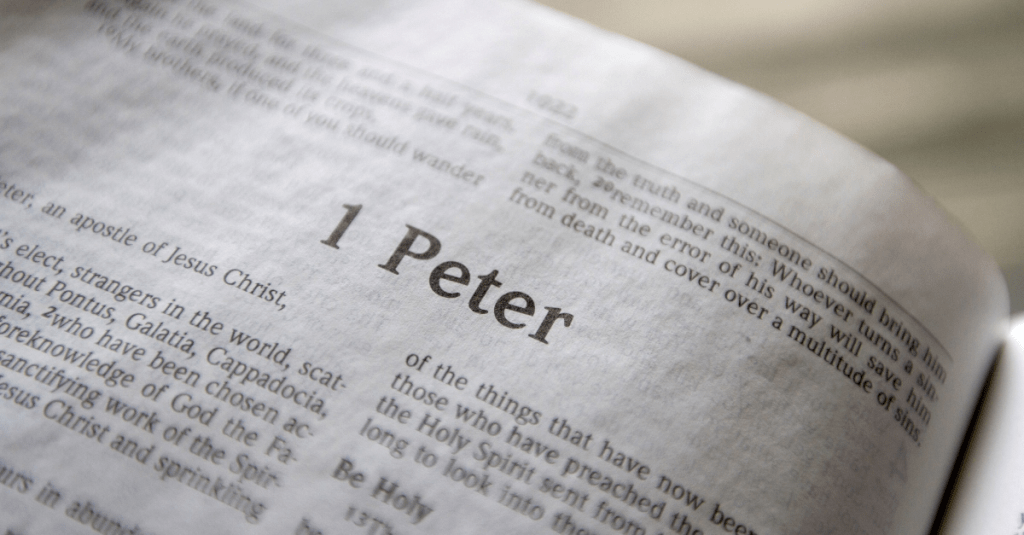
    I was preaching through 1 Peter. This morning we were looking at 1 Peter 2: 13 – 3: 7, which is all about submission. Not submission to God, but submitting to governing authorities, to masters, to husbands and wives. This is not a topic I would have chosen to preach about, except that it was in the middle of the book of the Bible that I was preaching through. Submitting to the government is not a popular topic among many church people, yet that was exactly what God’s Word was talking to us about in that scripture. Because it was God’s Word, and not my own ideas, I could preach it with confidence.

    If 2 Timothy 3: 16-17 above is right, then we know that there will be scriptures that rebuke and correct, not just encourage us or make us feel good. When the preacher makes sure to preach what God’s Word says, then the preacher can speak with confidence and boldness.

    I remember a person commenting after a sermon I preached that they thought I was brave to preach what I did. It actually surprised me a bit. I had preached on money, teaching what scripture said. I didn’t consider it brave. I was just preaching what God said, but this comment revealed the reality that there are certain scriptural truths that people do not want to hear. There will be people who are upset with you when you preach biblical sermons that challenge their personal beliefs, or even the beliefs and practices of their church.

    Scripture occasionally points out where we come up short and need to make corrections. As a preacher, I can preach boldly as long as I clearly say what scripture says. It is God’s Word. If the Bible says it, God says it. I should have no problem teaching it with confidence.

    At the same time, we need to preach with gentleness. When we teach about how God created people male and female, and only male and female with no other options, we can teach with gentleness in light of those who are personally struggling with this or have family who are.

    We can preach about money and giving to the church, but also recognize that some are struggling to make ends meet.

    We can preach on the importance of forgiveness even as we recognize that some people have been hurt deeply and personally in a way that is hard to move on from.

    God calls us preachers to preach the whole truth of His Word. We cannot pick and choose only the things that people want to hear. This is one of the benefits of preaching through a book of the Bible. We come across passages that we might not have chosen to preach about.

    If we are careful to preach what scripture says we can preach with confidence. We don’t need to be embarrassed to preach counter-cultural truths. We don’t need to be afraid that people won’t want to hear what the scripture says.

    If we are preaching something that scripture never said, then we better hesitate to say it. Yet we can preach with confidence when we know that we are saying what God said. Let’s continue to declare God’s truth with clarity and confidence.

    Keep looking up,

    Andy Wiebe

    Sermons That Change Lives

    A history teacher tells you what happened in the past. Or, they might inspire you to travel to historic sites. A first aid instructor will help you get a first aid certification. Or, they might inspire you to pursue a career as an EMT.

    All instructors convey information…but some inspire. In the same way, sermons can convey information…but they should inspire the listener to action. Something should happen as a result of hearing the sermon.

    As I was looking ahead to writing this blog, I heard some great material on a podcast I follow(Revitalize & Replant with Mark Clifton) where these two pastors were talking about how to write meaningful sermons. They referred to a model you may be familiar with. They said every sermon needs to answer the following 3 “what” questions: What? So What? and Now What?

    The first question – “what?” asks what the scripture says. This is the research that forms the content of the sermon.

    The next question asks, “so what?” This focuses on the importance of the scripture. Why is it something we are discussing? Why do we need to know this?

    The third question is the one I want to focus on. Most preachers will do a pretty good job on the researching and writing of a sermon. Many identify the importance and value of the scripture. But many sermons fall short on the final question: “now what?”

    “Now What?” is about the application of the sermon. Actually, it’s about even more than that. It is about inspiring the listener to want to do something as a result of the sermon they just heard. They cannot just go home with their family, eat their Sunday dinner, and go on with life.

    A good preacher will not be satisfied until the sermon calls the listener to action.

    Writing a good “now what” conclusion for a sermon requires an understanding of the scripture and what God is intending to communicate. The preacher takes it to heart and recognizes the action God is calling him to. He knows the content so well that the action required emerges from the text.

    Further, the preacher needs to understand his local context, because God does not speak to people in a vacuum. We all live in a certain country or province or community. We all have certain political realities we live in. The preacher needs to know how to make the call to action one that fits his local church. This is one reason why it is important for the preacher to know the people who will be listening to the sermon. The application is then connected to the local setting.

    I have discovered that giving a few ideas how to respond may help some people, while others will have already felt God speaking to them about a specific response.

    Beyond just suggesting ways to respond, the preacher needs to find a way to inspire the congregation to respond. Just to be clear, it the Word of God by the power of the Spirit that changes lives, yet the pastor needs to prayerfully work in tandem with the Spirit to determine what the action should be and how to describe it in such a way that makes people want to respond.

    In Acts 2 Peter preaches a powerful sermon. Look at the response of the people in verse 37:

     “When the people heard this, they were cut to the heart and said to Peter and the other apostles, ‘Brothers, what shall we do?’”

    The people were not satisfied with information. They felt a response was required of them, but they were unsure what to do. Peter responds: “Repent and be baptized, every one of you, in the name of Jesus Christ for the forgiveness of your sins. And you will receive the gift of the Holy Spirit.”

    As a preacher, you want people at the end of your sermon to be asking, “what shall we do?” So take the time to answer this question before you conclude. This should not just be tacked on at the end, but something that is given equal consideration as the body of the sermon because it is just as important.

    If you want your sermons to change lives, you must help people see what is expected of them after hearing the sermon.

    Keep looking up,

    Andy Wiebe
    Rehearsal: A Valuable Aspect of Sermon Preparation

    I was an actor in a drama years ago when I was attending Bible College. We received our script and then spent time getting to know our lines. One of the key aspects of preparing for the final show was rehearsals. After months of rehearsing, first individual scenes, and then the entire drama, we debuted a successful show that went quite smoothly and was enjoyed by all.

    As pastors and teachers in the church, we regularly prepare presentations. We work on lessons to teach to a class and sermons to preach to the congregation. We all have our methods of preparing for our presentations. We may do some research and pray through what God wants us to say. We may work at preparing just the right outline and finding just the right words to express our thoughts clearly. One aspect that some of us miss is rehearsal..

    I like to practice my sermon at least once and have experienced numerous benefits.

    • I hear what it sounds like.

    Preaching is not the same as writing a paper. In a paper I might write formally, and there are often clues such as headings and formatting that visually indicate the organization of topics.

    However, when preaching, the content is delivered audibly so the same visual clues no longer apply. That means that it needs to be more conversational, even if the audience isn’t responding to you. You need to pretend you are speaking with them. I get to hear if it sounds too formal and change the wording before I preach it “live”.

    • I hear what I sound like.

    I can hear my voice as I preach it. I can adjust by slowing down or speeding up at sections I want to highlight. I can hear if I sound judgmental, or if I sound like I care about the audience as I preach to them. If my voice goes too high, or if I say a word in a funny way, I can work at correcting that. Sometimes, what sounds good on paper sounds wrong when we speak it, so I can adjust that.

    • I can anticipate their responses as I practice.

    I try to do this as I write, but sometimes, as I practice out loud, my mind hears how it sounds and reminds me of a question that may be raised by what I just said. I can then determine if and how I need to address that question.

    • I get a better idea of how long it will take.

    Often there is an expectation on how long – or short – our sermon or lesson should be. When practicing it out loud, I can time myself and get a pretty good idea of how long I will take. I can also adjust to the time before I go live.

    • I can see how my actions will look or feel like.

    As a presenter, I enter into the presentation with my whole body. I can smile and frown. I can raise my hands in excitement or open my arms wide to imply something big.

    As I practice the sermon, I move around and go through my actions as I expect them to be. If they seem awkward I can either drop the actions or practice them enough to feel comfortable using them. Some presenters will record themselves so they can see what they actually look like.

    • I get it ingrained in my head.

    Speaking the sermon out loud helps me to get it ingrained in my mind so that I am not just reading content, but it becomes part of who I am. In this way, hopefully, it will not just sound like I am reciting information I have researched but will sound like something I have learned personally and am passionate about sharing with those listening.

    • I think of new illustrations as I go.

    Sometimes, practicing my sermon out loud will help me think of illustrations I didn’t think about when just writing words down. Saying the words out loud can remind me of something else that helps explain what I am teaching.

    • I can recognize when something needs to be reworked.

    There are times when I have written things down in the wrong order. Just the other day I recognized that I was missing a section of the scripture I was preaching on. Somehow, I had missed including a place where we would read those verses. I was able to put that in because I noticed it in practice.

    As we prepare for lessons and sermons, we want to do our best to communicate God’s truth accurately and creatively. Rehearsing your presentation is one way of making it even better.

    Keep looking up,

    Andy Wiebe
    Book Reviews: Andy’s 2023 Reading Experience

    I will be sharing a brief review of every book I read this year. Hope you enjoy and hope it encourages you to keep reading.


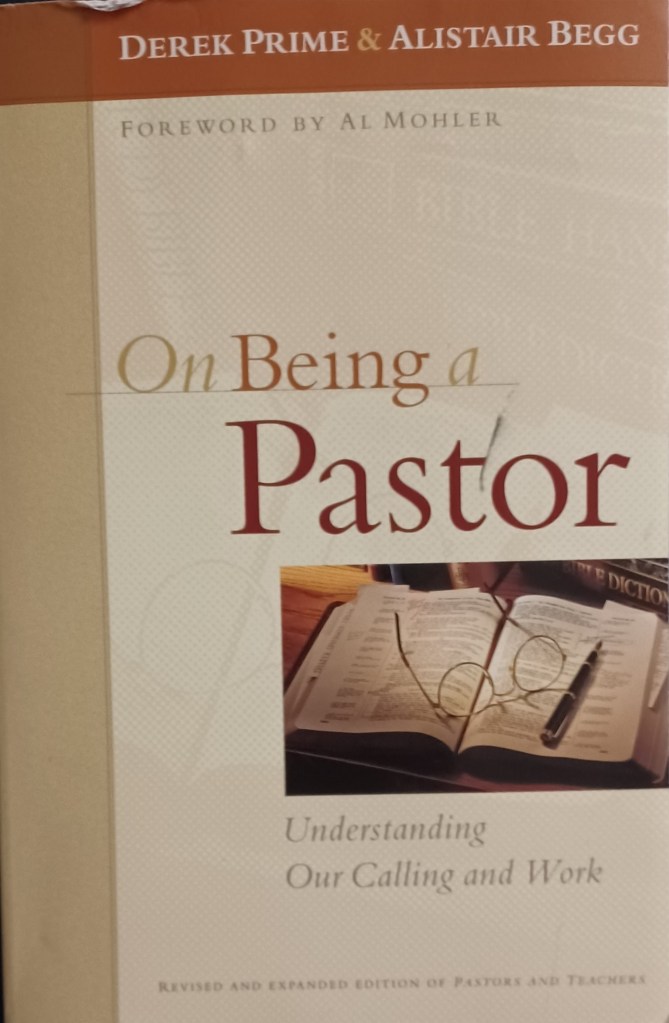
    ON BEING A PASTOR – by Derek Prime & Alistair Begg

    This is a great book for any pastor, especially for one who is just starting out. It covers many aspects of the pastor’s role and how to do it well. It is a bit dated, yet most of the content still speaks to the pastoral role today. The first chapter is a great discussion on the call to be a pastor, pointing out that the role can be difficult, but very rewarding if this is what God wants you to do. The authors, both pastors with years of experience themselves, then talk about the character of the pastor, his home life, and how to lead a serve a congregation well. The authors both share examples of how they have applied the teaching in many sections of the book. It is good to see the way two different pastors do the work of ministry. A great book for anyone in ministry!

    Book Reviews: Andy’s 2023 Reading Experience

    I will be sharing a brief review of every book I read this year. Hope you enjoy and hope it encourages you to keep reading.


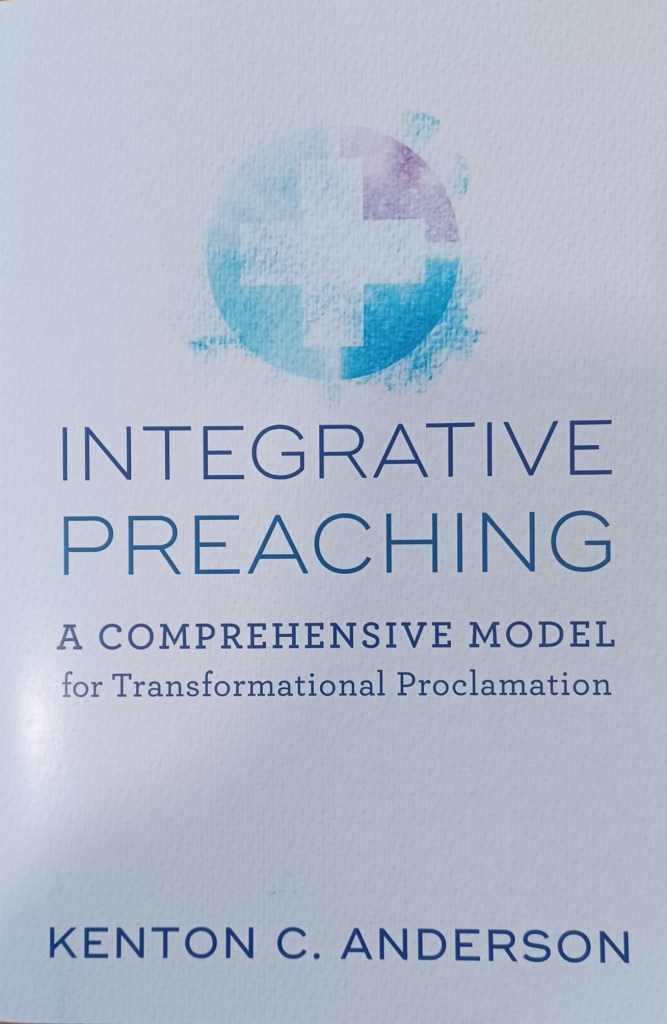
    INTEGRATIVE PREACHING – by Kenton C. Anderson

    Integrative Preaching: A Comprehensive Model for Transformational Proclamation – by Kenton C. Anderson

    Integrative Preaching is one of the best books on preaching I have read lately. Kenton Anderson diagrams a model that intends for sermon to reach both the mind and the heart. He describes this method in a number of ways. I especially like how he names each of the four steps of the sermon in ways that connect to the heart of a person: Engage, Instruct, Convict, and Inspire. I personally was most challenged to do a better job of Inspiring my listeners when I preach, not being satisfied with information alone, but driving home how the information should affect us and be lived out. An excellent book on how to build and deliver sermons that change lives.