Blog Train Yourself to Be Godly #10: Working for Jesus

*Training yourself to be godly may include viewing your work as working for Jesus.

Who are you working for?

When asked this question, you might think of the name of your boss or the company you work for. Some of you might think, “Well, I work for my family, it doesn’t matter who signs my paycheque or who gives me orders for the day, it’s all so I can provide for my family.”

1 Corinthians 10:31 says, “So whether you eat or drink, or whatever you do, do it all for the glory of God.” Here are a few ideas on how to give glory to God in our work.

1.         Work as if Jesus were your boss!

Colossians 3:23 tells us: “Work willingly at whatever you do, as though you were working for the Lord rather than for people.” Work willingly, work hard, as if you are serving the Lord. Do your work as if you are working for Jesus.

This verse is in the context of Paul writing to slaves, encouraging them to please their masters all the time, even when they are not being watched. Paul expects that slaves, Christian slaves, should be great workers for their human masters, as if they are serving Jesus! If they are to do so, how much more should we who choose to work where we do!!

I wonder if our work ethic would change if Jesus were our boss?

2.         Work as a witness to Jesus

If the people you work with or serve know that you call yourself a Christian, but you are a terrible employee, what would make them interested in being a Christian?

In Titus 2: 9-10, Paul again addresses slaves when he writes: “Teach slaves to be subject to their masters in everything, to try to please them, not to talk back to them, and not to steal from them, but to show that they can be fully trusted, so that in every way they will make the teaching about God our Savior attractive.”

One might think a slave might have a good excuse not to work hard, or to find any way they could take advantage of their master, since they are being taken advantage of by them, but Paul encourages them to do their best so they might make the “teaching about God our Saviour attractive.” He expects that how they work will reflect well on God or not.

In his book, “The Practice of the Presence of God”, Brother Lawrence writes about how one can practice God’s presence no matter the task. His job was a thankless job of cleaning pots and pans, but he is well known for his consistent and joyful devotion to Jesus in the middle of his daily, menial work.

Practice God’s presence at work by talking with Jesus as you go about your day, Remember that he is a constant companion.

3.         Don’t let work take the place of Jesus – Or don’t make work your idol!

Some people are consumed with their work. They work all the time. They can’t stop. They don’t take time for their family, or to enjoy life, or to enjoy time with God. Their whole identity is wrapped up in their job – their position or their status or their power that comes with their job. Simply put… for some, work becomes their idol.

Do you know what God did after six days of the work of creating? He rested! Genesis 2: 2-3 tells us: “On the seventh day God had finished his work of creation, so he rested from all his work. And God blessed the seventh day and declared it holy, because it was the day when he rested from all his work of creation.”

God ceased from all his work.

There must be a time for us to stop. There must be a time to say, “Enough”.

One way of preventing work from becoming an idol is to take a day off. Take a day to rest, take a day to stop, take a day to focus on the One you Worship. Refocus yourself at least once a week on the one you are truly serving, and on the one you should find your identity in, not in your work. God commanded the Israelites to remember the Sabbath every week.

The Discipline of Sabbath is not just about rest, but an opportunity to refocus regularly on God as the one we worship! It is a constant reminder that we live for God, not for our work. We are to find our identity in Him, not in our work.

View your work as working for Jesus, to honour him, and to use it as a witness to Him.

Keep looking up,

Andy Wiebe

Train Yourself to Be Godly #5: Other Spiritual Practices of Prayer

*Training yourself to be godly may include a rhythm of prayer and fasting, prayer and solitude, and listening or conversational prayer.

Last week, we talked about the spiritual practice of prayer. We have the privilege, as children of our heavenly Father, to talk with him about everything in our life. We can pray about all our concerns and thank him for all he has done for us.

There are a few other spiritual disciplines that are tied to prayer. It may be that you pray often, but haven’t tried some of the practices below. Or maybe you have tried them but have not intentionally made them part of the rhythms of your life. Check them out and ask God for direction on which one to try this week and which ones to incorporate into your walk with God.

SPIRITUAL PRACTICE: Prayer

The first practice is simply prayer but being intentional about determining when and where and what you will pray about. You could develop a prayer list about whom or what to pray for and schedule a regular time of day to pray. If you want to grow in your relationship with Jesus, you need to pray.

SPIRITUAL PRACTICE: Prayer and Fasting

Scripture is clear that fasting was part of people’s lives as they sought God – and usually prayer goes with the fasting. In the book of Esther, Esther asks Mordecai to tell her people to fast. She doesn’t ask them to pray, but that is the assumption – if they fast, they will be praying. They were fasting in order to hear from God and for God to give direction to Esther.

Fasting is simply going without food for a meal or two, or day or two. Some choose to fast for a week or more. Some emulate Jesus and his forty-day fast after his baptism. Some choose to fast by removing something else of importance from their life besides food, such as fasting from technology, or that special hot drink you like. The goal is to demonstrate that one’s desire for God is greater than our desires for other things.

You might want to include prayer and fasting in your walk with Jesus.

SPIRITUAL PRACTICE: Prayer and Solitude

Payer is talking with God. At other times it is just sitting and resting in the presence of God. To be in solitude. This is a hard one!

We fill our lives with busyness and with people and noise. Maybe you want to practice the discipline of Solitude – just stopping and being with Jesus. Sometimes I see this as having coffee with Jesus. Grab a coffee and just sit in prayerful thought as if Jesus is right there having coffee with you. This is less about what you need from Jesus and more about just being in his presence.

Wait. Maybe Jesus will say something – impress a certain thought or scripture on your mind. Maybe even give you direction for the day.

SPIRITUAL PRACTICE: Listening Prayer/Conversational Prayer

Very often, our prayer time is a time of giving God a list of requests and thanking him for what He has done. Sometimes we sit in solitude enjoying being in His presence.

We also need to take time to specifically listen to God. This is not about getting through my list and going on with my day, but taking time to ask God questions and wait for His answers. It is about listening for His still small voice, or a sense, or a reminder of a scripture.

For me, listening prayer works well with a journal, I write down my conversation – what I am saying and then what I think He is saying. I then ask another question to clarify or to learn more, like in any conversation.

I encourage you to slow down and spend time with God, listening and talking with, not just to, God.

Keep looking up,

Andy Wiebe

Train Yourself to Be Godly #3: Spiritual Practices of Scripture Memorization, Meditation, and Studying

*Training yourself to be godly includes memorizing, meditating on, and studying scripture.

Last week I introduced Scripture Reading as a spiritual practice to train ourselves to become more godly and become friends of Jesus. Many people read the Bible, at least to some extent. This may be reading a few verses a day or reading through the Bible in a year. While there is great value in reading scripture, there is great benefit in going beyond reading alone.

So, yes, have a plan for reading the Bible regularly, but also think of going beyond just reading to memorizing, meditating on, and studying scripture. Reading can help us get the big picture of scripture and help us understand what God has written and what Jesus has said. I would like to encourage you to find a way of intentionally internalizing what you read.

Scripture Memorization

Psalm 119:11 says,

“I have hidden your word in my heart

that I might not sin against you.”

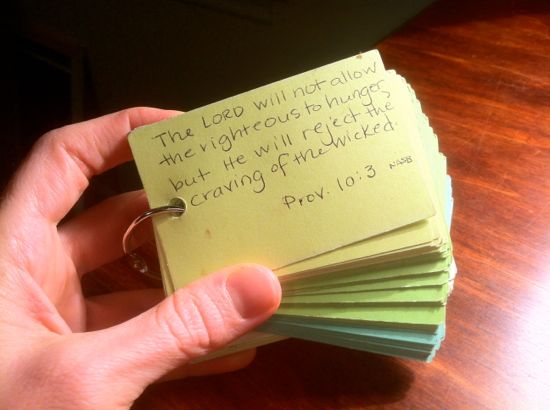
Memorization is to hide God’s word in your heart. By spending the time in scripture it becomes embedded in your memory.

At a recent worship service, the pastor started quoting Psalm 23. As he did, he coached the congregation to quote it with him. It was impressive to have many in the congregation reciting Psalm 23 from memory. The congregation had hidden Psalm 23 in their hearts.

I want to encourage you to begin memorizing. You don’t have to start with long scripture passages, but start by memorizing a verse a week. You could start with Psalm 23 or a passage from Paul’s letters like Philippians 2:1-11 which describes the humility of Jesus in coming to earth.

Scripture Meditation

Meditation is to think on a verse over a longer period of time. If you are memorizing a verse and mulling it over in your mind, you are also meditating on it as you continue to let it speak to you.

Psalm 119:15 reads: I meditate on your precepts and consider your ways.

To practice meditation is to spend time thinking and praying and talking to God about one thing, one verse or one statement about God.

Meditation slows us down as we focus on one idea for a period of time. It may be one verse or one phrase that describes God or a theological or doctrinal statement that we can think over as allow God to speak to us over time.

Scripture Study

Maybe you have read the Bible a lot, but you realize you haven’t really stopped to study it – to take time to understand certain passages of scripture or a certain book. You can use different online helps (Biblehub.com) or commentaries to dig a little deeper.

In 2 Timothy 3:16-17 we read:

All Scripture is God-breathed and is useful for teaching, rebuking, correcting and training in righteousness, so that the servant of God may be thoroughly equipped for every good work.

If we long to be more godly and want to train ourselves to be so, studying moves beyond reading, memorizing, and meditating, to dig into what words and phrases and verses mean.

I encourage you to move beyond devotional booklets like the Daily Bread, and others. While they have good stories and good scriptural thoughts, learn to study the Bible for yourself. Take time to “chew” on the word of God, not just taking in what others have “chewed” in their study. Study it for yourself without just relying on the work others have done. There is value in us processing the study instead of just receiving someone else’s answers from their study.

Train yourself to be godly by spending intentional time in scripture, getting to know God, getting to know Jesus, and allowing scripture to equip you and train you to be the woman or man of God He longs for you to be.

Keep looking up,

Andy Wiebe
Spiritual Training Series #2: The Spiritual Practice of Reading Scripture

*Training yourself to be godly will include reading scripture.

Anne of Green Gables described the type of friend she longed to meet: “A bosom friend. A kindred spirit. I’ve dreamt of meeting her all my life.” We all desire a good friend, a bosom friend who understands us, wants to spend time with us, and shares our interests.

But did you know that you can become a friend of Jesus? Or that Jesus wants to call you his friend?

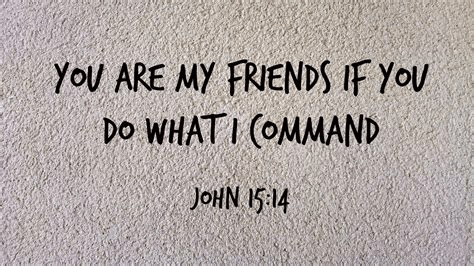
In John 15:14,15, Jesus says, “You are my friends if you do what I command. I no longer call you slaves, because a master doesn’t confide in his slaves. Now you are my friends, since I have told you everything the Father told me.”

Jesus calls YOU a friend if you do what he commands.

This is not just for the disciples – Jesus is inviting you and me – as his present-day disciples, to become his friends!

Verse 15 declares there is a change of status for Jesus’ disciples – there are no longer slaves (or servants) but friends!

But there needs to be obedience on the part of the friends.

And for the friends to be obedient to those commands – they need to know what those commands are!

Yes, Jesus is Lord, but he invites us into friendship. Jesus invites us into friendship, not as ones who must do everything Jesus said – or God said – but as ones who know the heart of Jesus and want to do the things that honor and show respect to our Lord – and friend!

You are my friends if… If what? If you do what I command.

How do we know what Jesus (or the Father) has commanded? We need to read the Bible.

If you want to be a friend of Jesus you need to spend time in Scripture getting to know Jesus, reading it like a letter from a friend rather than a textbook.

This is about getting to know the heart of God, the heart of Jesus. It’s about getting to know him and love him and desire to please him so that it is not obedience out of obligation, but because of a desire to please the one you love!

If you want to train yourself to be godly, to become a friend of Jesus and be more like him, you will want to include a regimen of Scripture reading (memorization, meditation, study, etc.), which will help you to get to know Jesus better.

First, get your own Bible, and then make a plan for reading the Bible. There are various Bible Reading Plans available, including some that take you through the entire Bible in a year. Just search the internet and you can download or order from a variety of plans, but make sure you have a plan so you can train yourself to be godly!

Read the Bible regularly so you can learn what Jesus has commanded, can do what he has taught, and be his friend, and become more godly in the process.

We are to train ourselves to be godly. It begins with reading the Bible regularly.

Keep looking up,

Andy Wiebe

Spiritual Training Series #1: Train Yourself to be Godly

Imagine you just received a baby picture from friends who just had a baby. What if they sent you a picture every year? What if you are like me and don’t clean your fridge very often? As you put up the picture from year five, you notice the picture from the first announcement. And then you realize there has been very little change. The baby is still hardly any bigger and doesn’t seem to have developed much. Unfortunately, there are some children who do not mature the way we expect, who never crawl or walk or communicate. This makes us sad because a baby needs to grow.

As followers of Jesus, we need to grow, too.

1 Timothy 4:7 says “train yourself to be godly”.

Philippians 2:12 says “work out your salvation”.

We are to become more “godly” or Christ-like. We are to continue to grow and develop spiritually to become a better expression of the image of God as we were created to be, according to Genesis 1:27.

So God created mankind in his own image,
in the image of God he created them;
male and female he crated them.

Genesis 1:27

This is not just about our own hard work though. In Colossians 1:29, the Apostle Paul writes: “I work and struggle so hard, depending on Christ’s mighty power that works within me.” Yes we are to train ourselves and work out our salvation and struggle. We have a part to play in our spiritual development, but this is never something we do no our own. Like Paul we can depend on “Christ’s mighty power that works within me”.

We can and should do our part. It may be that we choose to practice some of the Spiritual Disciplines that Christians have practiced throughout history. This includes prayer, scripture reading, fasting, sabbath, generosity, and so on. As we practice these disciplines, we make an effort to do our part as we invite the Holy Spirit to do His work in us to make us a little more like Jesus.

Whatever training we want to instill in our lives, we do need to train ourselves to become godly. For this to be a priority in our lives, we need to intentionally prepare a training schedule or plan. When will you read the Bible, and what will you read? When will you pray, and what will you include in your prayer time? When will you choose to fast, and what kind of fast? How will you practice generosity, and so on?

Think back to the time when you first became a believer in Jesus. We could say you were a baby Christian. What would that picture have looked like if your heavenly Father had taken a picture and hung it on his fridge in heaven? What would a picture he took this year look like? As I look back 51 years, to the time He could have taken my “spiritual baby” picture,  I trust that my picture – the me that God sees – would give evidence of much spiritual growth and maturity. Maybe the picture would not just include me, but other people around me who have come to know Jesus or been impacted for Jesus by me.

I pray that you are intentionally pursuing Jesus and looking for ways to grow toward every fuller spiritual maturity.

Keep on looking up,

Andy Wiebe

Persevering Through Leadership Challenges

Leadership is not for the faint of heart. Leaders can expect to face challenges from those they lead. Church leaders are not exempt from this reality.

I recently met with a church board who were facing these kinds of challenges. Some of the congregation were complaining that the board wasn’t leading well, others said they would never submit to the board’s leadership, and others said they didn’t even know who the leaders on their board were. Leaders can expect to face condemnation from every angle, facing criticism for being both too controlling and at the same time not leading strongly enough.

The Apostle Paul writes in 1 Timothy 3:1: “Here is a trustworthy saying: Whoever aspires to be an overseer desires a noble task.” It is a good thing to desire to be a leader, but Paul immediately follows up that statement with a list of qualifications a godly leader should measure up to. Not just anyone can be a leader.

Once you are a leader, you are entrusted with the care of those you are called to lead. It doesn’t matter how you came to your position; you have to believe that you are there because God wanted you there. Whatever system your church uses to select leaders, the assumption is that the church trusts God to guide that process. That means you are not just there because some people in the church wanted you there; you are there because God wanted you there. This is important as you face challenges from those you are called to lead. If you believe God put you in that position, then you can persevere with His strength, no matter the challenges.

How can you face these challenges and continue to lead?

Believe you are called to your leadership position by God.

When you are called by God, you can trust Him to help you persevere through tough leadership challenges because He will empower and equip you to do so.

Pray and read scripture.

As a church leader, you need to be in tune with God and to hear from Him as you navigate the hard seasons. Take time to talk to God about your challenges. Ask God to help you understand those who criticize you. Listen for God’s direction, either directly to you in prayer or through scripture.

Read the Bible with the desire to find answers to your challenges. This could be through examples of good leadership in scripture. It may be that you are encouraged by Paul’s letters to churches and leaders. Read so you can be encouraged by the Word of God.

Learn and grow in leadership.

I have found that reading leadership books, attending seminars or conferences, and listening to podcasts has encouraged me and helped to equip me to tackle various challenges I have faced as a leader in the church. We can learn from the stories of others. We can gain knowledge, skills, and encouragement from others who have faced similar situations.

Leadership can be exciting when everyone is working well together, but it can be difficult when people you are called to lead do not trust you and question every step. I hope you can find encouragement in your calling, find direction in God’s Word, and hear from God in prayer. Continue to persevere as you face challenges.

Keep looking up,

Andy Wiebe

Creative Service Ideas

Most Sunday Services in most North American churches look pretty much the same. There is usually an opening, announcements, singing, and a sermon. Sometimes there are a few extras like a special song sung for the congregation or something like that. As pastors, we tend to do things the way we have always done them because we have found a pattern that works, but for those who are interested in changing things up, I would like to share some creative service ideas you could try occasionally. I don’t believe there is a reason that every Sunday Worship Service has to look exactly the same or even include all the elements we regularly have.

The following ideas for Sunday Services can be done in place of a sermon. Some of these ideas may be quite different from what the congregation expects each Sunday, but, in my experience, with careful introduction and scriptural support, they can be well received. Before any service that I am drastically changing, I make sure I know what I am hoping for. This way I can clearly communicate these expectations to staff and volunteers. During the service, I also make sure to walk the congregation through the activities I’ve planned and how they can participate. Sometimes I make a special effort to explain how the creative idea is scripturally sound and appropriate for Sunday morning.

Here are the ideas:

Worship/Music Sunday

Most services place the sermon as the main event in a service. It would be appropriate to occasionally have a whole service of song, scripture, music, and praise. The singing and praise of the Lamb in Revelation 5 would be a good background for this service.

Prayer Sunday

While we often pray at different points in the service, or have designated prayer meetings, it is quite appropriate, in place of a sermon, to lead the congregation in a guided prayer time during the Sunday Service. Prayers of the Bible can be used as a guide for a Prayer Sunday, or use a guide like the “Five Finger Prayer.”

Scripture Sunday

We often read a scripture or two and preach from scripture, but it can be encouraging to have a complete service focused on the reading and quoting of scripture. Children can share verses they have memorized in Sunday School or at camp. We can imitate Timothy who was charged with the “public reading of scripture” (1 Timothy 4:13).

Sharing Sunday

Some churches have a brief Prayer and Share time as part of their service. This could be expanded to fill the whole morning as long as a leader is prepared to give some direction and guidelines. The leader can offer suggestions of sharing answered prayers and God’s work in their lives, as well as giving parameters of what is appropriate to share in a public setting.

Communion Sunday

Many of our communion celebrations are tacked onto the end of a service, sometimes following a sermon that had nothing to do with communion.  A complete Sunday devoted to communion might have a great impact on the people as you take time to explain and understand communion with more detail.

Communion Sunday – with Interactive Stations

Often, the communion celebration is only focused on the bread and juice. I have used interactive stations inviting people to enter into the story with more of their senses. Each station invites worshippers to read scripture and participate in a physical activity surrounding communion. An example would be to read scripture about forgiveness and having them write out confessions and nail them to the cross, or to read about the temple curtain being torn in two while tearing a rag in half. The hope is to engage more of the senses as people enter physically into the communion celebration.

Baptism Sunday – all focused on Baptism

Find ways to make the whole service a celebration of baptism. Explain the meaning and importance of baptism. Invite candidates to share their testimonies. Invite others to pray for each one being baptized. Encourage people to remember their baptism and to recommit to serving God as they did at that time. No matter what service you plan, include scriptures that speak to the theme of the service.

I hope you can try a few creative services. Let me know how they turn out. And let me know if you have other creative suggestions.

Keep looking up,

Andy Wiebe
Keeping Your Board Purposeful

As a pastor, I have spent many evenings around a board table (or plastic folding table), discussing the ministry of the local church with appointed leaders. Each board is different in how the members work together, how they make decisions, and how they attempt to fulfill their role. But how can you, as a board, ensure some basics that will help the board meetings be meaningful and effective?

Do you know why you meet?

Board members do not meet as a church board just because that’s how it has always been, or because the government requires non-profit organizations to have a board. Each board member need to understand what their main purpose is and how they contribute to accomplishing that.

Purpose: A board exists to look after the “big picture” of the church.

This means that you, as a board, need to know the big picture. You need to know the vision of the church, the values and policies and procedures, and how they speak into how the board governs.

This is essential because the board is in place to ensure that the vision, values, policies, and procedures are clearly defined and followed. As a board member you may have been involved in forming these documents or you may arrive after previous members have completed that work. Now each board member needs to understand them clearly so you can help ensure they are fulfilled.

In a church board, much of the work is done by the pastor. If the church is smaller, board members may be involved with the pastor in following through on decision that are made. In larger churches, the board may be more of a policy board entrusting the lead pastor and his staff to do the working out of the decisions. The board sets the policy and entrusts the lead pastor to fulfill what has been decided. He then hands off aspects of that to the rest of the staff to accomplish.

In either case, the board needs to know the guiding documents well enough to know if the decisions they make are in alignment with this guidance and the scope of the board’s mandate. Board members need to know how the guiding principles speak into every decision that is made. These documents are intended to guide the decision making process and keep the board, the pastor, and the church heading in the agreed upon direction.

One aspect boards often forget is their role as “gate keepers” and “protectors.” The board functions as a gate keeper when it makes sure that leadership and the church are not heading in a direction away from what they stand for and believe in. They function as gate keepers when they ensure that vision, values, policies and procedures continue to guide them. As gate keepers, the board must receive regular updates from pastors and ministry leaders to be aware of where these leaders are going and to ensure that it is in the right direction.

A church board needs to also see the importance of its role in protecting the church. This may involve protecting the church from teaching or practices that do not align with what they believe the Bible teaches or what they have agreed upon in their guiding documents. Protection also includes protecting the people of the church from physical and emotional harm. Many churches have clear safety guidelines and practices in place to guide their ministry to children and youth and seniors. Church boards need to ensure they are protecting all who attend, serve, or lead the various ministries of the church.

If you are a board member, remind yourself and your board regularly that everything you do should be about promoting and protecting the big picture of the church. While there are times boards should get involved in day to day activities of the church, they should never relinquish this role of promoting the big picture and protecting the church.

Keep looking up

Andy Wiebe

Continually Collect More Tools of the Trade

If you have ever worked on a car or built a deck, you know the value of a good tool. With the right tool the work becomes easier and you see better results. The same is true for a pastor. We benefit from having good tools to help us.

Some of you may immediately think of tools like a good commentary or online study tools. These are great and we need those, but I’m thinking more along the lines of the ideas and questions we come across in our reading and study.

Sermon Tools

Over the years I have gathered many questions that I use regularly to help me better dig into the scripture I am preparing to preach. Referring to my pates of collected questions and processes has enhanced my sermon preparation. These are questions like:

  1. What does it say?
  2. What does it not say?
  3. Could it mean what it says?

Sometimes I move through these three questions quickly, other times, if it is a difficult or controversial section of scripture, I tend to slow down and make sure these questions help clarify what God’s Word is truly saying.

One question that I have found helpful to me, especially because I am usually preaching to a congregation of all ages is:

4. “How will this sermon engage with a 12 – year – old boy?”

I want to preach to everyone, but if I can get a pre-teen boy to be engaged, I will most likely I will engage with the rest of the congregation as well.

Here are a sample of a few more questions:

  1. How does this speak to unbelievers?
  2. What is the audience’s thoughts, feelings, emotions, struggles, needs – relating to the big idea of this teaching segment or message?
  3. What are some practical steps the listener can take?

One process I use is a diagram that helps me to move through a scripture passage in a way that moves my study from the text, to historical context, through the Biblical theology, to how it is fulfilled in Christ, and then to how we need to apply the scripture today. Following this process keeps me from taking a shortcut and miss an important step in clearly understanding what the scripture text is saying.

Prayer Tools

I have come across some great ideas for prayer, whether personal or corporate. In his book, The Hour that Changes the World, Dick Eastman suggests praying for an hour i12 periods of 5 minutes. I try to use this prayer plan about twice a week. The forms of prayer are: 1. Praise and worship 2. Waiting on the Lord 3. Confession 4. Praying scripture 5. Watching 6. Intercession 7. Petitions 8. Thanksgiving 9. Song 10. Meditation 11. Listening 12. Praise

I have used this one-hour prayer plan many times for myself as well as for a prayer group.

Pastoral Tools

One of the “tools” I need to remind myself of occasionally is to “move slowly through the crowd.” It is easy for me to have things on my mind and things to do, but there is benefit of moving slowly through the crowd prior to or after the Sunday morning service because it gives me opportunities to connect with people, or for them to stop me with a question or comment. It helps me to be more present in the moment and available to people.

I don’t know what tools you have gathered over the years that have helped equip you to improve your ministry and leadership, but I hope you have many. I would love to hear from you about the tools that help you. Send me an email to share some of your tools with me.

Keep looking up,

Andy Wiebe

Fruitful Leadership #1: Love

There has been much study done on the character and personality of good leaders. In the book of Galatians, the Apostle Paul introduces what he refers to as the “fruit of the Spirit”, describing what Christians are to live like, to be like. As believers in Jesus, we have His Spirit living in us when we surrender our lives to Him. Just like al healthy apple tree produces apples, a healthy Spirit-filled person will produce the “fruit” of the Spirit.

Paul gives a list of nine fruits, or characteristics, that people surrendered to Jesus and filled with his Spirit will be like. It makes sense, then, that a Christian leader will be a Spirit-filled person who will ideally be producing the fruit Paul lists.

The first fruit listed is love. If you are a Christian leader, you should be exhibiting the characteristic of love to those you lead and serve. Jesus, in Matthew 22: 39, defines the second greatest commandment as: “Love your neighbor as yourself.” One of the most important characteristics of a follower of Jesus is then, to love. And to love our neighbour. If we are unsure who our neighbour is, we can read Jesus’ story of the Good Samaritan in Luke 10. While others noticed a beaten and robbed man, the Samaritan cared for his wounds and took him to a place to heal up, even paying all the costs this might incur. The neighbour was the one who loved the less fortunate one in practical ways that made a difference in his life. As we daily surrender our selves to the Holy Spirit, he will continue to help us become more loving in our leadership. While it is our responsibility to love, it is the Holy Spirit who helps us to love better and who fills us with a desire to love when we may not really want to.

So how might the fruit of the Spirit of love be evident in a Christian leader?

It would begin with a genuine caring for the others one connects with. These could be your boss, or co-worker, or employees. They could be your church staff and volunteers. Sometimes, people like me who like to focus on the project and getting things done, can see those around me as people who help me get my stuff done, rather than seeing them as people who need to be noticed and cared for. To love is to notice people and to care for them. And to look for ways to help them. A leader who is producing love in their relationships at work will recognize when someone needs to be cared for and not just used to accomplish the leader’s vision.

Love includes communicating well with those you work with and serve. It means that we create an environment where direction is given clearly, and feedback is welcomed. Rather than being threatened by the ideas of others, a leader who loves will see each person as a contributing member of the team. By creating an environment where exchange of ideas is welcomed, the leader makes it clear that everyone is valued.

A leader who loves will want to make sure that their team has healthy relationships with each other. The leader will not hesitate to apologize for hurting someone. He will take ownership of his own mistakes and not dwell on those of others. Love means finding solutions to relationship breakdowns. Rather than just demanding blind loyalty, a leader who loves will create an environment where all on the team enjoy serving together.

Christian leaders display the fruit of love when they are willing to serve rather than lord their authority over others. Jesus pointed this out in Matthew 10: 44, “For even the Son of Man did not come to be served, but to serve, and to give his life as a ransom for many.” Some leaders love being the boss and want to make sure everyone knows they are the one in charge and they are the one to be obeyed. Yet even Jesus showed that he came to serve. For him it even meant giving his life to pay for the sins of all people. Love means being willing to serve others, even if you are the leader. Maybe you get coffee for someone rather than expecting they need to get you one. Or you listen rather than direct. You still need to give direction and guidance and set standards that need to be met, but you do so in a way that shows you care about the people you are leading. Love them by serving them.

Christian leader, allow the Spirit to flow through you, displaying love to those you work with.

Keep looking up,

Andy Wiebe