Is Your Church Declining or Growing?

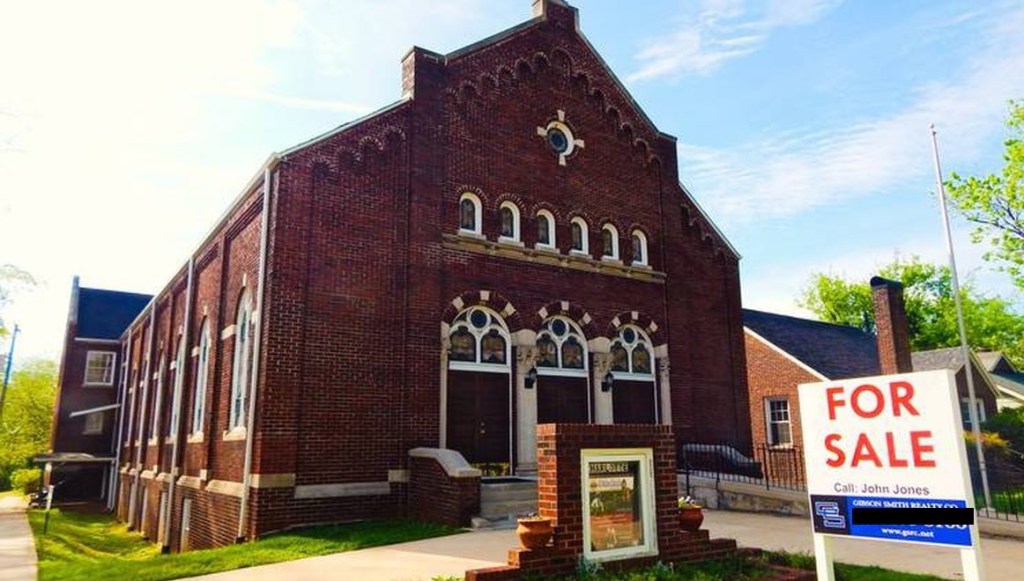
You may have heard some of the discouraging statements about church closures recently. A study by the National Trust of Canada “predicted that one-third of Canada’s 27,000 faith buildings, most of which are Christian, would likely close permanently in the next 10 years.”[i] The narrative around church closures includes conversations about the decline of religious affiliation in Canada. A January 8, 2022 Global News Report stated: “Religiosity in Canada is at an all-time low, with recently released data from Statistics Canada showing only 68 per cent of Canadians 15 or older now report having a religious affiliation. It’s the lowest it’s been since they first started tracking this statistic in 1985.[ii] The Canadian Institute for Empirical Church Research, in a 2024 article, stated an opposing view, saying “overall the Canadian Christian Church had only 2% fewer net congregations in 2019 (23,675) than they did in 2009 (24,138).”[iii] While pointing out that there are only a few fewer churches, the article acknowledged that religious affiliation is indeed down.

I understand that churches do sometimes close. The church I started in as a youth pastor no longer exists. At the same time, I am very encouraged as I think of the churches I have served as a transitional pastor over the last 5 years.

I have served seven churches, of which three were growing even during their transition, and all the rest were stable. Not one of the churches was in continual decline.

So what might this mean for us as pastors and church leaders?

There may be times when a church should close. Some of our rural communities are declining as people move away for school and jobs, which may mean a church closes for lack of people. Some churches may need to close because they have lost their mission and are no longer serving as a church, but a Christian club for a few dedicated members.

So what does this mean for church leaders?

We need to remind ourselves that we are serving God’s church. It is His church. While we can definitely do our part, we need to ask God to step in and bring revival where necessary and grow the church. We need to remind the church of our mission to make disciples who make other disciples. We need to give people hope and joy in their relationship with Jesus. We need to look for ways to bring spiritual renewal and transformation into our congregations, beginning with us.

We cannot lead people where we aren’t going first. Are you hungry for God? Are you digging into His Word, hungry for more of Him? Are you reading books on spiritual renewal? Are you praying and inviting others to pray with you? Are you loving your neighbours and those in the community around the church building?

Pastors, God wants us to use our gifting and calling to draw people ever closer to Jesus. I am convinced that when people fall in love with Jesus again, they will come alive. They will experience Him at work in their lives. As we ask for a fresh filling of the Holy Spirit, He will fill us and empower us for holy living and bold sharing of the gospel.

Quit preaching “self-help” sermons. Preach Jesus from the Gospels. Preach about the filling of the Holy Spirit. Introduce spiritual disciplines and invite your church to practice them. Show your members the full life that can be theirs.

God is still at work. He is still drawing new people to Himself. New believers are asking to be baptized. Some of your members are hungry and searching for more of Jesus. Encourage those who are already searching and ask God to open the hearts of others.

Are churches closing? Yes, some are, but yours does not need to be one of them. Be proactive. Do not assume the decline of your church is inevitable. God is still at work, renewing believers and reviving churches. May yours be one of those.

Keep looking up,

Andy Wiebe

[i] New report suggests opening churches to the masses as attendance dwindles

By The Canadian Press

Published: June 22, 2025 at 7:43AM EDT https://www.ctvnews.ca/canada/article/new-report-suggests-opening-churches-to-the-masses-as-attendance-dwindles/

[ii] [1] ‘Gone by 2040’: Why some religions are declining in Canada faster than ever

By Ashleigh Stewart  Global News

Posted January 8, 2022 5:00 am

 Updated January 17, 2022 3:21 pm https://globalnews.ca/news/8471086/religion-decline-canada/

[iii] Hope For the Future: The 2021 Canadian Census

Rev. Dr. Lee Beachhttps://flourishingcongregations.org/hope-for-the-future-the-2021-canadian-census/

Remembering the Priorities of a Church Board

For something to be a priority, it must be most important. When I see a company proudly displaying a slogan on their work trucks declaring, “Safety is our number one priority,” I know they don’t really mean it. It’s not true. If safety was their top priority, they would leave their work trucks at the shop and ask their work force not to leave the building. Their top priority is their business, but they do want to be safe in doing it.

Number one priority marked with red circle on math notebook

When I think of church boards, I wonder if we too have lost an understanding of what is truly priority? Board meetings begin with a welcome, maybe a devotional and a quick prayer, and then it’s on with the business of running a church. Much time is spent on financial discussions, reports, and budget. There is talk about the facilities and what maintenance is needed. There may be reports from different ministries highlighting their recent accomplishments. The board discusses, debates, and makes decisions. And then, after three hours of discussion, the meeting ends and everyone goes home.

The question is: did the board members focus on the priorities?

Too many church boards model themselves after a corporate board of a business. Yes, there are certain “business” aspects church boards need to handle such as managing insurance, paying bills, and ensuring the church functions in an organized way. But could it be that there are priorities that get shoved to the end of the meeting so they get less time than required?

There are a few items that I have noticed are not receiving the attention I believe should be given to them as priorities.

  1. Connect with God

Central to engaging with God is time spent in prayer. A church board is not first responsible to it’s “shareholders” (congregation) but is first responsible to God. It is God’s church, so the board needs to check in with Him to ensure that they are hearing His voice and being led by Him. Board decisions cannot be dependent on consensus alone but need to be guided by God. Along with asking God for direction, the board should talk to God about the people they are called to shepherd. A church board needs to pray for people’s health and life situations, but more importantly, pray for them to grow spiritually. A board has the privilege of interceding for their congregation.

2. Emphasize Discipleship

A church board is called, with the pastor, to lead a church in “making disciples.” (Matthew 28:20) This requires church leadership to regularly review their discipleship process to ensure people are coming to know Jesus and growing in their relationship with Him. Discipleship is about ensuring appropriate ministries are available to those who want to grow in their faith. When discipleship is a priority, it will influence other discussions during the board meeting. For example, if a board recognizes that their budget is falling short, they may want to encourage the pastor to preach about how God wants us to handle finances. The Board may want to plan a study on financial stewardship, not just to meet the budget, but to help their members to honour Jesus in their finances. Boards are easily caught up in many other decisions that it is easy to forget their role in making sure people are growing in their relationship with Jesus.

3. Pursue their God-given Vision

God has called every church to a unique role in the setting they find themselves in. Their vision needs to come from time with God. This may seem like a daunting task, but once the vision is clarified they can move ahead with purpose and clarity. Once they have determined their vision, church boards need to do everything they can to align all aspects of their church services and ministries to the vision God has called them to. This is about being responsible to what God has called them to

While there may be other priorities, these are three that every board needs to remember. A board that remembers these will do well.

Keep looking up,

Andy Wiebe

Creative Service Ideas

Most Sunday Services in most North American churches look pretty much the same. There is usually an opening, announcements, singing, and a sermon. Sometimes there are a few extras like a special song sung for the congregation or something like that. As pastors, we tend to do things the way we have always done them because we have found a pattern that works, but for those who are interested in changing things up, I would like to share some creative service ideas you could try occasionally. I don’t believe there is a reason that every Sunday Worship Service has to look exactly the same or even include all the elements we regularly have.

The following ideas for Sunday Services can be done in place of a sermon. Some of these ideas may be quite different from what the congregation expects each Sunday, but, in my experience, with careful introduction and scriptural support, they can be well received. Before any service that I am drastically changing, I make sure I know what I am hoping for. This way I can clearly communicate these expectations to staff and volunteers. During the service, I also make sure to walk the congregation through the activities I’ve planned and how they can participate. Sometimes I make a special effort to explain how the creative idea is scripturally sound and appropriate for Sunday morning.

Here are the ideas:

Worship/Music Sunday

Most services place the sermon as the main event in a service. It would be appropriate to occasionally have a whole service of song, scripture, music, and praise. The singing and praise of the Lamb in Revelation 5 would be a good background for this service.

Prayer Sunday

While we often pray at different points in the service, or have designated prayer meetings, it is quite appropriate, in place of a sermon, to lead the congregation in a guided prayer time during the Sunday Service. Prayers of the Bible can be used as a guide for a Prayer Sunday, or use a guide like the “Five Finger Prayer.”

Scripture Sunday

We often read a scripture or two and preach from scripture, but it can be encouraging to have a complete service focused on the reading and quoting of scripture. Children can share verses they have memorized in Sunday School or at camp. We can imitate Timothy who was charged with the “public reading of scripture” (1 Timothy 4:13).

Sharing Sunday

Some churches have a brief Prayer and Share time as part of their service. This could be expanded to fill the whole morning as long as a leader is prepared to give some direction and guidelines. The leader can offer suggestions of sharing answered prayers and God’s work in their lives, as well as giving parameters of what is appropriate to share in a public setting.

Communion Sunday

Many of our communion celebrations are tacked onto the end of a service, sometimes following a sermon that had nothing to do with communion.  A complete Sunday devoted to communion might have a great impact on the people as you take time to explain and understand communion with more detail.

Communion Sunday – with Interactive Stations

Often, the communion celebration is only focused on the bread and juice. I have used interactive stations inviting people to enter into the story with more of their senses. Each station invites worshippers to read scripture and participate in a physical activity surrounding communion. An example would be to read scripture about forgiveness and having them write out confessions and nail them to the cross, or to read about the temple curtain being torn in two while tearing a rag in half. The hope is to engage more of the senses as people enter physically into the communion celebration.

Baptism Sunday – all focused on Baptism

Find ways to make the whole service a celebration of baptism. Explain the meaning and importance of baptism. Invite candidates to share their testimonies. Invite others to pray for each one being baptized. Encourage people to remember their baptism and to recommit to serving God as they did at that time. No matter what service you plan, include scriptures that speak to the theme of the service.

I hope you can try a few creative services. Let me know how they turn out. And let me know if you have other creative suggestions.

Keep looking up,

Andy Wiebe

Preparing For Change #3: Begin Your Change by Easing Into It

We experience some changes gradually; others come as an abrupt shock. When prices at the gas pumps go up by a cent or two at a time, we don’t notice as much as when it is a five-cent increase or more at once. Easing into a change can help a church be more accepting of the change as it develops. This gives people time to adjust to smaller changes instead of the whole change at once.

Break the Change into Smaller Parts

For many churches, Sunday Worship services have a familiar flow. The order of service is the same each Sunday. If you want to lead your church in changing its service, you may want to begin with small changes. Instead of changing everything, change one or two things at a time.

For example, if you want to add some variety to the service, you could begin by breaking the usual group of worship songs into two smaller groups, inserting a scripture reading or prayer time in between. Then, after a while, you could move the second group of songs to the end of the service for a time when you want to follow a sermon on praise with singing praise songs as a sermon response. After people get used to some changes in the singing, you can change how the welcome and announcements are done. If you always start with a song and then the welcome and announcements, try starting with a video clip highlighting a ministry in the church before doing the welcome and announcements. Instead of depending on the song to gather the church to worship, gather them with a video followed by a scriptural “call to worship” from one of the psalms.

Whatever your change, see if there are ways of breaking it into smaller changes to allow people to adapt slowly. As people see you make small changes that work, they may be willing to try a bigger change next time.

Do a Trial Run

It may be appropriate to introduce a change by announcing it as a “trial run.” You can set a date for the trial period. The caveat that this is a temporary change that will be evaluated later may give your church the willingness to try it for a while. You could even introduce the change by explaining that you are looking for a way to do things better, but you aren’t sure if this is the best way to do so. You can encourage your congregation to give you feedback as you try the change.

If you introduce a “trial run” change, make sure it is a long enough period to give it a good test run, but a short enough time to still be a trial period. If you introduce a change that you will try for a year or two, that is obviously no longer a trial run. And make sure to stick with your timeline. Do not extend it. Respect people by keeping your promises.

Promise an Evaluation

Whether it is presented as a trial run or not, you can promise all those involved in implementing the changes that you will be doing a thorough evaluation, which they can take part in, on a certain date. Evaluate it against the intended purpose. Be honest with the results. 

Three options arise out of an evaluation. First, if it didn’t do what you hoped, you can always revert to the old way. Second, if the change didn’t work, you can adjust aspects of it and try again. Or, third, you can introduce a completely reworked change to try again. You may have to wait a while before people are ready to try again, but that will give you time to figure out how best to move ahead, if that seems the best option.

May God guide you as you introduce change to your church.

Keep looking up,

Andy Wiebe

Preparing for Change #2: Prepare For the Projected Change

In a world where change happens whether we like it or not, people are sometimes hesitant to follow a leader into more change. However, they may be open to change if the leader provides compelling reasons.  I talked about that in the last blog post. Another way to help people follow your change leadership is to help them prepare for the change.

Provide Examples

Some people are more willing to adopt a change if they know what to expect. Helping churches visualize the change can take away some of their fear of the unknown. They may still not be sure about it, but at least they will begin to understand where you are leading them and what that change will look like. Visualizing requires the leader to carefully explain the change with enough details that the change begins to make sense, whether they actually can picture it or just understand the steps involved.

Recently, I was leading a church in communion. Their tradition was to have the elders serve communion by passing the trays of bread and juice down the rows and people helping themselves to a piece of bread and cup of juice. Everyone waited until everyone had been served and then the pastor led them to eat the bread and drink the cup together as a congregation.

We had decided to change things up a bit. I explained to the congregation that they would be coming up to the front to receive the communion bread and juice. I came down off the stage to where the people would be coming up to show exactly where the bread and juice would be. I walked over and pointed to the side of the aisle we wanted people to come up in and which aisle they could follow to go back to their seats. I explained that we would still wait until everyone was served and participate together.

I tried to use words to explain what was happening. I tried to make my explanation itself visual as I pointed to the appropriate places and aisles. And I reminded them of what was still remaining the same. I think I helped them visualize it because it worked very smoothly!

Answer Questions

People have questions about upcoming changes. If they are given the opportunity to ask their questions, they may be more open to the change. As their questions are answered, your church members will be more informed and hopefully their concerns will be addressed. A leader may anticipate several questions and should answer as many of those early in the process, but there will always be other questions that people want clarified. As they are given time to process the upcoming change, and as they can ask questions, you are including them in the change without it just being dropped on their lap.

Stock Traders In A Meeting

Invite Engagement.

While not every change may allow this freedom, you can often invite the church to participate in planning the change. There are times when a change may be so scary for people that they do not want to be part of it at all. Forcing change will usually only increase the resistance. Do everything you can to help people see why the change is occuring, what it will look like, and what their involvement will require.

Recently, our church leadership suggested we have a Prayer Sunday, where instead of a sermon, we have corporate prayer. When I introduced the plan for the morning, I made it very clear that no one had to pray. I told them they could even say “Pass.” At the same time, I invited them to pray, even a brief sentence prayer, and gave them an example. It was good to see that most people participated, and no one seemed too uncomfortable or upset by the change.

Changes mean we have to adjust something. The better you prepare those you lead for the changes you are planning, the more likely they will be willing to adjust to the changes. May your changes go well.

Keep looking up,

And Wiebe

Turning Vision Into Reality

My wife and I enjoy spending time in our backyard. Two summers ago, I extended our deck. I had built a small deck, but it just couldn’t accommodate enough people. We began to dream about how we could extend it. My wife asked for a bench swing to be incorporated in it. A vision began to take shape in our minds of what could be, but vision alone accomplishes nothing. I had to develop a strategy that included practical steps, in the right order, to make the vision a reality. I had to determine how much lumber I needed, and how many of the different lengths and sizes. I had to figure out how many screws I needed. I would need chain to hang the swing. Once I had the materials delivered, I needed to work the steps, one at a time. Not being an experienced carpenter, there were a few times I had to sit and think, to evaluate if I was doing things in the right order. I didn’t want to put the decking on only to realize I had missed something underneath. There were also things I hadn’t planned for and learned along the way. I had to put in extra bracing in the frame to ensure the swing would not pull the deck apart when someone was swinging on it.

The end result is an enlarged deck with a bench swing – that actually works!

Many churches have realized the value of a vision. They work hard to develop a dream for their future. They pray, and they discuss, and create a vision of a future they can picture. But now what? While defining a vision can be difficult, it gets even harder as you move to developing a strategy to work towards that vision. This is where churches often fall short. They have a vision but don’t know how to actually achievve it. They lack a strategic plan.

When I work with a church to support their development of a strategic plan, I suggest the following steps and ask these questions along the way:

One: Pray

Pray first, pray during the planning, and pray as you move toward your goals. The church belongs to God so listen to him as you create and implement your strategy. Invite him to do his work in and through your efforts.

Two: Set clear Goals.

What goals can you work towards that will help you accomplish your vision? These goals act as checkpoints on the way to fully reaching your vision, to help make it less overwhelming.

Three: Create Action Steps

For each goal, determine the steps needed to accomplish that goal.

What smaller steps can be taken to move toward that goal? Can that larger goal be broken down into smaller manageable steps?

Are there certain steps that need to be accomplished before others?

Four: Assign Resources

This is primarily about people and finances.

Who needs to be assigned to this goal, or specific steps along the way?

Who needs to be in on decisions affecting these steps?

How much money is required for each step?

Will this be funded from a fund already in place or will fundraising be required?

Five: Establish a Timeline

What order do these steps need to be in? Determine a timeline, along with completion dates.

When will you start each step? When will you finish each step?

Six: Evaluate, Adjust, and Keep Going.

When it seems you are nearing the achievement of your goals, take time to evaluate to ensure you accomplished what you needed or if any readjustment or reworking of the strategy is needed.

If you want to see your vision becoming a reality, it is important to do the difficult work of creating a strategic plan and sticking to it. So, church leaders, I hope you have a vision for your church. Take the time to develop a strategy to help you move forward to achieving it.

Keep looking up,

Andy Wiebe

Pastors Are Doing Too Much!

Pastors do a large part of what is required in the work of most churches; after all, that is their role. And pastors are quick to take on duties that are not part of their responsibility. Pastors face the temptation to do too much. They often do more than their job description asks of them, doing things that others in the church could do.

As time passes, pastors slowly add more tasks to their plate thinking it’s easier to take on one more duty than to find someone else to do the job, especially if they need to be trained to do it. Rather than train a volunteer to design and print the weekly bulletin, the pastor takes it on. After all, “it’s only going to take about an hour.” Rather than finding someone else to look after locking up on Sunday, the pastor just does it. Slowly, the pastor does more and more of what someone else in the church could be doing. And, in a sense, without realizing it, pastors are hoarding the work of the ministry.

A few churches that I have heard from that saw value in the time they had between pastors alluded to this tendency. They found the transition period was good for their church because when the pastor left, more people in the congregation felt the freedom to step up and serve.

Churches in transition may see new opportunities for people to serve in those extra duties that the pastor took on that were outside of his role. As they look for people to serve, new people are stepping up and getting involved. The work is shared with more people, and there is a greater sense of everyone playing a part.

Pastors, we need to delegate. This is discipleship. This is mentoring. This is equipping. When we show a volunteer how to lock up or do the bulletin, we are equipping them with information and skills they did not have and were not using before. When we train a volunteer to manage the prayer chain, we disciple them, helping them to be part of the prayer ministry. When we train others to lead small groups, we are discipling.

And the things you have heard me say in the presence of many witnesses entrust to reliable people who will also be qualified to teach others.

2 Timothy 2:2 (NIV)

It is too easy for pastors to think that discipleship is only about spiritual things or helping people learn to share their faith. Pastors need to recognize that discipleship is about other parts of the Christian life too, the practical ways that people can learn to contribute to the work of the church and the expansion of God’s kingdom. Discipleship includes training someone to be an usher or training a new sound person. It includes training people to be good greeters.

Pastors have the responsibility of equipping their members for acts of service. In Ephesians 4:11-13, the Apostle Paul stated the roles of church leadership: “to equip his people for works of service, so that the body of Christ may be built up.” Pastors must equip members to serve, so hand off some of the responsibilities you have been carrying.

Pastors, let’s not take on roles in the church that the Holy Spirit has gifted others to do. The Holy Spirit gives spiritual gifts to every believer in the church. Help each member find their areas of gifting and release them to serve, even if it means a little extra effort on our part to equip and disciple them.

Keep looking up,

Andy Wiebe

Getting it All Done!

Life and ministry can be busy times. Maybe you have taken on too many commitments. Maybe someone else piled responsibilities on you that you can’t ignore. Maybe you thought you had time for everything until an unexpected demand popped up. This happened to me recently. I had accepted a number of responsibilities and thought I could manage them until I found a leak in my shower. Now I had the added work of dealing with house repairs that I am not skilled at and do not love doing. I was beginning to feel quite overwhelmed and wondered how I would get everything done.

As my anxiety started to rise, I paused my day to spend some time with God. As I was praying, I began to get some clarity and peace, trusting God to help me get done what had to be done by the appropriate deadlines while also dealing with my house. Here are some of the steps I took to focus on one thing at a time:

Pause the “doing” to be with God

    I took on the various responsibilities because I believed God was guiding me in accepting them. With that in mind, I handed it all over to Him and asked him to give me the time necessary to get it all done on time. I was reminded too, that God was not surprised by my house issues. So if God put these responsibilities in my lap, then he will give me the capacity to get them done.

    Remove anything from your to do list that is not important for now

    Sometimes we feel a duty to do something that we don’t really need to do. I had to reevaluate some of my goals and responsibilities and either eliminate some, or push them to next week.

    Plan my day and week.

    With God’s help, I began plotting all my responsibilities, along with their deadlines, onto my calendar. I tried to spread out the different requirements across the whole week. Then I considered all that I felt I had to accomplish for today. As I looked at the list, I started listing them in order of priority. If I could not complete all the tasks, at least the ones that had to get done today would get done.

    Focus on one thing at a time.

    When we get loaded down with responsibilities, we can get overwhelmed because we see it all in front of us. If we can break it down to what must be done this week, and this day, and this morning, we begin to narrow our focus. And if we tackle one thing at a time, giving it our full attention, we can begin to whittle away at the pile.

    It doesn’t matter how big the pile is, you can only deal with one thing at a time, so choose one thing and give it your best. You could even tell yourself you are focusing on this for a certain amount of time, and when that time is up, you will tackle something else before coming back to the first task.

    Celebrate your accomplishments

    I find it quite exhilarating to be able to check off the items on my calendar as I complete them. It feels good to see the momentum beginning to build toward completion of all the different tasks.

    Yes, life can be very busy at times, busier than we had planned, but God can help us grow in capacity so that we can get things done faster than we thought and can complete our list one task at a time. If God wants us to do it, he will help us to get it done.

    Keep looking up,

    Andy Wiebe

    Summer Road Signs Series – #2: Stop Signs

    We began the Summer Road Signs Series with speed signs. Now we’ll go to the opposite: stop signs. While moving forward and heading toward new adventures and new goals is exciting, there are times when we must stop. Eventually we have to take our foot off the gas, apply the brakes, and stop.

    Stop signs remind us of a few things. Sometimes we need to stop because we are coming to an intersection, and other traffic may be coming through. If we don’t stop, we may be hit by other traffic. There are times when we need to slow down and stop in life. We have all kinds of distractions and frustrations and even opportunities coming our way all the time.

    Sometimes we need to stop to just reset ourselves, to get our bearings. We need to remember to watch out for what is going on around us. Are there dangers we have been ignoring? Are there opportunities we have missed because we have been going forward with such passion and determination, we never recognized them? Slow seasons can give opportunity for us to stop and assess where we have been, where we are, and where we are going.

    For ourselves and our families, stopping to spend time reconnecting is valuable. Summer can be busy chauffeuring kids to camp or swimming lessons or tutoring. It can fill up with family gatherings and other expectations. But take time to spend with your family doing very little except being together. Instead of working on another project or chasing another busy thing, slow down and just listen to each other and talk about each other’s dreams and desires, hurts and frustrations. Pause to listen to each other.

    In our desire to move ahead, have we left people behind? Do we need to give time for our team to catch up with us? As pastors, we set vision and direction for our churches. Are we giving time for our teams and churches to capture that vision and move with us? As leaders, our jobs include thinking about our goals and our vision all the time, but the reality is that those lead have other things on their minds too. They are not necessarily prioritizing moving towards these goals at the pace we are. A stop sign may remind us to give time for those we lead to catch up.

    A stop sign could be at a T-intersection where we need to choose right or left. In our desire to move ahead, there are times we need to stop to figure out our next direction. What’s next? Just blindly choosing a direction in order to keep going may take us in the opposite direction of where we should be heading. Even if you are confronted with two equally good options, the stop will give space to allow you decide which one to take.

    A stop sign may also be a reminder to just pause. We all need, in biblical terms, an occasional sabbatical. When God created the world, the seventh day, the final day, was a day of rest. It was a time to recognize that the work that had been done was enough. It’s okay to stop. To rest from busyness and take a break. A sabbatical is a reminder that our worth is not found in what we produce or what we do. When the work stops, you are still loved by God and valued as a person, a child of His.

    There is also value in having other “sabbath” times. Taking a vacation can be a sabbath as we stop doing and pursing and producing and enjoy the people around us and take pleasure in the world God has created.

    Yes, it is fun to move ahead at full speed, but it is important to recognize the stop signs and take the important breaks that refresh and reorient us for the next part of our journey.

    Enjoy the stops signs!

    Keep looking up,

    Andy Wiebe

    P.S. Next week’s road signs: Watch for Wild Animals

    Book Reviews: Andy’s 2023 Reading Experience

    I will be sharing a brief review of every book I read this year. Hope you enjoy and hope it encourages you to keep reading.


    PRAY & GO: Your Invitation to Become a Great Commission Christian – by Thom S. Rainer.

    Thom Rainer has written a great book that is used for Church Answer’s Hope Initiative, a 30-day journey that can be done as a group or individually. When you sign up for the Hope Initiative you also get other supporting resources and video encouragement in you 30-day journey. The intent of the book is to help you become more active in sharing your faith as you pursue the fulfillment of the Great Commission of introducing others to Jesus. A great book to help you grow as a disciple of Jesus.