Celebrations and Recognitions

We recently celebrated my mother-in-law’s 80th birthday with a surprise party. She was excited to see everyone and impressed that people made an effort to come celebrate with her. Celebrations are always exciting, and recognizing someone for who they are and what they have contributed is a good thing to do.

God gave his people annual festivals to celebrate at certain times during the year. He instituted thank offerings as part of the worship at the tabernacle and temple. And Moses and Miriam’s song of celebration after the crossing of the Red Sea in Exodus 15 is an example of his people celebrating God at work.

We need to celebrate God and his work in and through our church. I recently walked our church through a look at their history. There was one period of the church’s history that was so bad some didn’t even want to talk about it. I encouraged them to instead celebrate God’s goodness in helping the church find their way through that tough time. We need to celebrate God’s goodness when he helps us through tough times, his goodness in answering prayer, his goodness in providing the right pastor, and on and on. We always have things to celebrate and thank God for.

We should also recognize and celebrate people in the church. I know some churches are hesitant for various reasons, including not wanting to make others feel bad. We should not stop celebrating the contributions of people out of fear of offending those who aren’t contributing. Yes, we need to be respectful of others, but there is nothing wrong in giving someone a small gift to thank them for serving faithfully. There is nothing wrong with clapping in recognition of someone’s faithful service to a church. And it can be quite appropriate to thank someone who has had a long and faithful ministry in the church with some words of recognition and thankfulness.

In Philippians 2: 29 – 30, the Apostle Paul writes to the church in Philippi asking them to honour his friend Epaphroditus for how he helped care for Paul. Paul writes, “So then, welcome him in the Lord with great joy, and honor people like him, because he almost died for the work of Christ. He risked his life to make up for the help you could not give me.” He wants the people in Philippi to extend special honour to Epaphroditus because he went above and beyond what was expected, even risking his life to help Paul. It is quite appropriate to honour those who have given of themselves to serve others.

In 1 Timothy 5:17, Paul even says it’s a good thing to honour the elders who lead the church: “The elders who direct the affairs of the church well are worthy of double honour, especially those whose work is preaching and teaching.” We should not be afraid to honour those who deserve honour and recognition. In Romans 12:10 we are even told to “be devoted to one another in love. Honour one another above yourselves.” It is good to honour others.

Make time to celebrate God’s goodness in your church. And take time to recognise those who have given of themselves in service to God through their work in the church.

Keep looking up,

Andy Wiebe

Preparing For Change #3: Begin Your Change by Easing Into It

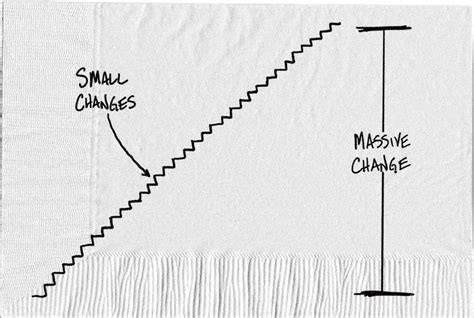
We experience some changes gradually; others come as an abrupt shock. When prices at the gas pumps go up by a cent or two at a time, we don’t notice as much as when it is a five-cent increase or more at once. Easing into a change can help a church be more accepting of the change as it develops. This gives people time to adjust to smaller changes instead of the whole change at once.

Break the Change into Smaller Parts

For many churches, Sunday Worship services have a familiar flow. The order of service is the same each Sunday. If you want to lead your church in changing its service, you may want to begin with small changes. Instead of changing everything, change one or two things at a time.

For example, if you want to add some variety to the service, you could begin by breaking the usual group of worship songs into two smaller groups, inserting a scripture reading or prayer time in between. Then, after a while, you could move the second group of songs to the end of the service for a time when you want to follow a sermon on praise with singing praise songs as a sermon response. After people get used to some changes in the singing, you can change how the welcome and announcements are done. If you always start with a song and then the welcome and announcements, try starting with a video clip highlighting a ministry in the church before doing the welcome and announcements. Instead of depending on the song to gather the church to worship, gather them with a video followed by a scriptural “call to worship” from one of the psalms.

Whatever your change, see if there are ways of breaking it into smaller changes to allow people to adapt slowly. As people see you make small changes that work, they may be willing to try a bigger change next time.

Do a Trial Run

It may be appropriate to introduce a change by announcing it as a “trial run.” You can set a date for the trial period. The caveat that this is a temporary change that will be evaluated later may give your church the willingness to try it for a while. You could even introduce the change by explaining that you are looking for a way to do things better, but you aren’t sure if this is the best way to do so. You can encourage your congregation to give you feedback as you try the change.

If you introduce a “trial run” change, make sure it is a long enough period to give it a good test run, but a short enough time to still be a trial period. If you introduce a change that you will try for a year or two, that is obviously no longer a trial run. And make sure to stick with your timeline. Do not extend it. Respect people by keeping your promises.

Promise an Evaluation

Whether it is presented as a trial run or not, you can promise all those involved in implementing the changes that you will be doing a thorough evaluation, which they can take part in, on a certain date. Evaluate it against the intended purpose. Be honest with the results. 

Three options arise out of an evaluation. First, if it didn’t do what you hoped, you can always revert to the old way. Second, if the change didn’t work, you can adjust aspects of it and try again. Or, third, you can introduce a completely reworked change to try again. You may have to wait a while before people are ready to try again, but that will give you time to figure out how best to move ahead, if that seems the best option.

May God guide you as you introduce change to your church.

Keep looking up,

Andy Wiebe

Preparing for Change #2: Prepare For the Projected Change

In a world where change happens whether we like it or not, people are sometimes hesitant to follow a leader into more change. However, they may be open to change if the leader provides compelling reasons.  I talked about that in the last blog post. Another way to help people follow your change leadership is to help them prepare for the change.

Provide Examples

Some people are more willing to adopt a change if they know what to expect. Helping churches visualize the change can take away some of their fear of the unknown. They may still not be sure about it, but at least they will begin to understand where you are leading them and what that change will look like. Visualizing requires the leader to carefully explain the change with enough details that the change begins to make sense, whether they actually can picture it or just understand the steps involved.

Recently, I was leading a church in communion. Their tradition was to have the elders serve communion by passing the trays of bread and juice down the rows and people helping themselves to a piece of bread and cup of juice. Everyone waited until everyone had been served and then the pastor led them to eat the bread and drink the cup together as a congregation.

We had decided to change things up a bit. I explained to the congregation that they would be coming up to the front to receive the communion bread and juice. I came down off the stage to where the people would be coming up to show exactly where the bread and juice would be. I walked over and pointed to the side of the aisle we wanted people to come up in and which aisle they could follow to go back to their seats. I explained that we would still wait until everyone was served and participate together.

I tried to use words to explain what was happening. I tried to make my explanation itself visual as I pointed to the appropriate places and aisles. And I reminded them of what was still remaining the same. I think I helped them visualize it because it worked very smoothly!

Answer Questions

People have questions about upcoming changes. If they are given the opportunity to ask their questions, they may be more open to the change. As their questions are answered, your church members will be more informed and hopefully their concerns will be addressed. A leader may anticipate several questions and should answer as many of those early in the process, but there will always be other questions that people want clarified. As they are given time to process the upcoming change, and as they can ask questions, you are including them in the change without it just being dropped on their lap.

Stock Traders In A Meeting

Invite Engagement.

While not every change may allow this freedom, you can often invite the church to participate in planning the change. There are times when a change may be so scary for people that they do not want to be part of it at all. Forcing change will usually only increase the resistance. Do everything you can to help people see why the change is occuring, what it will look like, and what their involvement will require.

Recently, our church leadership suggested we have a Prayer Sunday, where instead of a sermon, we have corporate prayer. When I introduced the plan for the morning, I made it very clear that no one had to pray. I told them they could even say “Pass.” At the same time, I invited them to pray, even a brief sentence prayer, and gave them an example. It was good to see that most people participated, and no one seemed too uncomfortable or upset by the change.

Changes mean we have to adjust something. The better you prepare those you lead for the changes you are planning, the more likely they will be willing to adjust to the changes. May your changes go well.

Keep looking up,

And Wiebe

Summer Road Signs Series – #2: Stop Signs

We began the Summer Road Signs Series with speed signs. Now we’ll go to the opposite: stop signs. While moving forward and heading toward new adventures and new goals is exciting, there are times when we must stop. Eventually we have to take our foot off the gas, apply the brakes, and stop.

Stop signs remind us of a few things. Sometimes we need to stop because we are coming to an intersection, and other traffic may be coming through. If we don’t stop, we may be hit by other traffic. There are times when we need to slow down and stop in life. We have all kinds of distractions and frustrations and even opportunities coming our way all the time.

Sometimes we need to stop to just reset ourselves, to get our bearings. We need to remember to watch out for what is going on around us. Are there dangers we have been ignoring? Are there opportunities we have missed because we have been going forward with such passion and determination, we never recognized them? Slow seasons can give opportunity for us to stop and assess where we have been, where we are, and where we are going.

For ourselves and our families, stopping to spend time reconnecting is valuable. Summer can be busy chauffeuring kids to camp or swimming lessons or tutoring. It can fill up with family gatherings and other expectations. But take time to spend with your family doing very little except being together. Instead of working on another project or chasing another busy thing, slow down and just listen to each other and talk about each other’s dreams and desires, hurts and frustrations. Pause to listen to each other.

In our desire to move ahead, have we left people behind? Do we need to give time for our team to catch up with us? As pastors, we set vision and direction for our churches. Are we giving time for our teams and churches to capture that vision and move with us? As leaders, our jobs include thinking about our goals and our vision all the time, but the reality is that those lead have other things on their minds too. They are not necessarily prioritizing moving towards these goals at the pace we are. A stop sign may remind us to give time for those we lead to catch up.

A stop sign could be at a T-intersection where we need to choose right or left. In our desire to move ahead, there are times we need to stop to figure out our next direction. What’s next? Just blindly choosing a direction in order to keep going may take us in the opposite direction of where we should be heading. Even if you are confronted with two equally good options, the stop will give space to allow you decide which one to take.

A stop sign may also be a reminder to just pause. We all need, in biblical terms, an occasional sabbatical. When God created the world, the seventh day, the final day, was a day of rest. It was a time to recognize that the work that had been done was enough. It’s okay to stop. To rest from busyness and take a break. A sabbatical is a reminder that our worth is not found in what we produce or what we do. When the work stops, you are still loved by God and valued as a person, a child of His.

There is also value in having other “sabbath” times. Taking a vacation can be a sabbath as we stop doing and pursing and producing and enjoy the people around us and take pleasure in the world God has created.

Yes, it is fun to move ahead at full speed, but it is important to recognize the stop signs and take the important breaks that refresh and reorient us for the next part of our journey.

Enjoy the stops signs!

Keep looking up,

Andy Wiebe

P.S. Next week’s road signs: Watch for Wild Animals

Church Leadership Series – Part 1: An Honourable Position

Introduction To Series:

There are many leaders in the church, from volunteers to paid staff to elders and pastors. While the Bible seems to speak most directly to elders and pastors in Timothy and Titus, Paul speaks to anyone who is in leadership in the church and in Christian ministry as a whole. I believe it is valuable to explore what the Bibl3 says about church leadership and these various roles, and want to give good time and space to do so. As such, this is the first post of a series on this subject.

An Honourable Position

You may have heard the perspective that no one should be too quick to jump into a leadership position at church. They say things like: “If you were reluctant to become a pastor, that is better than someone who has desired it for a long time.” They seem to think that it is a good display of humility to drag our feet a little in becoming a pastor. Yet when we look at 1 Timothy 3: 1 we read, “If someone aspires to be a church leader, he desires an honourable position.” Not only is it an honourable or noble role in the church, it is honourable to desire to fulfill that role.

Church leadership is a position of great responsibility and great privilege.

Some translations of scripture describe the position referred to above as “overseer” or “bishop.” This person takes on a role of leading people in a certain direction. Paul is an example of this when he writes  “And you should imitate me, just as I imitate Christ.” (1 Corinthians 11: 1). While a church leader might teach a class or lead a program, a large part of their leadership is leading by example. People who spend time with a church leader will likely become a little like the leader they follow.

There are many different aspects of the leader’s role, but I specifically want to remind us that it is a role that is an honourable position because it helps point others to Christ and a relationship with Him. The honourable part is that the leader has chosen to move past being a disciple to being a disciple-maker. They are now pouring into others in the same way that others have given to their spiritual growth.

In the Old Testament, prophets spoke God’s words to the people and priests went before God on behalf of the people. While church leaders today do not fulfill those specific roles, leaders do have the honourable position of speaking God’s words to those they lead and to bring those who follow before God in prayer. In a small way, a church leader acts like a bridge between God and His people, introducing them to Jesus Christ, the one “true bridge” who made it possible to have a relationship with God in the first place. This is the great privilege of leadership, that we get to help others grow in their relationship with God through a growing faith in Jesus Christ!

How is it an honourable pursuit?

To desire to be a leader, specifically a church leader, is to desire to help others to grow. What better pursuit is there than to help people grow in their faith in God and their relationship with Jesus Christ? We should long for many more individuals to step into church leadership, as both volunteers and paid full-time servants. We should pray for others in our own churches and Christian circles to recognize God’s call on their lives and step up to what that call may be. It is important to recognize that not every leader is called to lead in the church – godly leaders are needed in the business or political world as well, but it is an honourable position to pursue in the church.

As leaders who are already serving and leading, we need to look for ways to continually invite others into this honourable position. Let’s give others opportunities to try to learn and grow as leaders. And let’s thank God for how He chooses to use church leaders to impact so many others for Christ.

Keep looking up,

Andy Wiebe

Pursue Excellence: Develop Useful Templates

When you drive to work in the morning, do you always go the same way? Do you go the way that you know is the quickest, or takes you past the best coffee shop, or has the least traffic? Or do you change up your route each day? I always take the same route. In fact, over time it becomes so automatic that I find myself turn toward work when I’m driving those roads on my day off.

Taking the same route is like using templates in the office. Templates are the well-worn tracks that help work become more automatic and less stressful. Templates can be used in many different situations and for varying purposes.

Templates create efficiency:

As a leader, you are probably quite busy. You don’t want to have to re-learn how to do something every time you do it. When you find a good way of doing something, keep track of that method or format, and use that to create a template to follow. When you create a new document or work on a new project, pull out this template and follow the plan you have learned to trust. This saves you from trying to figure out how to put it all together.

In the same way that a familiar route to work ensures you get there on time, templates become familiar paths to work through quickly and save time.

Templates ensure uniformity:

In addition to ensuring you follow the same method, templates help you produce similar-looking documents. For example, I use templates when I am writing job descriptions. In this way it easy to compare one document to another. It also ensures that I include all the pertinent information in the order I want in the job description.

There are times when various team members may independently prepare documents for a shared project. Without a template you may end up with very different looking pieces making it difficult to combine efforts or compare results. A template helps everyone follow the same format. In this way, you can easily compare information across various documents because you know exactly where to look to find the information you need.

Templates provide consistent processes:

I use a template in my sermon preparation. Using a templated provides me with a format and process to follow. My sermons don’t always look the same, but the research and preparation process often does. I know what steps I have benefited from in the past and want to make sure I don’t forget them. For example, I like to ask myself certain questions as I work on the application of the sermon, such as: How does this sermon speak to a twelve-year-old boy?

In addition to sermon preparation, I use templates when working with planning teams for church events. I this way I make sure that we talk about costs, budgets, available resources, plans for prayer, and various other essential steps in planning.

Templates are also effective for more administrative work. For example, when working on Terms of Reference, a template can make sure you have the important details listed. For instance, I want to make sure that if people are working on an agreement for working together, I want there to be no question as to who has the final say. A template reminds me to include a statement about that.

Useful templates:

Pursuing excellence requires a plan and a template can get you there. As you begin to use templates you will adjust and refine them to become the most helpful tool they can be. If a template makes you do more work than you want, if it is not actually useful, then redo it or find a better one. You could start by finding a template someone else has used and adapting it to make it your own.

Templates and creativity:

I have found that adapting and implementing templates to my work has been incredibly helpful. While I would always advise using a template when possible, there are times when using a simplified template – more of a checklist – is a better option. If your goal is creativity, rigid templates may be a hinderance. As a pastor, I have created hundreds of Sunday morning worship services. I love to create each service in a unique way, meaning the different parts in the service can be moved around to accomplish the best result for each service. I joined one church that had exactly the same order of service every Sunday for the last seven years! In this instance, using a service template may restrict some creativity. Instead, a template that focuses on the planning process, or even using a checklist, provides guidance while allowing room for more freedom. As I mentioned earlier, I use a template for sermon preparation, but I have developed it to aid my creativity. While the final sermon is different each week, I use a template to guide each step of the process, which includes adding creative elements. On the other hand, a template makes each order of service exactly the same, but a checklist could be an effective way to ensure all the items to include are included, while still allowing you to be creative. (More on checklists: The Incredible Value of Checklists)

You have probably already figured out that I place a high value on creativity. At the same time, I want to be efficient in my work. Templates save time, and if used in the right circumstances still allow for creativity in the efficiency.

Templates can be very useful if you find ones that fit your situation. Use them well and save time.

Keep looking up,

Andy Wiebe
Book Reviews: Andy’s 2022 Reading Experience

I will be sharing a brief review of every book I read this year. Hope you enjoy and hope it encourages you to keep reading.


LEADING IN A CULTURE OF CHANGE – by Michael Fullan

This book is an older book but the principles are still helpful today, and maybe even more needed than back in 2001. Change is happening quickly around us, and many are suggesting they have answers. Often those requiring change to happen, look for a charismatic strong leader or a program that has worked somewhere else. Michael Fullan suggests, I believe correctly, that we need to realize that no one program is the answer to every situation. He also says that the change a charismatic leader brings may only last as long as he is leader. So Fullan suggests that change needs to be worked at slowly, with many of the people impacted participating in the transformation. As well, instead of using a cookie cutter approach, look for what might be appropriate to use at certain locations and at certain time periods of the change. He concludes the book like this: “Ultimately, your leadership in a culture of change will be judged effective or ineffective not by who you are as a leader but by what leadership you produce in others.”

Do You Really See Your Team?

We are quick to make judgements about people. Our first impressions can be completely wrong but we hold onto them anyway. Other times, the we may have known someone for a long time but do not realize they are not the same person they were years ago. For someone in a leadership role, there is a particular danger of viewing people one way and not realizing who they truly are and how they can be of help in our organization.

King Solomon, in Ecclesiastes, describes some of the unfortunate ways that people see others.

13 Here is another bit of wisdom that has impressed me as I have watched the way our world works. 14 There was a small town with only a few people, and a great king came with his army and besieged it. 15 A poor, wise man knew how to save the town, and so it was rescued. But afterward no one thought to thank him. 16 So even though wisdom is better than strength, those who are wise will be despised if they are poor. What they say will not be appreciated for long. (Ecclesiastes 9: 13-16, NLT)

These people greatly benefited from the wisdom of a poor person. They appreciated the rescue but did not appreciate the person. We are like these townspeople: quick to write people off, even if they have valuable gifts and insights. We see them a certain way and do not allow that to change as we begin to get to know them and what they offer.

Because of this oversight, we – and by extension our teams and organizations – may lose out on valuable skills and insight just because we have identified a person in one way so we do not think they have anything to add.

King Solomon continues:

There is another evil I have seen under the sun. Kings and rulers make a grave mistake when they give great authority to foolish people and low positions to people of proven worth. I have even seen servants riding horseback like princes—and princes walking like servants! (Ecclesiastes 10: 5-7, NLT)

Our quick judgements can create further damage when we choose to promote or demote the wrong people. This can be due to existing relationships or the desire to honour certain people. The unfortunate result is that we listen to the advice of the wrong person when there is someone much wiser nearby.

Most of us work with teams and volunteers in some way at some point in our life. This is especially true in ministry, when programs and services rely on staff and volunteers.

Get to know these staff and volunteers. This could be through personality tests, or at a minimum, putting in the effort to get to know each person well enough to see how they can contribute best. Intentionally take time with this in order to avoid making quick assumptions or writing someone off because of one or two missteps. Often the best outcome happens when people are in roles that suit them best, and it often takes time to identify these roles and responsibilities.

As you work with your teams and notice people are in the wrong roles, be brave enough to reorganize and reassign individuals to roles where they will excel and your team will be better in the long run.

I love to get things done, but I have realized that there are times where I am better off taking time to get to know people first. As we get to know each other, I will learn where someone can serve and give their best, and we will be able to communicate better because I know them and they know me.

Good organizations will have a regular system of evaluating people. The leader does a formal review every six months or a year to continue to help the person get better. In the evaluation, the leader can also discern if this person is still a fit here or would fit better in a different role. A system of regular evaluation is good, but the personal relationships are even better. As you develop good relationships with your key people, they will be brave enough to approach you when they want to learn or grow in a certain area or if they would like to try a different role. If open communication is valued and practiced, you will be more likely to continually give the right responsibilities to the right people.

So much of what we do in life involves working with people. Let’s figure out how to help our teams be the best by putting the right people in the right seats where everyone can contribute their best.

Get to know your people first, then get the work done.

Keep looking up,

Andy Wiebe

Book Reviews: Andy’s 2022 Reading Experience

I will be sharing a brief review of every book I read this year. Hope you enjoy and hope it encourages you to keep reading.


I WILL: Nine Traits Of The Outwardly Focused Christian – by Thom S. Rainer

Thom Rainer has written a great little book addressing many of the issues regarding a Christian and their relationship with their church. Each chapter addresses one aspect of a Christian and how to be outwardly focused as they are involved in their church. Chapters include topics like: I Will Serve, I Will Go, I Will Give Generously, and I Will Not Be A Church Dropout. This great little book with its short chapters would be great as curriculum for a new members class. He includes an “I Will” Commitment at the end of the book that new members could agree to.

The Incredible Value of Checklists!

During one of our breaks from pastoral ministry, I learned to drive a school bus. It was definitely an interesting experience. When I was about to complete the season, another driver commented that I had lasted very well on the worst run in the city. I picked up inner city kids and took them to school. Most of them came from difficult situations, but I tried to find ways of connecting with them and encouraging them.

As I was taking my training for my Class 2 license, which you need to drive a bus, the instructor walked me through a detailed list of what to check each morning to ensure the bus was safe to drive. This is not unique to driving busses; truckers have a similar pre-trip check to do. Usually this is done with a memorized checklist, but when I was later driving bus for a different company, they had a specific checklist I had to go through and sign each morning.

Checklists help you to make sure you remember to check all the important things. This applies to many places in life.

Photo by Suzy Hazelwood on Pexels.com

I go through a mental checklist most evenings before I head to bed:

  • Is my lunch prepared?
  • Have I laid out my clothes for the next work day?
  • Did I brush my teeth?
  • Did I remember to take my medications?
  • Did I set my alarm?
  • Did I plug in my phone?

The list helps me to remember what I want to remember.

Checklists can help you to train new volunteers at church. Checklists are doubly useful in training, both for the trainer and the new volunteer.  A checklist ensures the trainer knows exactly what training needs to take place. The checklist will remind them of what paperwork needs to be filled out, or what activities need to be practiced. The new volunteer can also be provided with a checklist to remind them what needs to be done.

Let’s pretend you are training a new worship leader. You can have them work alongside a current worship leader like an apprentice for a few weeks. The leader can make sure they are following the current checklist, a copy of which is then provided to the new volunteer. The checklist could look something like this:

  • Get the theme and scripture from the speaker for that Sunday.
  • Choose 5 songs that fit into that theme.
  • Sort/find the music for all musicians that will be leading worship with you.
  • Send the music titles (and music sheets) to all the worship staff and volunteers on your team.
  • Practice the music yourself.
  • Arrange practice time and practice with team during the week.
  • Arrange for all the team to come early on Sunday to do Sound checks
  • Etc.

Create lists according to the tasks that need to be done in each role, and encourage new volunteers to add to the list as they notice things that may have been missed.

I use a checklist like this in creating my sermons. I have a fairly long list that has certain comments and questions that help me think through my sermon from every aspect I think is important. Here are just a few things on my sermon checklist:

  • Who is the original audience?
  • How will this appeal to the 12-year-old boy in the pew?
  • What practical application steps can I suggest?
  • What are questions this scripture answers?

This list reminds me of what I have found to be important in the creating of a sermon. Some of them remind me of certain steps in my research. Other items remind me how to develop a good application at the end of the sermon. This is a list I have slowly compiled over the years, adding or adapting items as I discovered more steps I wanted to remember to use.

Checklists need to be open to adjustment. Sometimes a good book will encourage you to add another step. Over time some steps may be eliminated if they become irrelevant.

Checklists are a great tool to become better at what you do, to develop consistency, and to train new volunteers.

I’d love to hear about how checklists have helped you.

Keep looking up!

Andy