Getting it All Done!

Life and ministry can be busy times. Maybe you have taken on too many commitments. Maybe someone else piled responsibilities on you that you can’t ignore. Maybe you thought you had time for everything until an unexpected demand popped up. This happened to me recently. I had accepted a number of responsibilities and thought I could manage them until I found a leak in my shower. Now I had the added work of dealing with house repairs that I am not skilled at and do not love doing. I was beginning to feel quite overwhelmed and wondered how I would get everything done.
As my anxiety started to rise, I paused my day to spend some time with God. As I was praying, I began to get some clarity and peace, trusting God to help me get done what had to be done by the appropriate deadlines while also dealing with my house. Here are some of the steps I took to focus on one thing at a time:

Pause the “doing” to be with God

    I took on the various responsibilities because I believed God was guiding me in accepting them. With that in mind, I handed it all over to Him and asked him to give me the time necessary to get it all done on time. I was reminded too, that God was not surprised by my house issues. So if God put these responsibilities in my lap, then he will give me the capacity to get them done.

    Remove anything from your to do list that is not important for now

    Sometimes we feel a duty to do something that we don’t really need to do. I had to reevaluate some of my goals and responsibilities and either eliminate some, or push them to next week.

    Plan my day and week.

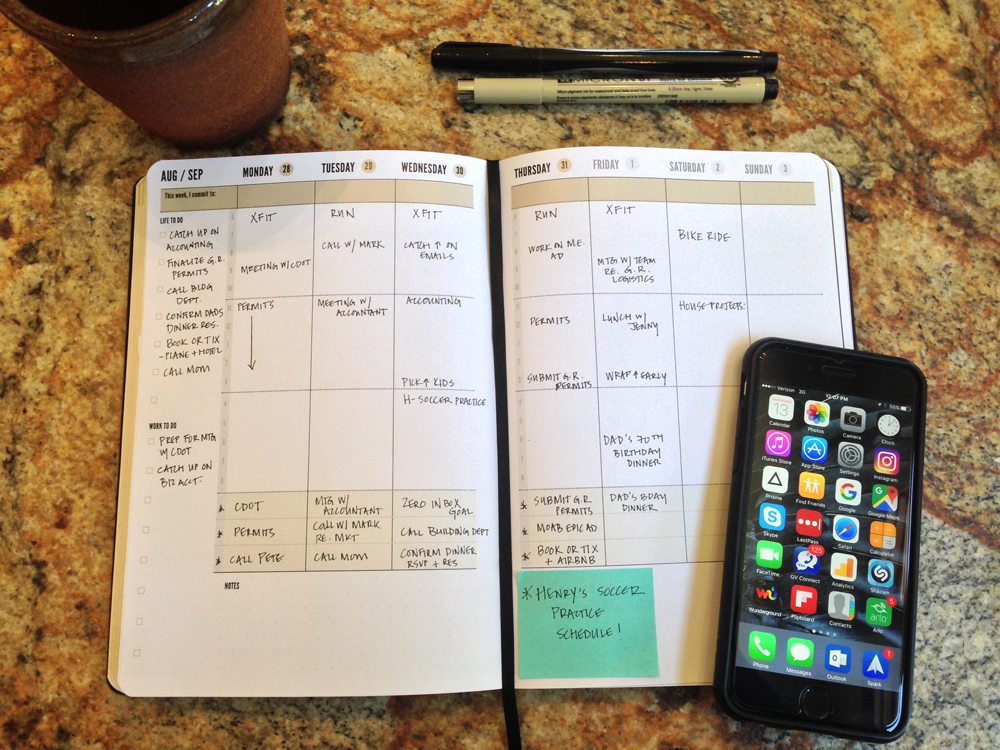
    With God’s help, I began plotting all my responsibilities, along with their deadlines, onto my calendar. I tried to spread out the different requirements across the whole week. Then I considered all that I felt I had to accomplish for today. As I looked at the list, I started listing them in order of priority. If I could not complete all the tasks, at least the ones that had to get done today would get done.

    Focus on one thing at a time.

    When we get loaded down with responsibilities, we can get overwhelmed because we see it all in front of us. If we can break it down to what must be done this week, and this day, and this morning, we begin to narrow our focus. And if we tackle one thing at a time, giving it our full attention, we can begin to whittle away at the pile.

    It doesn’t matter how big the pile is, you can only deal with one thing at a time, so choose one thing and give it your best. You could even tell yourself you are focusing on this for a certain amount of time, and when that time is up, you will tackle something else before coming back to the first task.

    Celebrate your accomplishments

    I find it quite exhilarating to be able to check off the items on my calendar as I complete them. It feels good to see the momentum beginning to build toward completion of all the different tasks.

    Yes, life can be very busy at times, busier than we had planned, but God can help us grow in capacity so that we can get things done faster than we thought and can complete our list one task at a time. If God wants us to do it, he will help us to get it done.

    Keep looking up,

    Andy Wiebe

    The Benefits of Scheduling Events on Your Calendar Regularly

    How do you remember meetings and appointments you have scheduled? As church leaders, we are often busy enough with our own families and work lives that we can easily forget some of our responsibilities at church. We have many options available to us if we want to keep track of our schedules. We can go old-school with a day timer or paper calendar. We can use calendars on our phones and computers. We can set alarms that remind us of an upcoming event. The problem is, these are no good unless you actually use them.

    I recently talked with a church board who had just about missed planning a tradition in their church. Every Father’s Day, people would bring pies to share after church. This was tradition. Someone always reminded people and made sure it happened.  

    This year, personnel had changed and no one remembered until the Friday before the special day. As a result, a few people were scrambling the day before to make sure everything was in place. If this event had gotten on the right calendar, it may have caused a lot less stress.

    So what can we do? And what needs scheduling? Here are a few thoughts on scheduling and setting reminders ahead of time.

    • Choose a system of scheduling that works for you.

    It doesn’t matter which system you use, the important thing is to choose one that you will continually use. Don’t use more than one system because then something is likely to fall through the cracks. 

    • Chart everything.

    For me, I put everything on my calendar in my phone. When I say everything, I mean everything. All meetings are written there, whether board meetings, or board responsibilities. For bigger events, you may want to break down deadlines for parts of it to be done by earlier dates.

    •  Set reminder alarms

    Often, I not only put the event at the correct date and time, I also put an alarm to remind me ahead of time so I can make sure I will be prepared and on time.

    •  Scheduling helps planning

    Marking everything on your calendar allows you to also plan ahead for preparation time. Because I know of events far in advance, I know when to delegate certain aspects to other volunteers on my team. And of course, scheduling helps reduce conflicts because you know not to plan another event at the same time.

    •  Your calendar helps you say no

    One value of charting everything on the same calendar is that you can see when you are getting overwhelmed and need to say no to something. If you don’t have everything – your work schedule and personal life – on your personal calendar, you may not realize how busy you are with both parts of your life at the same time. You do not need to feel guilty because you know you do not have time to take on anything else.

    • Watching your activities helps you see where you spend your time

    We are not always aware of how we are spending our time. We get caught up in doing what needs to be done. When you look at your calendar and see that you are spending a large portion of your time doing things that have nothing to do with your vision, you need to adjust your activities. If you notice that an overwhelming amount of time is spent on work, and you are missing out on family time, you need to adjust your schedule.

    Setting reminders of appointments and meetings and events can help you be more prepared for them, as well as help you see where you need to adjust your priorities.

    Keep looking up,

    Andy Wiebe

    Planning Ahead Raises Your Level of Excellence

    My wife and I are planning for a short holiday. We are planning ahead. We are planning for the middle of January 2022, about three months from now. Planning ahead his beneficial for a few reasons: we can make sure we have time off, we can get a cheaper price, we can make sure that everything will be taken care of at home while we are away, we can set aside a little extra money in the next couple of months, we can try to prepare for any covid-related restrictions or obstacles, and we get to build excitement as we anticipate some time for just the two of us away from home and the daily routine. Planning ahead means that it will be a much better experience than if we had just decided to wait till a few days before and then quickly tried planning something.

    I’m sure you do some planning for events in your home. You plan to be at your kids’ sports activities. You plan for Christmas. Your child is planning for graduation.

    Why is it that we seem to avoid planning too far ahead in our churches?

    Sermons and services are prepared each week from scratch to be ready for Sunday. Meetings come up and we rush to make sure there is an agenda and then run off to the meeting. We arrange for a visit with church members, but hardly give it a thought until we arrive at their door. What if we planned ahead?

    Planning ahead is valuable, and can raise the level of excellence in your ministry. Planning ahead:

    1. Demonstrates that you care about what you are planning – you have put some thought into it rather than just hoping it will all work out.
    2. Means you have a clarified vision and purpose – and gives you time to develop and apply those.
    3. Results in well-prepared events. You have time to research each aspect and prepare any documents or tools you need to make the event a success.
    4. Allows others to be involved in the planning process. You can work as a team, and can collaborate with others who are part of that event.
    5. Avoids conflicts. You can make sure to avoid any conflicting appointments or events at that time.
    6. Helps you test your plans. You have time to work on issues you may face at the event.
    7. Gives you more time to spend in prayer ahead of time.

    Let’s look at how planning ahead raises the level of excellence of the event.

    Meetings

    If you plan ahead, you can make sure all the people who should be at the meeting are notified in advance so they can either book that time for themselves or let you know of conflicts so you can reschedule. Planning ahead allows you to ensure you have an appropriate meeting room, necessary research and documents are prepared, and an agenda can be created with participant input. You can even arrange for someone to provide drinks and snacks. This also gives you time to ensure that you are comfortable with the technology you will be using (and test any videos, etc.) or that tech support will be available.

    Visits:

    Most pastors will at some point visit with members, either at their home or over coffee at a local restaurant. You could just show up and hope the conversation goes well, or you could plan ahead. If you want to raise the level of excellence for a visit, do a few things to prepare. You could make sure you know who you are meeting, especially if you do not know them well. I once was asked by a funeral home to call and provide pastoral help, to a family who had lost a loved one. I called and asked for who I thought I was to speak to, only to realize I had gotten things confused and I was asking for the deceased father! Make sure you know who you are meeting with.

    Even if you know them well, you may want to think of past conversations.  Have they asked for prayer recently? It might be good to check up on that. You might want to remind yourself of who is in their family, and the names of their children.

    As the pastor, you might even think through where they are at spiritually and how you could use this meeting to help disciple them. Are there some issues that you want to challenge them with? Is there a volunteer position you would like them to consider?

    And be ready to have a fun and enjoyable time with them.

    Worship Services

    The Sunday morning worship service is the main event in a local church. While there are numerous moving parts to the service, it is amazing how many churches don’t plan very far in advance. Too often staff and volunteers rush around each week to be ready for Sunday. This means there is little opportunity to consider anything creative, and instead, to keep up each week, churches keep doing the same old service each week with just a couple of different songs and a new sermon.

    You, pastor (or preaching team), would do well to plan ahead. I have tried to usually plan a year ahead. This allows me to think through the needs of my congregation, and plan around and for special days and seasons throughout the year. Taking this approach has allowed me to prepare a balanced preaching schedule, so I’m not surprised when Easter or Christmas arrive.

    I don’t have every sermon prepared a year in advance, but I have a general idea of the scriptures and themes I will be addressing throughout the year, so that they are in my mind as I come across good quotes or creative ideas that fit a certain upcoming theme.

    Planning the sermon text and themes ahead of time means I can better work with others, too. Sharing the upcoming sermon themes with a music pastor or worship planning team means they can also plan ahead. They might want to prepare special music around holidays or special events, or add creative elements such as preparing a skit or reading. This enables others involved in the services to prepare in a way that complements the sermon.

    You raise the level of excellence when everyone involved knows what is going on and can make sure their part fits well. You raise the level of excellence when people can practice and prepare ahead of time for some more unique additions to your service. You raise the level of excellence by having the time to do better.

    I want to encourage you to plan ahead. Not just for meetings and visits and services, but in all your responsibilities.

    Do you want to raise your level of excellence? Planning ahead is a great place to start!

    Keep looking up

    Andy

    www.elevatecoaching-consulting.com