Summer Road Signs Series – #7: Playground and School Zone Signs

Playground and school zone signs are similar in that they warn drivers to be aware that there are children in the area. This is one of the road signs that I seem to miss easily.  In fact, I got two photo radar tickets in the mail because I had not slowed down for a playground I passed twice in the same morning.

While many signs are intended for driver safety, these signs are all about the safety of other people, often children. And that is why I got my tickets, because I was focused on finding a doctor’s office that morning, not paying attention to others around me, and speeding in a playground zone. Churches, and pastors like me, could learn a few things from this sign.

First, remember that there are other people around. It is so easy to get focused on tasks we are engaged in that we don’t notice others. We are so focused on “driving” the church that we forget the importance of people in the process. Yes, pastors need to prepare for this Sunday’s sermon and monthly board meetings. There are projects to undertake and budgets to plan. All these are good and important things to engage with, but don’t forget that the first priority – the reason we exist as a church – is to help people. There are times we would benefit from a sign that would remind us to slow down and notice people.

Secondly, beyond just noticing people, we need to be aware of their needs – to stop driving and make sure we don’t hit them if they stumble on our path. Our desire should be to help these people get safely back off the road.

Thirdly, as we notice people and make sure they are safe, it is important that we do not view these people as distractions, but as the priority right there in the moment. Instead of yelling at kids to “get off the road,” or being frustrated with people who want some of our time, we need to see our interactions with people – even the unannounced ones – as an opportunity to fulfill our priorities as churches and church leaders. Other people are not inconveniences interrupting us on the way to what is really important.

Jesus tells a story that might help us see the outworkings of this sign in our church and pastoral ministry. In Luke 10: 25-37, Jesus tells the story of a man who is beaten, robbed, and left on the side of the road. A couple of religious leaders see the man but are so intent on their destination they ignore him and keep on going. Then along comes a Samaritan, who obviously was also on a journey somewhere, but is willing to delay it in order to ensure this stranger is okay and cared for. The Samaritan bandages the beaten man, puts him on his own donkey, takes him to an inn, and pays for all his needs.

Church leaders and pastors, let’s notice people and see them as the priority, not as an inconvenience to deal with quickly and get out of our way. Let’s notice them and care for their needs.

Keep looking up,

Andy Wiebe

Summer Road Signs Series #6: Roundabout or Traffic Circle Signs

Roundabouts and Traffic Circles are similar in that they help keep traffic moving without forcing anyone to come to a complete stop. I was pretty nervous the first time I encountered traffic circles. There were not any traffic circles in the small town where I learned to drive. I knew how to come to stop, watch for traffic, and then proceed. The idea that I was supposed to merge into this moving traffic and then leave the circle at the right spot was a little unnerving. I have since learned the benefits of traffic circles and roundabouts.

Roundabouts have become more common in the province where I live, not just traffic circles in the congested areas of a city but also at major intersections on highways. These have replaced 4-way stops, allowing traffic to keep moving. Traffic must slow down, yet doesn’t need to stop completely, which I’m sure large trucks appreciate especially. They don’t have to come to a complete stop and then get their heavy load moving again.

This made me think of how sometimes churches or organizations need to make wholesale changes to deal with problems that negatively affect them. Do they need to come to a complete stop or can they make changes on the fly? I’m reminded of observing how some hockey teams who are no longer winning regularly try to make changes. Some give up and trade away any player of value to try to do a complete restart. Others make significant tweaks in their organization without losing seasons to a restart. A roundabout is an example of making changes as you keep moving forward.

When churches have suffered a loss of member for an extended period, it becomes clear that changes need to be made. Often, if they have lived in denial for too long, they will need to come to a complete stop and start over. In some situations, a complete stop means a change of pastoral staff and a period of renewing vision and resetting strategy. In some situations the complete stop means completely stopping all functions of the church, even closing the doors for a brief period of time in order to start a new work down the road.

Like a roundabout, slowing down is preferable to the complete. Yes, the church must slow down. Maybe there are programs that need to be shut down or reworked completely. A pastoral transition might be required. Often someone outside the church needs to come and coach the church through to a better future. The church stops almost all activity for a time, while still maintaining regular Sunday worship services and a physical presence in the community. The church doesn’t come to a complete stop but slows down enough to consider the reality of what they are facing.

Most roundabouts have at least three alternatives for drivers to leave the circle. You may leave the roundabout at the exit that keeps you going straight ahead, or you can take a turn to the right or left. A church too, needs to consider if some simple realigning is all that is needed, and they can keep moving ahead in the direction they were already going. On the other hand, it may be the time to take a turn a little to the right or left. A complete stop is not required, but some restructuring on the fly may mean a change in vision and replacing some programs with others that fit better with the new vision and the current culture of the church and its community.

Like my first experiences with traffic circles, when a church realizes it needs to change, trying something new can be quite unnerving. Hopefully though, most churches will recognize that slowing down to make changes can help them avoid a complete stop.

Church leaders, be willing to adjust your vision and programming when necessary. Church members, work with your leaders as they guide you to a better future. Trust God to guide you as you ask Him to help you make the right changes.

Keep looking up,

Andy Wiebe

Church Leadership Series: Part 4: A Leader is Faithful to His Wife

He must be faithful to his wife

1 Timothy 3: 2 (NLT) and Titus 1: 6 (NLT)

A church leader must be faithful to his wife – or her husband. Paul advises church leaders to remember their priorities. Yes, serving in the church is a good thing – a great thing even – but he warns them not to forget their responsibilities to their spouse as well. Many church leaders work full time jobs outside the church and serve the church with the left-over time they may have. Others work full time in the church as pastoral staff. It is easy to see the church work as being so important that you begin to neglect the person most important to you.

I am serving as a Transition Pastor which means I serve a church for about a year or so in preparation for their next full-time pastor. One of the things I like to do is work with the church to make a plan for the first 90 days of the new pastor’s ministry. I want to help them see the importance for balance in the pastor’s ministry. That same balance needs to be there for any church staff or volunteer. Remember that you need to consider your spouse and make time for them to.

Part of “faithfulness” to your spouse is giving them time too so you do not make them feel they are fighting the church for attention from you. Faithfulness involves giving them priority in your life.

Some versions of 1 Timothy 3: 2 are: “husband of one wife,” or even “man of one woman.” If you want to be a God-honouring church leader, you will protect your marriage. You will be committed to your spouse. You will protect that relationship and not let anyone else into that place that you hold for them.

It is the nature of church work that volunteers work closely with other volunteers. You pour your heart into what you are working on. You are dealing with spiritual issues, which sometimes become emotional issues. In the process, some leaders have begun to transfer feelings and thoughts they had for their spouse to the person they are working so closely with. Guard yourself against sharing too intimate details with someone who is not your spouse, especially if you are working with people from the opposite sex.

You can protect yourself from some of the dangers by doing a few simple things.

  • Never spend time alone with a person of the opposite sex

If you need to meet with someone in your office who is of the opposite sex, make sure your office is set up with windows that anyone walking by can see what is going on inside. Keep the door open. If that does not work, ask if you can have another person sit in on the conversation.

Don’t spend time working on projects with a person of the opposite sex. Invite others to work with you, or make sure that the work being done is out in the open where people are coming and going.  Protect yourself from any problems or perceived problems.

Never drive anywhere with only one person of the opposite sex in your car. Either take separate cars or invite another person to join you.

  • Tell your spouse everything.

Tell your spouse about what you are doing. When you are ever in a situation that may cause an issue, let your spouse know as soon as you can. The more open you are with your spouse the less you will be tempted in the wrong direction. Hiding things lets temptation grow, bringing them out in the open takes the power of that temptation away. And the more you share with your spouse, the more they will trust you as well.

  •  Set guidelines and policies.

The more that is made clear at the beginning, the easier it is to stay on track and protect your relationship with your spouse. Develop clear guidelines for your staff and volunteers to make sure you all understand your desire to protect relationships and marriages.

Church leaders, do everything you can to protect your marriage as you serve the church.

Keep looking up,

Andy Wiebe

Book Reviews: Andy’s 2023 Reading Experience

I will be sharing a brief review of every book I read this year. Hope you enjoy and hope it encourages you to keep reading.


SO BEAUTIFUL: Divine Design for Life and the Church – by Leonard Sweet

Leonard Sweet writes about what the church may be like if she was living up to their divine design. He suggests that there are three key aspects to consider. He calls it the MRI of the church: Missional, Relational, and Incarnational. He contrasts this with what he calls the APC church: Attractional, Propositional, and Colonial. I especially appreciated his discussion of the incarnational church where he highlighted the importance of a church understanding it’s local context and being truly the church for that context. Don’t copy other churches, be the church your own community needs to best hear the gospel of Jesus.

Is Living Longer Really the Goal?

At a recent family gathering I was joking with my family that I expected to live longer than 100 years old. Why not? From organizations to businesses to human life, mankind always looks for ways to prolong what is good. We celebrate 100 years of farms owned by the same family. We celebrate people who live to 100 years of age, and often ask these individuals what their answer is to long life.

The life expectancy for Canada in 2023 is 82.96 years. If you break it down between males and females, life expectancy for men I around 80 years while female life expectancy is around 84 years. Most people love to point out that this number is slowly climbing. We are making progress, we think, by keeping people healthier longer. Scientific studies have been done to determine how to help people live longer.

People have attempted all kinds of things to prolong their life. Some have used magic potions, others have chosen to drink mercury, or played around with DNA manipulation. One pope from the 1400’s asked three young boys to give him their blood. According to the story, all four of them died as a result of this blood transfusion and attempt to lengthen one man’s life.

Is living longer the goal? Is long life the best thing we can hope for or dream of?

What all these people who have dedicated their lives to living longer don’t understand is that longer life is not the goal. Living again is the goal!

We just celebrated Easter. Easter is the celebration of resurrection – life again – specifically the resurrection of Jesus Christ. We celebrate this resurrection because the Bible clearly states that all who put their faith in Him for eternal life will live again. While human death will still happen, we will live forever in a new body with God Himself in a renewed version of the original Garden of Eden. Living longer is not the answer – living again is!

The Bible tells us that Jesus of Nazareth was crucified on a cross, and then buried in a tomb. On Easter morning, first some women and then others, saw Jesus alive. We are told that many people saw Him alive after that. He defeated death. It looked like the grave had claimed him until he rose again, alive, as attested by many people.

That, in itself, is amazing! For someone to die and then rise from the dead is amazing. Some of us may think this was only possible for Jesus because he was the Son of God. He was God. He could do what humans can’t, except that is not the full story.

Jesus said that resurrection was possible if only we believe in him. In John 11: 25, 26, just before Jesus raised Lazarus from the dead, Jesus said this to Lazarus’ sister:

Jesus told her, “I am the resurrection and the life. Anyone who believes in me will live, even after dying. Everyone who lives in me and believes in me will never ever die. Do you believe this, Martha?”

Later in the Bible, after Jesus went back to heaven, the Apostle Paul writes that resurrection is possible for us if we believe in Christ.

So you see, just as death came into the world through a man, now the resurrection from the dead has begun through another man. Just as everyone dies because we all belong to Adam, everyone who belongs to Christ will be given new life. (1 Corinthians 15: 25, 26)

I like to write about the church and about leadership and how to do things well, but all of that is in service of this message that by faith in Jesus Christ, we can have new life. New life that begins now, and continues after we die. Resurrection comes after death. So living longer is not the answer. Living again is. When we live again, we will live forever and do not need to fear death ever again.

Living longer is not the goal – living again is!

Keep looking up,

Andy Wiebe

The Power of Music and Song

Music is a part of our lives. From the song playing on your radio alarm as you wake up, to the elevator music you hear on you way to work, to the dinner music at a dinner out with your special person, music is all around us. Lullabies put our children to sleep, national anthems announce the start of a hockey game, and Happy Birthday makes us smile around a candle-lit cake. Music is also a big part of the church.

  • Music triggers memories.

Some couples have a song. It could be the song that was playing on their first date or another significant moment. Songs can take us back to occasions or moments of significance to us. I remember singing How Great Thou Art with some friends underneath tall evergreens on the shore of Heart Lake in northern British Columbia. We sang of God’s work in creation as the rain poured down and the lightning flashed against the night sky, lighting up the mountains around us. Every time I hear that song, I remember that place and that special moment.

In church, some songs remind us of special moments we had with God. The Goodness of God, by Bethel Music has a special place in my heart because I first heard it while in a low point in my life and it did a lot to lift me up and reorient myself with a renewed trust in God.

  • Songs teach us.

The tunes that stick in our head through the week remind us of the sermon we heard last Sunday and the truths that the Holy Spirit revealed to us. Humming or whistling a tune reminds us of something even when the words aren’t sung.

Statements read or spoken are not as easily retained as when in a song or put to a tune. As we sing songs together on Sunday morning or on our own throughout the week, we begin to internalize the words, and ultimately learn from them. Some of the great hymns of old were powerful because of the biblical truths they teach.

On the other hand, some of them taught us things that were not true. Christmas carols for instance taught us that baby Jesus didn’t cry, which can’t be true if He was truly human. How else would he have communicated his needs as a baby? We Three Kings declares there were three wisemen or Magi when the Bible doesn’t say that. Songs make assumptions and take poetic license, which is fine until we assume the words are truth.

Songs teach us. We just need to be aware what we are learning as we sing. Do the lyrics declare biblical truths that we can stand behind, or do they teach something contrary to what we preach and practice?

  • Songs speak to our hearts

Songs, and the music we sing them to, have a way of grabbing ahold of our hearts. They become personal expressions declaring great truths we agree with, or prayers expressing our hearts in a way we couldn’t until we heard and sang this song. Songs are the expression of the writer, and when we find a song where the writer expresses exactly what we want to say, it can be a wonderful experience. It gives words to feelings we may not have been able to articulate.

I have had songs help me declare my faith in God in the middle of the storms of my life. When everything seemed to be going wrong around me, I could join in with the song and reaffirm my belief that God was and is still sovereign even in my tough times.

Songs can make us laugh and make us cry as they enable us to put words to our emotions.

  • Songs Invigorate Us

Armies often had battle songs. National anthems inspire athletes to do their best at the Olympics. And songs can help us to rise to the challenges that face us every day. They don’t just give us something to identify with but draw us to commit to action. Songs can invite us to declare our allegiance to our God and King again.

There is power in music and song. We need to recognize that power and use it in a way that will continue to remind each other to keep looking to Jesus and honor God with our lives. Let’s encourage and inspire each other as we sing.

Keep looking up,

Andy Wiebe

Book Reviews: Andy’s 2022 Reading Experience

I will be sharing a brief review of every book I read this year. Hope you enjoy and hope it encourages you to keep reading.


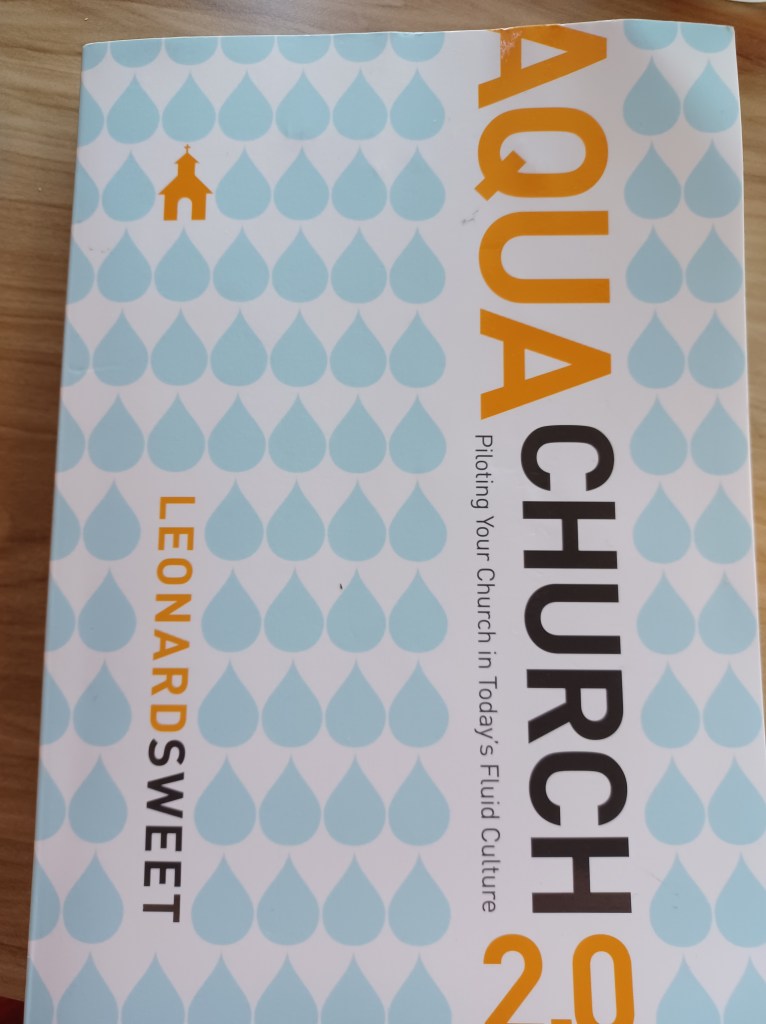
AQUACHURCH 2.0by Leonard Sweet

AQUACHURCH 2.0: Piloting Your Church in Today’s Fluid Culture uses the metaphor of water to teach on the church and it’s role in today’s culture. He addresses many aspects of church ministry, even chapters on “Risk Taking” and “Intuition” which most other church leadership books do not include. He is encouraging churches to be more aware of the culture we live in and minister in so we can understand how best to differentiate between places we join in and times we act counter-culturally. He makes a point of saying, “For leaders, not having a Web ministry is more than being without a calling card, not using a Web site as a communications and community-building tool is to have fumbled the future.” That is an appropriate message to the many churches who went to online service through Covid but have not chosen to have a meaningful online presence going forward. This book is a great resource for any church leader.

Church Has to be Different -But How?

A number of church leaders are declaring: Church has to be different now. Church has to change. While Covid has been an accelerator of this, leaders were already declaring this earlier.

I understand. As culture and society change, we need to adapt how we do the work of the church in order to connect with people today. But what changes?

I don’t feel I have the answers to what that change looks like. Instead, I will share my questions with you who follow me and hope you have some ideas to respond with. I would love to hear your comments.

Worship Service Changes

Do we need to change how we lead the worship service? I believe many churches need to plan for more audience participation and less performance at the front. I am passionate about creating interactive and transformational worship services – so much so, that I am in the process of writing a book about it!

Do we need to change from a monolog preaching style to more discussion? I know of one church that is attempting to do exactly that. People come to the service, gather around tables, and a table host leads the discussion. What else needs to change in the worship service?

Program Changes

What might be some beneficial changes to the type of programs we offer? Do we need to reduce the number of programs we offer? Should we plan more opportunities for people to interact with each other? Do we need to have more Biblical learning opportunities because people are biblically illiterate today?

Online Changes?

One positive outcome of covid restrictions was more churches provided an online worship service option. The church I presently serve is continuing this option, and usually have a number of people tuning in to watch. How might we improve in how we deliver those? Do we need to have people who can interact with those who are tuning in online? Maybe we need to hire staff to be the online church pastor in the same way multi-site churches hire a campus pastor?

How can we have a better online presence beyond just a one-hour worship service? Does this mean creating a presence on social media?

Discipleship Changes

How can we improve how we disciple new believers? In the past the emphasis was on teaching them “how to do” the Christian life. Should we move to an emphasis of “how to be” a Christian living in the world? While Bible teaching remains essential, especially for those coming to church with no prior Bible knowledge, I wonder if we need to help people move beyond living right to really connecting with Jesus, to actually listen and hear God?

Children and Youth Ministry Changes

Could we move beyond entertaining children and youth toward teaching them, even at a young age, how to live a life that is totally dependent on a relationship with God through faith in Jesus Christ, and tuned in to the guidance of the Holy Spirit? Do we need to challenge youth with opportunities to serve both in the church and in the community and world? Do we need to add in more digital content, or do we deliberately reduce screen time in our programs to counteract all the time they spend online in their day? Would it be wise to help youth focus more on getting to know God rather on avoiding sin? I came across a great quote a while back that went something like this: “Sin does not repel God, God repels sin.” We often see it as the less we sin, the closer we can get to God, when it is probably better to grow deeper in our relationship with God and then sin will be repelled.

Philosophy of Ministry Changes

Should we refocus our energies on helping people to grow in relationship with Jesus and not just in information about God? Do we need to remind ourselves that God came to be “with” us (Emmanuel)? Jesus sent the Holy Spirit to come live “in” us. It is about growing in relationship, not about growing in knowledge.

Outreach and Community Involvement Changes

As we think about introducing people to Jesus, our first realization should be that the mission field is not overseas, but right at our doorstep. There are many people living right next to us, who are just like us, who have never heard the message of salvation. And rather than thinking we need to go overseas, realize the world has come to us. Instead of taking a mission’s team to Mexico, maybe we need to reach out to the growing Mexican population down the street. Maybe instead of going to Africa, reach out to the many Africans from many different countries that now live in our cities? Even many small towns are seeing an influx of foreign workers and new immigrants. We need to reach out to them, welcoming them to Canada and sharing Jesus’ love with them.

As we reach out to those around us, this often requires an improved sense of community involvement and community connections. Some churches do well at this. Some churches offer English classes or homework help. The church I serve has an annual free Clothing Bonanza, clothing many children as they head off to school. They also give away free Bibles, so many that one year they started grabbing the church’s pew Bible to give away. Unfortunately, other churches are so caught up in their own church they hardly even know any people who don’t already know Jesus.

Let’s help people practically, and ensure we share the gospel as well. What else needs to change in how we reach out?

Facility Changes

What needs to change about how we build and set up the places where we meet? Many churches have done a good job equipping their facilities to be more accessible for those physical limitations, for example, by building ramps and elevators. We also have screens with the words on them so people don’t have to flip through hymn books. Additionally, many churches have recognized the needs of their communities, and replaced pews with chairs to allow their spaces to serve in varying purposes throughout the week. Are there other changes? Do we need to add more coffee bars?

Other Changes?

What else needs to change in how we do church? How do we update and adjust our ministries to have a greater impact for God’s kingdom? What “sacred cows” need to be chucked in order to head in a more effective direction?

I’m guessing that many changes will be different from church to church. Every church needs to mull over this issue of how to change to be the best they can be in reaching out and discipling people in their walk with Jesus.

What else needs to change?

Keep looking up,

Andy Wiebe

Book Reviews: Andy’s 2022 Reading Experience

I will be sharing a brief review of every book I read this year. Hope you enjoy and hope it encourages you to keep reading.


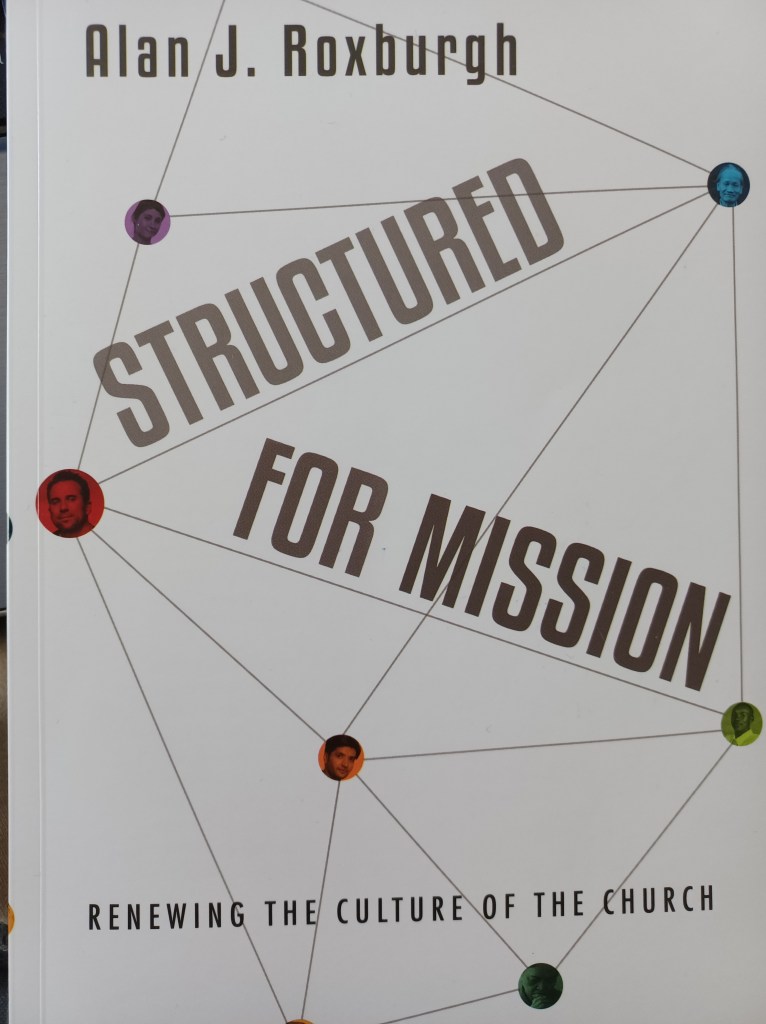
STRUCTURED FOR MISSION – By Alan J. Roxburgh

The thesis of Structured for Mission is that the present way denominations are structured must change to be effective in today’s culture. He believes that the time for experts in a denominational office is up. The real experts today are the ones at the local level. Local churches need to be given more freedom and take more ownership of their local ministry. Roxburgh doesn’t really give answers on how the local church or the denomination need to change. Instead, he suggests a new format for working through decisions in each local ministry. He suggests experimenting is necessary to see what new ideas work. The question he believes need addressing is this: “What are the challenges we currently face for which we presently have no answer but must address if we’re to live into God’s future for us?”
If you are struggling with how denominations and local churches presently work, this book will help you think further on that subject.

9 Reasons To Not Quit Today

Have you heard about the “Great Resignation?” Many people are quitting their jobs. So many in the recent months that it has been given the name: the Great Resignation. While this trend mainly focuses on the private sector, it has been felt within the churches, too. There are many churches currently hiring pastors because pastors have quit and are not in a hurry to take on another pastoral position.

I would like to give you nine reasons not to quit today.

1. You have been called by God.

If you are a pastor, you have been called to this role. Do not let the frustrations of covid and the hard work of ministry make you leave your calling.

2. Your church needs you.

No matter how long you have walked with your congregation, you know them better than any other pastor. They know you better than any other pastor. They may be walking through similar frustrations in life and need someone like you to remind them that God is walking with them, just as he is with you.

3. Your community needs you.

I hope you have invested in your community to the point that people know you and you know the people. They need someone like you to introduce them to Jesus. They need you to lead your congregation to continue to pour God’s love into the community. The new pastor does not have the relationships you have already built in the community.

4. The grass is not greener elsewhere.

If you were to leave your church and go to another one, you will most likely encounter people with many of the same life issues and problems. People are the same everywhere.

5. There are people watching you.

If you are a leader, you are being watched by others. They are looking to you to see how you handle the frustrations of life. You can show them how to persevere through difficult times. You can show them how to find encouragement from others.

6. Your present pain may be future gain.

It is often in the painful moments of life that our faith in God deepens and our relationship with God matures. The hard times offer us forks in the road of life. Will you choose the path to a deeper relationship with God or the path that gives you an easier life?

7. A sabbatical may be the answer.

There are times when we do need a break, a time for rest and recovery. In the same way that our body needs rest after a hard day’s work, there are times we need to have a break from the hectic pace of life. Don’t quit, but ask for a sabbatical to rejuvenate for the next part of your journey with your church.

8. Take advantage of help that is available.

Too often leaders try to lead alone. Pastors, don’t be a Lone Ranger. If you are part of a denomination, there is likely support available. There may be other pastors who are willing to walk the journey with you. Maybe you could seek out some encouragers you trust. Find a counselor who can help you find tools to manage the emotions of your ministry.

9. Spend time with God.

Even if you can’t take a sabbatical, take some time every day to pour your heart out to God. Ask him for insight and wisdom to lead well. Read the Bible and hear from God. Read about other leaders in the Bible who struggled and kept on going. Spend time in the Psalms, and Laments, and ask God to help you join in with the writers who declare that they will trust in God no matter what.

Keep looking up, and keep on going,

Andy Wiebe

P.S. Watch for next week’s article on reasons TO quit.