Spiritual Training Series #1: Train Yourself to be Godly

Imagine you just received a baby picture from friends who just had a baby. What if they sent you a picture every year? What if you are like me and don’t clean your fridge very often? As you put up the picture from year five, you notice the picture from the first announcement. And then you realize there has been very little change. The baby is still hardly any bigger and doesn’t seem to have developed much. Unfortunately, there are some children who do not mature the way we expect, who never crawl or walk or communicate. This makes us sad because a baby needs to grow.

As followers of Jesus, we need to grow, too.

1 Timothy 4:7 says “train yourself to be godly”.

Philippians 2:12 says “work out your salvation”.

We are to become more “godly” or Christ-like. We are to continue to grow and develop spiritually to become a better expression of the image of God as we were created to be, according to Genesis 1:27.

So God created mankind in his own image,
in the image of God he created them;
male and female he crated them.

Genesis 1:27

This is not just about our own hard work though. In Colossians 1:29, the Apostle Paul writes: “I work and struggle so hard, depending on Christ’s mighty power that works within me.” Yes we are to train ourselves and work out our salvation and struggle. We have a part to play in our spiritual development, but this is never something we do no our own. Like Paul we can depend on “Christ’s mighty power that works within me”.

We can and should do our part. It may be that we choose to practice some of the Spiritual Disciplines that Christians have practiced throughout history. This includes prayer, scripture reading, fasting, sabbath, generosity, and so on. As we practice these disciplines, we make an effort to do our part as we invite the Holy Spirit to do His work in us to make us a little more like Jesus.

Whatever training we want to instill in our lives, we do need to train ourselves to become godly. For this to be a priority in our lives, we need to intentionally prepare a training schedule or plan. When will you read the Bible, and what will you read? When will you pray, and what will you include in your prayer time? When will you choose to fast, and what kind of fast? How will you practice generosity, and so on?

Think back to the time when you first became a believer in Jesus. We could say you were a baby Christian. What would that picture have looked like if your heavenly Father had taken a picture and hung it on his fridge in heaven? What would a picture he took this year look like? As I look back 51 years, to the time He could have taken my “spiritual baby” picture,  I trust that my picture – the me that God sees – would give evidence of much spiritual growth and maturity. Maybe the picture would not just include me, but other people around me who have come to know Jesus or been impacted for Jesus by me.

I pray that you are intentionally pursuing Jesus and looking for ways to grow toward every fuller spiritual maturity.

Keep on looking up,

Andy Wiebe

God Draws People to Himself in Creative Ways!

A few years ago, I asked one of our members why she started attending our church. Her answer went something like this: “I read my horoscope, and it told me that I am a religious person, but not in the conventional way, so I thought I would go to church to find out.” Our creative God can use a horoscope to draw people to Himself!

I am preparing for a baptism service in a few weeks. A lady who is preparing to be baptized on that Sunday sent me a copy of her testimony of how she came to the place of surrendering her life to Jesus. It was a very well-written story explaining that she came from a family that had no interest in God, but God began to work in her life. She explained how she lingered a little longer than usual on a social media post about Christianity. The algorithm picked up on that and began highlighting other verses and Christian thoughts for her. She realized she was against the Bible without ever having read it. She started reading the Bible. She met other Christians and had meaningful conversations with them and started attending a church. God drew her to the point of surrendering herself to God through faith in Jesus. She described how she had just recently burned her tarot cards and is truly trusting Jesus. Our creative God can use social media algorithms to draw people to Himself.

I don’t know how God drew you to Him, but He is creative in how He works. We see this in scripture as well. God sent Philip to meet an Ethiopian official who was reading Isaiah in his chariot, and the official surrendered himself to Jesus. Peter preached to a crowd on the day of Pentecost, and three thousand people gave their lives to Jesus. The Lord knocked Paul off his horse and blinded him to draw Paul to Himself. Zacheus was up in a tree when Jesus noticed him, and Zacheus’ life was changed as Jesus went to his house and opened his eyes to a new reality of faith in God.

Jesus said in John 6:44, “For no one can come to me unless the Father who sent me draws them to me.” We are told that the Father draws people to Himself. But we are not told how that drawing may take place. God is creative and has all kinds of ways to break into hard hearts and draw people to Himself.

The examples I shared of people I have met make it clear that God doesn’t need you or me to begin bringing people to Him. In both cases, once they were interested and searching, God arranged for them to meet people who could help them along their new journey of developing a faith in Jesus and growing in relationship with God. We, as people, do not, and cannot, make anyone believe in Jesus. We can share stories about Jesus, and we can pray for and with them, but it is God who opens their hearts to faith in Him.

We have a role to play in people coming to faith in Jesus. We may encounter people at various stages of their journeys and have opportunities to be a part of their journey whenever we encounter them. Some may not have heard about Jesus, and we have the privilege of sharing the story of the Saviour of all people. Some may have heard about Jesus but never realized they needed to surrender their lives to His Lordship. Others may already have been drawn by the Father and are looking for someone to help them understand the decision they have made.

Whatever stage we encounter people, we can pray for them, we can share what we know about Jesus, and we can invite them to make a decision to surrender to the Lordship of Jesus. We have an amazingly creative Father God who invites men and women and boys and girls to faith in Jesus in whatever way He chooses. Let’s be aware of people in our life who are searching and whom the Father has been drawing so we can help them understand and begin their eternal life of faith in Jesus.

Keep looking up,

Andy Wiebe

I Can’t Do What God Can Do

I can’t do what God can do. God can do what I can’t do.

As a pastor, as a leader, I have come to realize that there are not many things that I can actually do to make people come to know Jesus, grow in their faith, learn to serve, or continue to pursue Jesus.

I can’t make a seeker surrender their life to Jesus.

I want people to come to know Jesus and put their faith in Him for forgiveness and salvation, but I cannot make them surrender their lives to Jesus; however, God can. John 6:44 is clear, “No one can come to me unless the Father who sent me draws them, and I will raise them up at the last day.” God can draw people to Himself. He can soften the sinner’s heart and create a longing in them for a relationship with God through faith in Jesus.

I can’t make anyone fall in love with God.

Many Christians possess extensive knowledge about God and Jesus and could pass a test on the Bible and their understanding of who God is and what Jesus did to provide salvation. Unfortunately, I am realizing many of these same people do not have a real, alive relationship with God.  I can’t make anyone fall in love with Jesus or with the Heavenly Father, but God can draw them and open their hearts and spiritual minds to get to know him personally and learn to love Him. God can reveal Himself to them in personal ways that deepen their love for Him.

I can’t disciple people on my own.

I can teach people and do my best to lead them by example. I can try to disciple them in the way that Matthew 28:19-20 calls us to. But it is only God who can work in their hearts, and it is the Spirit at work in them that helps Christians continue to grow in their faith.

I can’t make people serve.

I can try to guilt people into serving, I can push people, but ultimately, for them to serve with God’s love, God must show them the need to serve and use their gifts and passions and skills for Him.

I can’t make a Bible lesson change someone’s life.

I enjoy teaching, but I have recognized that the impact of a lesson on the hearts of the students really depends on what God chooses to do in their hearts in that moment. God is the one who can use the words of the teacher in ways that He chooses.

I can’t make a church grow.

I love to see new people added to the church. I love to hear stories of churches that are running out of room because so many people are attending. I can try to use various church growth techniques, but I have realized over the years that growth depends on what God does in the hearts of people.

I can invite people to do something, I can try to inspire them in a certain direction, but I cannot make people do anything they do not want to do. Yet as I trust God to work, He does. He works in me, and through me, and in others, as I faithfully do what God asks of me. I need to serve Him faithfully, and I need to recognize the results have little do with me and are all about how God is at work in people’s lives.

Yes, we need to work hard and do our best, recognizing that we need God to work. There are many things we can’t do, but if God is the one who does the work in people’s lives, we can pray urgently for God to work in our church and the people we serve.

Keep looking up,

Andy Wiebe

Remembering the Priorities of a Church Board

For something to be a priority, it must be most important. When I see a company proudly displaying a slogan on their work trucks declaring, “Safety is our number one priority,” I know they don’t really mean it. It’s not true. If safety was their top priority, they would leave their work trucks at the shop and ask their work force not to leave the building. Their top priority is their business, but they do want to be safe in doing it.

Number one priority marked with red circle on math notebook

When I think of church boards, I wonder if we too have lost an understanding of what is truly priority? Board meetings begin with a welcome, maybe a devotional and a quick prayer, and then it’s on with the business of running a church. Much time is spent on financial discussions, reports, and budget. There is talk about the facilities and what maintenance is needed. There may be reports from different ministries highlighting their recent accomplishments. The board discusses, debates, and makes decisions. And then, after three hours of discussion, the meeting ends and everyone goes home.

The question is: did the board members focus on the priorities?

Too many church boards model themselves after a corporate board of a business. Yes, there are certain “business” aspects church boards need to handle such as managing insurance, paying bills, and ensuring the church functions in an organized way. But could it be that there are priorities that get shoved to the end of the meeting so they get less time than required?

There are a few items that I have noticed are not receiving the attention I believe should be given to them as priorities.

  1. Connect with God

Central to engaging with God is time spent in prayer. A church board is not first responsible to it’s “shareholders” (congregation) but is first responsible to God. It is God’s church, so the board needs to check in with Him to ensure that they are hearing His voice and being led by Him. Board decisions cannot be dependent on consensus alone but need to be guided by God. Along with asking God for direction, the board should talk to God about the people they are called to shepherd. A church board needs to pray for people’s health and life situations, but more importantly, pray for them to grow spiritually. A board has the privilege of interceding for their congregation.

2. Emphasize Discipleship

A church board is called, with the pastor, to lead a church in “making disciples.” (Matthew 28:20) This requires church leadership to regularly review their discipleship process to ensure people are coming to know Jesus and growing in their relationship with Him. Discipleship is about ensuring appropriate ministries are available to those who want to grow in their faith. When discipleship is a priority, it will influence other discussions during the board meeting. For example, if a board recognizes that their budget is falling short, they may want to encourage the pastor to preach about how God wants us to handle finances. The Board may want to plan a study on financial stewardship, not just to meet the budget, but to help their members to honour Jesus in their finances. Boards are easily caught up in many other decisions that it is easy to forget their role in making sure people are growing in their relationship with Jesus.

3. Pursue their God-given Vision

God has called every church to a unique role in the setting they find themselves in. Their vision needs to come from time with God. This may seem like a daunting task, but once the vision is clarified they can move ahead with purpose and clarity. Once they have determined their vision, church boards need to do everything they can to align all aspects of their church services and ministries to the vision God has called them to. This is about being responsible to what God has called them to

While there may be other priorities, these are three that every board needs to remember. A board that remembers these will do well.

Keep looking up,

Andy Wiebe

Leading a Small Group with Discipleship in Mind

Much has been written about small groups as a valuable way to help believers grow. Churches often have unique names for their small groups depending on the priority of the group. Regardless of what these groups are called, churches that have small groups have an opportunity to disciple those in each group. As a leader, you can use your regular meetings to point everyone to Jesus again and again. This applies whether it is a task small group, friendship small group, or a Bible study small group. Here are a few suggestions for leading your small group with discipleship in mind.

  1. Pray together. Always take time to pray, even if it is just a brief time. Some members of your group may not typically pray in their day-to-day lives or may feel awkward or unfamiliar with praying. By leading in prayer, they see prayer modeled and may then learn how to pray themselves. So prayer will be an opportunity to bring requests to God as well as disciple people in how to pray.
  • Teach your small group to pray. Beyond modeling, you can show your group how to use prayers in the Bible as examples of how they can pray. You could start with the Lord’s Prayer, but there are many other prayers, especially in Paul’s letter and in the Psalms, which could be great examples for the amateur pray-er.
  • Read Scripture. Even if your group is not a Bible study group, you can still take time to read a few verses of scripture. This may be all the scripture some members read or hear that day. Remind them that God speaks to everyday situations. Even if your group is a task group that gathers to accomplish a certain purpose, such as a worship team that meets to practice for Sunday’s service, take time to read from God’s Word. If you are putting discipleship as a priority, then it is always appropriate to read scripture and pray.
  • Get personal. Sometimes we are so focused on the goal of the group, that we forget that we are all people who long for connection. We want to be noticed. We want people to express interest in our lives and concern for our well-being. Sometimes, in a Bible study, we jump so quickly to the Scriptures that we don’t notice that some members of the group are hurting, and others are excited about life and both want and need to share with someone. Take time to share something personal every time so you get to know each other and find ways of encouraging those who need it.
  • Teach something new. I used to think that discipleship only included teaching and equipping believers in “spiritual” things, yet discipleship can be very practical. A music small group may appreciate learning a new song, or a new creative way to engage their audience. A Bible study group may enjoy learning a new Bible Study method that helps them engage with scripture in a new way. Get creative, but look for ways to teach something new.
  •  Equip your small group. While this is connected to teaching something new, this specifically focuses on helping your group members improve a skill or grow in faith disciplines. The goal might be developing new Bible study methods that enable your members to move beyond just reading scripture to interacting and studying it. Maybe you can equip them in something practical such as how to buy a new Bible, how to make friends with their neighbour, or how to lead a small group so new leaders are raised up regularly.
  • Encourage your small group to consider God’s purpose for them. No matter what kind of group you lead, the believers in that group need to recognize that God has a purpose for them. Point them to scriptures that talk about loving God and loving others. Encourage them to try new things and see how God uses them. Encourage them to ask God about their purpose and then to live into it boldly.

No matter what kind of small group you lead in your church, each member needs to grow in their faith. Lead in such a way that they are discipled in the process.

Keep looking up,

Andy Wiebe
The Privilege of Being a Pastor #3: Making Disciples of Jesus.

One of the unique opportunities of a pastor is to walk with people as they take significant steps in their journey with Jesus. It is humbling to think that God allows me to be part of these times when people are making decisions that will impact their eternity. Let me share a few stories.

I remember a teenage girl who was searching for answers. She came from a difficult home situation and loved the acceptance she was experiencing in the youth group and church. Her friend brought her to me and together we introduced her to Jesus! She knew there was something better than what she was experiencing at home.

One young man had gone through many hard things. You could tell, just by looking at him, that life had been hard on him. I got to know him and tried to help answer his questions until the day that he asked to be baptised. Just as we headed to the washrooms to change for the baptism, he pulled out a cigar and handed it to me. What a fitting gift! He was so excited about what was about to happen and wanted to celebrate it with a gift for me.

I love the excitement of those preparing for baptism. One teenage girl was determined we would have an outdoor baptism in the river near the church even though it was fall already. The special day arrived, and there was already a skiff of snow on the ground, but she was not backing down. We made sure to have plenty of extra towels to wrap up after and went down into the cold river for the baptism. It was one of the quickest baptisms I ever did!

I remember reading the Bible with a new friend. He didn’t know the Bible but wanted to just read it together. This was not a Bible Study or in-depth lesson. We just started by taking turns reading in the Gospels. As we read the stories of Jesus, we stopped when he had a question or clarification was needed, and then kept going. I loved seeing his responses to a story that I was so used to but was brand new for him!

I have preached many sermons in my life. There are many I have forgotten, but others stick in my mind because of how people responded. One Sunday, I preached on receiving the Holy Spirit from the book of Acts. I pointed out that sometimes people had leaders lay their hands on them and pray for them to receive the Holy Spirit. I made it clear that there was nothing special about me, but if there were any who wanted to have me lay hands on them and pray for them, to come on up as I closed. One man actually ran to the front! Then others started coming up. There were so many  people who wanted to receive more of the Holy Spirit, that I had to recruit a couple of elders to lay hands on and pray for people with me. What a joy to see people respond to God’s word!

Working on vision with church leaders is one of the things I get excited about as I serve as a Transitional Pastor. I love seeing leaders begin to hear God together and get a sense of how God is leading their church. I served one church where leaders put in two planning and dreaming sessions of five and six hours each, working together to hear from God on His direction for the church. It was amazing to watch as they listened and heard from God together, coming up with the right words to describe who the church was and where the leaders felt God calling them as a church. The time of prayer and listening and discussing together brought a clear sense of direction that guided the church moving forward. What a privilege to coach the leaders through this process of listening to God.

Walking with people as they make decisions to follow and honour Jesus has given me opportunities to develop some great friendships. One friend and I spent many hours together in the church and serving in the community and just doing life together. It was a joy to eventually baptise him as he said yes to Jesus. Another friend was struggling with a desire to be holy and feeling he was far from it. As we walked through this time together, not only was I able to encourage him to continue to follow Jesus and go deeper with him, I also found a great friend.

I hope these stories show you what a gift it is to walk with people as they make big spiritual decisions and take steps in spiritual growth.

Keep looking up,

Andy Wiebe

Book Reviews: Andy’s 2024 Reading Experience

I will be sharing a brief review of every book I read this year. Hope you enjoy and hope it encourages you to keep reading.


GO: Returning Discipleship to the Front Lines of Faith – by Preston Sprinkle

As Preston Sprinkle’s books usually do, this one also pushes the boundaries of what believers are comfortable with and used to.  He does a great job of biblically suggesting there is more to discipleship than just teaching and more to church than just Sunday morning worship. He points out that discipleship is about living out a relationship with Christ, and living it out in real and practical ways as we connect with others in our world. Chapter 9 is worth the cost of the whole book as he challenges believers to consider how much of our efforts and money is wrapped up in putting on nice Sunday services instead of helping people with their real needs. A challenging and encouraging read!

Book Reviews: Andy’s 2024 Reading Experience.

I will be sharing a brief review of every book I read this year. Hope you enjoy and hope it encourages you to keep reading.


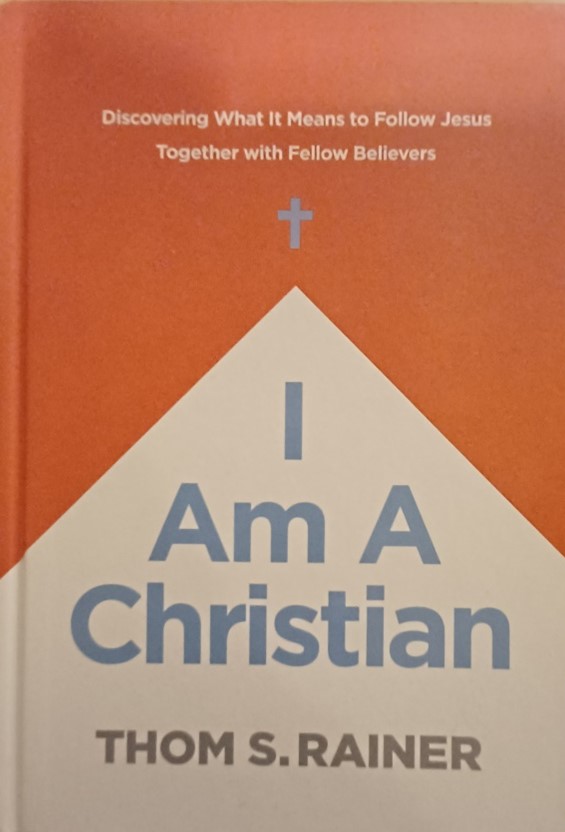
I AM A CHRISTIAN: Discovering What it Means to Follow Jesus Together with Fellow Believers – Thom S. Rainer

Thom Rainer outlines the basics of Christianity in a simple and straightforward manner. This little book would be great for new believers – and others – to explain what it really means to be a Christian in practice. Rainer introduces the reader to the main ways that a believer lives out their faith. He includes some good stories to help explain his concepts. A great biblical little book to help clarify what it means to be a Christian!

Book Reviews: Andy’s 2023 Reading Experience

I will be sharing a brief review of every book I read this year. Hope you enjoy and hope it encourages you to keep reading.


A TREASURY OF A. W. TOZER by A. W. Tozer

If you have never read A. W. Tozer, this might be the book to get. It is a collection of Tozer’s writings from a few different books he has published. Tozer is an older author who speaks with a directness to his audience and a reverence for our Holy God. Much of his writing focuses on the indwelling of the Holy Spirit and the pursuit of holy living. The short chapters make it a great devotional read.

Church Leadership Series: Part 5: A Leader Must Teach

he must be able to teach

1 Timothy 3: 2 (NLT)

He must have a strong belief in the trustworthy message he was taught; then he will be able to encourage others with wholesome teaching and show those who oppose it where they are wrong.

Titus 1: 9 (NLT)

I love to teach. I love preparing a lesson and then teaching it to a group of people, small or large. I love to see learners understanding a new idea or learning how to apply a truth they have just understood. To be a leader is to instill new ideas and ways of doing things in others who are coming after you. A church leader must be able to teach. This is one of the main ways to instill new ideas and practices in those whom you are leading. My automatic reaction to this verse is to think of teaching thoughts and ideas, of preaching and teaching scripture and discipling others through teaching in a class or sermon. But we all know that teaching is also about hands-on and practical learning.

Apprentices are always learning, but only part of their training is in the classroom. Much of the teaching they receive is active hands-on learning. Leaders in the church may be good classroom teachers, or they may not, but if they are teaching others in practical ways, then they are still teaching.

I find it interesting that in Titus we are told that the leader must have been taught first and must believe what he was taught. A teacher cannot teach what they do not know.

The key teaching in the church is the “trustworthy message” of the gospel. We have heard and now teach the gospel of Jesus Christ to others. As leaders we continue to encourage others to get to know the Jesus of the gospel, and to receive His life-giving forgiveness of sins as we put our faith in Him.

Church leaders are responsible to teach many things in the church, but it always needs to come back to the gospel message. Whether we are teaching others how to be an usher or how to do run the sound board, all of that is to help others continue to hear the gospel message.

Part of a leader’s responsibility is to “show those who oppose it where they are  wrong.” (Titus 1:9) It is not unusual to come across people that have not understood something correctly. Misunderstanding may be as serious as not understanding the forgiveness that Jesus offers to all who believe in Him, or something as simple as not following through on a certain responsibility they accepted. In either case, the leader’s job is to correct when correcting is necessary, and this is done by teaching and showing what the correct understanding is.

It is pretty much impossible to be a leader and not be able to teach. To lead is to be ahead of people in information or practices that somehow need to be passed on to those following. In the process of doing that, you are teaching. Yes, some are more gifted in teaching than others, but a leader will always be able to teach to some level.

Keep looking up,

Andy Wiebe