The Church Needs More Creativity

Our Bible begins with the Creator at work, creating our world. When He makes people, they are created in the “image” of God, as creators themselves. While different animals are incredibly industrious and clever, humans are set apart from the animal world by our ability to think through problems and find new solutions and create new things.

Merriam-Webster online defines “create” like this:

  • To bring into existence
  • To invest with a new form, office, or rank
  • To produce or bring about by a course of action or behavior
  • To produce through imaginative skill

Create with a twist on what already exists

God brings into existence something out of nothing. We, as humans, have to use what is already available to create something new or different. Even the creativity of thought or speech builds on the thoughts and words of others.

Creativity uses and builds on what others have created. Of course, we need to acknowledge other’s works and do not want to claim something as ours when it isn’t, but we usually create out of what already exists.

As a church, too often, we buy curriculum and programs that others have found to be useful. We run programs and events that have been effective elsewhere. These can be great options for times when we do not need to “re-invent the wheel” and use materials that others have invested in developing.

Even when we purchase a complete program, we often realize there are aspects that don’t quite fit. In order for the program to work well in our own situation, we need to implement frequent evaluations of our programs and events, and be open and flexible to make changes. These changes require a sense of creativity to consider what we could take out and add to improve the pre-made materials for our situation. We may also find that there are times when we are better off creating our own completely new program that more appropriately contributes to our ministry as a church. Just because a club program works well in large urban centers in the United States does not mean it will transfer to rural northern Alberta. While the teaching may still transfer, the application part may have to be adapted to connect with rural northern kids.

Stretch yourself to think creatively

We need to learn how to be creative. Many of us had all our creativity schooled out of us. We were forced to colour within the lines for too long. We no longer know how to think outside of what already exists. We need to stretch our creative muscles and limber them up so that we can think of things that do not exist yet, building something new on something old. This could be through reading and listening on a variety of subjects. It could be dreaming and brainstorming as a team. It could be learning how to take aspects from many different places to put together something that is new and different, and perfect for what we are hoping to accomplish.

Being creative is not an individual task. Instead, seek creative input from people in your community. Talk to people in different fields to learn how their knowledge and experience could be adapted to work in the church. For example, what might we learn from someone’s expertise in trees about how to structure small groups? Or how might talking to an electrician spark ideas for discipleship?

Areas for creativity in the church

As we focus in on church ministry, creativity can add some new life in almost every area!

The Worship Service – Our worship services have not changed much in decades. We may sing less hymns and more worship songs and we may use versions of the Bible with up-to-date language, but the service as a whole still consists of singing, prayer, scripture reading, and preaching much as it did years ago. Even if we don’t get creative with the outline and contents of the service, we could benefit from creative ways of doing these essential pieces of our worship traditions.

What if we celebrated communion with different stations spread around the room where we could physically enter into confession, repentance, and celebrating the forgiveness Christ offers? We could write sins on paper and run them through a shredder or nail them to a cross.

What if we built on the message of the sermon by inviting people to discuss the application of the lesson and promise to hold each other accountable to follow through on our commitments? Not only would this invite more participation in the service, but encourage engagement with one another throughout the week.

Discipleship – This has been one of the most talked about topic in my church circles over the last decade or two. How do we best disciple others? How do we grow as disciples of Jesus ourselves? Often the process is built on information. We teach people scriptural truths and encourage them to memorize verses. Could we borrow ideas from the trades where people progress through stages of practical learning along with class time? Maybe we could apprentice new believers through stages of learning and development. What if we “walked” through life together? An apprentice disciple could be in touch with their mentor throughout the day, perhaps checking in at certain times, and being available for advice and prayer? We need to creatively find ways of doing this better.

Children’s Ministry – Every church has some type of ministry for their children, and often they are very similar. Could we be creative in how we help our children get to know Jesus and grow in their faith in Him? Yes, use all kinds of media, and creatively insert “old-school” ideas that we enjoyed as children that our youngsters have never experienced. Sometimes creativity may mean re-creating something old with a new twist. You could use puppets, play a video, or have them record their own video on a topic. Find ways to engage them physically through games or dance or hands on interactive learnings stations.

Creativity is the means, not the end goal.

While our desire is to be creative, that is not our goal! While it may be nice to be known as a creative church, the creativity is only meant to help us reach our other goals and to engage more people in the process. As a church, God has called us to reach and teach people; to come to faith in Jesus and to grow as a disciple. Creativity can help us get people’s attention and keep them interested. Creativity can be the container that carries our goals forward. The colour and shape and size of the container helps draw attention. Who wants to watch black and white movies when you can watch them in High Definition colour?

Let’s learn to stretch our creative muscles prayerfully and creatively to be the best church offering the best programs you can!

Keep looking up,

Andy Wiebe

Church Has to be Different -But How?

A number of church leaders are declaring: Church has to be different now. Church has to change. While Covid has been an accelerator of this, leaders were already declaring this earlier.

I understand. As culture and society change, we need to adapt how we do the work of the church in order to connect with people today. But what changes?

I don’t feel I have the answers to what that change looks like. Instead, I will share my questions with you who follow me and hope you have some ideas to respond with. I would love to hear your comments.

Worship Service Changes

Do we need to change how we lead the worship service? I believe many churches need to plan for more audience participation and less performance at the front. I am passionate about creating interactive and transformational worship services – so much so, that I am in the process of writing a book about it!

Do we need to change from a monolog preaching style to more discussion? I know of one church that is attempting to do exactly that. People come to the service, gather around tables, and a table host leads the discussion. What else needs to change in the worship service?

Program Changes

What might be some beneficial changes to the type of programs we offer? Do we need to reduce the number of programs we offer? Should we plan more opportunities for people to interact with each other? Do we need to have more Biblical learning opportunities because people are biblically illiterate today?

Online Changes?

One positive outcome of covid restrictions was more churches provided an online worship service option. The church I presently serve is continuing this option, and usually have a number of people tuning in to watch. How might we improve in how we deliver those? Do we need to have people who can interact with those who are tuning in online? Maybe we need to hire staff to be the online church pastor in the same way multi-site churches hire a campus pastor?

How can we have a better online presence beyond just a one-hour worship service? Does this mean creating a presence on social media?

Discipleship Changes

How can we improve how we disciple new believers? In the past the emphasis was on teaching them “how to do” the Christian life. Should we move to an emphasis of “how to be” a Christian living in the world? While Bible teaching remains essential, especially for those coming to church with no prior Bible knowledge, I wonder if we need to help people move beyond living right to really connecting with Jesus, to actually listen and hear God?

Children and Youth Ministry Changes

Could we move beyond entertaining children and youth toward teaching them, even at a young age, how to live a life that is totally dependent on a relationship with God through faith in Jesus Christ, and tuned in to the guidance of the Holy Spirit? Do we need to challenge youth with opportunities to serve both in the church and in the community and world? Do we need to add in more digital content, or do we deliberately reduce screen time in our programs to counteract all the time they spend online in their day? Would it be wise to help youth focus more on getting to know God rather on avoiding sin? I came across a great quote a while back that went something like this: “Sin does not repel God, God repels sin.” We often see it as the less we sin, the closer we can get to God, when it is probably better to grow deeper in our relationship with God and then sin will be repelled.

Philosophy of Ministry Changes

Should we refocus our energies on helping people to grow in relationship with Jesus and not just in information about God? Do we need to remind ourselves that God came to be “with” us (Emmanuel)? Jesus sent the Holy Spirit to come live “in” us. It is about growing in relationship, not about growing in knowledge.

Outreach and Community Involvement Changes

As we think about introducing people to Jesus, our first realization should be that the mission field is not overseas, but right at our doorstep. There are many people living right next to us, who are just like us, who have never heard the message of salvation. And rather than thinking we need to go overseas, realize the world has come to us. Instead of taking a mission’s team to Mexico, maybe we need to reach out to the growing Mexican population down the street. Maybe instead of going to Africa, reach out to the many Africans from many different countries that now live in our cities? Even many small towns are seeing an influx of foreign workers and new immigrants. We need to reach out to them, welcoming them to Canada and sharing Jesus’ love with them.

As we reach out to those around us, this often requires an improved sense of community involvement and community connections. Some churches do well at this. Some churches offer English classes or homework help. The church I serve has an annual free Clothing Bonanza, clothing many children as they head off to school. They also give away free Bibles, so many that one year they started grabbing the church’s pew Bible to give away. Unfortunately, other churches are so caught up in their own church they hardly even know any people who don’t already know Jesus.

Let’s help people practically, and ensure we share the gospel as well. What else needs to change in how we reach out?

Facility Changes

What needs to change about how we build and set up the places where we meet? Many churches have done a good job equipping their facilities to be more accessible for those physical limitations, for example, by building ramps and elevators. We also have screens with the words on them so people don’t have to flip through hymn books. Additionally, many churches have recognized the needs of their communities, and replaced pews with chairs to allow their spaces to serve in varying purposes throughout the week. Are there other changes? Do we need to add more coffee bars?

Other Changes?

What else needs to change in how we do church? How do we update and adjust our ministries to have a greater impact for God’s kingdom? What “sacred cows” need to be chucked in order to head in a more effective direction?

I’m guessing that many changes will be different from church to church. Every church needs to mull over this issue of how to change to be the best they can be in reaching out and discipling people in their walk with Jesus.

What else needs to change?

Keep looking up,

Andy Wiebe

Book Reviews: Andy’s 2022 Reading Experience

I will be sharing a brief review of every book I read this year. Hope you enjoy and hope it encourages you to keep reading.


ALOOF: Figuring Out Life With A God Who Hides – by Tony Kriz

If you are looking for an easy read that packs a punch, this is for you! Tony Kriz walks through his life experience of pursuing a relationship with a God who is often in the shadows. He shares some great stories where God did something miraculous but also makes it clear that these are few and far in between. He does a great job of showing how God is continually there, even when we do not see Him or feel near to Him. Tony is very honest about his personally journey while asking great questions that make the reader think. And there is nothing wrong with thinking deeply about God! A great book for anyone who wants to go deeper with God!

The Thirst of Humanity

One of the fundamental questions of life is this: Does my life have meaning?

Wrapped up in that question are others. Why am I here? Do I have a role to play? Where do I fit? Can I do something of meaning? What is my purpose?

There is a basic thirst in all humanity to find meaning in life. Everyone wants to find some meaning and value in what they do. And they look for answers in all kinds of places. Some try to fill that thirst with experiences and so they do all kinds of things hoping something will satisfy. They may choose to enhance or even remove the feeling of reality with drugs and drinking. Some chase achievements, some look to “just provide a good life for my family.” Others look to fame. Some look to “leave a legacy” so their name will remain alive long after they are gone. Everyone is searching for that satisfaction that will finally quench their thirst.

The search is on for that elixir that will truly satisfy. This search has carried people in many different directions. If you have attended college or university you will probably have come across some of the following people and their ideas.

  • Albert Camus wrote in his essay The Myth of Sisyphus “There is but one truly serious philosophical problem, and that is suicide. Judging whether life is or is not worth living amounts to answering the fundamental question of philosophy.” According to Camus, life is entirely without meaning.
  • Jean-Paul Sartre argued for dealing with the meaninglessness of life by creating our own meaning. We decide, not God, or any other person, what we find meaning in.
  • Augustine of Hippo and Blaise Pascal, though many years apart have both been connected to the idea of a “God-shaped hole” in mankind, or an “infinite abyss”, that Pascal wrote in Pensées, “this he tries in vain to fill with everything around him, seeking in things that are not there the help he cannot find in those that are...” Looking for something that doesn’t exist, outside of God.

Solomon, King of Israel, declared in his book, Ecclesiastes, “Everything is meaningless… completely meaningless! …I observed everything going on under the sun, and really, it is all meaningless—like chasing the wind.” (Ecclesiastes 1: 2, 14).

Solomon’s journey for meaning led him to seek pleasure and wisdom and hard work, and found none of these pursuits were fulfilling. In Ecclesiastes 3: 14 he says, “God has made everything beautiful for its own time. He has planted eternity in the human heart, but even so, people cannot see the whole scope of God’s work from beginning to end.” There is something in the human heart that longs for more. This is reminiscent of the “God shaped hole” or “infinite abyss” that is longing to be filled, to be satisfied. This thirst that is longing to be quenched.

Solomon journeys on, looking at the injustices of life, the futility of political endeavors and chasing after and gaining wealth. He points out that everyone dies. So what is the value of the time of our existence?

In chapter 11 Solomon encourages both the old and young to treasure their days, and reminds them that God is part of the answer to our thirst for meaning. Yet he still views life as meaningless.

When people live to be very old, let them rejoice in every day of life. But let them also remember there will be many dark days. Everything still to come is meaningless.

Young people, it’s wonderful to be young! Enjoy every minute of it. Do everything you want to do; take it all in. But remember that you must give an account to God for everything you do. So refuse to worry, and keep your body healthy. But remember that youth, with a whole life before you, is meaningless. (Ecclesiastes 11: 8-9)

In the end Solomon concludes “Fear God and obey his commands, for this is everyone’s duty. God will judge us for everything we do, including every secret thing, whether good or bad.” (Ecclesiastes 12: 13-14.)

His final conclusion is we need to recognize that God has the final say about our meaning and value. He is the final judge. Our job is to obey him and find meaning in that obedience to God. There is no meaning in all other pursuits, except in honoring God in those pursuits.

The thirst of humanity cannot be satisfied with any other pursuit than that which brings us into a relationship with the One who made us. God created us to have a relationship with Him. Any pursuit that looks for satisfaction outside of that relationship will never satisfy. To look for contentment outside of what we were created for will only bring more dissatisfaction and frustration.

To use a drill to pound a nail or a file to chop wood is ridiculous and frustrating. We need to come to God who created us for relationship with Him, and as we honor and worship him our craving will find relief.

Your thirst can only be quenched as you drink deeply from God who created you and loves you!

Keep looking up,

Andy Wiebe

Book Reviews: Andy’s 2022 Reading Experience

I will be sharing a brief review of every book I read this year. Hope you enjoy and hope it encourages you to keep reading.


DEFINED: Who God Says You Are – by Stephen Kendrick & Alex Kendrick

Many in our culture are struggling with their identity. They are confused about who they really are. The Kendrick brothers present a great answer by walking through “who God says you are.” They draw on the book of Ephesians as they say “His Word teaches that you can discover, believe, and set your heart on your true identity – your identity in heaven.” The book is laid out in a daily reading style with extra scriptures and a prayer at the end of each day’s reading. Want to know who God says you are? Then this book is for you.

Pursue Excellence with Constant Evaluation

“CANEI is an acronym that stands for constant and never ending improvement. If you really want your services to soar, you have to commit to CANEI. You can never be satisfied with what you did last week, even if it was a great week. Always keep moving forward; always be working to reveal God’s excellence in a new, more powerful way.” 

– Nelson Searcy and Jason Hatley, Engage: A Guide to Creating Life-Transforming Worship Services.

To become better we need to evaluate. Everything we do can be improved through taking the time to reflect and evaluate when completed. An effective way to guide post-event evaluation it to use established systems and processes, whether these are adapted from other leaders or organizations, or created internally.

Recently I was reading Leading in a Culture of Change. Michael Fullan, in talking about evaluation, refers to Army After Action Reviews. These AARs have three key questions: What was supposed to happen? What happened? And what accounts for the difference?

I like that. While many evaluation systems include many questions about every aspect of the event, they really all come back to these three questions. All the questions on a long evaluation form probably come down to these three questions.

What was supposed to happen?

This question is effective because it assumes there was a clear plan from the beginning. Every person involved in making it happen knew what was expected. They likely talked through each aspect ahead of time, and maybe even rehearsed parts of it. Your evaluation needs to begin with a reminder of what you hoped to accomplish. In this way, everyone is reminded of what their goals were.

What happened?

This is where you work through the event in hindsight and remind yourself  what actually happened. Did those leading know what they were doing? Did the people involved enjoy the experience? Did it end up being close to the original goal and plan? Were you able to work the vision well, meaning did your effort move everyone toward the envisioned goal? This is the opportunity to consider each aspect and identify what went well and what did not.

What accounts for the difference?

Once you’ve identified the expectations and actual outcomes, it is time to look at how closely your event matched what you had dreamed and planned for. Focus in on what happened differently than expected. Point out any surprises or missteps, and then try to figure out why things did not go as planned. What are some reasons for what went wrong? And just as important: what are some reasons for what went right or better than you had planned?

With this in mind, brainstorm what needs to change to be better next time. There might be all kinds of actions to take to improve:

  • Better training
  • Clearer directions
  • More rehearsing
  • Better equipment
  • And on and on

An After Action Review (AAR) may take a few minutes or may last an hour. It depends on how complicated the event was or how many items were identified when answering the third question. I like these three questions because they really focus in on CANEI. You can zero in on what needs to improve for next time.

Evaluation always needs to lead to action. Everything that needs improvement must be worked on until a satisfactory change has been defined and developed.

Incorporate regular evaluation into your routines. Ask God to help you see where you may have fallen short of His hopes for the event, and the Holy Spirit to make it clear on how to continue to improve. As a follower of Jesus Christ, do your best for the Kingdom of God, no matter what you are doing.

Keep looking up,

Andy Wiebe

Book Reviews: Andy’s 2022 Reading Experience

I will be sharing a brief review of every book I read this year. Hope you enjoy and hope it encourages you to keep reading.


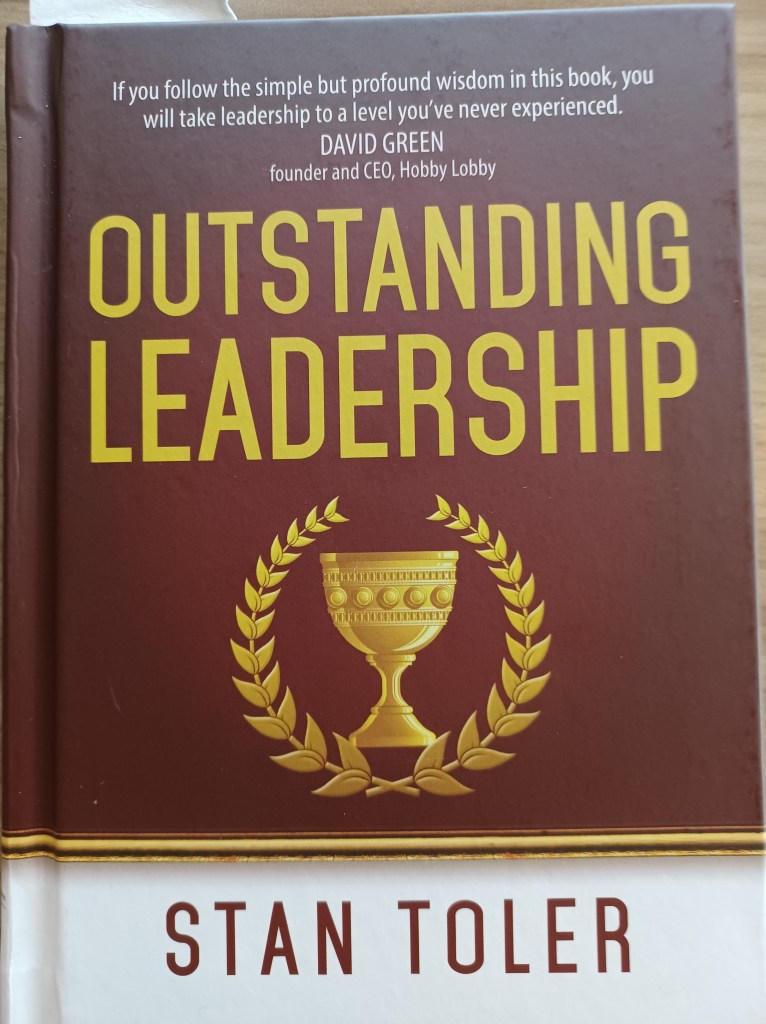
OUTSTANDING LEADERSHIP – by Stan Toler

There are many books on leadership, and this little book is among the best. Every short chapter is chockfull of ideas and definitions and quotes and generally good leadership advice. Stan Toler shares great advice drawing on many other good leaders. In Part 1: Leadership that Motivates, he shares how to develop and share a good vision. Part 2: Leadership that Relates lays out the value of communication and how to best communicate so that you can transform individuals and organizations. A great little book.

9 Reasons To Quit

In my last article I gave nine reasons not to quit your present role or position. I think those are important reasons to be aware of. On the other hand, sometimes it is the perfect time to quit. My daughter, who edits my blogs for me, reminded me of the times I have quit and suggested I approach this issue from the opposite side. Great idea! So here it is. Nine reasons to quit.

1. God has clearly called you somewhere else.

I believe that God has the authority to redirect me if he so chooses. You may have experienced that in your own life. Sometimes it is clear that God is asking you to take on a new role elsewhere. One pastor suggested that every time you quit to take on a new role, look for both the push and the pull. Look at the reasons you feel like quitting and the reasons the next role seems so appealing. It may be that God is pulling you to a new opportunity elsewhere.

2. You believe you have done all you can in your current role.

Sometimes we take on roles with great excitement. It seems like such a great fit. You work hard and do a good job, but then you come to the point where you feel you have done all you can. Church planters are a good example of this. They start a church and get it to a certain size or place of stability and then hand it off to another pastor so they can start another new church.

3. You have lost the confidence of your team.

There are times, whether it is your fault or not, where you know that you have lost the confidence of your team. Your board may no longer trust you or believe that you are capable of leading into the next chapter of your church or organization, and you realize that you will no longer be able to lead in your current role. I experienced this when someone misread my actions, and I knew that no matter what I did, I would not be able to change their opinion of me. It would be hard to gain the team’s trust back. It was time to move on.

4. Outside factors indicate a need to move.

Sometimes we need to leave a position because of external factors. These factors could be related to medical care, family care needs, or education. For example, one move my wife and I decided to make was influenced in a large part by the fact that both our daughters were entering High School and a move later would be much harder to manage.

5. You are pursuing further training.

You may recognize that in order to grow in areas you are called to and to continue to be effective, you need to pursue further education or training. That may be a meaningful reason to quit.

6. Your present role is taking too much of a toll on you.

There are times when we find ourselves in a role that is wearing on us to the point that we are emotionally and physically becoming ill. We need to recognize when we are no longer able to endure the pain or difficulty of our present role.

7. When your vision and the church’s vision are too different.

I left a pastoral role at a church after only being there a short time, when I finally realized that the church’s vision was too different from mine.

This had not been clarified before taking the position. It is impossible to maintain your integrity when you have to work in a role that does not align with your own values and goals. It is better for you, and the organization you are working for, to find a better fit elsewhere.

8. You are being asked to do more than you are capable of.

Sometimes our roles change. We may have been a great fit in the beginning, but things have changed to the point where you no longer fit. It could be that you have done a great job as a pastor so your church has grown, but you recognize that it is now bigger than you are capable of leading and someone else is needed. Alternatively, you may be in a situation where your job description is changed, and you need to evaluate the situation to see if you are still in the right role or need to move on.

9. If you can’t afford the role anymore.

Sometimes, you need to make a decision to quit and find a new role because you are not being paid well enough. Some churches are small, and are limited in what they can offer as a salary. If the wage is no longer enough to meet the climbing expenses of you and your family, there may come a time when you need to resign and look for a better paying role.

If you think it is time to quit, make sure you are doing it for the right reasons, and then do it with confidence.

Keep looking up,

Andy Wiebe
How to Set Plans that Work

“The best laid plans of mice and men oft go awry,” goes the saying. I like dreaming and planning. I like looking ahead and doing strategic planning with churches. I get excited about the possibilities of what could happen if things worked out right. The problem is, many good plans do not bear the fruit we had hoped. So how can you set plans that will not fail?

“The best laid plans of mice and men oft go awry.”

John Steinbeck

In James 4:14-15 it says, “How do you know what your life will be like tomorrow? Your life is like the morning fog—it’s here a little while, then it’s gone. What you ought to say is, ‘If the Lord wants us to, we will live and do this or that.’” 

James reminds his readers that no one knows what tomorrow brings. We can do all kinds of planning and scheming and base it all on good research, but in the end, no one knows what will really happen. There are always many unknowns that we cannot prepare for. We can do our best, and often plans work out, but not always. The only one who knows what tomorrow will bring is the Lord God.

God is not bound by time, so He knows what will happen tomorrow and the next day, and the next year. So as events happen, He is not surprised. Maybe we need to ask Him to help us make plans that match His for us.

In Jeremiah 1: 4-5, we read:

The Lord gave me this message:

“I knew you before I formed you in your mother’s womb.
    Before you were born I set you apart
    and appointed you as my prophet to the nations.”

God told Jeremiah that He knew him before he was born, even before he was conceived. That is quite the theological issue to work through at another time, but the point is that God knows us and has plans for us. He had a plan for Jeremiah. He appointed him to be a “prophet to the nations.” Jeremiah didn’t need a career counselor or an aptitude test of some kind to help him discover what he wanted to do with his life. God told him exactly what he should be “when he grew up.”

This morning I was reading in Psalm 138 when I came across a line in verse 8: “The Lord will work out his plans for my life.” The psalmist believes that God has a plan for his life. He trusts that to be true. I felt comforted as I read that verse. My life and my plans are not dependent on my own abilities or lack thereof. If King David is right, and I believe other scriptures agree, then God has a plan for MY life, and a plan for YOUR life.

I don’t think God has every detail of your life planned out in such a way that you need to be constantly afraid that you are making the wrong decision. I don’t think God was disappointed that I chose the Mexican Bean soup at lunch instead of the Butternut Squash soup. And honestly, I don’t know if there is one specific girl for each guy or if God leaves that up to us. What I do know is that God is intimately aware of who you are and who I am. He has plans for us as one person of humanity and plans unique to each of us as an individual.

God’s plan for all humans is that they would come to faith in Jesus and a relationship with God the Father through Him. God wants all people to join him in living in His kingdom here on earth. God desires for all people to join him in the afterlife, in His new kingdom. But I believe he also has plans unique to us. These plans are more like the plans of a coach for each individual player. He puts the player in goal who has been playing that position all his life and is best equipped and prepared for that role. He will probably put the fastest skater and best player on the first line, maybe even at centre. God knows each of us, after all, He created us. Like Jeremiah, God knew you and me before we were even born. He has observed us all our lives. He knows how we are equipped to handle situations we will face in life. And I believe that he has certain roles He wants us to be in.

If I want to make plans that will work out, I had better talk with God about those plans. Whatever the plans, we can talk to God about them as we make them. There is generally good value in involving others on our team in plans we make for organizations we are part of. We can benefit from the input of good friends. Yet the best input is to ask God to help you in the dreaming and planning. Ask Him to guide your thinking. Ask Him to help you get the best research and information to base your planning on. Ask Him to tell you what He wants done. After all, if God has plans for me, I will be better off doing what he has planned.

There are many different steps that experts could suggest as you desire to make plans that work, but if you believe in God, your first step needs to be to check in with Him. Sometimes it takes hard work and effort to accomplish meaningful plans. Again, God is the one who can help you persevere to the end.

You want to make plans that work? Then ask God to guide you in making your plans.

Keep looking up,

Andy Wiebe

Book Reviews: Andy’s Reading Experience 2022

I will be sharing a brief review of every book I read this year. Hope you enjoy and hope it encourages you to keep reading.


DEEP FAITH – by Dr. Rob Reimer

Rob Reimer has written another great book regarding personal renewal and spiritual growth. In Deep Faith, he helps the reader see how they may deepen or grow their faith. Reimer does a good job of showing how this has worked in his own life and his experience with others. He says on page, “Faith is not static; it is dynamic. We can and must take an intentional path toward growing and developing our faith if we want to see the works of the Kingdom in greater measure, for the glory of the King, and for the sake of his mission to the world.” He wants to help people grow in their faith for the glory of God and for the continuing growth of the kingdom. A great read if you want to deepen your faith.