Develop an Active Imagination

I remember watching two preschoolers, a brother and sister, playing next to me as I was watching a floor hockey game in college. I was fascinated at their imagination. They had no toys, no digital devices, just the bleachers and their imagination. They played for a long time, together imagining all that was happening around them.

Too many of us have lost our ability to imagine. We are so caught up in the moment and in what is right in front of us that we no longer know how to use our imagination. There could be a number of reasons for that. Maybe our imagination was stifled as a child when a parent or teacher told us to quit daydreaming. Daydreaming is the fertile ground imagination grows in! Some of us had an active imagination until someone made fun of our ideas. For whatever reason, we have stopped imagining.

Have you ever wondered why some people are so good at coming up with ideas? It’s because they have an active imagination. They are not afraid to dream up something new. And they are not afraid to try out their ideas. We don’t know how many ideas these people imagined that went nowhere, before they found the ones that were great.

We can develop an active imagination. For instance, give yourself freedom to daydream. Find some time when you have no other distractions and no requirements of yourself and just imagine things. Find your time you can claim as your own. Dream. Make up a story in your mind. It could be that you have a problem at work. Whatever your work is, whether dealing with people or machines, if there is a problem, your imagination can help you solve it. So start imagining all kinds of possibilities.

In your daydreaming, don’t put up fences. Don’t start evaluating and discarding an idea too quickly. Sometimes good ideas need time to work their way to a solution. Some of us are quick to say: “That won’t work.” We even think that way in our daydreaming and discard ideas before they are fully developed. Remove that fence. Remove any fence that puts limitations on your imagining. Don’t discard an idea too soon because it takes more money than you have, or more volunteers than your organization has, or whatever it is that tempts you to short-circuit your dreaming.

Imagination is enhanced by other ideas. Sometimes as you read and watch and listen, ideas come to you through other people or situations around you.  A while back my one of my daughters gave me a book on trees. I would not have chosen to read a book like that, but it was amazing to read the insights of someone who had spent years working with trees and understanding them. There were points in the book that got me thinking about how to work with small groups and how people interact.

Another book I recently read outside of my normal reading selections was Atomic Habits, by James Clear. While the book was about habits, it sparked all kinds of ideas that made me want to apply the teaching to the process of discipleship. As we read and learn from others, we add fertilizer to the fertile ground of our imagination.

Someone once said that we should “beg, borrow, and steal” as we look for good ideas. There have been many times that my good ideas came out of ideas that others had worked on. I was able to build on and adapt those ideas to programs I was working on or ministries I was running.

I have been part of churches that planned wonderful Easter Celebrations complete with a breakfast, fun and games, a worship service, and an Easter Egg hunt. One of the aspects of the morning that went over really well was to bring in a professional photographer to take family photos. Many people dress up for Easter so it was a great time to offer people a free family photo. I don’t know where I got the idea, but I know it came from someone else’s ideas and I was able to adapt it to my setting.

One author who wrote about planning creative worship services suggested always having some children’s toys at hand. The idea was, if you have fun thing near you, in your environment and in your hand, your creativity will be enhanced. So, surround yourself with weird and wonderful objects, collect fun sayings and give yourself an environment that will be conducive to good imagining.

I don’t know if you have found this to be true, but some people think they imagine and think creatively better by being in a certain place, or a certain chair, or taking time to daydream at a certain time of day. If you want to be intentional about improving your creativity and your imagination, this might be an idea to try. Find a comfortable spot and see if the creativity ideas start flowing. It may take a bit of trial and error to find the right spot, but sometimes the habit of that certain spot or certain time can help unlock creative ideas.

Then, at a certain point, you have to look to putting your ideas into action. When you have ideas, start writing them down. Writing down ideas requires you to express the idea in a concrete way. The imagination has to become reality at some point. Writing it down helps you put that idea together.

If the written idea still seems like a good one, try it out. Share it with someone. You might want to make sure you share it with someone you trust, or someone who won’t shut you down too quickly. If you can verbalize it in a way that makes sense to the person listening, you are heading in the direction of your ideas becoming reality.

When you think you are ready, try out your idea. See if it solves the problem you were working on. If it does, great! Your imagination helped you. If it does not work, then keep looking for another idea.

Continue to cultivate an active imagination. Just think of how many good ideas you will have if you allow yourself to stop and daydream!

Keep looking up,

Andy Wiebe

Book Reviews: Andy’s 2022 Reading Experience

I will be sharing a brief review of every book I read this year. Hope you enjoy and hope it encourages you to keep reading.


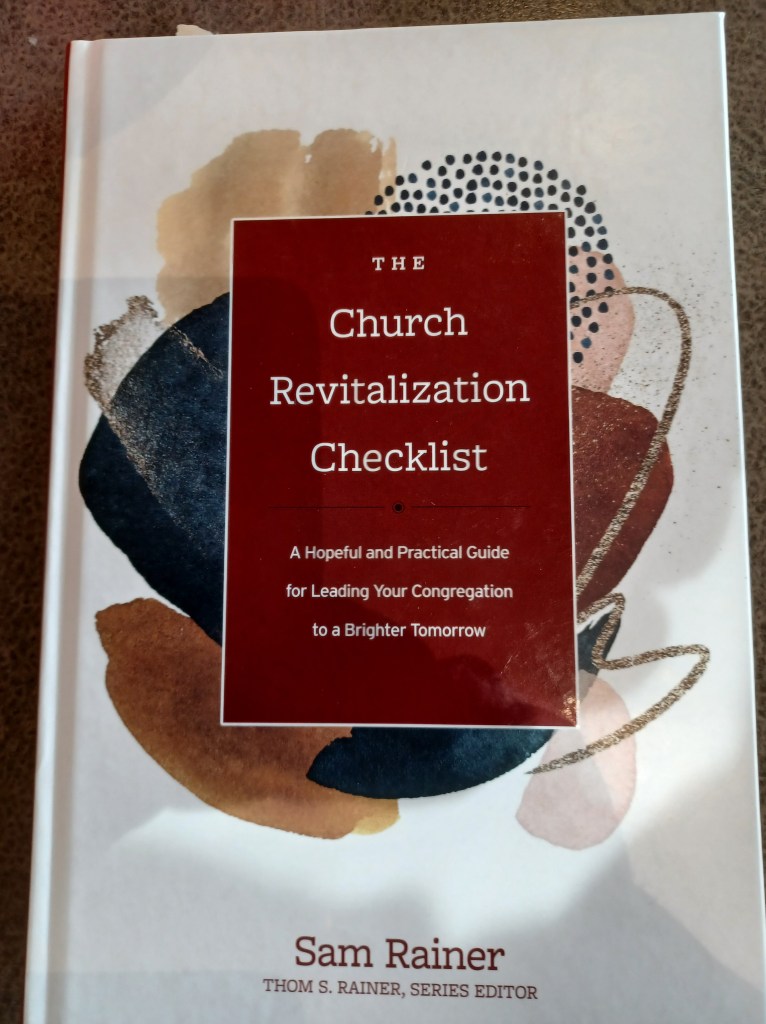
THE CHURCH REVITALIZATION CHECKLISTby Sam Rainer

The Church Revitalization Checklist: A Hopeful and Practical Guide for Leading Your Congregation to a Brighter Tomorrow is for pastors and church leaders who recognize that their church needs some renewing. Sam writes from the position of pastor and coach to pastors who are attempting to lead their churches to a brighter tomorrow.

The first line of the book is: “If God can save any person, he can save any church.” I have a sad memory of the first church I served as a youth pastor. That church no longer exists. Fortunately the building is still being used for ministry, but that church died. Many other churches are on the verge of dying unless someone can bring them new life. Sam has written a very practical book that helps walk you through the revitalization process. Pastors, I believe many of you could benefit greatly from having this resource at your side as you lead your church to a better future.

Book Reviews: Andy’s 2022 Reading Experience

I will be sharing a brief review of every book I read this year. Hope you enjoy and hope it encourages you to keep reading.


KINGDOM IMPACT: Living Like Jesus in a Broken World – by Putty Putman

Putty Putman has written a challenging book on how to move beyond just impacting individuals for Christ, to impacting larger entities like business and other nations. Chapter 4 “Reclaiming the Planet”, introduces an idea that was new to me, but made me think. He states that all the nations did not just have gods they conjured up in their minds, but that these were truly other gods who were assigned to all the nations. He ties this in to the role we have of reaching all the nations, not just individuals. He challenges us to the task of reclaiming cities and social systems for God. A challenging read!

Pastors Are Staying Longer

Pastors seem to be staying at one church for a longer time than in the past. I have seen a few pastors who resigned recently after 13 or 15 years at the same church. How did they do it?

Let me share a few of my observations. Some, or all, or none, of the following may be at play in longer pastoral stays.

1. The Strong Leader

Leadership has been one of the main issues pastors have been told they need to work on to have a great ministry. There are many books and seminars and podcasts dedicated to pastoral leadership. Well, some pastors are great leaders. The congregation loves the pastor because they see how the pastor always leads with a strong vision and clear direction. The congregation see the results of new people, maybe their own children, coming to Christ and being baptized under the leadership of these pastors. The leadership board enjoys having a leader who guides them as a board.

This type of pastor appeals to a congregation that loves to do the work of the Kingdom. They flourish because the leader equips them and inspires them to move toward one direction together. This pastor understands the congregation and builds ministries on the gifts and skills and passions of those present.

The strong leader addresses issues as soon as they arise and deals with them swiftly. If there are relationships that are struggling, he will do his best to fix them immediately. If there are ministries that are having issues he steps in to resolve them as efficiently as possible.

This pastor will most likely be a “projects person.” He is great at setting up the right ministries so that the care for people is done in the ministries and programs of the church rather than through his own relationships with everyone.

2. The Strong Shepherd

Pastors do not need to have abundant leadership skills to stay long term in one church. I’ve seen some who remain at a church for years because they love people. They care for those in the congregation. They are at the hospital bed of everyone who ends up in the hospital. They might even remember everyone’s birthday and call them or take the out for coffee to celebrate. I remember a pastor with this gifting who remembered everybody’s name from the first time they attended as new-comers.

This pastor may not start new ministries but is faithful to continue to maintain the ministries that are already going. This pastor may not have strong preaching abilities, but the congregation senses his love for them whenever he preaches.

This pastor will generally be a “people person.” His ministry is all about loving and caring for people.

3. Be a Strong Adapter

I am presently doing transition ministry in one church that just said goodbye to a pastor who was there for about 13 years. As we have gone through the transition process, I have heard comments from people that the previous pastor was not the same at the end as he was at the beginning of his ministry. He changed and adapted, and it was a good thing.

Adapting happens for a few reasons.

a. The pastor grows up: If you are a new pastor just out of Bible College, you are likely young, and probably inexperienced. Some young pastors may have been very involved in their church growing up, or grew up in a pastor’s family and so have some experience of how church works. Others come to this role with little church experience at all.

If you are a young pastor, you may be able to have a long ministry at one church if you keep on growing. Keep on taking courses. Attend seminars. Read books. You might want to focus in on a certain aspect of the pastoral role that excites you, but keep learning. Find an older pastor nearby who will mentor you and whom you can bounce ideas off of. Make use of denominational leaders and coaches to help you. Be willing to listen to your leadership team. They have probably been in that church longer than you.

b. The church grows: If you are part of a church that is growing, the dynamics of church ministry will shift over time. When you have 60 people, you will know everyone. When you have 120 people, you may have to work much harder to get to know the newer people. You may need to add more small groups and add more leaders, so your role in equipping leaders may expand. If you grow to the point of hiring staff, you will again have to adapt as you are now leading a team, even if it is just two of you. You are now handing off some responsibilities to another pastor and trusting them to lead their areas well.

If you are in a growing church, make sure you keep learning. Go to seminars, take courses, and read lots. Look for someone who has experience pastoring a church that is growing and ask them to help you adapt well. Learn to increase your leadership team. Work closely with new staff. You may need to establish another level of leadership to look after different departments in the church.

If it is your goal to be a pastor who stays a long time in one church, then be the best you that you can be. If you are gifted as a leader, lead well. If your primary gifts are in the area of shepherding, then shepherd your congregation well. When you are in a church that is growing, figure out how to adapt where you can and gather a team around you to compliment and balance out your own gifts and skills. Usually both the pastor and the church benefit from a pastor staying for a longer period.

Keep looking up,

Andy Wiebe
Book Reviews: Andy’s 2022 Reading Experience

I will be sharing a brief review of every book I read this year. Hope you enjoy and hope it encourages you to keep reading.


AN HOUR ON SUNDAY – By Nancy Beach

In An Hour On Sunday: Creating Moments of Transformation and Wonder, Nancy Beach draws on her years of experience creating great worship services. She covers many aspects of how to create meaningful experiences for church congregations, focusing on the arts and artists involved in making these experiences moments of “transcendence”. She writes, “Our aim should be to create services so compelling, so meaningful, and so unexpected, that the time sails by and attenders leave with an enthusiastic desire to talk about their experience as well as the content of the service.” Her chapter on creativity is one of the best. This book is a great encouragement to do our best to create services that impact people in meaningful ways.

The Transition Pastor’s Process

More and more churches are choosing to hire a Transition Pastor to help them as they say goodbye to one pastor and look to hire the next. If you are curious about how this transition process works, then you are at the right place. (This post builds on a previous post: Do We Need a Transition Pastor?)

The process begins with the transition pastor getting to know the congregation and the way the church functions. They complete various assessments and evaluations to get a clear picture of what is really going on in the church. This is a helpful step whether the church is healthy or unhealthy, and whether the pastor left on good terms or not. These assessments are done with the whole congregation as well as the leadership and various ministry leaders. Often there are interviews of staff and members of the congregation to get a clear understanding of how things are going and what areas may need to be addressed. It is important to take some time to look back to make sure there are no issues that have just been “swept under the rug”, but adequately faced and dealt with. Unforgiveness for past mistakes will make it difficult to move ahead in a meaningful way.

The assessments can help the pastor know what to preach on. He can address current issues facing the church from scripture.

The first issue to acknowledge and address is often grief. The assessments and interviews will determine the level of grief, as the church is often mourning the loss of the pastor and his family. Often the preacher will focus sermons on the “one another” passages in scripture. These can help build on or restore much needed unity in the church.

After taking some time to look at the past and then getting a clear picture of the present situation, the pastor can move the church to start looking ahead to establish a clear vision for the church. This may include understanding the demographics of the church as well as the community it serves. It will include having vision meetings with both the elders and the church as a whole. My belief is that the vision a church develops usually does not vary much from where they have been in the past. The value of this practice is not so much in coming up with something unique for the next part or the journey, but in being able to clearly articulate their vision together.

This process is bathed in prayer, and builds on the assessments and understanding of the community the church feels called to reach. The vision guides the church moving ahead. Often, when a church goes through the process of hiring a new pastor, they do not have a clear vision and so the newly hired pastor moves the church in the direction of his own vision. This is not a bad thing, except each new pastor may go in a different direction. If the church can clearly identify a vision before they hire their next pastor, then they can hire a pastor that fits that vision.

For pastors looking for a position in a church, it helps to know what the church’s vision is so he can tell if he will fit there or not. I have taken a position in a church only to learn two years later that my vision and theirs were very different, opposite even. It is helpful to both the church and the pastor to be clear on this before being hired. It will prevent some pain in the future.

The completed assessments and articulated vision help the church know exactly what kind of pastor they are looking for. The transition pastor can help guide them up to this point and help them through the search process as well. One valuable tool the transition pastor can help the church with is developing their Pastoral Profile. All the other assessments and processes the transition pastor leads the church through really culminate in the clarifying their vision and determining what kind of pastor is needed to help them accomplish that vision. Without all the work leading up to this point, a church may not have a clear idea who will best fit their church. Too often there is just a pendulum swing where one teaching pastor with no shepherding skills is replaced with a shepherd with no teaching skills. A Pastoral Profile is built on all the work produced during the transition process so the church knows how to truly evaluate a candidate against their real needs.

The Transition pastor concludes their time with that church before the next pastor is hired.

If a church is between pastors, hiring a transition pastor will be of great benefit. Those months, up to two years, of a transition pastor leading a church through a transition process will be extremely beneficial in planning well for the next step of the journey for the church.

Keep looking up,

Andy Wiebe

The Natural Hamartiologist

The hunter reaches back with quiet well-practiced motion to locate an arrow in his quiver. He selects one and brings it forward as his other hand raises his bow. He nocks his arrow on the bow and pulls back the full reach of his arm. His eyes look down the arrow and focus in on the deer in the open field ahead of him. As soon as he feels his aim is true, he pauses his breath, and lets the arrow fly. If the hunter is well practiced, and maybe a bit lucky, the arrow will pierce his prey and provide him with his supper.

There is a word used in the New Testament that describes an arrow missing its mark. The word “hamartano,” is translated as “sin.” So the word for “sin” comes from a word “regularly used in ancient times of an archer missing the target.” (Strong’s Concordance) We all regularly “miss the mark”. We sin. I heard one person recently say, “we regularly hurt the ones we love.” Often we miss the mark with the people we care about the most.

Hamartiology is the study of how we miss the mark. Romans 3:23 says, “all have sinned and fall short of the glory of God.”

I am adapting the word to suit my own purposes here: the Natural Hamartiologist is the one who naturally misses the mark. The one who regularly and often misses the mark is a Natural Hamartiologist. I would suggest that this is really a description of all humans.

Our Creator God created us to have someone to have a relationship with. He created us with free will, hoping we would choose to love and serve and honor Him. The book of Genesis is the first book of the Bible. Only 3 chapters in you will find the first people – Adam and Eve – choosing to disobey and miss God’s mark for them. From then on all humans have this tendency to miss the mark – not all the time – but regularly. Some of us have no interest in pleasing God, so missing the mark in measuring up to His standards is not relevant. For the rest of us, those who have surrendered our lives to God, we desire to hit the mark more often than not.

God chose to send His Son Jesus Christ to die on the cross in our place, taking our death penalty that missing the mark requires of us. When Jesus rose from the dead, He was victorious over death, over the devil, and over sin. He never missed the mark when it came to obeying God. He gives us his Spirit to remind us when we do miss the mark. And every time the Spirit reminds us, we can go back to Jesus, ask him to forgive us, and he does. God sees us as the forgiven ones, because he sees us through Jesus who never missed the mark.

As Christians with our faith in Jesus and his death and resurrection for us, we can be forgiven. We can have a relationship with God, as He desired in the first place, as people who are not seen as Hamartiologists but as “dikaios” – Righteous Ones.

We fall short of God’s ideal very often, but we also have One who by his death and resurrection has paid for our sin and made us righteous before God.

Are you a practicing Hamartiologist or are you an aspiring Dikaios? What we think of ourselves as influences how we live our life. If we think we are ones who regularly miss the mark, then we are not surprised when we do. If we view ourselves as ones who are righteous, then we focus more on living out that righteousness. It may seem like a small thing, but I believe how you view yourself affects how you live. Paul regularly addressed his New Testament letters “to God’s holy people” in Ephesus, or Philippi. We are righteous ones pursuing The Righteous One. We want to pursue the God-given ideal and can rejoice that God has provided a way for us to become righteous when we miss the mark again.

Keep coming back to Jesus,

Andy Wiebe

Book Reviews: Andy’s 2022 Reading Experience

I will be sharing a brief review of every book I read this year. Hope you enjoy and hope it encourages you to keep reading.


I WILL: Nine Traits Of The Outwardly Focused Christian – by Thom S. Rainer

Thom Rainer has written a great little book addressing many of the issues regarding a Christian and their relationship with their church. Each chapter addresses one aspect of a Christian and how to be outwardly focused as they are involved in their church. Chapters include topics like: I Will Serve, I Will Go, I Will Give Generously, and I Will Not Be A Church Dropout. This great little book with its short chapters would be great as curriculum for a new members class. He includes an “I Will” Commitment at the end of the book that new members could agree to.

Always Become Better!

Our education system helps us to figure out if we are continuing to learn and develop. If you are faithfully doing your homework and finishing your assignments, you should be learning what the curriculum has laid out for you in each grade in school, or each year of college or university. Every year you should ideally pass a level and move up to the next grade. When you enter college, there are a number of classes you must take as prerequisites to classes offered in the next year or two. You can track how well you are doing by what grade you are in, or what courses you have completed toward the degree you are pursuing. When we leave school, it is not as easy to see if we are still learning.

When you complete your degree, you hope to step into a career that uses your training. As you begin at a new place of employment, you are taught what is expected of you at that job. Sometimes there are opportunities to advance in your career so you feel like you are continuing to grow and develop.

Eventually even in your job, there are not more steps to advance to. You may not even be expected to do any further learning. You know what the job is, and have proven you are capable of doing it. You do not need to keep learning.

This is where some people become stagnant. They have reached a certain level in their job or their career and they are content. The problem is, no one plateaus in their life for long. Either you keep learning and growing and making yourself better in some way, or you start to fall off, and fall behind as the world keeps on changing and developing.

I have been a pastor most of my life. While I have done a few other things for an income, this has been what I have given my life to. And I have chosen to keep on growing. I love to read. If you have noticed my book reviews on this blog you will know that is true. I like to read a variety of things. Sometimes I focus on a certain subject for a while, but I love to learn and to grow and develop. As a pastor, I need to learn how to use technology.  I started out by writing my sermons by hand, no I always use my computer. Along the way I learned how to use PowerPoint to add slides to my sermons. I spent a number of years pursuing a Masters (It took a period of over 20 years from the first course I took towards my Masters degree until I completed the last one and graduated!) I was not as concerned about accomplishing the degree as I was about continuing to regularly keep on learning. I enjoyed taking time to implement what I was learning.

We should want to always become better. Whatever skill or ability or gift you may have, keep learning how to develop it further. If you are a good preacher, continue to learn from others who are better, or who may do it slightly differently. If you are good at leading meetings, keep reading new books or go to seminars on how to lead them even better. If you are a good counselor, continue to learn and find new techniques to try out.

It may be that you realize you are about average in a number of areas in what you are skilled at. You might want to choose one or two to become good at, or even one area where you excel.

I have found one of the ways of continuing to get better is to teach others. If you think you are pretty good at something, then see if there are opportunities for you to teach others. When you teach, you have to figure out what you actually do, how you do it, and why what you do or the way you do it is the best way. This forces you to not just do something you are naturally good at, but evaluate it and figure out what valuable lessons you can pass on to others.

David Sanders, a cellist in the Chicago Symphony was describing how many hours of practice it takes to get to and maintain such a high level of competency. “You cannot rest on your laurels in the Chicago Symphony, or in any world-class orchestra. You never want to let your colleagues down, yourself down, or, maybe more importantly, the music down. Now in my 42nd year, I still don’t want to let my colleagues, myself or the music down. It is a never-ending struggle to continually try to master a musical instrument, to keep improving, be it string, wind, brass, or percussion.” (A CHICAGO CELLIST EXPLAINS: WHY WE WORK ONLY 20 HOURS A WEEK)

If you want to be your best, you need to continue to work at your craft. You have to continue to learn and practice and develop. The person who is continuing to develop and grow will be sought after in their field of expertise. And I would venture to say, will be much more interesting than the person who has not learned anything new for the last couple of years. This is not necessarily about “moving up the ladder”, but about being the best you can be where you are at.

Always become better at what you are good at and what you are equipped to do. You will enjoy life more than those who have become stagnant. You won’t be left behind as those younger and more skilled start to catch up to you.

As a pastor, if you keep on learning and growing and developing, you will be more attractive to churches looking for someone relevant to the world around them who also comes with years of experience. Continue to become better, for yourself, and for long-term ongoing employment.

Always become better.

Keep looking up,

Andy

Book Reviews: Andy’s 2022 Reading Experience

I will be sharing a brief review of every book I read this year. Hope you enjoy and hope it encourages you to keep reading.


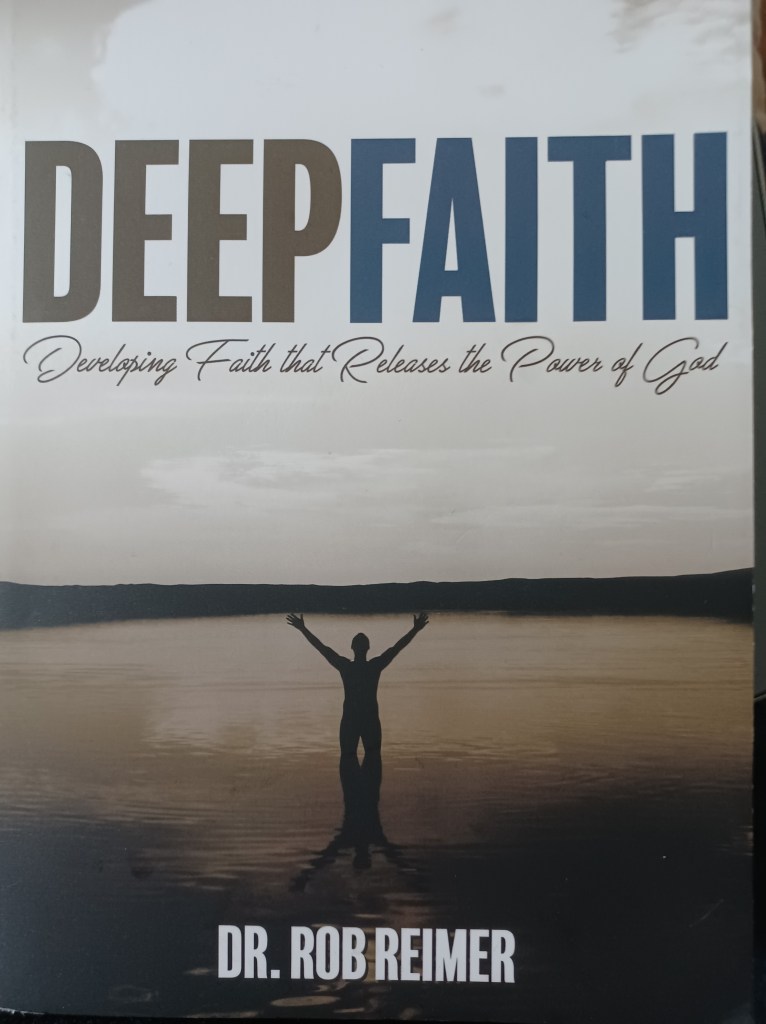
SPIRITUAL AUTHORITY – by Dr. Rob Reimer

Rob Reimer has written a few books on experiencing a deeper relationship with God and seeing His power at work. He describes how God wants to partner with us in releasing the Kingdom, in helping people find freedom, especially freedom from the forces of evil. He gives some direction on how to handle different situations as you work to set people free. One of his key phrases is this: Spiritual authority is rooted in identity, expanded in intimacy, and activated by faith. He emphasizes that we can do nothing without an intimate relationship with the Father and filling of the Holy Spirit. It is only then that we can experience the power that Jesus displayed. This book encourages a deeper relationship with God and an encouragement to help others find freedom.