I will be sharing a brief review of every book I read this year. Hope you enjoy and hope it encourages you to keep reading.
AN HOUR ON SUNDAY – By Nancy Beach

More and more churches are choosing to hire a Transition Pastor to help them as they say goodbye to one pastor and look to hire the next. If you are curious about how this transition process works, then you are at the right place. (This post builds on a previous post: Do We Need a Transition Pastor?)
The process begins with the transition pastor getting to know the congregation and the way the church functions. They complete various assessments and evaluations to get a clear picture of what is really going on in the church. This is a helpful step whether the church is healthy or unhealthy, and whether the pastor left on good terms or not. These assessments are done with the whole congregation as well as the leadership and various ministry leaders. Often there are interviews of staff and members of the congregation to get a clear understanding of how things are going and what areas may need to be addressed. It is important to take some time to look back to make sure there are no issues that have just been “swept under the rug”, but adequately faced and dealt with. Unforgiveness for past mistakes will make it difficult to move ahead in a meaningful way.

The assessments can help the pastor know what to preach on. He can address current issues facing the church from scripture.
The first issue to acknowledge and address is often grief. The assessments and interviews will determine the level of grief, as the church is often mourning the loss of the pastor and his family. Often the preacher will focus sermons on the “one another” passages in scripture. These can help build on or restore much needed unity in the church.
After taking some time to look at the past and then getting a clear picture of the present situation, the pastor can move the church to start looking ahead to establish a clear vision for the church. This may include understanding the demographics of the church as well as the community it serves. It will include having vision meetings with both the elders and the church as a whole. My belief is that the vision a church develops usually does not vary much from where they have been in the past. The value of this practice is not so much in coming up with something unique for the next part or the journey, but in being able to clearly articulate their vision together.
This process is bathed in prayer, and builds on the assessments and understanding of the community the church feels called to reach. The vision guides the church moving ahead. Often, when a church goes through the process of hiring a new pastor, they do not have a clear vision and so the newly hired pastor moves the church in the direction of his own vision. This is not a bad thing, except each new pastor may go in a different direction. If the church can clearly identify a vision before they hire their next pastor, then they can hire a pastor that fits that vision.
For pastors looking for a position in a church, it helps to know what the church’s vision is so he can tell if he will fit there or not. I have taken a position in a church only to learn two years later that my vision and theirs were very different, opposite even. It is helpful to both the church and the pastor to be clear on this before being hired. It will prevent some pain in the future.
The completed assessments and articulated vision help the church know exactly what kind of pastor they are looking for. The transition pastor can help guide them up to this point and help them through the search process as well. One valuable tool the transition pastor can help the church with is developing their Pastoral Profile. All the other assessments and processes the transition pastor leads the church through really culminate in the clarifying their vision and determining what kind of pastor is needed to help them accomplish that vision. Without all the work leading up to this point, a church may not have a clear idea who will best fit their church. Too often there is just a pendulum swing where one teaching pastor with no shepherding skills is replaced with a shepherd with no teaching skills. A Pastoral Profile is built on all the work produced during the transition process so the church knows how to truly evaluate a candidate against their real needs.
The Transition pastor concludes their time with that church before the next pastor is hired.
If a church is between pastors, hiring a transition pastor will be of great benefit. Those months, up to two years, of a transition pastor leading a church through a transition process will be extremely beneficial in planning well for the next step of the journey for the church.
Keep looking up,
Andy Wiebe
The hunter reaches back with quiet well-practiced motion to locate an arrow in his quiver. He selects one and brings it forward as his other hand raises his bow. He nocks his arrow on the bow and pulls back the full reach of his arm. His eyes look down the arrow and focus in on the deer in the open field ahead of him. As soon as he feels his aim is true, he pauses his breath, and lets the arrow fly. If the hunter is well practiced, and maybe a bit lucky, the arrow will pierce his prey and provide him with his supper.
There is a word used in the New Testament that describes an arrow missing its mark. The word “hamartano,” is translated as “sin.” So the word for “sin” comes from a word “regularly used in ancient times of an archer missing the target.” (Strong’s Concordance) We all regularly “miss the mark”. We sin. I heard one person recently say, “we regularly hurt the ones we love.” Often we miss the mark with the people we care about the most.

Hamartiology is the study of how we miss the mark. Romans 3:23 says, “all have sinned and fall short of the glory of God.”
I am adapting the word to suit my own purposes here: the Natural Hamartiologist is the one who naturally misses the mark. The one who regularly and often misses the mark is a Natural Hamartiologist. I would suggest that this is really a description of all humans.
Our Creator God created us to have someone to have a relationship with. He created us with free will, hoping we would choose to love and serve and honor Him. The book of Genesis is the first book of the Bible. Only 3 chapters in you will find the first people – Adam and Eve – choosing to disobey and miss God’s mark for them. From then on all humans have this tendency to miss the mark – not all the time – but regularly. Some of us have no interest in pleasing God, so missing the mark in measuring up to His standards is not relevant. For the rest of us, those who have surrendered our lives to God, we desire to hit the mark more often than not.
God chose to send His Son Jesus Christ to die on the cross in our place, taking our death penalty that missing the mark requires of us. When Jesus rose from the dead, He was victorious over death, over the devil, and over sin. He never missed the mark when it came to obeying God. He gives us his Spirit to remind us when we do miss the mark. And every time the Spirit reminds us, we can go back to Jesus, ask him to forgive us, and he does. God sees us as the forgiven ones, because he sees us through Jesus who never missed the mark.
As Christians with our faith in Jesus and his death and resurrection for us, we can be forgiven. We can have a relationship with God, as He desired in the first place, as people who are not seen as Hamartiologists but as “dikaios” – Righteous Ones.
We fall short of God’s ideal very often, but we also have One who by his death and resurrection has paid for our sin and made us righteous before God.
Are you a practicing Hamartiologist or are you an aspiring Dikaios? What we think of ourselves as influences how we live our life. If we think we are ones who regularly miss the mark, then we are not surprised when we do. If we view ourselves as ones who are righteous, then we focus more on living out that righteousness. It may seem like a small thing, but I believe how you view yourself affects how you live. Paul regularly addressed his New Testament letters “to God’s holy people” in Ephesus, or Philippi. We are righteous ones pursuing The Righteous One. We want to pursue the God-given ideal and can rejoice that God has provided a way for us to become righteous when we miss the mark again.
Keep coming back to Jesus,
Andy Wiebe
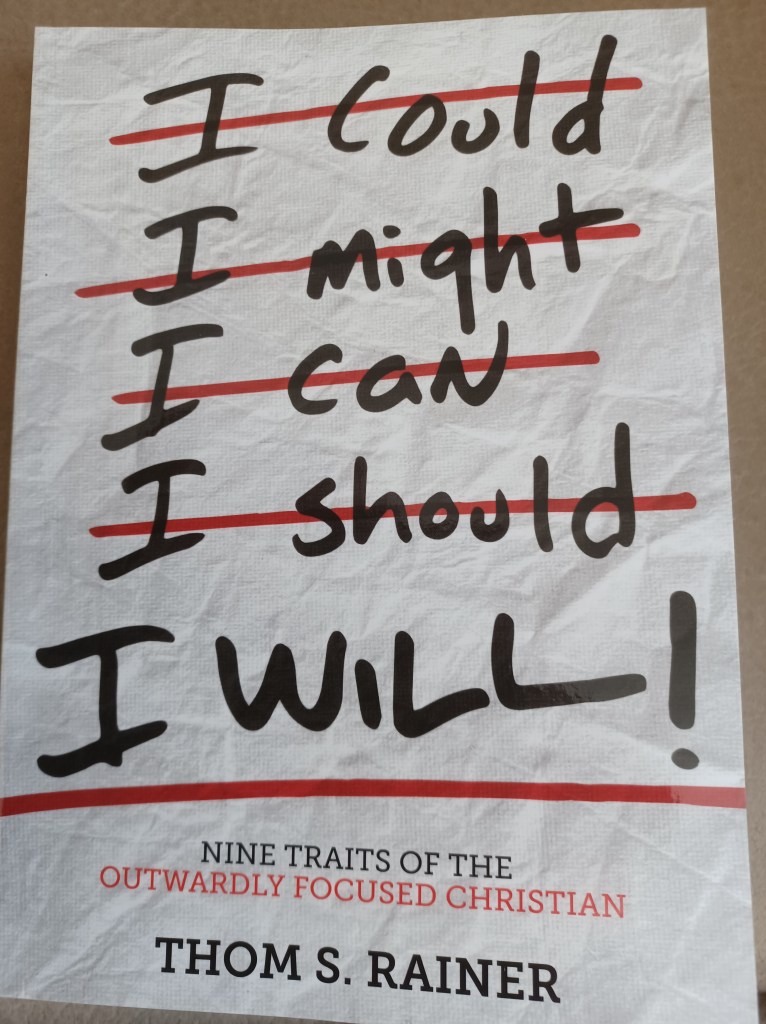
Thom Rainer has written a great little book addressing many of the issues regarding a Christian and their relationship with their church. Each chapter addresses one aspect of a Christian and how to be outwardly focused as they are involved in their church. Chapters include topics like: I Will Serve, I Will Go, I Will Give Generously, and I Will Not Be A Church Dropout. This great little book with its short chapters would be great as curriculum for a new members class. He includes an “I Will” Commitment at the end of the book that new members could agree to.
Our education system helps us to figure out if we are continuing to learn and develop. If you are faithfully doing your homework and finishing your assignments, you should be learning what the curriculum has laid out for you in each grade in school, or each year of college or university. Every year you should ideally pass a level and move up to the next grade. When you enter college, there are a number of classes you must take as prerequisites to classes offered in the next year or two. You can track how well you are doing by what grade you are in, or what courses you have completed toward the degree you are pursuing. When we leave school, it is not as easy to see if we are still learning.

When you complete your degree, you hope to step into a career that uses your training. As you begin at a new place of employment, you are taught what is expected of you at that job. Sometimes there are opportunities to advance in your career so you feel like you are continuing to grow and develop.
Eventually even in your job, there are not more steps to advance to. You may not even be expected to do any further learning. You know what the job is, and have proven you are capable of doing it. You do not need to keep learning.
This is where some people become stagnant. They have reached a certain level in their job or their career and they are content. The problem is, no one plateaus in their life for long. Either you keep learning and growing and making yourself better in some way, or you start to fall off, and fall behind as the world keeps on changing and developing.
I have been a pastor most of my life. While I have done a few other things for an income, this has been what I have given my life to. And I have chosen to keep on growing. I love to read. If you have noticed my book reviews on this blog you will know that is true. I like to read a variety of things. Sometimes I focus on a certain subject for a while, but I love to learn and to grow and develop. As a pastor, I need to learn how to use technology. I started out by writing my sermons by hand, no I always use my computer. Along the way I learned how to use PowerPoint to add slides to my sermons. I spent a number of years pursuing a Masters (It took a period of over 20 years from the first course I took towards my Masters degree until I completed the last one and graduated!) I was not as concerned about accomplishing the degree as I was about continuing to regularly keep on learning. I enjoyed taking time to implement what I was learning.
We should want to always become better. Whatever skill or ability or gift you may have, keep learning how to develop it further. If you are a good preacher, continue to learn from others who are better, or who may do it slightly differently. If you are good at leading meetings, keep reading new books or go to seminars on how to lead them even better. If you are a good counselor, continue to learn and find new techniques to try out.
It may be that you realize you are about average in a number of areas in what you are skilled at. You might want to choose one or two to become good at, or even one area where you excel.
I have found one of the ways of continuing to get better is to teach others. If you think you are pretty good at something, then see if there are opportunities for you to teach others. When you teach, you have to figure out what you actually do, how you do it, and why what you do or the way you do it is the best way. This forces you to not just do something you are naturally good at, but evaluate it and figure out what valuable lessons you can pass on to others.
David Sanders, a cellist in the Chicago Symphony was describing how many hours of practice it takes to get to and maintain such a high level of competency. “You cannot rest on your laurels in the Chicago Symphony, or in any world-class orchestra. You never want to let your colleagues down, yourself down, or, maybe more importantly, the music down. Now in my 42nd year, I still don’t want to let my colleagues, myself or the music down. It is a never-ending struggle to continually try to master a musical instrument, to keep improving, be it string, wind, brass, or percussion.” (A CHICAGO CELLIST EXPLAINS: WHY WE WORK ONLY 20 HOURS A WEEK)

If you want to be your best, you need to continue to work at your craft. You have to continue to learn and practice and develop. The person who is continuing to develop and grow will be sought after in their field of expertise. And I would venture to say, will be much more interesting than the person who has not learned anything new for the last couple of years. This is not necessarily about “moving up the ladder”, but about being the best you can be where you are at.
Always become better at what you are good at and what you are equipped to do. You will enjoy life more than those who have become stagnant. You won’t be left behind as those younger and more skilled start to catch up to you.
As a pastor, if you keep on learning and growing and developing, you will be more attractive to churches looking for someone relevant to the world around them who also comes with years of experience. Continue to become better, for yourself, and for long-term ongoing employment.
Always become better.
Keep looking up,
Andy

You do not have to say “yes” to every opportunity to serve that comes your way.
When we are young, and just starting out in life, the opportunities are endless. You could go in almost any direction for a career. As you get older and get more experience you learn that there are certain things that you are good at and certain things you are not as good at. There are certain roles you take on that you love and others where you struggle to survive the day.
As we get older, and hopefully a little more experienced, we begin to narrow down the real and meaningful opportunities for us. We are not quick to jump in to jobs that will require us doing things we hate. We choose to do what we enjoy if at all possible. We prefer doing what we enjoy, and over time get a clear sense of what those things are.
Beyond that, I believe that God has certain roles for us to fulfill. He has given us gifts and abilities, and led us through circumstances that prepare us for what is next. We can ask him to clarify for us what he wants us to do with our life, and he will. I believe that God has a role for everyone, if we will only ask him to help us discover that.

Through a number of different circumstance God has brought me to the place where I believe he wants me to focus on helping churches and leaders achieve their God-given dreams. I have been a pastor for about 30 years, and generally loved the role. I had the opportunity, with a few others, to start up and establish the Rural Church Pastors Network. I loved the opportunity to equip and encourage fellow pastors. I enjoy writing and sharing my thoughts with others. And God, through these experiences and some clear signs from him, called me to this role of helping leaders and churches.
God has called me to help churches and leaders discover their God-given dreams. I was recently offered a position that looked interesting. I knew I could do what was required, I might even enjoy the role, but I couldn’t say yes. As I prayed about it, God reminded me that he had called me to this role of helping leaders and churches. This new opportunity was not part of that. Saying “no” to something that I might enjoy was not easy, but I knew what God called me to do.
Knowing your “yes” helps you know your “no”. When you have a clear understanding of what God has called you to do, you can clearly say no to that which is not part of the plan. I know it is hard to say no to people. We want people to like us and so we try to please them. Knowing our specific calling from God helps us have an easier time making decisions about what we choose to agree to and what opportunities we decline. Then we can say no with a clear conscience when we know what fits in God’s plan for us and what does not.
Sometimes we are overwhelmed with all that is on our plate. I wonder how often that is a result of us not clearly understanding what we are called to do so we do everything that comes our way. We say yes to every good thing when maybe God would like us to focus in on a specific opportunity. We tell ourselves that we can’t get out of these responsibilities when maybe we just need to say no. Sometimes we get frustrated with people and all they demand of us, but the problem may be us. We haven’t set clear boundaries on what we should or should not do, what fits into the scope of who we are and what does not.

Clarifying who we are and what God is calling us to may be harder to determine when we are young and have not had time to try new things or experience various roles and opportunities. As we get involved in different jobs and serve in a variety of places, we can narrow down who we are and what we are called to do.
This allows us to figure out how God has gifted us and what talents we have. But clarifying who we are and what we become involved in does not just depend on age and experience. I believe we need to have time with God asking him to clarify what he wants us to do with our lives. God may speak to you through your reading of scripture. He may speak to you in your prayer time. He may speak to unique ways such as dreams or visions. What I do know is this: if we ask God, he will answer. Ask him to clarify his calling on your life and then you will be able.
I hope you can clarify your “yes” so you can also know your “no.” May God show you your unique place in this world.
Keep looking up
Andy
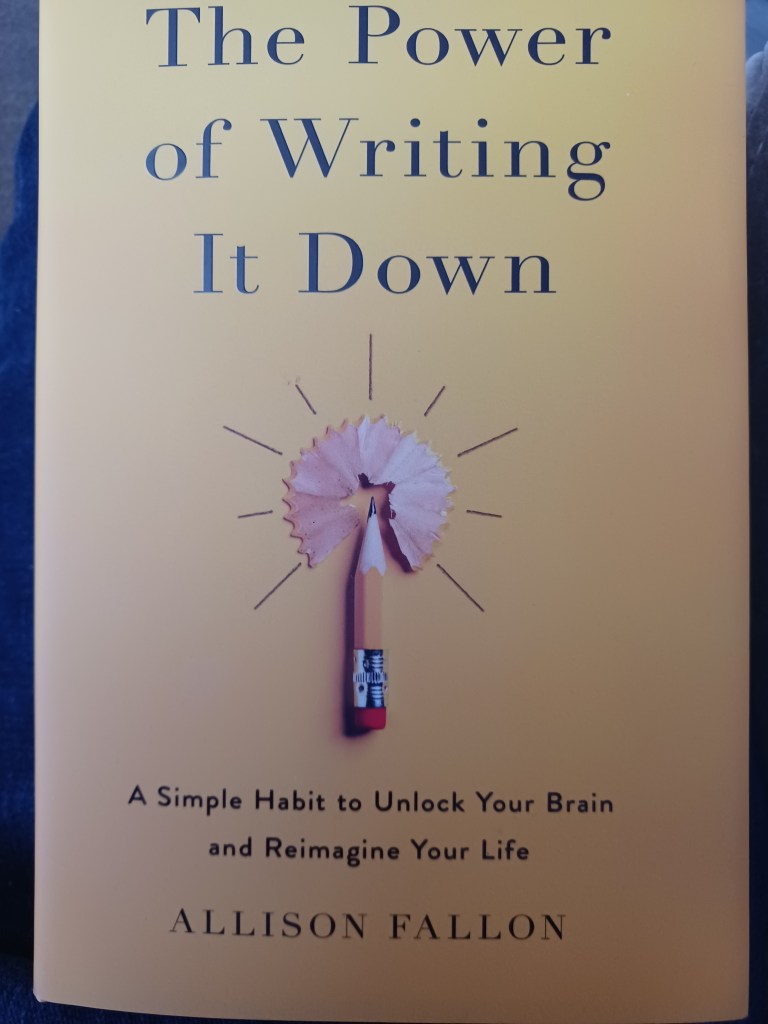
Allison Fallon is a writer who helps others write. Her book walks through a number of tips on how to keep writing, whether for publishing or for personal purposes. She draws a number of parallels to life and has a number of examples of how encouraging people to write about their life has actually helped them through tough times in their life. So if you like to write, anything from journaling to writing a novel, you could benefit from this book. If you are not a writer, but would like to try something new to help you deal with circumstances in your life, this might be the book for you.
A while back I was trying to find a church to attend. We were new to the area and had no specific ties to any church, so we tried a few. There was one church that I really liked. They had a number values and practices similar to my own. This church seemed like a great option for us, but there was one aspect of their theology in practice that I did not agree with.
So what could I do?
I decided to spend time thinking and praying about it. For the next few weeks, maybe even months, every time I prayed and every time I read the Bible, I had this one question on my mind. I needed clarity from God. I wanted to have an answer that would change my thinking so I could feel comfortable attending this church. I thought about it throughout the day. Finally, I just couldn’t find peace about attending that church, but at least I had spent some time seriously thinking through what was right for me and my wife.
Praise generally goes to the “doer,” while the “thinker” is often considered lazy. We have been taught from a young age that there is great value in getting things done. We are told, “Quit daydreaming! Get back to work.” What if thinking about something for a long time was getting things done? Is it possible that thinking about something for a long time can be beneficial?
My desire is to help people pursue their God-given dreams. Some of this involves taking time to think, to meditate or contemplate.
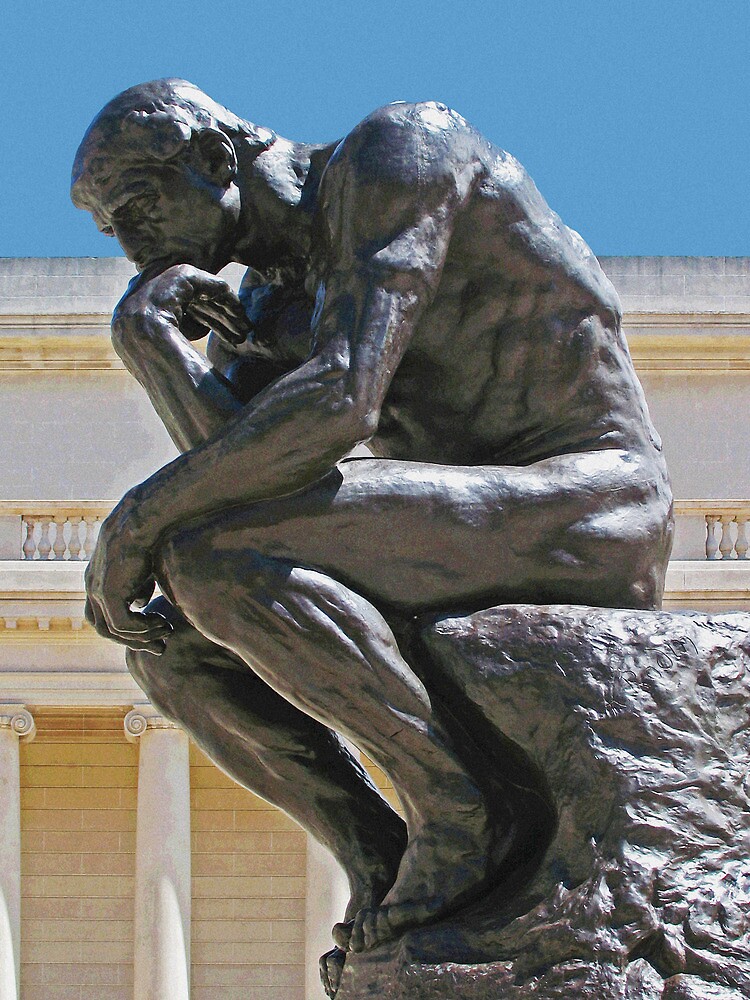
Most definitions for both words include something like this: “thinking seriously about something for a long time.” Whether you are meditating, or contemplating, there are times when it is of great value to slow down, and just think.
Do you know what God wants you to do with your life? Do you know what the next step of the journey is? Before you make a big decision, take some time to think. Seriously consider your situation and what God might have in mind next. Allow God to interrupt your thinking time. Read scripture. Pray. And think.
You may need to block out some time just for thinking. Maybe stay up after everyone else has gone to bed, so you can focus on your thinking, or get up before everyone else does so you can think in peace and quiet.
Have you ever read a scripture and just couldn’t get it out of your mind? I mean, it just kept ringing around in your mind. It may be that God was teaching you something, and he didn’t want you to forget what you had read. You thought about it all day. You thought about it in the shower, and when you were commuting, and when you were supposed to be working. Sure, you did your job like usual, but in the back of your mind you were still thinking about that verse.
We would all benefit from taking time to think on scripture more often. I read my Bible almost every day, but I don’t often stop to just think about what I read, or what God wanted me to hear from Him that day.

It’s too easy to see Bible Reading and Prayer as part of a to-do list to conquer and check off, rather than time to slow down and allow God to soak His words into our minds.
When is the last time you actually just stopped everything to think? To think about something for an extended period of time? Is there an issue in your life that needs to be resolved? Is there a question you would like answered? Why not book off some time, and take a mini-retreat for yourself to purposefully think? Find a place or time where you can have peace and quiet, where all distractions are removed if possible, and think on the issues facing you. You might want to begin with reading some scripture, with a time of prayer, and then just think. If you are like me, and benefit from writing thing down, then write it down. If you are someone who has to think out loud, then think out loud.
You may be meditating, or you may be contemplating, either way, take time to seriously think about something for an extended period of time. See if that doesn’t help you get some perspective on your present issue. Do the hard work of thinking.
Keep looking up
Andy
I am a Christian. I love Jesus, and am greatly thankful for the salvation He has given me. I want others to have that same experience with God, to find purpose in life, and peace and joy today and for the future. The reality is that some people do not want to hear about church or Jesus.

It is quite difficult to share Jesus with people who do not know Jesus and have clearly indicated that they do not want to know Jesus. All of us associate with people who do not yet know Jesus.
How do we share Jesus with them when they have already said they don’t want anything to do with Him or with church?
I think this is an especially difficult reality for those living in smaller rural towns. You know people, and you know their families. People know you and your family. You may have grown up with many of them and went to school with them. They know you are part of a church, and you know they are not. It seems that there is no way to help them see they need Jesus because they have clearly told you they want no part of that.
Some say they don’t come to church because it is too hard with kids. Others say they tried church and didn’t like it, or they were hurt by it, or “they are all hypocrites there.” So inviting them to church seems like an impossible and useless endeavor.
Ok, then. If we are to be faithful to share Jesus “as we go into all the world,” as we go on with life and all of its activities, what can we do to reach them with the good news of great joy? Let me share a bunch of ideas that can all be part of sharing Jesus with unbelievers. These will all lie on a spectrum between no interest in Jesus, to asking how they can become a Christian.

I hope you get the point. If you truly want to win someone to Christ, you need to be a friend. This is not about seeing certain people as a project but just becoming friends with people you are in contact with already.
You may think some of the suggestions in the list are really just about being a good friend and not really about outreach, but that is exactly the point. You need to be intentional, in making friends and being a good friend. The idea is to find ways to be friends, and then talk with them about Jesus as you already do with the friends you already have. We can pray for them regularly, asking God to draw them and work in their lives. It may take years, and then when it happens, it will be so exciting!
Keep looking up
Andy
 Elevate with Andy