I will be sharing a brief review of every book I read this year. Hope you enjoy and hope it encourages you to keep reading.
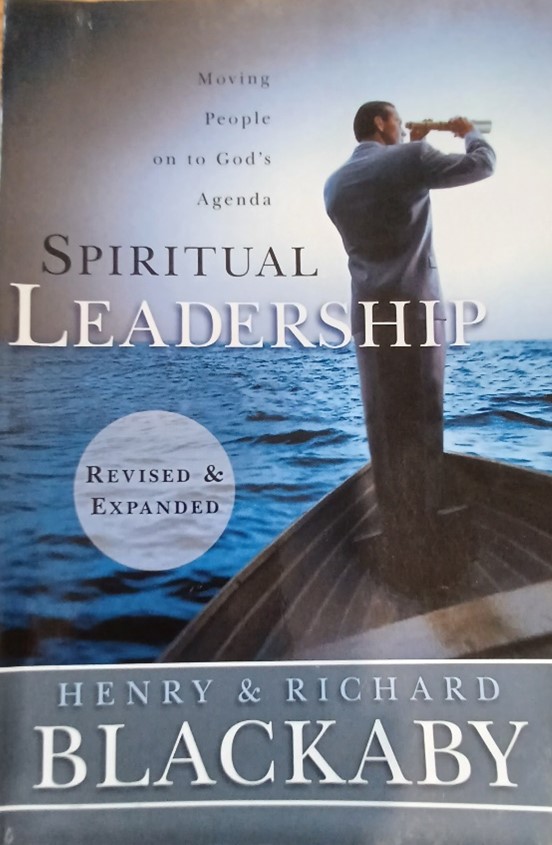
SPIRITUAL LEADERSHIP: Moving People on to God’s Agenda – by Henry & Richard Blackaby
Spiritual Leadership is one of the better leadership books I have read. The authors highlight that spiritual leadership is all about God. It is about moving people in the direction God wants them to go, about listening to God for how to lead well, and listening to God about what direction to lead. I appreciate how they point out that spiritual leadership is not the same as leadership in general. In fact, they begin the book with this statement: Spiritual leadership is not an occupation: it is a calling. Christians in any area of leadership should be spiritual leaders. This is a great book for any Christian who wants to lead well.
This is the final of a three part series on looking ahead with clarity. Part 1 was about recognizing where we have come from. I discussed the value of reflecting on how God had used us in the past and what God has been teaching us that may give us a sense of what is next for us. In Part 2 we looked at assessing our present reality, where we are, and now in Part 3 we will discuss where we are going.
Knowing where we have been and where we are helps us identify a solid starting point from which to begin moving forward. Now we need to clarify where we are going. What is the goal we are shooting for? When that is clear, we can set appropriate steps to get us there.
There are two kinds of goals: achievement goals and habit goals. Achievement goals are goals we work towards to accomplish at some point down the road. Examples could be losing 20 pounds or running a marathon. These are specific points we can look forward to and measure clearly when accomplished. Habit goals are goals we want to work on regularly. A habit goal for me is to read my Bible every day. Habit goals can help us accomplish achievement goals. My daily reading goals help me work toward reading the whole Bible in a year, an achievement goal.
Goals help us determine where we wish to be. There is a 2005 Fountain Tire commercial where a man is buckling himself into his seat on a plane, excited to be going to Hawaii, only to find out he used the wrong gate and got on the wrong airplane. “Ok, goin’ to Winnipeg,” he declares to himself. We need to be clear on our goal and then figure out the right steps that will get us to that goal. If we don’t, we may find ourselves “going to Winnipeg” when we were geared up for a holiday in Hawaii.
While goals give us a point to work toward, it is the steps we take along the way that make a difference to where we end up.
Goals without an appropriate plan to achieve those goals are only wishes. When we create a plan with clear steps to take, we are better able to move toward the goals we have set.
Let’s work through an example. If I want to read the Bible in a year, I can break the goal down into smaller steps:
First, I need to determine which Bible I will read from. I like to choose a version I have not usually read, just to change things up a bit.
Second, I need to decide how much I will read every day. This is made simpler by all the reading options available to purchase or download online.
Third, I need to decide when I will read. Personally, I like to read first thing in the morning, right after my shower. This helps me be awake as I read, and is a perfect time to focus uninterrupted as I’m usually up before my family.
Fourth, I need to decide what I will do if I miss a day. Sometimes I miss a day. I have decided to catch up the next time I read. I do not want to skip any parts and I don’t want to fall too far behind. And I will track my progress by following a Bible laid out in daily readings, keeping a bookmark in place to remind me where I left off.
Whatever goal we are working towards, we can set achievable goals that keep moving us forward. We can develop a plan that gives us small enough steps to achieve in the short term but big enough steps that lead us to the goal.
We need to know where we are going and then make a clear plan to get there.
In part one of this series we looked back to see where we have been and if God has been leading us or preparing us in a certain direction. In part two we looked at how to get clarity on our present reality and so we have a clear starting point to move forward from. Now as we set clear goals and steps to get there, we will be moving ahead with a clear plan.
May God help you accomplish the plans He has given you.
We are in the middle of a three part series about looking ahead with clarity. Part 1 was about recognizing where we have come from. I discussed the value of reflecting on how God had used us in the past and what God has been teaching us that may give us a sense of what is next for us. Today I want to suggest looking at the present reality, where we are, and then in part 3 move to where we are going.
When I use my Maps app on my phone, I type in where I want to go, ask for directions, and immediately am asked for “your location.” There is no way of knowing how to get somewhere if I don’t know where I am starting from. We want to look ahead with clarity, so we must be clear about our starting point. We need to ask, “Where am I?”
When I am considering my personal life and goals for this next year, I may evaluate things like my physical health or emotional well-being. If I want to be healthier, I need to be clear on what my reality is right now. If I want to lose twenty pounds, then I need to know how much I weigh right now so I can measure if I am moving toward my goal. A clear and accurate starting point is necessary for us to know if we are making progress toward our goals.
Alberta Einstein has been given credit for the following quote: If I had an hour to solve a problem I’d spend 55 minutes thinking about the problem and 5 minutes thinking about the solution.” While this may seem excessive, too often we want to jump to the solution too quickly. Dreaming about the future is much more appealing than trying to determine an accurate picture of our present reality. Yet, unless we are clear on where we are, we will have a hard time knowing where we are going. If we do not have a clear picture of where we are we will not know how to improve and set good growth goals.
So before you start setting goals, take the “55 minutes” needed to do an accurate reality check. If you want to be better at managing your time, first figure out how much time you allot to different activities in your day. If you want to lose weight, first determine how much you weigh and what the ideal weight for you is. If you are looking to keep growing in your skills, do an assessment of your skills and where you feel you are lacking. Take time for a reality check in the area you are looking to set goals in.
After the reality check, you can begin asking questions of yourself to determine where goals should be set. Here are some questions I’m asking as I look ahead:
How can I improve my health?
Presently, I am overweight. I have less energy than I think I should have. I am eating more than I should. I need to work towards becoming healthier.
2. How can I keep on learning and growing?
Presently, I am reading regularly. I read quite a bit and listen to podcasts. How can I keep growing and developing in my role as a Transition Pastor? I do not want to stagnate as a person and as a pastor.
3. How can I keep growing in my relationship with Jesus?
Presently, I read the Bible just about every morning. I take time to talk with Jesus. Is there something I should change up or add into my life that would help me move closer to Jesus? What format should I use to read through the Bible again this year? My prayer life is better than it has been, but it could still use some improvement. How can I address that?
4. How am I doing financially?
Presently, I have some debt that needs to be cleaned up. I do not like carrying debt other than my mortgage. I spend money quite freely, maybe too freely? I tithe regularly, but should I be more generous this year?
What questions do you need to ask yourself to take an honest look at your reality? You may use some of the questions I ask myself, but I’m sure there are others that are your own questions you are facing. Set aside some time to get your reality clear so that you can set goals with clarity as well.
I’d love to hear how you go about setting goals for yourself. Leave me a comment.
I remember a leader telling me that she was discouraged because she never heard from people if they appreciated what she was doing. We all long for approval and acknowledgement. We want validation because it feeds our desire for people to like us and like what we do. We need to keep leading even when the accolades are not freely given.
The general population is not good at giving approval for something they expect. If we lead well in church, we will rarely get feedback because we are doing exactly what we signed up to do. We are leading in the way we agreed to when we took on the responsibility. Sometimes, when the verbal accolades are not given, we may be able to read the body language of the crowd to recognize their approval. If people laugh at a joke you shared in a speech, take that as an accolade. If they respond with clapping or raised hands during worship you lead, receive that as a sign you are leading well as they are responding physically.
It is also important to recognize that people are more likely to give negative feedback than positive feedback. If there is absence of negative feedback, take that as a good sign. No feedback may mean that people are okay with how things are going.
As leaders, we also need to learn to get our affirmation elsewhere. We cannot depend on the people we lead to be a gauge of how well we are leading. Instead, we need to be clear about what our role is and do it to our best ability. Yes, we love and need feedback, but we must learn to lead without it coming from the ones we lead. And then when we do receive positive feedback, accept it as a bonus rather than an expectation.
Sometimes we can look at the success of our leadership and receive positive encouragement from that, but sometimes our leadership is not met with the success we long for. We may be doing it all right, but still have no success to point to.
Am I now trying to win the approval of human beings, or of God? Or am I trying to please people? If I were still trying to please people, I would not be a servant of Christ.
Galatians 1:10
In Galatians 1: 10 Paul points out that our goal should be to please God rather than look for the approval of men. Yes, it feels really good and is affirming to hear the “well done” of people, but it is even more encouraging to know that God approves of us and our leadership. Some years ago, my leadership was challenged to the point that I ended up losing my position. This affected me deeply. It was incredibly encouraging when I was at a pastor’s retreat, and God used others to affirm His love for me. Three different times in those couple of days, God said to me, “You are beloved Son in whom I am pleased.” Once it was a strong impression in my mind and twice it was as different people prayed over me. The approval of God was worth much more than that of men.
It is also valuable to recognize that anything good is done only through the work of Christ in us. 1 Corinthians 3: 7 points out, “So neither the one who plants nor the one who waters is anything, but only God, who makes things grow”. God equips us and invites us into leadership roles. Our first responsibility is to Him! As we serve in leadership, we ought to serve with a desire to please God first.
When the accolades do not come, continue to lead as God has called you. Do your job well and do it for the Master who called you to that role in the first place.
It is common to seek out safety and security. We want to know that we, and those in our care, are not in danger or lacking in anything. But progress is only made as someone has the courage to step out and try something new. If safety is our number one priority, we will never try anything new.
To be a good leader one must be willing to try something new, at least occasionally. We recognize that what we are doing may not be enough, that there might be other options out there that are better than what we are doing right now. The problem is, we don’t know if there are better options unless we try. Trying something new is a risk. When we step out of the safety of our comfort zone and the familiar, we move into uncharted territory for us and the church or organization we lead.
A pastor may need courage to try something new in a worship service – something a little unusual. I risked a change last Sunday. We had completed a sermon series I was working through and didn’t want to start a Christmas series just yet. As I thought about the service, I got an idea I felt may have been from God, but it was different. I am still a new pastor at this church, having only served them for about three months. I wasn’t sure if I was trying something they might respond to or not.
Here’s what I did: I introduced the Sunday as a Scripture Sunday. At the beginning of the service, I gave the congregation a heads up, that I would ask them to read or quote their favorite scripture. I made sure we had mics for people to go to so everyone could hear them read. I introduced the morning with a brief look at 2 Timothy 3: 16-17 which highlights the value and importance of scripture. I referenced 1 Timothy 4: 13 where the Apostle Paul encourages Timothy to include public reading of scripture in their worship services. When I opened up the floor for people to read their verses, I was pleasantly surprised at how many people came up to quote or read verses.
I had no idea how that morning would turn out, but I risked it and was pleasantly surprised. And I was encouraged to see how scripture was obviously an important part of many people’s lives.
There are many areas in a church or an organization that could benefit from a change. Have the courage to try. Though it can be tough to introduce a big change, it may help to approach it as a trial and see how it goes. Sometimes people are willing to try something new if they know it is not forever and will be evaluated later. If after a trial period it turns out to be less than ideal, then put it aside and move on, but if it is a good idea, now you can evaluate and improve it and keep going!
Courage is also required when reorganizing responsibilities, and letting someone else take over a responsibility you previously held. As much as you can prepare someone else, training and equipping them for that role, there is still the risk that they may do a terrible job and you will have to deal with problems after. Yet, if you have done your part to prepare the person taking over, they may even do a better job than you, though likely not exactly as you would had done.
Courage is necessary when you have to speak truth into a difficult situation. When you have to confront someone about their actions, you never know how they might respond. You may be risking a friendship breakdown. But sometimes you have to courageously speak up for the best for the larger organization.
Courage is required when leading a church toward a new vision. Even when many people from the church contributed to developing the vision, you do not know what the end result will be. You are moving toward a new vision, trusting that you have carefully sought out the best route. The risk is you don’t know exactly what it will look like until you get there. But take courage and move forward.
Courage is vital for any leader, vital for any pastor who is concerned about leading their church well. Prayerfully assess the risks and ask God to guide you as you courageously move in the direction you believe God is leading. Take courage and lead on.
The following guide is created to help boards and committees move beyond discussion and questions to the point of decision. The goal is a well thought-out and God-honouring decision.
1. Clarify the decision:
Do I have all the information I need to consider this decision? Collect and disperse needed information to all involved in the decision-making process.
Review all related information. (read, watch, listen, etc.)
Does this decision have to be made right now, or can we wait a bit to pray and gather all pertinent information?
Determine who will be affected by this decision, and how.
2. Write the motion:
WRITE OUT THE QUESTION BEING DEBATED. Write out a motion that clearly defines the decision being made and asks for a “yes” or “no” answer. Either you vote for or against the motion.
One person makes a motion: I move that _______________________________________.
The chair calls for a seconder. If someone seconds the motion, you can go on and have the necessary discussion leading to a decision on that motion. If there is no seconder, then the motion does not stand and you move on to the next order of business.
After walking through the steps below, the chair then calls the board to declare their “Yes” or “No” to the motion. A simple majority wins, yet you want to strive for a unanimous vote if at all possible.
Good motions include:
The precise decision being made
Any related deadlines
Who is responsible for the action in the motion
3. Biblically informed:
Does Scripture say anything that speaks to this decision? Read appropriate scriptures.
4. Vision directed:
How will our decision help move our Vision forward? Some decisions may not directly relate to the vision, but any that work against it should be avoided.
5. Guiding Documents:
Guiding documents need to inform a board’s actions and decisions. These may not always need to be consulted but you need to be aware of them enough to make sure you only make decisions that uphold them and are consistent with them.
Possible guiding documents
Policies and Procedures
Constitution
Statement of Faith
Job Descriptions
Etc.
6. Prayer:
Pray about decisions that are coming up prior to the meeting.
Pray during the meeting. Ask God to speak to you through this whole process.
Listen to God and ask Him to give you direction on how to vote on the issue.
Pause for prayer before the decision is made.
7. Board unity:
Discuss the issue together. And then decide together. Strive for unanimity. It should be a rare decision that gets passed by a vote where even one board member is opposed.
The board speaks as one voice – Once the decision is made, whether you were in favor or not, you abide by and support the decision that was made.
I will be sharing a brief review of every book I read this year. Hope you enjoy and hope it encourages you to keep reading.
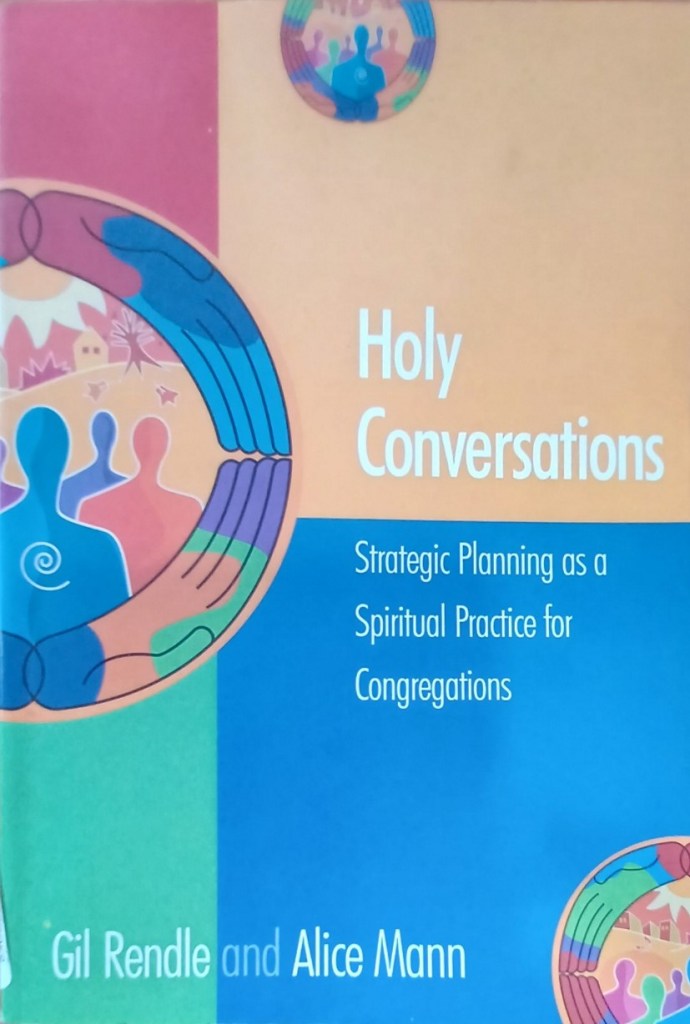
HOLY CONVERSATIONS – by Gil Rendle and Alice Mann
Holy Conversations: Strategic Planning as a Spiritual Practice for Congregations, is a practical workbook for anyone who is looking to lead a congregation to a unified vision and purpose. This book would be especially appealing to those who have little or no experience in leading a church through vision setting and strategic planning. They offer a number of examples, resources, and tools in the appendix that you could use as is or adapt to your local setting. If you are looking to lead a congregation to become more purposeful and with a unified mission, consider this book as a resource.
A leader must be a self-starter who is ahead of the people he leads.
A Christian leader must know their role and how to do it without requiring external instruction. Leaders do not wait to receive direction.
If you have a job description, make sure you understand it and know it so well that you continually look for ways to fulfill it. If you did not receive a job description or are running your own organization, develop a description of your role so you have guidance in how you will spend your time.
This often requires an understanding of the mission and vision of the church or organization you lead. You need to know where you are to be leading others toward, and how you will measure success as you work toward it.
With the job description and vision in mind, prayerfully set the course for how you will spend your time. Identify your responsibilities and areas to delegate. I constantly check in with God for wisdom and discernment on what is important for each day and what needs to be left for another day.
A self-starter knows what is needed and how to determine what activities they should pursue for the day. This means knowing the daily and weekly requirements that can not be missed.
A self-starting leader schedules their efforts. I have found it helpful to occasionally set time aside to determine what needs to be done in the next year, next six months, next 30 days, and the next week. A self-starter knows that you cannot stumble into each day with no idea what needs to be done in the near future. Planning is a key characteristic of a self-starter.
For example, in my role, I preach a sermon each Sunday. At the beginning of each week, I know that this is something I need to prepare without putting it off for later. There are also some recurring meetings that I can anticipate and prepare for in advance according to my role in these meetings and my expected contributions. A self-starting leader knows how to schedule and then do what is required.
Being a self-starter means you do what needs to be done. Be clear what is required, and then you do it. Don’t wait for others to direct your activities. If you do, then you are definitely not a leader but are following the leading of someone else.
Planning and preparation is arriving to commitments on time, if not early. A self-starter is an achiever because they do the work required to get the job done.
The self-starting leader is courageous, pushing beyond comfort zones. This includes trying new things, not taking unnecessary risks, but open to taking risks to move beyond what is to what could be. This leader is the visionary who is willing to look out and pursue a new future or new direction because he sees what others don’t. While he tries to get others on board, he does not wait for everyone to agree with him before he takes necessary steps to what could be.
A driven leader is a self-starter. This leader is ambitious and passionate about moving the people and organization forward. This leader is not content to only do what has been done, or just doing enough to make people happy, but eagerly seeks opportunities for positive change.
A Christian leader asks God to continually guide as they move ahead to get things done and move people to the future God has for them.
I will be sharing a brief review of every book I read this year. Hope you enjoy and hope it encourages you to keep reading.
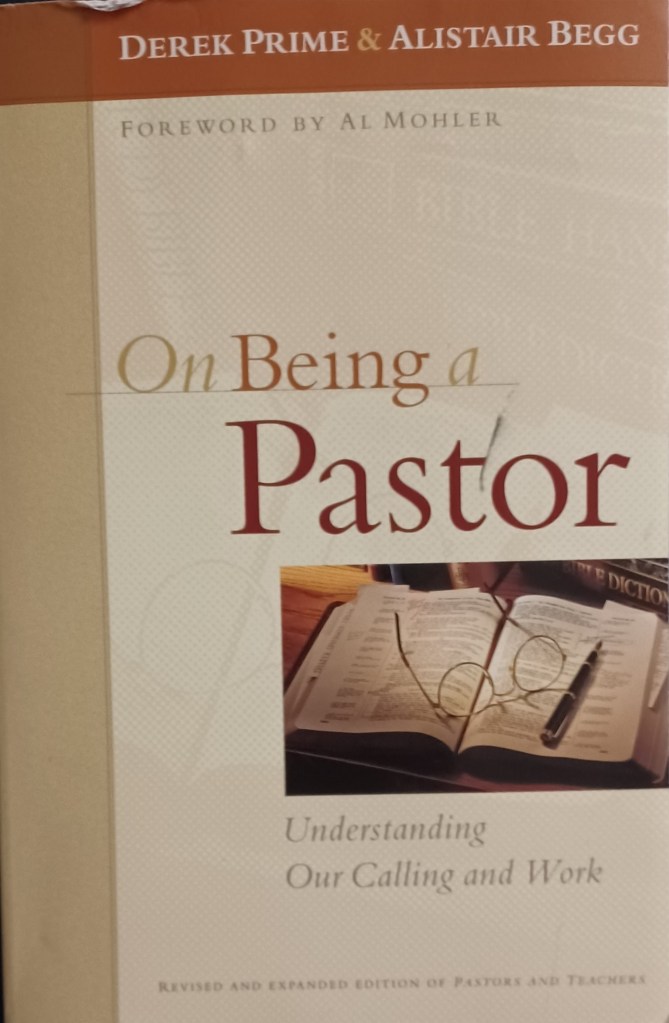
ON BEING A PASTOR – by Derek Prime & Alistair Begg
This is a great book for any pastor, especially for one who is just starting out. It covers many aspects of the pastor’s role and how to do it well. It is a bit dated, yet most of the content still speaks to the pastoral role today. The first chapter is a great discussion on the call to be a pastor, pointing out that the role can be difficult, but very rewarding if this is what God wants you to do. The authors, both pastors with years of experience themselves, then talk about the character of the pastor, his home life, and how to lead a serve a congregation well. The authors both share examples of how they have applied the teaching in many sections of the book. It is good to see the way two different pastors do the work of ministry. A great book for anyone in ministry!
I will be sharing a brief review of every book I read this year. Hope you enjoy and hope it encourages you to keep reading.
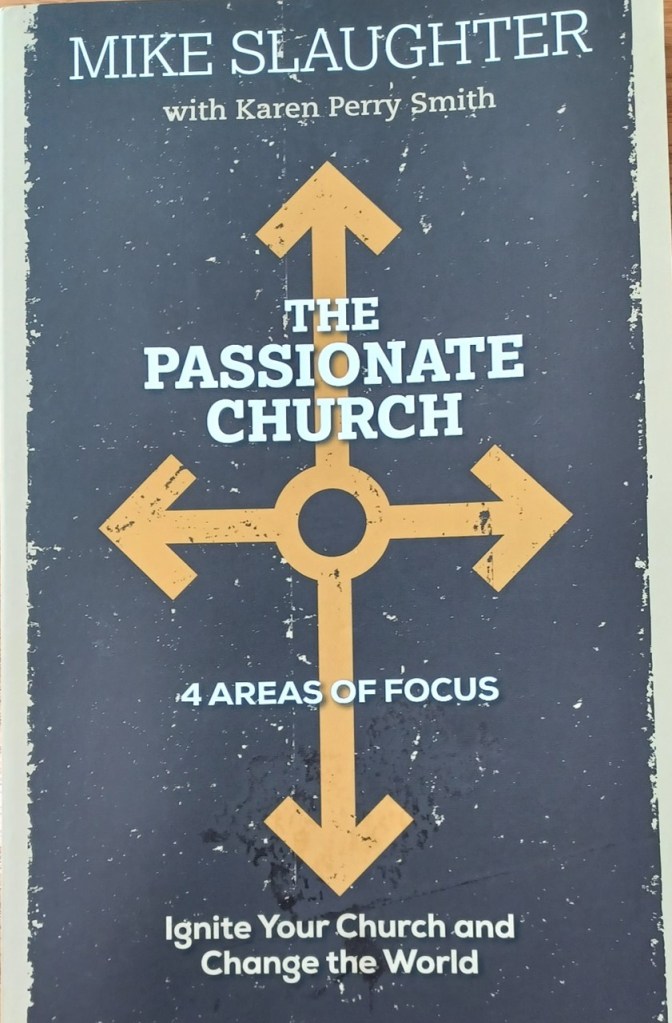
THE PASSIONATE CHURCH – by Mike Slaughter
Mike Slaughter draws on his United Methodist heritage and denominational connections to describe what a passionate church looks like. He addresses Four Areas of Focus as highlighted by the United Methodist Church: Developing Principled Christian Leaders, Engaging in Ministry for the Poor, Creating New and Renewed Congregations, and Improving Health. He does a great job of giving good examples for how each of these areas can become a real part of how a church does ministry. He uses examples from his own church in Ginghamsburg as well as from many others. What I love most about this book is the practicality of it. Passionate Church is a few years old now (2008), but the same questions can still be asked of our church and how we are living out our calling in our own communities.










 Elevate with Andy