I will be sharing a brief review of every book I read this year. Hope you enjoy and hope it encourages you to keep reading.
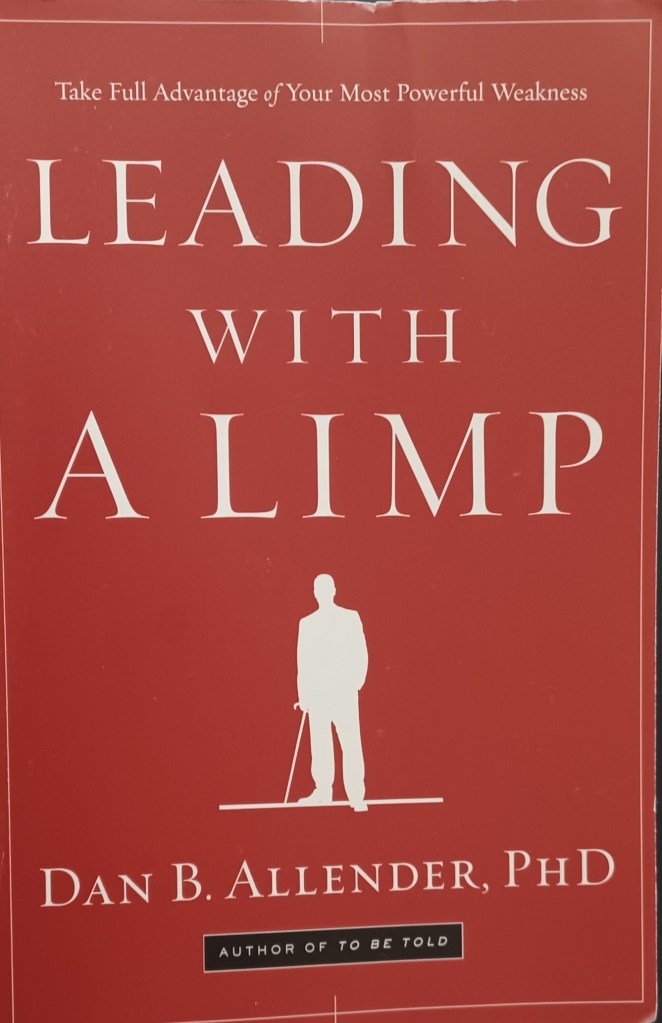
LEADING WITH A LIMP – by Dan B. Allender, PhD.
Allender states this as his core assumption for the book: “To the degree you face and name and deal with your failures as a leader, to that same extent you will create an environment conducive to growing and retaining productive and committed colleagues.” If you try to hide your failures as a leader, you will need to be more controlling of others around you. He says that in God’s leadership model, “He calls us to brokenness, not performance; to relationships, not commotion; to grace, not success.” While leaders often feel compelled to show they know everything and are definitely the right people for the job, they would be better off admitting their weaknesses since everybody else can see them anyway, and work more on a good relationship with people than just trying to get the most out of them for the task at hand. Allender offers this great quote as he talks about the difficulty of being a leader and casting vision. “One can speak of vision and mission, calling and opportunity until the cows come home, but when the day ends, most people want nothing more demanding than some television and a few uncomplicated laughs.” He speaks honestly of the hard work of being a leader while giving hope from God’s perspective. A great leadership book that makes one think.
As people who love God and want to serve Him, can we actually hear him? Can we have clear direction as we make decisions and lead a church?
God spoke with people in the stories of the Bible. In Genesis 3 the Bible describes a conversation between Adam and Eve and God. It tells us that God came and spent time with them in the Garden of Eden. Many times, prophets in the Bible spoke what they knew were the words of God. And others accepted their words as from God. People like Abraham and God had conversations about how many children he would have. God spoke to Moses from the burning bush. Sometimes God sent his angels as messengers, as seen when Gabriel visited Mary. God spoke through dreams and visions, as he did when warning the Magi not to return to King Herod after visiting Jesus. When people in the Bible heard God speak to them, they were confident that it was Him and clear about what He was saying to them.
God clearly spoke through His Son. John 1 tells us that Jesus was and is the Word from God. He is the expression of all God is. But Jesus also spoke with his disciples about many things. He taught with authority – so much so that people wondered where he got his authority. Jesus’ disciples had intimate conversations with Jesus dealing with everyday life like paying taxes, or dealing with the fact that he would have to die and rise again. He spoke to the two on the road to Emmaus, in Luke 24. Even though those who heard from Jesus were sometimes unsure what Jesus meant when he spoke, they clearly heard him, and had the privilege of asking questions to clarify what He meant.
God spoke in and still speaks through scripture. 1 Peter 1: 20-21 says, “Above all, you must realize that no prophecy in Scripture ever came from the prophet’s own understanding, or from human initiative. No, those prophets were moved by the Holy Spirit, and they spoke from God.” The scriptures are God’s words to us. 2 Timothy 3: 16-17 record Paul’s words to Timothy on the value and purpose of the Scriptures in people’s lives: all Scripture is inspired by God and is useful to teach us what is true and learn what is wrong in our lives. It corrects us when we are wrong and teaches us to do right. God uses it to prepare and equip his people to do every good work.” The scriptures are God’s words of guidance in our lives so we know how to live a life that honours Him. As God speaks in Scripture, we can clearly hear his direction for how to live our lives.
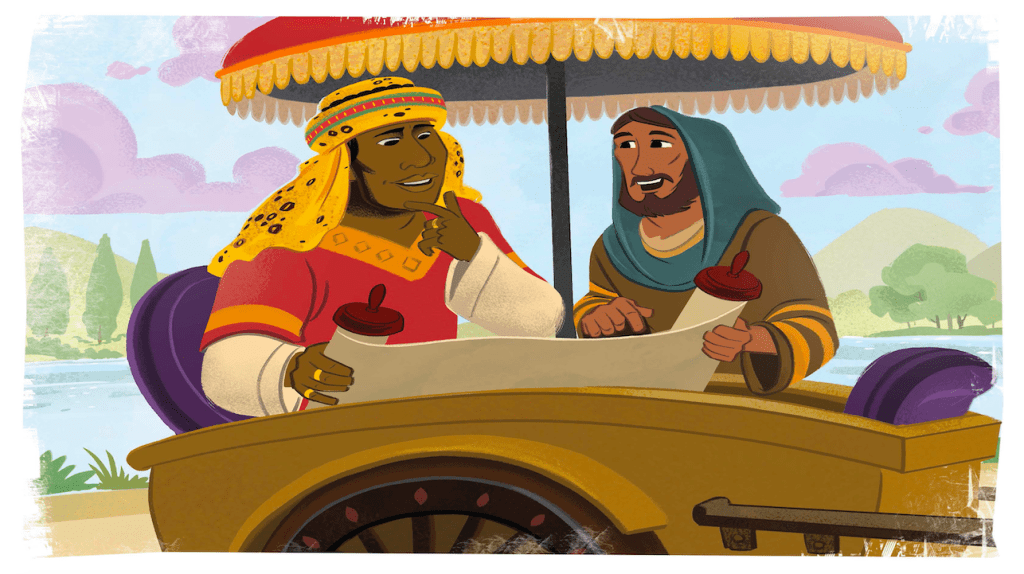
Sometimes God combines a few ways of speaking to give clear direction. A good example is the story of Philip leading the Ethiopian eunuch to Christ in Acts 8. First, an angel told Philip in verse 26, ‘” Go south down the desert road that runs from Jerusalem to Gaza.” So, he did. He started travelling down the road until he came upon this man sitting in his carriage. Verse 29 says, “The Holy Spirit said to Philip, “Go over and walk along beside the carriage.’” Philip did. He heard the man reading scripture so he asked, “Do you understand what you are reading?” The man did not and invited Philip into the carriage to sit with him and explain it. In the end, the man wanted to be baptized as he accepted he Good News of Jesus.
In this case, God spoke through an angel, through the Holy Spirit, through Philips willingness to enter into a conversation with the man, and through the scriptures – all to get the right person to talk with this man and explain salvation to him!
Philip clearly heard he was to go on that road, then clearly heard he was to go up to the chariot. But then, no one told him to enter into a conversation. He saw this as the next right thing to do. As the man asked questions, Philip explained scripture for him to understand and respond to.
I believe we serve the same God who will speak to us and direct us as we listen to him, though it doesn’t always seem as clear as we wish. God can and still occasionally speaks through angels. God can and does speak through the Holy Spirit. This may be an “out loud” voice or it may be strong sense that you need to do something. Sometimes we get this sense we are to call someone or visit someone and perhaps after responding, we see that God was setting that up. God can, and still does, speak through scripture. There are times when a certain verse jumps out at you as you are reading, and you know that was God’s encouragement for you. Sometimes, God will use a verse to clearly direct you.
God continues to speak in various ways. I have had God clearly direct me through seeing certain signs on trucks. He used these signs as a reminder of something I had written in my prayer journal, and he showed me the answer. I have had God speak through thoughts or feelings I was supposed to do something. I have heard God through the words others spoke. I have “heard” God speak through pictures he has given me in my mind. And many times God has spoken to me as I read the Bible, His Word to us.
God wants to speak to us. I am convinced of that. I also believe that God does not want us to be confused. We need to expect God to speak, and then respond as we believe we should. And if it is not clear, then ask him for clarity. Look to scripture to speak. Even ask God to speak through other wise people around you. Believe that God is interested in you and wants to speak. Keep listening.
I love preaching. I love opening a passage of scripture, expounding on it, and seeing eyes opened and hearts encouraged. The natural tendency is to make the sermon a monologue. Often this serves just fine, but I think it can be enhanced visually.
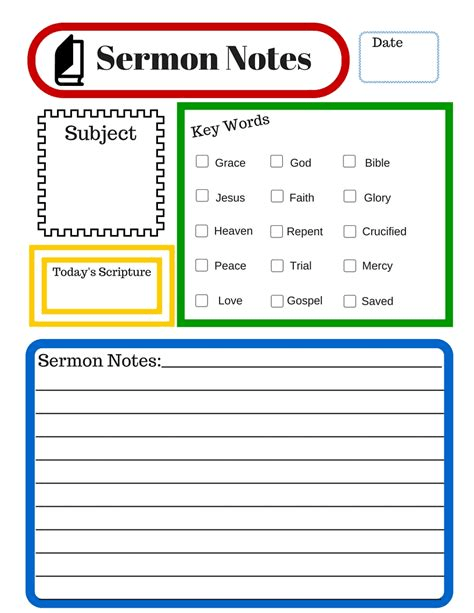
Personal Sermon Notes
Sermon outlines or notes pages can be included in bulletins or handouts that each person receives as they arrive at church. Adding visual aids in these notes can provide an additional way the congregation follows along with the sermon.
Slides accompanying the sermon
In addition to outlines for each person, slides can be used to highlight a point you are making or a scripture you are referring to.
As a visual person, I appreciate seeing slides that go beyond the text that the pastor is saying, and include relevant images or other visual aids. For example, when quoting a person, include their photo. A sermon illustration could be accompanied by a picture of what is being referenced. If you are speaking on the Lord being our shepherd you could have a picture or brief video clip of a shepherd working with his sheep.
Props
While pictures are useful, the real thing can be even better. Some sermons make it easy to bring in a prop. An easy example could be pointing to a cross already in your church when you are preaching about Christ’s death. Communion includes props which Jesus instituted: the bread and juice. A sermon from Matthew 7:3-5 about the person with a log in their eye pointing out a speck in another’s eye would be a great time to bring in a 2 X 4 and a little sliver and visually show people the absurdity of that action. A sermon on reaching the world for Christ might be a time to bring in a large world map or globe to point out some of the least reached areas of the world.
Models
This past Sunday I asked my wife, and she agreed, to be a model for me. I am preaching through Colossians, and we were in chapter 3 where Paul writes to the church in Colossae about how to dress as a believer. He specifically talks about “getting rid”, and “putting off”, and “stripping away” certain things. Then he twice says “clothe yourself with” something.
I had my wife put on an old T-shirt over her clothes. Then, after reading the scripture, invited people from the congregation to shout out all the things that were of the old life and were to be put off. As they listed the items from the scripture, I had preprinted words and phrases that I taped to this T-shirt. When they were all taped onto her T-shirt I reminded them that verse 5 talks about “putting to death” the things of the old life. So I picked up a pair of scissors and cut the shirt off of her and through it on the ground. That has now been put to death.
Then I had her put on a suit jacket of mine. Now we continued in the scripture and as they called out the things that we are to “clothe” ourselves with, I taped those words and phrases onto the suit jacket. Once she was wearing all the good things, I had her walk around as if she was a runway model, displaying all the things Paul was telling us to “put on”. I concluded by pointing out how Paul finishes that section by telling us to do all we do for the glory of God. The New Living Translation says we are to be good representatives of Christ in all we do. We are like a model, continually displaying what a Christian should be like. I pointed out that this was not “Dress to Impress”, but “Dress to Express”. We are to put on the things of Christ to show the world what Christ is like.
Look for ways to occasionally bring in a visual to aid your sermon. There will definitely be some who appreciate your efforts.
I will be sharing a brief review of every book I read this year. Hope you enjoy and hope it encourages you to keep reading.
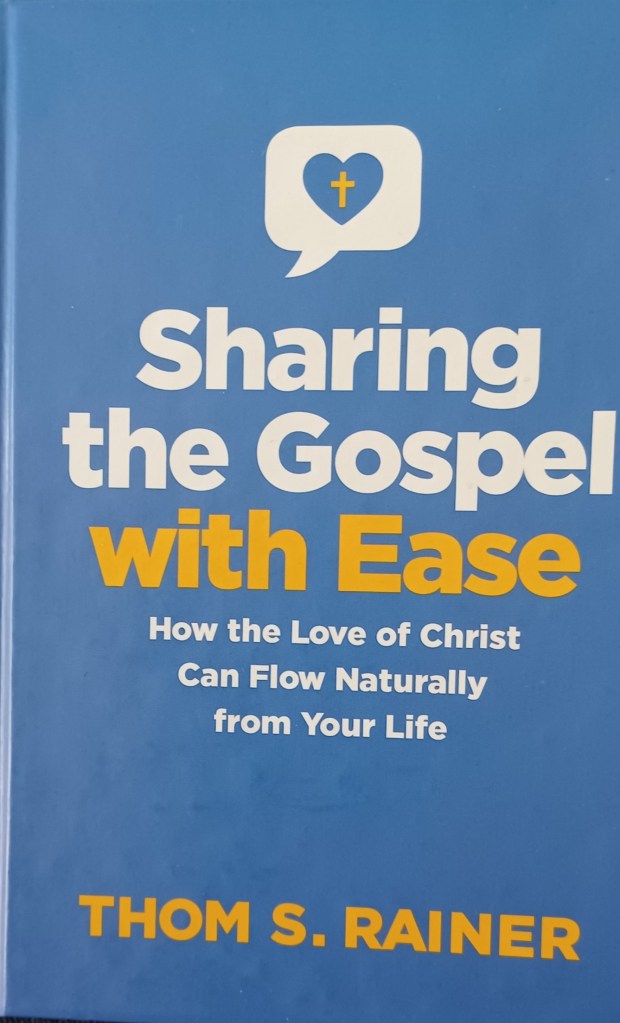
SHARING THE GOSPEL WITH EASE: How the love of Christ can flow naturally from your life – by Thom Rainer
In Sharing the Gospel with Ease, Thom Rainer explains how sharing the gospel should be a natural experience for a follower of Christ. He reminds us of our calling in the Great Commission from Matthew 28 and our encouragement and empowerment in Acts 1. Thom points out that many of us use excuses for not sharing the gospel. We complain about having no time. But the average Christian is also apathetic about the gospel. We say that we realize unbelievers will miss out on heaven and end up in hell, but we don’t seem to care enough to do it. Thom Rainer encourages us to allow it to be a natural part of our life. And to pray that God would guide us and open doors for us to share. A good little book.
Every organization and every church benefits from having a clear vision describing their purpose and how they will focus their efforts. A vision helps determine if certain programs in the church will be helpful or not. If something does not help move the vision forward, then it is wasted effort or worse – detrimental to your organization or church. Develop a clear vision to give direction to all you do.
Realistically, the vision creating process takes time. Those involved need to be able to mull over different ideas in order to come up with the best ones. Most people in volunteer board/committee roles do not have the same time to commit to this process as those leading it, so we have to go slower than we think we should. It is no use pushing ahead if that means we lose people along the way. Consider those on your team and provide appropriate time and space they need to work alongside you as you lead the process.
Time and patience also are needed as we pray about the vision. Our church is currently doing 40 Days of Prayer and Fasting, with part of that time specifically focused on asking God for vision and direction for the church. This is best done over time too. Don’t think one short prayer will be enough. The more time we spend in conversation with God, the more likely we will hear clearly from Him. As we patiently take our time, we will be better off in the end.
As I work with my church to create our vision, we started with identifying three core values. This took time, too. We gathered for one six-hour session with this outcome. While there was a lot of conversation around the whole process that will continue to contribute to the vision, our end result was three core values. Since then, we had a second five-hour session where we now came up with a possible two-word mission statement. Again, there was a lot of conversation that will continue to speak into the ongoing vision discussion, but didn’t result in a finished vision.
All of that to say, it takes time, patience, and a lot of conversation to come up with a meaningful vision to give direction to the leadership team and the church as a whole.
Our next step is to share with the congregation what we have come up with so far, inviting them to speak into the process and tell us how what we have so far connects or doesn’t connect with them.
Some leaders say that good vision creating can take months if not years. My contract with them will be ending in a few months, so we are trying to get to a point where they can easily continue to build on the work being done now with the next pastor. So we are working on this with purpose, but patience. We want to keep the vision work moving along, but not rush it and miss out on important conversations along the way. Hopefully we will determine a vision with enough clarity to guide us in creating a practical strategy for how to work toward accomplishing this vision.
Take time for the important work of vision defining so that everyone knows exactly what you are committed to doing and how you will do it. Ask God to walk with you in the whole process so your end product is a vision that reveals God’s heart and resonates with the church. And then, as you begin to work out the vision, you will all be on the same page and moving ahead together.
I will be sharing a brief review of every book I read this year. Hope you enjoy and hope it encourages you to keep reading.
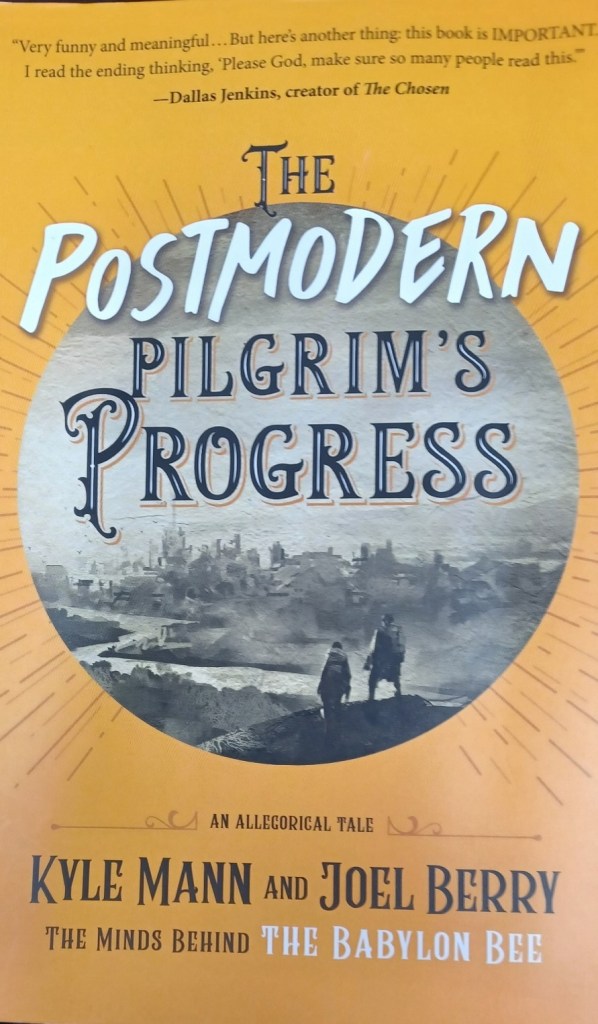
THE POSTMODERN PILGRIM’S PROGRESS by Kyle Mann and Joel Berry
Mann and Berry write a funny and entertaining allegory of the Christian life. It is a light read with a powerful reminder of how we get sidetracked with many varieties of ways we live our Christian lives. They do a good job reminding us of the main purpose of the Christian life, to keep on going forward in the journey toward a true relationship with the King!
I will be sharing a brief review of every book I read this year. Hope you enjoy and hope it encourages you to keep reading.
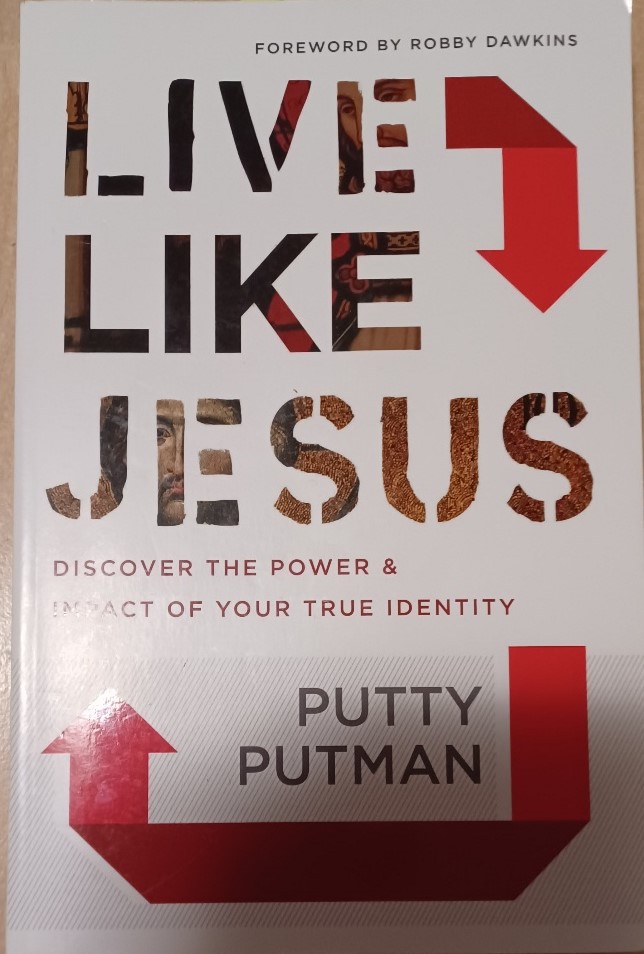
LIVE LIKE JESUS: Discover the power and impact of your true identity – by Putty Putman
Live Like Jesus: Discover the power & impact of your true identity, by Putty Putman
This is one of the best books I have read on the reality of our life in Christ. Putman asks questions and looks for answers that many Christians are afraid to ask. He does a good job asking questions that make a person think, and thus find answers that the average person is not looking for. If you want to be challenged in your walk with Jesus, this is the book you need to read.
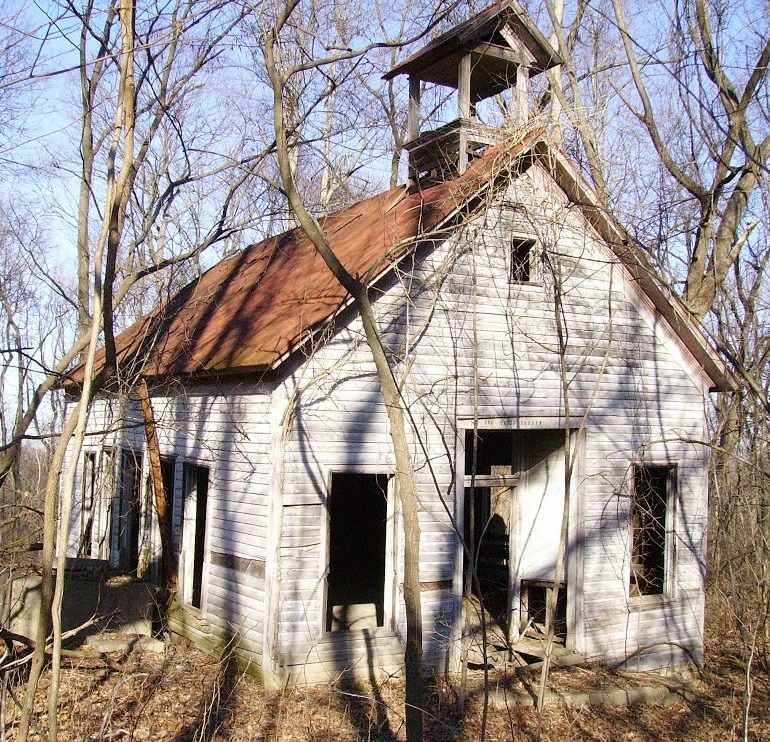
There’s a church I drive by occasionally. Each time I do, it makes me sad. I drove by it just the other day and noticed how dilapidated it was. You see, I attended that church a few times many years ago. I remember how excited the people were. The building was new, and still in the process of being completed. The congregation was already meeting there in the fellowship hall even though the sanctuary was not yet completed. They were looking ahead with excitement and anticipation. There was laughter and the noise of young children. While I was only a visitor, I could tell there was a sense of expectation as they had raised enough money to get to where they were now. They had outgrown a smaller, older building and were in good spirits.
Now, as I drive by and remember that excitement, instead of giving me a sense of hope, I feel sad. The building looks run down. The gravel parking lot now has twelve-foot-tall trees growing in it. I didn’t see a cross on the building anywhere. And I wondered what happened. What happened to the excitement of that forward-looking congregation? Did they finish the building? Did people move away? Why did they not continue to grow?
I think back to the church where I first started as a young pastor. I was on staff as the youth pastor. That church no longer exists either, and it makes me sad. I know some of what happened there, but that doesn’t make it any better. I know the great history they had of sending and supporting missionaries. They were part of planting other churches, but they lost their way. Over time, more and more people left. Eventually the denomination shut down the church. While that church experienced a lot of loss, one good thing is that the building is still being used for ministry purposes, but that church of people no longer exists. What a sad ending for a church that had prospered over the years.
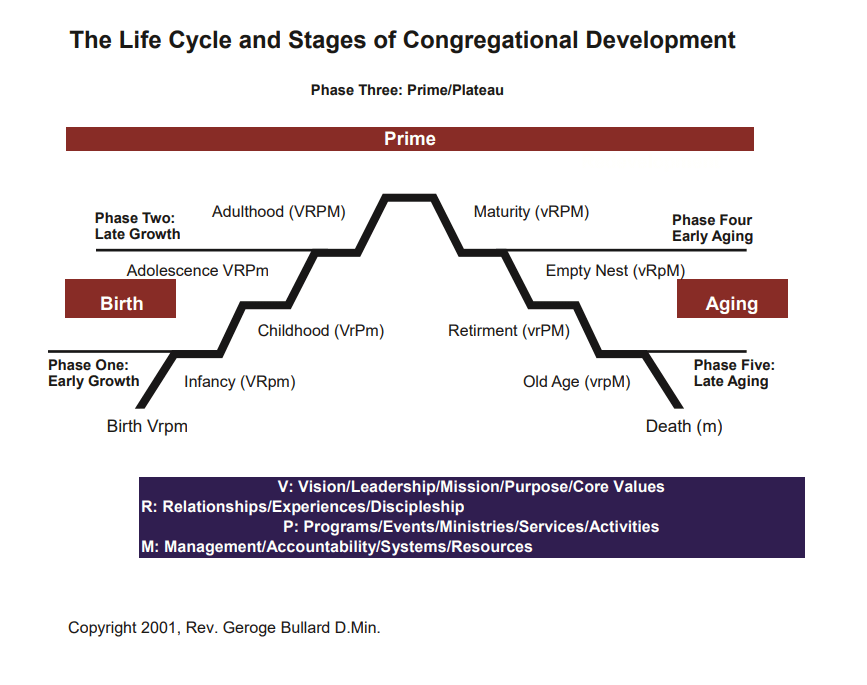
Just this week, as part of a class I am taking, we were given a handout by George Bullard entitled: Will Your Congregation Still Exist Ten Years From Now? His research has led him to this list of 25 Factors That May Impact Your Survivability, Vitality, and Vibrancy. Bullard invites churches and church leaders to evaluate their church by a set of 25 categories such as: vision, true relationships, high expectations of members, and a well-maintained facility . His research has concluded that there are at least 25 different things that can impact a church’s life expectancy.
Most of us never consider that our church may die. We just go on with our activities as if it will go on forever. But we need to do some serious evaluation from time to time. We need to look at the church with critical eyes – not to criticize but to evaluate boldly. And then we need to decide to correct what needs correcting. When this is done regularly and early in your church’s life, the changes made to correct occasionally may be small, but if your leadership has not evaluated your church and made adjustments over the years, there will come a time when you will need to make drastic changes. Some pruning will be required as you prayerfully cut out what is diseased and a distraction from what God has called your church to be.
If the evaluation and correction process is not something you are familiar with or equipped to handle, then call in someone who can. There may be resources available through your denomination, or call in a church coach or consultant. We are trained to walk a church through this process in a meaningful way. Whichever path you choose, do not just give up and hope the church will correct itself without the necessary work needed.
Churches and organizations need regular evaluation and appropriate action to correct where things are not going as they should. Don’t be scared to tackle this important yet painful process. Be more afraid that not doing anything will lead to the death of your church!
So call in someone to help. Contact someone like me to help you.
I love to work on vision. I’m a dreamer. It’s not hard for me to come up with new ideas, and I do it often. Not everyone has that mindset. I also think quickly and I realize not everyone does. In my present role, I work with a different church each year, and lead them through a process of vision setting. This means I’m engaging with a wider range of individuals, some who are excited about and comfortable with working on vision setting, and some who are not.
Here’s the big question: how can you make sure that everyone is able to fully engage in the process of setting vision for your church or organization?
Follow a written plan.
When you lead a team through the process of setting vision for your organization, make sure you first identify a written plan. Whether you use something developed by another, or like me, pick and choose exercises from a variety of sources, make sure that everyone has access to the plan before starting the process. Then each person – not just the leaders – can see where the process is heading.
I provide everyone with a booklet they can follow. One of my team has a difficulty hearing, so the booklet helps him know where we are even when he misses some of what is said in the discussion.
In addition to the overall plan document, for each meeting, I also provide a clear agenda, complete with breaks, and times listed for each exercise so everyone can see if we are falling behind. I try to be a little flexible with the time, and even skip some pages in the workbook if we are running behind schedule. The participants can check those out later if they want.
Use Variety
I like to do more than just a question-and-answer format. Some of the exercises I like to use for vision setting sessions are multiple choice or circle the best answer. Some are fill in the blank. I provide examples from other organizations that can spark ideas. I do a little leading but prefer to get the team to do most of the talking, especially since I am the consultant and will not be with the church as they move to implement the plan. My job is to make sure they can arrive at a common vision that is truly theirs. This means that I invite a lot of discussion. I do some work on a white board when trying to bring their ideas together so everyone can see any common threads. I even included a few colour charts to help visualize some exercises. I also like to add a few cartoons! Make sure to include times where people can get up and move around a bit. Sitting for too long will slow people’s thought processes down.
Go Slow
When leading a vision process, go slower than you think you should. There are always a few who think slowly and need time to think about things. Some ideas may be brand new and might need some mulling over. Some participants will read and process the directions for the next exercise slower so you can’t rush the process. Too much information too fast will not work. Instead, give time to process to keep everyone’s thinking clear.
Circle Back
I have found that it is helpful to present exercises that to get the team to see the present reality and the future possibilities from a number of different angles.
As I recently led our team through a visioning process, it was interesting to see some of the same ideas coming up throughout the session, and ideas coming up later that built on what was previously discussed. As these topics came up multiple times, it resulted in more clarity.
Highlight Recurring Themes
When you are working through a vision process, note these recurring ideas so that everyone is aware of them. It’s obvious that these are the themes that will be a major contributor to the final vision statement and vision picture. Listen to how their answers to different questions tie together and form a common theme. As the leader of the session, you are in position to observe these connections and identify them for the group.
Listen to God
In the recent process I led, there were a few times where we just stopped and prayed, both talking to God and listening to Him as well. There were a few times where different members of the team felt God was saying something we needed to pay attention to. When there were others that concurred, we took those thoughts seriously and integrated them into the values and vision that were taking shape.
It was very encouraging to me to see our team fully engaged through a 6-hour vision marathon! Everyone contributed to the conversation and was involved in the process right from the beginning to the end.
What are some ways you have found helpful to keep people engaged in process of developing a vision or strategy?
A new year often brings New Years resolutions. Many people make them, and while few keep them, the idea of making commitments to improve your life is a good one. Resolutions are often about our personal health like losing weight or becoming more fit. Again, not a bad idea. Some may make commitments about their career. Maybe they want to pursue another level at their job or more education hoping that will result in a financial boost in income down the road.
But what about personal growth? What about growing in your joy? We all know that people of joy are much more fun to work with than people with no joy. And we personally feel better if we have joy inside as well.
Are you a person of joy? Do you share joy or do people sense a dark cloud over your head every time you walk by? What is it in your life that affects your Joy?
Our joy can be impacted by a number of things. If you always spend time with negative people, it will be hard to stay positive and maintain joy. It is not always possible to avoid spending time with negative people, especially if your co-workers or family are negative. What you can do, is choose to seek out and spend time with joyful people. If you have to look for them, then do that. Notice the people in life that make you feel just a bit happier and find ways to connect with them. You could even initiate a coffee date to deliberately spend some time with them.
Our joy may be impacted by the news. If you always consume the news, you will have to work at being full of joy because the news rarely shares positive stories. Make a commitment to cut down on how much news you consume. You might need to reduce your time on social media. Rather than cut these habits out completely, identify new habits that can take the place of the time you typically spend consuming new or other media
Some of us have a hard life. Things have not gone the way we hoped and dreamed. Our realities include single parenting, the loss of a child, or unemployment. The circumstances of our life can affect our joy. We can become sad, or discouraged, or even angry about what life has thrown at us. We look around and see happy people with good families and healthy children and perfect jobs and we get even more discouraged. The truth is, there are some things that we encounter in our life that are not good, terrible in fact. And yes, they drain all our joy. What can we do about that? I’ve been there, where I questioned God about what He was allowing to happen to me. I get it.
What do we do when we cannot change our life circumstances right now? How do we find joy?
One of the things that has helped me a lot is my faith in God. Yes, I said earlier that I have had times where I really questioned God, wondering if He really cared for me or not. But I have always come back to God because He and I have history together – a history of him being faithful in the past, and answering prayers. When I come back to God, I can trust Him to take care of me. I know that I am safe in His hands. I remember that He loves me, even when it seems others don’t. I remember that He has a future for me.
I can go to the Psalms in the Bible and receive encouragement there, that begins to open up the possibility of Joy again.
The Lord is my strength and shield. I trust him with all my heart. He helps me, and my heart is filled with joy. I burst out in songs of thanksgiving.
Our joy can be affected by our circumstances. Sometimes we can change them, and then we should. Sometimes we can’t. I would encourage you to turn to God. Turn to the Bible. Read the psalms. And ask God to give you new Joy.
As you make commitments for personal growth this year, I encourage you to choose to develop more joy.







 Elevate with Andy