Good Vision Work Requires Time and Patience

Every organization and every church benefits from having a clear vision describing their purpose and how they will focus their efforts. A vision helps determine if certain programs in the church will be helpful or not. If something does not help move the vision forward, then it is wasted effort or worse – detrimental to your organization or church. Develop a clear vision to give direction to all you do.

Realistically, the vision creating process takes time. Those involved need to be able to mull over different ideas in order to come up with the best ones. Most people in volunteer board/committee roles do not have the same time to commit to this process as those leading it, so we have to go slower than we think we should. It is no use pushing ahead if that means we lose people along the way. Consider those on your team and provide appropriate time and space they need to work alongside you as you lead the process.

Time and patience also are needed as we pray about the vision. Our church is currently doing 40 Days of Prayer and Fasting, with part of that time specifically focused on asking God for vision and direction for the church. This is best done over time too. Don’t think one short prayer will be enough. The more time we spend in conversation with God, the more likely we will hear clearly from Him. As we patiently take our time, we will be better off in the end.

As I work with my church to create our vision, we started with identifying three core values. This took time, too. We gathered for one six-hour session with this outcome. While there was a lot of conversation around the whole process that will continue to contribute to the vision, our end result was three core values. Since then, we had a second five-hour session where we now came up with a possible two-word mission statement. Again, there was a lot of conversation that will continue to speak into the ongoing vision discussion, but didn’t result in a finished vision.

All of that to say, it takes time, patience, and a lot of conversation to come up with a meaningful vision to give direction to the leadership team and the church as a whole.

Our next step is to share with the congregation what we have come up with so far, inviting them to speak into the process and tell us how what we have so far connects or doesn’t connect with them.

Some leaders say that good vision creating can take months if not years. My contract with them will be ending in a few months, so we are trying to get to a point where they can easily continue to build on the work being done now with the next pastor. So we are working on this with purpose, but patience. We want to keep the vision work moving along, but not rush it and miss out on important conversations along the way. Hopefully we will determine a vision with enough clarity to guide us in creating a practical strategy for how to work toward accomplishing this vision.

Take time for the important work of vision defining so that everyone knows exactly what you are committed to doing and how you will do it. Ask God to walk with you in the whole process so your end product is a vision that reveals God’s heart and resonates with the church. And then, as you begin to work out the vision, you will all be on the same page and moving ahead together.

Keep looking up,

Andy Wiebe
Is Your Church Alive?

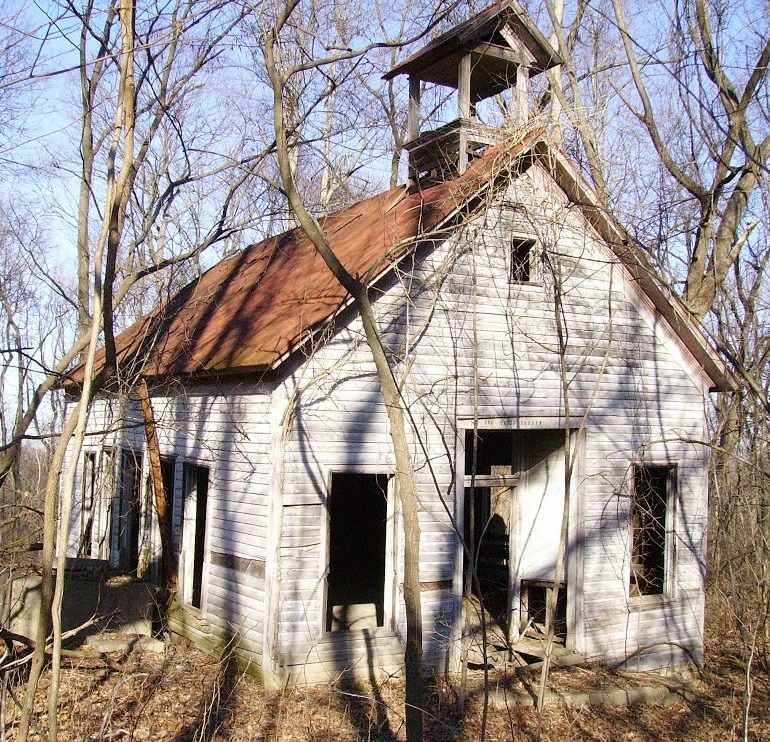
There’s a church I drive by occasionally. Each time I do, it makes me sad. I drove by it just the other day and noticed how dilapidated it was. You see, I attended that church a few times many years ago. I remember how excited the people were. The building was new, and still in the process of being completed. The congregation was already meeting there in the fellowship hall even though the sanctuary was not yet completed. They were looking ahead with excitement and anticipation. There was laughter and the noise of young children. While I was only a visitor, I could tell there was a sense of expectation as they had raised enough money to get to where they were now. They had outgrown a smaller, older building and were in good spirits.

Now, as I drive by and remember that excitement, instead of giving me a sense of hope, I feel sad. The building looks run down. The gravel parking lot now has twelve-foot-tall trees growing in it. I didn’t see a cross on the building anywhere. And I wondered what happened. What happened to the excitement of that forward-looking congregation? Did they finish the building? Did people move away? Why did they not continue to grow?

I think back to the church where I first started as a young pastor. I was on staff as the youth pastor. That church no longer exists either, and it makes me sad. I know some of what happened there, but that doesn’t make it any better. I know the great history they had of sending and supporting missionaries. They were part of planting other churches, but they lost their way. Over time, more and more people left. Eventually the denomination shut down the church. While that church experienced a lot of loss, one good thing is that the building is still being used for ministry purposes, but that church of people no longer exists. What a sad ending for a church that had prospered over the years.

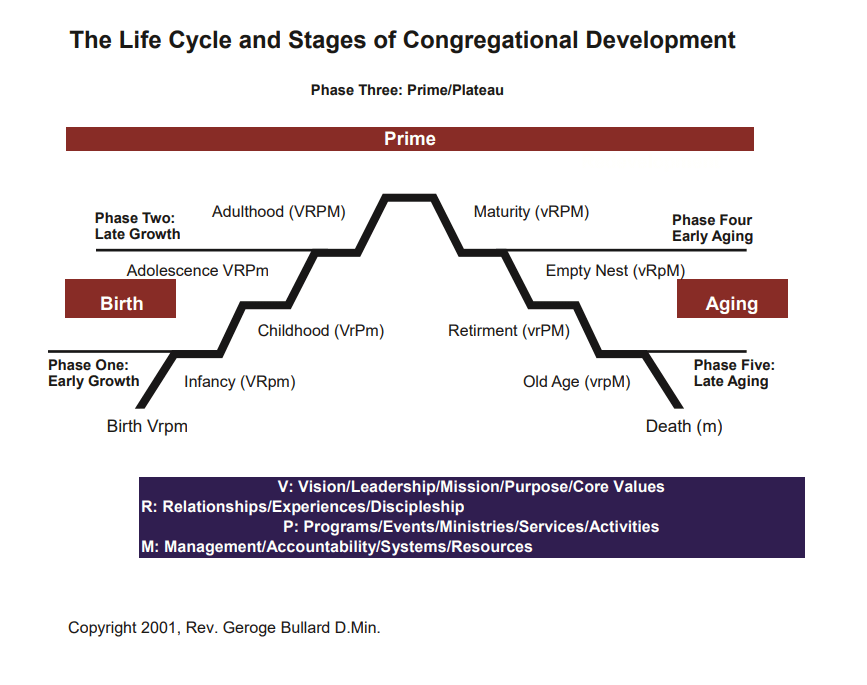
Just this week, as part of a class I am taking, we were given a handout by George Bullard entitled: Will Your Congregation Still Exist Ten Years From Now? His research has led him to this list of 25 Factors That May Impact Your Survivability, Vitality, and Vibrancy. Bullard invites churches and church leaders to evaluate their church by a set of 25 categories such as: vision, true relationships, high expectations of members, and a well-maintained facility . His research has concluded that there are at least 25 different things that can impact a church’s life expectancy.

Most of us never consider that our church may die. We just go on with our activities as if it will go on forever. But we need to do some serious evaluation from time to time. We need to look at the church with critical eyes – not to criticize but to evaluate boldly. And then we need to decide to correct what needs correcting. When this is done regularly and early in your church’s life, the changes made to correct occasionally may be small, but if your leadership has not evaluated your church and made adjustments over the years, there will come a time when you will need to make drastic changes. Some pruning will be required as you prayerfully cut out what is diseased and a distraction from what God has called your church to be.

If the evaluation and correction process is not something you are familiar with or equipped to handle, then call in someone who can. There may be resources available through your denomination, or call in a church coach or consultant. We are trained to walk a church through this process in a meaningful way. Whichever path you choose,  do not just give up and hope the church will correct itself without the necessary work needed.

Churches and organizations need regular evaluation and appropriate action to correct where things are not going as they should. Don’t be scared to tackle this important yet painful process. Be more afraid that not doing anything will lead to the death of your church!

So call in someone to help. Contact someone like me to help you.

Keep looking up,

Andy Wiebe
3 Steps to Ensure You Are Not a People-Pleasing Leader

My natural tendency is to be a people pleaser. I don’t feel good when someone disagrees with me. Recently I was talking with a friend who challenged a statement made by my church. It was regarding a practice of the church that we believed was scripturally accurate, but he was not willing to agree to this statement. I realized that I was trying really hard to come up with at solution so that he would be satisfied. I was trying to please him, rather than stand true to a statement we had made and believed to be biblically accurate. There was no reason for me to try to please him except that I like this guy and didn’t want to feel like there was disagreement between us.

Any leader needs to realize the value of being considerate and finding ways to get people to follow, but we cannot lead from a position of pleasing people first.

Know What You Believe.

I realized that I was a little unsure in this conversation. I was being asked to support a statement that I hadn’t given a lot of thought to. I believed it to be true, but when questioned, my first thought was to figure out how to make him happy rather than about showing him why I believed this statement.

I realized that I needed to be clear on what I believed. My job as a leader was not first to make him feel good about this statement but to show why we believed it was biblical and one worth following. Yes, I wanted him to agree – and I wanted him to feel good about it and accept it as worthwhile. But I should have begun with a desire to protect the truth of the statement rather than trying to please him.

If you know what you believe, then you know what to stand up for.

Know Why You Believe it is True.

Not only did I need to believe the statement was one that we should live by, I needed to know why. The more we understand the why of something, the easier it is to stand up for it. When there are certain expectations in our church or organization that we don’t agree with, it is hard to stand up for them. If we believe them, it may help to also know why we believe them to be worth operating by.

Sometimes the “why” can help us explain it to those who are questioning us. If I am convinced of the value of something, I will be more likely to stand up for it instead of trying to downplay it with the hope the person I am speaking with will agree with me.

Know What You Will Do if Someone Disagrees with You.

Not everyone you encounter will agree with you on certain issues. Even the people in your organization, and your friends, will not always see eye-to-eye with you on everything. What then?

Sometimes it is easier to try to please the person, and we end up being wishy-washy, always changing our minds according to whom we are talking with.

Sometimes it is easier to fight for what we believe and stand for, with the risk of losing relationships.

We need to find a way to balance, standing up for what we believe and our desire to be in a good relationship with people. Ideally, we convince our friend to agree with us, or realize they were right. And we have maintained our relationship.

Unfortunately, we will have disagreements where we cannot convince someone to change their mind and agree with us. We need to figure out how to continue to have good relationships with people who see things differently than we do. This will not always be easy. Some relationships will not continue. Even if relationships fall apart, maintain a proper love and respect for the other person. Sometimes we will not be able to maintain our integrity and our relationships at the same time. Then part in as amiable manner as possible.

We will always come across people we disagree with. Let’s ensure we stand up for what we believe even as we value the relationships we have.

Keep looking up,

Andy Wiebe

5 Steps to Maintaining Unity When Confronting Divisive Issues

We can all do a pretty good job of getting along when everything is going our way. We can enjoy time with people and think they are pretty good friends. Life is good when no one challenges me or my ideas. But what do we do when someone we thought we were on good terms with ends up on the opposite side of an issue?

The church I am presently serving is facing an issue that is fairly divisive. I won’t tell you what the issue is. You can insert your own issue as I address how we are attempting to maintain unity even as we deal with a divisive issue.

  1. Clarify the Issue

Whatever the issue is that you as a church or organization or team are facing, make sure that you clarify the issue. We thought we had been quite clear on the issue, but we realized that even after weeks of talking about it, people were confused. Do everything you can to make sure everyone knows exactly what you are talking about.

I remember a story of three men going into business together. They had rented a building and were setting up their restaurant. And then a problem arose. One of the men started talking about where he wanted the buffet area. A second interrupted him and told him clearly that a buffet was not part of the plan. They were going to have people come to the counter to order and pick up their meals. By now the third man was getting a little agitated. “I thought this was a fish and chips place!” We have to clarify the issue, and sometimes it means talking about it again and again to get down to what the real issue is so effective communication can take place.

2. Gather Supporting Information

For us, this was a decision that would affect some of our bylaws, so we had to make sure people understood what the bylaw was that was affected by the decision we were about to make. It was an issue that we believed had spiritual connotations, so we made sure to provide documents to our membership with scripture verses and explanations of how they spoke into the question at hand. We did some historical checking to see how this situation had been handled in the past. We even contacted our denominational office to get their input.

3. Prayer

We made sure to pray about this event. We encouraged people to pray on their own, we prayed about it in our services, and we prayed about it at leadership meetings. We prayed about it at discussion meetings we had regarding this question. We asked God to give us clarity and unity in the process.

4. Discussion Events

We hosted one formal evening of discussion on the topic. We recognized that there were people on either side of the question. Each side felt they had scriptural backing to why they believed what they believed. We determined not to enter into a debate. We did not want to set up a situation where we caused people to publicly take sides against each other. So we arranged for a time to carefully look at both sides of the issue. We invited people to speak up, but only in a positive way. No one was allowed to speak against an issue, they could only speak for their side. In this way, everyone was given opportunity to speak into the issue without it being against an individual.

As an aside, it was very encouraging to me as we ended that Discussion Evening, that many present stated their commitment to the unity of the church even if the vote did not go their way when decision time came. They were more concerned about protecting unity as one family or body, than about fighting for their point of view!

5. Make a Decision

At some point you have to decide how you will answer the question at hand. Like us, you may want to have a formal vote by the membership. You will need to decide at which level of authority in your church or organization that decision needs to be made. We encouraged our people to vote as their conscience directed after all the discussion and prayer we had. And then, whatever way the vote went, we trusted that God spoke into our situation and moved ahead according to the results of the vote.

Once a decision has been made, it is important to recognize that not everyone will agree with the decision as you move forward. Be alert to situations where people are having a hard time accepting the decision and take time to walk them as they process the results. You may need to meet with some individuals who are slow in processing the results so that you can help them move forward, encouraging them to trust God will continue to walk with us even as we trusted him to guide our decision process.

May God guide you with divisive issues you face. Too often, we become so closely tied to the issue that we would rather cause disunity than lose out on a vote. May God guide you and help you maintain unity as you too work through issues that could divide.

I would love to hear how you have worked through divisive issues and what worked for you. Let me know. Comment or email me.

Keep looking up,

Andy Wiebe

Make It Easy For People To Do What You Want

I was shocked when I attended church this Sunday. I get an occasional Sunday off so I get to take in a service at a church I am not leading. It was a great Sunday with good worship, and the commissioning of a new Lead Pastor. But one thing was missing: the offering. There was no offering received as part of the service. There may have been some information regarding giving on the slide announcements that were playing prior to the service, but I didn’t notice them. On the way out I did notice that there was a “giving station” on the wall. There may have been a few. I don’t know what you would do at the station but it must have been a way to give financially to the church.

Now, you may be wondering why I was shocked, and why I would make such a big deal about this. Here’s why.

First, I know that the church is struggling financially, and had to let a few staff members to in recent months because they couldn’t afford them.

Second, giving of our tithes and offerings to God and the work of his kingdom on earth is part of what following Jesus looks like. It is part of discipleship.

Third, if we want people to do something, we need to make it as easy as possible. Do you want to have your congregation learn how to give back to God, trusting Him to provide all their needs with the remaining money they still have? Then make it easy for them to do so.

We need to make it easy for people to do what we want them to do, whether we are leading an organization or leading a church. Whatever you want your team to do, make it clear and easy to do.

As we entered 2023, I encouraged our church to read the Bible, every day. In fact, I encouraged them to read the whole Bible this year. I printed four different Bible Reading Guides that followed different reading strategies from reading straight through the Bible from beginning to end or jumping around to different topics. I was hoping that at least one of these methods may appeal to people who had never read the whole Bible. Each Guide was a different color, and we included a lengthy description of each guide in the Sunday bulletin, with descriptions in the color of the Guide. I announced that these Guides were available, for four weeks in a row, continually reminding the congregation to choose their plan and begin reading. We placed the guides in a display at the information table everyone walks by every Sunday, making it easy to grab one on the way in to the service or on the way out. We did everything we could to make it as easy for people to choose a reading plan as possible.

As for the way we take up the offering, we do a few things to make it simple and clear how and why we do it. We have a clear step by step direction in the bulletin as to the various ways people can give, including online and in person in the service. We place offering envelopes on the chairs so when people come in for the service, not only is it easy to find an envelope to put their offering in, by prominently displaying these envelopes, it is a reminder that we value their financial gifts to the church. We always include a time in the service when we pass a basket and invite members to drop their financial gift in the basket as it goes by. Just before we pass the basket, we take a moment to talk about why we give and how we do it, thanking everyone for their faithful and willing giving. We pray, inviting God to bless the offering for His work. The whole process doesn’t take long, but it shows we value that part of discipleship and want to include it in our worship service.

As you consider an aspect of your organization or church where you want people to take a certain action, think about how to make it as simple as possible. Explain the purpose and instructions for the activity in multiple ways so it is accessible, and provide materials and time to complete the task. If you want people to fill in a certain form, begin by clearly explaining what is expected in an accessible medium. It may be a public announcement, an email, or text, or even a phone call. It may be a combination of these along with a clear statement explaining each step. Along with the direction, provide a designated time and deadline for completing the task. For example, if it is an evaluation of an event, give the participants time right after the event, or a few minutes the next office day after the event. Make sure that everyone has access to the correct form in a format that is as easy to access as possible – providing each person their own copy (and even a pen) is the most effective for ensuring they will complete it. Do whatever you can to make completing the desired task easy to do.

We all have expectations of our congregation or our team. Let’s do the work to make sure that it is as simple as possible for them to meet your expectations.

Keep looking up,

Andy Wiebe

6 Ways to Engage Your Team in Vision Setting

I love to work on vision. I’m a dreamer. It’s not hard for me to come up with new ideas, and I do it often. Not everyone has that mindset. I also think quickly and I realize not everyone does. In my present role, I work with a different church each year, and lead them through a process of vision setting. This means I’m engaging with a wider range of individuals, some who are excited about and comfortable with working on vision setting, and some who are not.

Here’s the big question: how can you make sure that everyone is able to fully engage in the process of setting vision for your church or organization?

  • Follow a written plan.

When you lead a team through the process of setting vision for your organization, make sure you first identify a written plan. Whether you use something developed by another, or like me, pick and choose exercises from a variety of sources, make sure that everyone has access to the plan before starting the process. Then each person – not just the leaders – can see where the process is heading.

I provide everyone with a booklet they can follow. One of my team has a difficulty hearing, so the booklet helps him know where we are even when he misses some of what is said in the discussion.

In addition to the overall plan document, for each meeting, I also provide a clear agenda, complete with breaks, and times listed for each exercise so everyone can see if we are falling behind. I try to be a little flexible with the time, and even skip some pages in the workbook if we are running behind schedule. The participants can check those out later if they want.

  • Use Variety

I like to do more than just a question-and-answer format. Some of the exercises I like to use for vision setting sessions are multiple choice or circle the best answer. Some are fill in the blank. I provide examples from other organizations that can spark ideas. I do a little leading but prefer to get the team to do most of the talking, especially since I am the consultant and will not be with the church as they move to implement the plan. My job is to make sure they can arrive at a common vision that is truly theirs. This means that I invite a lot of discussion. I do some work on a white board when trying to bring their ideas together so everyone can see any common threads. I even included a few colour charts to help visualize some exercises. I also like to add a few cartoons! Make sure to include times where people can get up and move around a bit. Sitting for too long will slow people’s thought processes down.

  • Go Slow

When leading a vision process, go slower than you think you should. There are always a few who think slowly and need time to think about things. Some ideas may be brand new and might need some mulling over. Some participants will read and process the directions for the next exercise slower so you can’t rush the process. Too much information too fast will not work. Instead, give time to process to keep everyone’s thinking clear.

  • Circle Back

I have found that it is helpful to present exercises that to get the team to see the present reality and the future possibilities from a number of different angles.

As I recently led our team through a visioning process, it was interesting to see some of the same ideas coming up throughout the session, and ideas coming up later that built on what was previously discussed.  As these topics came up multiple times, it resulted in more clarity.

  • Highlight Recurring Themes

When you are working through a vision process, note these recurring ideas so that everyone is aware of them. It’s obvious that these are the themes that will be a major contributor to the final vision statement and vision picture. Listen to how their answers to different questions tie together and form a common theme. As the leader of the session, you are in position to observe these connections and identify them for the group.

  • Listen to God

In the recent process I led, there were a few times where we just stopped and prayed, both talking to God and listening to Him as well. There were a few times where different members of the team felt God was saying something we needed to pay attention to. When there were others that concurred, we took those thoughts seriously and integrated them into the values and vision that were taking shape.

It was very encouraging to me to see our team fully engaged through a 6-hour vision marathon! Everyone contributed to the conversation and was involved in the process right from the beginning to the end.

What are some ways you have found helpful to keep people engaged in process of developing a vision or strategy?

Keep looking up,

Andy Wiebe

Book Reviews: Andy’s 2023 Reading Experience


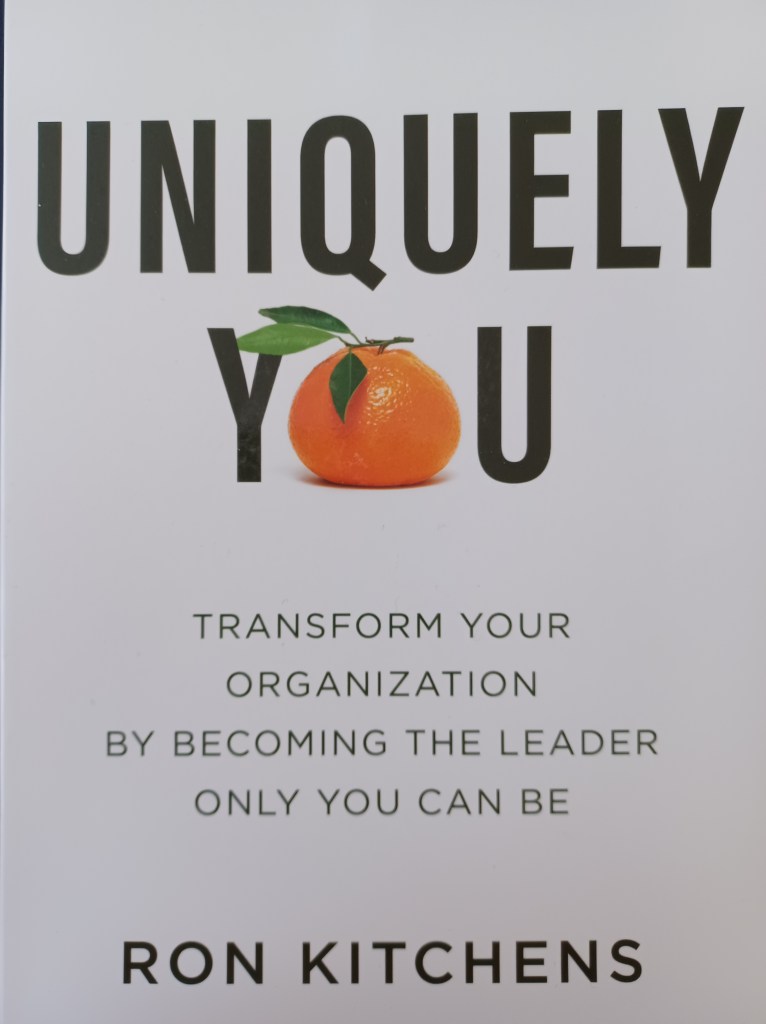
UNIQUELY YOU – by Ron Kitchens

Uniquely You: Transform Your Organization by Becoming the Leader Only You Can Be is an encouraging book for any leader. Ron Kitchen builds off his own experience and the many lessons he has learned along the way. Ron shares many stories as he highlights the value of building a great team. He gives a number of great ideas on how to build that team. I like how he puts family first, and makes that an important part of his business, so that everyone on the team has that same priority. His ideas have a great track record as his teams don’t have alot of turnover because they love working together.

This books has short chapters which will be appreciated by those who don’t like reading but still want to learn.

Ancient Leadership Lessons

Many of you would have great suggestions for books on leadership from your own reading and study. And the list would be quite varied as there are all kinds of books on leadership from many different aspects. I love to check out the latest leadership books, but I want to remind you of some ancient leadership lessons from an old book.

If you were to read the Bible with an ear for leadership concepts you would find many aspects to put into practice and learn from. While it is not a leadership book, the stories of different leaders in history can speak powerfully into our present leadership situations.

Nehemiah has been an example as he had a clear vision for how to repair the wall around Jerusalem, how he was able to recruit and delegate, and persevere through opposition. Ezra is an example of a leader as he rebuilt the temple in Jerusalem. These are some good examples for us.

Leaders, I would encourage you to read the Bible and look to the Bible to speak into and shape your leadership. Some of it is personal. We have examples of the faith of Abraham over a long period of time, continuing to trust God to be faithful to his promises. Had God given you a vision? Trust God to do his work through you to accomplish that vision. Continue to push ahead faithfully.

Joseph is an example of someone who persisted faithfully no matter the circumstances around him. All leaders face difficult situations from time to time, but we can continue to faithfully serve God even in those difficult times.

I like the desperation of Moses, begging God to go with him and the people. Moses said to God, “if you don’t personally go with us, don’t make us leave this place.” (Exodus 33:15) We need to have that kind of desperation for God to go with us too. As children of God, we know that we can accomplish little of value unless He goes with us. Christian leaders need to have that desperation of Moses that God go ahead and with you in all your endeavors.

We can learn from some of the negative examples as well. We can learn the devastation of listening to the crowd, as Aaron did, when he allowed the people to make a golden calf because Moses was gone to long. We can learn from the bad example of Eli who did not correct his sons when they disobeyed God. We can learn the importance of leading and not letting the crowd mislead us. We can learn the importance of following through and even discipling those under us when they do wrong.

We can learn from the example of the twelve spies the Israelites sent into the land God had promised them. They came back with stories, but there were two very different stories. Ten of them saw danger everywhere. They even exaggerated their stories – talking of giants who made us look like grasshoppers. But there were two others, Joshua and Caleb, who spoke of the wonderful fruit of the land and that it was flowing with “milk and honey”. It is a great place, and we can trust God to go ahead of us and give us the land. We can learn how the different views and the different stories we tell influence the people we lead in powerful ways. The Israelites listened to the majority and accepted the negative picture. They chose fear instead of trust because they listened to frightened leaders. God made them wander the wilderness until all that generation was dead and gone. Only then, were Joshua and Caleb able to enter the land with the next generation. What story are you telling? Are you pointing people to the problems or to the God who helps us through the problems?

And of course, we can look at how Jesus led his group of twelve. There are many leadership skills we can learn in how he led that small group. We can see how he loved and cared for those under his leadership, we can see examples he set when he washed their feet, we can learn from how he exhorted Peter when he misunderstood what Jesus’ plan was. We can learn from his commitment to the plan, never wavering.

Yes, learn from the great leadership books and seminars, but do not forget the ancient leadership wisdom from God’s word that still speaks into our leadership roles today.

Keep looking up,

Andy Wiebe

Book Reviews: Andy’s 2022 Reading Experience

I will be sharing a brief review of every book I read this year. Hope you enjoy and hope it encourages you to keep reading.


BEAUTIFUL OUTLAW – By John Eldredge

Beautiful Outlaw: Experiencing the Playful, Disruptive, Extravagant Personality of Jesus by John Eldredge is a book that will shock some people while encouraging others. He writes about Jesus, but not in the distant manner that we often think of him. Eldredge presents Jesus as a human in a way that few, if any, have before. It is a great reminder that Jesus was a human who walked this earth in a certain place in time within a specific community and with other human friends. Eldredge points out where Jesus responds with emotion like any other human person. He, in his words, is trying to “clear the religious fog” around who our Lord and Saviour Jesus was and is. Do you want to know Jesus better? This book will help you in that search. Your ideas may be challenged, but I do believe the person of Jesus will be revealed as a person you can actually communicate with and live your life with.

No Insignificant Moments. No Insignificant People.

The moments of our life are filled with little decisions. A mother in Zambia stirs her nshima. A farmer in Peru harvests his coffee. A businessman in Japan exits an elevator. Life is going on in every corner of the world. Insignificant moments? Insignificant people?

A kind word encourages a friend. A “thank you” lifts the spirits of the barista who prepared your coffee. A word of encouragement helps a young person decide on a career. Small moments that make a difference.

A secretary phones in sick, and a temp gets a new job. A student calls for prayer and a movement takes shape A neighbor introduces himself to another neighbor – and introduces him to the Lord three years later.

A woman pours perfume on a man’s dirty feet and wipes them with her hair – and Jesus makes sure it is recorded in history. An impatient soldier shoves a spear into Jesus’ side to make sure he is dead – and fulfills prophecy. Small, seemingly insignificant moments, with significant effects.

John Maxwell is famous for his writing and speaking on leadership. I was amazed at his ability to find good quotes and the right facts – until I heard he has a crew of people who do much of that work for him. Those who have made significant contributions to the world require the support of people in the background. Unknown people are in the background of all who seem to have made significant contributions to the world.

A friend is recognized for his act of bravery by the Canadian government for helping a fellow passenger to safety when their small plane crashed. He’s seen as a hero now, but in the moment simply decided to act. And it turned out to be a significant decision. A choice made in the moment, but a lasting impact and recognition.

There are no insignificant moments. All the seemingly insignificant decisions of seemingly insignificant moments shape who you become. Everything we do, as insignificant as it may seem, has significance. Those small decisions that we make in a moment accumulate in your character. They shape you and determine who you become.

So whether you eat or drink or whatever you do, do it all for the glory of God.”

the Apostle Paul

“So whether you eat or drink or whatever you do, do it all for the glory of God” writes the Apostle Paul in 1 Corinthians 10: 31. Brush your teeth for the glory of God? Share your testimony for the glory of God? Every moment that feels insignificant can glorify God. God is at work using the moments, the words, and the actions, of each person. God uses the average, unimportant people to bring Him glory.

Every moment can make a difference. Every word can be powerful. Every person has value and purpose.

May you live a life of significance as you surrender your life to the pursuit of the glory of God. Invite him into every aspect of your life, every decision you make, and you will live a life of significance in His eyes.

May you be a leader who recognizes the value of the insignificant moments and insignificant people.

Keep looking up,

Andy Wiebe