Leading Without Accolades

I remember a leader telling me that she was discouraged because she never heard from people if they appreciated what she was doing. We all long for approval and acknowledgement. We want validation because it feeds our desire for people to like us and like what we do. We need to keep leading even when the accolades are not freely given.

The general population is not good at giving approval for something they expect. If we lead well in church, we will rarely get feedback because we are doing exactly what we signed up to do. We are leading in the way we agreed to when we took on the responsibility. Sometimes, when the verbal accolades are not given, we may be able to read the body language of the crowd to recognize their approval. If people laugh at a joke you shared in a speech, take that as an accolade. If they respond with clapping or raised hands during worship you lead, receive that as a sign you are leading well as they are responding physically.

It is also important to recognize that people are more likely to give negative feedback than positive feedback. If there is absence of negative feedback, take that as a good sign. No feedback may mean that people are okay with how things are going.

As leaders, we also need to learn to get our affirmation elsewhere. We cannot depend on the people we lead to be a gauge of how well we are leading. Instead, we need to be clear about what our role is and do it to our best ability. Yes, we love and need feedback, but we must learn to lead without it coming from the ones we lead. And then when we do receive positive feedback, accept it as a bonus rather than an expectation.

Sometimes we can look at the success of our leadership and receive positive encouragement from that, but sometimes our leadership is not met with the success we long for. We may be doing it all right, but still have no success to point to.

Am I now trying to win the approval of human beings, or of God? Or am I trying to please people? If I were still trying to please people, I would not be a servant of Christ.

Galatians 1:10

In Galatians 1: 10 Paul points out that our goal should be to please God rather than look for the approval of men. Yes, it feels really good and is affirming to hear the “well done” of people, but it is even more encouraging to know that God approves of us and our leadership. Some years ago, my leadership was challenged to the point that I ended up losing my position. This affected me deeply. It was incredibly encouraging when I was at a pastor’s retreat, and God used others to affirm His love for me. Three different times in those couple of days, God said to me, “You are beloved Son in whom I am pleased.” Once it was a strong impression in my mind and twice it was as different people prayed over me. The approval of God was worth much more than that of men.

It is also valuable to recognize that anything good is done only through the work of Christ in us. 1 Corinthians 3: 7 points out, “So neither the one who plants nor the one who waters is anything, but only God, who makes things grow”. God equips us and invites us into leadership roles. Our first responsibility is to Him! As we serve in leadership, we ought to serve with a desire to please God first.

When the accolades do not come, continue to lead as God has called you. Do your job well and do it for the Master who called you to that role in the first place.

Keep looking up,

Andy Wiebe

Pushing Past Nervousness!

I remember the first time I had to speak publicly to a large crowd. It was only to make an announcement, but I was shaking so bad I didn’t know if I would be able to get the words out. Most of us will be nervous at some point, but if we want to lead, we need to push past the nervousness. Instead of just avoiding leadership, we need to find a way through. Too many people are willing to ignore their interest in leadership rather than learn how to get through it.

I’ve been in roles that require public speaking for 30 years, and still experience nervousness – though not quite like that first announcement I made years ago. Let me share some of the things I do to help me push through.

Prepare Well

I still get nervous from time to time, especially if I am leading something new or if it is a special event that we have worked towards for a while. My first step in dealing with my nervousness is to make sure that I know what my role is. If it is to make a speech, I write it out. If it is to lead an activity of some kind, I make sure I have all the directions written out step by step. Sometimes it is helpful to consider what questions others may ask as I lead, so I can address those in my write-up.

If I need any resources or props, I gather them ahead of time, and place them where I will have access to them as needed. If I am depending on others for assistance, like someone running the presentation slides for me, I make sure the presentation is easy to follow with a clear guide on how they can follow along.

Create a Step by Step Plan.

While this may be part of preparing, I want to make sure I point out that a clear plan helps calm my nerves. If I am preaching or making a speech, I need my script or outline. When leading a meeting I want to be clear on what will happen when, and make sure that my supporting documents are in the order of the agenda. I want to have my documents ready to go, and be ready to call for decisions to be made or actions to be created.

The clearer I am in my head as well as on paper, the less nervous I am.

Do a “Walk-through” Practice.

I like to physically enact the event if possible. This means talking through the talk or reading over the agenda to make sure everything makes sense. It’s a little like the basketball player who shoots 100 baskets every morning. The more we have already “experienced” an event, the more likely we will be more comfortable when the real things comes and execute it better. The practice allows time for correction if you realize something needs changing.

Prayer

As a Christian leader, prayer needs to be part of every aspect of our leadership. I probably should have put this higher up in the article! I pray through every event or talk I lead. I want to be clear that I am doing what God is asking of me. I want His guidance in preparing. I want to hear His voice as I practice to discern if changes are necessary. I want to make sure He gets the glory, and that everything I do gives Him honour.

And as I place myself and my endeavours in his hands, I can relax a bit, knowing that I am not on my own.

Just Do It.

After all the prayer and preparation and practice, there comes a point where I just have to do the event and trust that God will help me do it as well as possible. One of the ways to push through nervousness is to just do it. I’ve found the more often I do it, the less nervous I am. Just this past Sunday, as I was waiting for my time to go up and preach, I realized that I was not nervous at all. God has helped me to push through again and again so that my nerves do not hold me back like they used to.

It’s okay to be nervous, just continue to push through and see how God will help you to do your best for Him.

Keep looking up,

Andy Wiebe

The Importance of Critical Assessment

Now the Berean Jews were of more noble character than those in Thessalonica, for they received the message with great eagerness and examined the Scriptures every day to see if what Paul said was true.

Acts 17:11

There are times when we need to critically assess certain things. The Bereans in the verse above were carefully assessing the good news the Apostle Paul shared with them in order to determine if what he said was true or false. Rather than writing him off, as some other towns did, the Bereans understood the value of examining the situation carefully and responding appropriately.

There are many times in the work of the church or an organization where critical examination is beneficial. Hare some examples of areas that require careful assessment.

Programs

Churches often begin a new program with excitement and a hope that it will be meaningful and accomplish a certain purpose. The program may succeed and serve the church well, but there may come a time when the program no longer serves the same purpose, or something else might serve the church better. If you do not assess the program critically, you may be holding on to something that no longer has value. Instead, ask these questions regularly:

  • What is the goal of this program, and is it achieving that goal?
  • Is this the best program to achieve that goal?
  • Would the church be best served if this program was dissolved, or replaced?

Budgets

In my years of serving the church I have been part of many budget-setting meetings. It is surprising how often a budget line is approved or denied without real assessment of its value.

Sometimes budget amounts are simply left as is, or increased slightly because of overspending the previous year. This lacks critical thought process about why each amount is designated for each area.

In my years of serving the church I have been part of many budget-setting meetings. It is surprising how often a budget line is approved or denied without real assessment of its value. Sometimes budget amounts are simply left as is, or increased slightly because of overspending the previous year. This lacks critical thought process about why each amount is designated for each area.

Some churches invite program or ministry leaders to submit budget requests. This might require that some assessment take place if those leaders prayerfully determine what their plans and expenses are for the next year, while keeping the vision in mind. The following questions could be helpful:

  • What is our ministry plan for the next year?
  • What expenses will we ask the church to fund, and why?

New Hires

As a Transition Pastor, I am continually working with churches who are looking for a new pastor. I am hired to help them make a wise choice. This includes asking the leadership questions to help them assess each candidate carefully. When a church has been without a full-time pastor for a period of time, there is a desire to find their next one quickly. As they receive resumes, it is easy to fall in love with a candidate without being critical enough. While it seems harsh to the average church leader, you must evaluate your candidate according to some strict expectations. You want the right person, not just someone who seems nice. Here are some questions to ask regarding the candidate:

  • How closely does this candidate match your job description?
  • Are the candidate’s beliefs and philosophies closely aligned with the church’s?
  • Will this person be the best one to lead your church toward its goals?

There are many other areas a church leader needs to assess critically, and there are many other questions to ask in the evaluation process, but most importantly, do the critical assessment necessary to ensure you have the best results moving forward.

Keep looking up,

Andy Wiebe

A Decision Making Guide

The following guide is created to help boards and committees move beyond discussion and questions to the point of decision. The goal is a well thought-out and God-honouring decision.

1. Clarify the decision:

  • Do I have all the information I need to consider this decision? Collect and disperse needed information to all involved in the decision-making process.
  • Review all related information. (read, watch, listen, etc.)
  • Does this decision have to be made right now, or can we wait a bit to pray and gather all pertinent information?
  • Determine who will be affected by this decision, and how.

2. Write the motion:

  • WRITE OUT THE QUESTION BEING DEBATED. Write out a motion that clearly defines the decision being made and asks for a “yes” or “no” answer. Either you vote for or against the motion.
  • One person makes a motion: I move that _______________________________________.
  • The chair calls for a seconder. If someone seconds the motion, you can go on and have the necessary discussion leading to a decision on that motion. If there is no seconder, then the motion does not stand and you move on to the next order of business.

After walking through the steps below, the chair then calls the board to declare their “Yes” or “No” to the motion. A simple majority wins, yet you want to strive for a unanimous vote if at all possible.

Good motions include:

  • The precise decision being made
  • Any related deadlines
  • Who is responsible for the action in the motion

3. Biblically informed:

  • Does Scripture say anything that speaks to this decision? Read appropriate scriptures.

4. Vision directed:

  • How will our decision help move our Vision forward? Some decisions may not directly relate to the vision, but any that work against it should be avoided.

5. Guiding Documents:

  • Guiding documents need to inform a board’s actions and decisions. These may not always need to be consulted but you need to be aware of them enough to make sure you only make decisions that uphold them and are consistent with them.

Possible guiding documents

  • Policies and Procedures
  • Constitution
  • Statement of Faith
  • Job Descriptions
  • Etc.

6. Prayer:

  • Pray about decisions that are coming up prior to the meeting.
  • Pray during the meeting. Ask God to speak to you through this whole process.
  • Listen to God and ask Him to give you direction on how to vote on the issue.
  • Pause for prayer before the decision is made.

7. Board unity:

  • Discuss the issue together. And then decide together. Strive for unanimity. It should be a rare decision that gets passed by a vote where even one board member is opposed.
  • The board speaks as one voice – Once the decision is made, whether you were in favor or not, you abide by and support the decision that was made.

8. Anything else to consider?

  • Consider any other aspects of the decision.

Download GUIDE here.

Keep Looking up,

Andy Wiebe

Book Reviews: Andy’s 2023 Reading Experience

I will be sharing a brief review of every book I read this year. Hope you enjoy and hope it encourages you to keep reading.


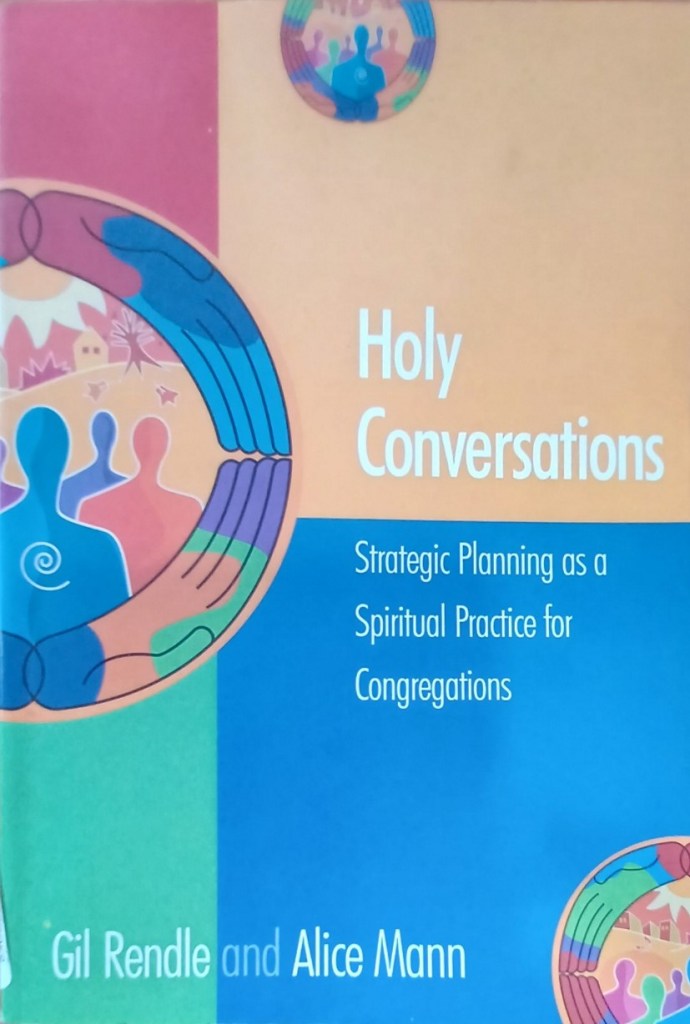
HOLY CONVERSATIONS – by Gil Rendle and Alice Mann

Holy Conversations: Strategic Planning as a Spiritual Practice for Congregations, is a practical workbook for anyone who is looking to lead a congregation to a unified vision and purpose. This book would be especially appealing to those who have little or no experience in leading a church through vision setting and strategic planning. They offer a number of examples, resources, and tools in the appendix that you could use as is or adapt to your local setting. If you are looking to lead a congregation to become more purposeful and with a unified mission, consider this book as a resource.

A Leader is a Self-Starter

A leader must be a self-starter who is ahead of the people he leads.

A Christian leader must know their role and how to do it without requiring external instruction. Leaders do not wait to receive direction.

If you have a job description, make sure you understand it and know it so well that you continually look for ways to fulfill it. If you did not receive a job description or are running your own organization, develop a description of your role so you have guidance in how you will spend your time.

This often requires an understanding of the mission and vision of the church or organization you lead. You need to know where you are to be leading others toward, and how you will measure success as you work toward it.

With the job description and vision in mind, prayerfully set the course for how you will spend your time. Identify your responsibilities and areas to delegate. I constantly check in with God for wisdom and discernment on what is important for each day and what needs to be left for another day.

A self-starter knows what is needed and how to determine what activities they should pursue for the day. This means knowing the daily and weekly requirements that can not be missed.

A self-starting leader schedules their efforts. I have found it helpful to occasionally set time aside to determine what needs to be done in the next year, next six months, next 30 days, and the next week. A self-starter knows that you cannot stumble into each day with no idea what needs to be done in the near future. Planning is a key characteristic of a self-starter.

For example, in my role, I preach a sermon each Sunday. At the beginning of each week, I know that this is something I need to prepare without putting it off for later. There are also some recurring meetings that I can anticipate and prepare for in advance according to my role in these meetings and my expected contributions. A self-starting leader knows how to schedule and then do what is required.

Being a self-starter means you do what needs to be done. Be clear what is required, and then you do it. Don’t wait for others to direct your activities. If you do, then you are definitely not a leader but are following the leading of someone else.

Planning and preparation is arriving to commitments on time, if not early. A self-starter is an achiever because they do the work required to get the job done.

The self-starting leader is courageous, pushing beyond comfort zones. This includes trying new things, not taking unnecessary risks, but open to taking risks to move beyond what is to what could be. This leader is the visionary who is willing to look out and pursue a new future or new direction because he sees what others don’t. While he tries to get others on board, he does not wait for everyone to agree with him before he takes necessary steps to what could be.

A driven leader is a self-starter. This leader is ambitious and passionate about moving the people and organization forward. This leader is not content to only do what has been done, or just doing enough to make people happy, but eagerly seeks opportunities for positive change.

A Christian leader asks God to continually guide as they move ahead to get things done and move people to the future God has for them.

Keep looking up,

Andy Wiebe

Church Leadership Series: Part 8: A Church Leader Must Not Be A New Christian

A church leader must not be a new believer, because he might become proud, and the devil would cause him to fall.

1 Timothy 3: 6 (NLT)

It is a great joy to welcome new believers into the church! But Paul gives a warning: “A church leader must not be a new believer.” We should look to those who are spiritually mature to lead us.

Paul doesn’t give us a length of time to wait, just that we are to wait. This is good, because some new believers mature faster than others. There are some who could take years to be ready while others might be ready in a year. The important thing is to give the new believer time to learn and grow in their faith in Christ.

What might be some problems with new believers in church leadership? Paul, in his letter to Timothy cautions that a new believer put into leadership too soon may become proud. The new believer may see this leadership role as a position of elevation in the eyes of others and think of themselves as something special, rather than as a servant. And Paul is concerned that this new believer, in their pride, may fall. The NIV puts it like this: He must not be a recent convert, or he may become conceited and fall under the same judgment as the devil. The devil fell because of his pride. He wanted to be higher than Jesus. Paul is concerned that a new believer will fall prey to the same sin and hurt his walk with God.

Other concerns may be tied to some of the earlier instructions given to church leaders. A leader needs to have a good reputation and live a goldy life. The new believer may not have that to begin with. He may need to have time to mature and become more like Jesus, and to gain that good reputation with others around him.

Another concern may be that a new believer will not be able to teach in the same way that a mature believer can. If a new believer is good at research, they may be able to put together a good lesson, but their teaching would generally be theory because they have not yet had time to put into practice what they are learning as a new follower of Jesus.

A new believer may also still carry sinful habits. He needs to learn to set those aside before stepping into leadership. While it is great to desire leadership, there should first be a strong desire to live in right relationship with Jesus by the power of the Spirit.

Churches often talk about discipleship when referring to the process of maturing as a believer, where over time the new believer becomes more and more like Jesus. A new believer would benefit from some discipleship first, whether formal or by spending time in the activities and teachings of the church. Part of that discipleship could include observing and learning from the leadership board or shadowing a leader as they go about their duties.

The official church leaders should be people who have already shown their leadership in the church as maturing believers. Asking them to serve on a board or a committee is a natural next step, affirming that they are already one of the people that others naturally look up to and learn from. Ongoing discipleship prepares maturing believers for the next steps in church leadership, taking on smaller roles to begin with and then being asked to higher levels of leadership as they prove themselves.

Church leaders should be mature and passionate about Christ and His church. They should learn and develop and grow until they are among the best in the church and well prepared for leadership. If you are that new believer, then do your part to continue to grow and be discipled as opportunities allow. God will build you up to the time when others recognize you have already become a leader. When that happens, step into leadership with a confident faith in God and a desire to serve.

Keep looking up,

Andy Wiebe

Church Leadership Series: Part 7: A Leader Must Manage His Family Well

He must manage his own family well, having children who respect and obey him. For if a man cannot manage his own household, how can he take care of God’s church?

1 Timothy 3: 4,5 (NLT)

his children must be believers who don’t have a reputation for being wild or rebellious. 

 Titus 1: 6 (NLT)

I wonder how many leaders love the idea of leading people as long as it doesn’t intrude on their own personal life. The reality is, when we are leaders, we are still parents and children and siblings.  We have responsibilities at home that affect how we lead and how we lead affects how we handle our responsibilities at home.

A Christian leader must manage his own family well. After all, if you can’t manage your household, how can you be expected to manage the church organization you lead? How you do with your responsibilities at home portrays how you will likely manage others.

Look at Ephesians 6:4: “Fathers, do not exasperate your children; instead, bring them up in the training and instruction of the Lord.” Parents, especially fathers, are entrusted with the training and instruction of their children. Church leader, you need to be able to manage your family well.

In 1 Timothy the leader is described as “having children who respect and obey him.” Titus says, “his children must be believers who don’t have a reputation for being wild or rebellious.” I know of Christian leaders who have stepped out of leadership positions because of children who were not obeying them. They felt that if they were not able to manage their family, they should not be in church leadership. I respect that decision as long as there is then an effort to rebuild a relationship with a rebellious child.

There is an expectation that a Christian leader will have a good relationship with his children so the children will willingly respect and obey him. This tells us things about both the leader and their child. This implies that the leader has taken time at home to ensure there is a relationship with the child. Some Christian leaders are “absent fathers” because they spend so much time away from home, or even focused on their leadership responsibilities, that they have not cultivated a loving and caring relationship with their children! A child’s obedience can be an indicator the leader has not parented well, but this is not always the case. It could be that the child is struggling in some other way or is determined to do their own thing, no matter what. If so, then maybe the leader needs to step away from some leadership roles to spend more time with this child.

A leader should not have a “wild and rebellious child” but children who are believers. The leader should take time raising their children to ensure that they came to know Jesus, or at least had every opportunity to do so. Do we really want leaders in the church who have not taken the time to ensure their own children have given their lives to Jesus and accepted Him as their Savior?

Some Christian parents seem to think their role is to make sure their children get to Sunday School and VBS and youth group at church. They may enroll them in a Christian school. Their idea of Christian training is to expect the church to do it all. While all those are good things, they can never be more than an added help. The church cannot be the main contributor to the spiritual growth of children. This must be led by the parents at home. A Christian leader needs to see the value of their own time teaching their children and not expect they can hand it off to the church. A Christian will go out of their way to disciple their children first and then look at leading others.

Keep looking up,

Andy Wiebe

Church Leadership Series: Part 6: A Leader Exhibits Self-Discipline

He must not be a heavy drinker or be violent. He must be gentle, not quarrelsome, and not love money. 

1 Timothy 3: 3 (NLT)

A church leader is a manager of God’s household, so he must live a blameless life. He must not be arrogant or quick-tempered; he must not be a heavy drinker, violent, or dishonest with money.and he must love what is good. He must live wisely and be just. He must live a devout and disciplined life. 

Titus 1: 7, 8 (NLT)

Not everyone leads a self-disciplined life, but leaders must be able to do so. Leaders need to have the ability to assess themselves against the expectations laid out for them. A Christian leader assesses themselves regularly against what the scriptures teach about leadership.

When I was a kid, my church circles strongly opposed drinking alcohol of any kind. Today, many Christians have decided abstinence is not a requirement in scripture. Paul, while not teaching abstinence, clearly prohibits church leaders from being “a heavy drinker”. He doesn’t say that they need to avoid getting drunk, but not be a heavy drinker. So the warning is actually about drawing a line earlier than getting drunk. It’s not hard to understand why. Drinking to excess will severely limit a person’s self-control.

In both Titus and Timothy, Paul speaks against being violent immediately after warning about drinking too much. This may be because for some, drinking may lead to violence (perhaps related to lack of self-control mentioned above). In any case, violence should not be part of a Christian leader’s character in any way. Instead, there should be gentleness. There should be a kindness in every leader.  And they should not be known a someone who quarrels. They should be disciplined, controlling their anger.

A church leader should not be arrogant. Sometimes people in leadership think that everyone else should look up to them, expecting, even demanding, a certain amount of respect from people rather than choosing to serve others. Some church leaders, some pastors, act like little kings rather than servants of those they are tasked to lead.

A church leader must not be dishonest with money, or even love money! There have been many scandals in the news over the years bringing to light leaders who have used their position to build their own personal wealth at a cost to the organization they were entrusted to lead. That should not be.

When a Christian leader lives rightly, they will love what is good, live wisely, and be just. They will be more concerned about the people they serve and the organization they lead that they will be good and kind and wise in their actions. They will be more concerned about honouring God than trying to make themselves look good.

He must live a devout and disciplined life.” A Christian leader will desire God first. There will be a constant desire to give God the glory and take none for themselves. There will be a longing to know Jesus in a deeper and more personal way. The Christian leader will spend regular time in God’s Word, not just for their next teaching responsibility but for personal growth and connection with God. There will be a desire to live out what they are reading, to honour God with their abilities and their position, whether in the church or in business.

A disciplined life is one that is careful to remove and stay away from characteristics that do not reflect a relationship with God, while also working hard to reflect the character of God in all they do. Discipline means you put some effort in. You evaluate yourself regularly against what you believe God wants of you. A disciplined person knows where to draw lines in life, knowing how to avoid extremes of one way or another so as to reflect Jesus in all they do. A Christian leader will live a disciplined life.

Keep looking up,

Andy Wiebe

Book Reviews: Andy’s 2023 Reading Experience

I will be sharing a brief review of every book I read this year. Hope you enjoy and hope it encourages you to keep reading.


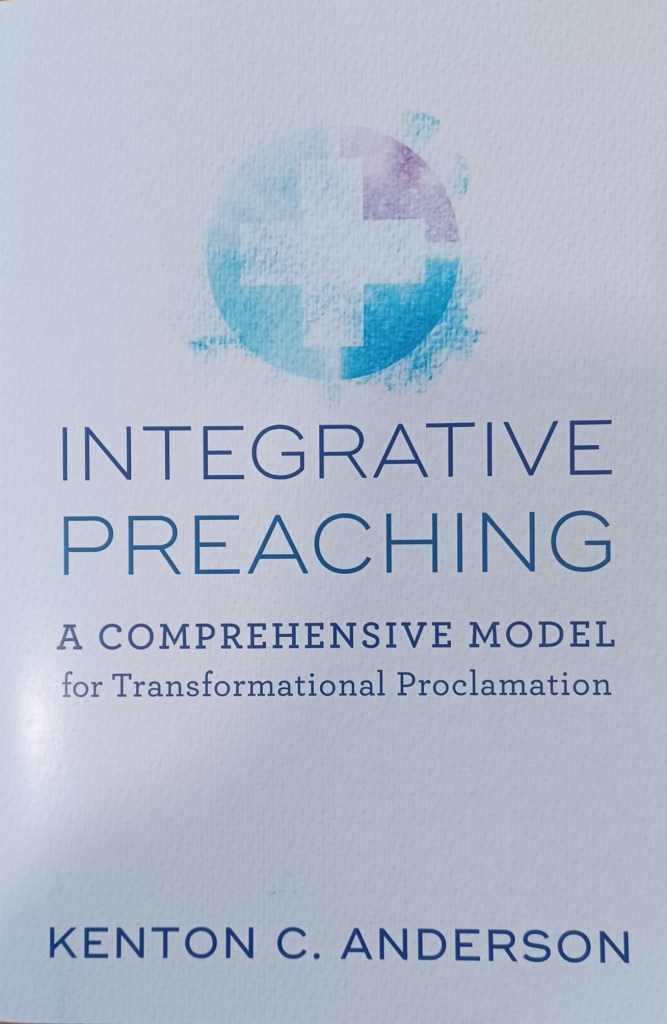
INTEGRATIVE PREACHING – by Kenton C. Anderson

Integrative Preaching: A Comprehensive Model for Transformational Proclamation – by Kenton C. Anderson

Integrative Preaching is one of the best books on preaching I have read lately. Kenton Anderson diagrams a model that intends for sermon to reach both the mind and the heart. He describes this method in a number of ways. I especially like how he names each of the four steps of the sermon in ways that connect to the heart of a person: Engage, Instruct, Convict, and Inspire. I personally was most challenged to do a better job of Inspiring my listeners when I preach, not being satisfied with information alone, but driving home how the information should affect us and be lived out. An excellent book on how to build and deliver sermons that change lives.