Do We Need A Transition Pastor?

I am presently serving as a Transition Pastor. Some might wonder what that is, or why a church might need one. Many of you reading this are part of a church, and may be part of the leadership that needs to determine next steps after a pastor leaves.

When a pastor resigns and leaves his church, the church needs to determine next steps. Some questions to consider would be:

  • Should we immediately look for a new pastor?
  • What kind of pastor do we need next?
  • Should we get a Transition Pastor?
  • Are there things we need to work on to be ready for a new pastor?

A Transition Pastor

A Transition Pastor serves in the time between a church’s last pastor and the next one they will hire. He will generally sign a contract for nine months up to two years. The Transition Pastor’s main role is to make sure the church is healthy and ready for the next part of their journey, before hiring the next pastor.

 Another role is to help the church say goodbye to the previous pastor and some of the experiences of the past. If the pastor who left was deeply loved by the congregation, and if he served there for a long time, a new pastor coming in immediately would probably be regularly compared to the last pastor. I have had that experience in a few churches I served. A Transition Pastor can be a buffer, helping the church move on from the last pastor and be ready to accept the next one.

If there was a lot of pain and heartache that caused the previous pastor to leave in turmoil, the Transition Pastor can help the church heal and move on from that experience so they are ready to accept the next pastor God sends their way. This is part of the process of ensuring the church is heathy and ready to move on.

The Transition Pastor can also bring consistency to the congregation while they are looking for their next pastor. Instead of bringing in different local people to preach every Sunday, he provides consistent leadership that takes the load from the Leadership Board that volunteers to serve with already busy lives of their own.

Transition Benefits

If you are part of a church that is in between pastors, I would highly recommend hiring a Transition pastor. They will help you say goodbye to the previous pastor and that chapter of the church. They will help you be healthy and ready for the next chapter. The Transition Pastor can focus in on the issues that will bring health in a way that a new pastor can’t, as they are responsible to deal with all aspects of the church.

The Transition Pastor is a trained specialist who can address much needed assessing and re-visioning that not every pastor is equipped to do.

The Transition Coach

Not every church that is between pastors will hire a Transition Pastor. Sometimes they opt to go with a Transition Coach. Churches that choose this option usually have others in the church that can continue to preach most Sundays and look after pastoral care of the congregation. This would most likely be a multi-staff church that may be looking for their next Lead Pastor while still having other staff running many aspects of the church.

The Transition Coach will do many of the same assessments and work through similar processes with the Elders, staff, and congregation. He will not be there every Sunday but will show up occasionally to work through different steps of the process. And he will be guiding the whole process, even suggesting topics or themes to address in the preaching. The one concern I have about choosing a Transition Coach is that this person is not as closely connected or intimately in tune with what is going on in the church in the way an on-site Transition Pastor is.

Are you in between pastors? Then consider hiring a Transition Pastor. You will benefit greatly!

Keep looking up

Andy Wiebe

*Click this link to connect with Andy about Transition ministry.
Book Reviews: Andy’s 2022 Reading Experience

I will be sharing a brief review of every book I read this year. Hope you enjoy and hope it encourages you to keep reading.


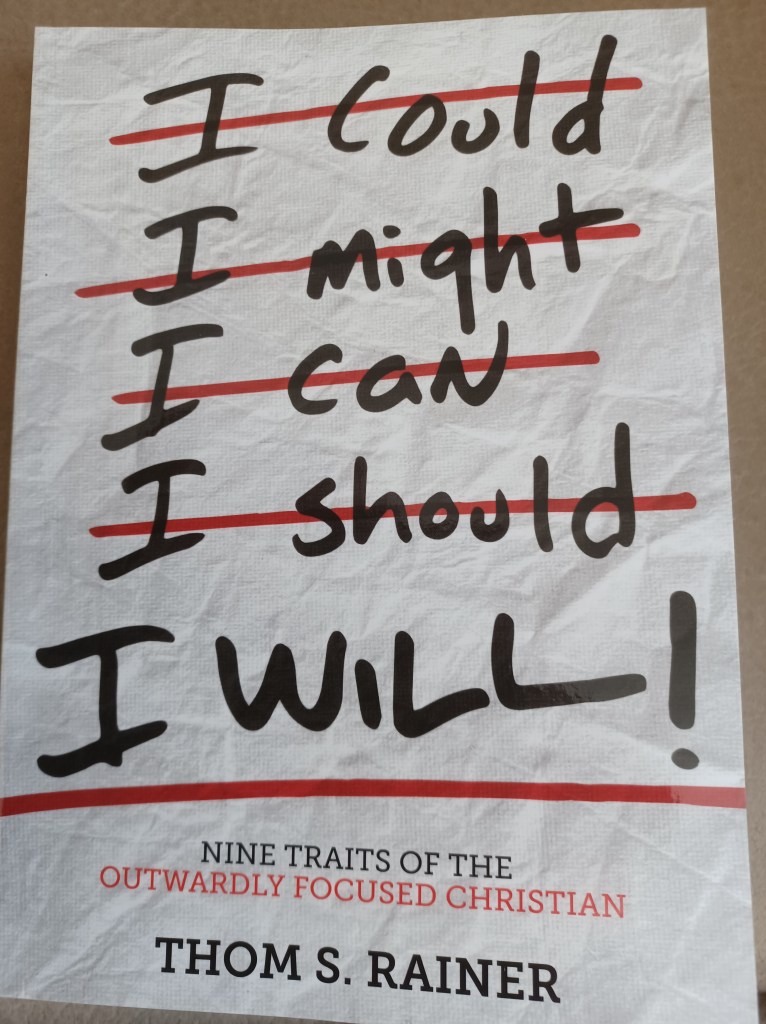
I WILL: Nine Traits Of The Outwardly Focused Christian – by Thom S. Rainer

Thom Rainer has written a great little book addressing many of the issues regarding a Christian and their relationship with their church. Each chapter addresses one aspect of a Christian and how to be outwardly focused as they are involved in their church. Chapters include topics like: I Will Serve, I Will Go, I Will Give Generously, and I Will Not Be A Church Dropout. This great little book with its short chapters would be great as curriculum for a new members class. He includes an “I Will” Commitment at the end of the book that new members could agree to.

Book Reviews: Andy’s 2022 Reading Experience

I will be sharing a brief review of every book I read this year. Hope you enjoy and hope it encourages you to keep reading.


SPIRITUAL AUTHORITY – by Dr. Rob Reimer

Rob Reimer has written a few books on experiencing a deeper relationship with God and seeing His power at work. He describes how God wants to partner with us in releasing the Kingdom, in helping people find freedom, especially freedom from the forces of evil. He gives some direction on how to handle different situations as you work to set people free. One of his key phrases is this: Spiritual authority is rooted in identity, expanded in intimacy, and activated by faith. He emphasizes that we can do nothing without an intimate relationship with the Father and filling of the Holy Spirit. It is only then that we can experience the power that Jesus displayed. This book encourages a deeper relationship with God and an encouragement to help others find freedom.

Know Your Yes, Know Your No

You do not have to say “yes” to every opportunity to serve that comes your way.

When we are young, and just starting out in life, the opportunities are endless. You could go in almost any direction for a career. As you get older and get more experience you learn that there are certain things that you are good at and certain things you are not as good at. There are certain roles you take on that you love and others where you struggle to survive the day.

As we get older, and hopefully a little more experienced, we begin to narrow down the real and meaningful opportunities for us. We are not quick to jump in to jobs that will require us doing things we hate. We choose to do what we enjoy if at all possible. We prefer doing what we enjoy, and over time get a clear sense of what those things are.

Beyond that, I believe that God has certain roles for us to fulfill. He has given us gifts and abilities, and led us through circumstances that prepare us for what is next. We can ask him to clarify for us what he wants us to do with our life, and he will. I believe that God has a role for everyone, if we will only ask him to help us discover that.

Through a number of different circumstance God has brought me to the place where I believe he wants me to focus on helping churches and leaders achieve their God-given dreams. I have been a pastor for about 30 years, and generally loved the role. I had the opportunity, with a few others, to start up and establish the Rural Church Pastors Network. I loved the opportunity to equip and encourage fellow pastors. I enjoy writing and sharing my thoughts with others. And God, through these experiences and some clear signs from him, called me to this role of helping leaders and churches.

God has called me to help churches and leaders discover their God-given dreams. I was recently offered a position that looked interesting. I knew I could do what was required, I might even enjoy the role, but I couldn’t say yes. As I prayed about it, God reminded me that he had called me to this role of helping leaders and churches. This new opportunity was not part of that. Saying “no” to something that I might enjoy was not easy, but I knew what God called me to do.

Knowing your “yes” helps you know your “no”. When you have a clear understanding of what God has called you to do, you can clearly say no to that which is not part of the plan. I know it is hard to say no to people. We want people to like us and so we try to please them. Knowing our specific calling from God helps us have an easier time making decisions about what we choose to agree to and what opportunities we decline. Then we can say no with a clear conscience when we know what fits in God’s plan for us and what does not.

Sometimes we are overwhelmed with all that is on our plate. I wonder how often that is a result of us not clearly understanding what we are called to do so we do everything that comes our way. We say yes to every good thing when maybe God would like us to focus in on a specific opportunity. We tell ourselves that we can’t get out of these responsibilities when maybe we just need to say no. Sometimes we get frustrated with people and all they demand of us, but the problem may be us. We haven’t set clear boundaries on what we should or should not do, what fits into the scope of who we are and what does not.

Clarifying who we are and what God is calling us to may be harder to determine when we are young and have not had time to try new things or experience various roles and opportunities. As we get involved in different jobs and serve in a variety of places, we can narrow down who we are and what we are called to do.

This allows us to  figure out how God has gifted us and what talents we have. But clarifying who we are and what we become involved in does not just depend on age and experience. I believe we need to have time with God asking him to clarify what he wants us to do with our lives. God may speak to you through your reading of scripture. He may speak to you in your prayer time. He may speak to unique ways such as dreams or visions. What I do know is this: if we ask God, he will answer. Ask him to clarify his calling on your life and then you will be able.

I hope you can clarify your “yes” so you can also know your “no.” May God show you your unique place in this world.

Keep looking up

Andy

Lower Your Expectations For Christmas

Lynnette and I were married in October 1990. I have done many weddings as a pastor, and attended many as a friend or family member. And yet, I haven’t heard of a wedding that met all the expectations that the bride had for the special day. At our wedding, we had a miscommunication with some family members and my little sister wasn’t able to perform a specific role we had planned for her. We even started the wedding before Lynnette got to the church. I thought meant she was there and ready to go. She did get there in time to walk in at the right time. With all the months of planning things still go wrong.

Christmas is a magical time in many of our minds. We have expectations of how we think it should go. We hope our kids will be home for Christmas, or that Grandma and Grandpa will come join us. We have a certain gift we have been hinting toward for six months, and we don’t get it. We want a perfect dinner and somehow the turkey isn’t quite done in time.

Everyone needs to have goals and plans and dreams. They give us hope. But we have to realize that they don’t always work out. When it comes to Christmas, we might do well to lower our expectations a little this year.

Family Expectations

Some of us have expectations that others do not even know about. I remember a seminar years ago that clearly taught that we cannot set goals for other people. This really impacted me. Some of our frustrations and even anger at people is that we have set certain expectations and never told them. We just expect them to know that “we will be opening presents on Christmas Eve, no matter who of the family is there or not.” Lower your expectations – especially the ones no one even knows you have.

We might do well to lower our expectations of what gifts we will receive. Even if you hinted to your mom for six months, she may not have understood. Or maybe the person wanted to get you that gift, but they couldn’t find it or they thought they found a much better one instead. Enjoy the gifts you do receive, and enjoy the time you have with those who gave it.

Lower your expectations about how your family Christmas will go. Again, I’m not suggesting you plan on it being a wreck, but plan on being okay if things don’t happen exactly as you wish. Be prepared that not everything will go as you hope. If one of your children and their family can’t show up till Boxing Day, don’t be mad at them but just enjoy the time you have when they do arrive.

Expectations Around Grief

Many of us forget that there are families who are grieving at Christmas time. This may be the first Christmas without that one special person. Roles in family traditions will need to change and there may be an empty place at the dinner table.

If you are suffering loss and facing this Christmas in grief, I hope you have a really good and encouraging Christmas. The reality is that you may have expectations that will not be met. There will be people, even friends, who are so consumed with their own families they forget about you and your pain. You may wish that you had some people around to share their comfort, and the realities are that unless you reach out, that comfort may not be there. What could you do? Why not reach out? Friends and family are so focused on their own activities that it may feel as though they are ignoring your experience this year. Reach out. Invite someone for tea on Christmas Eve, or take them some cookies on Christmas afternoon. Do something to connect with people, and you might be amazed at how a simple act like this reminds them of your grief and motivates them to pour out some love on you.

If you are having family events and are missing that one person, take time to grieve as a family. Share some stories and memories of this family member. Don’t ignore the loss. And don’t expect that everything will go so well you won’t remember the pain.

When the pain comes, acknowledge it, share it with someone near you, and then move on.

If you are one experiencing loss this Christmas, please don’t expect things from others and be disappointed. Look for ways to connect. On the other hand, if you know of someone experiencing loss, reach out to them and encourage them.

Pastors

I have heard of pastors who do not like Christmas: “I don’t have anything new to say after 15 years of preaching the Christmas story,” “I am not creative enough to make it exciting for people.” Yes, the Christmas story is the same story it has been for two thousand years. Yes, people know the story. I’m wondering if pastors may do well to lower their expectations a little.

Do not expect that you will be able to preach something new to your congregation. Instead, walk through the story again. Maybe you can think of the new believers in your congregation who have only recently come to know the story. Maybe you can think of the eight and nine-ear-olds who have only experienced a few Christmases they remember. Think of the incredible story again, and just faithfully walk through the story in your service. For some it will be the thirtieth or fortieth time, but for some in the congregation it may actually be the first time they hear it.

Instead of comparing your sermons and services to other churches that have live animals, choirs, and symphonies, do the best with what you have. Prepare people ahead of time, and practice whatever you do have for your Christmas service. Allow the traditions and the story to speak. And do the best you can.

Lower Your Expectations

Last year was, of course, a COVID Christmas. With all the concerns and the regulations imposed on us, our family was unable to have Christmas in our home with both our daughters present. While that is what we would have usually expected, I had to let go of those expectations, and we tried something else. We were able to meet up as a family, and exchange gifts and spend a little time together, even though it was at a different venue. Lowering expectations may allow for some creative options instead.

I hope you have a great and wonderful Christmas. We all have expectations, but unfortunately they will not all be achieved. Lower your expectations and make them more realistic. Don’t let the hype and the commercialism make you think it has to be the most wonderful time of the year when it may not be.

Have your hopes. Make your plans, but be willing to be okay if they are not completely fulfilled. You will be happier in the end.

Keep looking up

Andy

Ask People to Give

Reaching people for Jesus costs money. Running a church with all its ministries costs money.

The truth is, your church needs money. Bills come in regularly for the electricity, gas, insurance, and on and on. Salaries must be paid. And vision needs to be funded.

Conversations about money make some people squirm. Especially if it is about their money.

As a pastor, you can talk about money in a number of different ways, some better than others. For example, you can hammer them with Old Testament scriptures and tell them they have to give, or you can tell them they need to pay for their ability to enjoy the services, like a user-fee.

MONEY AND DISCIPLESHIP

Or, instead, you can invite them to listen to God, and give as He directs. I like the idea of talking with the congregation about their discipleship and how being a follower of Jesus means allowing him access to all areas of my life, including my money. If we don’t give him control, money can become the root of all kinds of evil. Like anything else we don’t hand over to Jesus, it can become our god.

There are many great studies and programs that churches can use to help teach their congregation how to handle money as God would want them to, and help the congregation see how budgeting can help them handle their money with purpose. Tithing is an act of budgeting, even for those who do not have an actual budget. The effort of deliberately figuring out 10% is the beginning of budgeting.

You can teach them how even a little savings each month can add up over time for when they need to make a bigger purchase without borrowing. Borrowing money, using debt of any kind, always means the costs is actually higher. Saving ahead of time means you may not have to borrow, or not as much, when that big need comes along. My wife has been slowly putting money into a separate account over the last number of years. Her money, along with a tax refund I had, enabled us to recently have enough money for a down payment on a house. We can finally own a home again because of the savings she did!

MONEY AND VISION

I like tying any conversation about money, with vision. Clearly, to do this, you need to have a vision to point to. If you have a vision for your church that you and your leadership have prayerfully worked through, then you believe this is what God wants your church to pursue. Explain to your congregation how their funding of that vision will help make the vision a reality.

If your church’s vision includes winning youth to Christ, you might point to how their giving helps pay the Youth Pastor. If your church’s vision includes providing space for local 12-step programs, show how their giving helps provide a space for the community to meet. And just maybe, when those who attend the community programming are looking for a church, they will check out yours. You could even highlight a certain aspect of the church budget once a month and show how it enables your church’s vision to be accomplished.

And you could point to how sacrifice is an important part of the Christian life. Maybe your congregation needs a challenge, and maybe a bit of sacrifice, in order to accomplish great things for God in your community!

MONEY CONVERSATIONS

Be creative in how you talk to your congregation about money and their giving.

  • I have used some video clips that were very well done and got the point across without me needing to say anything.
  • Include a verse about money and giving with other onscreen announcements.
  • Say a few pertinent words just before the offering is taken.
  • Ask some people who are willing to share a short testimony about how God has guided them in their giving.
  • And of course, don’t hesitate to preach a sermon, or even a series, on finances.
  • And feel free to share about how you handle your own money.

It is important to highlight money and giving as part of discipling your congregation. You could schedule different creative methods to be used on a yearly calendar. Make talking about money a priority. Don’t be afraid to do it.

And keep looking up,

Andy

*If you are wondering how well your church is doing in light of its giving, and would like an outside voice, I can work through a Financial Audit with your church.

The Incredible Value of Checklists!

During one of our breaks from pastoral ministry, I learned to drive a school bus. It was definitely an interesting experience. When I was about to complete the season, another driver commented that I had lasted very well on the worst run in the city. I picked up inner city kids and took them to school. Most of them came from difficult situations, but I tried to find ways of connecting with them and encouraging them.

As I was taking my training for my Class 2 license, which you need to drive a bus, the instructor walked me through a detailed list of what to check each morning to ensure the bus was safe to drive. This is not unique to driving busses; truckers have a similar pre-trip check to do. Usually this is done with a memorized checklist, but when I was later driving bus for a different company, they had a specific checklist I had to go through and sign each morning.

Checklists help you to make sure you remember to check all the important things. This applies to many places in life.

Photo by Suzy Hazelwood on Pexels.com

I go through a mental checklist most evenings before I head to bed:

  • Is my lunch prepared?
  • Have I laid out my clothes for the next work day?
  • Did I brush my teeth?
  • Did I remember to take my medications?
  • Did I set my alarm?
  • Did I plug in my phone?

The list helps me to remember what I want to remember.

Checklists can help you to train new volunteers at church. Checklists are doubly useful in training, both for the trainer and the new volunteer.  A checklist ensures the trainer knows exactly what training needs to take place. The checklist will remind them of what paperwork needs to be filled out, or what activities need to be practiced. The new volunteer can also be provided with a checklist to remind them what needs to be done.

Let’s pretend you are training a new worship leader. You can have them work alongside a current worship leader like an apprentice for a few weeks. The leader can make sure they are following the current checklist, a copy of which is then provided to the new volunteer. The checklist could look something like this:

  • Get the theme and scripture from the speaker for that Sunday.
  • Choose 5 songs that fit into that theme.
  • Sort/find the music for all musicians that will be leading worship with you.
  • Send the music titles (and music sheets) to all the worship staff and volunteers on your team.
  • Practice the music yourself.
  • Arrange practice time and practice with team during the week.
  • Arrange for all the team to come early on Sunday to do Sound checks
  • Etc.

Create lists according to the tasks that need to be done in each role, and encourage new volunteers to add to the list as they notice things that may have been missed.

I use a checklist like this in creating my sermons. I have a fairly long list that has certain comments and questions that help me think through my sermon from every aspect I think is important. Here are just a few things on my sermon checklist:

  • Who is the original audience?
  • How will this appeal to the 12-year-old boy in the pew?
  • What practical application steps can I suggest?
  • What are questions this scripture answers?

This list reminds me of what I have found to be important in the creating of a sermon. Some of them remind me of certain steps in my research. Other items remind me how to develop a good application at the end of the sermon. This is a list I have slowly compiled over the years, adding or adapting items as I discovered more steps I wanted to remember to use.

Checklists need to be open to adjustment. Sometimes a good book will encourage you to add another step. Over time some steps may be eliminated if they become irrelevant.

Checklists are a great tool to become better at what you do, to develop consistency, and to train new volunteers.

I’d love to hear about how checklists have helped you.

Keep looking up!

Andy

Welcome to Elevate

Welcome to Elevate. My name is Andy Wiebe. I was a pastor for 25 years, and I loved it. Sure, there were some hard, quite difficult, days, but I loved what I did.

God has now redirected me to serve, not one church at a time, but to serve pastors, churches, and Christian leaders. I want to “help you achieve your God-given dreams.” I can coach you as you work through decisions. I can bring my expertise and tools to help you as a pastor or as a church become what you believe God wants you to be.

I believe God has a dream for each of us.

To be clear, there are some specific directions God gives all of us. We have the Great Commandments, of Matthew 26 – 30: Love God and love others. We have the Great Commission of Matthew 28: 19 – 20: Make disciples of all nations.

I believe that each one has a more specific task God has given us. For some of us, it may just be that we have a passion or burden for something to the point that we can’t help but do something about it. For some of us we have prayed for direction and it has been clear that God is directing us in a certain direction. Each of us have certain skills and abilities, experiences and training, that guide us toward certain places of contribution in this world.

I believe this if for individuals as well as a for a church. I believe that a church can ask God to help her discover it’s place in this world. To hear from God as to what he wants of that church. This will usually tie in to the local community around the church.

God has placed us, as well as churches, in certain neighborhoods. We may not have been part of the decision to plant or move that congregation to that location, but it was no accident that it ended up in that community. God has that church in that community to reach that community with the gospel.

At Elevate Coaching & Consulting, I want to help pastors and Christian leaders be all that God wants them to be. And I want to help churches also be all that God is asking them to be.

I hope to be an encouragement to pastors, Christian leaders, and churches, helping them to achieve their God-given dreams.