Turning Vision Into Reality

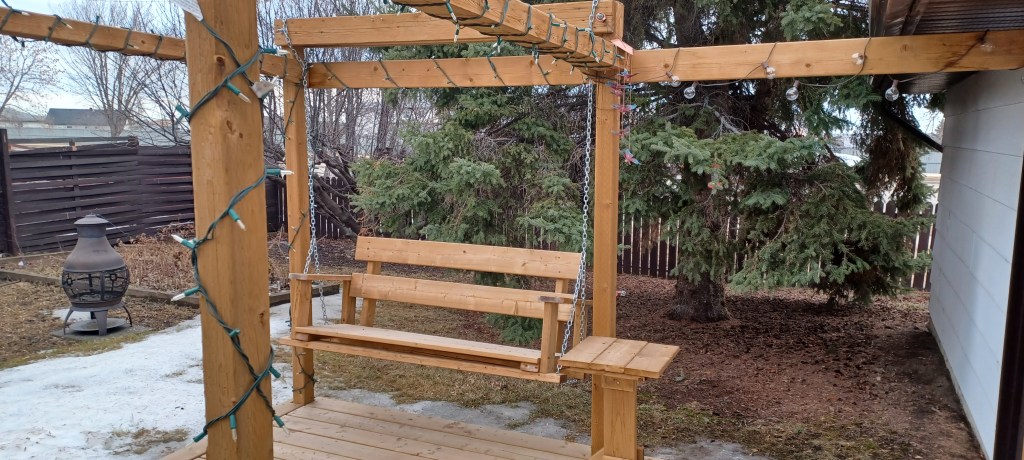
My wife and I enjoy spending time in our backyard. Two summers ago, I extended our deck. I had built a small deck, but it just couldn’t accommodate enough people. We began to dream about how we could extend it. My wife asked for a bench swing to be incorporated in it. A vision began to take shape in our minds of what could be, but vision alone accomplishes nothing. I had to develop a strategy that included practical steps, in the right order, to make the vision a reality. I had to determine how much lumber I needed, and how many of the different lengths and sizes. I had to figure out how many screws I needed. I would need chain to hang the swing. Once I had the materials delivered, I needed to work the steps, one at a time. Not being an experienced carpenter, there were a few times I had to sit and think, to evaluate if I was doing things in the right order. I didn’t want to put the decking on only to realize I had missed something underneath. There were also things I hadn’t planned for and learned along the way. I had to put in extra bracing in the frame to ensure the swing would not pull the deck apart when someone was swinging on it.

The end result is an enlarged deck with a bench swing – that actually works!
Many churches have realized the value of a vision. They work hard to develop a dream for their future. They pray, and they discuss, and create a vision of a future they can picture. But now what? While defining a vision can be difficult, it gets even harder as you move to developing a strategy to work towards that vision. This is where churches often fall short. They have a vision but don’t know how to actually achievve it. They lack a strategic plan.

When I work with a church to support their development of a strategic plan, I suggest the following steps and ask these questions along the way:

One: Pray

Pray first, pray during the planning, and pray as you move toward your goals. The church belongs to God so listen to him as you create and implement your strategy. Invite him to do his work in and through your efforts.

Two: Set clear Goals.

What goals can you work towards that will help you accomplish your vision? These goals act as checkpoints on the way to fully reaching your vision, to help make it less overwhelming.

Three: Create Action Steps

For each goal, determine the steps needed to accomplish that goal.

What smaller steps can be taken to move toward that goal? Can that larger goal be broken down into smaller manageable steps?

Are there certain steps that need to be accomplished before others?

Four: Assign Resources

This is primarily about people and finances.

Who needs to be assigned to this goal, or specific steps along the way?

Who needs to be in on decisions affecting these steps?

How much money is required for each step?

Will this be funded from a fund already in place or will fundraising be required?

Five: Establish a Timeline

What order do these steps need to be in? Determine a timeline, along with completion dates.

When will you start each step? When will you finish each step?

Six: Evaluate, Adjust, and Keep Going.

When it seems you are nearing the achievement of your goals, take time to evaluate to ensure you accomplished what you needed or if any readjustment or reworking of the strategy is needed.

If you want to see your vision becoming a reality, it is important to do the difficult work of creating a strategic plan and sticking to it. So, church leaders, I hope you have a vision for your church. Take the time to develop a strategy to help you move forward to achieving it.

Keep looking up,

Andy Wiebe

No Regrets.

The start of a new calendar year often causes people to evaluate their lives. This may include both looking back and looking forward. Some of us seem to spend more time looking in the mirror, while others focus only on what is in front of them. I generally focus on what’s ahead. I love planning and dreaming and preparing for what’s coming up.

The other day I overheard people talking about regrets they had. They felt they had missed out on opportunities in life because they were not willing to risk and try new things. We can look ahead with a “no regrets” mindset where we learn from the past and move on. We don’t need to look back and regret where we felt you missed out.

As I look around my office, filled with my Coke collection, I’m reminded of regrets the Coca-Cola Company had some years ago. They introduced “New Coke” on April 23, 1985, hoping to revitalize the brand and gain more market share of the beverage industry. It was a big flop! According to Brittanica, “original Coke was hoarded or sold at Prohibition-style prices. In addition, New Coke was dumped publicly into the sewers in Seattle. After 77 days the previous version of Coke was brought back as “Coca-Cola Classic” on July 11, 1985”. (https://www.britannica.com/topic/New-Coke) Hopefully you don’t have any regrets as notable as that, but it is possible that we do have some things we wish went differently for us in our past.

Regrets may come in many forms. Some are mistakes that were made. Some regrets have to do with roads not taken and opportunities missed out on. Some regrets have to do with fear of risk. While I’m not promoting revisioning history, I do think that we need to find ways of using regrets to our benefit, so they end up not being regrets in the end.

We can benefit from our experience, even if they seem like regrets at first. If your regret is a mistake that was made, learn from the mistake. Did you do something wrong on purpose? Was it a deliberate mistake? Then figure out why you did it and how you can learn from that for the next time you are in the same situation. Was it a mistake because you didn’t have the full story? Then determine to get more information, or more pertinent and accurate information the next time. Don’t live with regrets about mistakes in the past, just learn from them and move on. You cannot change what happened but you can change how you handle your future.

When considering missed opportunities, asking “what if” questions do not help us with reality. We don’t know how things would have turned out if we had taken a different direction. We can imagine, but we don’t really know. Hindsight is not always 20/20 because we don’t know what might have happened if we had stepped into a possible opportunity. If your regrets are about things that could have been different because of a missed opportunity, remember that you have no idea how it would have turned out. So don’t live with regrets for something you never did.

Another regret may be the way fear of risk kept you from stepping into roles and opportunities. If fear of risk is still predominant in your life, then learn to take small risks and learn that some risks have good benefits. Instead of letting fear keep you back, learn what you can, and then carefully move ahead, into the risk. When you have a relationship with God, you can ask him to help you know when to move ahead and when not to. If God wants you to move, then the risks is not as risky anyway.

As you look back over the last year, I hope you have no regrets. Learn from mistakes, grow in areas you feel you fell short in, and focus on what went well. Don’t focus on what could have been but learn what you can from what did happen. And then look ahead to the next year with anticipation and determination to do your best to keep growing and learning and contributing to the world in any way you can.

Don’t have regrets, just memories that help spur you on!

Keep looking up

Andy Wiebe

Looking Ahead With Clarity Series: Part 2: Where We Are

We are in the middle of a three part series about looking ahead with clarity. Part 1 was about recognizing where we have come from. I discussed the value of reflecting on how God had used us in the past and what God has been teaching us that may give us a sense of what is next for us. Today I want to suggest looking at the present reality, where we are, and then in part 3 move to where we are going.

When I use my Maps app on my phone, I type in where I want to go, ask for directions, and immediately am asked for “your location.” There is no way of knowing how to get somewhere if I don’t know where I am starting from. We want to look ahead with clarity, so we must be clear about our starting point. We need to ask, “Where am I?”

When I am considering my personal life and goals for this next year, I may evaluate things like my physical health or emotional well-being. If I want to be healthier, I need to be clear on what my reality is right now. If I want to lose twenty pounds, then I need to know how much I weigh right now so I can measure if I am moving toward my goal. A clear and accurate starting point is necessary for us to know if we are making progress toward our goals.

Alberta Einstein has been given credit for the following quote: If I had an hour to solve a problem I’d spend 55 minutes thinking about the problem and 5 minutes thinking about the solution.” While this may seem excessive, too often we want to jump to the solution too quickly. Dreaming about the future is much more appealing than trying to determine an accurate picture of our present reality. Yet, unless we are clear on where we are, we will have a hard time knowing where we are going. If we do not have a clear picture of where we are we will not know how to improve and set good growth goals.

So before you start setting goals, take the “55 minutes” needed to do an accurate reality check. If you want to be better at managing your time, first figure out how much time you allot to different activities in your day. If you want to lose weight, first determine how much you weigh and what the ideal weight for you is. If you are looking to keep growing in your skills, do an assessment of your skills and where you feel you are lacking. Take time for a reality check in the area you are looking to set goals in.

After the reality check, you can begin asking questions of yourself to determine where goals should be set. Here are some questions I’m asking as I look ahead:

  1. How can I improve my health?

Presently, I am overweight. I have less energy than I think I should have. I am eating more than I should. I need to work towards becoming healthier.

2. How can I keep on learning and growing?

Presently, I am reading regularly. I read quite a bit and listen to podcasts. How can I keep growing and developing in my role as a Transition Pastor? I do not want to stagnate as a person and as a pastor.

3. How can I keep growing in my relationship with Jesus?

Presently, I read the Bible just about every morning. I take time to talk with Jesus. Is there something I should change up or add into my life that would help me move closer to Jesus? What format should I use to read through the Bible again this year? My prayer life is better than it has been, but it could still use some improvement. How can I address that?

4. How am I doing financially?

Presently, I have some debt that needs to be cleaned up. I do not like carrying debt other than my mortgage. I spend money quite freely, maybe too freely? I tithe regularly, but should I be more generous this year?

What questions do you need to ask yourself to take an honest look at your reality? You may use some of the questions I ask myself, but I’m sure there are others that are your own questions you are facing. Set aside some time to get your reality clear so that you can set goals with clarity as well.

I’d love to hear how you go about setting goals for yourself. Leave me a comment.

Keep looking up,

Andy Wiebe