I will be sharing a brief review of every book I read this year. Hope you enjoy and hope it encourages you to keep reading.
MASTER LEADERS – by George Barna
If you want some leadership tips from a number of leaders in one book, this is it. Barna has interviewed thirty leaders and summarized their responses into sixteen keys to success. The leaders are from various backgrounds: Politics, business, sports, etc. The leaders share from their own experiences, including good examples of how they followed through or fell short of the leadership tips they are sharing. This is an excellent book for anyone wanting a good primer on leadership.
Sometimes our dreams are dashed in front of us. We had all kinds of dreams, were convinced that we were doing exactly what God wanted in the place he wanted us, and life is not going as we had planned.
All of us face disappointment. All of us will have times of discouragement. But sometimes the load seems too much. We consider giving up and moving on to something else. We feel that those close to us don’t understand how big the load is that we carry. We feel very alone. We may feel God has given up on us.
I’m reminded of the story of Joseph in the Bible, which begins in Genesis 37 and goes on for a few chapters. Joseph had eleven brothers. They hated him because they saw that he was Daddy’s favorite. Joseph had a few dreams that made it look like the rest of the family, all the brothers and their Dad, would bow down before Joseph. Sharing those dreams didn’t help his brother’s hatred. A few of them arranged it to look as if wild animals killed him, and then sold him to some slave traders. Those slave traders brought Joseph to Egypt and sold him to one of the Pharoah’s top officials.
That would be a terrible experience for anyone. No one would be shocked if Joseph became angry. Instead of being a rebellious and belligerent young slave, Joseph served his master well. In fact, his effort was rewarded by the master making him his attendant in charge of the whole household. Jospeh overcomes being sold as a slave and manages to do good for his master. What an amazing example of overcoming disappointment. Instead of letting the disappointment of the situation he finds himself in, causing him to dwell on his own terrible misfortune, Joseph rises above that to continue to do his best as a person – and as a slave.
Then his master’s wife tries to seduce him, but he runs away in order not to sin in this way. The master believes his wife when she accuses Joseph, and he sends Joseph to prison. A second wave of disappointment must have hit Joseph. No one would have been surprised if he was angry at God or became a hardened criminal in prison. Instead, he overcomes that disappointment by doing good in prison. Like when he arrived at the official’s house, his abilities and attitude are soon recognized, and he is placed in charge over all the prisoners. Yes, God is with him, His blessing is evident, but Joseph overcomes what would have been a terribly disappointing situation and is rewarded. Again, instead of letting the situation push him into despair or anger at God, he continues to do his best in the situation he finds himself in.
After some time, Joseph becomes aware through a dream, that one of his fellow prisoners will be soon released and return to his position as Pharaoh’s cupbearer. Joseph asks the cupbearer to please remember him when he returns to Pharaoh’s palace. Joseph begs him to speak up on his behalf and get him out of prison. The cupbearer gets his position back but forgets about poor Joseph back in prison. As time goes on Joseph realizes the cupbearer didn’t speak up and he remains in prison, experiencing yet another disappointment.
Two years later Pharoah has a dream. Finally the cupbearer remembers Joseph, and how he was able to interpret dreams for him. He recommends that Pharoah speak with Joseph, and Joseph is brought in to explain Pharoah’s dream. When Joseph favourably explains the dream, Pharaoh ends up making Joseph his second in command!
Joseph survived a few waves of disappointment – terrible things to endure. He made it through and God placed him over all of Egypt, second only to Pharaoh.
Some time later, when famine hits the homeland, Joseph’s brothers came to Egypt looking for food. Since Joseph is in charge of the grain, they bow down before him – just like the dreams Joseph had as a youngster! And then Joseph makes an incredible statement in Genesis 50: 20: “You intended to harm me, but God intended it for good to accomplish what is now being done, the saving of many lives.”
Not only did Joseph survive all the terrible disappointments, he saw that God used what others did to him as a means to accomplish great good!
Some lessons to help us survive disappointments:
1. Trust that God is the same God in both moments of triumph and moments of despair. Joseph never blamed God for what was happening. He even ended up saying God was in all of the things he suffered.
2. Be faithful where you are, no matter how disappointing. Joseph did his best in every situation he found himself in. And God blessed him and rewarded him. Whether the disappointments result in goals left unreached or a position terminated when you still had dreams to pursue, be faithful to God wherever you find yourself next.
Be the person God wants you to be no matter what the circumstances are around you.
3. Find your sense of well-being in your relationship with God rather than in your circumstances. Whether Joseph was head slave in an important official’s house or a lowly prisoner, he did everything to the best of his abilities.
4. Trust that God will look after the future. Serve God faithfully right now, wherever you are, trusting that God knows all the next steps and future twists and turns, and that you are safe in His hands.
Disappointments will come. Sometimes they are small, often they are big. We can survive them if we continue to trust God and know we are safe with Him.
When your dreams are dashed and life is not meeting your expectations, continue to hold onto God in the middle of the frustration and pain.
I will be sharing a brief review of every book I read this year. Hope you enjoy and hope it encourages you to keep reading.
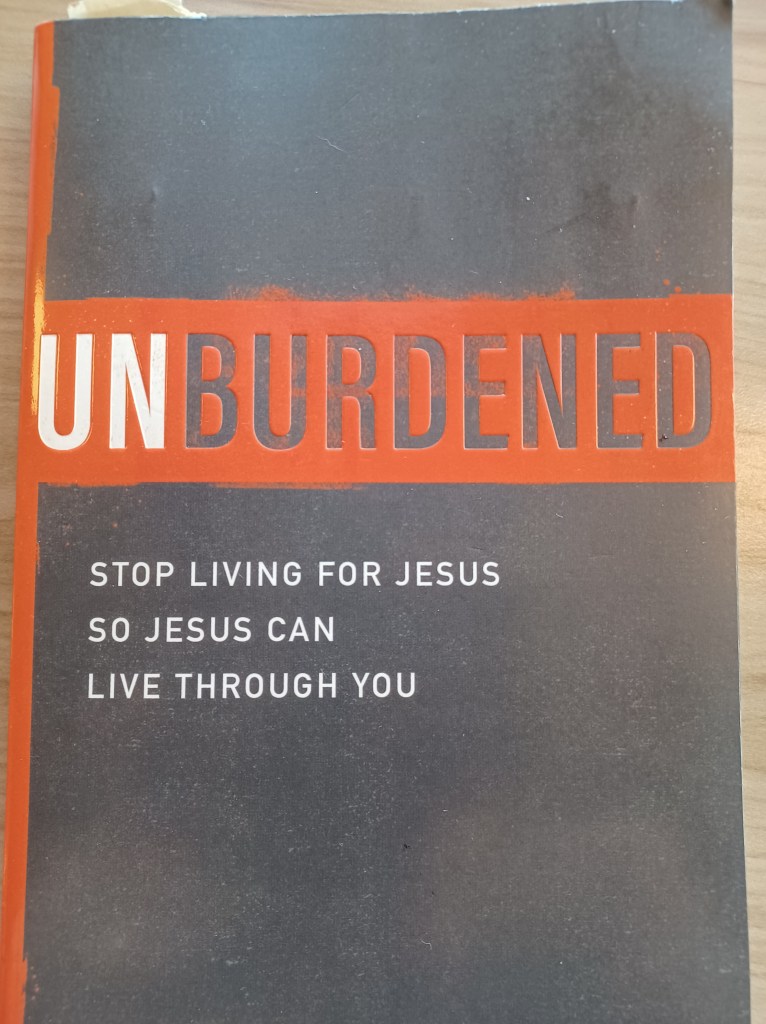
UNBURDENED – by Vance Pitman
This is among the TOP 3 books of the year so far! I know that I often describe the book I am reviewing as good, this one is great. Unburdened: Stop Living for Jesus so Jesus Can Live Through You is a much needed book for today’s Christian. We get so caught up in “doing what I need to do” to be a good Christian, that we slip into religion and loose the relationship with Jesus. Vance Pitman states in the Introduction: “The Christian life is not me living for Jesus but Jesus living His life in and through me.” Instead of having a list of do’s and don’ts to become a better Christian, work at building your relationship with Jesus. The more time you spend with Him, in tune with Him, listening to Him, and obeying Him, the more like Jesus you will become. Pitman describes our purpose as a Christian: God brought you to Himself so out of the outflow of your intimate relationship with Him – which is Christ in you, working through you – you could share in His mission locally and globally in fellowship with others.” The key in all of that is to pursue an intimate relationship with Jesus and the rest will flow out of you naturally. A great book that you will be challenged and encouraged by as a Christian.
Integrity is a characteristic that makes most lists describing good leaders. As you read the list of definitions of integrity below, evaluate yourself as to how you match up. If you want to become a better leader, with integrity, choose one to work on.
You are a person of integrity if:
You are the same person in every circumstance. While we may act differently when with friends or family or coworkers, we should display the same integrity in every case, no matter who you are talking to, or what context you are in, or how much you have had to drink or how tired you are. Consistency.
You are quick to acknowledge mistakes your mistakes, such as failed communication or broken promises.
You are who you say you are. Your actions match your words.
You are honest. Never surrendering to the draw of the white lie. Truth is a high value for you.
You are a person of few excuses. You never use “sorry” as an excuse or to get out of something. If you say “sorry”, you also look at how to correct the situation.
You are never satisfied with producing low quality work. You always do your best.
You make the tough calls. You know when to shut down a useless endeavor, when to address concerns of team members, and when to challenge someone to do better. You do not allow problems to simmer.
You do not throw others under the bus to save yourself. You take personal responsibility.
You are trustworthy. If you promote a new event or project, people trust that you will do the work necessary to make it the best it can be.
You want to be understood, not just heard. You learn how to communicate well.
You are quick to give credit where credit is due. You never claim credit for another’s ideas or work.
You respect people, whether a boss or employee, whether a team member or a client.
You are persistent, and follow through, not giving up easily. You look for ways to makes something work, rather than an excuse to give up.
You are ethical. You are more concerned about doing the right things than just doing things right. You do the right things even when no one is looking.
You have a high regard for the standards of your profession, calling, and position.
I hope you measure up to these 15 values, if not, you might choose one or two to start working on right now. Leaders, let’s be people of integrity.
Our Bible begins with the Creator at work, creating our world. When He makes people, they are created in the “image” of God, as creators themselves. While different animals are incredibly industrious and clever, humans are set apart from the animal world by our ability to think through problems and find new solutions and create new things.
Merriam-Webster online defines “create” like this:
To bring into existence
To invest with a new form, office, or rank
To produce or bring about by a course of action or behavior
To produce through imaginative skill
Create with a twist on what already exists
God brings into existence something out of nothing. We, as humans, have to use what is already available to create something new or different. Even the creativity of thought or speech builds on the thoughts and words of others.
Creativity uses and builds on what others have created. Of course, we need to acknowledge other’s works and do not want to claim something as ours when it isn’t, but we usually create out of what already exists.
As a church, too often, we buy curriculum and programs that others have found to be useful. We run programs and events that have been effective elsewhere. These can be great options for times when we do not need to “re-invent the wheel” and use materials that others have invested in developing.
Even when we purchase a complete program, we often realize there are aspects that don’t quite fit. In order for the program to work well in our own situation, we need to implement frequent evaluations of our programs and events, and be open and flexible to make changes. These changes require a sense of creativity to consider what we could take out and add to improve the pre-made materials for our situation. We may also find that there are times when we are better off creating our own completely new program that more appropriately contributes to our ministry as a church. Just because a club program works well in large urban centers in the United States does not mean it will transfer to rural northern Alberta. While the teaching may still transfer, the application part may have to be adapted to connect with rural northern kids.
Stretch yourself to think creatively
We need to learn how to be creative. Many of us had all our creativity schooled out of us. We were forced to colour within the lines for too long. We no longer know how to think outside of what already exists. We need to stretch our creative muscles and limber them up so that we can think of things that do not exist yet, building something new on something old. This could be through reading and listening on a variety of subjects. It could be dreaming and brainstorming as a team. It could be learning how to take aspects from many different places to put together something that is new and different, and perfect for what we are hoping to accomplish.
Being creative is not an individual task. Instead, seek creative input from people in your community. Talk to people in different fields to learn how their knowledge and experience could be adapted to work in the church. For example, what might we learn from someone’s expertise in trees about how to structure small groups? Or how might talking to an electrician spark ideas for discipleship?
Areas for creativity in the church
As we focus in on church ministry, creativity can add some new life in almost every area!
The Worship Service – Our worship services have not changed much in decades. We may sing less hymns and more worship songs and we may use versions of the Bible with up-to-date language, but the service as a whole still consists of singing, prayer, scripture reading, and preaching much as it did years ago. Even if we don’t get creative with the outline and contents of the service, we could benefit from creative ways of doing these essential pieces of our worship traditions.
What if we celebrated communion with different stations spread around the room where we could physically enter into confession, repentance, and celebrating the forgiveness Christ offers? We could write sins on paper and run them through a shredder or nail them to a cross.
What if we built on the message of the sermon by inviting people to discuss the application of the lesson and promise to hold each other accountable to follow through on our commitments? Not only would this invite more participation in the service, but encourage engagement with one another throughout the week.
Discipleship – This has been one of the most talked about topic in my church circles over the last decade or two. How do we best disciple others? How do we grow as disciples of Jesus ourselves? Often the process is built on information. We teach people scriptural truths and encourage them to memorize verses. Could we borrow ideas from the trades where people progress through stages of practical learning along with class time? Maybe we could apprentice new believers through stages of learning and development. What if we “walked” through life together? An apprentice disciple could be in touch with their mentor throughout the day, perhaps checking in at certain times, and being available for advice and prayer? We need to creatively find ways of doing this better.
Children’s Ministry – Every church has some type of ministry for their children, and often they are very similar. Could we be creative in how we help our children get to know Jesus and grow in their faith in Him? Yes, use all kinds of media, and creatively insert “old-school” ideas that we enjoyed as children that our youngsters have never experienced. Sometimes creativity may mean re-creating something old with a new twist. You could use puppets, play a video, or have them record their own video on a topic. Find ways to engage them physically through games or dance or hands on interactive learnings stations.
Creativity is the means, not the end goal.
While our desire is to be creative, that is not our goal! While it may be nice to be known as a creative church, the creativity is only meant to help us reach our other goals and to engage more people in the process. As a church, God has called us to reach and teach people; to come to faith in Jesus and to grow as a disciple. Creativity can help us get people’s attention and keep them interested. Creativity can be the container that carries our goals forward. The colour and shape and size of the container helps draw attention. Who wants to watch black and white movies when you can watch them in High Definition colour?
Let’s learn to stretch our creative muscles prayerfully and creatively to be the best church offering the best programs you can!
Somewhere, many followers of Jesus have gotten the unfortunate idea that when we sin we push God away from us. In this way of thinking, because God is holy and cannot stand sin, God will not be anywhere near our sin – much less near us, the sinner.
Don’t lose sight of God while desiring to be right with God.
This thought causes us to develop a perspective of “working really hard not to sin.” That is a tiring and fruitless endeavor. We become people of the law, people of rules.
We memorize the “thou shalt not’s” and make up others. We say we want to get closer to God and yet our focus is intently on our sin. We work so hard to prevent sin that we forget why we try to avoid sin in the first place. We lose sight of God by the very effort we hoped would make us right with God.
If we find ourselves viewing life from this perspective, that’s a sign that it is time to reorient our thinking. We need to realize that God is not repelled by our sin. In fact, he came to face it head on.
When we were utterly helpless, Christ came at just the right time and died for us sinners. 7 Now, most people would not be willing to die for an upright person, though someone might perhaps be willing to die for a person who is especially good. 8 But God showed his great love for us by sending Christ to die for us while we were still sinners. 9 And since we have been made right in God’s sight by the blood of Christ, he will certainly save us from God’s condemnation. 10 For since our friendship with God was restored by the death of his Son while we were still his enemies, we will certainly be saved through the life of his Son. 11 So now we can rejoice in our wonderful new relationship with God because our Lord Jesus Christ has made us friends of God.
-Romans 5: 6-11 (NLT)
Jesus came to this earth to die for our sins. He willingly took all our sin on himself so that he could pay the death penalty for it for us. God arranged this in order for us to become right with him.
In his book, Aloof: Figuring out life with a God who hides, Tony Kriz adds, “We do not experience God by avoiding sin, we overcome sin by pressing into God.” We need to pay less attention to how much sin we have committed and pay more attention to the one who loves us and sent his Son to die for us, even while we were full of sin. Instead of focusing on what not to do, we need to focus on what to do to grow in relationship with God.
Trade information for relation
We need to shift our focus onto God. Press in to a relationship with Him in any and every way we can and get to know him. Bible reading is one way to get to know God. It’s important that we don’t just learn information but grow in relationship with him. Let’s listen and watch for how scripture reveals God’s heart for us. Allow scripture to be our conversation together.
As we focus on God and our relationship with him, we can read biographies and learn from Christian leaders of the past who have pursued God and how they experienced a relationship with Him.
We can read about Corrie Ten Boom forgiving her German captors. We can read of George Mueller and his complete faith in God’s provision for his hungry orphans. We can learn from those who had a relationship with God that allowed them to live boldly and confidently in the grace of God.
Trade monolog for dialogue
Rather than focusing on our sin and what we are not doing, we can shift our focus to God and what he has to say to us through regular conversations with Him. I learned how to talk to God from an early age. It started with a few memorized prayers for bedtime or before meals and graduated to imitating adults. Over time I learned how to express my needs to God with my own words, even pouring out my heart to God. But unfortunately, I was not taught how to have a conversation with God. To pursue God instead of living a life focused on “not sinning,” I need to be able to talk with him as a friend. Romans 5, above, says that through Christ we become friends of God. Friends have conversations. I needed to learn how to listen to God so that my monolog turned into a dialogue.
This does not mean I have quit sinning, but that I have quit dwelling on my sin and go quickly and regularly back to God and pursue Him. As I recognize sin – as God points it out – I confess my sin and renew my focus on God.
I encourage you to “press in” to God, dig deeper into a relationship with Him through faith in Jesus Christ, and as you focus more on Him you will be less inclined to be drawn into sin. Jesus sent us the Holy Spirit to both remind us of what He taught and to remind us of our sin. Allow the Holy Spirit to guide you as you deepen your relationship with God.
I will be sharing a brief review of every book I read this year. Hope you enjoy and hope it encourages you to keep reading.
ALOOF: Figuring Out Life With A God Who Hides – by Tony Kriz
If you are looking for an easy read that packs a punch, this is for you! Tony Kriz walks through his life experience of pursuing a relationship with a God who is often in the shadows. He shares some great stories where God did something miraculous but also makes it clear that these are few and far in between. He does a great job of showing how God is continually there, even when we do not see Him or feel near to Him. Tony is very honest about his personally journey while asking great questions that make the reader think. And there is nothing wrong with thinking deeply about God! A great book for anyone who wants to go deeper with God!
Last week I was preparing for Sunday’s service at church. We wanted to include communion as part of the service. I have only been at this church for a few weeks now, and I assumed things.
I assumed that their traditions around the celebration of communion would be similar to my experience. Here are my assumptions. I assumed that I could insert communion into the service where I felt it fit best. I was planning for a two-part sermon and decided communion would work really well as a practical expression of the first part. Next, I assumed that communion would be set up with cups of juice in trays and bread on plates. I assumed that would mean we needed a table at the front for the elements to sit until we were ready to move into the ceremony of communion. Then, I assumed that we would be serving everyone. That lead to a few more assumptions. I assumed we then needed to have 4 people prepared to pass the trays down the rows to cover the two sections of chairs we had set up, so I asked four of the elders if they could help serve. Along with the serving, I then assumed that since we were serving the bread and then the juice, we could use someone to play some music while everyone was being served, so I asked my wife to be prepared to play a few songs on the piano. Since I assumed we were serving everyone, I thought my sermon would be longer because we had to give time to serve everyone which would draw things out a bit.
My assumptions were not correct. First, in talking to my wife, she mentioned that she had seen a supply of cups and wafers that were one sealed unit. So then I assumed we will only be serving them once, so that shortens up the time a bit. Then, in conversation with one of the Elders, he mentioned that they had just been handing the elements to people as they entered the sanctuary.
So we will not be serving them at all, okay. They will already have the bread and juice with them for when they were needed. And that meant that we didn’t need anyone to actually serve the congregation.
Well, someone still had to hand them out as people came in for the service. Another assumption was that the piano could be used and I was informed it desperately needed tuning and was not ready to play. I had to tell my wife that her playing was not needed.
Assumptions.
We often make assumptions, especially when we are in a new situation. I am new to this church and had not bothered to ask anyone about how they practiced communion. I could have saved myself some trouble by just asking a few appropriate questions.
So, how can we deal with assumptions in new situations?
Realize we don’t know what we don’t know.
When we are in a new situation, we assume that we can approach it the same way we have approached similar situations in the past. We need to realize that every new situation requires new information for us to know how to proceed in a meaningful way.
Watch and listen
We can learn a lot in a new situation if we slow down and carefully observe what is going on. Before jumping into action, watch what others around you are doing, even how they are doing things. Listen to the conversation. What do they talk about? What can you learn from what they are saying that will help you know how to move ahead?
Ask questions
I am serving as a Transition Pastor. That means I go into a church for a period of a year or so before I move on to a new assignment. Every new church I serve is a new experience for me. Yes, I have years of experience being a pastor, but I have not been a pastor for this church at this time. Even in the last church I served, I had been a pastor there years ago, but people and practices had changed. I did not know how things were done now.
So, I ask a lot of questions. I want to know what their traditions are and how they would like to see things done. I try to figure out who they are talking about when they mention a name.
I try to get a sense of the inter-personal dynamics in the relationships of the people I am working with. I want to know the history so I can get a true sense of the present.
Admit you are a newbie
It’s okay to remind people that you are new here, acknowledge that this is a new situation and you may mess up. As I greet people on Sundays, I admit I am new there and don’t know if they are long-term members or guests. As we talk about programs or practices, I remind people I am new and don’t know all the history. I regularly ask people to give me some background and detail on programs or practices so I can get a sense of what they are talking about.
Ask for a guide
Sometimes it is helpful to ask for someone to be your guide. It’s good to find who is familiar with the situation so they can help you navigate around potential missteps. If you can find someone like this, make use of their knowledge.
Assumptions can lead to problems, but you may avoid those problems by trying some of the tips above.
I would love to hear how you have handled new situations. Leave a comment about how something went really well or really bad.
I will be sharing a brief review of every book I read this year. Hope you enjoy and hope it encourages you to keep reading.
DEFINED: Who God Says You Are – by Stephen Kendrick & Alex Kendrick
Many in our culture are struggling with their identity. They are confused about who they really are. The Kendrick brothers present a great answer by walking through “who God says you are.” They draw on the book of Ephesians as they say “His Word teaches that you can discover, believe, and set your heart on your true identity – your identity in heaven.” The book is laid out in a daily reading style with extra scriptures and a prayer at the end of each day’s reading. Want to know who God says you are? Then this book is for you.
I will be sharing a brief review of every book I read this year. Hope you enjoy and hope it encourages you to keep reading.
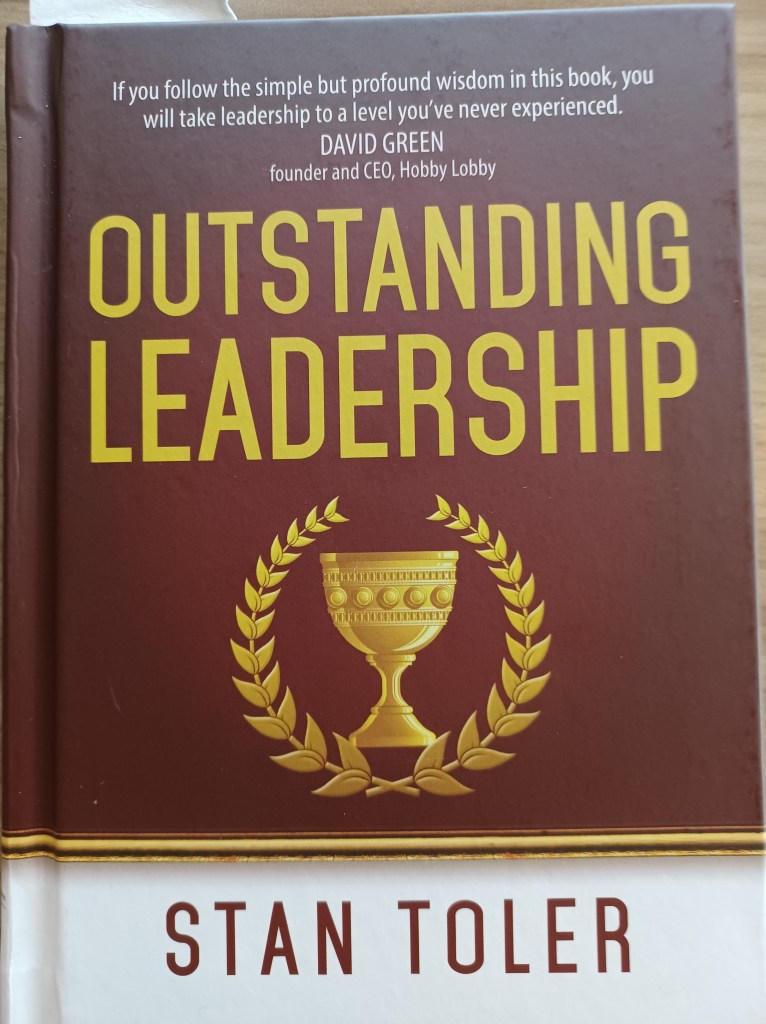
OUTSTANDING LEADERSHIP – by Stan Toler
There are many books on leadership, and this little book is among the best. Every short chapter is chockfull of ideas and definitions and quotes and generally good leadership advice. Stan Toler shares great advice drawing on many other good leaders. In Part 1: Leadership that Motivates, he shares how to develop and share a good vision. Part 2: Leadership that Relates lays out the value of communication and how to best communicate so that you can transform individuals and organizations. A great little book.












 Elevate with Andy