The Natural Hamartiologist

The hunter reaches back with quiet well-practiced motion to locate an arrow in his quiver. He selects one and brings it forward as his other hand raises his bow. He nocks his arrow on the bow and pulls back the full reach of his arm. His eyes look down the arrow and focus in on the deer in the open field ahead of him. As soon as he feels his aim is true, he pauses his breath, and lets the arrow fly. If the hunter is well practiced, and maybe a bit lucky, the arrow will pierce his prey and provide him with his supper.

There is a word used in the New Testament that describes an arrow missing its mark. The word “hamartano,” is translated as “sin.” So the word for “sin” comes from a word “regularly used in ancient times of an archer missing the target.” (Strong’s Concordance) We all regularly “miss the mark”. We sin. I heard one person recently say, “we regularly hurt the ones we love.” Often we miss the mark with the people we care about the most.

Hamartiology is the study of how we miss the mark. Romans 3:23 says, “all have sinned and fall short of the glory of God.”

I am adapting the word to suit my own purposes here: the Natural Hamartiologist is the one who naturally misses the mark. The one who regularly and often misses the mark is a Natural Hamartiologist. I would suggest that this is really a description of all humans.

Our Creator God created us to have someone to have a relationship with. He created us with free will, hoping we would choose to love and serve and honor Him. The book of Genesis is the first book of the Bible. Only 3 chapters in you will find the first people – Adam and Eve – choosing to disobey and miss God’s mark for them. From then on all humans have this tendency to miss the mark – not all the time – but regularly. Some of us have no interest in pleasing God, so missing the mark in measuring up to His standards is not relevant. For the rest of us, those who have surrendered our lives to God, we desire to hit the mark more often than not.

God chose to send His Son Jesus Christ to die on the cross in our place, taking our death penalty that missing the mark requires of us. When Jesus rose from the dead, He was victorious over death, over the devil, and over sin. He never missed the mark when it came to obeying God. He gives us his Spirit to remind us when we do miss the mark. And every time the Spirit reminds us, we can go back to Jesus, ask him to forgive us, and he does. God sees us as the forgiven ones, because he sees us through Jesus who never missed the mark.

As Christians with our faith in Jesus and his death and resurrection for us, we can be forgiven. We can have a relationship with God, as He desired in the first place, as people who are not seen as Hamartiologists but as “dikaios” – Righteous Ones.

We fall short of God’s ideal very often, but we also have One who by his death and resurrection has paid for our sin and made us righteous before God.

Are you a practicing Hamartiologist or are you an aspiring Dikaios? What we think of ourselves as influences how we live our life. If we think we are ones who regularly miss the mark, then we are not surprised when we do. If we view ourselves as ones who are righteous, then we focus more on living out that righteousness. It may seem like a small thing, but I believe how you view yourself affects how you live. Paul regularly addressed his New Testament letters “to God’s holy people” in Ephesus, or Philippi. We are righteous ones pursuing The Righteous One. We want to pursue the God-given ideal and can rejoice that God has provided a way for us to become righteous when we miss the mark again.

Keep coming back to Jesus,

Andy Wiebe

Always Become Better!

Our education system helps us to figure out if we are continuing to learn and develop. If you are faithfully doing your homework and finishing your assignments, you should be learning what the curriculum has laid out for you in each grade in school, or each year of college or university. Every year you should ideally pass a level and move up to the next grade. When you enter college, there are a number of classes you must take as prerequisites to classes offered in the next year or two. You can track how well you are doing by what grade you are in, or what courses you have completed toward the degree you are pursuing. When we leave school, it is not as easy to see if we are still learning.

When you complete your degree, you hope to step into a career that uses your training. As you begin at a new place of employment, you are taught what is expected of you at that job. Sometimes there are opportunities to advance in your career so you feel like you are continuing to grow and develop.

Eventually even in your job, there are not more steps to advance to. You may not even be expected to do any further learning. You know what the job is, and have proven you are capable of doing it. You do not need to keep learning.

This is where some people become stagnant. They have reached a certain level in their job or their career and they are content. The problem is, no one plateaus in their life for long. Either you keep learning and growing and making yourself better in some way, or you start to fall off, and fall behind as the world keeps on changing and developing.

I have been a pastor most of my life. While I have done a few other things for an income, this has been what I have given my life to. And I have chosen to keep on growing. I love to read. If you have noticed my book reviews on this blog you will know that is true. I like to read a variety of things. Sometimes I focus on a certain subject for a while, but I love to learn and to grow and develop. As a pastor, I need to learn how to use technology.  I started out by writing my sermons by hand, no I always use my computer. Along the way I learned how to use PowerPoint to add slides to my sermons. I spent a number of years pursuing a Masters (It took a period of over 20 years from the first course I took towards my Masters degree until I completed the last one and graduated!) I was not as concerned about accomplishing the degree as I was about continuing to regularly keep on learning. I enjoyed taking time to implement what I was learning.

We should want to always become better. Whatever skill or ability or gift you may have, keep learning how to develop it further. If you are a good preacher, continue to learn from others who are better, or who may do it slightly differently. If you are good at leading meetings, keep reading new books or go to seminars on how to lead them even better. If you are a good counselor, continue to learn and find new techniques to try out.

It may be that you realize you are about average in a number of areas in what you are skilled at. You might want to choose one or two to become good at, or even one area where you excel.

I have found one of the ways of continuing to get better is to teach others. If you think you are pretty good at something, then see if there are opportunities for you to teach others. When you teach, you have to figure out what you actually do, how you do it, and why what you do or the way you do it is the best way. This forces you to not just do something you are naturally good at, but evaluate it and figure out what valuable lessons you can pass on to others.

David Sanders, a cellist in the Chicago Symphony was describing how many hours of practice it takes to get to and maintain such a high level of competency. “You cannot rest on your laurels in the Chicago Symphony, or in any world-class orchestra. You never want to let your colleagues down, yourself down, or, maybe more importantly, the music down. Now in my 42nd year, I still don’t want to let my colleagues, myself or the music down. It is a never-ending struggle to continually try to master a musical instrument, to keep improving, be it string, wind, brass, or percussion.” (A CHICAGO CELLIST EXPLAINS: WHY WE WORK ONLY 20 HOURS A WEEK)

If you want to be your best, you need to continue to work at your craft. You have to continue to learn and practice and develop. The person who is continuing to develop and grow will be sought after in their field of expertise. And I would venture to say, will be much more interesting than the person who has not learned anything new for the last couple of years. This is not necessarily about “moving up the ladder”, but about being the best you can be where you are at.

Always become better at what you are good at and what you are equipped to do. You will enjoy life more than those who have become stagnant. You won’t be left behind as those younger and more skilled start to catch up to you.

As a pastor, if you keep on learning and growing and developing, you will be more attractive to churches looking for someone relevant to the world around them who also comes with years of experience. Continue to become better, for yourself, and for long-term ongoing employment.

Always become better.

Keep looking up,

Andy

Book Reviews: Andy’s 2022 Reading Experience

I will be sharing a brief review of every book I read this year. I hope you enjoy and hope it encourages you to keep reading.

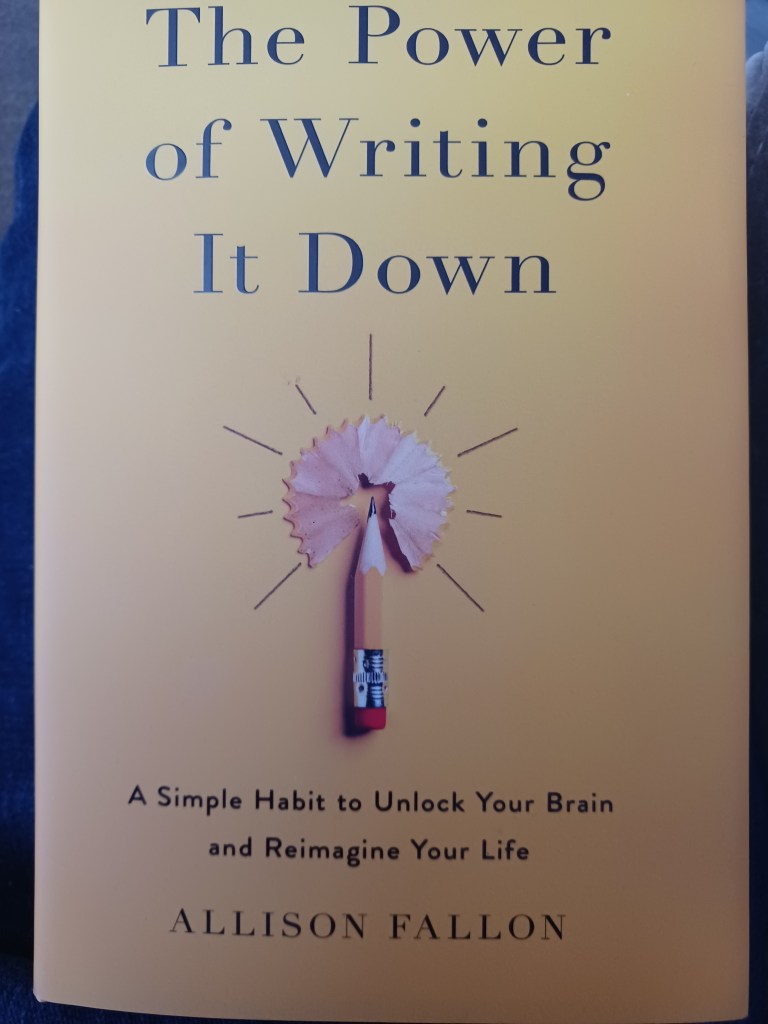
THE POWER OF WRITING IT DOWN – by Allison Fallon

Allison Fallon is a writer who helps others write. Her book walks through a number of tips on how to keep writing, whether for publishing or for personal purposes. She draws a number of parallels to life and has a number of examples of how encouraging people to write about their life has actually helped them through tough times in their life. So if you like to write, anything from journaling to writing a novel, you could benefit from this book. If you are not a writer, but would like to try something new to help you deal with circumstances in your life, this might be the book for you.

Who Do You Want to Become?

Who are you? I mean, if friends were to describe you, what words and phrases would they mention?

As we transition into a new year, we are often asked about our resolutions. I prefer setting goals rather than making resolutions.

Some of us might want to rethink goals just a bit. I tend to set goals to accomplish something. For example, I want to read the whole Bible this year, using the Chronological reading plan that puts things in the order they probably happened. I also want to finish writing a book. But should I be setting some different goals?

How about goals that affect who we are? Should we be setting some goals in areas that would impact who we are, what our personality is, or how we face life?

If you want to be seen as a generous person, you could make your goal to be more generous this year. However, vague goals like that are less effective than those with more specific or concrete descriptors. Maybe we could write a list of what a “generous person” is like or what they do and how they interact with others. Perhaps you view generosity as being freer with your resources and time, for example, such as lending your tools or giving food to the food bank. Or your focus could be on buying meaningful things for people you care about or inviting more people to your home for a meal. You could do some research and find a worthwhile cause to support, financially or by volunteering, being generous with money and generous with your time. You might choose to lend your books to a friend after you read them. It’s your goal, so make it yours. You could consider reading some books or taking a course on generosity.

If being generous doesn’t resonate with you, consider a few other character goals. Think about your own life and moments of personal frustration or struggle to identify where you might want to focus your personal growth.

1. Do you want to be more forgiving? You realize you are quick to judge, quick to get angry and offended, and slow to forgive. You want to forgive more freely. Then set a character goal of becoming more forgiving.

2. You might desire to be more patient. You struggle with having to wait for anything. You could set a goal to deliberately always take the longest line in the grocery store, or when buying gas. You could find ways of thinking about other things while waiting. You could memorize scripture…so every time you wait in line you bring up the verses you are learning and go over them. Now the slow line becomes productive for you, and you are being more patient.

3. Would you like to be more creative? You could read books and take courses. You could find ways of trying new things that require creativity. Maybe you schedule in some “day-dreaming” into your day so that you can focus on your creativity.

4. Maybe you want to be more at peace and worry less. You could memorize scripture verses on not worrying. You could pray, even ask others to pray with you, that God would help you have peace in your life.

5. Maybe you want to be more considerate of other people. This is one I have to work on. I have set a goal for me to connect with at least two people who are not in my immediate family or part of the church. Personally, I want to text or visit or connect in a meaningful way with others that are outside of my immediate thought process. These are people I care about, but they may not realize it because I rarely connect with them.

I’m sure that if you ask yourself: “What is one area in my life where I would like to improve?” you will quickly come up with an answer.

Now, before we leave this, I want to suggest that some of these self-improvement goals may need some outside help. Maybe you connect with a coach, or book a few sessions with a counselor. Maybe you meet with your pastor, or a good friend. And you ask for others to speak into your life and help you think of how to improve in your area you want to grow in.

I’m thinking that a number of us probably have people in our life who are really good at the area we want to improve. At least for me, my lack shows up when I see others who are doing so well in this area. My wife is one who is great at noticing others and connecting and loving – and that is why I recognize I have some improving to do. Take time to talk with those in your life who exemplify the area you want to work on. Maybe you are doing well in an area they want to work on and you can help each other.

I encourage you to set some risk-taking goals for the year: tasks to complete as well as areas of personal character growth. Put a plan into place, to learn and grow in these areas.

I wish you all the best for 2022. May it be a life-changing year for you!!

Keep looking up!

Andy